
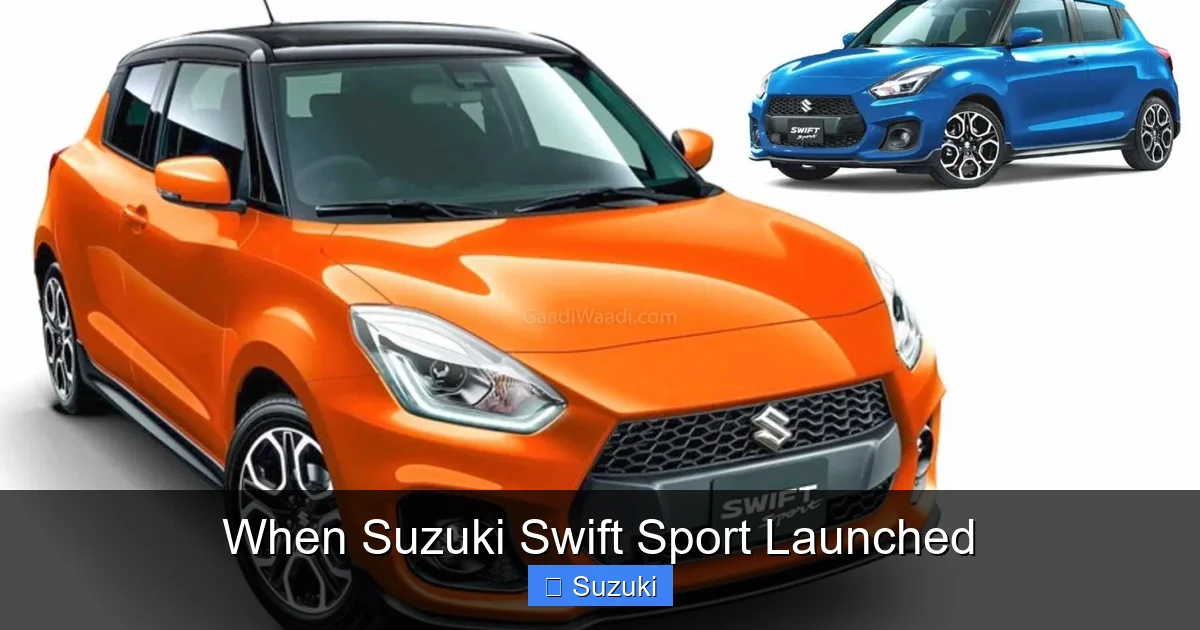
When Suzuki Swift Sport Launched

Contents
- 1 Key Takeaways
- 2 📑 Table of Contents
- 3 The Birth of a Hot Hatch Legend: When Suzuki Swift Sport Launched
- 4 First Generation (2005–2010): The Original Pocket Rocket
- 5 Second Generation (2011–2017): Refinement and Evolution
- 6 Third Generation (2017–2023): The Modern Hot Hatch
- 7 Why the Swift Sport Stood Out in the Hot Hatch Market
- 8 The End of an Era: Discontinuation in 2023
- 9 Is the Suzuki Swift Sport Still Worth Buying?
- 10 Conclusion: A True Driver’s Car
- 11 Frequently Asked Questions



The Suzuki Swift Sport first launched in 2005 as a high-performance variant of the popular Swift hatchback, combining sporty design with agile handling. Over the years, it has evolved through multiple generations, gaining more power, modern tech, and sharper styling while staying true to its fun-to-drive roots.
Key Takeaways
- First launched in 2005: The Suzuki Swift Sport debuted in Europe and Japan, offering a turbocharged or naturally aspirated engine depending on the market.
- Designed for driving fun: Lightweight chassis, responsive steering, and sport-tuned suspension made it a favorite among driving enthusiasts.
- Multiple generations evolved: The model went through three major generations (2005, 2011, 2017), each improving on power, efficiency, and technology.
- Global popularity: Sold in over 100 countries, the Swift Sport became a cult classic in markets like the UK, Australia, and Southeast Asia.
- Discontinued in 2023: Suzuki announced the end of the Swift Sport in many markets due to stricter emissions regulations and shifting consumer preferences.
- Legacy lives on: Enthusiasts still praise its balance of affordability, performance, and practicality, making it a sought-after used car.
📑 Table of Contents
- The Birth of a Hot Hatch Legend: When Suzuki Swift Sport Launched
- First Generation (2005–2010): The Original Pocket Rocket
- Second Generation (2011–2017): Refinement and Evolution
- Third Generation (2017–2023): The Modern Hot Hatch
- Why the Swift Sport Stood Out in the Hot Hatch Market
- The End of an Era: Discontinuation in 2023
- Is the Suzuki Swift Sport Still Worth Buying?
- Conclusion: A True Driver’s Car
The Birth of a Hot Hatch Legend: When Suzuki Swift Sport Launched
The Suzuki Swift has long been known for its compact size, fuel efficiency, and cheerful driving dynamics. But when Suzuki decided to inject some serious performance into the formula, they created something truly special—the Suzuki Swift Sport. This sporty variant didn’t just add a spoiler and some stripes; it redefined what a small car could do on twisty roads and daily commutes alike.
The Suzuki Swift Sport first launched in 2005, marking Suzuki’s official entry into the hot hatch segment. At the time, the market was dominated by heavyweights like the Volkswagen Golf GTI, Ford Focus ST, and Honda Civic Type R. But Suzuki took a different approach. Instead of going for brute force, they focused on agility, lightweight construction, and driver engagement. The result? A car that felt alive in the driver’s hands—a true pocket rocket that punched well above its weight.
From the very beginning, the Swift Sport was designed to be fun. It wasn’t about setting lap records or dominating drag strips. It was about making every drive feel exciting, whether you were navigating city streets or carving up mountain passes. And for a generation of drivers who wanted performance without the price tag, the Swift Sport delivered in spades.
First Generation (2005–2010): The Original Pocket Rocket
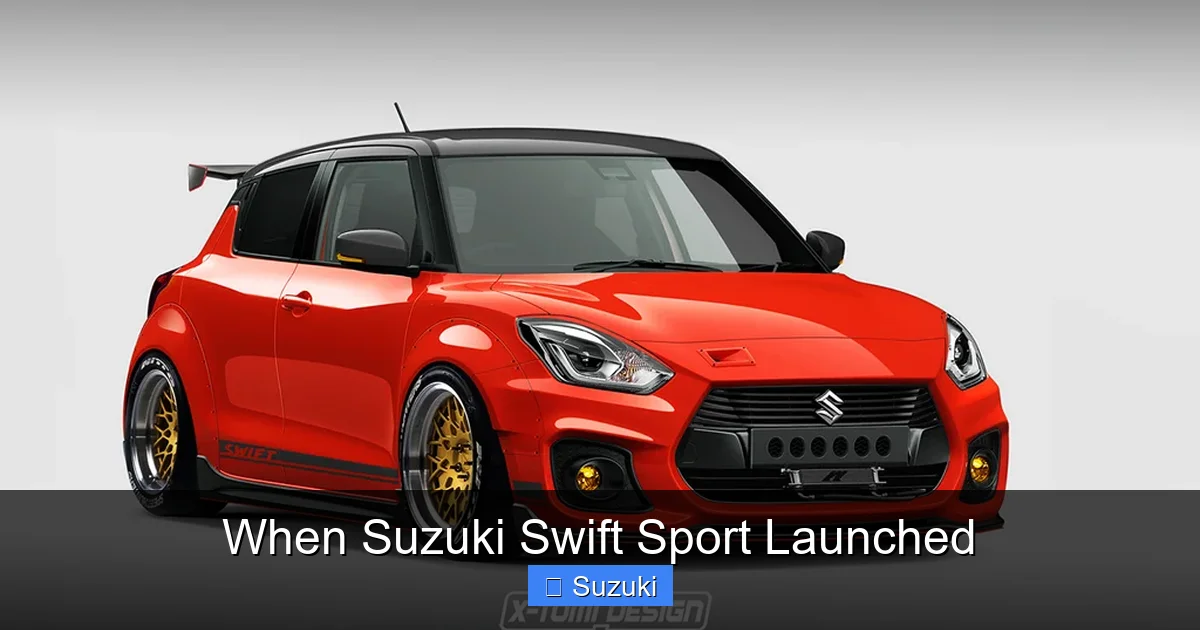
Visual guide about When Suzuki Swift Sport Launched
Image source: gaadiwaadi.com
Launch Details and Market Reception
The Suzuki Swift Sport made its global debut in 2005, initially launching in Japan and Europe. It was based on the second-generation Suzuki Swift (codenamed ZC), which had already earned praise for its nimble handling and modern design. The Sport version took everything people loved about the standard Swift and turned the dial up to eleven.
Under the hood, the first-gen Swift Sport came with a 1.6-liter naturally aspirated M16A inline-four engine. In most markets, it produced around 125 horsepower and 118 lb-ft of torque—modest by today’s standards, but impressive for a car weighing just over 1,000 kg (about 2,200 lbs). The lightweight body, combined with a close-ratio 6-speed manual transmission, gave the Swift Sport a thrilling acceleration feel, especially in the lower RPM range.
Drivers and critics alike were quick to praise the car’s balanced chassis and communicative steering. Unlike many hot hatches of the era, the Swift Sport didn’t rely on heavy power to impress. Instead, it used precision and balance to deliver a driving experience that felt more engaging than cars twice its price. Autocar magazine called it “a revelation in the small car segment,” while Top Gear praised its “go-kart-like agility.”
Design and Features
Visually, the first-gen Swift Sport stood out with its sportier bumpers, side skirts, rear spoiler, and 16-inch alloy wheels. The interior featured sport seats with bolstered support, a leather-wrapped steering wheel, and aluminum pedals—touches that added to the performance vibe without breaking the bank.
Suzuki also focused on practicality. Despite its sporty nature, the Swift Sport retained the Swift’s generous cabin space and 213-liter trunk. This made it a viable daily driver for singles, couples, or small families who wanted a bit of excitement in their commute.
One standout feature was the optional sunroof, which was rare in this segment at the time. It added a sense of openness and luxury, further enhancing the car’s appeal.
Driving Dynamics and Performance
What truly set the first-gen Swift Sport apart was its driving dynamics. The suspension was tuned for sporty handling, with stiffer springs and dampers than the standard Swift. The result was minimal body roll, sharp turn-in, and excellent grip through corners.
The steering was hydraulic-assisted, offering excellent feedback and a direct connection to the road. Drivers could feel every bump and crevice, which some purists loved, though it could be a bit harsh on rough surfaces.
Performance-wise, the 0-60 mph time was around 8.5 seconds—not blistering, but quick enough to feel lively. The real magic was in how the car responded to driver inputs. It felt eager, willing, and always ready to play. Whether you were overtaking on a highway or threading through traffic, the Swift Sport made driving feel like an event.
Second Generation (2011–2017): Refinement and Evolution
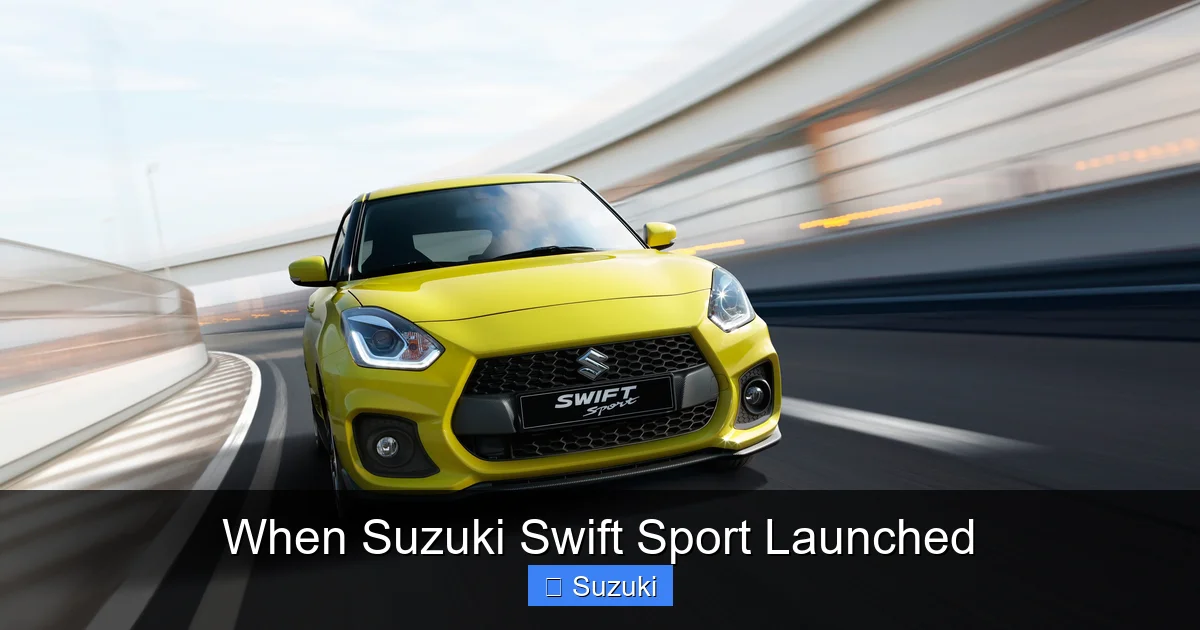
Visual guide about When Suzuki Swift Sport Launched
Image source: hdcarwallpapers.com
Redesign and Upgrades
In 2011, Suzuki introduced the third-generation Swift, and with it, the second-generation Swift Sport. This version marked a significant step forward in terms of design, technology, and performance. The new model was slightly larger, more aerodynamic, and featured a completely redesigned interior.
The most notable change was under the hood. The naturally aspirated 1.6-liter engine was replaced with a 1.6-liter Boosterjet turbocharged engine, producing 136 horsepower and 170 lb-ft of torque. This was a big jump in power, especially in the mid-range, making the car feel much more responsive during overtaking and hill climbs.
The turbocharged engine also improved fuel efficiency, thanks to direct injection and variable valve timing. Suzuki claimed a combined fuel economy of around 5.5 L/100 km (43 mpg), which was impressive for a performance-oriented hatch.
Enhanced Handling and Safety
The second-gen Swift Sport retained the lightweight philosophy but added structural reinforcements for better rigidity. The suspension was retuned for a balance between comfort and sportiness, making it more usable on rough roads without sacrificing cornering ability.
Steering was now electric power-assisted, which some enthusiasts criticized for being less communicative than the hydraulic system. However, it was lighter at low speeds and more efficient, contributing to better fuel economy.
Safety was also improved. The car came standard with six airbags, ABS, electronic brakeforce distribution (EBD), and stability control. It earned a 5-star Euro NCAP safety rating, which was a big deal for a small car in this segment.
Interior and Technology
Inside, the Swift Sport got a major upgrade. The dashboard was more modern, with a higher-quality feel and better ergonomics. The sport seats were more supportive, and the instrument cluster featured a digital display with real-time performance data.
Infotainment options included a touchscreen system with Bluetooth, USB, and optional navigation. While not as advanced as some rivals, it was user-friendly and reliable.
One clever feature was the optional “Sport Mode,” which sharpened throttle response and adjusted the steering weight for a more dynamic feel. It wasn’t a night-and-day difference, but it added to the car’s playful character.
Third Generation (2017–2023): The Modern Hot Hatch
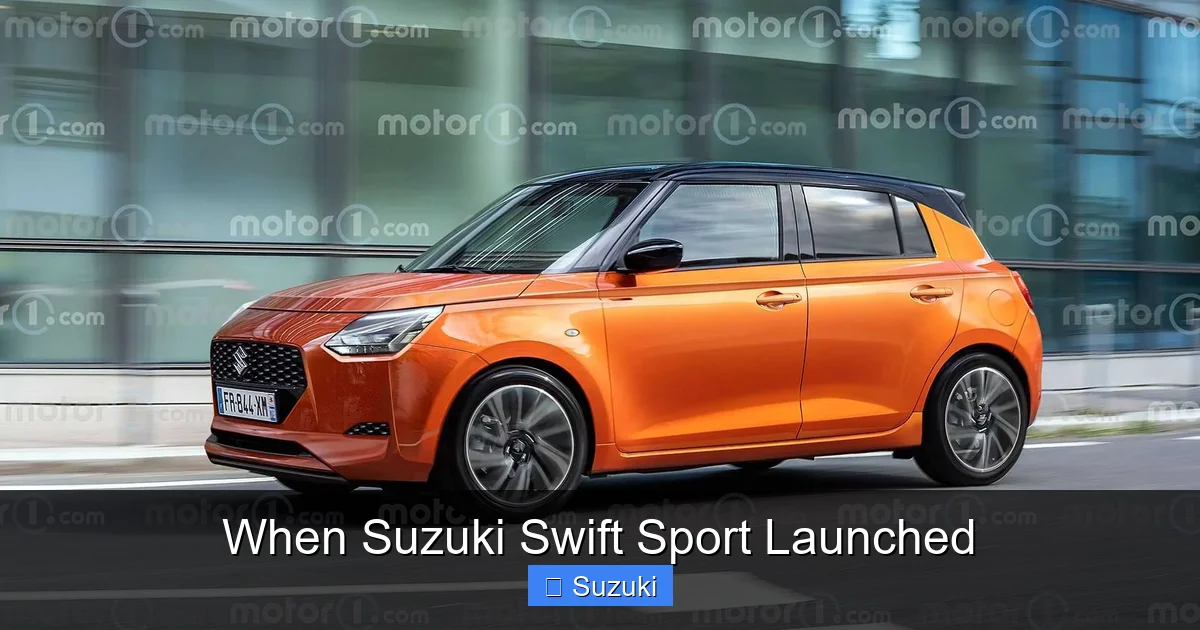
Visual guide about When Suzuki Swift Sport Launched
Image source: newcarscoops.com
Launch and Global Expansion
The third-generation Suzuki Swift Sport launched in 2017, based on the all-new HEARTECT platform. This platform was lighter, stronger, and more rigid than before, contributing to better handling and safety. The new Swift Sport was unveiled at the Geneva Motor Show and quickly gained attention for its aggressive styling and improved performance.
This generation was more global than ever. It was sold in Europe, Australia, Japan, India, and parts of Southeast Asia. In some markets, it was badged as the Suzuki Baleno Sport or Suzuki Swift Sport Turbo, but the core design and engineering remained consistent.
Engine and Performance
The heart of the third-gen Swift Sport was a 1.4-liter Boosterjet turbocharged engine, producing 140 horsepower and 230 Nm (170 lb-ft) of torque. Paired with either a 6-speed manual or a 6-speed automatic transmission, it delivered strong acceleration and smooth power delivery.
The 0-100 km/h (0-62 mph) time dropped to around 8.1 seconds, and the top speed increased to 205 km/h (127 mph). More importantly, the torque was available from just 1,700 rpm, making the car feel punchy in everyday driving.
Suzuki also introduced a mild-hybrid system in some markets, which used a small electric motor to assist the engine during acceleration and reduce emissions. This helped the car meet stricter environmental standards without sacrificing performance.
Design and Aerodynamics
The third-gen Swift Sport had a more aggressive look, with a wider grille, sharper headlights, and a more sculpted body. The rear featured a dual-tone spoiler and dual exhaust tips, giving it a sporty stance.
Aerodynamics were improved with active grille shutters and underbody panels, reducing drag and improving high-speed stability. The car also sat lower and had wider tracks, enhancing cornering grip.
Technology and Connectivity
Inside, the Swift Sport embraced modern tech. The dashboard featured a 7-inch touchscreen with Apple CarPlay and Android Auto, a big upgrade from previous models. The instrument cluster included a color display with customizable themes, including a “Sport” mode that highlighted performance metrics.
Other features included keyless entry, push-button start, automatic climate control, and a premium audio system. Safety tech was also upgraded, with adaptive cruise control, lane departure warning, and automatic emergency braking available in higher trims.
Why the Swift Sport Stood Out in the Hot Hatch Market
Affordability and Value
One of the Swift Sport’s biggest strengths was its price. It was significantly cheaper than rivals like the Ford Fiesta ST, Volkswagen Polo GTI, or Honda Jazz Sport. Yet, it offered a driving experience that was often more engaging and fun.
For example, in 2018, the Swift Sport started at around £18,000 in the UK, while the Fiesta ST cost over £22,000. Despite the lower price, the Swift Sport had similar performance and better fuel economy. This made it a no-brainer for budget-conscious enthusiasts.
Lightweight Philosophy
Suzuki’s focus on lightweight construction was a game-changer. By keeping the car light, they improved acceleration, braking, handling, and fuel efficiency. The Swift Sport weighed around 1,050 kg (2,315 lbs), making it one of the lightest hot hatches in its class.
This philosophy also made the car more nimble. It could change direction quickly, making it ideal for city driving and twisty roads. Drivers often described it as “feeling like a go-kart,” a compliment that speaks volumes about its agility.
Reliability and Low Running Costs
Another reason for the Swift Sport’s popularity was its reliability. Suzuki has a reputation for building durable, low-maintenance vehicles, and the Swift Sport was no exception. Owners reported few mechanical issues, and servicing costs were low.
Fuel economy was also a strong point. Even with a turbocharged engine, the Swift Sport returned around 5.8 L/100 km (49 mpg) in real-world driving. Insurance costs were reasonable, and depreciation was slower than many competitors.
Community and Enthusiast Following
The Swift Sport developed a loyal fanbase. Online forums, social media groups, and car clubs dedicated to the model sprang up around the world. Owners shared tuning tips, track day experiences, and modification ideas.
This community helped keep the car relevant long after its launch. Even today, used Swift Sports are in high demand, with well-maintained examples holding their value well.
The End of an Era: Discontinuation in 2023
Reasons for Discontinuation
In 2023, Suzuki announced that it would discontinue the Swift Sport in several key markets, including Europe and Australia. The decision was driven by stricter emissions regulations, the shift toward electrification, and changing consumer preferences.
Euro 7 emissions standards, set to take effect in the mid-2020s, would have required costly upgrades to the engine and exhaust system. For a small-volume model like the Swift Sport, the investment wasn’t justified.
Additionally, Suzuki is focusing on hybrid and electric vehicles. The standard Swift now comes with a mild-hybrid option, and the company has hinted at an all-electric future. The Swift Sport, with its turbocharged petrol engine, didn’t fit into this new strategy.
Legacy and Impact
Though the Swift Sport is gone, its legacy lives on. It proved that you don’t need a big engine or a high price tag to have fun behind the wheel. It inspired a generation of drivers to appreciate lightweight, agile cars.
Many enthusiasts believe that the Swift Sport was one of the last true driver’s cars in the compact segment. Its combination of affordability, performance, and charm is hard to replicate in today’s market.
Is the Suzuki Swift Sport Still Worth Buying?
Buying Used: Tips and Considerations
Even though the Swift Sport is no longer in production, it remains a fantastic used car. Prices vary by region and condition, but you can often find a well-maintained example for under £15,000 in the UK or $15,000 AUD in Australia.
When buying used, look for:
- Service history: A full service record is a good sign of care.
- Mileage: Lower mileage (under 60,000 miles) is ideal.
- Modifications: Avoid heavily modified cars unless you’re experienced.
- Rust and corrosion: Check wheel arches, sills, and underbody.
- Test drive: Pay attention to engine noise, gearbox smoothness, and suspension feel.
Common Issues to Watch For
While the Swift Sport is generally reliable, some common issues include:
- Turbocharger wear: On higher-mileage examples, listen for unusual noises.
- Suspension components: Check for worn bushings or shocks.
- Clutch wear: Manual models may need a clutch replacement around 80,000 miles.
- Electrical glitches: Some owners report issues with infotainment systems.
Modifications and Tuning
The Swift Sport is popular among tuners. Common upgrades include:
- ECU remap: Can increase power to 160+ hp.
- Exhaust system: Improves sound and flow.
- Lowering springs: Enhances handling and stance.
- Lightweight wheels: Reduce unsprung weight for better agility.
However, be cautious with modifications. Over-tuning can affect reliability and insurance costs.
Conclusion: A True Driver’s Car
The Suzuki Swift Sport launched in 2005 as a bold statement: performance doesn’t have to be expensive or complicated. Over nearly two decades, it evolved through three generations, each improving on the last while staying true to its core values—lightweight, fun, and affordable.
It may no longer be in production, but the Swift Sport remains a benchmark for what a hot hatch should be. It’s a car that puts a smile on your face every time you drive it, whether you’re commuting to work or exploring back roads on the weekend.
For those who value driving enjoyment over specs and status, the Swift Sport was—and still is—a perfect choice. Its legacy continues in the hearts of enthusiasts and the growing community of owners who keep the spirit alive.
Frequently Asked Questions
When did the Suzuki Swift Sport first launch?
The Suzuki Swift Sport first launched in 2005, debuting in Japan and Europe as a high-performance variant of the popular Swift hatchback. It quickly gained attention for its sporty design and agile handling.
What engine did the first-gen Swift Sport have?
The first-generation Swift Sport (2005–2010) was powered by a 1.6-liter naturally aspirated M16A inline-four engine, producing around 125 horsepower and 118 lb-ft of torque.
Was the Swift Sport available with an automatic transmission?
Yes, starting with the third generation (2017), the Swift Sport was offered with a 6-speed automatic transmission in addition to the standard 6-speed manual.
Why was the Suzuki Swift Sport discontinued?
The Swift Sport was discontinued in 2023 due to stricter emissions regulations, the shift toward electrification, and declining demand for small turbocharged petrol cars in key markets.
How much did the Swift Sport cost when new?
When new, the Swift Sport typically started around £18,000 in the UK, making it one of the most affordable hot hatches in its class.
Is the Suzuki Swift Sport reliable?
Yes, the Swift Sport is known for its reliability, low running costs, and durable build. Regular maintenance and careful driving can keep it running well for many years.


