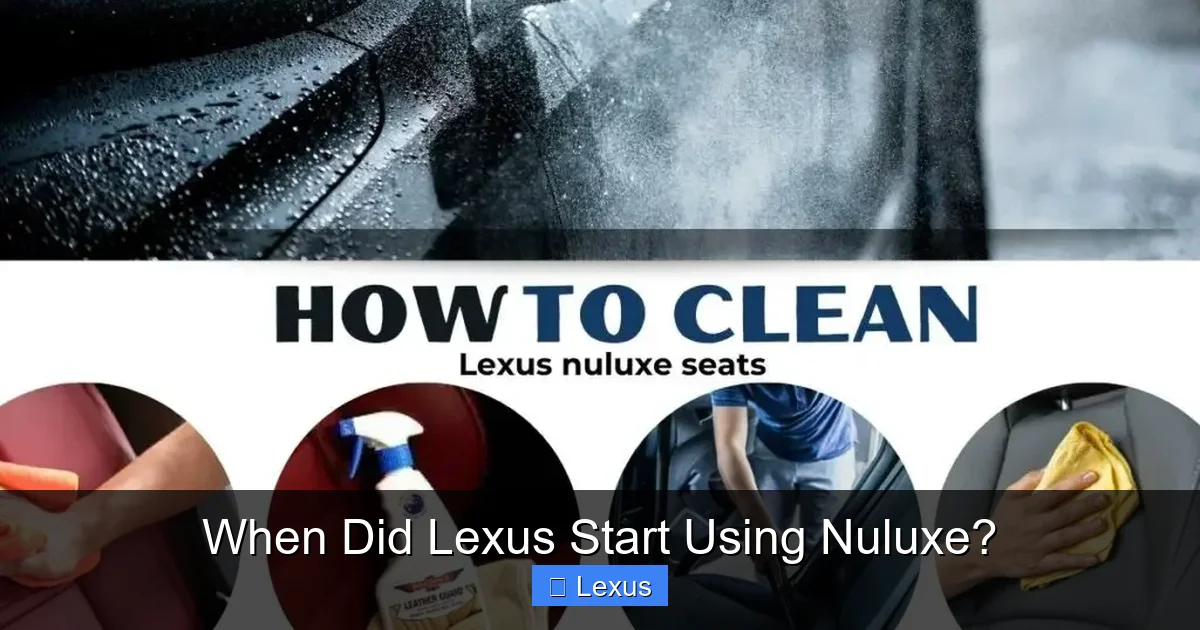
When Did Lexus Start Using Nuluxe?

Contents
- 1 Key Takeaways
- 2 Introduction: The Rise of Sustainable Luxury in Automotive Interiors
- 3 The Origins of NuLuxe: Why Lexus Needed a New Material
- 4 When Did Lexus Start Using NuLuxe? The 2012 Debut
- 5 NuLuxe Expands: From the GS to the Entire Lexus Lineup
- 6 The Benefits of NuLuxe: Why Drivers Love It
- 7 NuLuxe and the Future of Lexus Interiors
- 8 Conclusion: NuLuxe as a Benchmark for Modern Luxury
- 9 FAQs
- 10 Key Takeaways
- 11 Frequently Asked Questions

Car Jump Starter

Dash Cam

Brake Cleaner Spray

Car USB Charger
Lexus introduced NuLuxe in 2012 as a high-quality, eco-friendly alternative to traditional leather. This innovative material debuted in the Lexus GS and has since become a signature feature across many models, offering durability, comfort, and a refined aesthetic.
Key Takeaways
- NuLuxe was first introduced in 2012: It made its debut in the Lexus GS model, marking a shift toward sustainable luxury interiors.
- Designed as a leather alternative: NuLuxe offers a premium feel similar to genuine leather but with lower environmental impact.
- Widely adopted across the lineup: By the mid-2010s, NuLuxe became standard or optional in models like the RX, ES, NX, and UX.
- Focus on sustainability and ethics: Lexus developed NuLuxe to reduce reliance on animal products and lower VOC emissions.
- Enhanced comfort and durability: The material resists fading, cracking, and wear while maintaining a soft, luxurious texture.
- Easy maintenance: NuLuxe is simple to clean and doesn’t require special conditioners like real leather.
- Part of Lexus’s broader eco-initiatives: NuLuxe aligns with the brand’s commitment to innovation, sustainability, and responsible luxury.
[FEATURED_IMAGE_PLACEHOLDER]
Introduction: The Rise of Sustainable Luxury in Automotive Interiors
When you think of luxury cars, what comes to mind? Plush leather seats, soft-touch surfaces, and a cabin that feels like a five-star hotel on wheels. For decades, genuine leather has been the gold standard in high-end automotive interiors. It’s durable, breathable, and has a rich, natural feel that drivers and passengers appreciate. But as the world becomes more environmentally conscious, automakers are rethinking what luxury really means—especially when it comes to materials.
Enter Lexus, the luxury division of Toyota, known for its commitment to innovation, craftsmanship, and forward-thinking design. In the early 2010s, Lexus began exploring alternatives to traditional leather—not because they wanted to cut corners, but because they wanted to lead. They asked: Can we create a material that feels just as luxurious as leather, but with a smaller environmental footprint? Can we offer a premium experience without compromising on ethics or sustainability?
The answer came in the form of NuLuxe—a high-performance synthetic upholstery that mimics the look and feel of real leather while being kinder to the planet. But when exactly did Lexus start using NuLuxe? And why did they make the switch? This article dives deep into the origins, development, and impact of NuLuxe, exploring how this material has reshaped the interior experience of Lexus vehicles and set a new standard for sustainable luxury.
The Origins of NuLuxe: Why Lexus Needed a New Material
To understand when Lexus started using NuLuxe, it’s important to first understand why they needed it in the first place. The automotive industry has long relied on animal-derived materials like leather for premium interiors. But by the late 2000s, consumer attitudes were shifting. More drivers were becoming aware of the environmental and ethical implications of leather production—deforestation for grazing, water pollution from tanning, and animal welfare concerns.
At the same time, synthetic alternatives were improving. Materials like vinyl and polyurethane (PU) leather were becoming more sophisticated, offering better durability and a more realistic texture. However, many of these early synthetics still fell short in terms of comfort, breathability, and long-term performance. They often felt plasticky, trapped heat, and wore out quickly—especially in hot climates.
Lexus, always focused on delivering an exceptional ownership experience, saw an opportunity. They wanted a material that could match the luxury of real leather but with added benefits: lower environmental impact, easier maintenance, and consistent quality. They also wanted to future-proof their interiors as regulations around volatile organic compounds (VOCs) and sustainability became stricter.
So, in the late 2000s, Lexus began developing a new kind of synthetic upholstery. The goal was ambitious: create a material that felt premium, looked elegant, and aligned with the brand’s values of innovation and responsibility. After years of research and testing, NuLuxe was born.
The Development Process: From Concept to Reality
The development of NuLuxe wasn’t a quick process. It involved collaboration between Lexus engineers, material scientists, and design teams. The team studied the molecular structure of high-quality leather to understand what made it so desirable—its softness, flexibility, and ability to age gracefully. Then, they worked to replicate those properties using synthetic fibers and advanced coatings.
One of the biggest challenges was achieving the right balance between softness and durability. Early prototypes were either too stiff or too fragile. The team experimented with different base fabrics, top coatings, and embossing techniques to create a surface that looked and felt authentic. They also focused on breathability—ensuring that NuLuxe wouldn’t trap heat like some cheaper synthetics.
Another key focus was reducing environmental impact. Traditional leather tanning uses harsh chemicals like chromium, which can pollute water supplies. NuLuxe, by contrast, is made using water-based coatings and fewer toxic substances. It also generates lower VOC emissions, contributing to better indoor air quality in the vehicle.
After extensive testing—including exposure to extreme temperatures, UV light, and repeated use—NuLuxe was ready for production. And in 2012, it made its debut in a major Lexus model.
When Did Lexus Start Using NuLuxe? The 2012 Debut
So, when did Lexus start using NuLuxe? The answer is 2012. That year, NuLuxe was introduced as an option in the fourth-generation Lexus GS, a mid-size luxury sedan known for its sporty handling and refined interior. The GS was the perfect vehicle to showcase this new material—it was a flagship model that attracted buyers who valued both performance and comfort.
At launch, NuLuxe was offered as an alternative to genuine leather in the GS. Buyers could choose between traditional leather, NuLuxe, or even a combination of both in certain trims. The material was available in a range of colors, including black, gray, and beige, and was used for seat upholstery, door panels, and center consoles.
The response from drivers and critics was overwhelmingly positive. Many praised NuLuxe for its soft, supple feel and elegant appearance. It didn’t have the plasticky texture of older synthetic materials, and it held up well under daily use. Over time, as more people experienced NuLuxe firsthand, it became clear that this wasn’t just a compromise—it was a genuine upgrade in many ways.
Why the GS Was the Right Launchpad
The Lexus GS was an ideal vehicle to introduce NuLuxe for several reasons. First, it was a global model sold in markets where environmental regulations were tightening, such as Europe and California. Offering a low-emission interior material helped Lexus meet compliance standards while appealing to eco-conscious buyers.
Second, the GS had a strong reputation for interior quality. By introducing NuLuxe in a model already known for luxury, Lexus could demonstrate that sustainability didn’t mean sacrificing comfort or style. It sent a powerful message: you can have both.
Finally, the GS was positioned as a driver’s car—one that balanced performance with refinement. NuLuxe’s lightweight nature also contributed to better fuel efficiency, aligning with Lexus’s broader goals of improving vehicle efficiency without compromising on luxury.
Early Reception and Market Response
In the months following its debut, NuLuxe gained traction among Lexus owners. Dealerships reported that many buyers were intrigued by the idea of a leather alternative that was both luxurious and responsible. Some customers appreciated the ethical aspect—knowing their car didn’t rely on animal products. Others liked the practical benefits: easier cleaning, resistance to fading, and no need for regular conditioning.
Automotive journalists also took notice. Reviews highlighted NuLuxe as a standout feature, often comparing it favorably to real leather. One reviewer noted that after several months of use, the NuLuxe seats in their GS still looked and felt brand new—something that couldn’t always be said for genuine leather, which can crack or fade over time.
Of course, not everyone was immediately convinced. Some traditionalists still preferred the “real thing,” believing that only genuine leather could deliver true luxury. But as NuLuxe improved and became more widely available, even skeptics began to come around.
NuLuxe Expands: From the GS to the Entire Lexus Lineup
After its successful debut in the GS, NuLuxe didn’t stay exclusive for long. Lexus quickly began rolling it out across other models, recognizing its potential to enhance the brand’s image and appeal to a broader audience.
By 2014, NuLuxe was available in the Lexus RX, the brand’s best-selling SUV. The RX was a natural fit—it was family-friendly, practical, and often used in warm climates where real leather could become uncomfortably hot. NuLuxe’s breathability and heat resistance made it a smart choice for drivers in places like Arizona, Florida, and Southern California.
In 2015, the material appeared in the Lexus NX, a compact luxury crossover that targeted younger, urban buyers. These customers often valued sustainability and modern design, making NuLuxe a perfect match. The NX’s interior featured bold color options and sleek styling, with NuLuxe adding a touch of sophistication.
By the late 2010s, NuLuxe had become a staple in the Lexus lineup. It was standard or optional in nearly every model, including the ES, IS, UX, and even high-performance variants like the RC F. In some trims, NuLuxe was paired with real leather accents to create a hybrid interior that offered the best of both worlds.
NuLuxe in the UX and the Shift Toward Electrification
One of the most significant moments in NuLuxe’s expansion came with the launch of the Lexus UX in 2018. As Lexus’s first dedicated compact luxury crossover, the UX was designed with urban millennials in mind—people who cared about sustainability, technology, and style.
The UX featured NuLuxe as standard across most trims, emphasizing its role as a modern, eco-conscious material. It was also used in the Lexus UX 250h hybrid, reinforcing the connection between sustainable powertrains and sustainable interiors.
This trend continued with the introduction of the Lexus NX and RX hybrids, and eventually with the brand’s first fully electric vehicle, the Lexus RZ. In the RZ, NuLuxe is used extensively throughout the cabin, reflecting Lexus’s commitment to a holistic approach to sustainability—from powertrain to upholstery.
NuLuxe vs. Other Synthetic Leathers: How It Stacks Up
As NuLuxe gained popularity, it faced competition from other synthetic leathers like BMW’s Sensatec, Mercedes’ Artico, and Audi’s Milano leather. So how does NuLuxe compare?
In terms of feel, NuLuxe is often considered one of the most leather-like synthetics on the market. It has a soft, slightly grainy texture that mimics real leather, and it doesn’t have the glossy, plasticky look of some competitors. It also performs well in extreme temperatures—staying cool in the summer and not becoming brittle in the winter.
Durability is another strength. NuLuxe resists fading, cracking, and peeling, even after years of use. It’s also resistant to stains and spills, making it ideal for families or pet owners.
From an environmental standpoint, NuLuxe stands out for its low VOC emissions and reduced chemical use in production. While other brands have made strides in sustainability, Lexus has been particularly transparent about NuLuxe’s eco-benefits, publishing data on its reduced carbon footprint compared to traditional leather.
The Benefits of NuLuxe: Why Drivers Love It
So why has NuLuxe become such a hit with Lexus owners? It’s not just about being “not leather”—it’s about offering a better overall experience. Here are some of the key benefits that drivers appreciate:
Comfort and Feel
NuLuxe feels remarkably close to real leather. It’s soft to the touch, with a slight give that makes long drives more comfortable. Unlike some synthetics that feel stiff or synthetic, NuLuxe has a natural drape and flexibility that conforms to the body.
It’s also breathable, which means it doesn’t trap heat like vinyl. On a hot day, NuLuxe seats stay cooler than real leather, which can become uncomfortably warm in direct sunlight. This makes it especially popular in warmer climates.
Durability and Longevity
One of the biggest advantages of NuLuxe is how well it holds up over time. Real leather can develop cracks, especially in areas of high wear like the driver’s seat. It can also fade when exposed to sunlight.
NuLuxe, on the other hand, is highly resistant to both fading and cracking. The material is engineered to maintain its appearance for years, even with daily use. This means your Lexus interior will look newer, longer—adding to the vehicle’s resale value.
Easy Maintenance
Cleaning NuLuxe is simple. Spills can be wiped away with a damp cloth, and there’s no need for special leather conditioners or protectants. This is a big plus for busy families or anyone who wants a low-maintenance interior.
Unlike real leather, which can be damaged by harsh cleaners, NuLuxe is compatible with most household cleaning products. Just avoid abrasive scrubbers, and you’re good to go.
Sustainability and Ethics
For many buyers, the environmental and ethical benefits of NuLuxe are just as important as the performance. By choosing NuLuxe, drivers can enjoy a luxury interior without contributing to animal agriculture or the pollution associated with leather tanning.
Lexus has also highlighted NuLuxe’s role in reducing VOC emissions, which contribute to smog and indoor air pollution. Lower emissions mean a healthier cabin environment for drivers and passengers.
Cost-Effectiveness
While NuLuxe isn’t necessarily cheaper than real leather in terms of material cost, it can save money in the long run. Because it requires less maintenance and lasts longer, owners spend less on cleaning products and repairs. It also helps preserve the vehicle’s value, as a well-maintained interior is a major selling point.
NuLuxe and the Future of Lexus Interiors
As Lexus continues to evolve, NuLuxe is likely to play an even bigger role in the brand’s future. With the shift toward electrification and sustainability, materials like NuLuxe align perfectly with the company’s vision.
In fact, Lexus has hinted at further innovations in synthetic materials. Future versions of NuLuxe could incorporate recycled fibers, bio-based coatings, or even self-healing properties. The brand is also exploring ways to make the production process even more sustainable, such as using renewable energy in manufacturing.
NuLuxe in the Age of Autonomous Driving
As vehicles become more connected and autonomous, interiors are transforming from driver-focused spaces to mobile living rooms. In this context, materials like NuLuxe are ideal—they’re comfortable for long periods, easy to clean, and resistant to wear from frequent use.
Imagine a future where your Lexus is a mobile office or relaxation pod. NuLuxe’s durability and comfort make it a smart choice for these new use cases.
Consumer Trends and Market Demand
Consumer demand for sustainable luxury is growing. According to recent surveys, over 60% of luxury car buyers say they would consider a vehicle with eco-friendly materials, even if it meant giving up traditional leather.
Lexus is well-positioned to meet this demand. By offering NuLuxe as a standard or optional feature across its lineup, the brand is appealing to a new generation of buyers who value both performance and responsibility.
Conclusion: NuLuxe as a Benchmark for Modern Luxury
So, when did Lexus start using NuLuxe? The answer is 2012, with the launch of the fourth-generation GS. But the story doesn’t end there. NuLuxe has since become a defining feature of the Lexus brand, representing a shift toward sustainable, ethical, and innovative luxury.
It’s more than just a leather alternative—it’s a statement. A statement that luxury doesn’t have to come at the expense of the planet. That comfort and conscience can coexist. And that the future of automotive interiors is bright, breathable, and beautifully crafted.
Whether you’re driving a GS, an RX, or an electric RZ, NuLuxe is there, quietly enhancing your experience. It’s soft under your hands, cool in the summer, and built to last. And as Lexus continues to innovate, NuLuxe will remain at the heart of its vision for responsible luxury.
So the next time you slide into a Lexus, take a moment to appreciate the seats. They’re not just stylish—they’re a symbol of progress.
FAQs
When did Lexus first introduce NuLuxe?
Lexus first introduced NuLuxe in 2012 as an option in the fourth-generation Lexus GS. It was developed as a premium, eco-friendly alternative to traditional leather.
Is NuLuxe real leather?
No, NuLuxe is a high-quality synthetic material designed to mimic the look and feel of real leather. It’s made from polyurethane and other advanced materials.
What are the benefits of NuLuxe over real leather?
NuLuxe is more durable, easier to clean, resistant to fading and cracking, and has a lower environmental impact. It’s also breathable and stays cooler in hot weather.
Is NuLuxe available in all Lexus models?
NuLuxe is available in most Lexus models, including the ES, RX, NX, UX, and RZ. It’s often standard or optional depending on the trim level.
Can NuLuxe be repaired if it gets damaged?
Minor scratches or scuffs can often be buffed out, but deep cuts may require professional repair or replacement. However, NuLuxe is highly resistant to damage under normal use.
Does NuLuxe come in different colors?
Yes, NuLuxe is available in a variety of colors, including black, gray, beige, and brown, depending on the model and trim. Some trims also offer contrast stitching for added style.
This is a comprehensive guide about When Did Lexus Start Using NuLuxe?.
Key Takeaways
- Understanding When Did Lexus Start Using NuLuxe?: Provides essential knowledge
Frequently Asked Questions
What is When Did Lexus Start Using NuLuxe??
When Did Lexus Start Using NuLuxe? is an important topic with many practical applications.