
When Can a Car Seat Face Forward?

Wondering when it’s safe for your child’s car seat to face forward? The answer depends on age, weight, height, and developmental readiness—not just a birthday milestone. Most experts recommend keeping kids rear-facing until at least age 2, but many benefit from staying rear-facing even longer for maximum safety.
Key Takeaways
- Age is just one factor: While many children turn 2 around the time they can face forward, experts recommend waiting until they outgrow the rear-facing limits of their seat—often well beyond age 2.
- Weight and height matter most: Check your car seat manual for rear-facing weight and height limits, which typically range from 35 to 50 pounds depending on the model.
- Rear-facing reduces injury risk: Studies show rear-facing seats reduce the risk of serious injury by up to 75% compared to forward-facing seats for young children.
- Follow the “2-hour rule” for comfort: If your child seems uncomfortable rear-facing, ensure they’re not sitting with legs bent or cramped—most kids adapt easily with proper positioning.
- Use a convertible or all-in-one seat: These seats support both rear- and forward-facing modes, allowing you to keep your child rear-facing longer without buying a new seat.
- State laws vary—but best practice goes further: While some states only require rear-facing until age 1 or 2, following AAP and NHTSA guidelines offers the best protection.
- Transition safely to forward-facing: Once your child exceeds rear-facing limits, switch to a forward-facing seat with a 5-point harness and top tether for added security.
📑 Table of Contents
- When Can a Car Seat Face Forward? A Parent’s Complete Guide
- Why Rear-Facing Is Safer (And Why It Matters)
- Age, Weight, and Height: The Real Guidelines
- Signs It’s Time to Face Forward
- Choosing the Right Forward-Facing Seat
- State Laws vs. Best Practices
- Common Misconceptions About Forward-Facing Seats
- Tips for a Smooth Transition
- Conclusion: Safety First, Always
When Can a Car Seat Face Forward? A Parent’s Complete Guide
As a parent, few things feel as important—or as confusing—as choosing the right car seat for your child. You’ve probably heard conflicting advice: “Turn them forward at age 2,” or “Wait until they’re 4,” or “Just follow the law.” But the truth is, the decision of when a car seat can face forward isn’t based on a single rule. It’s a combination of science, safety data, and your child’s individual growth.
The good news? You don’t have to navigate this alone. In this guide, we’ll walk you through everything you need to know about when to transition your child from a rear-facing to a forward-facing car seat. We’ll cover the latest safety recommendations, explain why rear-facing is so important, and help you make the switch with confidence—when the time is right.
Why Rear-Facing Is Safer (And Why It Matters)

Visual guide about When Can a Car Seat Face Forward?
Image source: seatplenary.com
Before we dive into when a car seat can face forward, let’s talk about why rear-facing is the gold standard for young children. It’s not just a trend—it’s backed by decades of crash data and biomechanical research.
When a car stops suddenly—whether in a crash or even a hard brake—the forces on a child’s body are immense. In a forward-facing seat, those forces pull the child’s head and neck forward, putting tremendous strain on the spine. A young child’s neck bones (vertebrae) and ligaments are still developing and aren’t strong enough to handle that kind of stress.
In contrast, a rear-facing seat cradles the child’s head, neck, and spine. During a crash, the seat absorbs the impact and distributes the force across the entire back and shoulders—areas that are much better equipped to handle it. Think of it like a cocoon: the seat wraps around the child, protecting the most vulnerable parts.
The Science Behind the Safety
Studies from organizations like the National Highway Traffic Safety Administration (NHTSA) and the American Academy of Pediatrics (AAP) consistently show that rear-facing seats reduce the risk of serious injury by up to 75% compared to forward-facing seats for children under 2. That’s not a small number—it’s a life-saving difference.
For example, in a frontal crash (the most common type of serious accident), a rear-facing seat keeps the child’s head from snapping forward. Instead, the seat supports the head and neck, preventing whiplash and spinal injury. Even in side-impact crashes, rear-facing seats offer better protection because the child is held firmly against the seat back.
Real-World Examples
Consider this: In Sweden, where rear-facing travel is standard until age 4 or older, child fatality rates in car crashes are among the lowest in the world. Parents there don’t see rear-facing as inconvenient—they see it as essential. And while cultural norms play a role, the science is clear: the longer a child rides rear-facing, the safer they are.
Now, you might be thinking, “But my child hates facing backward!” That’s common—especially around age 2 when kids become more aware of their surroundings and want to see what’s going on. But discomfort doesn’t mean danger. Most children adapt quickly, especially when parents make the ride fun with toys, music, or conversation.
Age, Weight, and Height: The Real Guidelines
Visual guide about When Can a Car Seat Face Forward?
Image source: lucieslist.com
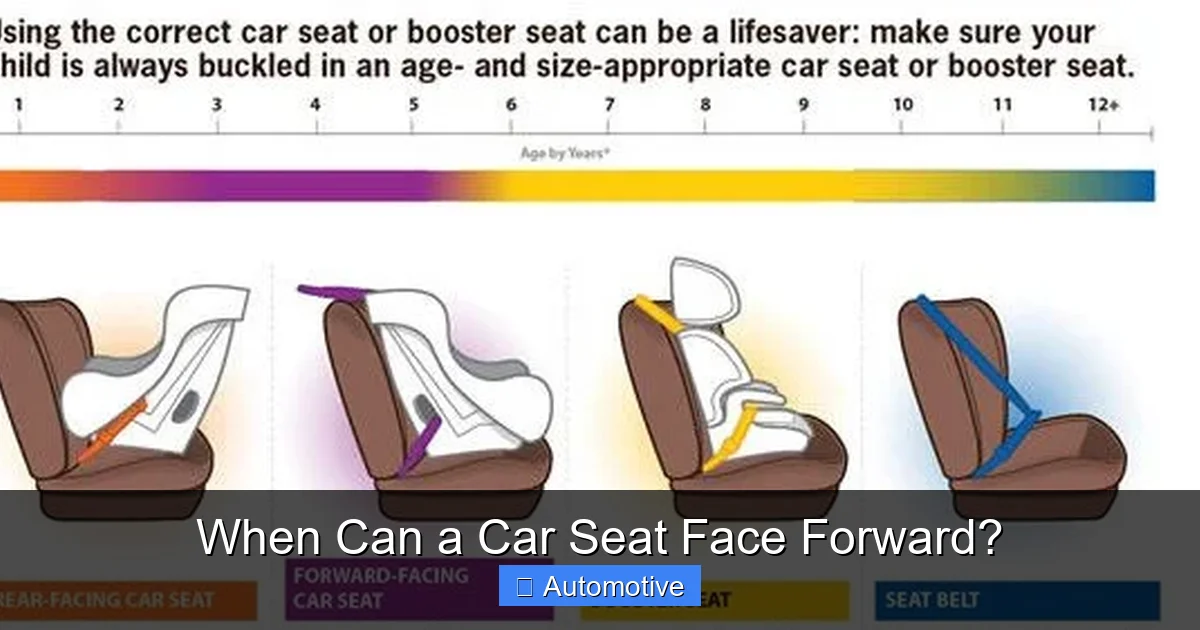
So, when can a car seat face forward? The short answer: not until your child has outgrown the rear-facing limits of their current seat. That means age is just one piece of the puzzle.
Age Recommendations
The American Academy of Pediatrics (AAP) recommends that children remain in a rear-facing car seat “for as long as possible, until they reach the highest weight or height allowed by their car seat manufacturer.” That often means well beyond age 2.
While many parents think age 2 is the magic number, the AAP updated its guidelines in 2018 to emphasize that rear-facing should continue as long as the seat allows. Some convertible seats now support rear-facing up to 40 or even 50 pounds—meaning many children can safely face backward until age 4 or 5.
Weight and Height Limits
This is where reading your car seat manual becomes crucial. Every seat has specific rear-facing weight and height limits. For example:
– Infant-only seats: Typically rear-facing up to 22–35 pounds.
– Convertible seats: Often rear-facing up to 40–50 pounds.
– All-in-one seats: Some go up to 50 pounds rear-facing.
Height limits are equally important. Most seats allow rear-facing until the child’s head is within 1 inch of the top of the seat shell. If their ears reach the top, it’s time to consider a taller seat—or transitioning forward.
Practical Example
Let’s say you have a 3-year-old who weighs 32 pounds and is 36 inches tall. Your convertible seat allows rear-facing up to 40 pounds and 40 inches. In this case, your child can—and should—stay rear-facing. They haven’t hit the limits, and keeping them rear-facing adds significant protection.
On the other hand, if your 2-year-old weighs 38 pounds and your seat maxes out at 35 pounds rear-facing, it’s time to switch—even if they’re still young. Safety comes first, and exceeding weight limits compromises the seat’s effectiveness.
Signs It’s Time to Face Forward

Visual guide about When Can a Car Seat Face Forward?
Image source: cdn.thewirecutter.com
Knowing when a car seat can face forward means watching for specific signs—not just the calendar. Here are the key indicators that your child is ready (or needs) to transition:
Outgrowing the Rear-Facing Limits
This is the #1 reason to switch. If your child exceeds the weight or height limit for rear-facing in their current seat, it’s time to move forward—even if they’re still under 2. Never use a seat beyond its stated limits. Doing so can cause the harness to fail or the seat to eject in a crash.
Legroom Concerns (Myth vs. Reality)
Many parents worry that rear-facing seats cramp their child’s legs. But here’s the truth: children are incredibly flexible. Most kids sit comfortably with their legs bent or crossed—even in tight spaces. In fact, studies show that leg position doesn’t increase injury risk in rear-facing seats.
If your child seems uncomfortable, try adjusting the seat angle or using a footrest (some seats come with them). You can also encourage stretching during stops. But don’t rush the switch just because legs are bent—that’s normal and safe.
Behavioral Readiness
Some children become restless or fussy in rear-facing seats as they grow. While this is understandable, it’s not a safety issue. Instead of switching early, try:
– Bringing favorite toys or books.
– Playing audiobooks or music.
– Making frequent stops on long trips.
– Talking to your child about why they’re facing backward (“It keeps you super safe!”).
Most kids adapt within a few weeks. If fussiness persists, consult your pediatrician—but don’t compromise safety for comfort.
Choosing the Right Forward-Facing Seat
Once you’ve determined that your child has outgrown rear-facing, it’s time to choose a forward-facing car seat. But not all forward-facing seats are created equal.
Types of Forward-Facing Seats
– **Convertible seats:** These can be used rear-facing first, then turned forward. Great for long-term use.
– **All-in-one seats:** Rear-facing, forward-facing, and booster in one. Ideal if you want to avoid multiple purchases.
– **Forward-facing-only seats:** Less common, but available for older toddlers who’ve outgrown rear-facing.
Look for seats with a 5-point harness (straps over both shoulders, both hips, and between the legs). This design spreads crash forces across the strongest parts of the body.
Top Tether: A Must-Have Feature
When using a forward-facing seat, always attach the top tether strap to your vehicle’s anchor point. The top tether reduces forward movement during a crash by up to 60%, significantly lowering the risk of head injury.
Many parents skip this step, thinking the seat belt is enough—but it’s not. The top tether is a critical part of the system. Check your vehicle manual to find the anchor location (usually on the back of the seat, trunk, or ceiling).
Installation Tips
– Use either the seat belt or LATCH system (but not both unless the manual allows it).
– Ensure the seat doesn’t move more than 1 inch side-to-side or front-to-back when tugged at the belt path.
– Recline the seat according to the manual—most forward-facing seats should be upright or slightly reclined.
– Keep the harness at or above shoulder level for forward-facing use.
State Laws vs. Best Practices
It’s important to know that state laws don’t always match expert recommendations. While they provide a legal baseline, they’re often outdated or minimal.
What the Law Says
As of 2024, most U.S. states require rear-facing seats until age 1 or 2. For example:
– California: Rear-facing until age 2.
– Texas: Rear-facing until age 2.
– Florida: Only requires rear-facing for infants under 1 year.
But laws vary widely. Some states have no specific rear-facing age requirement at all.
Why Best Practice Goes Beyond the Law
Just because it’s legal to turn your child forward at age 2 doesn’t mean it’s the safest choice. The AAP, NHTSA, and Safe Kids Worldwide all recommend keeping children rear-facing as long as possible—often until age 4 or beyond.
Think of it like seat belts: laws require them, but experts recommend wearing them correctly (over the shoulder, not under the arm). Similarly, following best practices—not just the law—gives your child the best protection.
Common Misconceptions About Forward-Facing Seats
Let’s clear up some myths that might be influencing your decision.
“My Child Is Too Big for Rear-Facing”
Unless your child has truly outgrown the seat’s limits, they’re likely not too big. Many parents mistake leg length for overall size. Remember: children can sit with bent legs safely. If your child fits within the weight and height limits, they can stay rear-facing.
“Forward-Facing Is More Comfortable”
While some kids prefer seeing out the front window, comfort isn’t the same as safety. Rear-facing seats are designed for comfort too—with padded headrests, adjustable recline, and cozy fabrics. Plus, you can make the ride fun with distractions.
“All Seats Are the Same”
Not true. Seats vary widely in safety features, ease of use, and crash performance. Look for seats with high safety ratings from organizations like the Insurance Institute for Highway Safety (IIHS) or Consumer Reports. Avoid used seats unless you know their full history—and never use a seat that’s been in a crash.
Tips for a Smooth Transition
Switching from rear- to forward-facing can feel like a big step. Here’s how to make it easier:
– **Talk to your child:** Explain that they’re “growing up” and getting a “big kid seat.” Make it exciting.
– **Practice at home:** Let them sit in the seat while it’s not installed to get used to the new position.
– **Use familiar items:** Bring their favorite blanket or stuffed animal to ease anxiety.
– **Stay consistent:** Once you switch, don’t go back. Rear-facing seats aren’t designed for forward use, and vice versa.
Conclusion: Safety First, Always
So, when can a car seat face forward? The answer is simple: when your child has outgrown the rear-facing limits of their seat—not when they turn 2, or when they complain, or when the law allows it.
Keeping your child rear-facing as long as possible is one of the most effective ways to protect them in a crash. It’s not about convenience or tradition—it’s about science, data, and love.
As your child grows, continue following best practices: use the right seat for their size, install it correctly, and keep them harnessed until they’re ready for a booster (usually around age 8–12). Every step matters.
Remember, you’re not just following rules—you’re giving your child the gift of safety. And that’s something worth celebrating.
Frequently Asked Questions
Can I turn my car seat forward at age 2?
Not necessarily. While age 2 is a common milestone, the safest approach is to keep your child rear-facing until they outgrow the weight or height limits of their seat—often well beyond age 2. Always check your car seat manual for specific guidelines.
What if my child’s legs touch the back seat?
That’s perfectly normal and safe. Children are flexible, and having their legs bent or touching the seat doesn’t increase injury risk in a rear-facing position. Focus on weight and height limits, not legroom.
How do I know if my car seat is installed correctly?
A properly installed seat should not move more than 1 inch side-to-side or front-to-back when tugged at the belt path. Use either the seat belt or LATCH system (not both unless allowed), and always attach the top tether for forward-facing seats.
Can I use a forward-facing seat without the top tether?
No. The top tether is a critical safety feature that reduces forward movement in a crash. Always attach it to your vehicle’s anchor point—check your car manual for the location.
What’s the difference between a convertible and an all-in-one seat?
A convertible seat can be used rear-facing and then turned forward-facing. An all-in-one seat does that plus converts to a booster seat later. Both are great options for long-term use and keeping kids rear-facing longer.
Is it safe to buy a used car seat?
Only if you know its full history—including whether it’s been in a crash, recalled, or expired. Never use a seat without the original manual or if it’s more than 6–10 years old. When in doubt, buy new.