
What Years of Subaru Forester to Avoid?

Not every Subaru Forester model year is created equal. While the Forester is known for reliability and rugged performance, certain years have recurring mechanical and design flaws that can lead to expensive repairs. This guide highlights the specific model years you should approach with caution—and why.
Key Takeaways
- 2014–2015 Subaru Forester: Prone to excessive oil consumption and CVT transmission issues, making these years high-risk for long-term ownership.
- 2016–2017 Subaru Forester: Improved over earlier models but still faced head gasket failures and CVT concerns in some cases.
- 2019–2020 Subaru Forester: Generally reliable, but early reports of infotainment glitches and minor A-pillar noise issues emerged.
- Pre-2014 Models (especially 2009–2013): Known for head gasket failures, CVT problems, and rust issues—especially in cold climates.
- Best Years to Buy: 2018, 2021, and 2022 models offer the best balance of reliability, updated tech, and fewer reported problems.
- Always Get a Pre-Purchase Inspection: Even in good model years, a thorough inspection by a trusted mechanic can save you from hidden issues.
- Check Maintenance Records: Regular oil changes and timely repairs significantly impact a Forester’s lifespan, regardless of model year.
📑 Table of Contents
- What Years of Subaru Forester to Avoid?
- Why Model Year Matters When Buying a Used Forester
- Top Problematic Years: 2014–2015 Subaru Forester
- 2016–2017 Subaru Forester: Slight Improvements, Lingering Issues
- 2019–2020 Subaru Forester: Mostly Reliable, But Watch for These Issues
- Pre-2014 Models: The Head Gasket Era
- Best Years to Buy: 2018, 2021, and 2022
- How to Avoid Buying a Lemon: Tips for Every Buyer
- Conclusion: Make an Informed Decision
What Years of Subaru Forester to Avoid?
If you’re in the market for a used Subaru Forester, you’re likely drawn to its reputation for safety, all-wheel drive capability, and off-road readiness. The Forester has been a favorite among outdoor enthusiasts, families, and commuters alike for decades. But while Subaru has built a loyal following, not every model year delivers the same level of reliability.
Some years of the Subaru Forester are plagued by recurring mechanical issues, expensive repairs, and design flaws that can turn a great SUV into a money pit. Whether you’re shopping at a dealership, browsing private listings, or considering a certified pre-owned (CPO) vehicle, knowing which years to avoid can save you thousands in repairs and countless headaches down the road.
In this comprehensive guide, we’ll walk you through the specific model years of the Subaru Forester that come with red flags. We’ll break down the most common problems, explain why they happen, and offer practical advice on how to make a smart, informed purchase. Whether you’re a first-time buyer or upgrading from an older Forester, this article will help you navigate the used car market with confidence.
Why Model Year Matters When Buying a Used Forester

Visual guide about What Years of Subaru Forester to Avoid?
Image source: carstriple.com
When it comes to used cars, the model year is more than just a number—it’s a snapshot of the vehicle’s engineering, technology, and potential weaknesses. Subaru has made significant improvements over the years, especially in areas like fuel efficiency, safety features, and transmission design. However, those advancements sometimes come with growing pains.
For example, the introduction of the continuously variable transmission (CVT) in the Forester lineup brought better fuel economy but also introduced new reliability concerns. Similarly, engine updates aimed at reducing emissions sometimes led to unintended side effects like oil consumption or head gasket failures.
Understanding which years of the Subaru Forester to avoid means looking beyond mileage and exterior condition. It means digging into consumer reports, technical service bulletins (TSBs), and real-world owner experiences. Some problems don’t show up until the vehicle hits a certain mileage, while others are design flaws that affect nearly every unit from that year.
By focusing on model years with known issues, you can narrow your search to vehicles that are more likely to deliver long-term value and peace of mind. And even if you’re eyeing a model from a “safe” year, knowing the common pitfalls helps you ask the right questions during your inspection.
Top Problematic Years: 2014–2015 Subaru Forester
Visual guide about What Years of Subaru Forester to Avoid?
Image source: carstriple.com
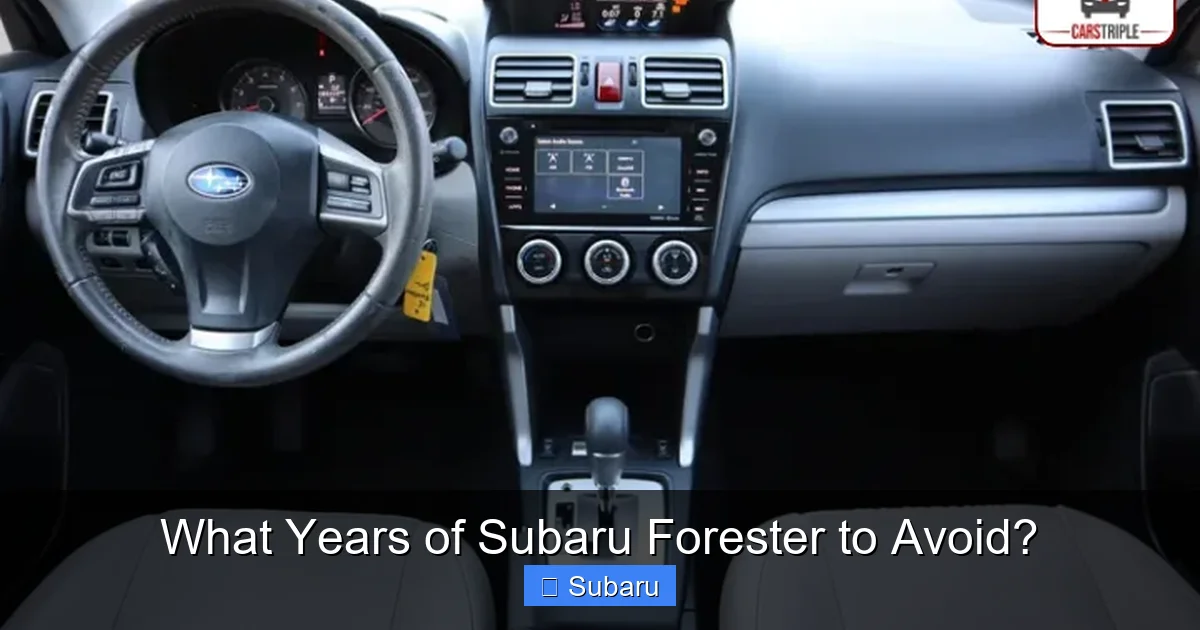
If there’s one stretch of model years that consistently raises eyebrows among Forester buyers, it’s 2014 and 2015. These two years introduced the third-generation Forester with a complete redesign, including a new 2.5-liter engine and the widespread adoption of the CVT. Unfortunately, the transition wasn’t seamless.
Excessive Oil Consumption
One of the most notorious issues with the 2014–2015 Forester is excessive oil consumption. Many owners reported burning through a quart of oil every 1,000 to 1,500 miles—far beyond what’s considered normal. Subaru eventually acknowledged the problem and issued extended warranties for affected vehicles, but not before countless drivers were left stranded or facing costly engine repairs.
The root cause was traced to piston ring design flaws that allowed oil to seep into the combustion chamber. While Subaru released updated piston rings in later models, many 2014–2015 Foresters never received the fix unless owners specifically requested it under warranty.
CVT Transmission Concerns
The CVT in these models was another weak point. While CVTs are designed to improve fuel efficiency by providing seamless acceleration, the early versions in the Forester were prone to hesitation, jerking, and premature wear. Some drivers described a “rubber band” feeling when accelerating, especially during cold starts or uphill driving.
In extreme cases, the CVT would fail entirely, requiring a full replacement that could cost $4,000 or more. Subaru issued several software updates to improve shift logic, but hardware limitations remained a concern.
Head Gasket Issues (Again)
Believe it or not, the head gasket problems that plagued earlier Foresters didn’t entirely disappear in 2014–2015. While Subaru made improvements to the gasket material and cooling system, some owners still reported leaks, overheating, and coolant loss—especially in vehicles driven in hot climates or used for towing.
These issues were less widespread than in the 2000s models, but they still occurred frequently enough to warrant caution. A blown head gasket can cost $1,500–$2,500 to repair, and if left unchecked, it can lead to engine damage.
What to Do If You’re Considering a 2014–2015 Forester
If you’re set on buying one of these models, proceed with extreme caution. Always check the vehicle’s service history for oil consumption records and CVT software updates. Ask the seller to demonstrate a cold start and monitor oil levels over a week of driving. And most importantly, have a trusted mechanic inspect the engine and transmission before purchase.
2016–2017 Subaru Forester: Slight Improvements, Lingering Issues

Visual guide about What Years of Subaru Forester to Avoid?
Image source: rerev.com
The 2016 and 2017 model years brought some much-needed improvements to the Forester lineup. Subaru addressed many of the oil consumption issues with revised piston rings and better engine management software. The CVT also received updates to reduce hesitation and improve responsiveness.
However, these years are not without their own set of problems.
Head Gasket Failures Persist
While less common than in earlier models, head gasket failures still occurred in 2016–2017 Foresters. The issue was particularly noticeable in vehicles with high mileage (over 100,000 miles) or those that had experienced overheating events. Coolant leaks, white exhaust smoke, and overheating are key warning signs.
Subaru’s improved gasket design helped, but it wasn’t a complete fix. Owners in hot climates or those who frequently drive in stop-and-go traffic should be especially vigilant.
CVT Reliability Concerns
The CVT in these years was more refined than its predecessors, but it still wasn’t perfect. Some drivers reported delayed acceleration, especially when merging onto highways or climbing hills. Others experienced transmission shuddering or a loss of power during sudden acceleration.
While Subaru continued to release software updates, hardware limitations meant that some units were simply more prone to failure. If you’re considering a 2016–2017 Forester, ask for proof of any CVT-related repairs or updates.
Infotainment and Electrical Glitches
Another emerging issue in these years was the Starlink infotainment system. Some owners reported freezing screens, unresponsive touch controls, and Bluetooth connectivity problems. While these aren’t safety-critical, they can be frustrating and costly to fix if the head unit needs replacement.
Additionally, a few reports surfaced about faulty door lock actuators and malfunctioning dashboard warning lights—issues that, while minor, suggest quality control wasn’t always consistent.
Verdict on 2016–2017 Models
These years are a step up from 2014–2015, but they’re not the safest bet for long-term ownership. If you do choose one, prioritize low-mileage examples with full service records and a clean history report. Avoid vehicles with a history of overheating or transmission complaints.
2019–2020 Subaru Forester: Mostly Reliable, But Watch for These Issues
The 2019 and 2020 model years marked the debut of the fourth-generation Forester, built on Subaru’s newer Global Platform. These models brought significant improvements in ride quality, safety, and fuel efficiency. They also earned top marks from the IIHS and NHTSA for crash safety.
But even in this more reliable era, a few issues emerged.
Infotainment System Problems
The updated Starlink system in 2019–2020 Foresters was more advanced, but it wasn’t immune to bugs. Some owners reported random reboots, slow response times, and difficulty pairing phones. In rare cases, the system would fail entirely, requiring a software reset or hardware replacement.
Subaru released several over-the-air updates to address these glitches, but not all vehicles received them automatically. If you’re buying used, ask the dealer or seller to confirm the system is up to date.
A-Pillar Noise and Rattle
A surprising number of 2019–2020 Forester owners complained about wind noise and rattling from the A-pillar area (the part of the frame near the windshield). This was often traced to loose trim or poor sealing during assembly. While not a mechanical failure, it can be annoying on long drives and may require dealership intervention to fix.
Minor Suspension Complaints
Some drivers noted a stiffer ride compared to earlier models, especially on rough roads. While this was partly due to the new platform’s improved handling, a few reports mentioned premature wear on suspension components like struts and bushings. Regular inspections can help catch these issues early.
Overall Reliability
Despite these minor flaws, the 2019–2020 Forester is one of the more reliable years in the lineup. With proper maintenance, these models can easily surpass 150,000 miles without major problems. They’re a solid choice for buyers who want modern features and strong safety ratings without the risk of major mechanical failures.
Pre-2014 Models: The Head Gasket Era
Before the 2014 redesign, the Subaru Forester was built on older platforms with well-documented weaknesses—especially when it came to the head gasket.
2009–2013: The Peak of Head Gasket Problems
Models from 2009 to 2013 are notorious for head gasket failures. The 2.5-liter engine used during this period had a design flaw that caused the gasket to degrade prematurely, especially in cold climates where freeze-thaw cycles stressed the engine block.
Symptoms include coolant loss, overheating, white smoke from the exhaust, and a sweet smell inside the cabin. Repair costs typically range from $1,500 to $2,500, and if ignored, the engine can suffer catastrophic damage.
CVT and Automatic Transmission Issues
While the 2009–2013 models used traditional automatics or early CVTs, both had reliability concerns. The 4-speed automatic was outdated and prone to harsh shifting, while the early CVTs (introduced in 2010) suffered from the same hesitation and wear issues seen in later models.
Rust and Corrosion
Older Foresters, especially those from the Midwest, Northeast, or Canada, are highly susceptible to rust. Check the wheel wells, undercarriage, and door sills for signs of corrosion. Surface rust can be treated, but structural rust is a serious safety concern.
Should You Avoid Pre-2014 Models Entirely?
Not necessarily—but you need to be extra cautious. If you find a well-maintained 2012 or 2013 Forester with low mileage and a documented repair history (including a head gasket replacement), it could still be a good buy. But for most buyers, the risk outweighs the reward.
Best Years to Buy: 2018, 2021, and 2022
If you’re looking for the sweet spot in Forester reliability, focus on 2018, 2021, and 2022 models.
2018 Forester: The Final Year of the Third Gen
The 2018 model benefited from years of refinements to the 2.5-liter engine and CVT. Oil consumption issues were largely resolved, and Subaru had ironed out most of the early CVT bugs. It also came with standard EyeSight safety technology, making it a great value for used buyers.
2021–2022 Forester: The Refined Fourth Gen
These years represent the peak of Forester engineering. They feature the latest EyeSight system, improved fuel economy, and a more spacious interior. Reliability ratings are high, and major mechanical issues are rare.
The 2022 model, in particular, is often recommended as one of the best used SUVs in its class. With strong resale value and low repair frequency, it’s a smart long-term investment.
How to Avoid Buying a Lemon: Tips for Every Buyer
No matter which model year you choose, these tips will help you avoid common pitfalls:
- Get a Pre-Purchase Inspection (PPI): Always have a trusted mechanic inspect the vehicle, especially the engine, transmission, and suspension.
- Check the Vehicle History Report: Use services like Carfax or AutoCheck to look for accidents, title issues, and service records.
- Test Drive in Real Conditions: Drive on highways, hills, and rough roads to test acceleration, braking, and noise levels.
- Ask About Recalls and TSBs: Subaru has issued several recalls and technical service bulletins over the years. Make sure any open items have been addressed.
- Monitor Oil Levels: For older models, ask the seller to show recent oil level checks. A low oil level or frequent top-offs is a red flag.
- Consider a CPO Vehicle: Subaru’s certified pre-owned program includes a 7-year/100,000-mile powertrain warranty and a 152-point inspection.
Conclusion: Make an Informed Decision
So, what years of Subaru Forester to avoid? The short answer: 2014–2015 are the riskiest, with 2016–2017 and pre-2014 models also carrying notable concerns. But that doesn’t mean you can’t find a great Forester—far from it.
By focusing on well-maintained examples from 2018, 2021, and 2022, and by doing your homework before buying, you can enjoy all the benefits of Subaru’s legendary SUV without the headaches. Remember, a little research today can save you thousands tomorrow.
Whether you’re hitting the trails or cruising the suburbs, the right Forester is out there—just make sure you’re picking the right year.
Frequently Asked Questions
What is the most common problem with the Subaru Forester?
The most common issue across multiple model years is head gasket failure, especially in pre-2014 models. Other frequent problems include excessive oil consumption (2014–2015) and CVT transmission concerns.
Is the 2015 Subaru Forester reliable?
The 2015 Forester has improved over the 2014 model but still suffers from oil consumption and CVT issues in some cases. It’s considered a moderate-risk purchase unless it has a documented repair history.
Should I avoid all older Subaru Foresters?
Not necessarily. Older models can be reliable if they’ve been well-maintained and had critical repairs like head gasket replacements. However, they require more diligence during inspection.
What year Forester has the least problems?
The 2018, 2021, and 2022 models are widely regarded as the most reliable, with fewer reported issues and strong owner satisfaction ratings.
How much does it cost to fix a head gasket on a Subaru Forester?
Head gasket repairs typically cost between $1,500 and $2,500, depending on labor rates and whether additional components like the water pump or timing belt need replacement.
Can a Subaru Forester last 200,000 miles?
Yes, many Foresters exceed 200,000 miles with proper maintenance. Regular oil changes, timely repairs, and avoiding overheating are key to longevity.
