
What Year Subaru Impreza to Avoid

Not all Subaru Imprezas are created equal—some model years come with serious reliability concerns. If you’re shopping for a used Impreza, knowing which year Subaru Impreza to avoid can save you thousands in repairs and headaches down the road.
Key Takeaways
- 2002–2005 Subaru Impreza models are notorious for head gasket failures, leading to costly engine repairs.
- 2006–2007 Imprezas often suffer from excessive oil consumption and premature timing belt wear.
- 2008–2011 models may have CVT transmission issues, especially in higher-mileage examples.
- 2012–2014 Imprezas can experience power steering rack failures and electrical gremlins.
- Rust problems are common in Imprezas from the early 2000s, particularly in snowy or coastal regions.
- Always get a pre-purchase inspection before buying any used Impreza, especially high-mileage or older models.
- Later models (2015 and newer) are generally more reliable but still require regular maintenance to avoid issues.
📑 Table of Contents
- Introduction: Why the Subaru Impreza Is a Popular Choice
- Understanding the Risks: What Makes a Model Year Problematic?
- 2002–2005 Subaru Impreza: The Head Gasket Nightmare
- 2006–2007 Subaru Impreza: Oil Consumption and Timing Belt Worries
- 2008–2011 Subaru Impreza: CVT Transmission Troubles
- 2012–2014 Subaru Impreza: Power Steering and Electrical Issues
- Rust and Body Issues: A Hidden Threat in Older Imprezas
- Better Alternatives: Which Impreza Years Are Safer Bets?
- Conclusion: Make an Informed Decision
Introduction: Why the Subaru Impreza Is a Popular Choice
The Subaru Impreza has long been a favorite among compact car buyers who want all-wheel drive, practicality, and a touch of rally-inspired performance. Since its debut in the early 1990s, the Impreza has evolved from a modest economy car into a well-rounded vehicle that appeals to students, commuters, outdoor enthusiasts, and even performance drivers—especially with the high-octane WRX and STI variants. Its standard symmetrical all-wheel drive system gives it an edge in snowy or wet conditions, making it a top pick in northern climates.
But while the Impreza’s reputation for reliability and safety is strong overall, not every model year lives up to the hype. Like any long-running vehicle line, the Impreza has had its ups and downs. Some years were plagued by manufacturing flaws, design oversights, or parts that simply didn’t hold up over time. If you’re in the market for a used Impreza, it’s crucial to know which year Subaru Impreza to avoid—because a bad choice could mean dealing with expensive repairs, frequent breakdowns, or even safety concerns.
Understanding the Risks: What Makes a Model Year Problematic?
When evaluating used cars, especially those with a long production history like the Impreza, it’s important to look beyond just mileage and price. Certain model years develop patterns of failure due to engineering decisions, supplier issues, or cost-cutting measures. These recurring problems often surface after the factory warranty expires, leaving owners stuck with repair bills that can exceed the car’s value.
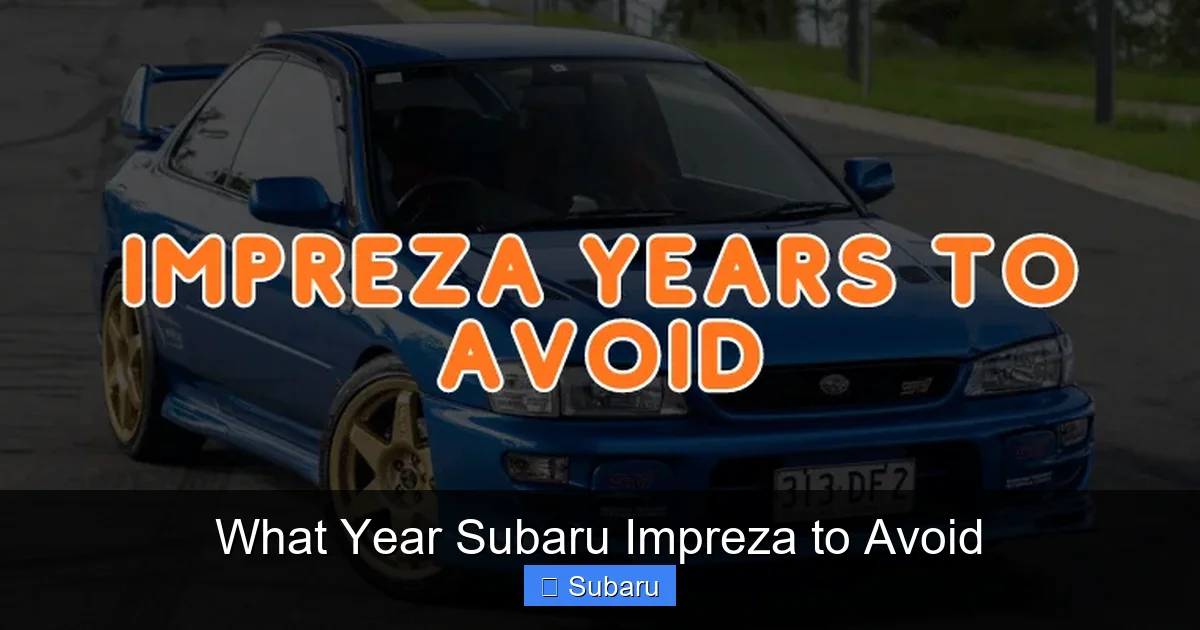
Visual guide about What Year Subaru Impreza to Avoid
Image source: gmundcars.com
For the Impreza, the most common trouble spots include the engine (especially head gaskets and oil consumption), transmission (particularly CVT units), suspension and steering components, and body rust. Electrical issues and interior wear can also be red flags. The good news? Many of these problems are well-documented by owners, mechanics, and consumer reports. By learning from others’ experiences, you can avoid the worst offenders and focus your search on the more dependable years.
How to Identify a Problematic Model Year
Start by researching common complaints on forums like SubaruOutback.org, Reddit’s r/Subaru, and NHTSA.gov. Look for patterns—if dozens of owners report the same issue (like head gasket leaks or transmission shuddering), it’s a strong indicator of a systemic problem. Also check for Technical Service Bulletins (TSBs) and recalls. A high number of open recalls or unresolved TSBs can signal ongoing quality control issues.
Another smart move is to consult reliability ratings from sources like Consumer Reports, J.D. Power, and RepairPal. These organizations analyze real-world data to score vehicles on predicted reliability, owner satisfaction, and average repair costs. While no system is perfect, they offer a solid starting point for narrowing down your options.
2002–2005 Subaru Impreza: The Head Gasket Nightmare
If you’re wondering which year Subaru Impreza to avoid, the 2002–2005 models should be at the top of your list. These early-2000s Imprezas are infamous for head gasket failures—a problem that can cost $1,500 or more to fix and often strikes between 80,000 and 120,000 miles.
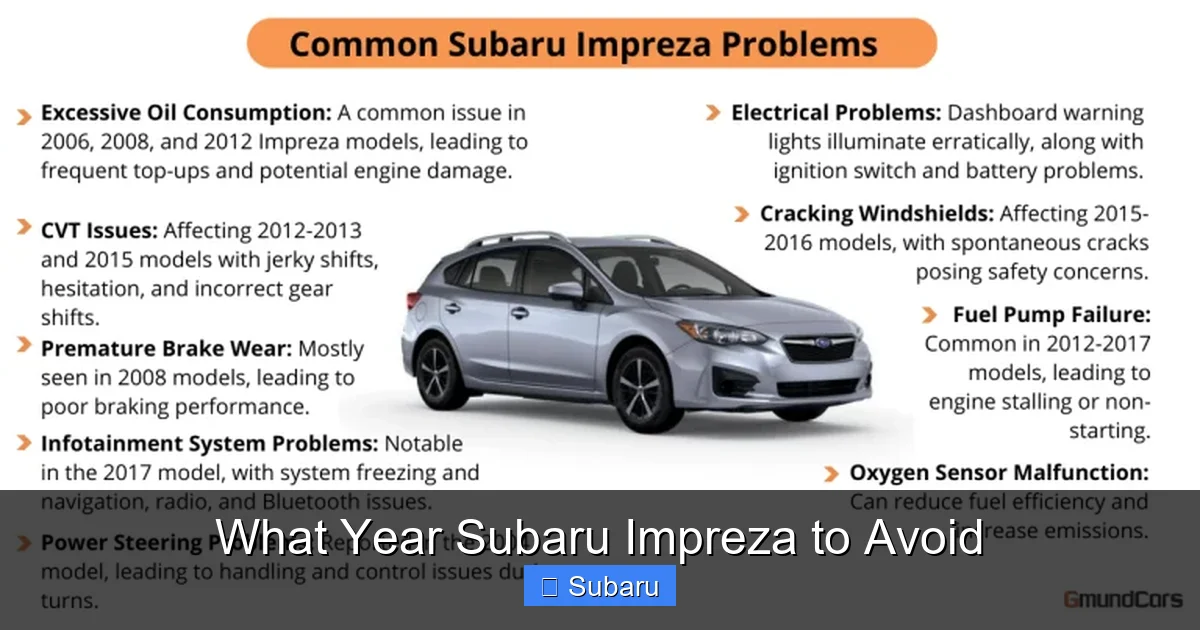
Visual guide about What Year Subaru Impreza to Avoid
Image source: gmundcars.com
The root of the issue lies in Subaru’s use of non-asbestos composite head gaskets, which were prone to breaking down under heat and pressure. Unlike traditional multi-layer steel gaskets, these older designs couldn’t handle the thermal cycling common in cold-weather climates. Over time, the gasket would fail, allowing coolant to leak into the combustion chamber or oil passages. Symptoms include white smoke from the exhaust, overheating, milky oil on the dipstick, and a sweet smell from the engine bay.
Real-World Example: A Costly Repair
Take the case of Sarah, a teacher from Minnesota who bought a 2004 Impreza with 95,000 miles. Within six months, her car started overheating and losing coolant. A mechanic diagnosed a blown head gasket and quoted $1,800 for the repair—nearly half the car’s value. “I loved the AWD and fuel economy,” she said, “but I didn’t expect to spend that much so soon.”
While some owners have avoided the issue with meticulous maintenance and coolant flushes, it’s a gamble. Even if the head gasket holds, these engines are also known for oil leaks from the valve cover gaskets and camshaft seals. Combined with rust issues (more on that later), the 2002–2005 Imprezas are best left to experienced DIYers or those willing to invest in major repairs.
Tips for Buyers Considering These Models
- Always check the coolant level and condition—low or discolored coolant is a red flag.
- Inspect the oil dipstick for a milky appearance, which indicates coolant contamination.
- Ask for maintenance records showing regular coolant changes (every 30,000 miles).
- Consider a compression test or leak-down test to assess engine health.
- If you do buy one, budget $1,500–$2,000 for potential head gasket work.
2006–2007 Subaru Impreza: Oil Consumption and Timing Belt Worries
The 2006–2007 Subaru Impreza models brought some improvements, including updated styling and a more refined interior. But they also introduced new problems—most notably, excessive oil consumption and timing belt failures.
Visual guide about What Year Subaru Impreza to Avoid
Image source: rerev.com
Many owners of these model years report burning through a quart of oil every 1,000 to 1,500 miles. While some oil loss is normal in older engines, this level of consumption is excessive and can lead to low oil levels, engine damage, and increased emissions. Subaru acknowledged the issue and extended the powertrain warranty for affected vehicles, but many owners still faced out-of-pocket costs.
Why Oil Consumption Matters
Running low on oil can cause premature wear on critical components like piston rings, bearings, and the turbocharger (in WRX models). Over time, this leads to reduced performance, knocking sounds, and even engine failure. The problem is especially dangerous because it can go unnoticed if you don’t check your oil regularly.
Another concern with the 2006–2007 Imprezas is the timing belt. Unlike modern cars that use timing chains, these models rely on a rubber belt that must be replaced every 60,000 to 100,000 miles. If the belt fails, the engine can suffer catastrophic damage—especially in interference engines like Subaru’s, where pistons and valves occupy the same space. A broken timing belt can destroy the engine, requiring a full replacement that costs $3,000 or more.
What to Look For
- Ask the owner how often they check and top off oil.
- Request service records showing oil changes and top-offs.
- Listen for unusual engine noises, especially at startup.
- Verify the timing belt replacement history—if it’s overdue, factor in a $500–$800 replacement cost.
- Test drive the car and monitor oil levels over a week if possible.
2008–2011 Subaru Impreza: CVT Transmission Troubles
The 2008–2011 Subaru Impreza models marked a shift toward more fuel-efficient transmissions, with many trims offering a Continuously Variable Transmission (CVT). While CVTs improve fuel economy and smoothness, they’ve been a source of frustration for many Impreza owners.
Common CVT issues include shuddering during acceleration, delayed response, overheating, and premature failure. Some owners report the transmission “jerking” or “slipping” under light throttle, especially in cold weather. In severe cases, the CVT may need a full rebuild or replacement, which can cost $3,000 to $5,000.
The CVT Debate: Efficiency vs. Reliability
Subaru’s CVT was designed to maximize fuel efficiency and deliver seamless power delivery. In theory, it’s a great idea—especially for a compact car like the Impreza. But in practice, the early CVT units were prone to overheating and wear, particularly in high-mileage or poorly maintained vehicles.
One contributing factor is the CVT fluid. Unlike traditional automatic transmission fluid, CVT fluid is specially formulated and must be changed at specific intervals (usually every 30,000 to 60,000 miles). Skipping these changes can lead to sludge buildup, overheating, and internal damage. Unfortunately, many owners aren’t aware of this requirement, leading to premature failures.
Signs of CVT Trouble
- Hesitation or jerking when accelerating from a stop.
- A high-pitched whining or droning noise from the transmission.
- Check Engine Light with codes related to transmission pressure or temperature.
- Reduced fuel economy or sluggish performance.
- Transmission fluid that smells burnt or appears dark and gritty.
If you’re considering a 2008–2011 Impreza with a CVT, insist on a full transmission inspection and fluid change history. Some owners have avoided problems by upgrading to a performance CVT cooler or switching to a manual transmission model, which tends to be more reliable.
2012–2014 Subaru Impreza: Power Steering and Electrical Issues
The 2012–2014 Subaru Impreza models brought a complete redesign, with a more modern look, improved safety features, and better fuel economy. But they also introduced new challenges, particularly with the electric power steering (EPS) system and electrical components.
Many owners report failures in the power steering rack, which can cause the steering wheel to feel stiff or unresponsive. In some cases, the EPS system completely shuts down, requiring a tow and a repair that can cost $1,200 or more. The problem is often linked to a faulty torque sensor or control module, which may not be covered under warranty after the vehicle ages.
Electrical Gremlins: More Than Just a Nuisance
Beyond steering issues, these model years are known for electrical quirks. Common complaints include malfunctioning infotainment systems, flickering dashboard lights, faulty door locks, and intermittent windshield wiper operation. While these issues may seem minor, they can indicate deeper wiring or grounding problems that are difficult and expensive to diagnose.
One owner from Oregon reported that his 2013 Impreza’s touchscreen would randomly reboot, losing navigation and audio settings. After multiple visits to the dealer, the issue was traced to a faulty ground wire—a fix that took weeks and cost over $400 in labor.
Tips for Avoiding Electrical Headaches
- Test all electrical features during the test drive: windows, locks, lights, wipers, and infotainment.
- Check for aftermarket modifications, which can interfere with factory electronics.
- Ask for a diagnostic scan to check for stored error codes.
- Inspect the battery and alternator—weak charging can cause electrical issues.
- Consider a vehicle history report to check for prior repairs or recalls.
Rust and Body Issues: A Hidden Threat in Older Imprezas
While mechanical problems get most of the attention, rust is a silent killer for many older Subaru Imprezas—especially those from the early 2000s. The 2002–2007 models, in particular, are prone to rust on the wheel wells, rocker panels, and undercarriage.
In snowy regions where road salt is used heavily, rust can eat through metal panels in just a few years. Coastal areas aren’t safe either—salt air accelerates corrosion. Once rust takes hold, it’s difficult and expensive to repair. In severe cases, structural integrity can be compromised, affecting safety and resale value.
Where to Look for Rust
- Inspect the wheel wells and fender liners for bubbling paint or flaking metal.
- Check the rocker panels (the area between the front and rear wheels) for rust holes.
- Lift the car and examine the undercarriage, especially around the suspension mounts and exhaust system.
- Look inside the trunk and under the spare tire—water leaks can cause hidden rust.
- Use a flashlight to check hard-to-see areas like the frame rails and strut towers.
If you find surface rust, it may be manageable with sanding and touch-up paint. But if you see structural rust—especially near suspension or brake components—walk away. Repairing it properly requires welding and professional work, which can cost more than the car is worth.
Better Alternatives: Which Impreza Years Are Safer Bets?
Now that you know which year Subaru Impreza to avoid, you might be wondering: are there any good years? The answer is yes—especially if you focus on later models with updated engineering and improved reliability.
The 2015–2018 Subaru Impreza models are generally considered some of the most reliable in the lineup. They feature a revised engine design with improved head gaskets, a more robust CVT (or optional manual), and better rust protection. Safety ratings are also top-notch, with standard EyeSight driver-assistance technology on many trims.
Even better, the 2019–2023 models benefit from a complete redesign with a stronger chassis, improved fuel economy, and enhanced infotainment. These newer Imprezas have fewer reported issues and come with longer factory warranties, making them a smarter long-term investment.
Tips for Buying a Reliable Used Impreza
- Prioritize models from 2015 and newer for the best reliability.
- Choose a manual transmission if available—it’s often more durable than the CVT.
- Look for vehicles with complete service records and no accident history.
- Have a trusted mechanic perform a pre-purchase inspection.
- Check for open recalls and ensure they’ve been addressed.
- Consider certified pre-owned (CPO) models for added peace of mind.
Conclusion: Make an Informed Decision
Choosing the right Subaru Impreza doesn’t have to be a gamble. By knowing which year Subaru Impreza to avoid—and understanding the common problems associated with each problematic model—you can save yourself from costly repairs and endless frustration. The 2002–2005 models with head gasket issues, the 2006–2007 oil burners, the 2008–2011 CVT troubles, and the 2012–2014 electrical gremlins are all red flags that deserve serious consideration.
But don’t let these warnings scare you away from the Impreza altogether. With proper research, a thorough inspection, and a focus on later, more reliable model years, you can find a used Impreza that’s safe, efficient, and built to last. Whether you’re commuting to work, exploring the backroads, or just need a dependable daily driver, the right Impreza is out there—just make sure you’re buying the right one.
Frequently Asked Questions
Which year Subaru Impreza has the most problems?
The 2002–2005 models are widely considered the worst due to frequent head gasket failures, oil leaks, and rust issues. These problems often appear around 80,000–120,000 miles and can cost over $1,500 to repair.
Are newer Imprezas more reliable?
Yes, models from 2015 and newer are significantly more reliable. They feature improved engines, better rust protection, and updated transmissions, making them safer long-term investments.
Can I fix a blown head gasket on a 2004 Impreza?
Yes, but it’s expensive—typically $1,500–$2,000 for parts and labor. Unless you’re experienced with engine work, it’s best left to a professional mechanic.
Is the CVT transmission in Imprezas reliable?
The early CVTs (2008–2011) had reliability issues, but later models (2015+) are much improved. Regular fluid changes are essential to maintain CVT health.
How can I check for rust on a used Impreza?
Inspect the wheel wells, rocker panels, undercarriage, and trunk area. Look for bubbling paint, flaking metal, or holes. A professional inspection is recommended for older models.
Should I avoid all early 2000s Imprezas?
Not necessarily—some have been well-maintained and avoided major issues. But due to the high risk of head gasket and rust problems, they require extra scrutiny and a solid maintenance history.
