
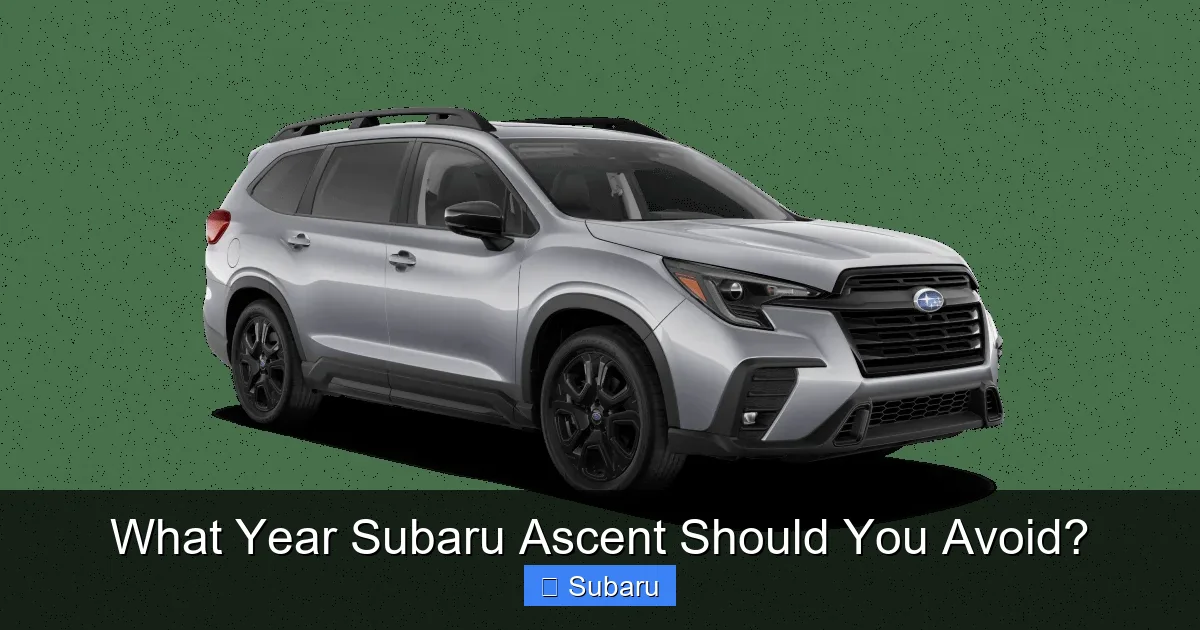
What Year Subaru Ascent Should You Avoid?

Not every Subaru Ascent model year is created equal. While the Ascent is known for its reliability and family-friendly features, certain years have recurring mechanical and electrical issues that buyers should avoid. This guide breaks down the problematic model years, highlights the safest options, and helps you make a smart, informed decision.
Key Takeaways
- Avoid the 2019 Subaru Ascent: The first model year had frequent reports of transmission shuddering, infotainment system failures, and excessive oil consumption.
- 2020 model also has concerns: While improved, it still suffers from some transmission and software glitches, especially in early builds.
- 2021–2023 are the safest bets: These years received key updates, including revised transmissions and better infotainment systems, making them more reliable.
- Watch for CVT issues: The continuously variable transmission (CVT) in early models is prone to overheating and jerking, especially under heavy load.
- Infotainment system problems are common: Early Ascents often freeze, reboot randomly, or lose Bluetooth connectivity—look for updated software in later models.
- Oil consumption can be excessive: Some 2019 and 2020 models burn oil faster than expected; regular checks are essential.
- Always check vehicle history and maintenance records: Even in good model years, poor upkeep can lead to major problems down the road.
📑 Table of Contents
- What Year Subaru Ascent Should You Avoid?
- Why the Subaru Ascent Is Popular
- The 2019 Subaru Ascent: The Year to Avoid
- The 2020 Subaru Ascent: Slightly Better, But Still Risky
- 2021–2023: The Sweet Spot for Subaru Ascent Buyers
- How to Spot a Problematic Subaru Ascent
- Tips for Buying a Used Subaru Ascent
- Conclusion: Make an Informed Decision
What Year Subaru Ascent Should You Avoid?
If you’re in the market for a three-row SUV that blends safety, space, and Subaru’s legendary all-wheel drive, the Subaru Ascent is a strong contender. Launched in 2018 as Subaru’s largest SUV ever, the Ascent quickly became a favorite among families and outdoor enthusiasts. With seating for up to eight, standard AWD, and a host of advanced safety features, it checks many boxes for modern drivers.
But here’s the catch: not every model year is equally reliable. Like any vehicle, the Subaru Ascent has had its ups and downs—especially in its early years. While Subaru has made significant improvements over time, some model years stand out as problematic due to recurring mechanical and electrical issues. Whether you’re buying new or used, knowing what year Subaru Ascent to avoid can save you thousands in repairs and a lot of headaches.
In this guide, we’ll walk you through the model years with the most reported problems, highlight the safest options, and give you practical tips to help you make the best choice. Whether you’re a first-time buyer or upgrading from an older SUV, this information will help you drive away with confidence.
Why the Subaru Ascent Is Popular

Visual guide about What Year Subaru Ascent Should You Avoid?
Image source: miramarspeedcircuit.com
Before diving into which years to avoid, it’s important to understand why the Subaru Ascent has become such a popular choice in the midsize SUV segment. Subaru has long been known for building durable, all-weather vehicles with a strong focus on safety—and the Ascent continues that tradition.
One of the biggest selling points is its standard Symmetrical All-Wheel Drive system. Unlike many competitors that offer AWD as an expensive add-on, Subaru includes it on every Ascent trim. This makes it a great option for drivers in snowy or rainy climates, or anyone who enjoys weekend adventures off the beaten path.
The Ascent also offers impressive interior space. With three rows of seating, it can comfortably accommodate up to eight passengers. The second and third rows are surprisingly roomy for a vehicle in this class, and the cargo area is generous even with all seats in use. Families love the available rear-seat entertainment system, dual-zone climate control, and ample USB ports to keep everyone charged and happy.
Safety is another major strength. The Ascent comes standard with Subaru’s EyeSight Driver Assist Technology, which includes adaptive cruise control, lane departure warning, pre-collision braking, and lane keep assist. It consistently earns top safety ratings from the IIHS and NHTSA, making it a top pick for parents and safety-conscious drivers.
But despite these strengths, the Ascent hasn’t been immune to growing pains—especially in its first few years on the market. Let’s take a closer look at which model years have the most reported issues.
The 2019 Subaru Ascent: The Year to Avoid

Visual guide about What Year Subaru Ascent Should You Avoid?
Image source: di-sitebuilder-assets.s3.us-east-1.amazonaws.com
If there’s one model year you should be cautious about, it’s the 2019 Subaru Ascent. As the first year of production, it’s no surprise that Subaru faced some initial challenges. But the 2019 model’s problems go beyond typical first-year teething issues—they’re significant enough that many experts recommend avoiding it altogether.
Transmission Shuddering and CVT Problems
One of the most common complaints about the 2019 Ascent is transmission shuddering. Drivers report a noticeable vibration or jerking sensation, especially during acceleration or when shifting from a stop. This issue is linked to the Continuously Variable Transmission (CVT), which Subaru uses across its lineup.
The CVT in early Ascents was prone to overheating, particularly when towing or driving in hot weather. Subaru issued a technical service bulletin (TSB) in 2019 addressing the problem, but many owners still experienced recurring issues even after repairs. In some cases, the transmission had to be replaced entirely—a costly fix that can run several thousand dollars.
Infotainment System Failures
Another major pain point for 2019 Ascent owners is the Starlink infotainment system. The 8-inch touchscreen is prone to freezing, rebooting randomly, or losing Bluetooth connectivity. Some users report that the system becomes completely unresponsive, requiring a hard reset or even a dealership visit to fix.
These glitches aren’t just annoying—they can be dangerous. Imagine driving down the highway and your navigation screen freezes, or your hands-free calling drops mid-conversation. Subaru released software updates to address some of these issues, but many owners say the problems persist, especially in vehicles that haven’t been regularly updated.
Excessive Oil Consumption
A surprising number of 2019 Ascent owners have reported excessive oil consumption. Some drivers noticed they were burning through a quart of oil every 1,000 to 1,500 miles—far more than what’s considered normal. Subaru initially downplayed the issue, but it became widespread enough that the company extended the powertrain warranty for affected vehicles.
While not all 2019 models suffer from this problem, the risk is high enough that it’s a red flag for used car buyers. If you’re considering a 2019 Ascent, be sure to check the maintenance records and ask about oil consumption history.
Other Reported Issues
Beyond the big three—transmission, infotainment, and oil consumption—the 2019 Ascent has also had reports of:
– Power window failures
– HVAC system malfunctions
– Suspension noise over bumps
– Premature brake wear
While these issues aren’t universal, they appear frequently enough in owner forums and complaint databases to warrant caution.
The 2020 Subaru Ascent: Slightly Better, But Still Risky
Visual guide about What Year Subaru Ascent Should You Avoid?
Image source: di-sitebuilder-assets.dealerinspire.com
The 2020 Subaru Ascent saw some improvements over the 2019 model, but it’s still not considered a safe bet by many experts. Subaru made several updates to address early complaints, including software patches for the infotainment system and minor tweaks to the transmission control module.
Improved, But Not Fixed
While the 2020 model is generally more reliable than its predecessor, it’s not immune to the same core issues. Transmission shuddering still occurs, especially in vehicles that were built early in the model year. Some owners report that the problem improves after a few thousand miles, but others continue to experience it throughout ownership.
The infotainment system is more stable in 2020 models, but glitches still happen. Bluetooth connectivity issues, screen freezes, and slow response times are still reported, particularly in vehicles that haven’t received the latest software updates.
Oil Consumption Remains a Concern
Oil consumption is still a problem in some 2020 Ascents. While Subaru claims the issue was resolved with updated engine components, real-world reports suggest otherwise. Many owners still need to top off their oil frequently, and some have had to replace piston rings or entire engines under warranty.
Why Some Buyers Still Choose 2020
Despite the risks, some buyers are drawn to the 2020 model because it often comes with more features than the 2019—especially in higher trims like the Limited and Touring. You might find a well-maintained 2020 Ascent with low mileage and a clean history, but it’s crucial to have it inspected by a trusted mechanic before purchasing.
2021–2023: The Sweet Spot for Subaru Ascent Buyers
If you’re looking for the best balance of reliability, features, and value, the 2021 to 2023 Subaru Ascent models are your best bet. These years represent Subaru’s effort to refine the Ascent based on real-world feedback, and the improvements are noticeable.
Major Updates in 2021
The 2021 model year brought some of the most significant updates since the Ascent’s launch. Subaru introduced a revised CVT with improved cooling and better shift logic, which greatly reduced transmission shuddering. The infotainment system was also upgraded with faster processing, better graphics, and more responsive touch controls.
Additionally, the 2021 Ascent received a refreshed exterior design, including new LED headlights, a revised grille, and updated taillights. Inside, the cabin materials were improved, and higher trims got a 11.6-inch vertical touchscreen—similar to what’s found in the Outback and Forester.
Enhanced Safety and Driver Assistance
Subaru also expanded the EyeSight suite in 2021, adding features like:
– Lane centering assist
– Emergency stop assist
– Improved adaptive cruise control with stop-and-go functionality
These enhancements make the 2021 and newer Ascents some of the safest vehicles in their class.
Reliability and Owner Satisfaction
Owner satisfaction scores for the 2021–2023 models are significantly higher than earlier years. According to Consumer Reports and J.D. Power, these models rank well above average in reliability, especially in the transmission and electrical categories.
Common issues in these years are minor—things like occasional sensor glitches or minor rattles—and are typically resolved quickly under warranty.
2023 Model: The Most Refined Yet
The 2023 Subaru Ascent continues the trend of refinement. It includes standard wireless Apple CarPlay and Android Auto, improved sound insulation for a quieter cabin, and available rear-seat reminder technology to help prevent leaving children or pets in the car.
With strong reliability ratings and a host of modern features, the 2023 Ascent is an excellent choice for families and long-term ownership.
How to Spot a Problematic Subaru Ascent
Even if you’re considering a model year that’s generally reliable, it’s important to know how to spot potential red flags. Here are some practical tips to help you avoid a lemon:
Check the Vehicle History Report
Always run a vehicle history report using services like Carfax or AutoCheck. Look for:
– Accident history
– Number of previous owners
– Service and maintenance records
– Warranty claims
A clean report doesn’t guarantee a problem-free vehicle, but it’s a good starting point.
Inspect the Transmission
Take the Ascent for a test drive and pay close attention to how the transmission behaves. Does it jerk or shudder when accelerating? Does it hesitate or make unusual noises? If you notice anything off, have a mechanic inspect it before buying.
Test the Infotainment System
Spend time with the touchscreen. Try connecting your phone via Bluetooth, using navigation, and adjusting climate controls. If the system lags, freezes, or reboots, it could be a sign of deeper software issues.
Check Oil Levels and Consumption
Ask the owner or dealer for recent oil change records. If the vehicle has been burning oil, there should be documentation of frequent top-offs. Also, check the dipstick during your inspection—low oil or a strong gasoline smell could indicate engine problems.
Look for Recalls and TSBs
Visit the NHTSA website and enter the VIN to check for open recalls. Also, ask the dealer if there are any active technical service bulletins (TSBs) for the vehicle. These are manufacturer-issued fixes for known issues that may not be covered under recall.
Get a Pre-Purchase Inspection
This is the most important step. Have a trusted mechanic—preferably one familiar with Subarus—inspect the vehicle thoroughly. They can identify hidden issues like suspension wear, brake problems, or engine leaks that aren’t obvious during a test drive.
Tips for Buying a Used Subaru Ascent
If you’re buying used, here are some additional tips to ensure you get a reliable Ascent:
Choose Certified Pre-Owned (CPO)
Subaru’s CPO program includes a 152-point inspection, extended warranty coverage, and 24/7 roadside assistance. While CPO vehicles cost more, the peace of mind is often worth it.
Avoid High-Mileage Early Models
Even if a 2019 or 2020 Ascent has been well-maintained, high mileage increases the risk of transmission and engine problems. Aim for models with under 60,000 miles if possible.
Negotiate Based on Known Issues
If you find a 2019 or 2020 model with a clean history but known issues (like oil consumption), use that as leverage to negotiate a lower price. You may need to budget for future repairs.
Consider a Warranty Extension
If you buy a used Ascent outside of the factory warranty, consider purchasing an extended warranty from a reputable provider. This can cover major repairs like transmission or engine failure.
Conclusion: Make an Informed Decision
So, what year Subaru Ascent should you avoid? The short answer: 2019 and, to a lesser extent, 2020. These early models have well-documented issues with the transmission, infotainment system, and oil consumption that can lead to costly repairs and frustration.
On the other hand, the 2021–2023 models represent the Ascent at its best—refined, reliable, and packed with features. If you’re looking for a family SUV that can handle daily commutes, road trips, and weekend adventures, these are the years to target.
No matter which model year you choose, always do your homework. Check the vehicle history, get a pre-purchase inspection, and test drive multiple vehicles if possible. The Subaru Ascent is a great SUV when it’s in good condition—and with the right knowledge, you can find one that will serve you well for years to come.
Frequently Asked Questions
What is the most common problem with the Subaru Ascent?
The most common problem is transmission shuddering, especially in the 2019 and early 2020 models. This is caused by issues with the CVT and often occurs during acceleration or low-speed driving.
Is the Subaru Ascent reliable?
Yes, especially the 2021–2023 models. These years have significantly improved reliability, with fewer reports of transmission, infotainment, and engine issues compared to earlier versions.
How much does it cost to fix a Subaru Ascent transmission?
Transmission repairs or replacements can cost between $3,000 and $6,000, depending on the issue and whether it’s covered under warranty. Early models are more likely to need major repairs.
Does the Subaru Ascent burn oil?
Some 2019 and 2020 models have reported excessive oil consumption, burning up to a quart every 1,000 miles. This issue is less common in 2021 and newer models.
What is the best year for the Subaru Ascent?
The 2021–2023 models are widely considered the best years due to improved transmissions, updated infotainment systems, and better overall reliability.
Should I buy a used Subaru Ascent?
Yes, but avoid 2019 and early 2020 models unless they have a clean history and low mileage. Always get a pre-purchase inspection and consider a CPO vehicle for added protection.
