
What Voids a Toyota Warranty

Understanding what voids a Toyota warranty is essential to keeping your vehicle protected and avoiding costly repairs. From improper maintenance to unauthorized modifications, several actions can invalidate your coverage—but knowing the rules helps you stay compliant and confident on the road.
Buying a Toyota isn’t just about getting a reliable car—it’s also about peace of mind. Toyota vehicles are known for their durability, fuel efficiency, and long lifespans, and part of that confidence comes from the comprehensive warranty coverage that backs them up. Whether you’re driving a brand-new Camry, a rugged Tacoma, or a hybrid Prius, your warranty is designed to protect you against unexpected mechanical failures during the early years of ownership.
But here’s the catch: that protection isn’t unconditional. Like any warranty, Toyota’s coverage comes with terms, conditions, and limitations. And if you unknowingly cross certain lines—like skipping an oil change or installing a non-approved part—you could find yourself footing the bill for repairs that would’ve otherwise been covered. That’s why understanding what voids a Toyota warranty isn’t just smart—it’s essential.
In this guide, we’ll walk you through the most common ways people accidentally invalidate their Toyota warranty, explain the fine print in plain language, and give you practical tips to keep your coverage intact. Whether you’re a first-time Toyota owner or a seasoned enthusiast, this information will help you drive with confidence, knowing your investment is protected.
Key Takeaways
- Neglecting scheduled maintenance: Skipping oil changes, tire rotations, or other required services can void your warranty if damage results from lack of care.
- Using non-approved parts or fluids: Installing aftermarket components or unapproved fluids may lead to system failure and warranty denial.
- Modifying your vehicle improperly: Performance upgrades, lift kits, or tuning without factory approval can invalidate coverage on affected systems.
- Accidents or misuse: Damage from collisions, racing, off-road abuse, or commercial overuse typically isn’t covered under standard warranties.
- Tampering with emissions or safety systems: Altering catalytic converters, OBD systems, or airbags violates federal and Toyota warranty policies.
- Failing to use certified repair shops: While you can choose any mechanic, improper repairs that cause further damage may not be covered.
- Ignoring recall notices: Not addressing safety recalls promptly could jeopardize future warranty claims related to those components.
📑 Table of Contents
- Understanding Your Toyota Warranty Basics
- Common Maintenance Mistakes That Void Your Warranty
- Modifications and Aftermarket Parts: The Gray Area
- Accidents, Misuse, and Commercial Use
- Tampering with Emissions and Safety Systems
- Repair Shops and Documentation: What You Need to Know
- How to Protect Your Toyota Warranty
Understanding Your Toyota Warranty Basics
Before diving into what can void your warranty, it’s important to understand what your Toyota warranty actually covers. Toyota offers one of the most straightforward and consumer-friendly warranty packages in the automotive industry. The standard New Vehicle Limited Warranty includes:
– **36 months or 36,000 miles** (whichever comes first) for basic coverage on most components.
– **60 months or 60,000 miles** for powertrain components like the engine, transmission, and drivetrain.
– **8 years or 100,000 miles** for hybrid-related components in hybrid models (e.g., battery, inverter, electric motor).
Additionally, Toyota provides **2 years or 25,000 miles of complimentary scheduled maintenance** on new vehicles, which includes oil changes, tire rotations, and multi-point inspections. This isn’t just a perk—it’s also a clue about how seriously Toyota takes proper maintenance.
Your warranty is transferable if you sell your vehicle, which adds resale value. However, it’s not a “lifetime” guarantee. It’s a promise that your vehicle will perform as expected under normal use, provided you follow the guidelines set by Toyota.
What “Normal Use” Really Means
Toyota defines “normal use” as driving your vehicle for everyday purposes—commuting, running errands, family trips, and light recreational use. This excludes activities like racing, competitive driving, towing beyond rated capacity, or using your SUV as a full-time off-road rig without proper modifications and maintenance.
For example, if you take your RAV4 on a weekend camping trip and drive on gravel roads, that’s considered normal use. But if you start rock crawling in Moab without upgrading suspension or cooling systems, and your transmission overheats, Toyota may deny your warranty claim—even if the transmission is still under the 60,000-mile powertrain warranty.
Warranty vs. Extended Service Agreements
It’s also worth noting the difference between your factory warranty and any extended service plans you might purchase. The factory warranty comes standard with every new Toyota. Extended plans (sometimes called Toyota Care Plus or third-party warranties) offer additional coverage beyond the original terms but often have their own rules about what voids coverage.
Always read the fine print. Some extended plans require you to use only Toyota dealerships for repairs, while others allow independent shops—but only if they use OEM (original equipment manufacturer) parts. Mixing up these requirements can lead to denied claims, even if your factory warranty would have covered the issue.
Common Maintenance Mistakes That Void Your Warranty
Visual guide about What Voids a Toyota Warranty
Image source: m.media-amazon.com
One of the biggest misconceptions about car warranties is that they’re only voided by major modifications or accidents. In reality, something as simple as skipping an oil change can put your warranty at risk—especially if that neglect leads to engine damage.
Toyota’s warranty explicitly states that failure to perform required maintenance “in accordance with the manufacturer’s recommendations” can void coverage on related components. This isn’t just a suggestion—it’s a contractual condition.
Skipping Scheduled Maintenance
Toyota provides a detailed maintenance schedule in your owner’s manual, outlining when to change oil, rotate tires, replace cabin air filters, inspect brakes, and more. These intervals are based on rigorous testing and real-world data to keep your vehicle running smoothly.
For instance, if your owner’s manual recommends an oil change every 10,000 miles (common for newer Toyotas with synthetic oil), but you wait 15,000 miles because you “don’t drive much,” you’re technically out of compliance. If your engine later develops sludge or premature wear, Toyota may argue that the damage resulted from delayed maintenance—and deny your claim.
> **Real-life example:** A 2021 Corolla owner skipped two oil changes over 18,000 miles. When the engine started making noise, the dealership found excessive sludge. The warranty claim was denied because maintenance records showed lapses, and the damage was deemed preventable.
Using the Wrong Oil or Fluids
Toyota specifies exact types of oil, coolant, brake fluid, and transmission fluid for each model. Using the wrong viscosity or formulation can cause seals to degrade, reduce lubrication, or even damage electronic sensors.
For example, using conventional oil in a Toyota that requires full synthetic (like many turbocharged engines) can lead to increased engine wear. Similarly, topping off your transmission with the wrong fluid might seem harmless, but it can cause shifting problems or overheating.
Always check your owner’s manual or ask a Toyota service advisor before adding any fluids. And keep receipts—proof of using the correct products can help support your warranty claim.
Ignoring Warning Lights or Recalls
If your check engine light comes on and you ignore it for months, any resulting damage may not be covered. Toyota expects owners to respond promptly to warning indicators. The same goes for safety recalls.
When Toyota issues a recall—say, for a faulty fuel pump or airbag sensor—they notify owners by mail and sometimes through the Toyota app. Failing to get the repair done could void warranty coverage on that component if it fails later.
> **Tip:** Register your vehicle with Toyota’s owner portal and enable notifications. This ensures you receive recall alerts and maintenance reminders directly.
Modifications and Aftermarket Parts: The Gray Area
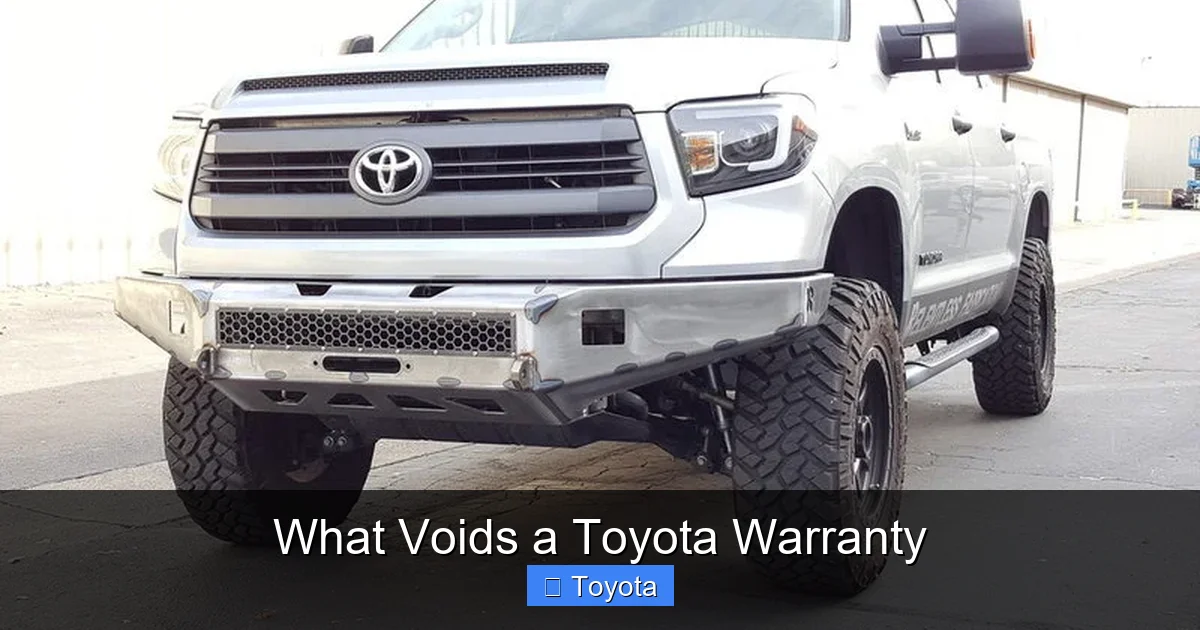
Visual guide about What Voids a Toyota Warranty
Image source: tnstatic.net
Many Toyota owners love to personalize their vehicles—adding roof racks, upgrading wheels, or installing performance chips. While some modifications are harmless, others can seriously jeopardize your warranty.
The key principle here is **causation**. Toyota won’t automatically void your entire warranty just because you added a cold air intake. But if that modification causes engine damage—say, by allowing dirt into the intake system—they can deny coverage for the engine repairs.
Performance Upgrades and Tuning
Installing aftermarket performance parts like turbochargers, superchargers, or engine management systems (“chips”) can increase power—but they also increase stress on your engine and drivetrain. If these parts aren’t approved by Toyota, any related failure may be denied.
Even “bolt-on” upgrades like exhaust systems can cause issues. A poorly designed cat-back exhaust might create backpressure problems or trigger oxygen sensor errors, leading to check engine lights and potential drivetrain strain.
> **Example:** A Toyota Supra owner installed a third-party ECU tune to boost horsepower. Later, the transmission failed. Toyota denied the warranty claim, citing evidence that the tune altered shift patterns and caused overheating.
Suspension and Lift Kits
Lift kits on trucks like the Tacoma or 4Runner are popular for off-roading. But lifting your vehicle changes its center of gravity, suspension geometry, and stress points. If not done correctly, it can lead to premature wear on shocks, CV joints, or steering components.
Toyota may deny warranty claims on suspension parts if they determine the lift kit contributed to the failure—even if the kit itself wasn’t directly damaged.
> **Pro tip:** If you must modify, consult a Toyota-certified technician or use Toyota Genuine Accessories. These parts are tested and approved, so they won’t void your warranty.
Electronics and Infotainment Add-ons
Adding aftermarket stereos, backup cameras, or dash cams might seem safe, but improper installation can interfere with your vehicle’s CAN bus system—the network that connects all electronic components. This can cause glitches in everything from your climate control to your hybrid battery management.
If a dealership finds evidence that an aftermarket device caused an electrical fault, they may deny coverage for related repairs.
Accidents, Misuse, and Commercial Use
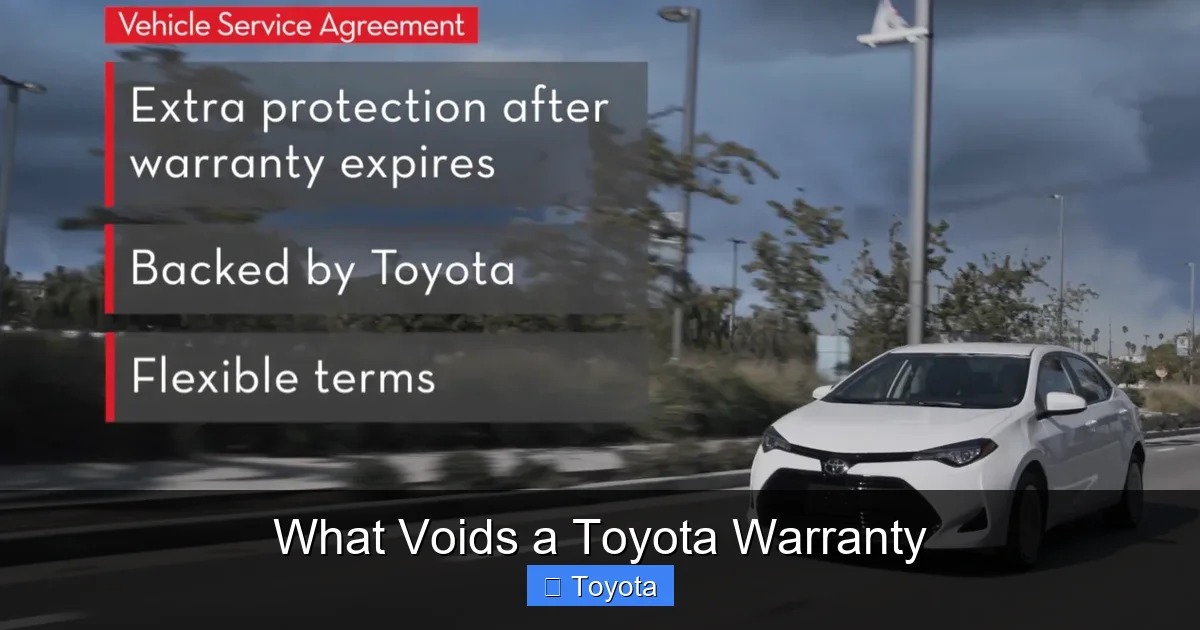
Visual guide about What Voids a Toyota Warranty
Image source: falmouthtoyota.com
Your Toyota warranty is designed for personal, everyday driving—not extreme conditions or commercial operations. Certain types of use are explicitly excluded from coverage.
Collision and Accident Damage
If your car is damaged in an accident, the repairs are typically covered by your auto insurance—not your Toyota warranty. The warranty only covers manufacturing defects, not damage from crashes.
However, if a component fails due to a defect *after* an accident repair, coverage depends on whether the repair was done correctly. Using non-OEM parts or improper alignment can lead to further issues that Toyota may not cover.
Racing, Towing, and Off-Road Abuse
Toyota does not cover damage resulting from racing, track use, or competitive driving. Even occasional track days can void coverage if damage occurs.
Towing is allowed within your vehicle’s rated capacity (check your owner’s manual), but exceeding that limit—or towing in extreme heat without proper cooling—can cause transmission or engine failure that won’t be covered.
Off-roading is trickier. Light trail use in a 4Runner or Land Cruiser is generally acceptable, but severe rock crawling, mudding, or water fording beyond specifications can lead to denial of claims for differential, transfer case, or electrical damage.
> **Example:** A Tacoma owner drove through deep water without checking the air intake height. Water entered the engine, causing hydrolock. The warranty claim was denied because the damage resulted from misuse.
Commercial and Ride-Sharing Use
Using your Toyota for Uber, Lyft, delivery services, or as a taxi can affect your warranty. While Toyota doesn’t outright prohibit it, excessive mileage, constant stop-and-go driving, and lack of downtime can accelerate wear.
If your vehicle racks up 30,000 miles in a year and develops transmission issues, Toyota may argue that commercial use contributed to premature failure—especially if maintenance wasn’t performed more frequently than recommended.
Some extended warranties explicitly exclude commercial use, so read your contract carefully.
Tampering with Emissions and Safety Systems
Federal law and Toyota policy strictly prohibit tampering with emissions control systems. This includes:
– Removing or disabling the catalytic converter
– Deleting or altering the EGR (exhaust gas recirculation) system
– Modifying the OBD-II (on-board diagnostics) system
– Disconnecting or bypassing the EVAP (evaporative emissions) system
These systems are critical for reducing pollution and ensuring your vehicle meets EPA standards. Tampering not only violates the Clean Air Act but also voids your warranty on all emissions-related components—including the engine, transmission, and fuel system.
Why Emissions Tampering Is a Big Deal
Modern vehicles rely on complex emissions systems to monitor and control pollutants. When these systems are altered, sensors send incorrect data, leading to poor performance, reduced fuel economy, and increased emissions.
Toyota uses diagnostic tools to detect tampering during service visits. Even if you reinstall the original parts before taking your car in, forensic analysis can reveal past modifications.
> **Real case:** A modified Tundra had its catalytic converter removed and a straight pipe installed. When the engine later developed a misfire, the dealership found evidence of tampering and denied the warranty claim—even though the misfire wasn’t directly related to the exhaust.
Safety System Interference
Airbags, ABS, and stability control systems are also protected under warranty terms. Disabling airbags (even for car seat installation) or modifying brake systems can void coverage if an accident occurs and those systems fail to deploy properly.
Always use certified technicians for safety-related repairs and never attempt DIY fixes on airbag or braking systems.
Repair Shops and Documentation: What You Need to Know
One of the most misunderstood aspects of car warranties is where you can get your vehicle repaired. Thanks to the Magnuson-Moss Warranty Act, you are legally allowed to use any licensed repair shop—you don’t have to go to a Toyota dealership.
However, there’s a catch: if an independent mechanic performs a repair incorrectly and causes additional damage, Toyota may not cover the resulting issues—even if the original problem was warranty-related.
Choosing the Right Repair Shop
If you use an independent shop, make sure they:
– Use OEM or equivalent-quality parts
– Follow Toyota’s repair procedures
– Keep detailed records and receipts
When you take your car in for a warranty claim, the dealership may ask for maintenance and repair history. If your records are incomplete or show subpar work, they might deny the claim.
> **Tip:** Keep a maintenance log—either digital or physical—with dates, mileage, services performed, and receipts. This builds a strong case for warranty coverage.
Dealing with Warranty Denials
If Toyota denies your warranty claim, don’t panic. You have options:
1. **Ask for a detailed explanation.** The dealership must provide a written reason for the denial.
2. **Review your maintenance records.** Ensure you followed the schedule and used approved parts.
3. **Contact Toyota Customer Experience.** They can review the case independently.
4. **File a complaint with the FTC or your state’s consumer protection agency** if you believe the denial is unfair.
Most disputes are resolved through dialogue, but having documentation is your best defense.
How to Protect Your Toyota Warranty
The good news? Protecting your warranty is mostly about common sense and consistency. Here’s a simple checklist:
– **Follow the maintenance schedule** in your owner’s manual.
– **Use Toyota-approved fluids and parts.**
– **Address warning lights and recalls immediately.**
– **Avoid unauthorized modifications**—especially to engine, emissions, or safety systems.
– **Keep detailed records** of all services and repairs.
– **Drive responsibly**—avoid racing, overloading, or extreme off-roading.
– **Use certified technicians** for complex repairs.
By treating your Toyota with care and respecting the terms of your warranty, you’ll maximize its lifespan and minimize out-of-pocket expenses.
Your warranty isn’t just a piece of paper—it’s a promise of reliability. And with a little attention to detail, you can keep that promise intact for years to come.
Frequently Asked Questions
Can I use an independent mechanic without voiding my Toyota warranty?
Yes, you can use any licensed repair shop. The Magnuson-Moss Warranty Act protects your right to choose where you get service. Just ensure they use quality parts and follow proper procedures.
Will installing Toyota Genuine Accessories void my warranty?
No. Toyota Genuine Accessories are designed and tested to meet factory standards, so they won’t void your warranty when installed correctly.
What happens if I miss one oil change?
Missing a single oil change may not automatically void your warranty, but if engine damage occurs and Toyota determines it was due to lack of maintenance, they can deny your claim.
Can I modify my Toyota TRD Pro for off-roading?
Yes, but stay within reasonable limits. Severe modifications or abuse beyond design specs can lead to warranty denial on affected components.
Does using premium gas void my warranty?
No, as long as your vehicle doesn’t require it. Using higher-octane fuel than recommended is fine, but using lower-octane fuel in a premium-required engine can cause knocking and potential damage.
What should I do if my warranty claim is denied?
Request a written explanation, review your maintenance records, and contact Toyota Customer Experience. You may also file a complaint with consumer protection agencies if needed.