
How to Recharge Toyota Sienna Ac

Recharging your Toyota Sienna’s AC system is easier than you think—if you follow the right steps. With basic tools and a little know-how, you can restore cool air to your cabin in under an hour. This guide walks you through the entire process safely and efficiently.
Key Takeaways
- Safety first: Always wear gloves and safety goggles when handling refrigerant to protect your skin and eyes from cold burns or chemical exposure.
- Check for leaks first: Recharging without fixing a leak will only provide temporary relief—use a UV dye kit or electronic detector to locate leaks.
- Use the correct refrigerant: Most Toyota Siennas from 1998–2010 use R-134a; newer models (2011+) may require R-1234yf—check your owner’s manual or under-hood label.
- Don’t overcharge: Overfilling can damage the compressor and reduce cooling efficiency—follow pressure guidelines using a gauge set.
- Low pressure = low cooling: If the low-side pressure reads below 25 psi when the engine is running and AC is on max, your system likely needs a recharge.
- DIY vs. professional: Simple top-offs are fine for DIYers, but complex repairs or R-1234yf systems are best left to certified technicians.
- Regular maintenance matters: Have your AC inspected annually to catch issues early and extend system life.
📑 Table of Contents
Why Your Toyota Sienna’s AC Might Need a Recharge
If you’ve noticed that your Toyota Sienna’s air conditioning isn’t blowing as cold as it used to—or worse, it’s blowing warm air—you’re not alone. Over time, even well-maintained AC systems can lose refrigerant due to minor leaks, seal degradation, or simply aging components. Unlike oil or coolant, refrigerant isn’t “consumed” during normal operation, so if your system is low, there’s almost always an underlying issue.
The good news? In many cases, a simple recharge can restore cool, comfortable airflow to your cabin—especially if the leak is small or hasn’t progressed far. But before you grab a can of refrigerant and start spraying, it’s important to understand what you’re dealing with. Not all Siennas use the same type of refrigerant, and improper handling can lead to costly damage or even safety hazards. This guide will walk you through everything you need to know to safely and effectively recharge your Toyota Sienna’s AC system, whether you’re driving a 2004 model or a brand-new 2023.
Understanding Your Sienna’s AC System
Before diving into the recharge process, it helps to understand how your Toyota Sienna’s air conditioning system works. At its core, the AC system is a closed loop that circulates refrigerant between high- and low-pressure sides. The compressor pressurizes the gas, which then flows through the condenser (where it cools and becomes a liquid), the expansion valve (which regulates flow), and finally the evaporator (where it absorbs heat from cabin air, creating cool airflow).
Visual guide about How to Recharge Toyota Sienna Ac
Image source: thecarhow.com
Types of Refrigerant Used in Toyota Siennas
Not all refrigerants are created equal—and using the wrong one can ruin your AC system. Here’s a quick breakdown:
- R-134a: Used in most Toyota Siennas from 1998 through 2010. It’s widely available, affordable, and compatible with standard DIY recharge kits.
- R-1234yf: Introduced in 2011 and standard in all newer Siennas (2011–present). This newer refrigerant is more environmentally friendly but requires specialized equipment and handling due to its mild flammability.
To confirm which refrigerant your Sienna uses, check the under-hood emissions label near the radiator support or consult your owner’s manual. Never mix refrigerants—doing so can cause chemical reactions that damage seals and compressors.
Signs Your AC Needs a Recharge
How do you know if your Sienna actually needs a recharge? Look for these common symptoms:
- Air from vents is lukewarm or only slightly cool, even on the coldest setting
- AC performance worsens after the vehicle has been sitting in hot weather
- Bubbling or gurgling sounds from the dashboard when AC is running
- Reduced airflow from vents (though this can also indicate a clogged cabin filter)
- Ice buildup on the evaporator or refrigerant lines (a sign of low refrigerant causing temperature swings)
If you notice any of these signs, it’s worth checking the system pressure before assuming a recharge is needed. A professional scan tool or a simple manifold gauge set can tell you whether the issue is truly low refrigerant or something else—like a failing compressor or clogged expansion valve.
Tools and Materials You’ll Need
Recharging your Sienna’s AC isn’t rocket science, but it does require the right tools. Fortunately, most items are affordable and available at auto parts stores or online. Here’s what you’ll need for a basic R-134a recharge:
Visual guide about How to Recharge Toyota Sienna Ac
Image source: thecarhow.com
Essential Equipment
- AC recharge kit with gauge: Look for a kit that includes a hose, pressure gauge, and trigger dispenser. Avoid “no-gauge” cans—they make it impossible to monitor pressure and risk overcharging.
- Refrigerant (R-134a or R-1234yf): Buy name-brand cans (like DuPont, Honeywell, or Interdynamics) to ensure purity. One can (12–14 oz) is usually enough for a top-off; full systems may need 2–3 cans.
- Safety gear: Nitrile gloves and safety goggles are non-negotiable. Refrigerant can cause frostbite on contact and irritate eyes.
- UV leak detection kit (optional but recommended): Contains dye and a UV flashlight to help locate small leaks before they worsen.
Optional but Helpful Tools
- Digital multimeter (to test electrical connections)
- Cabin air filter (replace if dirty—it affects airflow)
- Shop towels and rags (for cleaning ports and spills)
- Jack and jack stands (if accessing low-side port requires lifting the vehicle)
For R-1234yf systems, DIY recharging is strongly discouraged unless you have certified recovery/recycling equipment. These systems require precise handling, and improper procedures can violate EPA regulations. If your Sienna uses R-1234yf, consider visiting a Toyota dealership or ASE-certified shop.
Step-by-Step Guide to Recharging Your Sienna’s AC
Now that you’ve gathered your tools and confirmed your refrigerant type, it’s time to recharge. Follow these steps carefully—especially if this is your first time working with AC systems.
Visual guide about How to Recharge Toyota Sienna Ac
Image source: thecarhow.com
Step 1: Prepare Your Vehicle
Park your Sienna on a level surface, engage the parking brake, and let the engine cool for at least 30 minutes. Open the hood and locate the low-pressure service port—it’s usually on the aluminum suction line near the firewall, marked with an “L” or colored blue/green. The high-pressure port (red/orange cap) should NOT be used for recharging.
Step 2: Check System Pressure
With the engine off, attach the recharge hose to the low-pressure port. Do not start the engine yet! Turn the valve on the recharge can to release a tiny bit of refrigerant—just enough to purge air from the hose. Then connect the hose fully and note the pressure reading on the gauge. A healthy system at rest should read between 70–100 psi in warm weather. If it’s below 60 psi, your system is significantly low.
Step 3: Start the Engine and Turn On AC
Start your Sienna and set the AC to MAX COOL, recirculation mode, and highest fan speed. Let it run for 2–3 minutes to stabilize. Watch the gauge: the low-side pressure should drop to 25–45 psi when the compressor engages (you’ll hear a slight click under the hood). If the pressure stays high or the compressor doesn’t kick on, there may be an electrical or mechanical issue—not just low refrigerant.
Step 4: Add Refrigerant Slowly
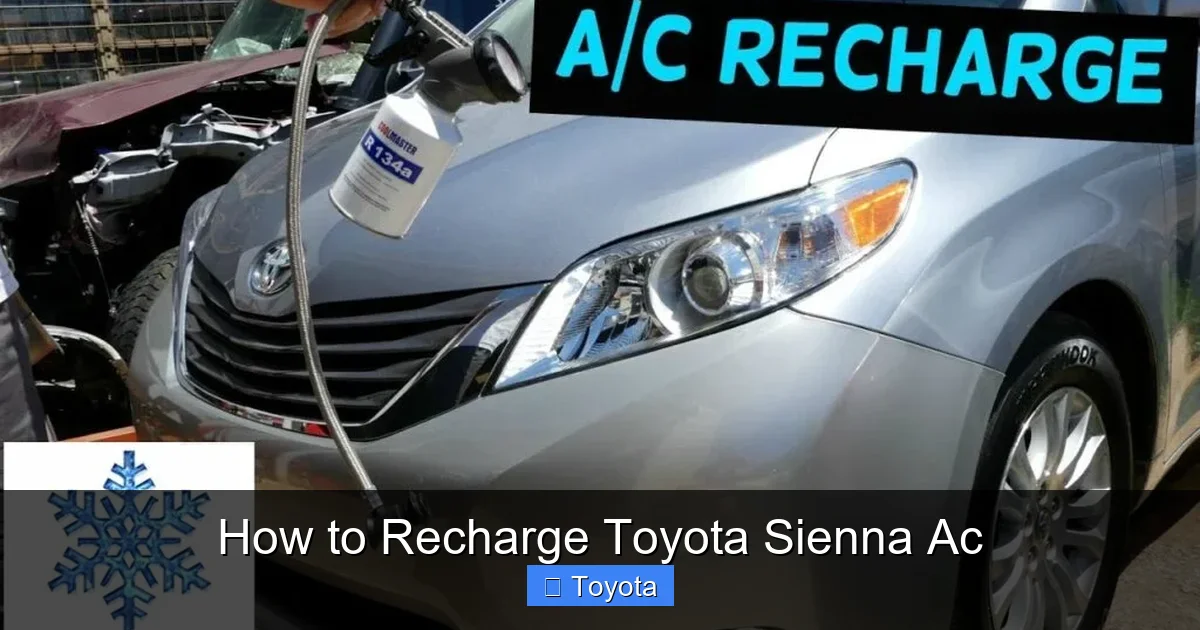
Hold the recharge can upright and squeeze the trigger in short bursts (2–3 seconds each). Never invert the can—liquid refrigerant can flood the compressor and cause catastrophic damage. After each burst, wait 10–15 seconds for the system to stabilize and check the gauge. Aim for a low-side pressure of 30–40 psi on a hot day (80°F+). If the pressure climbs above 45 psi, stop adding refrigerant—you’re getting close to full.
Step 5: Monitor Cooling Performance
Feel the air coming from the vents. It should get noticeably colder within 5–10 minutes of adding refrigerant. If it doesn’t improve, there may be a blockage, faulty blend door, or major leak. Once the air is cold and pressure is stable, disconnect the hose, replace the cap on the service port, and turn off the engine.
Step 6: Test Drive and Recheck
Take your Sienna for a 10–15 minute drive with the AC on max. Monitor vent temperature and listen for unusual noises. If cooling remains strong, you’re done! If performance fades quickly, suspect a leak and consider a professional inspection.
Safety Tips and Common Mistakes to Avoid
Working with refrigerant isn’t dangerous if you follow basic safety rules—but cutting corners can lead to injury or expensive repairs.
Safety First: Protect Yourself
Always wear gloves and goggles. Refrigerant expands rapidly when released, creating extreme cold that can freeze skin on contact. Never breathe in refrigerant fumes—they displace oxygen and can cause dizziness or asphyxiation in enclosed spaces. Work in a well-ventilated area, preferably outdoors or in a garage with the door open.
Avoid These Common Errors
- Overcharging: Adding too much refrigerant raises pressure, strains the compressor, and reduces cooling efficiency. Stick to manufacturer specs—most Siennas hold 18–24 oz total.
- Using the wrong port: Only use the low-pressure (suction) port for recharging. The high-pressure side requires specialized equipment and should never be accessed by DIYers.
- Ignoring leaks: Recharging without fixing a leak is like refilling a tire with a hole. Use a UV dye kit to find and seal leaks before adding new refrigerant.
- Mixing refrigerants: Never top off R-134a with R-1234yf or vice versa. Cross-contamination voids warranties and damages components.
- Rushing the process: Add refrigerant slowly and allow time for the system to stabilize. Hasty recharging leads to inaccurate readings and potential overfill.
When to Call a Professional
While many Sienna owners successfully recharge their AC at home, some situations call for expert help. Consider visiting a certified technician if:
- Your Sienna uses R-1234yf refrigerant (requires EPA Section 609 certification to handle legally)
- The compressor won’t engage even after recharging
- You suspect a major leak (e.g., oily residue around fittings, constant pressure drop)
- The system has been completely empty for more than a few days (moisture may have entered, requiring evacuation and recharge with a vacuum pump)
- You’re uncomfortable working with pressurized systems or lack the right tools
Professional shops have recovery machines that safely remove old refrigerant, evacuate moisture, and recharge with precision. For complex issues, their expertise saves time, money, and frustration.
Maintaining Your Sienna’s AC System
A recharge isn’t a permanent fix—it’s a temporary solution unless you address the root cause. To keep your Sienna’s AC running smoothly for years:
- Have the system inspected annually, especially before summer
- Replace the cabin air filter every 12,000–15,000 miles
- Run the AC for 10 minutes every week, even in winter, to keep seals lubricated
- Watch for oily stains near AC components—they often indicate leaks
- Use a UV additive during recharge to make future leak detection easier
Proactive care prevents costly breakdowns and ensures your family stays cool on long road trips.
Conclusion
Recharging your Toyota Sienna’s AC system is a practical DIY task that can save you hundreds of dollars in labor costs—if done correctly. By understanding your refrigerant type, using the right tools, and following safety protocols, you can restore crisp, cold air to your cabin in under an hour. Remember: a recharge is only effective if there’s no major leak, and overcharging can do more harm than good. When in doubt, consult a professional—but for most mild cases, this guide gives you everything you need to tackle the job confidently.
Stay cool, drive safe, and enjoy the comfort your Sienna was designed to deliver.
Frequently Asked Questions
Can I recharge my Toyota Sienna AC myself?
Yes, if your Sienna uses R-134a refrigerant and the system isn’t severely damaged. With basic tools and careful attention to pressure readings, many owners successfully recharge their AC at home. However, R-1234yf systems require professional handling.
How much does it cost to recharge a Toyota Sienna AC?
A DIY recharge kit with one can of R-134a costs $20–$40. Professional recharges range from $150–$300, depending on refrigerant type, labor rates, and whether leaks are repaired.
How often should I recharge my Sienna’s AC?
AC systems shouldn’t need regular recharging if they’re sealed properly. If you’re recharging more than once every 2–3 years, there’s likely a leak that needs professional attention.
What happens if I overcharge my Sienna’s AC?
Overcharging increases pressure, strains the compressor, reduces cooling efficiency, and can trigger the pressure relief valve. In extreme cases, it may damage seals or hoses.
Why is my Sienna’s AC still warm after recharging?
This could indicate a clogged expansion valve, failing compressor, electrical issue, or a large leak. Recharging only fixes low refrigerant—not mechanical failures.
Is it illegal to recharge my own car’s AC?
No, it’s legal for consumers to recharge their own vehicles with R-134a. However, releasing refrigerant into the atmosphere is illegal under EPA regulations—always use a sealed system and proper disposal methods.
