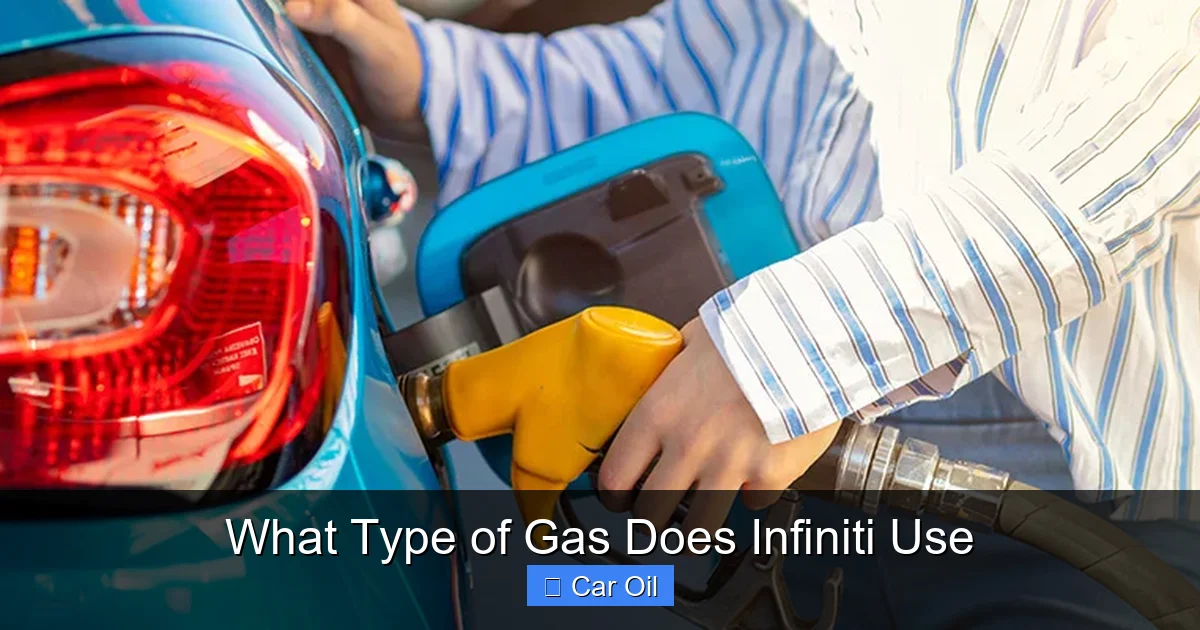
What Type of Gas Does Infiniti Use

Contents
- 1 Key Takeaways
- 2 📑 Table of Contents
- 3 Demystifying Octane: What Those Numbers Really Mean
- 4 Infiniti’s Engineering: Why Premium is Non-Negotiable
- 5 Model-by-Model Guide: Infiniti Gas Requirements
- 6 The Real Cost of Using Regular Gas in an Infiniti
- 7 Beyond the Pump: Fuel Quality Matters Too
- 8 Pro Tips for Keeping Your Infiniti Happy at the Pump
- 9 Conclusion: Fueling Your Infiniti the Right Way is an Investment
- 10 Frequently Asked Questions



Infiniti engines are designed for premium gasoline (91 octane or higher) to prevent knocking and ensure peak performance. Using regular gas can cause engine damage over time. Always check your owner’s manual for your specific model’s requirements, as turbocharged and high-compression engines are particularly sensitive to fuel quality.
Key Takeaways
- Understanding What Type of Gas Does Infiniti Use: Provides essential knowledge
📑 Table of Contents
- Demystifying Octane: What Those Numbers Really Mean
- Infiniti’s Engineering: Why Premium is Non-Negotiable
- Model-by-Model Guide: Infiniti Gas Requirements
- The Real Cost of Using Regular Gas in an Infiniti
- Beyond the Pump: Fuel Quality Matters Too
- Pro Tips for Keeping Your Infiniti Happy at the Pump
- Conclusion: Fueling Your Infiniti the Right Way is an Investment
Demystifying Octane: What Those Numbers Really Mean
Let’s start with the basics, because understanding “octane” is the key to understanding what type of gas does Infiniti use. You’ve seen the numbers on the pump—87, 89, 91, sometimes even 93. But what do they actually mean? In simple terms, octane is a measure of a fuel’s ability to resist “knocking” or “pinging.” Knocking happens when the air-fuel mixture in your cylinder ignites prematurely due to compression heat, rather than from the spark plug’s controlled spark. It’s like a tiny, uncontrolled explosion inside your engine that creates a distinctive rattling sound.
Higher octane fuel is more resistant to this premature ignition. Why does this matter for an Infiniti? Because luxury brands like Infiniti engineer their engines for higher performance. This often means higher compression ratios or the use of turbochargers, both of which create more heat and pressure inside the cylinder. That extra heat and pressure makes the fuel more prone to knocking if it’s not high-quality, high-octane stuff. So, when you ask what type of gas does Infiniti use, the short answer is: the kind that won’t explode at the wrong time. Using 87 octane in an engine designed for 91 is like trying to run a marathon in flip-flops—it might work for a bit, but you’re going to cause serious damage.
The Science Behind Octane Ratings
Octane rating isn’t about energy content. A gallon of 87 octane has roughly the same amount of potential energy as a gallon of 93 octane. The difference is entirely in the fuel’s chemical stability under pressure. Refineries use different processes and additives to boost this stability. For an Infiniti with a turbocharger, the air is compressed even more before being forced into the cylinder. This super-pressurized air gets extremely hot. When you add fuel to that hot, compressed air, it becomes highly volatile. High-octane fuel can handle that volatility without detonating on its own. The engine’s computer (ECU) is tuned to expect this stability. If it detects knock, it will try to compensate by retarding ignition timing, which robs you of power and fuel economy. In extreme cases, it can’t compensate enough, and you get persistent, damaging knock.
Regular, Midgrade, Premium: Breaking Down the Types
At most stations, you’ll see three main grades:
- Regular (87 Octane): This is the standard fuel for most everyday, non-performance engines. It is almost always insufficient for Infiniti vehicles.
- Midgrade (89 Octane): A blend of regular and premium. While better than regular, it still typically falls short of the minimum 91 octane requirement for Infinitis. It’s a compromise that doesn’t serve these engines well.
- Premium (91-94 Octane): This is the gold standard for Infiniti. The exact minimum can vary by model and region (e.g., 91 in some states, 93 in others), but 91 is the universal baseline. This is the fuel your Infiniti’s engine management system is calibrated for.
You might also see “Super” or “Ultra” at some stations, which are often 93-94 octane. This is perfectly fine and will provide a small, often negligible, performance edge over 91 in most Infinitis. The key is meeting or exceeding the manufacturer’s specified minimum.
Infiniti’s Engineering: Why Premium is Non-Negotiable
To truly grasp why Infiniti is so particular about fuel, we need to look under the hood. Infiniti, Nissan’s luxury division, has packed its lineup with advanced powertrain technology aimed at delivering that signature blend of smoothness and power. Two engineering choices in particular make premium fuel an absolute requirement, not a suggestion.
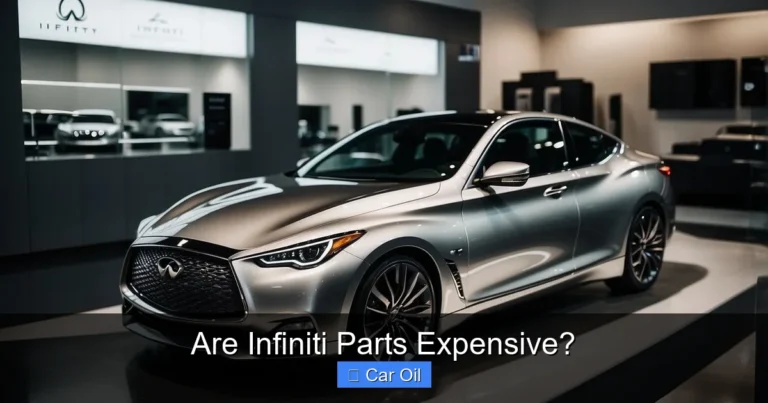
Visual guide about What Type of Gas Does Infiniti Use
Image source: lp-auto-assets.s3.amazonaws.com
Turbochargers and High Compression Ratios
The turbocharger is the star of the show for many modern Infiniti models. A turbo works by using exhaust gases to spin a turbine, which forces more air into the engine’s cylinders than would naturally enter. More air means you can add more fuel and burn more efficiently, creating a huge power boost from a smaller, more efficient engine. However, compressing that air also heats it up dramatically—a phenomenon called “adiabatic heating.” This superheated air raises the cylinder’s temperature before the fuel even ignites. Fuel with a lower octane rating is much more likely to spontaneously combust under these conditions, causing knock. Infiniti’s turbocharged engines, like the excellent 2.0-liter in the Q50 and QX50, are specifically designed with this in mind and mandate premium fuel.
Even some non-turbo Infiniti V6 engines, like the long-serving 3.7-liter V6, feature high compression ratios (around 10.3:1). A higher compression ratio squeezes the air-fuel mix more, again increasing heat and pressure and demanding higher-octane fuel to prevent knock. The combination of turbocharging and high compression is why the requirement is so strict.
The Role of Knock Sensors and Engine Management
“But my car has knock sensors,” you might say. “Can’t it just adjust?” Yes, modern engines have incredibly sophisticated knock sensors that listen for the telltale ping and tell the Engine Control Unit (ECU) to adjust timing. This is a safety net, not a workaround. When the ECU detects knock, it retards the ignition timing—meaning it sparks the plug later in the cycle. This reduces pressure and stops the knock, but it also severely reduces power and fuel efficiency. You’re literally not getting the performance or MPG you paid for. Furthermore, constantly running in this protective, retarded mode can lead to other issues like increased carbon buildup and higher exhaust temperatures. The system is designed to save the engine from catastrophic damage in the short term, not to allow you to regularly use sub-par fuel. It’s a last line of defense, not a permission slip to use regular gas.
Model-by-Model Guide: Infiniti Gas Requirements
While the “premium only” rule is consistent, it’s always wise to check your specific vehicle. Here’s a breakdown of common Infiniti models and their fuel needs. Remember, your owner’s manual is the final authority.
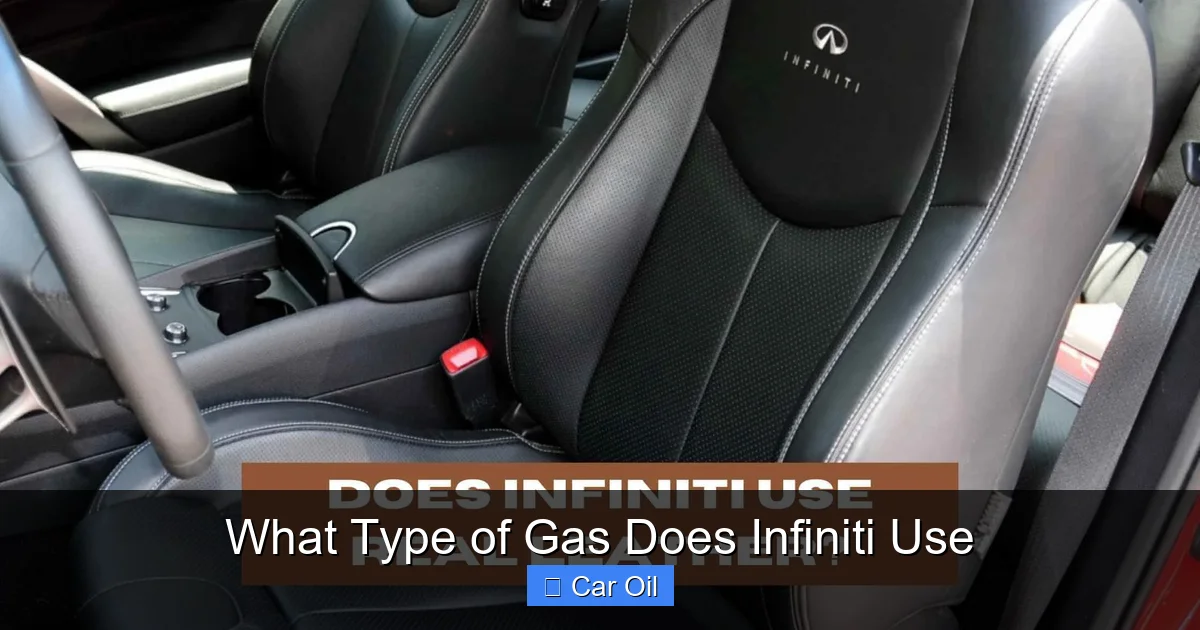
Visual guide about What Type of Gas Does Infiniti Use
Image source: leatherninja.com
Current Models (2020-Present)
Virtually the entire current Infiniti lineup runs on premium unleaded:
- Infiniti Q50 (all trims): Requires premium. The 2.0-liter turbo (200-300hp) and the retired 3.0-liter turbo both specify 91 octane minimum.
- Infiniti Q60 (all trims): Same as the Q50. The twin-turbo 3.0-liter V6 (400hp) is especially demanding and will feel noticeably sluggish on lower octane.
- Infiniti QX50: The innovative variable-compression turbo engine (VC-Turbo) is a masterpiece of engineering that absolutely requires premium fuel to operate its compression ratio (from 8:1 to 14:1) seamlessly.
- Infiniti QX55: Shares the QX50’s VC-Turbo engine and its premium requirement.
- Infiniti QX60 (3.5L V6): The non-turbo V6 still has a high compression ratio and specifies premium unleaded fuel.
- Infiniti QX80 (5.6L V8): This large, naturally aspirated V8 also calls for premium fuel to achieve its rated power and torque.
Older Models and Exceptions
Going back in time, the requirement remains overwhelmingly for premium:
- Infiniti G37/G35 (sedan/coupe): The 3.7L and 3.5L V6 engines require premium. They are high-revving, high-compression engines.
- Infiniti EX35/EX37, FX35/FX37: These predecessors to the QX50 also require premium.
- Infiniti M35/M37/M56: The M series (now Q70) consistently required premium across its V6 and V8 options.
- Potential Exception: Some very old, base-model Infiniti I30 or J30 models from the late 1990s/early 2000s might have been rated for regular. But for any vehicle from the last 15 years, you can safely assume premium is required. When in doubt, check the gas filler door (it often says “Premium Unleaded Only”) or your owner’s manual.
It’s interesting to note that while Infiniti’s parent company Nissan often uses regular fuel in many of its models (like the Altima or Rogue), the luxury division’s performance-oriented engineering creates a different standard. You can read more about the specific requirements for a Nissan Altima here, but for your Infiniti, premium is the only correct choice.
The Real Cost of Using Regular Gas in an Infiniti
Okay, so premium is required. But what’s the big deal if you occasionally use regular to save a few bucks? Let’s talk about the real-world consequences, from the annoying to the catastrophic.
Visual guide about What Type of Gas Does Infiniti Use
Image source: images.app.ridemotive.com
Immediate Symptoms: Knocking and Power Loss
The first thing you’ll notice is the sound. A rhythmic pinging or knocking under acceleration is your engine in distress. It’s the sound of fuel detonating erratically. Along with the sound, you’ll feel a loss of power and responsiveness. The car will feel “sluggish” or “flat.” This is the ECU’s knock control system retarding the timing to save your engine. Your fuel economy will also suffer because the engine is running inefficiently in this protective mode. You’re not saving money; you’re paying for worse performance and worse MPG, negating any per-gallon savings at the pump. If you experience this, immediately fill up with the correct premium gas. Occasional, brief exposure might not cause immediate harm, but it’s a stress your engine shouldn’t endure.
Long-Term Damage: Carbon Buildup and Engine Wear
The real danger is the slow, cumulative damage. Persistent knocking, even if mild, creates shockwaves that can physically damage pistons, piston rings, and cylinder walls. More insidiously, running lower-quality fuel can lead to increased carbon deposits. Modern direct-injection engines (common in Infinitis) are particularly prone to carbon buildup on the back of intake valves because fuel doesn’t wash over them. Poor-quality fuel with fewer detergents exacerbates this. Carbon buildup can further increase compression ratios locally, making knock even more likely and creating a vicious cycle. Over time, this can lead to:
- Pre-ignition (Detonation): A more violent, destructive form of knocking that can burn holes in pistons.
- Increased Emissions: A dirty, inefficient engine will fail emissions tests more easily.
- Reduced Engine Life: The constant stress and heat from improper combustion wear out components faster.
- Costly Repairs: A damaged engine from prolonged knock can require a rebuild or replacement—a bill that makes a lifetime of premium fuel look like pocket change.
Think of it this way: you bought an Infiniti for its superior engineering, performance, and reliability. Using regular gas directly undermines all three of those pillars. It’s a false economy of the highest order.
Beyond the Pump: Fuel Quality Matters Too
Octane is the headline, but it’s not the whole story. The quality of the gasoline, specifically its detergent additive package, is equally important for your Infiniti’s health. This is where the “Top Tier” designation comes in.
Top Tier Gasoline: What It Is and Why You Need It
Top Tier is a fuel quality standard created by major automakers (including Nissan/Infiniti, Toyota, GM, Honda, and others) because they determined the federal minimum detergent requirements were insufficient for modern engines. Top Tier fuel contains significantly higher levels of specialized detergents that clean critical fuel system components like fuel injectors, intake valves, and combustion chambers. For an Infiniti with its precise, high-pressure direct injection system, keeping these components clean is vital for maintaining performance, fuel economy, and low emissions. Gunked-up injectors spray a poor mist, leading to uneven combustion, more carbon, and eventually, the knock we talked about. Always choose stations that display the Top Tier logo. Most major brands (Shell, Chevron, Exxon, Mobil, etc.) are Top Tier, but it’s worth confirming.
Ethanol Content: Friend or Foe?
Most gasoline in the U.S. contains ethanol (typically E10, or 10% ethanol). Ethanol is an oxygenate that burns cleaner and boosts octane slightly. Infiniti engines are fully compatible with E10. However, ethanol is hygroscopic, meaning it absorbs water from the air. This can be a problem for vehicles that sit for long periods. Water can separate from the ethanol-gas blend and cause corrosion in fuel tanks and lines or lead to hard starting. If you have a seasonal Infiniti (like a convertible you store in winter), consider using a fuel stabilizer and keeping the tank full to minimize condensation. Avoid fuels with higher ethanol content (like E15 or E85) unless your specific model is explicitly flex-fuel rated—almost no Infinitis are. Stick to standard E10 from a reputable Top Tier station.
Pro Tips for Keeping Your Infiniti Happy at the Pump
Now that you know the “what” and “why,” here’s the practical “how.”
Reading Your Owner’s Manual Like a Pro
The absolute best source of truth is your vehicle’s owner’s manual. In the “Fuel” or “Specifications” chapter, it will state the required octane rating in clear terms. Look for language like “premium unleaded gasoline with an octane rating of 91 AKI (Anti-Knock Index) or higher required.” AKI is the average of the Research Octane Number (RON) and Motor Octane Number (MON)—the number you see on the pump. If it says “required,” that’s not a suggestion. If it says “recommended,” you might get away with midgrade in a pinch, but premium is still best for performance and longevity. Keep this manual in your car or download a digital copy.
When and How to Use Fuel Additives
If you’re consistently using high-quality Top Tier premium fuel, you generally don’t need additives. The detergents are already built-in. However, if you’ve used lower-quality fuel, have an older Infiniti with higher mileage, or notice slight performance degradation, a quality fuel system cleaner can help. Look for additives with polyether amine (PEA) chemistry, which is what Top Tier fuels use. Brands like Chevron Techron, Red Line SI-1, or Liqui Moly Jectron are reputable. Use one bottle in a full tank every 3,000-5,000 miles. Don’t fall for “octane boosters” that claim to turn regular into premium—they are largely ineffective and a waste of money. The only way to get 91 octane is to buy 91 octane.
Another practical tip: if you live in a high-altitude area (like Denver), octane requirements can sometimes be slightly lower because the air is thinner. However, your Infiniti’s ECU is programmed for a specific minimum. It’s still best to follow the manual, but you might find 89 octane sufficient in a pinch if you’re far above sea level and the manual mentions altitude adjustments. When in doubt, use premium.
Choosing the Right Gas Station
Not all stations are created equal. While most major brands are Top Tier, consistency matters. Stick to well-known, high-turnover stations. Fuel that sits in underground tanks for months can degrade and absorb water. A busy station ensures fresh fuel. Also, avoid stations you suspect might have contaminated water or sediment in their tanks (though this is rare at reputable chains). If you’re on a road trip and unfamiliar with local brands, use an app like GasBuddy to find a major Top Tier brand nearby. Your Infiniti’s fuel system is a precisely engineered piece of machinery—feed it the best.
Conclusion: Fueling Your Infiniti the Right Way is an Investment
So, what type of gas does an Infiniti use? The unwavering answer is premium unleaded gasoline with an octane rating of 91 or higher. This isn’t luxury snobbery; it’s cold, hard engineering. From the turbochargers spooling under the hood of the Q50 to the high-compression V6 in the QX60, Infiniti’s powertrains are designed to extract maximum performance and efficiency from a specific fuel quality. Using regular or midgrade gas is a compromise that leads to immediate power loss, poor fuel economy, and the ominous sound of engine knock. The long-term risk of carbon buildup, pre-ignition, and catastrophic engine damage makes it a gamble not worth taking.
Treat your Infiniti’s fuel requirement with the same seriousness you would its oil changes or tire rotations. It’s a fundamental part of its maintenance. By consistently choosing Top Tier premium fuel from a reputable station, you’re protecting your investment, ensuring your car drives as the engineers intended, and avoiding thousands in potential repair bills. Your Infiniti is more than just transportation; it’s a statement. Keep it running beautifully by giving it the quality fuel it demands. When you pull up to the pump, remember: for an Infiniti, premium isn’t a luxury—it’s a necessity.
Frequently Asked Questions
Can I put regular gas in my Infiniti if I’m careful?
No. Infiniti engines are engineered for premium fuel. While the knock sensors will prevent immediate destruction, running on regular causes the ECU to retard timing, drastically reducing power and fuel economy. It also increases the risk of long-term carbon buildup and engine damage. It is not safe or recommended.
Will using premium gas improve my Infiniti’s performance?
Yes, but only if your manual requires it. If you’re already using the correct premium, switching to a higher-octane “Super” grade (93 vs 91) will provide negligible, if any, noticeable gains in most models. The performance benefit is in using the *correct* octane, not necessarily the highest available.
Is ethanol bad for my Infiniti’s engine?
Standard E10 (10% ethanol) gasoline is perfectly safe and required by the EPA in many areas. It is approved for all Infiniti models. Avoid higher blends like E15 or E85 unless your vehicle is specifically flex-fuel certified, which almost no Infinitis are. The main issue with ethanol is its tendency to absorb water, so use a stabilizer if storing the car long-term.
Do I need to use fuel additives in my Infiniti?
Not if you consistently use Top Tier premium gasoline, which contains sufficient detergents. Additives are primarily useful if you’ve used lower-quality fuel, have an older high-mileage engine, or want to periodically deep-clean the system. Choose a reputable PEA-based cleaner and follow the instructions.
Does the octane requirement change in high altitudes?
Octane requirements can be slightly lower at very high altitudes because the air is less dense, reducing cylinder pressure. However, your Infiniti’s computer is calibrated for a specific minimum. It’s best to follow your owner’s manual. In practice, you might get away with 89 octane in places like Denver, but 91 premium is still the guaranteed correct choice.
Where can I find the official gas requirement for my specific Infiniti?
The definitive source is your vehicle’s owner’s manual, in the “Fuel” or “Specifications” section. You can also check the label inside the fuel filler door, which often states the minimum octane rating. When in doubt, default to premium unleaded (91 octane or higher). You can also find model-specific information on Infiniti’s official website or by contacting an Infiniti dealership’s service department. For comparison, many Toyota models have different requirements, which you can explore here.