
What Type of Car Is a Honda Civic?

The Honda Civic is a compact car that blends practicality, fuel efficiency, and modern technology into one reliable package. It’s perfect for daily commuting, city driving, and even long road trips, offering a smooth ride and strong resale value.
If you’ve ever found yourself wondering, “What type of car is a Honda Civic?” you’re not alone. It’s a question that pops up often—especially when people see one zipping through city streets, parked in a college lot, or cruising down the highway with quiet confidence. The Honda Civic has been a staple on roads around the world for decades, and its popularity isn’t just a fluke. It’s earned its place through consistent performance, smart design, and a reputation for being one of the most dependable cars on the market.
So, what exactly is the Honda Civic? At its core, it’s a compact car—but that simple label doesn’t capture the full picture. The Civic is more than just a small vehicle; it’s a well-engineered machine that balances efficiency, comfort, and style. Whether you’re a first-time car buyer, a student on a budget, or a family looking for a practical daily driver, the Civic offers something for nearly everyone. It’s not flashy or over-the-top, but it doesn’t need to be. What it lacks in extravagance, it makes up for in reliability, fuel economy, and everyday usability.
Key Takeaways
- Compact Car Classification: The Honda Civic is classified as a compact car, offering a balance of size, efficiency, and interior space ideal for individuals and small families.
- Fuel Efficiency Leader: With impressive MPG ratings, the Civic helps drivers save money at the pump while reducing environmental impact.
- Reliability and Durability: Known for long-term dependability, the Civic consistently ranks high in reliability studies and holds its value over time.
- Modern Technology and Safety: Equipped with Honda Sensing® suite, infotainment systems, and advanced driver-assist features, the Civic prioritizes safety and connectivity.
- Multiple Body Styles: Available as a sedan, coupe, or hatchback, the Civic offers versatility to suit different lifestyles and preferences.
- Performance Options: From efficient base engines to the sporty Civic Si and high-performance Type R, there’s a Civic for every driving style.
- Strong Resale Value: The Civic’s reputation for quality and low maintenance costs contributes to excellent resale value in the used car market.
📑 Table of Contents
Understanding the Honda Civic: Compact Car with Big Appeal
The Honda Civic falls squarely into the compact car category, a segment known for vehicles that are smaller than midsize sedans but larger than subcompacts. Compact cars are designed to offer a sweet spot between fuel efficiency and interior space—enough room for passengers and cargo without the bulk of a larger vehicle. The Civic has long been one of the most popular models in this class, and for good reason.
Compact cars like the Civic are ideal for urban environments where parking can be tight and traffic is heavy. Their smaller size makes them easy to maneuver through crowded streets, and their fuel-efficient engines help keep operating costs low. But the Civic goes beyond the basics. Over the years, Honda has refined the Civic to include features typically found in more expensive vehicles, such as advanced safety systems, premium audio options, and intuitive infotainment setups.
One of the Civic’s standout traits is its adaptability. It’s not just a car for young drivers or budget-conscious buyers—it appeals to a wide range of people. Professionals use it for their daily commute, parents appreciate its safety features, and even car enthusiasts enjoy the sportier versions. This broad appeal has helped the Civic maintain its status as one of the best-selling cars in the world.
Why Compact Cars Matter in Today’s Market
In a world where fuel prices fluctuate and environmental concerns grow, compact cars like the Honda Civic play a crucial role. They offer a practical solution for drivers who want to reduce their carbon footprint without sacrificing comfort or functionality. According to the U.S. Department of Energy, compact cars typically achieve 25 to 35 miles per gallon (MPG) in combined city and highway driving—making them some of the most fuel-efficient non-hybrid vehicles on the road.
The Civic often exceeds these averages, especially with its latest engine technologies. For example, the 2024 Honda Civic sedan with the standard 2.0-liter four-cylinder engine delivers an EPA-estimated 33 MPG in the city and 42 MPG on the highway. That kind of efficiency translates into real savings over time. If you drive 15,000 miles a year and gas costs $3.50 per gallon, a car that gets 35 MPG will cost you about $1,500 annually in fuel. A less efficient vehicle getting 25 MPG would cost around $2,100—a difference of $600 per year.
But it’s not just about saving money. Compact cars also contribute to reduced traffic congestion and lower emissions. Their smaller size means they take up less space on the road and in parking lots, which helps ease urban congestion. And with modern engineering, today’s compact cars are safer and more comfortable than ever before.
The Civic’s Global Reputation
The Honda Civic isn’t just popular in the United States—it’s a global phenomenon. Sold in over 170 countries, the Civic has become a symbol of reliability and practicality. In markets like Canada, Europe, and Japan, it’s a top choice for drivers who value efficiency and low maintenance costs. Even in regions where larger vehicles dominate, the Civic holds its own thanks to its strong build quality and consistent performance.
Honda’s commitment to quality control and innovation has helped the Civic earn high marks from automotive experts and everyday drivers alike. It consistently ranks near the top of reliability surveys conducted by organizations like J.D. Power and Consumer Reports. In fact, the Civic has been named one of the most reliable cars of the past decade multiple times.
This global reputation didn’t happen overnight. The Civic first debuted in 1972 as a response to the oil crisis, offering a small, fuel-efficient alternative to gas-guzzling American cars. Over the years, it evolved from a basic economy car into a sophisticated compact vehicle with advanced features and modern styling. Today’s Civic is a far cry from its humble beginnings, but it still carries the same core values: efficiency, reliability, and value.
Honda Civic Body Styles: Sedan, Coupe, and Hatchback
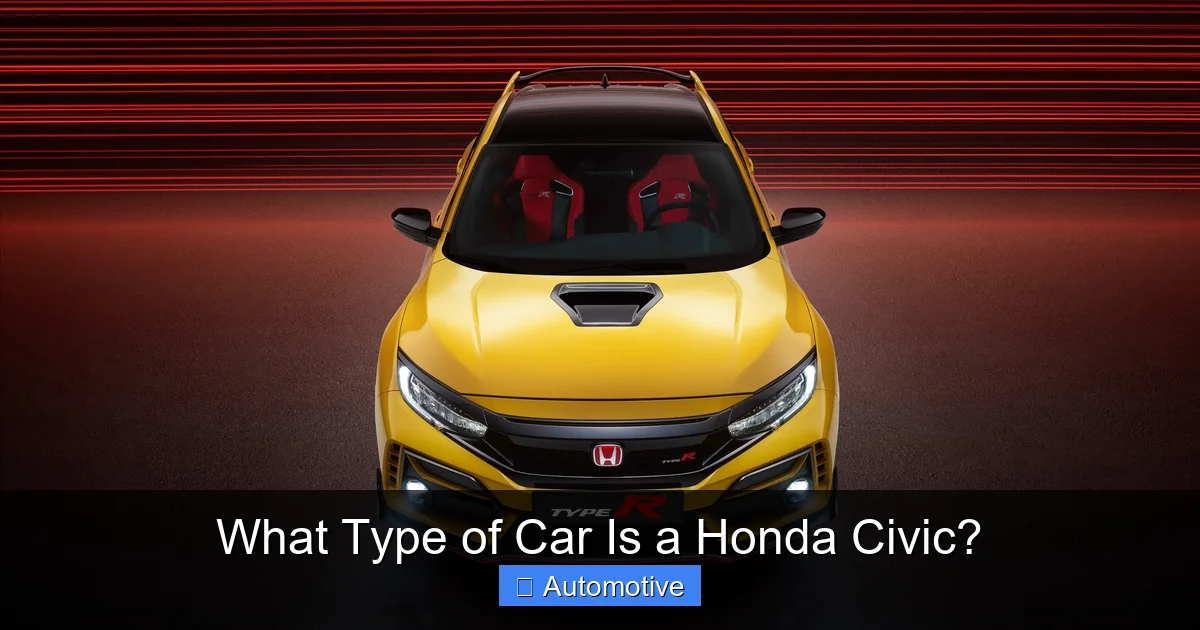
Visual guide about What Type of Car Is a Honda Civic?
Image source: images.wallpapersden.com
One of the reasons the Honda Civic stands out in the compact car segment is its variety. Unlike many competitors that offer only one or two body styles, the Civic comes in three distinct forms: sedan, coupe, and hatchback. This flexibility allows buyers to choose the version that best fits their lifestyle, whether they prioritize passenger space, cargo capacity, or sporty styling.
Each body style has its own strengths, and understanding the differences can help you pick the right Civic for your needs.
The Civic Sedan: Practical and Polished
The Honda Civic sedan is the most popular version and the one most people think of when they imagine the Civic. It features a traditional four-door layout with a separate trunk, making it ideal for families, commuters, and anyone who values a clean, professional look.
The sedan offers a spacious interior with comfortable seating for five passengers. Rear legroom is generous for a compact car, and the trunk provides 15.1 cubic feet of cargo space—enough for groceries, luggage, or sports equipment. The ride is smooth and quiet, thanks to Honda’s refined suspension tuning and sound-dampening materials.
In terms of technology, the Civic sedan comes well-equipped even in its base trim. Standard features include a 7-inch touchscreen, Apple CarPlay, Android Auto, and the Honda Sensing® suite of safety features. Higher trims add upgrades like a premium audio system, wireless charging, and a larger 9-inch display.
For 2024, the Civic sedan is available in four main trims: LX, Sport, EX, and Touring. The LX is the most affordable and still includes key features like automatic climate control and LED headlights. The Sport trim adds sporty styling cues and a leather-wrapped steering wheel. The EX and Touring trims offer more power, better fuel economy, and luxury touches like leather seats and a sunroof.
The Civic Coupe: Sleek and Sporty
While the sedan is the workhorse of the Civic lineup, the coupe brings a dose of style and excitement. With its two-door design and sloping roofline, the Civic coupe has a more aggressive and athletic appearance. It’s perfect for drivers who want a car that looks fast even when it’s parked.
The coupe shares much of its mechanical foundation with the sedan, including the same engine options and safety features. However, it offers a slightly more engaging driving experience, with a lower center of gravity and sport-tuned suspension in higher trims. The interior is driver-focused, with supportive seats and intuitive controls.
Cargo space is more limited in the coupe—just 12.4 cubic feet—but that’s expected given its sporty design. Rear seat space is also tighter, making it better suited for couples or individuals who don’t often carry passengers.
The Civic coupe is available in LX and Sport trims, with the Sport version adding 18-inch alloy wheels, a rear spoiler, and a sport exhaust system. While it’s not as practical as the sedan, the coupe delivers a fun-to-drive experience that appeals to younger buyers and driving enthusiasts.
The Civic Hatchback: Versatile and Fun
If you need more cargo flexibility without sacrificing style, the Honda Civic hatchback is an excellent choice. It combines the sporty look of the coupe with the practicality of a small SUV. The hatchback features a liftgate instead of a trunk, allowing you to load larger items like strollers, bikes, or camping gear with ease.
With the rear seats folded, the hatchback offers up to 44.2 cubic feet of cargo space—more than double the sedan’s capacity. That makes it ideal for outdoor enthusiasts, pet owners, or anyone who frequently transports bulky items. The rear seats also fold flat, creating a level loading floor for maximum utility.
The hatchback is available in Sport, Sport Touring, and high-performance Type R trims. The Sport and Sport Touring models come with a 1.5-liter turbocharged engine that delivers 180 horsepower—more than the base sedan engine. The Type R, meanwhile, is a track-ready machine with over 300 horsepower and aggressive aerodynamics.
Despite its sporty capabilities, the hatchback remains fuel-efficient, with the turbo engine achieving up to 30 MPG in the city and 37 MPG on the highway. It’s a great example of how the Civic lineup offers something for everyone—whether you want efficiency, performance, or versatility.
Performance and Engine Options
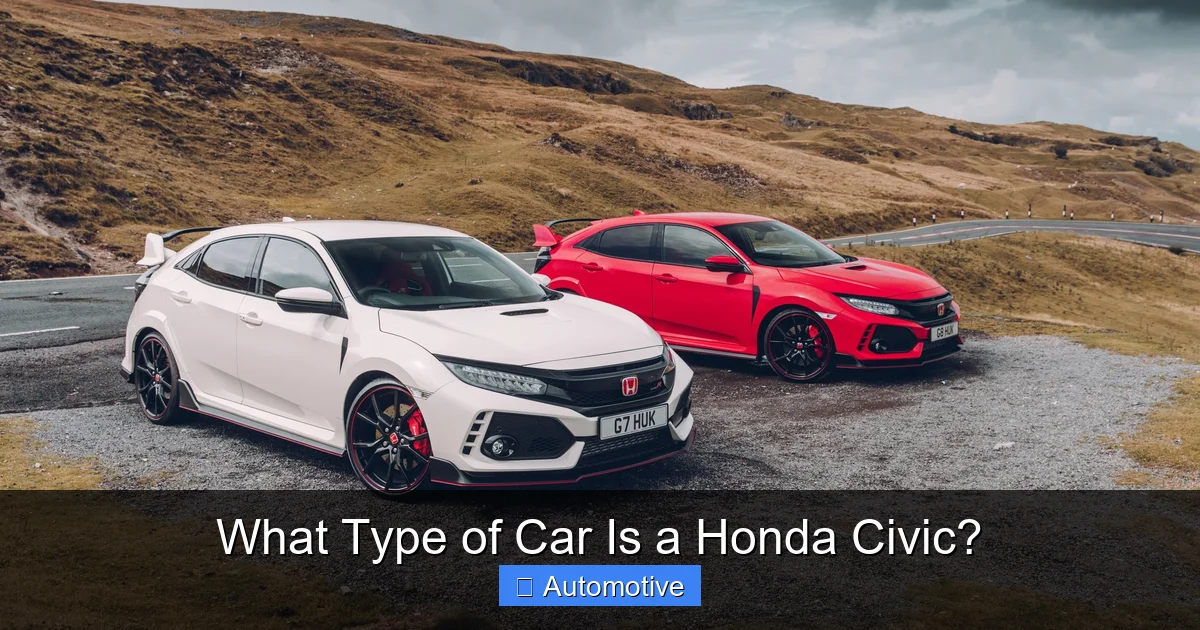
Visual guide about What Type of Car Is a Honda Civic?
Image source: hdcarwallpapers.com
When it comes to performance, the Honda Civic doesn’t disappoint. While it’s not a muscle car, it offers a range of engine options that balance power, efficiency, and responsiveness. Whether you’re looking for a smooth daily driver or a spirited weekend cruiser, there’s a Civic engine to match your needs.
Base Engine: Efficient and Reliable
The standard engine across most Civic trims is a 2.0-liter inline-four cylinder that produces 158 horsepower and 138 lb-ft of torque. This engine is designed for everyday driving, offering smooth acceleration and excellent fuel economy. It’s paired with a continuously variable transmission (CVT) that maximizes efficiency while maintaining a responsive feel.
For drivers who prioritize economy over performance, this engine is a great choice. It’s quiet, reliable, and gets the job done without drawing attention to itself. It’s also the most affordable option, helping keep the Civic’s starting price competitive.
Turbocharged Power: More Fun, Same Efficiency
For those who want a bit more excitement, the 1.5-liter turbocharged four-cylinder engine is available in the EX, Touring, and hatchback trims. This engine delivers 180 horsepower and 177 lb-ft of torque—a significant upgrade over the base engine—while still achieving impressive fuel economy.
The turbo engine provides quicker acceleration and better passing power, making highway merges and uphill climbs feel effortless. Despite the added performance, it maintains strong MPG ratings, especially in the hatchback and sedan models.
The turbo engine also features direct injection and variable valve timing, which help optimize combustion and reduce emissions. It’s a great example of how modern engineering can deliver both power and efficiency.
High-Performance Variants: Si and Type R
For driving enthusiasts, Honda offers two high-performance versions of the Civic: the Si and the Type R.
The Civic Si is a sport-tuned version of the sedan and coupe, featuring a 1.5-liter turbo engine tuned to produce 200 horsepower. It comes with a six-speed manual transmission, sport suspension, larger brakes, and a limited-slip differential. The Si is designed for drivers who want a more engaging driving experience without stepping into full-blown sports car territory.
The Civic Type R, on the other hand, is a track-focused powerhouse. Based on the hatchback, it features a 2.0-liter turbocharged engine that delivers 315 horsepower and 310 lb-ft of torque. With a top speed of over 169 mph and a 0-60 time of around 5 seconds, the Type R is one of the fastest front-wheel-drive cars on the market.
Both the Si and Type R include aggressive styling, sport seats, and performance-oriented features like rev-matching and launch control. They’re not for everyone, but for those who love driving, they offer an unbeatable combination of performance and practicality.
Safety and Technology Features
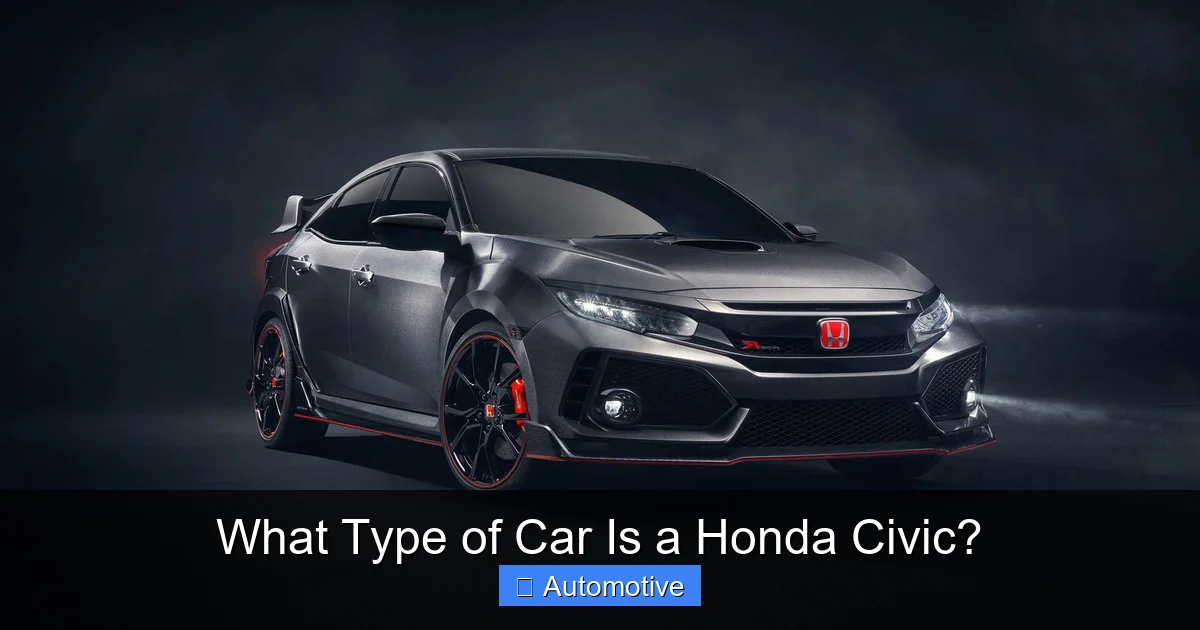
Visual guide about What Type of Car Is a Honda Civic?
Image source: wallpaperaccess.com
Safety and technology are two areas where the Honda Civic truly shines. Honda has made significant investments in both, ensuring that the Civic is not only fun to drive but also safe and connected.
Honda Sensing®: Standard Safety for All
One of the Civic’s biggest strengths is the inclusion of the Honda Sensing® suite as standard equipment on all trims. This comprehensive package of driver-assist technologies helps prevent accidents and protect occupants.
Key features include:
– **Collision Mitigation Braking System (CMBS):** Automatically applies the brakes if a potential collision is detected.
– **Road Departure Mitigation (RDM):** Helps keep the car in its lane and can steer it back if it drifts off the road.
– **Adaptive Cruise Control (ACC):** Maintains a set distance from the vehicle ahead, even in stop-and-go traffic.
– **Lane Keeping Assist System (LKAS):** Gently steers the car to keep it centered in its lane.
– **Traffic Sign Recognition:** Reads speed limit signs and displays them on the dashboard.
These features have helped the Civic earn top safety ratings from the National Highway Traffic Safety Administration (NHTSA) and the Insurance Institute for Highway Safety (IIHS). In fact, the 2024 Civic received a 5-star overall safety rating from NHTSA and was named a Top Safety Pick by IIHS.
Infotainment and Connectivity
The Civic’s technology extends beyond safety. The infotainment system is user-friendly and packed with features. The base model includes a 7-inch touchscreen with Apple CarPlay and Android Auto, allowing seamless integration with your smartphone. Higher trims upgrade to a 9-inch display with wireless smartphone integration, navigation, and a premium Bose audio system.
Other tech features include:
– Wireless phone charging
– Wi-Fi hotspot capability
– Multiple USB ports
– Digital instrument cluster (on Touring and Type R trims)
The system is intuitive, with large icons and responsive touch controls. Voice commands are also supported, making it easy to adjust settings without taking your eyes off the road.
Fuel Efficiency and Environmental Impact
Fuel efficiency is one of the Civic’s defining characteristics. Honda has consistently pushed the envelope in this area, offering engines and transmissions that maximize miles per gallon without sacrificing performance.
The 2024 Civic sedan with the 2.0-liter engine achieves an EPA-estimated 33 MPG city / 42 MPG highway / 36 MPG combined. The turbocharged 1.5-liter engine in the EX and Touring trims gets 31 MPG city / 40 MPG highway / 35 MPG combined. Even the sporty Si manages 27 MPG city / 37 MPG highway.
These numbers are impressive for a non-hybrid vehicle. When compared to competitors like the Toyota Corolla, Hyundai Elantra, and Mazda3, the Civic often comes out on top in fuel economy.
Honda is also committed to reducing the Civic’s environmental impact. The company uses sustainable materials in the interior, such as bio-fabrics and recycled plastics. Additionally, Honda is investing in hybrid and electric versions of the Civic, with plans to expand its electrified lineup in the coming years.
Resale Value and Long-Term Ownership
One of the Civic’s most appealing traits is its strong resale value. According to Kelley Blue Book, the Civic retains more of its value over time than most compact cars. After three years, a Civic typically holds around 60% of its original value—compared to the industry average of about 50%.
This is due to several factors: reliability, low maintenance costs, and high demand in the used car market. People know they can trust a used Civic to last, which keeps prices high.
Long-term ownership is also a breeze. Routine maintenance is straightforward and affordable, and parts are widely available. Many Civic owners report driving their cars well over 200,000 miles with proper care.
Conclusion
So, what type of car is a Honda Civic? It’s a compact car that punches above its weight. It’s efficient, reliable, safe, and packed with modern features. Whether you choose the practical sedan, the stylish coupe, or the versatile hatchback, the Civic delivers a well-rounded driving experience.
It’s not the flashiest car on the road, but it doesn’t need to be. What it offers is something more valuable: consistency, dependability, and value. For millions of drivers around the world, the Honda Civic isn’t just a car—it’s a trusted companion for life’s everyday journeys.
Frequently Asked Questions
Is the Honda Civic a compact car?
Yes, the Honda Civic is classified as a compact car. It offers a balance of size, fuel efficiency, and interior space, making it ideal for city driving and daily commuting.
What body styles does the Honda Civic come in?
The Honda Civic is available as a sedan, coupe, and hatchback. Each style offers different advantages in terms of space, style, and functionality.
How fuel efficient is the Honda Civic?
The 2024 Honda Civic achieves up to 33 MPG in the city and 42 MPG on the highway, depending on the engine and trim. It’s one of the most fuel-efficient non-hybrid compact cars.
Does the Honda Civic have good safety ratings?
Yes, the Civic earns top safety ratings from NHTSA and IIHS. It comes standard with the Honda Sensing® suite, which includes advanced driver-assist features.
What is the difference between the Civic Si and Type R?
The Civic Si is a sport-tuned version with 200 horsepower and a manual transmission. The Type R is a high-performance model with over 300 horsepower, designed for track driving.
How long does a Honda Civic last?
With proper maintenance, a Honda Civic can easily last over 200,000 miles. Many owners report driving their Civics for 10 years or more without major issues.