
What Technology Powers Rolls Royce Engines

Rolls Royce engines are powered by a blend of advanced engineering, precision manufacturing, and smart technology. These powerplants combine high-efficiency turbofan designs, lightweight composite materials, and real-time digital monitoring to deliver unmatched performance and reliability in both aviation and marine applications.
When you think of Rolls Royce, the first image that likely comes to mind is a luxury car gliding silently down a country road. But behind that iconic brand lies a powerhouse of engineering excellence—one that extends far beyond the automotive world. Rolls Royce Holdings plc, the aerospace and defense company, is a global leader in designing and manufacturing some of the most advanced engines on the planet. These aren’t just engines; they’re marvels of modern technology, powering everything from commercial airliners to military jets, naval destroyers, and even space exploration systems.
What sets Rolls Royce engines apart isn’t just raw power—it’s the intelligent integration of cutting-edge materials, precision engineering, and digital innovation. Whether it’s the Trent XWB engine that powers the Airbus A350 or the MT30 gas turbine used in the U.S. Navy’s Freedom-class littoral combat ships, Rolls Royce engines are built to perform under extreme conditions while delivering unmatched efficiency and reliability. The technology behind these engines is a carefully orchestrated symphony of aerodynamics, thermodynamics, materials science, and artificial intelligence.
Key Takeaways
- Advanced Turbofan Technology: Rolls Royce engines use high-bypass turbofan designs that maximize fuel efficiency and reduce noise, making them ideal for modern aircraft.
- Lightweight Composite Materials: Extensive use of carbon fiber composites and titanium alloys reduces engine weight while maintaining strength and durability.
- Intelligent Engine Monitoring: The Engine Health Monitoring (EHM) system uses sensors and AI to predict maintenance needs and prevent failures.
- Precision Manufacturing Techniques: Techniques like 3D printing and single-crystal turbine blades ensure components meet exacting tolerances for peak performance.
- Digital Twin Technology: Virtual replicas of engines allow engineers to simulate performance, optimize designs, and improve reliability before physical testing.
- Sustainable Innovation: Rolls Royce is investing in hybrid-electric propulsion and sustainable aviation fuels (SAF) to reduce environmental impact.
- Marine and Industrial Applications: The same core technologies power naval vessels and energy systems, showcasing the versatility of Rolls Royce engineering.
📑 Table of Contents
- The Heart of the Engine: Advanced Turbofan Technology
- Materials That Make the Impossible Possible
- Smart Engines: The Role of Digital Technology
- Precision Manufacturing: The Art of Perfection
- Sustainability and the Future of Rolls Royce Engines
- Beyond Aviation: Marine and Industrial Applications
- Conclusion
The Heart of the Engine: Advanced Turbofan Technology
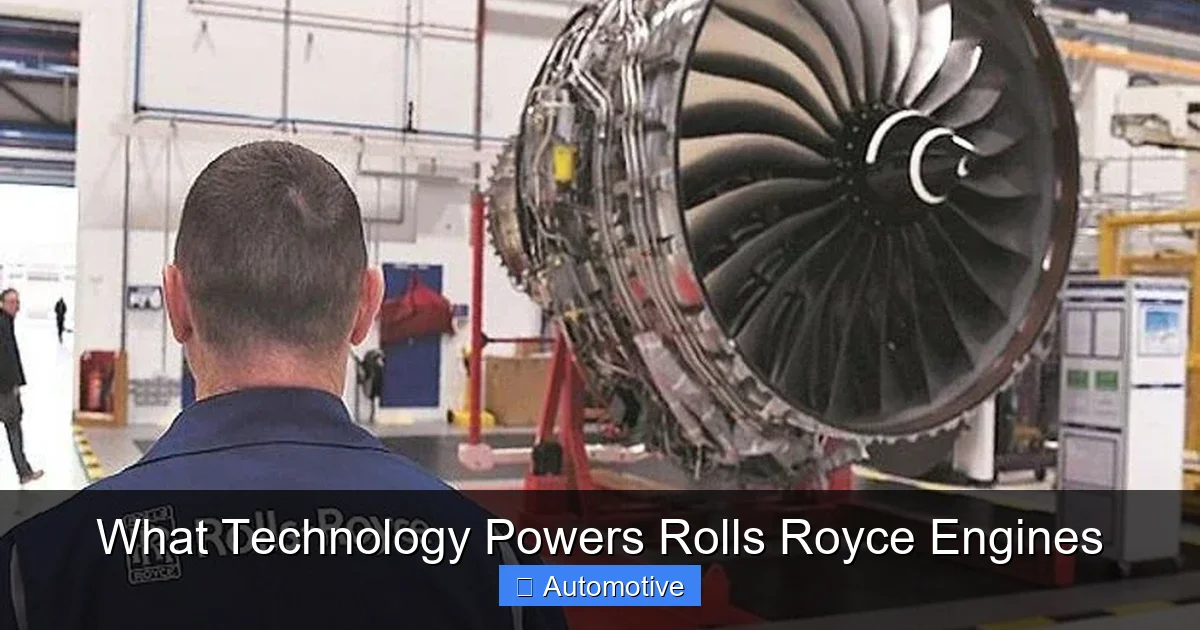
At the core of most Rolls Royce aviation engines is the high-bypass turbofan design—a technological leap that has redefined modern air travel. Unlike older turbojet engines that pushed all air through the combustion chamber, turbofans divert a large portion of incoming air around the engine core. This “bypass” air generates thrust more efficiently and quietly, making turbofans the gold standard for commercial aviation.
The bypass ratio—the amount of air that bypasses the core compared to the air that goes through it—is a key performance indicator. Rolls Royce engines, such as the Trent 1000 and Trent XWB, feature bypass ratios exceeding 10:1, meaning more than 90% of the airflows around the core. This design significantly improves fuel efficiency, reduces emissions, and cuts noise levels—critical factors for airlines operating in noise-sensitive airports and under strict environmental regulations.
How High-Bypass Turbofans Work
Imagine a large fan at the front of the engine, spinning at incredible speeds. This fan pulls in massive amounts of air. Most of this air is pushed straight out the back, creating thrust without ever entering the combustion chamber. Only a small fraction of the air is compressed, mixed with fuel, and ignited in the core. The hot exhaust gases then spin the turbine, which powers the fan and compressor. This separation of airflow allows the engine to produce more thrust with less fuel, making it ideal for long-haul flights.
Rolls Royce has continuously refined this design. For example, the Trent XWB, introduced in 2015, is one of the most efficient large turbofan engines in the world. It powers the Airbus A350 and delivers a 15% improvement in fuel efficiency compared to previous-generation engines. This translates to lower operating costs for airlines and a smaller carbon footprint per passenger mile.
Noise Reduction and Environmental Benefits
One of the biggest challenges in aviation is noise pollution. Rolls Royce has tackled this with innovative fan blade designs and acoustic liners inside the engine casing. The fan blades on the Trent series are shaped using computational fluid dynamics (CFD) to minimize turbulence and noise. Additionally, the larger diameter of high-bypass engines allows for slower fan speeds, which further reduces noise.
From an environmental standpoint, high-bypass turbofans burn fuel more cleanly and efficiently. Rolls Royce engines are certified to run on up to 50% sustainable aviation fuel (SAF), with ongoing research aiming for 100% compatibility. This commitment to sustainability is part of the company’s broader goal to achieve net-zero carbon emissions by 2050.
Materials That Make the Impossible Possible
Visual guide about What Technology Powers Rolls Royce Engines
Image source: bsmedia.business-standard.com
Building an engine that can withstand temperatures hotter than the surface of the sun and pressures greater than deep-sea trenches requires materials that push the boundaries of science. Rolls Royce engines rely on a sophisticated blend of advanced alloys, ceramics, and composite materials to survive these extreme conditions.
Single-Crystal Turbine Blades
One of the most remarkable innovations in Rolls Royce engines is the use of single-crystal turbine blades. Traditional metal blades are made from polycrystalline alloys—meaning they consist of many tiny crystals. Under extreme heat and stress, the boundaries between these crystals can become weak points, leading to cracks and failure.
Rolls Royce solved this by developing turbine blades grown from a single crystal structure. Using a process called directional solidification, molten metal is cooled in a controlled environment so that only one crystal forms. This eliminates grain boundaries, dramatically increasing the blade’s strength and heat resistance. These blades can operate at temperatures exceeding 1,700°C (3,092°F)—hotter than the melting point of the metal itself—thanks to internal cooling channels that circulate cool air.
Carbon Fiber Composites
Weight is the enemy of efficiency in aviation. Every kilogram saved means less fuel burned and lower emissions. Rolls Royce has embraced carbon fiber-reinforced polymers (CFRP) to reduce engine weight without sacrificing strength. The fan blades and casings in engines like the Trent 1000 are made from lightweight composites that are both strong and resistant to fatigue.
These composites are woven into complex shapes and cured under high pressure and temperature. The result is a material that’s lighter than titanium but just as strong. For example, the fan blades in the Trent XWB are made from a composite called carbon fiber with a titanium leading edge. This hybrid design protects against bird strikes while keeping weight to a minimum.
Titanium Alloys and Ceramic Coatings
Titanium alloys are used throughout Rolls Royce engines for their high strength-to-weight ratio and resistance to corrosion. Components like compressor blades and discs are often made from titanium aluminide, a lightweight intermetallic compound that performs well at high temperatures.
In addition, ceramic matrix composites (CMCs) are being integrated into newer engine designs. These materials can withstand even higher temperatures than metal alloys and are significantly lighter. Rolls Royce uses CMCs in the turbine section, where they reduce the need for cooling air and improve overall efficiency. The use of CMCs is still evolving, but it represents a major step forward in engine performance.
Smart Engines: The Role of Digital Technology

Visual guide about What Technology Powers Rolls Royce Engines
Image source: arabianbusiness.com
Modern Rolls Royce engines are not just mechanical marvels—they’re also digital powerhouses. Embedded sensors, real-time data analysis, and artificial intelligence allow these engines to monitor their own health, optimize performance, and predict maintenance needs.
Engine Health Monitoring (EHM)
Every Rolls Royce engine is equipped with dozens of sensors that track parameters like temperature, pressure, vibration, and fuel flow. This data is continuously transmitted to ground-based systems via satellite or aircraft data links. The Engine Health Monitoring (EHM) system analyzes this information to detect anomalies, such as blade wear or compressor fouling, before they become serious issues.
For example, if a sensor detects unusual vibrations, the system can alert maintenance crews to inspect the engine. This predictive maintenance approach reduces unscheduled downtime and extends the engine’s lifespan. Airlines using Rolls Royce engines report significant savings in maintenance costs and improved operational reliability.
Digital Twin Technology
One of the most exciting developments in engine technology is the use of digital twins—virtual replicas of physical engines. Rolls Royce creates a digital twin for every engine it produces, using real-time data from sensors to simulate performance under various conditions.
Engineers can use these digital models to test new designs, optimize fuel efficiency, and troubleshoot problems without ever touching a physical engine. For instance, if a new turbine blade design is being considered, it can be tested in the digital twin to see how it performs under stress, heat, and airflow. This accelerates development cycles and reduces the need for costly physical prototypes.
Digital twins also help with fleet management. Airlines can compare the performance of multiple engines across their fleet, identifying trends and making data-driven decisions about maintenance and operations.
Artificial Intelligence and Machine Learning
Rolls Royce is increasingly using AI to analyze the vast amounts of data generated by its engines. Machine learning algorithms can detect patterns that human engineers might miss, such as subtle changes in vibration that indicate early wear. These systems can also optimize engine settings in real time to improve fuel efficiency based on flight conditions.
For example, during cruise, the AI might adjust the fuel flow and compressor speed to maintain optimal performance while minimizing emissions. This level of automation ensures that the engine is always operating at peak efficiency, regardless of altitude, temperature, or weather.
Precision Manufacturing: The Art of Perfection
Visual guide about What Technology Powers Rolls Royce Engines
Image source: marinelink.com
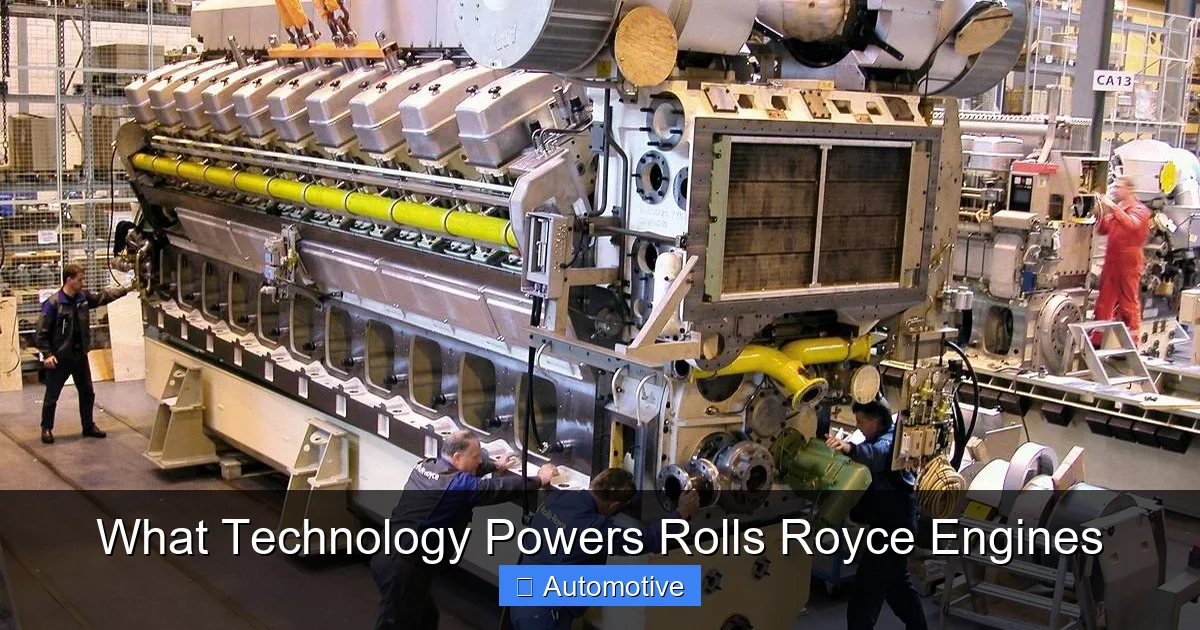
Building an engine that performs flawlessly under extreme conditions requires manufacturing processes that are as advanced as the materials and designs they produce. Rolls Royce employs some of the most precise manufacturing techniques in the world, including 3D printing, robotic assembly, and laser metrology.
Additive Manufacturing (3D Printing)
Rolls Royce has been a pioneer in using additive manufacturing, or 3D printing, to produce complex engine components. Unlike traditional machining, which removes material from a solid block, 3D printing builds parts layer by layer from powdered metal or ceramic.
This allows for the creation of intricate internal structures, such as cooling channels in turbine blades, that would be impossible to make with conventional methods. For example, the company has 3D-printed fuel nozzles for its UltraFan engine demonstrator, reducing the number of parts from 20 to just one. This not only simplifies assembly but also improves reliability and performance.
Robotic Assembly and Quality Control
Once components are manufactured, they are assembled using highly automated robotic systems. These robots ensure that every bolt is tightened to the exact specification and every part is aligned perfectly. Human technicians oversee the process, but the precision of robotics minimizes the risk of human error.
After assembly, engines undergo rigorous testing, including spin tests, thermal cycling, and performance evaluations. Laser metrology systems measure every dimension to ensure compliance with design tolerances. Even a deviation of a few microns can affect performance, so quality control is paramount.
Single-Crystal Casting Process
The production of single-crystal turbine blades is a highly specialized process that requires extreme precision. Rolls Royce uses a technique called investment casting, where a ceramic mold is created around a wax pattern of the blade. The wax is melted away, and molten metal is poured into the mold. The mold is then cooled in a controlled manner to encourage the formation of a single crystal.
This process takes place in a vacuum or inert gas environment to prevent contamination. The result is a blade with exceptional strength and heat resistance, capable of operating in the most demanding conditions.
Sustainability and the Future of Rolls Royce Engines
As the world shifts toward greener technologies, Rolls Royce is leading the charge in sustainable propulsion. The company is investing heavily in hybrid-electric systems, hydrogen fuel research, and sustainable aviation fuels (SAF).
Hybrid-Electric Propulsion
Rolls Royce is developing hybrid-electric engines that combine traditional gas turbines with electric motors. These systems can reduce fuel consumption and emissions, especially during takeoff and landing—the most fuel-intensive phases of flight. The company’s ACCEL (Accelerating the Electrification of Flight) project aims to create the world’s fastest all-electric aircraft, showcasing the potential of electric propulsion.
Hydrogen and Alternative Fuels
Hydrogen is seen as a promising zero-emission fuel for aviation. Rolls Royce is testing hydrogen combustion in gas turbine engines and exploring fuel cell technology for electric propulsion. The company has partnered with airlines and governments to develop hydrogen-powered aircraft, with test flights expected in the coming years.
In the meantime, Rolls Royce engines are already compatible with sustainable aviation fuels made from waste oils, agricultural residues, and even captured carbon. These fuels can reduce lifecycle carbon emissions by up to 80% compared to conventional jet fuel.
Net-Zero Commitment
Rolls Royce has committed to achieving net-zero carbon emissions across its operations by 2030 and net-zero across its value chain by 2050. This includes reducing emissions from engine production, improving fuel efficiency, and supporting the adoption of alternative fuels. The company is also investing in carbon capture and offset programs to balance remaining emissions.
Beyond Aviation: Marine and Industrial Applications
While Rolls Royce is best known for its aviation engines, the same core technologies power a wide range of applications. The company’s MT30 gas turbine, for example, is used in naval ships like the U.S. Navy’s Zumwalt-class destroyers and the UK’s Queen Elizabeth-class aircraft carriers. These engines deliver over 36 megawatts of power—enough to power a small city—while maintaining high efficiency and reliability.
In the energy sector, Rolls Royce provides gas turbines for power generation and backup systems for critical infrastructure. The same principles of efficiency, durability, and smart monitoring apply across all applications, demonstrating the versatility of Rolls Royce engineering.
Conclusion
Rolls Royce engines are more than just machines—they’re a testament to human ingenuity and the relentless pursuit of excellence. From the high-bypass turbofans that glide passengers across continents to the digital twins that predict maintenance needs, every aspect of these engines is designed for peak performance and sustainability.
The technology behind Rolls Royce engines continues to evolve, driven by advances in materials, manufacturing, and digital innovation. As the world demands cleaner, quieter, and more efficient propulsion systems, Rolls Royce is at the forefront of this transformation. Whether in the skies, on the seas, or in power plants, Rolls Royce engines power the future—one revolution at a time.
Frequently Asked Questions
What makes Rolls Royce engines different from other aircraft engines?
Rolls Royce engines stand out due to their high-bypass turbofan design, advanced materials like single-crystal turbine blades, and intelligent monitoring systems. These features deliver superior fuel efficiency, lower emissions, and exceptional reliability compared to many competitors.
Can Rolls Royce engines run on sustainable fuels?
Yes, Rolls Royce engines are certified to operate on up to 50% sustainable aviation fuel (SAF), and the company is working toward 100% compatibility. SAF can reduce lifecycle carbon emissions by up to 80%.
How does Rolls Royce ensure engine reliability?
Through a combination of precision manufacturing, rigorous testing, and real-time Engine Health Monitoring (EHM). Sensors detect issues early, and digital twins allow for predictive maintenance, minimizing downtime.
What is a digital twin in Rolls Royce engines?
A digital twin is a virtual replica of a physical engine that uses real-time data to simulate performance. It helps engineers optimize designs, predict failures, and improve efficiency without physical testing.
Are Rolls Royce engines used only in airplanes?
No, Rolls Royce engines also power naval ships, power generation systems, and industrial applications. The MT30 gas turbine, for example, is used in military vessels worldwide.
What is the future of Rolls Royce engine technology?
The future includes hybrid-electric propulsion, hydrogen fuel systems, and increased use of sustainable fuels. Rolls Royce aims to achieve net-zero carbon emissions by 2050 through innovation and sustainability.
