
What Size Tires for a 2014 Toyota Corolla?

Choosing the correct tire size for your 2014 Toyota Corolla ensures safety, performance, and fuel efficiency. This guide covers factory specifications, plus-size options, and expert advice to help you make the best decision for your driving needs.
Key Takeaways
- Standard tire size for most 2014 Corolla models is P205/55R16. This size offers a balanced mix of comfort, handling, and fuel economy.
- LE and S trims typically use 16-inch wheels, while the base L trim may come with 15-inch wheels and P195/65R15 tires.
- Always check your door jamb sticker or owner’s manual for the exact OEM tire size recommended for your specific trim and configuration.
- Upgrading to 17-inch wheels is possible with P215/45R17 tires, but ensure proper clearance and alignment to avoid rubbing or handling issues.
- Tire width, aspect ratio, and wheel diameter must align with your vehicle’s suspension and braking system for optimal performance.
- Season and climate matter—all-season tires are ideal for most drivers, but winter or performance tires may be better in extreme conditions.
- Regular tire maintenance—including rotation, alignment, and pressure checks—extends tire life and improves safety.
📑 Table of Contents
What Size Tires for a 2014 Toyota Corolla?
If you’re the proud owner of a 2014 Toyota Corolla, you already know it’s a reliable, fuel-efficient compact car that’s perfect for daily commuting, weekend road trips, and everything in between. But when it comes time to replace your tires—whether due to wear, damage, or seasonal changes—you might find yourself asking: “What size tires do I actually need?”
It’s a great question, and one that’s more important than you might think. The right tire size doesn’t just keep your car rolling smoothly—it affects your safety, handling, fuel economy, and even your car’s warranty. Put simply, using the wrong tire size can lead to poor performance, premature wear, and in some cases, dangerous driving conditions.
In this comprehensive guide, we’ll walk you through everything you need to know about tire sizes for the 2014 Toyota Corolla. From factory specifications to upgrade options, seasonal considerations, and maintenance tips, we’ve got you covered. Whether you’re a first-time car owner or a seasoned driver looking to fine-tune your ride, this article will help you make an informed decision.
Understanding Tire Size Basics
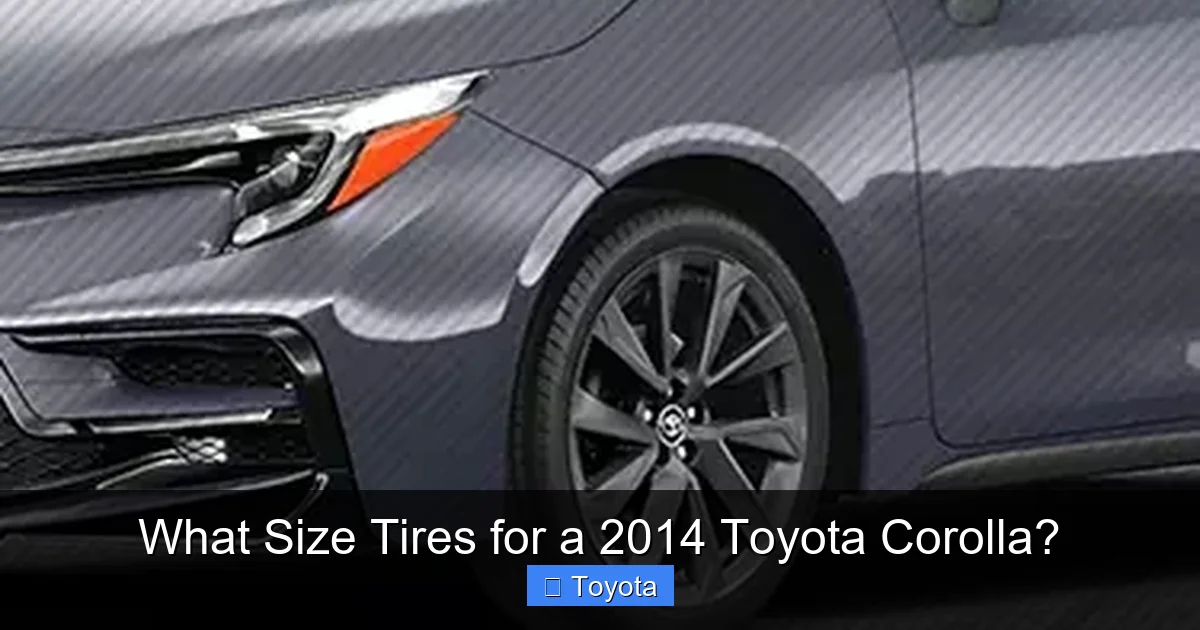
Visual guide about What Size Tires for a 2014 Toyota Corolla?
Image source: discounttire.scene7.com
Before we dive into the specific tire sizes for your 2014 Corolla, let’s take a moment to understand what those numbers on the sidewall actually mean. Tire sizes are written in a standardized format that might look confusing at first, but once you break it down, it’s actually quite simple.
Most tire sizes follow this pattern: **P205/55R16**.
Let’s decode that:
– **P** stands for “P-metric,” which means the tire is designed for passenger vehicles (as opposed to light trucks or commercial vehicles).
– **205** is the tire’s width in millimeters from sidewall to sidewall.
– **55** is the aspect ratio—the height of the tire’s sidewall as a percentage of its width. In this case, the sidewall is 55% of 205mm.
– **R** means the tire has a radial construction, which is the most common type today.
– **16** is the diameter of the wheel (in inches) that the tire is designed to fit.
So, a P205/55R16 tire is 205mm wide, has a sidewall height of about 113mm (55% of 205), and fits a 16-inch wheel.
Why Tire Size Matters
You might be wondering, “Can’t I just pick any tire that fits?” The short answer is no—tire size matters more than you think. Here’s why:
– **Speedometer Accuracy**: Your car’s speedometer is calibrated based on the original tire size. If you install tires that are too large or too small, your speedometer will read incorrectly. For example, larger tires cover more ground per rotation, making your car seem slower than it actually is—which could lead to speeding tickets or unsafe driving.
– **Fuel Efficiency**: Wider tires often have more rolling resistance, which can reduce fuel economy. Conversely, narrower tires might improve efficiency but compromise handling.
– **Suspension and Braking**: Your Corolla’s suspension and braking systems are designed to work with specific tire dimensions. Using tires that are too tall or too wide can interfere with suspension travel, cause rubbing against the wheel well, or reduce braking performance.
– **Safety and Handling**: The right tire size ensures optimal contact with the road, better traction, and stable handling—especially in wet or slippery conditions.
In short, sticking to the correct tire size (or a compatible alternative) is essential for maintaining your car’s performance and safety.
Factory Tire Sizes for the 2014 Toyota Corolla
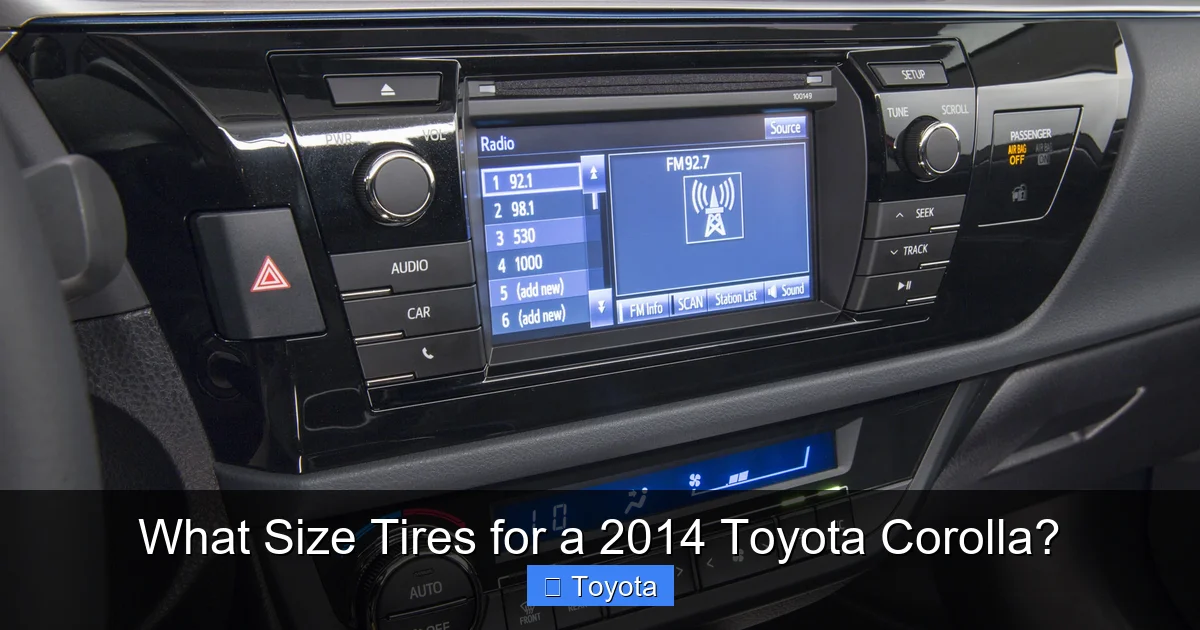
Visual guide about What Size Tires for a 2014 Toyota Corolla?
Image source: st.automobilemag.com
Now that you understand how tire sizes work, let’s get into the specifics for your 2014 Toyota Corolla. The good news? Toyota made it relatively straightforward by offering a few consistent tire sizes across the different trim levels.
The 2014 Corolla was available in three main trims: **L**, **LE**, and **S**. Each trim came with slightly different wheel and tire configurations, so it’s important to know which one you have.
Standard Tire Sizes by Trim
– **L Trim (Base Model)**: The base L trim typically came with 15-inch steel wheels and P195/65R15 tires. This size offers a slightly taller sidewall, which can provide a more comfortable ride on rough roads. It’s also a bit more budget-friendly when it comes to tire replacement.
– **LE Trim (Mid-Level)**: The LE trim is the most popular and usually comes with 16-inch alloy wheels and P205/55R16 tires. This is the most common tire size for the 2014 Corolla and strikes a great balance between comfort, handling, and fuel efficiency.
– **S Trim (Sport Model)**: The sportier S trim also uses 16-inch wheels but may come with slightly wider tires—still P205/55R16 in most cases. Some S models, especially those with optional sport packages, might have upgraded wheels, but the tire size remains consistent.
How to Confirm Your Tire Size
Even if you know your trim, it’s always best to double-check your current tire size. Here’s how:
1. **Check the sidewall of your current tires**: Look for a series of numbers like “P205/55R16” on the side of the tire. This is the easiest way to confirm your size.
2. **Look at the door jamb sticker**: Open your driver’s side door and look for a white or yellow sticker on the door frame. It lists important info, including the recommended tire size, inflation pressure, and vehicle weight ratings.
3. **Consult your owner’s manual**: The manual that came with your Corolla will have a section on tires, including the OEM (original equipment manufacturer) specifications.
4. **Use Toyota’s online VIN decoder**: If you’re unsure, you can enter your Vehicle Identification Number (VIN) on Toyota’s official website to get detailed specs for your exact model.
Why Stick with OEM Sizes?
While it might be tempting to upgrade to a bigger or flashier tire, sticking with the factory-recommended size (or a close alternative) is usually the safest and most practical choice. Here’s why:
– **Warranty and Resale Value**: Modifying your tires beyond OEM specs can sometimes void parts of your warranty or reduce resale value if future buyers prefer stock configurations.
– **Ease of Replacement**: OEM-sized tires are widely available and often more affordable. You won’t have to hunt for rare or custom sizes.
– **Proven Performance**: Toyota engineers designed your Corolla with specific tire sizes in mind. They’ve tested them for safety, efficiency, and durability—so why fix what isn’t broken?
That said, there are valid reasons to consider alternative sizes, which we’ll explore in the next section.
Can You Upgrade Your Tire Size?
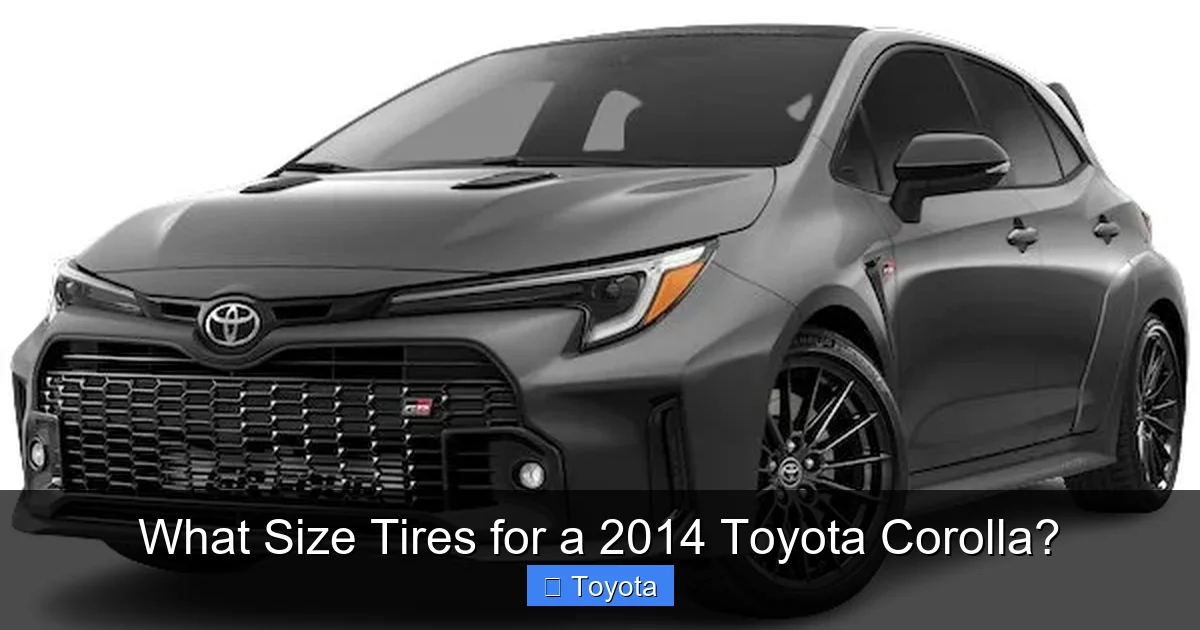
Visual guide about What Size Tires for a 2014 Toyota Corolla?
Image source: cdn.wheel-size.com
So, what if you want to upgrade your wheels and tires for better performance, a sportier look, or improved handling? Is it possible to go bigger than the factory specs?
The short answer is yes—but with caveats.
Upgrading to 17-Inch Wheels
Many 2014 Corolla owners consider upgrading from 16-inch to 17-inch wheels for a more aggressive stance and better cornering grip. This is a popular mod, especially among S trim drivers who want a sportier feel.
If you’re upgrading to 17-inch wheels, the recommended tire size is **P215/45R17**.
Let’s break down why this works:
– **Width (215mm)**: Slightly wider than the stock 205mm, which improves grip and stability.
– **Aspect Ratio (45%)**: Lower than the stock 55%, meaning a shorter sidewall. This reduces flex during cornering, improving responsiveness.
– **Diameter (17 inches)**: Matches the new wheel size.
But here’s the catch: a lower aspect ratio means less cushioning. You’ll feel more road imperfections, potholes, and bumps. This can lead to a harsher ride, especially on rough city streets.
Important Considerations Before Upgrading
Before you rush out to buy 17-inch wheels and P215/45R17 tires, keep these points in mind:
– **Clearance**: Make sure the new tires don’t rub against the wheel well, suspension components, or brake calipers. Test-fit one wheel before committing to a full set.
– **Speedometer Calibration**: A change in tire diameter can affect your speedometer. A P215/45R17 tire has a slightly smaller overall diameter than a P205/55R16, so your speedometer may read a bit high. This is usually within acceptable limits, but it’s something to be aware of.
– **Fuel Economy**: Wider tires with lower profiles often reduce fuel efficiency due to increased rolling resistance and weight.
– **Tire Cost**: 17-inch tires are generally more expensive than 16-inch ones, both upfront and over time.
– **Ride Comfort**: As mentioned, shorter sidewalls mean less shock absorption. If you drive on rough roads or prioritize comfort, this might not be the best upgrade.
Other Upgrade Options
If 17-inch wheels aren’t for you, there are other ways to enhance your Corolla’s performance:
– **Performance Tires**: Even with stock 16-inch wheels, you can upgrade to high-performance all-season or summer tires. These offer better grip, shorter braking distances, and improved handling—without changing the wheel size.
– **All-Weather or Winter Tires**: If you live in a region with harsh winters, consider dedicated winter tires. They’re designed for snow, ice, and cold temperatures, and can significantly improve safety.
– **Lightweight Wheels**: Swapping steel wheels for lightweight alloy wheels can reduce unsprung weight, improving acceleration, braking, and handling.
Seasonal and Climate Considerations
Your local climate plays a big role in choosing the right tires—even if the size stays the same.
All-Season Tires: The Safe Bet
Most 2014 Corolla owners opt for all-season tires, and for good reason. These tires are designed to perform well in a variety of conditions, including dry, wet, and light snow. They’re durable, affordable, and perfect for year-round driving in moderate climates.
Popular all-season options for the P205/55R16 size include:
– Michelin Defender T+H
– Continental PureContact LS
– Goodyear Assurance WeatherReady
These tires offer excellent tread life, quiet rides, and reliable performance.
Winter Tires for Cold Climates
If you live in an area with heavy snow, ice, or temperatures consistently below 45°F (7°C), winter tires are a must. They’re made from a softer rubber compound that stays flexible in cold weather, and they have deeper treads with siping for better grip on snow and ice.
Winter tires for the 2014 Corolla are available in the same sizes—P195/65R15, P205/55R16, or P215/45R17—so you can keep your current wheels.
Just remember: winter tires should only be used in cold months. In warmer weather, they wear out quickly and don’t perform as well as all-season or summer tires.
Summer/Performance Tires for Warm Weather
If you live in a warm climate and enjoy spirited driving, summer tires might be worth considering. They offer superior grip, sharper handling, and shorter braking distances on dry pavement.
However, they’re not suitable for cold or wet conditions. The rubber hardens below 45°F, reducing traction and increasing stopping distances.
Popular summer tires include:
– Michelin Pilot Sport 4
– Bridgestone Potenza RE-71R
– Continental ExtremeContact Sport
Again, these are best for performance enthusiasts in mild-to-warm climates.
Tire Maintenance Tips for Your 2014 Corolla
Once you’ve chosen the right tires, it’s important to take care of them. Proper maintenance not only extends tire life but also improves safety and fuel efficiency.
Regular Tire Rotation
Tires wear unevenly due to weight distribution, driving habits, and road conditions. Front tires typically wear faster than rear ones, especially on front-wheel-drive cars like the Corolla.
To promote even wear, rotate your tires every 5,000 to 7,500 miles. A standard rotation pattern moves the front tires to the rear and vice versa, sometimes crossing them side-to-side.
Check Tire Pressure Monthly
Underinflated tires increase rolling resistance, reduce fuel economy, and cause uneven wear. Overinflated tires reduce traction and can lead to blowouts.
Check your tire pressure at least once a month and before long trips. Use the pressure listed on your door jamb sticker—not the maximum pressure printed on the tire sidewall.
Inspect for Damage and Wear
Look for signs of damage like cuts, bulges, or punctures. Also, check the tread depth using the “penny test”: insert a penny into the tread with Lincoln’s head upside down. If you can see the top of his head, it’s time for new tires.
Most tires have built-in tread wear indicators—small bars that appear when the tread is worn down to 2/32 of an inch.
Wheel Alignment and Balancing
If your car pulls to one side, vibrates at high speeds, or shows uneven tire wear, you may need an alignment or balancing.
Alignment ensures your wheels are angled correctly relative to the road and each other. Balancing distributes weight evenly around the wheel to prevent vibrations.
Get these checked annually or after hitting a major pothole or curb.
Conclusion
Choosing the right tire size for your 2014 Toyota Corolla isn’t just about fitting a round rubber donut on your wheel—it’s about safety, performance, and peace of mind. Whether you stick with the factory-recommended P205/55R16 or explore upgrades like P215/45R17, the key is to make an informed decision based on your driving needs, climate, and budget.
Remember to always verify your current tire size, consider seasonal needs, and maintain your tires properly. A little attention now can save you money, improve your driving experience, and keep you safe on the road.
Your Corolla is a reliable, efficient car—and with the right tires, it’ll keep serving you well for years to come.
Frequently Asked Questions
What is the standard tire size for a 2014 Toyota Corolla?
The most common tire size for the 2014 Toyota Corolla is P205/55R16, especially on the LE and S trims. The base L trim may come with P195/65R15 tires on 15-inch wheels.
Can I put 17-inch tires on my 2014 Corolla?
Yes, you can upgrade to 17-inch wheels with P215/45R17 tires, but ensure proper clearance and consider the impact on ride comfort and fuel economy.
How do I find the correct tire size for my Corolla?
Check the sidewall of your current tires, the door jamb sticker, or your owner’s manual. You can also use your VIN on Toyota’s website for exact specs.
Are all-season tires good for a 2014 Corolla?
Yes, all-season tires are ideal for most drivers. They offer reliable performance in dry, wet, and light snow conditions, making them a practical year-round choice.
Do I need winter tires for my Corolla?
If you live in an area with heavy snow, ice, or cold temperatures below 45°F, winter tires are recommended for better traction and safety.
How often should I rotate my Corolla’s tires?
Rotate your tires every 5,000 to 7,500 miles to promote even wear and extend tire life. This is especially important on front-wheel-drive vehicles like the Corolla.