
What Size Rims Are on a Mazda 3?

The 2026 Mazda 3 comes with a variety of factory rim sizes, typically ranging from 16 to 18 inches in diameter, depending on the specific trim level and package. All models share a common 5×114.3 bolt pattern (lug pattern) and a specific center bore, which are critical measurements for any wheel replacement. Choosing the correct size ensures proper safety, handling, and performance, whether you’re sticking with OEM wheels or exploring aftermarket options.
So, you’re staring at your Mazda 3, maybe thinking about a fresh look or a replacement wheel, and the big question hits you: “What size rims are on this thing?” It’s a deceptively simple question with a wonderfully detailed answer, especially for a 2026 model. You’re not just looking for a number; you’re unlocking the code to your car’s connection to the road. Getting this right is about more than just aesthetics—it’s fundamental to your safety, your car’s handling character, and even your fuel economy. Let’s pop the hood on this topic and break down everything you need to know about Mazda 3 rim sizes for the 2026 model year, from the factory floor to your potential aftermarket upgrades.
Key Takeaways
- Multiple Factory Sizes: The 2026 Mazda 3 offers different rim diameters (e.g., 16″, 17″, 18″) across its trims (Sport, Touring, Premium, etc.), affecting ride quality and aesthetics.
- Consistent Bolt Pattern: Regardless of rim size, all 2026 Mazda 3 models use a 5×114.3 bolt pattern (5 lugs on a 114.3mm circle), a crucial spec for wheel compatibility.
- Check Your Specific Vehicle: The definitive source for your car’s exact rim and tire size is the manufacturer’s label on the driver’s side door jamb or the owner’s manual.
- Aftermarket Flexibility: You can fit a wide range of aftermarket rims as long as they match the 5×114.3 bolt pattern, correct center bore (typically 63.6mm), and appropriate offset/width for your model year.
- Size Impacts Performance: Larger rims (18″) often improve cornering grip but can reduce ride comfort; smaller rims (16″) generally offer a smoother ride over bumps.
- Don’t Forget the Hardware: When changing rims, you must use the correct lug nuts (often requiring new ones for different wheel seat types) and ensure TPMS sensors are transferred or replaced.
- Professional Consultation is Key: For significant size changes or aftermarket wheels, consulting a trusted tire/wheel professional helps avoid fitment issues like rubbing or poor handling.
📑 Table of Contents
- Decoding the Factory: Rim Sizes by 2026 Mazda 3 Trim
- The Non-Negotiables: Bolt Pattern, Center Bore, and Offset
- How to Find Your Exact Rim Size: A Practical Guide
- Aftermarket Rim Selection: Your Expanded Universe
- The Real-World Impact: How Rim Size Changes Your Driving Experience
- Pitfalls and Pro Tips: Common Mistakes to Avoid
- Conclusion: Your Rim Size, Your Choice, Done Right
Decoding the Factory: Rim Sizes by 2026 Mazda 3 Trim
Mazda, in its typical fashion, offers a thoughtful progression of wheel sizes that mirror the trim hierarchy. The 2026 Mazda 3 lineup continues this tradition, where base models prioritize efficiency and value, while higher trims focus on sportier aesthetics and performance. It’s important to remember that while we can outline the common configurations, the absolute best way to confirm your specific vehicle’s size is to check the tire information label on your driver’s side door jamb. That sticker is the law of the land for your car.
The Entry Point: Sport and Base Models
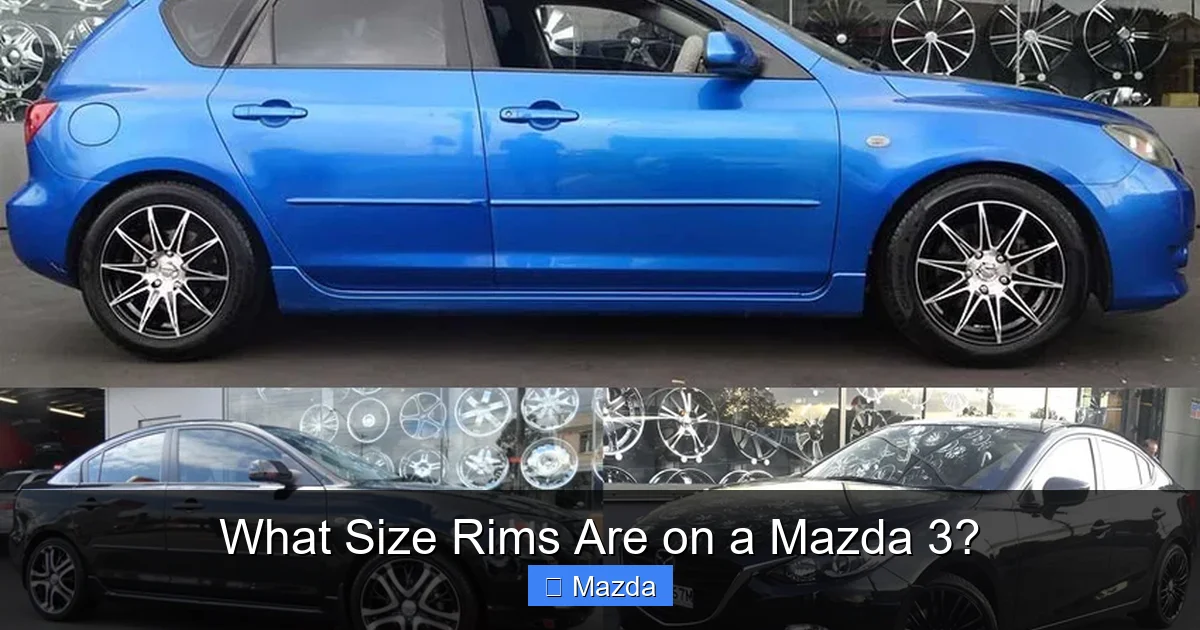
For the 2026 Mazda 3 Sport and other base-level trims, Mazda typically equips the car with 16-inch steel wheels or basic alloy wheels. A very common factory specification you’ll encounter is a P205/60R16 tire mounted on a 16×6.5-inch rim. This size is the workhorse—it’s designed for a comfortable, compliant ride that soaks up road imperfections, which aligns perfectly with the Mazda 3’s reputation for being a practical yet fun daily driver. The narrower tire and smaller diameter contribute to slightly lower rolling resistance, which can benefit fuel economy in city driving. If you see a 16-inch wheel on a 2026 Mazda 3, it’s a clear indicator of the entry-level, value-focused specification.
The Sweet Spot: Touring and Grand Touring Trims
Move up to the popular Touring trim or the more luxurious Grand Touring (or Premium, depending on the specific market nomenclature for 2026), and you’ll almost certainly step up to 17-inch wheels. This is arguably the most common and balanced size for the Mazda 3. A typical setup here is a P215/50R17 tire on a 17×7.0-inch alloy wheel. The wider tire and larger diameter offer a noticeable improvement in lateral grip during cornering, making the car feel more planted and responsive. The sidewall is slightly shorter than the 16-inch setup, which can reduce body roll and sharpen steering feedback. For many drivers, the 17-inch package represents the ideal blend of ride comfort, handling performance, and visual appeal. If you’re shopping for a used 2026 Mazda 3, the vast majority of well-equipped models you find will be on 17s.
The Sporty Apex: Premium and Signature Trims
At the top of the 2026 Mazda 3 food chain—think Premium, Signature, or any special edition model—you’ll likely find the largest factory wheel option: 18 inches. The specification often shifts to a P225/45R18 tire mounted on an 18×8.0-inch (or sometimes 18×7.5-inch) alloy wheel. This is the sportiest, most aggressive look from the factory. The even wider tire and minimal sidewall height maximize contact patch for ultimate cornering grip and steering precision. However, this comes at a predictable cost: the ride becomes significantly firmer. You’ll feel more road texture and larger impacts more directly. The 18-inch wheel is for the driver who prioritizes sharp handling and a head-turning stance over plush comfort. It’s also the size you’ll most commonly see on Mazda’s own accessory pages for sport upgrades.
To give you a clear snapshot, here’s a summary of the most probable 2026 Mazda 3 factory wheel and tire setups:
- Base/Sport Trim: 16-inch wheels (e.g., 16×6.5) with P205/60R16 tires.
- Mid-Level Trims (Touring/Grand Touring): 17-inch wheels (e.g., 17×7.0) with P215/50R17 tires.
- Top Trims (Premium/Signature): 18-inch wheels (e.g., 18×8.0) with P225/45R18 tires.
A quick note on model years: While 2026 is our focus, Mazda often carries over wheel specs for several years. If you’re comparing to a 2024 or 2025 model, the sizes are likely identical, but always verify with your door jamb sticker. For broader context on how other manufacturers size their family sedans, you can check out what size tires are on a Toyota Camry for a popular competitor’s approach.
The Non-Negotiables: Bolt Pattern, Center Bore, and Offset
Knowing the diameter is only half the battle. Three other critical measurements determine if a wheel will not only fit on your Mazda 3 but also function safely and correctly. Think of these as the wheel’s “DNA.” Get any of these wrong, and you’re looking at vibration, premature bearing wear, brake caliper interference, or even a wheel that could potentially come off.

Visual guide about What Size Rims Are on a Mazda 3?
Image source: tempetyres.com.au
Bolt Pattern (PCD): The 5×114.3 Standard
This is the most famous spec. The 2026 Mazda 3, like its predecessors, uses a 5×114.3 bolt pattern. This means the wheel has five lug holes arranged in a circle with a diameter of 114.3 millimeters. This is a very common pattern, shared by countless vehicles from Honda, Toyota, Nissan, and others. It’s great news for aftermarket selection—you have a vast pool of compatible wheels. However, “compatible bolt pattern” does not mean “perfectly compatible.” The other two specs are equally vital.
Center Bore: The Hub-Centric Fit
The center bore is the hole in the middle of the wheel that centers it on the car’s hub. The factory specification for the 2026 Mazda 3 is 63.6 mm. A wheel with a center bore that matches this exactly is “hub-centric,” meaning the wheel is perfectly centered by the hub itself. This is the ideal, vibration-free setup. Many aftermarket wheels have a larger center bore (e.g., 67.1mm or 73.1mm) to fit multiple vehicles. To make these fit your Mazda 3’s smaller hub, you must use a hub-centric ring—a plastic or metal spacer that fills the gap. Using the wrong size or forgetting the ring can cause a noticeable vibration at highway speeds. Always verify the wheel’s stated center bore against your car’s requirement.
Offset and Wheel Width: The Clearance Equation
Offset, measured in millimeters, is the distance from the wheel’s mounting surface to its centerline. It determines how far the wheel “sticks out” or “tucks in” relative to the fender and suspension components. Factory offsets for the Mazda 3 typically range from +45mm to +50mm for the smaller wheels, moving towards +40mm to +45mm for the wider 18-inch options. Wheel width (e.g., 7.0″, 8.0″) works in tandem with offset. When shopping for aftermarket wheels, you must consider the combined effect. A wheel with an offset that’s too low (more negative) will stick out and likely rub against the fender liner or suspension. An offset that’s too high will tuck the wheel deep into the fender well, which can look sunken and may cause clearance issues with the brake caliper. The safe aftermarket range for a 2026 Mazda 3 without modifications is generally within +/- 5-7mm of the factory offset for a given width.
How to Find Your Exact Rim Size: A Practical Guide
You don’t have to be a mechanic to find this information. It’s physically on your car and in your paperwork. Here’s your step-by-step guide to becoming 100% certain of your Mazda 3’s wheel specifications.
Visual guide about What Size Rims Are on a Mazda 3?
Image source: tempetyres.com.au
1. The Door Jamb Sticker: Your Primary Source
Open the driver’s side door. Look for a yellow and white sticker permanently affixed to the door pillar or the door frame itself. This is the tire placard, mandated by the DOT. It lists the original equipment tire size (e.g., P215/50R17) and often the recommended cold tire pressure. It may also list the rim size. This sticker is the single most authoritative source for your specific VIN’s factory configuration.
2. The Owner’s Manual: The Comprehensive Reference
Your physical or digital owner’s manual will have a dedicated “Wheels and Tires” or “Specifications” chapter. It will list all approved wheel and tire sizes for every trim available in your market. This is excellent for understanding the full range of what Mazda designed the car to accept, which is useful if you’re considering a different factory-style wheel from a different trim.
3. Direct Measurement: For the Hands-On Verifier
If you have the wheel off the car or just want to confirm, you can measure it. Use a tape measure to get the diameter (from bead seat to bead seat, not outer lip) and width (inside the flanges). To find the bolt pattern, measure from the center of one lug hole to the center of the one directly across (skipping one hole for a 5-lug pattern). That distance is the diameter of the bolt circle (114.3mm). You can also count the lugs (5) and measure the distance between two adjacent lug centers to confirm the pattern.
4. The VIN Decoder: Digital Deep Dive
Your Vehicle Identification Number (VIN), found on the dashboard near the windshield or on your registration, contains a wealth of information. Several reputable online VIN decoders (from services like Mazda’s own owner portal or trusted automotive data sites) can reveal the exact factory build specifications, including wheel size and type. This is the most precise method if you don’t have physical access to the car.
Understanding these numbers is crucial before you even start browsing. For example, knowing your car has a 17-inch rim with a 5×114.3 pattern immediately filters out countless incompatible wheels. It also helps you when you’re reading forums or comparing notes with other Mazda 3 owners. If someone mentions a “common issue” with 18-inch wheels on a certain year, you’ll know if it applies to your specific setup.
Aftermarket Rim Selection: Your Expanded Universe
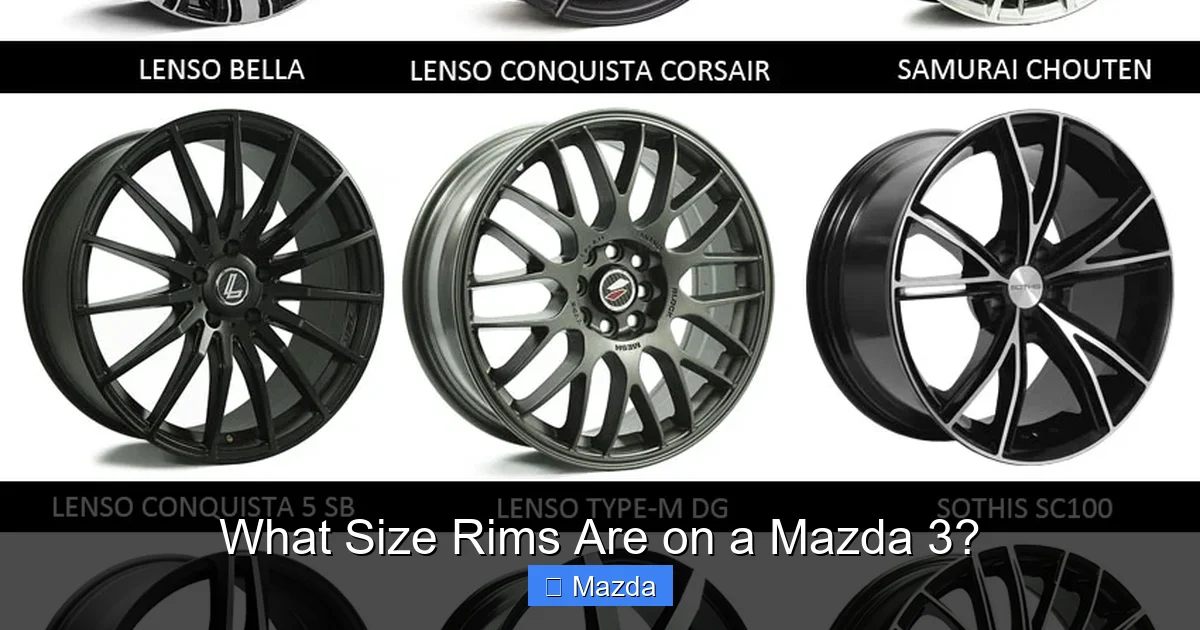
This is where the fun begins. Once you know your factory specs, a world of aftermarket wheels opens up. The key principle is interchangeability within safe parameters. You’re looking for wheels that match the critical “DNA” specs: 5×114.3 bolt pattern, 63.6mm center bore (or willing to use rings), and an offset/width combo that clears all suspension and brake components.
Visual guide about What Size Rims Are on a Mazda 3?
Image source: tempetyres.com.au
The “Plus Sizing” Philosophy
The most common and simplest aftermarket move is “plus sizing.” This means keeping the overall tire diameter nearly identical (to keep your speedometer accurate and gearing unchanged) but increasing the rim diameter and decreasing the tire’s sidewall height. For example, moving from a factory 17-inch setup (P215/50R17) to an 18-inch setup might use a P225/40R18 tire. The +1 sizing (18″ vs 17″) gives a sportier look and potentially better handling but a firmer ride. It’s a safe, straightforward upgrade that many Mazda 3 owners make. You can often find excellent all-season or performance tires in these sizes that pair perfectly with popular aftermarket 18-inch wheels.
Material Matters: Alloy vs. Steel
Alloy Wheels (Aluminum/Magnesium): These are the standard for both OEM and aftermarket. They are lighter than steel, which improves unsprung weight (leading to better acceleration, braking, and handling), and they dissipate heat more effectively. They also come in countless styles and finishes (painted, machined, chrome). For a 2026 Mazda 3, aftermarket alloy wheels are the go-to for performance and style.
Steel Wheels: Heavier and usually only found on base models. Their main advantage is extreme durability and low cost, often used with winter tires. They are not a performance or aesthetic upgrade.
Brands, Styles, and the Importance of Fitment Data
The aftermarket wheel world is vast. Brands like Enkei, O.Z. Racing, Volk Racing, BBS, and many others offer wheels in 5×114.3. When you find a style you love, you must select the exact specification for your 2026 Mazda 3. This means choosing the correct diameter, width, offset, and center bore from the vendor’s fitment guide. Reputable online wheel retailers have brilliant filters where you input your car’s year, make, and model, and they show only the wheels proven to fit. Never guess. A wheel listed for a 2010 Mazda 3 might have a different offset requirement than one for a 2026 model. If you’re looking at wheels designed for a different platform entirely, like a Dodge Ram, the bolt pattern and offset will almost certainly be wrong. You can read about the specific lug pattern on a Dodge Ram 1500 to see how different it is from the Mazda’s 5×114.3 pattern.
TPMS: The Electronic Elephant in the Room
Your 2026 Mazda 3 has a Tire Pressure Monitoring System (TPMS). This means each wheel has a sensor inside. When you change wheels, you must either:
1. Transfer your original sensors to the new wheels (requires careful disassembly and often new valve stems).
2. Buy new sensors that are compatible with your car’s system.
3. Use a set of “programmable” or “cloneable” aftermarket sensors that a shop can program to your vehicle.
This is a cost and logistical step you cannot ignore. Factor sensor cost into your wheel budget. Some high-end aftermarket wheels come with sensor compatibility notes, so ask before you buy.
The Real-World Impact: How Rim Size Changes Your Driving Experience
Let’s move beyond specs and talk about how these changes translate to the seat of your pants. Switching from your Mazda 3’s factory size to an aftermarket size isn’t just about looks; it fundamentally alters the car’s character.
Ride Comfort vs. Handling Sharpness
This is the classic trade-off. A smaller rim with a taller tire sidewall (like the 16-inch option) acts as a natural spring. It absorbs potholes, cracks, and road debris with aplomb. The cabin stays quieter and more isolated. However, that tall, flexible sidewall can flex during hard cornering, leading to a bit of “wallow” or delayed steering response.
A larger rim with a shorter sidewall (like the 18-inch option) reduces that flex. The tire tread is more directly connected to the wheel, so steering inputs are more immediate and precise. The car feels more “tied to the road.” The downside is that the short sidewall has less air volume to act as a cushion. Every impact is transmitted more directly into the chassis and cabin. You’ll feel more road texture and hear more tire noise, especially on coarser asphalt.
Grip, Acceleration, and Braking
Generally, a wider tire (which often comes with a larger rim) has a larger contact patch, which can increase ultimate grip in dry conditions. This can slightly improve acceleration traction (less wheel spin) and shorter braking distances. However, a wider tire also has more rolling resistance, which can have a minor negative impact on fuel economy. The type of tire compound (all-season vs. summer performance) plays a far larger role in wet/snow grip than rim size alone. A high-performance summer tire on a 17-inch rim will massively outperform a cheap all-season on an 18-inch rim in dry conditions.
Aesthetics and Stance
This is the most personal factor. Larger rims fill out the wheel wells more aggressively, often creating a more “sporty” or “aggressive” stance. Smaller rims can look a bit more conservative or even “empty” within the fender space, especially on a car like the Mazda 3 with its tidy proportions. The style of the wheel itself—spokes, finish, depth—is where your personality comes in. Just remember that extreme sizes or offsets that cause the wheel to protrude beyond the fender line are not only often illegal but also increase the risk of curb damage and spray.
Pitfalls and Pro Tips: Common Mistakes to Avoid
Even with all this knowledge, it’s easy to make a costly error. Here are the most common pitfalls when changing Mazda 3 wheels and how to avoid them.
Ignoring the Load Index and Speed Rating
Your factory tires have a load index (a number like 89) and a speed rating (a letter like H or V). These indicate how much weight the tire can carry and its maximum safe speed. Your replacement tires must meet or exceed the factory ratings. Never fit a tire with a lower load index, as it could fail under heavy loads. For a sporty Mazda 3, maintaining the speed rating is crucial for safety at highway speeds.
Forgetting About the Spare Tire
If your Mazda 3 came with a temporary spare (a “donut”), it is designed for a specific wheel size, usually the smallest factory size (e.g., 16-inch). If you upgrade to larger 18-inch wheels, your temporary spare will no longer fit. You must either keep a full-size spare that matches your new wheels (impractical for most) or rely on a roadside assistance plan and a repair kit. This is a practical reality of plus-sizing.
Overlooking Brake Caliper Clearance
This is a sneaky one, especially when moving to very wide wheels or wheels with deep spokes. The brake caliper and its mounting hardware sit very close to the inner barrel of the wheel. An aftermarket wheel with insufficient clearance will rub against the caliper, causing grinding, overheating, and brake failure. Always check the wheel manufacturer’s fitment notes for “brake caliper clearance” specific to your Mazda 3’s brake system (e.g., standard disc vs. optional larger brakes). When in doubt, ask the vendor.
Going Too Wide or Too Extreme with Offset
It’s tempting to throw on a super-wide, deep-dished wheel for that aggressive look. But on a front-wheel-drive economy car like the Mazda 3, going too wide (e.g., beyond 8 inches) or too low in offset (e.g., +35mm or less on a wide wheel) can cause serious issues. The wheels will stick out, increasing the risk of curb rash. More critically, the increased scrub radius can put excessive strain on wheel bearings and CV joints, leading to premature failure. It can also cause the tires to rub on the inner fender liner during full lock turns. For a trouble-free fit, staying within the recommended width and offset ranges for your year is the smart play. If you’re unsure about these mechanical concepts, reading up on what does the wrench light mean on a Honda Civic might seem unrelated, but it highlights how modern cars monitor all sorts of mechanical stresses—improper wheel fitment can trigger such warnings.
Skipping the Professional Mount and Balance
Do not attempt to install and balance wheels yourself without proper equipment and experience. Improperly torqued lug nuts (must be tightened in a star pattern to the manufacturer’s spec, usually 80-100 ft-lbs for a Mazda 3) can warp brake rotors or, in the worst case, cause a wheel to detach. An unbalanced wheel/vibration at speed is dangerous and damaging. Always have new wheels and tires professionally mounted, balanced, and torqued with a calibrated torque wrench.
Conclusion: Your Rim Size, Your Choice, Done Right
So, what size rims are on a 2026 Mazda 3? The answer is a nuanced one: it’s likely 16, 17, or 18 inches, all sharing the robust 5×114.3 bolt pattern and 63.6mm center bore. The specific size is a badge of your car’s trim level and intended use. Whether you’re replacing a damaged OEM wheel, seeking a fresh look, or optimizing for a specific driving feel, the path is clear: identify your exact factory specs from the door jamb sticker, understand the critical fitment measurements (bolt pattern, center bore, offset), and then select aftermarket wheels that honor those specs while meeting your load and speed rating needs. The Mazda 3 is a fantastic platform for wheel customization precisely because of its common bolt pattern and the healthy aftermarket support it enjoys. Take your time, do your research, and when in doubt, consult with a reputable tire and wheel specialist. A correctly sized and fitted wheel will not only make your 2026 Mazda 3 look fantastic but will also keep it performing safely and joyfully for miles to come.
Frequently Asked Questions
Can I put 18-inch rims on a Mazda 3 that came with 16-inch rims from the factory?
Yes, you can, as long as the new 18-inch wheels have the correct 5×114.3 bolt pattern, 63.6mm center bore (or use hub-centric rings), and an appropriate offset/width that clears your suspension and brakes. You will also need to install tires with a shorter sidewall (like P215/45R18) to maintain accurate speedometer reading and ground clearance. Ensure the new tire’s load and speed ratings meet or exceed the originals.
What is the most common bolt pattern for a Mazda 3?
For the 2026 model year and many preceding years, the Mazda 3 consistently uses a 5×114.3 bolt pattern. This means five lug nuts arranged on a circle with a 114.3 millimeter diameter. This is a very common pattern shared with many other vehicles, giving owners a wide selection of aftermarket wheels.
Do I need special lug nuts for aftermarket rims on my Mazda 3?
Often, yes. Factory lug nuts are designed for the specific seat shape (usually conical/tapered) on your OEM wheels. Aftermarket wheels may require a different seat type (e.g., spline drive, ball/radius seat) or may have a different shank length. Using the wrong lug nut can lead to improper clamping force, wheel vibration, or damage to the wheel. Always use the lug nuts recommended by the wheel manufacturer for your specific application.
Will changing my rim size affect my Mazda 3’s fuel economy?
It can, but the effect is usually modest. Larger, heavier wheels increase unsprung weight, which can slightly reduce fuel economy and acceleration. Additionally, wider tires have more rolling resistance. Conversely, a lighter aftermarket wheel can sometimes improve economy. The biggest factor is the overall tire diameter. Keeping the overall diameter the same as stock (via plus-sizing) minimizes the impact on your speedometer and gearing. Most drivers notice a change of 1-2 MPG at most with a typical 1-inch rim increase.
My Mazda 3 has a TPMS. Do I need to do anything special when changing wheels?
Absolutely. Your Tire Pressure Monitoring System sensors are mounted inside the wheel. When you change wheels, you must either have the original sensors professionally transferred to the new wheels (involving breaking the tire bead) or purchase new, compatible sensors. After installation, the new wheels/sensors will need to be “relearned” or programmed to your car’s system, which a tire shop can do with a special tool. Driving without functioning TPMS sensors is not recommended and may trigger a warning light.
What’s the biggest rim size I can put on a 2026 Mazda 3 without modifications?
While the factory maximum is typically 18 inches, many owners successfully fit 19-inch aftermarket wheels without suspension or fender modifications, provided they choose a conservative offset (usually between +40mm to +50mm) and a moderate width (e.g., 8 inches). The critical factors are clearing the front brake calipers and not rubbing the fender liner or rear strut during full suspension travel and steering lock. Always consult detailed fitment forums or a wheel specialist for your specific model year before purchasing 19-inch wheels. Going beyond 19 inches almost always requires fender modifications or stretched tires, which we do not recommend for daily drivers.