
What Size Battery for 2014 Toyota Camry

Choosing the right battery for your 2014 Toyota Camry ensures reliable starts and long-term performance. This guide covers the correct battery size, top recommendations, installation tips, and maintenance advice to keep your Camry running smoothly.
Key Takeaways
- Standard Battery Size: The 2014 Toyota Camry typically uses a Group 24F battery, which measures approximately 10.2 x 6.8 x 8.9 inches and fits securely in the engine bay.
- CCA Rating Matters: Look for a battery with at least 600 Cold Cranking Amps (CCA) to ensure reliable starts in cold weather, especially in northern climates.
- Top Brands to Consider: Opt for trusted brands like Toyota Genuine, Optima, DieHard, Interstate, and Bosch for durability and warranty coverage.
- Check Reserve Capacity: A reserve capacity of 90 minutes or more ensures your car can run essential systems if the alternator fails.
- Professional Installation Recommended: While DIY is possible, professional installation ensures proper connection and avoids electrical issues.
- Regular Maintenance Extends Life: Clean terminals, check voltage, and test battery health annually to prevent unexpected failures.
- Warranty and Recycling: Choose batteries with at least a 3-year free replacement warranty and recycle your old battery responsibly.
📑 Table of Contents
- What Size Battery for 2014 Toyota Camry?
- Understanding Battery Group Sizes and Why They Matter
- Recommended Battery Specifications for the 2014 Toyota Camry
- Top Battery Brands for the 2014 Toyota Camry
- How to Replace the Battery in a 2014 Toyota Camry
- When to Replace Your 2014 Camry Battery
- Battery Maintenance Tips to Extend Lifespan
- Conclusion
What Size Battery for 2014 Toyota Camry?
If you’re the proud owner of a 2014 Toyota Camry, you already know it’s a dependable, fuel-efficient sedan built to last. But even the most reliable cars need maintenance—and one of the most critical components to keep an eye on is the battery. Whether your car won’t start on a chilly morning or you’re just being proactive, knowing the correct battery size for your 2014 Toyota Camry is essential.
The good news? The 2014 Camry uses a standard battery size that’s widely available and easy to replace. Most models—whether you have the base four-cylinder, the V6, or the hybrid version—use a Group 24F battery. This size fits perfectly in the battery tray and connects seamlessly with the vehicle’s electrical system. But size isn’t the only factor. You also need to consider cold cranking amps (CCA), reserve capacity, brand quality, and whether you’re replacing it yourself or having a professional do it.
In this guide, we’ll walk you through everything you need to know about choosing the right battery for your 2014 Toyota Camry. From understanding battery specifications to tips on installation and maintenance, we’ve got you covered. Whether you’re a DIY enthusiast or prefer to leave it to the experts, this article will help you make an informed decision and keep your Camry running smoothly for years to come.
Understanding Battery Group Sizes and Why They Matter
Visual guide about What Size Battery for 2014 Toyota Camry
Image source: images.simplepart.com
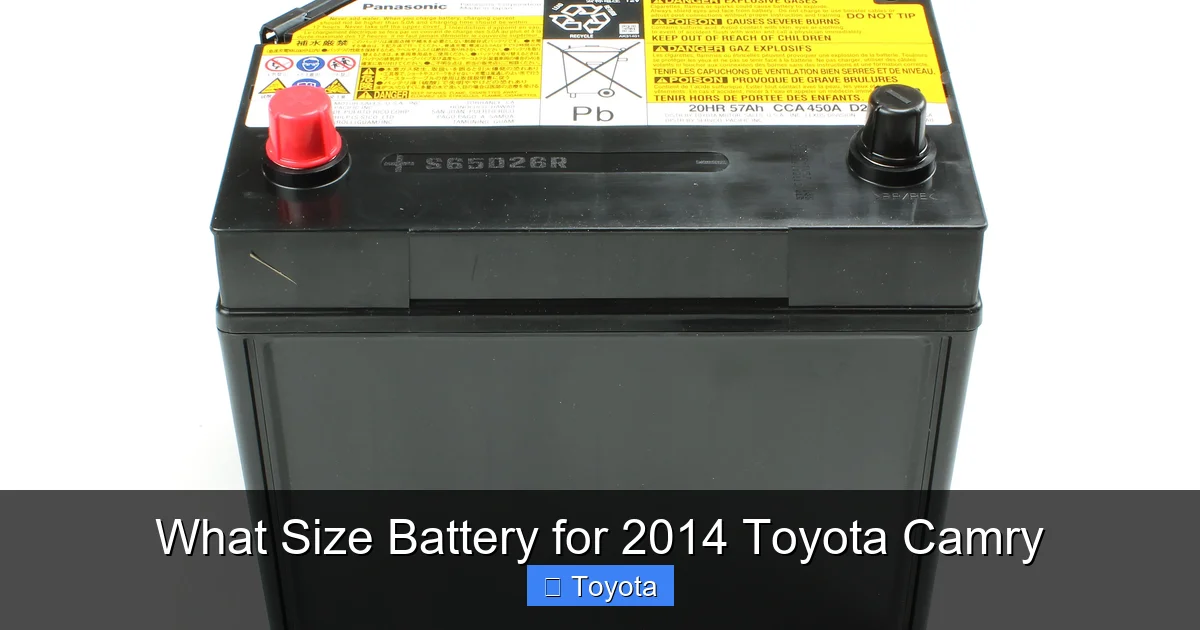
When it comes to car batteries, “group size” refers to the physical dimensions and terminal placement of the battery. The Battery Council International (BCI) assigns group numbers to standardize battery sizes across vehicles. For the 2014 Toyota Camry, the recommended group size is 24F.
What Is a Group 24F Battery?
A Group 24F battery measures approximately 10.2 inches in length, 6.8 inches in width, and 8.9 inches in height. The “F” in 24F indicates the orientation of the terminals—positive on the right and negative on the left when facing the battery. This design ensures compatibility with the Camry’s battery tray and cable connections.
Using the correct group size is crucial. A battery that’s too small may not fit securely, while one that’s too large could interfere with other engine components. The 24F size is specifically designed for vehicles like the Camry, Honda Accord, and Nissan Altima, making it a common and reliable choice.
Why Group Size Isn’t the Only Factor
While group size ensures physical compatibility, it doesn’t tell the whole story. You also need to consider electrical specifications like cold cranking amps (CCA), reserve capacity (RC), and amp-hour (Ah) rating. These determine how well the battery will perform under different conditions.
For example, a battery with high CCA is essential if you live in a cold climate. Cold weather thickens engine oil and reduces battery efficiency, so a strong CCA rating ensures your Camry starts reliably even on freezing mornings. Similarly, reserve capacity tells you how long the battery can power your car’s electrical systems if the alternator fails—important for safety and convenience.
Recommended Battery Specifications for the 2014 Toyota Camry
Visual guide about What Size Battery for 2014 Toyota Camry
Image source: thecarhow.com
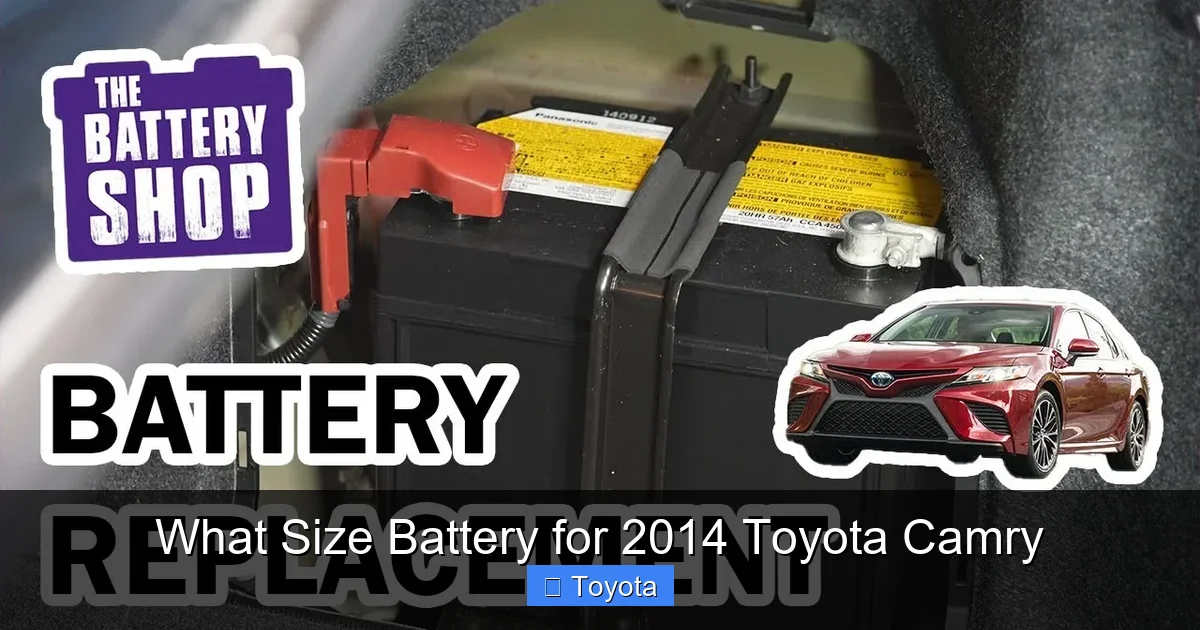
Now that you know the 2014 Camry uses a Group 24F battery, let’s dive into the key specifications you should look for when shopping for a replacement.
Cold Cranking Amps (CCA)
Cold cranking amps measure a battery’s ability to start an engine in cold temperatures. The Society of Automotive Engineers (SAE) defines CCA as the number of amps a battery can deliver at 0°F for 30 seconds while maintaining at least 7.2 volts.
For the 2014 Toyota Camry, a minimum of 600 CCA is recommended. However, if you live in a region with harsh winters, consider a battery with 650–750 CCA for extra peace of mind. Higher CCA doesn’t hurt performance—it just gives you more starting power when you need it most.
Reserve Capacity (RC)
Reserve capacity is the number of minutes a fully charged battery can deliver 25 amps at 80°F before dropping below 10.5 volts. This is important if your alternator fails or you accidentally leave your lights on.
Aim for a battery with at least 90 minutes of reserve capacity. This ensures your car’s essential systems—like lights, radio, and climate control—can keep running long enough for you to get to a service station or call for help.
Amp-Hour (Ah) Rating
Amp-hour rating indicates the battery’s total energy storage capacity. While not as critical as CCA or RC, a higher Ah rating generally means longer life and better performance. Most Group 24F batteries for the Camry have an Ah rating between 50 and 70.
Voltage and Chemistry
All 12-volt automotive batteries are standard, but chemistry matters. Most 2014 Camrys use traditional flooded lead-acid batteries, but some owners upgrade to absorbed glass mat (AGM) batteries for better performance and longevity.
AGM batteries are more expensive but offer advantages like faster charging, better vibration resistance, and longer cycle life. They’re especially useful if you frequently use accessories like heated seats, premium audio systems, or navigation while the engine is off.
Top Battery Brands for the 2014 Toyota Camry
Visual guide about What Size Battery for 2014 Toyota Camry
Image source: i.ytimg.com
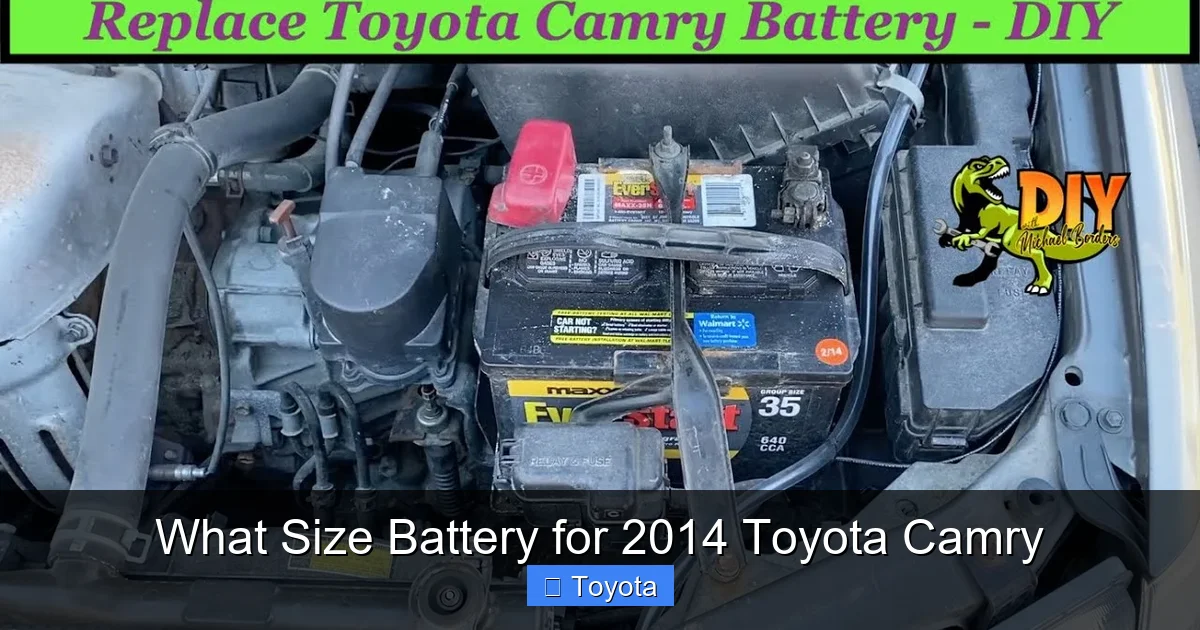
With so many brands on the market, it can be overwhelming to choose the right one. Here are some of the best options for your 2014 Camry, based on reliability, performance, and customer reviews.
Toyota Genuine Battery
If you want the exact same battery that came with your Camry, go with the Toyota Genuine battery. It’s designed specifically for your vehicle and comes with a strong warranty—often 3 years free replacement and 4–5 years prorated.
Pros: Perfect fit, reliable performance, excellent warranty.
Cons: Higher price than aftermarket options.
Optima RedTop
The Optima RedTop is a high-performance AGM battery known for its durability and starting power. With 760 CCA and 100 minutes of reserve capacity, it’s a great upgrade for drivers who want extra reliability.
Pros: Spill-proof, vibration-resistant, long lifespan.
Cons: Expensive, overkill for basic needs.
DieHard Gold
DieHard is a trusted name in automotive batteries. The Gold series offers 650–700 CCA and a 3-year free replacement warranty. It’s a solid mid-range option that balances cost and performance.
Pros: Good value, widely available, strong warranty.
Cons: Not AGM, shorter lifespan than premium brands.
Interstate Batteries
Interstate is known for long-lasting batteries with excellent deep-cycle performance. Their MT-24F model delivers 650 CCA and 95 minutes of reserve capacity, making it a reliable choice for daily drivers.
Pros: Great longevity, strong performance, affordable.
Cons: Limited availability in some areas.
Bosch S6
Bosch is a European brand known for engineering excellence. The S6 series features AGM technology and high CCA ratings. It’s a premium option for those who want top-tier performance.
Pros: High efficiency, long life, excellent cold weather performance.
Cons: Higher price point.
How to Replace the Battery in a 2014 Toyota Camry
Replacing the battery in your 2014 Camry is a straightforward process that most people can do at home with basic tools. However, it’s important to follow safety precautions and the correct steps to avoid damage or injury.
Tools You’ll Need
– 10mm wrench or socket
– Battery terminal cleaner or wire brush
– Safety gloves and goggles
– New Group 24F battery
– Optional: Battery terminal protector spray
Step-by-Step Replacement Guide
- Turn off the engine and remove the key. Make sure all lights and accessories are off to prevent electrical surges.
- Open the hood and locate the battery. It’s on the driver’s side of the engine bay, secured by a hold-down clamp.
- Disconnect the negative terminal first. Use the 10mm wrench to loosen the nut on the negative (-) cable. Pull the cable off and tuck it away from the battery.
- Disconnect the positive terminal. Repeat the process for the positive (+) cable. Always remove negative first to reduce the risk of short circuits.
- Remove the hold-down clamp. Unscrew the bolts securing the battery in place.
- Lift out the old battery. Batteries are heavy—lift with your legs, not your back. Place it in a safe, upright position.
- Clean the battery tray and terminals. Use a wire brush to remove corrosion and dirt. Apply terminal protector spray if desired.
- Install the new battery. Place the new Group 24F battery in the tray, ensuring the terminals match the cable positions (positive on the right).
- Secure the battery. Reattach the hold-down clamp and tighten the bolts.
- Connect the positive terminal first. Slide the positive cable onto the terminal and tighten the nut.
- Connect the negative terminal. Attach the negative cable and tighten securely.
- Test the installation. Turn on the ignition and check that all electrical systems are working. Listen for any unusual sounds.
Safety Tips
– Always wear gloves and goggles to protect against acid and sparks.
– Never touch both terminals at the same time.
– Keep metal tools away from the battery terminals to avoid short circuits.
– Dispose of the old battery responsibly—most auto parts stores recycle them for free.
When to Replace Your 2014 Camry Battery
Car batteries don’t last forever. Most last between 3 and 5 years, depending on climate, driving habits, and maintenance. Here are signs it’s time for a replacement.
Slow Engine Crank
If your engine takes longer than usual to start—especially in the morning—it could be a sign of a weak battery. Listen for a “clicking” sound when you turn the key; this often indicates insufficient power.
Check Engine or Battery Light
The dashboard warning lights aren’t just for show. If the battery light comes on, it means the charging system isn’t working properly. This could be due to a failing battery, a bad alternator, or loose connections.
Swollen or Leaking Battery Case
Extreme temperatures can cause the battery case to swell or crack. If you notice bulges, leaks, or a sulfur smell (like rotten eggs), replace the battery immediately. A damaged battery can be dangerous.
Electrical Issues
Dim headlights, flickering interior lights, or malfunctioning electronics can all point to a weak battery. If your radio resets or power windows move slowly, it’s time for a check-up.
Age of the Battery
Even if your battery seems fine, replace it every 4–5 years as a preventive measure. Batteries degrade over time, and a sudden failure can leave you stranded.
Battery Maintenance Tips to Extend Lifespan
A little maintenance goes a long way in keeping your battery healthy and your Camry running smoothly.
Clean the Terminals Regularly
Corrosion on the terminals can interfere with electrical connections. Clean them every 6 months using a mixture of baking soda and water, a wire brush, and terminal protector spray.
Check Voltage with a Multimeter
A healthy battery should read around 12.6 volts when the car is off and 13.7–14.7 volts when the engine is running. If it’s below 12.4 volts, it may need charging or replacement.
Keep the Battery Secure
A loose battery can vibrate and damage internal components. Make sure the hold-down clamp is tight and the battery isn’t shifting.
Avoid Short Trips
Frequent short trips don’t give the alternator enough time to recharge the battery. If possible, take longer drives occasionally or use a battery maintainer.
Use a Battery Tender in Winter
In cold climates, consider using a trickle charger or battery tender during long periods of inactivity. This keeps the battery charged and extends its life.
Conclusion
Choosing the right battery for your 2014 Toyota Camry doesn’t have to be complicated. Stick with a Group 24F battery, aim for at least 600 CCA and 90 minutes of reserve capacity, and pick a reputable brand like Toyota Genuine, Optima, or Interstate. Whether you install it yourself or have a professional do it, proper maintenance and timely replacement will keep your Camry starting reliably for years to come.
Remember, your battery is the heart of your car’s electrical system. Treat it well, and it will return the favor with smooth starts, reliable performance, and peace of mind—no matter the weather or road ahead.
Frequently Asked Questions
What is the correct battery size for a 2014 Toyota Camry?
The 2014 Toyota Camry uses a Group 24F battery, which measures approximately 10.2 x 6.8 x 8.9 inches. This size ensures a proper fit in the battery tray and correct terminal alignment.
Can I use a different battery group size in my 2014 Camry?
It’s not recommended. Using a battery that isn’t Group 24F may result in improper fit, loose connections, or damage to the battery tray. Always stick with the manufacturer-recommended size.
How many cold cranking amps (CCA) does my 2014 Camry need?
A minimum of 600 CCA is recommended, but 650–750 CCA is better for cold climates. Higher CCA ensures reliable starts in freezing temperatures.
Should I upgrade to an AGM battery for my Camry?
AGM batteries offer better performance and longevity, especially if you use many electrical accessories. They’re a great upgrade but come at a higher cost than standard flooded batteries.
How often should I replace the battery in my 2014 Camry?
Most batteries last 3–5 years. Replace yours every 4 years as a preventive measure, or sooner if you notice slow cranking, warning lights, or corrosion.
Can I install the battery myself?
Yes, replacing the battery is a DIY-friendly task with basic tools. However, if you’re unsure or uncomfortable working with electrical systems, have a professional handle it to avoid damage or injury.