What Sel Stands for on Hyundai Models

Contents
- 1 Key Takeaways
- 2 📑 Table of Contents
- 3 The Evolution of Hyundai’s Trim Naming Strategy
- 4 What Does SEL Actually Mean? Decoding the Myth
- 5 SEL vs. SE vs. Limited: The Feature Comparison
- 6 The SEL Package: What Features Are You *Actually* Getting?
- 7 Which Hyundai Models Offer an SEL Trim?
- 8 Who Is the SEL Trim For? The Ideal Buyer Profile
- 9 The Bottom Line: Is the SEL Worth the Money?
- 10 Conclusion: SEL – The Heart of Hyundai’s Lineup
- 11 Frequently Asked Questions


Hyundai’s SEL trim is a popular mid-level package that sits between the base SE and the top-tier Limited. It’s not an official acronym but a marketing designation for a “Special Edition Limited” or similar, offering a significant boost in features, comfort, and technology over the entry-level model without the full premium price of the range-topper. Understanding what SEL includes helps you find the best value for your budget and needs.
You’re standing in a Hyundai dealership, looking at a shiny new sedan or SUV. The sticker on the window reads “Elantra SEL,” “Tucson SEL,” or “Santa Fe SEL.” But what does that “SEL” actually mean? Is it a special edition? A luxury package? It’s a common question that leads to a lot of confusion. Let’s clear the air completely and dive deep into what the SEL designation signifies across Hyundai’s diverse model lineup.
The short answer is that SEL is primarily a trim level name, not a technical acronym. While enthusiasts and even some dealerships might say it stands for “Special Edition Limited,” Hyundai Motor Company has never officially defined it as such. Think of it simply as a label for a specific pre-packaged set of features that sits in the middle of the model’s hierarchy. It’s Hyundai’s most popular and strategically important trim because it delivers the best balance of value, comfort, and technology for the average buyer. This article will unpack everything you need to know about the SEL trim, from its historical context and typical features to how it stacks up against other trims and which buyers it’s perfect for.
Key Takeaways
- SEL is a trim level, not an acronym: While often thought to stand for “Special Edition Limited,” Hyundai uses SEL as a marketing name for a specific equipment package, not a technical abbreviation.
- It’s the sweet spot in Hyundai’s lineup: The SEL trim is positioned as the value-oriented middle child, offering far more features than the base SE for a moderate price increase.
- Features vary significantly by model: What you get in an Elantra SEL is different from a Tucson SEL or a Santa Fe SEL. Always check the specific model’s window sticker.
- It bridges the gap to luxury: SEL trims frequently include premium touches like leather seats (or premium cloth), advanced safety tech, and larger touchscreens that feel upscale.
- Not all models have an SEL: While most sedans and crossovers do, some sportier models (like the Veloster N) or very basic models may skip this trim level entirely.
- Excellent resale value: Well-equipped SEL trims tend to hold their value very well in the used market due to their popular feature set.
- Always compare packages: The specific features bundled in an SEL can change yearly. Compare the SEL package content directly to the SE and Limited for that exact model year.
📑 Table of Contents
- The Evolution of Hyundai’s Trim Naming Strategy
- What Does SEL Actually Mean? Decoding the Myth
- SEL vs. SE vs. Limited: The Feature Comparison
- The SEL Package: What Features Are You *Actually* Getting?
- Which Hyundai Models Offer an SEL Trim?
- Who Is the SEL Trim For? The Ideal Buyer Profile
- The Bottom Line: Is the SEL Worth the Money?
- Conclusion: SEL – The Heart of Hyundai’s Lineup
The Evolution of Hyundai’s Trim Naming Strategy
To understand SEL, you need to understand Hyundai’s journey. In the 1990s and early 2000s, Hyundai was known for building inexpensive, basic transportation. Their model lines were simple, often with just one or two poorly defined versions. As the brand aggressively pursued quality and design excellence in the 2000s and 2010s, their product lineup became more complex. They needed a clear, logical way to differentiate models based on features, performance, and price.
From Simple to Stratified
Hyundai adopted a tiered trim structure that is now industry-standard. The most common ladder is:
- SE (Sport Edition): The entry-level, base model. It focuses on providing the core vehicle at the lowest possible starting price with essential features.
- SEL (Special Edition Limited): The mid-level, value-focused trim. It adds a substantial list of comfort, convenience, and tech features that most buyers desire.
- Limited: The top-tier, near-luxury trim. It includes almost every available feature, premium materials, and sometimes more powerful engines.
- Other Trims: Many models also have sport-focused trims like “N Line” or “N,” and hybrid/electric-specific trims like “Blue” or “Ultimate.”
This structure creates clear choice for consumers. The SEL is the critical bridge, transforming a basic commuter car into a genuinely pleasant and modern daily driver. Its success is a huge reason for Hyundai’s sales growth; it hits the sweet spot where most shoppers’ budgets and wish lists intersect.
What Does SEL Actually Mean? Decoding the Myth
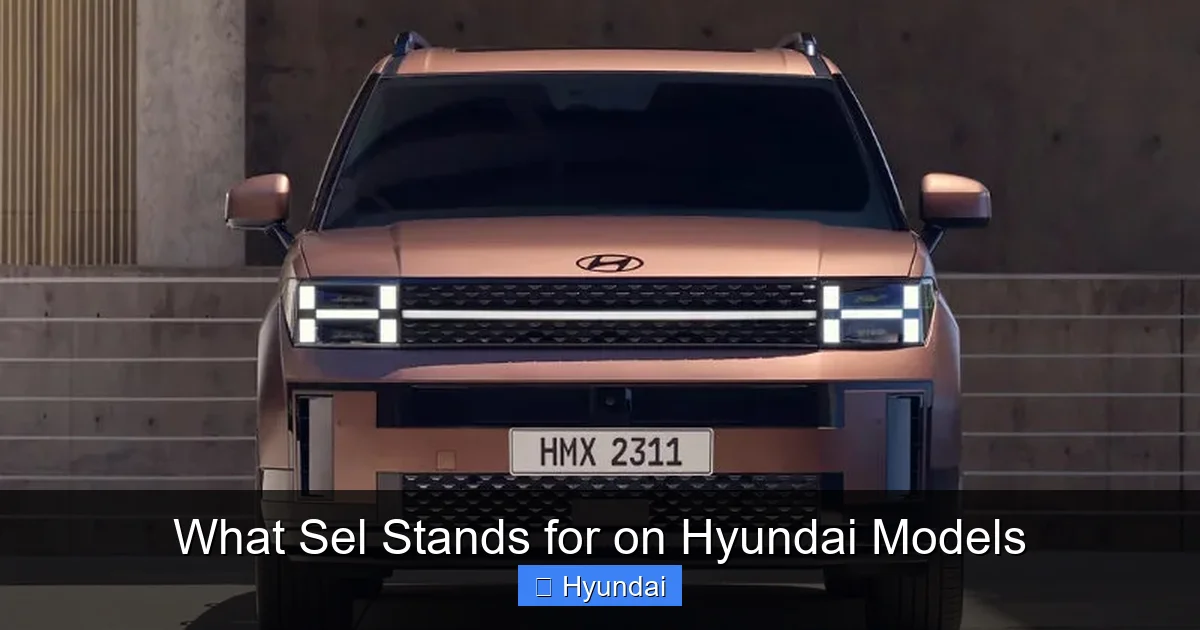
So, is SEL an acronym? The persistent rumor is that it stands for “Special Edition Limited.” This makes intuitive sense—it’s a “special” edition that’s not quite the full “Limited.” However, Hyundai’s official stance is that SEL is a model designation, not an abbreviation. In internal and marketing documents, you’ll rarely see it spelled out.
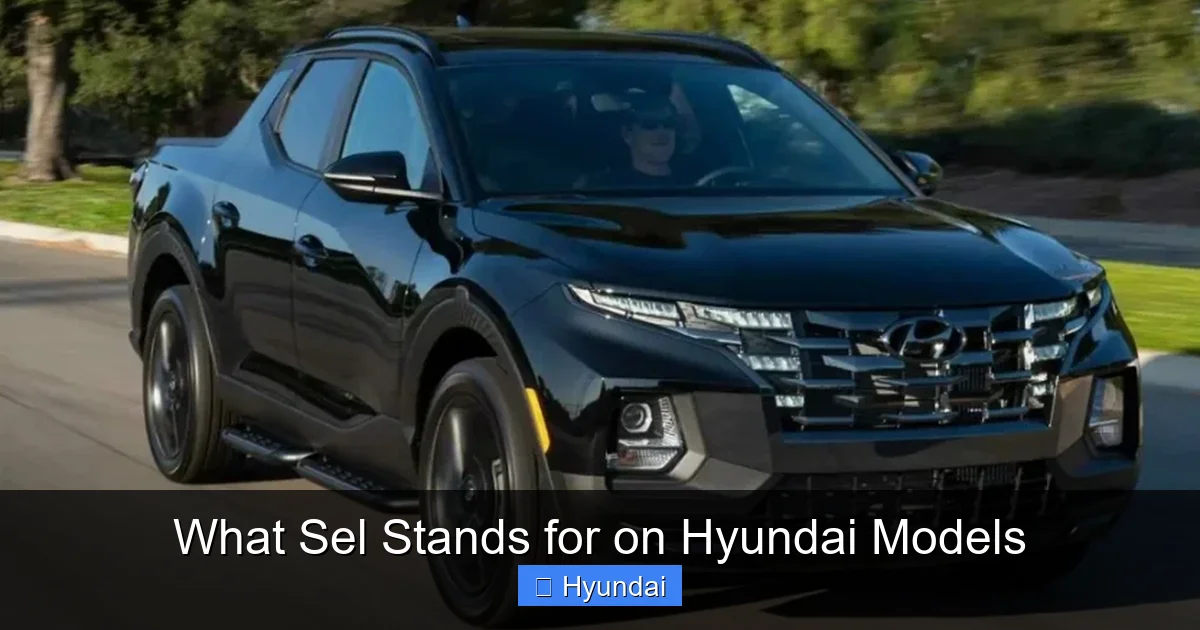
Visual guide about What Sel Stands for on Hyundai Models
Image source: hyundainewspecs.com
Marketing Over Mechanics
Automakers often use alphanumeric codes that don’t stand for anything specific (think BMW’s 320i or Toyota’s Camry LE). The goal is brand consistency, not literal description. “SEL” sounds upscale compared to “SE,” and it’s easy to remember. For Hyundai, it has become a powerful brand asset. When a buyer hears “Hyundai Elantra SEL,” they immediately understand it’s the well-equipped, desirable version. The “meaning” is in the consumer’s perception of value, not in the letters themselves.
That said, the “Special Edition Limited” moniker isn’t entirely wrong in spirit. Historically, these trims were often introduced as limited-run packages with extra features. As they became permanent fixtures due to popularity, the name stuck. So, while you shouldn’t write “SEL = Special Edition Limited” on a test, it’s a helpful mnemonic for remembering its position in the lineup: a special, more limited (than SE) edition.
SEL vs. SE vs. Limited: The Feature Comparison
The true meaning of SEL is found in what it adds. Let’s break down the typical feature delta between the trims, using popular models as examples. Remember: Year-to-year changes happen. Always confirm the exact features for the specific vehicle you’re considering.
Visual guide about What Sel Stands for on Hyundai Models
Image source: newhyundaimodels.com
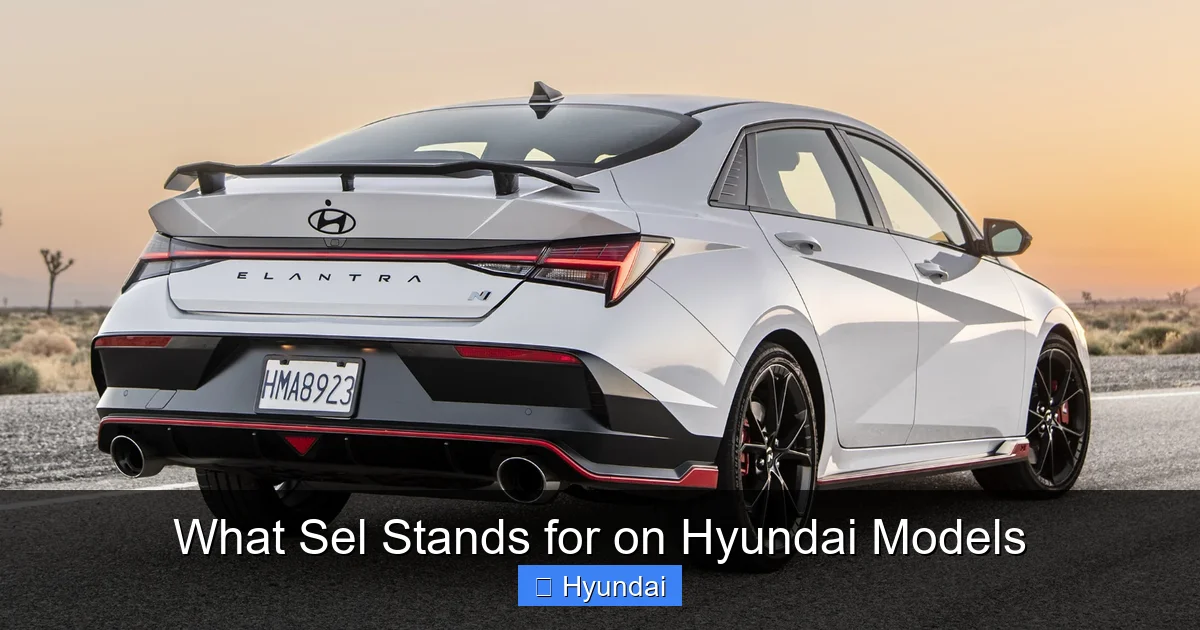
Hyundai Elantra (Sedan)
The Elantra is a perfect case study in the SEL’s value proposition.
- Elantra SE: Starts with a 2.0L engine, basic cloth seats, a small 5-inch touchscreen (or no screen in older years), manual climate control, and a basic audio system. Key safety tech like Forward Collision-Avoidance Assist (FCA) is often standard, but features like Blind-Spot View Monitor may be optional or unavailable.
- Elantra SEL: The jump to SEL is massive. You typically get the more powerful 1.6L turbocharged engine (in recent years), a larger 8-inch or 10.25-inch touchscreen with Hyundai’s excellent user interface, wireless Apple CarPlay/Android Auto, dual-zone automatic climate control, heated front seats, a leather-wrapped steering wheel, and advanced safety features like Blind-Spot Collision-Avoidance Assist (BCA) and Rear Cross-Traffic Collision-Avoidance Assist (RCCA). The interior materials also get an upgrade.
- Elantra Limited: Builds on SEL with genuine leather seats, a power sunroof, a premium Bose audio system, LED headlights, and sometimes a heated steering wheel or ventilated front seats.
For roughly $2,000-$3,000 more than the SE, the SEL adds hundreds of dollars worth of desirable tech and comfort. This is the core of its appeal.
Hyundai Tucson (Compact SUV)
In the wildly popular Tucson, the SEL is often the trim that makes the vehicle competitive with rivals like the Honda CR-V or Toyota RAV4.
- Tucson SE: Focuses on space and efficiency. May have a smaller touchscreen, manual or basic auto climate, and cloth seats.
- Tucson SEL: Adds huge value with Hyundai’s SmartSense full suite of safety features (often standard on all trims now, but SEL ensures it), a larger infotainment screen with navigation, a power driver’s seat, heated front seats, a proximity key with push-button start, and often a panoramic sunroof as an option. Wheel size usually increases to 18 inches.
- Tucson Limited: Steps up to Nappa leather, a 10.25-inch touchscreen, a 12-speaker Bose system, a wireless charging pad, and LED interior lighting.
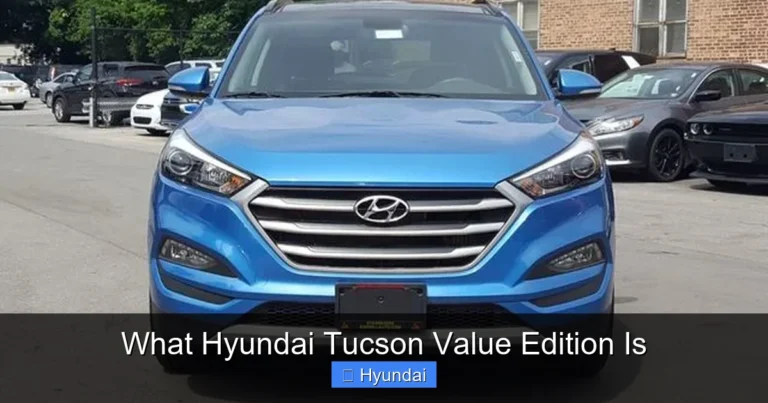
For SUV buyers, the SEL’s added comfort and tech are often deal-clinchers. You can also explore specific accessory options for your Tucson SEL by checking guides like the best tires for Hyundai Tucson to personalize your ride further.
Hyundai Santa Fe (Mid-Size SUV)
The Santa Fe’s SEL is where the family-friendly features truly shine.
- Santa Fe SE: A capable 3-row SUV with a 2.5L engine, basic infotainment, and cloth seats.
- Santa Fe SEL: Transforms it into a premium family hauler. Expect a 2.5L turbo engine option, second-row captain’s chairs (in 8-passenger models), a much larger touchscreen, heated and ventilated front seats, a heated steering wheel, and a power liftgate. The cabin becomes significantly quieter and more upscale.
- Santa Fe Limited: Adds genuine leather throughout, a 12.3-inch digital instrument cluster, a rear seat reminder, and more advanced driver aids.
The SEL on the Santa Fe is arguably the most transformative trim in the entire Hyundai lineup, making it a top recommendation for families.
The SEL Package: What Features Are You *Actually* Getting?
While specifics vary, the SEL trim consistently delivers on a few key pillars that define its character. Think of these as the “SEL DNA” across most models.
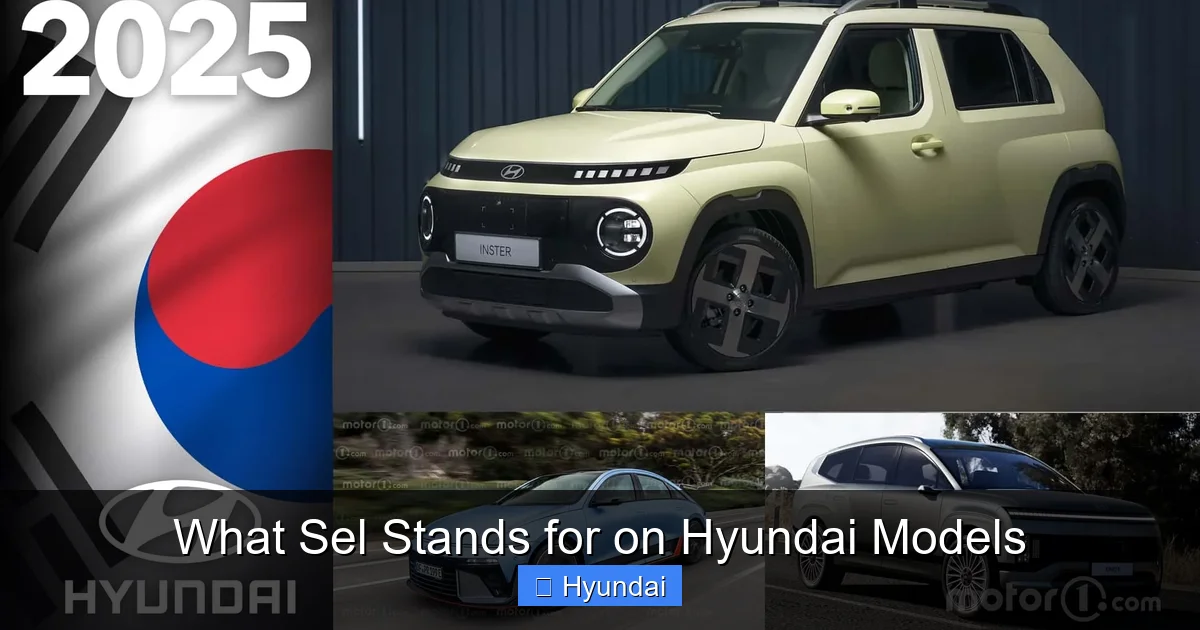
Visual guide about What Sel Stands for on Hyundai Models
Image source: cdn.motor1.com
Infotainment & Connectivity
This is the most noticeable upgrade. The SEL almost always jumps from a small, dated screen to a modern, tablet-style display (8-inch or larger) with Hyundai’s latest software. Crucially, it adds wireless Apple CarPlay and Android Auto, which is a game-changer for daily usability. You also get more USB ports, often a premium audio system upgrade (from 4 to 6 or 8 speakers), and sometimes even embedded navigation.
Comfort & Convenience
The interior feel changes dramatically. Key additions include:
- Heated front seats (almost universal on SEL).
- Dual-zone automatic climate control (a huge comfort upgrade over manual).
- Power-adjustable driver’s seat (with lumbar support on some models).
- Upgraded interior materials: Softer-touch plastics, simulated leather (pleather) on door panels and seats, and a leather-wrapped steering wheel.
- Proximity key & push-button start.
- Power sunroof/moonrooon (often optional or standard).
Safety & Driver Assistance
This is a critical area. While Hyundai’s SmartSense suite (Forward Collision-Avoidance Assist, Lane Keeping Assist, Driver Attention Warning) is increasingly standard even on SE, the SEL adds the more advanced systems that truly reduce stress:
- Blind-Spot Collision-Avoidance Assist (BCA): Actively prevents lane changes if a vehicle is in your blind spot.
- Rear Cross-Traffic Collision-Avoidance Assist (RCCA): Warns and brakes when reversing if traffic is detected.
- Smart Cruise Control with Stop & Go: Adaptive cruise that can bring the car to a complete stop and resume.
- Safe Exit Assist: Warns if opening a door into traffic.
These features move the car from “safe” to “semi-autonomous,” and they are a major reason buyers choose the SEL. For more on how Hyundai’s safety tech works, you can read about features like Panic Alert on Hyundai, which is part of the broader safety ecosystem.
Which Hyundai Models Offer an SEL Trim?
The availability of the SEL trim is widespread but not universal. Here’s a quick guide:
- Sedans: Elantra, Sonata, and the new Kona (subcompact crossover) all have well-defined SEL trims. The Accent, being the entry-level model, typically does not offer an SEL; it goes from SE to Limited.
- SUVs & Crossovers: Tucson, Santa Fe, Palisade, and Kona all have SEL versions. The Venue, as the smallest and most basic crossover, usually skips SEL, going from SE to Limited.
- Performance/Electric: Models like the Ioniq (hybrid/EV) have their own trim naming (e.g., Ioniq SEL does exist but with EV-specific features). The performance-oriented N models and the Ioniq 5/6 EVs have different designations (e.g., “Essential,” “AWD,” “Ultimate”).
- Sports Cars: The Veloster does not have an SEL; it uses SE, N Line, and N.
Pro Tip: When shopping, use Hyundai’s official “Build & Price” tool on their website. Select your model and year, and you’ll see the exact trim hierarchy and feature comparisons for that specific vehicle. This is the only way to get 100% accurate information for your target model year.
Who Is the SEL Trim For? The Ideal Buyer Profile
The SEL isn’t for everyone, but it’s the right choice for a huge majority of new car shoppers.
The Practical Family Person
If you need a reliable, comfortable, and safe vehicle for daily school runs, commuting, and weekend trips, the SEL is perfect. The heated seats, dual-zone climate, and advanced safety features like blind-spot monitoring make every drive easier and more comfortable. The Santa Fe SEL or Tucson SEL are quintessential family haulers with all the essentials at a rational price.
The Value-Conscious Tech Enthusiast
You want a modern infotainment system with wireless Apple CarPlay/Android Auto, a good sound system, and connected services. You don’t necessarily need every luxury material, but you want the interface to feel current. The SEL delivers this without the premium price of the Limited. For the tech-focused, the SEL often represents the point of diminishing returns—you get 90% of the tech experience for 70% of the Limited’s cost.
The First-Time New Car Buyer Stepping Up
If you’re moving from a used car or a base-model economy car, the SEL is a monumental leap. The difference in refinement, quietness, and feature set between an SE and an SEL can feel like jumping two segments up. It’s a fantastic “treat yourself” upgrade that makes a new car purchase feel truly special.
Who Should *Avoid* the SEL?
The SEL might not be for you if:
- You have a very tight budget and the SE’s starting price is your absolute ceiling. (But consider if the SEL’s added features are worth a small stretch).
- You demand the absolute highest-quality materials (genuine leather, real wood/metal trim) and the most advanced driver aids (like Highway Driving Assist 2). You need the Limited or higher.
- You’re a performance enthusiast seeking maximum power. The SEL rarely includes the top engine option; that’s usually reserved for Limited or N Line trims.
The Bottom Line: Is the SEL Worth the Money?
In almost every Hyundai model, the answer is a resounding yes. The SEL trim represents the brand’s philosophy of “Modern Premium”—offering features and experiences that feel upscale and contemporary at a price that remains accessible. The price jump from SE to SEL is typically the best value proposition in the entire lineup. You are purchasing a comprehensively equipped vehicle that will satisfy the vast majority of owners for years.
When you’re out shopping, don’t just look at the MSRP. Consider the long-term value. A well-equipped SEL will have a higher residual value (meaning it’s worth more when you sell or trade it in) than a barebones SE. It will also provide more daily satisfaction with its comfort and convenience features. The slight initial investment pays dividends in enjoyment and utility.
Finally, remember that the automotive market is dynamic. Incentives, dealer discounts, and financing offers can change the value equation dramatically. Sometimes, an SE with a big discount might be a better deal than an SEL at sticker price. Always do the math on the total out-the-door cost and the feature set you’re actually getting. But as a general rule of thumb, when in doubt between SE and SEL, lean toward the SEL. It’s the trim that made Hyundai a household name for value.
Conclusion: SEL – The Heart of Hyundai’s Lineup
The “SEL” badge on a Hyundai is more than just three letters on a trunk lid. It’s a promise. It’s the promise of a vehicle that’s been thoughtfully upgraded from a simple means of transport to a comfortable, connected, and safe sanctuary. It signifies that Hyundai has listened to what consumers truly want—not flashy performance, but everyday excellence in comfort, tech, and peace of mind.
So, the next time you see a Hyundai Santa Fe SEL or Elantra SEL, you’ll know it’s not just a random code. It’s the smart choice, the value champion, and the trim that millions of drivers have chosen as their trusted companion on the road. It embodies Hyundai’s dramatic transformation from a budget brand to a leader in quality and value. When you understand what SEL stands for—a complete, well-rounded package—you’re empowered to make a smarter car-buying decision that you’ll appreciate every single day.
Frequently Asked Questions
Is the Hyundai SEL trim worth the extra money over the SE?
For most buyers, absolutely yes. The SEL adds significant upgrades like a larger touchscreen with wireless Apple CarPlay/Android Auto, heated seats, dual-zone automatic climate control, and advanced safety features like blind-spot monitoring. The price increase is often justified by the huge leap in daily comfort and technology.
What’s the main difference between a Hyundai SEL and a Limited trim?
The Limited is the top-tier model. Key differences typically include genuine leather seats (vs. cloth/pleather in SEL), a premium Bose or Lexicon audio system, a panoramic sunroof, LED headlights, a digital instrument cluster, and sometimes additional driver-assist features or a more powerful engine. The SEL offers premium features at a more accessible price.
Do all Hyundai models come in an SEL version?
No. Most sedans (Elantra, Sonata) and crossovers/SUVs (Tucson, Santa Fe, Palisade, Kona) offer an SEL. However, the entry-level Accent and Venue usually skip SEL, going from SE to Limited. Performance models like the Veloster N and Ioniq 5/6 use different trim designations.
Does “SEL” officially stand for “Special Edition Limited”?
While that’s the common belief and it makes logical sense, Hyundai does not officially define SEL as an acronym. It is a marketing designation for a specific trim level. However, the “Special Edition Limited” interpretation accurately describes its position as a well-equipped, special package between the base and top models.
Are Hyundai SEL trims reliable?
Yes. The SEL trim uses the same core powertrain and chassis as other trims of the same model. Its reliability is identical to the SE and Limited versions. The additional features (like the larger touchscreen or power seats) are built with the same quality standards as the rest of the vehicle and are covered by the same Hyundai warranty.
Can I get an SEL with all-wheel drive (AWD)?
It depends on the model. On models like the Tucson and Santa Fe, AWD is often available on SEL trims, sometimes as an option or standard on certain engine configurations. On sedans like the Elantra, AWD is not available. You must check the specific build and price guide for the model and year you’re interested in.