
What Oil Life Percentage to Change Oil on Gmc

GMC’s Oil Life Monitoring System tells you when to change oil based on a percentage. Typically, change when it displays “Change Engine Oil” around 15% or at 0%. Don’t ignore it—driving with low oil life can cause engine damage. Reset the monitor after each oil change to keep it accurate.
If you own a GMC, you’ve probably seen that little oil life percentage creeping down on your dashboard display. It’s a handy feature, but it also leaves many drivers wondering: what oil life percentage should actually trigger an oil change? You’re not alone in this question. Understanding your GMC’s Oil Life Monitoring System (OLMS) is key to keeping your engine healthy and avoiding unnecessary trips to the shop. Let’s break it down in simple terms.
GMC, like many modern vehicles, doesn’t rely on a rigid “every 5,000 miles” rule anymore. Instead, it uses a smart algorithm that considers how you drive, the temperatures your engine endures, and how hard your truck or SUV works. This system gives you a personalized estimate, usually shown as a percentage from 100% (fresh oil) down to 0% (oil change overdue). But what number should make you pull over and call your mechanic? We’ll get to that. First, let’s understand how this system works so you can trust the numbers it shows.
Key Takeaways
- GMC’s oil life monitor calculates oil degradation based on engine conditions, not just mileage. It uses sensors to track revolutions, temperature, and driving habits.
- Change your oil when the system displays “Change Engine Oil” or when oil life reaches 15% or lower. Waiting until 0% risks engine wear.
- Severe driving conditions (towing, extreme temps, short trips) reduce oil life faster. The system adjusts, but you may need changes more often.
- Always reset the oil life monitor after an oil change. If not reset, it will continue counting down from the old percentage.
- Using the correct oil type (dexos1™ gen 3) is crucial for system accuracy. Wrong oil can trigger premature warnings.
- Ignoring the oil life warning can lead to sludge, wear, and costly repairs. Address it promptly to protect your engine.
📑 Table of Contents
- How GMC’s Oil Life Monitoring System Works
- What Oil Life Percentage Should Trigger Your Oil Change?
- Real-World Factors That Can Alter Your Oil Change Interval
- The Risks of Ignoring Your Oil Life Warning
- How to Reset Your GMC’s Oil Life Monitor After an Oil Change
- Debunking Common Oil Change Myths for GMC Owners
How GMC’s Oil Life Monitoring System Works
GMC’s Oil Life Monitoring System is more than just a timer. It’s an algorithm-based computer that actively calculates the remaining useful life of your engine oil. It does this by monitoring several engine parameters in real-time.
The Algorithm: It’s All About Engine Revolutions
At its core, the system tracks engine revolutions. Think of it like this: every time your engine’s pistons move up and down, it causes microscopic wear on the oil. The system counts these revolutions. But it doesn’t stop there. It also factors in engine load, speed, and temperature. A long highway cruise at moderate speeds is much easier on oil than a short, cold winter trip to the grocery store where the engine never fully warms up. The algorithm assigns a “penalty” for these severe conditions, draining the oil life percentage faster.
Sensors and Data: The System’s Inputs
The OLMS receives data from various sensors across your GMC. The engine control module (ECM) feeds it information on coolant temperature, engine speed (RPM), throttle position, and even ambient air temperature. For example, if the engine runs consistently at high temperatures (like when towing a trailer up a hill), the oil degrades quicker, and the system will deduct more percentage points per mile. This is why two GMC owners with identical trucks might get different oil change intervals—one might see 15% oil life at 6,000 miles, while another hits it at 4,500 miles, all because of their driving patterns.
How It’s Different from a Simple Mileage Counter
Old-school oil change reminders were based on a fixed mileage or time interval. If your manual said “change oil every 7,500 miles,” the light would come on at that mark regardless of conditions. GMC’s system is adaptive. It extends the interval during gentle, highway driving and shortens it during severe use. This means you’re not changing oil too early (wasting money and resources) or too late (risking damage). It’s a tailored approach. However, it’s not infallible, which is why understanding the percentage thresholds is still important.
What Oil Life Percentage Should Trigger Your Oil Change?
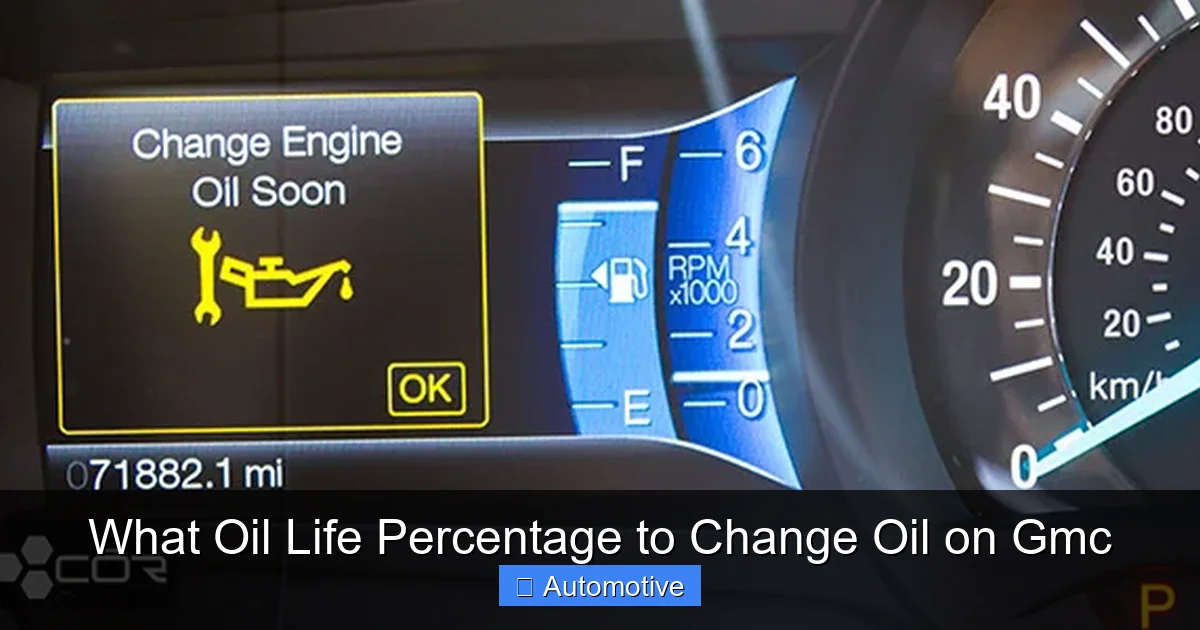
This is the million-dollar question. The short answer: you should plan to change your oil when the display shows “Change Engine Oil” or when the oil life percentage drops to 15% or lower. But let’s dig into the details because there’s some nuance here.
Visual guide about What Oil Life Percentage to Change Oil on Gmc
Image source: corwheels.com
The 15% Rule: Your Practical Warning
On most GMC models, the system will illuminate the “Change Engine Oil” message on the Driver Information Center (DIC) when the oil life reaches approximately 15%. This is your first, and most important, warning. At this point, you have a buffer—typically 500 to 1,000 miles of driving, depending on your habits—before the oil life hits 0%. Our strong advice is to schedule your oil change as soon as you see that message. Don’t wait for 0%. Why? Because once oil life hits 0%, the oil is severely degraded. It has lost its ability to lubricate properly, fight sludge, and cool the engine. Driving on 0% oil life is like running a marathon with no shoes—it might work for a short distance, but damage is inevitable.
What Happens at 0%? The Overdue Point
When oil life reaches 0%, the system will display “Oil Life 0%” or “Change Oil Now.” At this stage, the oil has exceeded its useful life according to the algorithm. The vehicle is essentially telling you that an oil change is critically overdue. Continuing to drive at this point significantly increases the risk of accelerated engine wear, sludge formation, and in extreme cases, engine failure. If you see 0%, change the oil immediately. Do not delay.
Manufacturer Recommendations: Trust the System, But Know the Limits
GMC’s official stance is to follow the oil life monitor. The system is designed to allow for extended oil change intervals, often up to 10,000 miles or more under ideal conditions. However, they also state that you should not exceed 12 months or 10,000 miles (whichever comes first) without an oil change, even if the oil life percentage hasn’t dropped to 15%. This is because oil can degrade over time from moisture and contaminants, even if the engine isn’t run much. So, if you have a vehicle that sits idle a lot, check the oil life percentage and time since last change. For most drivers, the percentage is the primary guide.
Real-World Factors That Can Alter Your Oil Change Interval
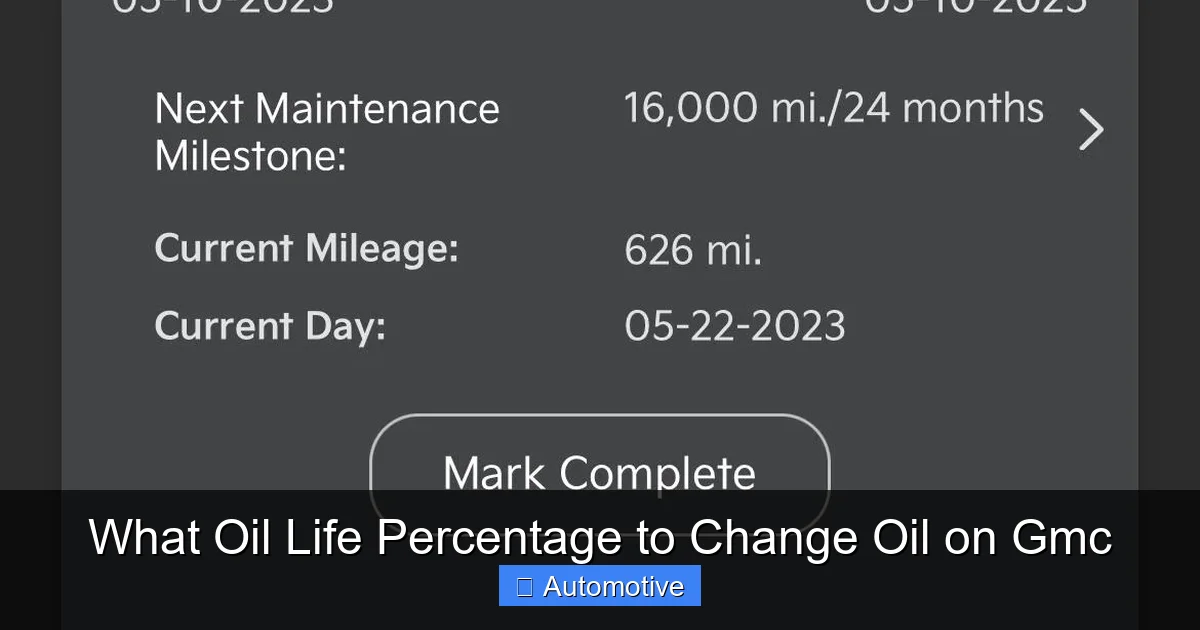
While the oil life monitor is sophisticated, your driving style and environment have the final say. Certain conditions will cause the percentage to drop faster than the “average” estimate. Recognizing these helps you interpret the system correctly.
Visual guide about What Oil Life Percentage to Change Oil on Gmc
Image source: i.redd.it
Severe Driving Conditions: The Usual Suspects
GMC defines “severe” driving as: frequent short trips (less than 5-10 miles) where the engine doesn’t fully warm up, driving in extremely cold or hot climates, towing or hauling heavy loads, extensive idling, and driving in dusty or sandy conditions. If your lifestyle includes any of these, expect your oil life to plummet quicker. For example, if you tow a boat every weekend, your oil life might drop to 15% in just 3,000 miles. The system is supposed to account for this, but it’s wise to be proactive. In severe service, consider checking your oil level and condition monthly.
Oil Type Matters: Dexos1™ Gen 3 is Key
GMC engines are designed to use oil that meets the dexos1™ gen 3 specification (for gasoline engines) or dexos2™ (for some diesels). Using the correct oil is not just a recommendation; it’s critical for the oil life monitor to function accurately. The system’s algorithm is calibrated for the performance characteristics of dexos-certified oil. If you use a non-certified oil, it may degrade faster, but the monitor won’t know—it might still show a higher percentage, giving you a false sense of security. Always use oil with the dexos label. You can find this on the oil container and in your owner’s manual.
Climate and Environment: Hot, Cold, and Dusty
Extreme temperatures stress oil. In very cold climates, oil thickens, making it harder to circulate initially, increasing wear during cold starts. In very hot climates, oil thins out and can break down faster. Dusty environments introduce more particulate matter into the air intake, which can contaminate the oil. The OLMS tries to compensate for temperature via sensor data, but it can’t measure air dust content. If you live in a particularly harsh environment, consider more frequent oil changes or use a high-quality oil filter designed for your conditions.
The Risks of Ignoring Your Oil Life Warning
It’s tempting to think, “It’s just a suggestion, I’ll get to it next week.” But ignoring the oil life warning is one of the fastest ways to cause expensive engine damage. Let’s look at what happens inside your GMC’s engine when oil is neglected.
Visual guide about What Oil Life Percentage to Change Oil on Gmc
Image source: i.ytimg.com
Engine Sludge and Buildup
As oil degrades, it loses its ability to suspend and carry away combustion byproducts, dirt, and metal shavings. These contaminants clump together, forming a thick, gooey substance called sludge. Sludge can clog oil passages, preventing oil from reaching critical components like the camshaft bearings or turbocharger (if equipped). This leads to areas running with little or no lubrication, causing overheating and rapid wear. Cleaning sludge is a major, costly service—often requiring an engine teardown.
Increased Wear and Tear
Fresh oil forms a protective film between metal surfaces. Worn-out oil has a much thinner film strength. This means metal-on-metal contact occurs more frequently. Over time, this wears down bearings, piston rings, cylinder walls, and valve train components. You might notice increased oil consumption, lower compression, and reduced performance. The wear is cumulative and irreversible.
Potential for Catastrophic Failure
In the worst-case scenario, severely degraded oil can lead to a complete engine seizure. If a bearing welds itself to the crankshaft due to lack of lubrication, the engine locks up. This is often referred to as a “thrown rod” or “spun bearing,” and it usually means the engine needs to be replaced—a bill that can easily exceed $5,000 for a GMC truck or SUV. The oil life warning is your cheapest insurance policy against this.
How to Reset Your GMC’s Oil Life Monitor After an Oil Change
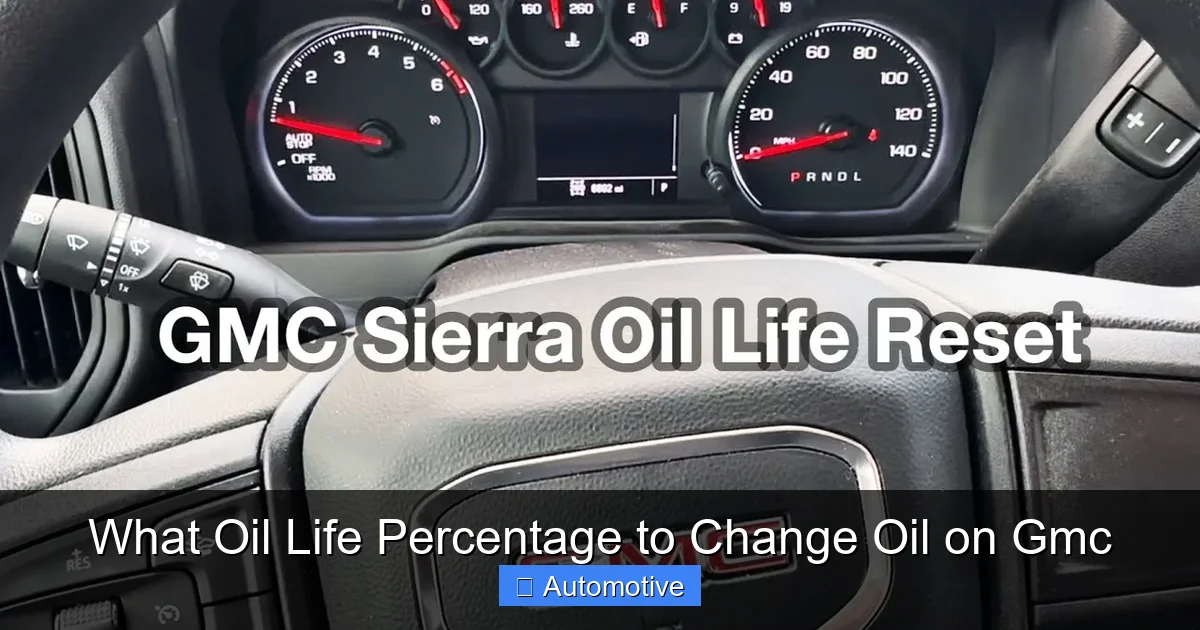
After you’ve completed the oil change (whether you did it yourself or had a shop do it), the oil life percentage on your dashboard will still show the old, low number. You must manually reset it to 100% so the system can begin counting down from full again. If you don’t reset it, the system will think you’re still running on the old oil and will soon display “Change Engine Oil” again, even though you just changed it.
Step-by-Step Reset Procedure for Most GMC Models
The process is similar across many GMC trucks and SUVs (Sierra, Yukon, Acadia, Terrain, etc.), but always check your owner’s manual for specifics. Here’s the general method:
- Turn the ignition to the “ON” position (do not start the engine). All dashboard lights should be on.
- Use the steering wheel controls or the DIC buttons to navigate to the “Oil Life” display. It might say “Oil Life XX%”.
- Press and hold the “Set/Clr” or “Reset” button (often the arrow or trip odometer reset button) for about 5 seconds. You might see “Oil Life Set to 100%” or a confirmation message.
- Turn the ignition off and then back on to verify the display now reads 100%.
If this doesn’t work, consult your manual. Some older models use a different sequence involving the gas pedal or turning the key in a specific pattern.
What If the Reset Fails?
If you’ve followed the steps correctly and the oil life still won’t reset, there could be a few issues. First, double-check that the oil level is correct. Some systems won’t reset if the oil level is low. Second, ensure the oil change was done properly—the old oil filter was replaced, and the drain plug is tight. Third, there might be a temporary glitch; try the procedure again. If it persists, there could be a fault with the DIC or a sensor. In this case, a visit to a dealer or a qualified mechanic with a professional scan tool is necessary. They can manually reset the system and check for any underlying trouble codes.
When to Seek Professional Help
If you’re uncomfortable performing the reset yourself, any quick-lube shop or dealership will do it for free or a nominal fee when you get your oil changed. It’s a standard part of the service. However, if the system is malfunctioning (e.g., it shows an oil life percentage that doesn’t seem to decrease, or it gives a warning immediately after a reset), you should have it diagnosed. A faulty oil life system isn’t dangerous by itself, but it means you’re losing a valuable maintenance tool and might miss a real oil change need.
Debunking Common Oil Change Myths for GMC Owners
With all this talk about percentages and systems, some old-school myths still persist. Let’s clear the air.
Myth: “I Can Go 10,000 Miles No Matter What”
The 10,000-mile interval is the maximum under ideal, “normal” driving conditions. If you engage in any severe driving (towing, short trips, extreme temps), your actual interval will be much shorter. The oil life monitor exists precisely to dispel this one-size-fits-all myth. Trust the percentage, not a fixed number.
Myth: “Synthetic Oil Lasts Forever”
High-quality synthetic oil (which GMC requires) is more resistant to breakdown than conventional oil, but it still degrades. It gets contaminated with fuel dilution, moisture, and particulates. It also loses its additive package over time. The oil life monitor accounts for the type of oil (it’s calibrated for dexos synthetic), so even with synthetic, you must change it when the system indicates.
Myth: “The Oil Life Monitor Is Always Perfect”
While highly reliable, the system is an estimate. It doesn’t test the actual oil condition; it predicts it based on inputs. In rare cases, a faulty sensor (like a coolant temperature sensor) can throw off the calculation. That’s why it’s still a good habit to check your oil level and appearance (color and clarity) at least once a month. If the oil looks dark, gritty, or smells like gasoline, change it regardless of the percentage.
Understanding your GMC’s oil life percentage is like having a direct conversation with your engine about its needs. By changing the oil when the system warns you (around 15% or at 0%), using the correct dexos oil, and resetting the monitor promptly, you’re following the manufacturer’s best practices for longevity. This system takes the guesswork out of maintenance, but it still requires you to listen. Don’t let that percentage dip too low. A timely oil change is one of the simplest, most cost-effective ways to ensure your GMC serves you reliably for hundreds of thousands of miles. It’s not just about avoiding breakdowns; it’s about preserving performance, fuel economy, and the overall health of your investment. So next time that “Change Engine Oil” message appears, don’t sigh—see it as your engine’s friendly reminder that it’s time for some fresh fluids.
Frequently Asked Questions
What does 0% oil life mean on a GMC?
It means your oil has degraded past its useful life according to the monitoring system. An oil change is critically overdue. Driving at this point risks serious engine damage. Change the oil immediately.
Can I drive my GMC with 5% oil life?
Technically, you can drive a short distance (100-200 miles), but it’s not recommended. At 5%, the oil is severely degraded. It’s best to schedule an oil change as soon as you see the warning message, which typically appears at 15%.
How often should I change my oil if I tow with my GMC?
Towing is a severe driving condition that drastically reduces oil life. While the oil life monitor will adjust and likely show a lower percentage faster, be prepared for oil changes as often as every 3,000 to 5,000 miles, depending on load and terrain. Always check the percentage regularly.
What type of oil does my GMC require?
Most modern GMC gasoline engines require oil that meets the dexos1™ gen 3 specification. Check your owner’s manual for the exact viscosity (e.g., 0W-20, 5W-30). Using non-dexos oil can void your warranty and confuse the oil life monitor.
Why did my oil life percentage drop so quickly?
This is normal if you’ve been driving in severe conditions: lots of short trips, extreme cold or heat, towing, or heavy loads. The system detects these factors and accelerates the percentage decrease to reflect the oil’s faster degradation.
How do I reset the oil life on my GMC after an oil change?
With the ignition on (engine off), use the steering wheel controls or DIC buttons to display “Oil Life.” Press and hold the “Set/Clr” or reset button for about 5 seconds until it reads “Oil Life Set to 100%.” See your owner’s manual for model-specific instructions.
