
What Kind of Oil Does a Toyota Tacoma Take?

Choosing the right oil for your Toyota Tacoma is essential for engine health, fuel efficiency, and long-term reliability. This guide covers everything from oil types and viscosities to manufacturer specs and maintenance tips tailored specifically for Tacoma owners.
Key Takeaways
- Use 0W-20 or 5W-20 synthetic oil: Most modern Toyota Tacomas (2012 and newer) require 0W-20 full synthetic oil, while older models may use 5W-20.
- Follow Toyota’s API and ILSAC standards: Look for oils meeting API SN or higher and ILSAC GF-5 or GF-6 certifications to ensure compatibility.
- Change oil every 5,000 to 10,000 miles: Synthetic oil allows longer intervals, but driving conditions like towing or off-roading may require more frequent changes.
- Avoid conventional oil in newer models: Full synthetic oil provides better protection, especially in extreme temperatures and high-stress driving.
- Check your owner’s manual: Always confirm the recommended oil type and capacity for your specific model year and engine (2.7L 4-cylinder or 3.5L V6).
- Use Toyota Genuine Motor Oil or equivalent: Brands like Mobil 1, Pennzoil Platinum, and Castrol EDGE meet Toyota’s specifications and are trusted by mechanics.
- Don’t ignore oil life monitoring systems: Many Tacomas have smart oil life monitors—use them as a guide, but don’t exceed 10,000 miles without inspection.
📑 Table of Contents
What Kind of Oil Does a Toyota Tacoma Take?
If you own a Toyota Tacoma, you already know it’s one of the most reliable, rugged, and long-lasting trucks on the road. Whether you’re hauling gear to a job site, towing a trailer up a mountain pass, or just cruising down the highway, your Tacoma is built to handle it all. But to keep that engine running strong for 200,000 miles and beyond, one of the most important things you can do is use the right kind of motor oil.
Motor oil is the lifeblood of your engine. It lubricates moving parts, reduces friction, prevents overheating, and helps keep contaminants at bay. Using the wrong oil—or neglecting oil changes—can lead to sludge buildup, reduced fuel economy, and even engine damage. That’s why knowing what kind of oil your Toyota Tacoma takes isn’t just a good idea—it’s essential.
In this guide, we’ll walk you through everything you need to know about choosing the right oil for your Tacoma. From understanding viscosity ratings and synthetic vs. conventional oils to decoding Toyota’s official recommendations, we’ve got you covered. Whether you drive a 2005 4-cylinder or a 2023 V6 TRD Pro, this article will help you make smart, informed decisions about your truck’s maintenance.
Understanding Motor Oil Basics

Visual guide about What Kind of Oil Does a Toyota Tacoma Take?
Image source: driverlessrevolutions.com
Before diving into Tacoma-specific recommendations, it helps to understand what motor oil actually does—and how to read the labels on the bottle.
Motor oil has two main jobs: lubrication and cooling. Inside your engine, hundreds of metal parts move at high speeds and temperatures. Without oil, these parts would grind together, overheat, and fail in minutes. Oil creates a thin film between these parts, reducing friction and wear. It also carries heat away from critical areas like the pistons and cylinder walls.
But not all oils are created equal. Modern engines demand oils that can perform under extreme conditions—high heat, cold starts, stop-and-go traffic, and heavy loads. That’s why oil is formulated with a base stock (conventional, synthetic, or a blend) and a cocktail of additives that improve performance.
One of the most important things to understand is oil viscosity—the measure of how thick or thin the oil is. Viscosity is indicated by a number like “5W-20” or “0W-30.” The first number (with the “W”) tells you how the oil flows in cold weather—lower numbers mean better cold-weather performance. The second number is the oil’s viscosity at operating temperature. A lower second number means the oil is thinner when hot, which can improve fuel economy.
For example, 0W-20 oil flows easily in freezing temperatures (great for winter starts) but stays thin enough at high temps to reduce engine drag. That’s why it’s the go-to choice for most modern Toyotas, including the Tacoma.
Conventional vs. Synthetic Oil
You’ve probably seen bottles labeled “conventional,” “synthetic blend,” or “full synthetic.” What’s the difference?
Conventional oil is refined from crude oil and works fine for older engines or light-duty driving. But it breaks down faster under heat and stress, and it doesn’t flow as well in cold weather.
Synthetic oil, on the other hand, is engineered in a lab. It starts with a high-quality base stock and is chemically modified to deliver superior performance. Full synthetic oil offers better protection against sludge, improved cold-weather flow, and longer service life. It’s more expensive, but the benefits—especially for modern engines—are worth it.
Synthetic blends are a mix of conventional and synthetic oils. They offer some of the benefits of full synthetic at a lower price, but they’re not as durable.
For Toyota Tacomas, especially 2012 and newer models, full synthetic oil is strongly recommended. Toyota engineers design these engines to take advantage of synthetic oil’s advanced properties, and using conventional oil can void your warranty or reduce engine life.
Why Viscosity Matters
Using the wrong viscosity can hurt your engine. If the oil is too thick, it won’t flow properly during cold starts, leading to increased wear. If it’s too thin, it won’t provide enough protection under high heat and load.
Toyota specifies exact viscosity grades for each Tacoma model. For example, a 2020 Tacoma with the 3.5L V6 engine requires 0W-20 oil. Using 10W-40—a common oil for older trucks—could reduce fuel efficiency and increase engine strain.
Always check your owner’s manual. It will list the recommended viscosity based on your engine and climate. In colder regions, 0W-20 is ideal. In warmer climates, 5W-20 may be acceptable for older models, but 0W-20 is still preferred for newer ones.
Toyota Tacoma Oil Recommendations by Model Year

Visual guide about What Kind of Oil Does a Toyota Tacoma Take?
Image source: low-offset.com
Toyota has updated its engine designs and oil recommendations over the years, so the right oil for your Tacoma depends on when it was made. Let’s break it down by generation.
First Generation (1995–2004)
The first-gen Tacoma came with either a 2.4L 4-cylinder or a 3.4L V6 engine. These older engines were built to run on conventional oil, and Toyota recommended 5W-30 or 10W-30 depending on climate.
– In cold climates: 5W-30
– In warm climates: 10W-30
While you can still use conventional oil in these models, switching to a high-mileage synthetic blend can offer better protection, especially if your truck has over 100,000 miles. High-mileage oils contain additives that condition seals and reduce oil consumption.
Second Generation (2005–2015)
The second-gen Tacoma introduced the 2.7L 4-cylinder and 4.0L V6 engines. These engines were more advanced and began to favor synthetic oils.
– 2005–2011 models: Toyota recommended 5W-30 conventional or synthetic blend.
– 2012–2015 models: The recommendation shifted to 0W-20 full synthetic for improved fuel economy and emissions control.
Even if your 2008 Tacoma can run on 5W-30, upgrading to 0W-20 synthetic (if your engine is in good condition) can improve cold starts and reduce engine wear.
Third Generation (2016–Present)
The current-generation Tacoma (2016 and newer) uses the 2.7L 4-cylinder or 3.5L V6 engines. Both are designed for 0W-20 full synthetic oil.
Toyota’s official recommendation is clear: use 0W-20 synthetic oil that meets API SN or higher and ILSAC GF-5 or GF-6 standards. This oil is optimized for direct injection engines, start-stop systems (on some trims), and improved fuel efficiency.
Using anything other than 0W-20—even 5W-20—can affect your truck’s performance and may void your warranty. The 3.5L V6, in particular, relies on precise oil flow for its variable valve timing (VVT-i) system, and thicker oil can interfere with operation.
Special Cases: TRD Models and Off-Road Use
If you drive a TRD Off-Road or TRD Pro Tacoma, you’re likely putting your truck through tougher conditions—rock crawling, mud, dust, and high heat. These conditions increase engine stress and can break down oil faster.
While the recommended oil type remains 0W-20 synthetic, you may need to change it more often. Toyota suggests oil changes every 5,000 to 10,000 miles under “severe” driving conditions, which includes:
– Frequent short trips (less than 10 miles)
– Towing or hauling heavy loads
– Driving in dusty or sandy environments
– Extreme temperatures (below 32°F or above 90°F)
For off-roaders, consider changing oil every 5,000 miles or every 6 months—whichever comes first. You might also want to use a high-performance synthetic oil like Mobil 1 Extended Performance or Pennzoil Ultra Platinum, which offer extra protection under stress.
How Much Oil Does a Toyota Tacoma Hold?
Visual guide about What Kind of Oil Does a Toyota Tacoma Take?
Image source: thetacomaguy.com
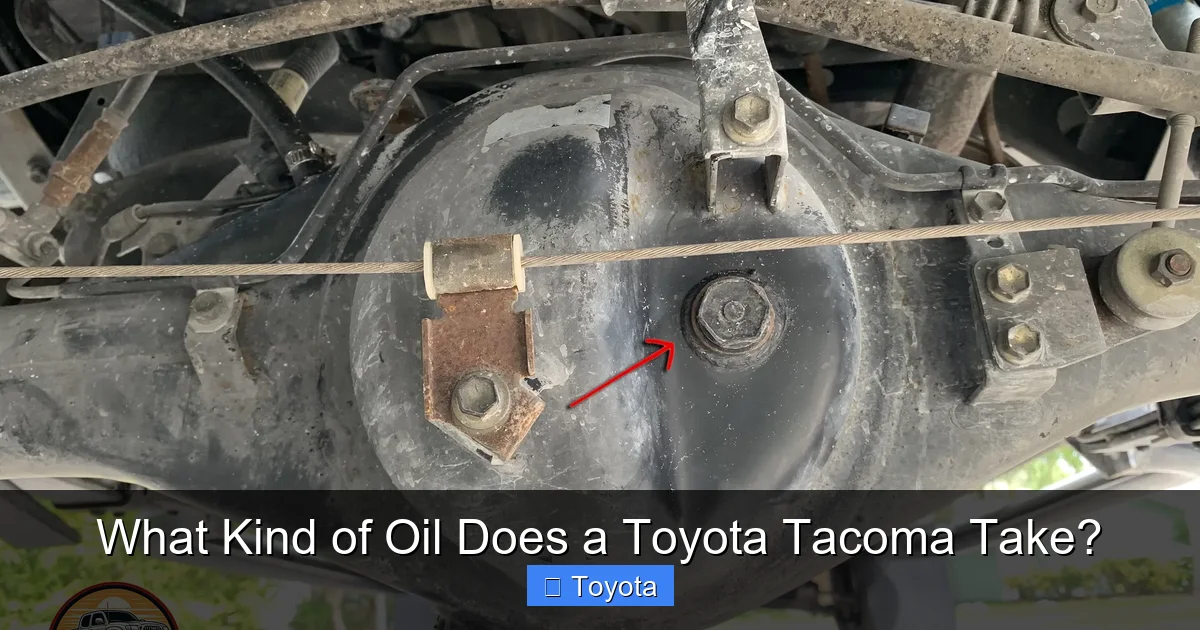
Knowing how much oil your Tacoma takes is just as important as knowing what kind. Overfilling or underfilling can cause serious engine problems.
The oil capacity varies by engine:
– 2.7L 4-cylinder: Approximately 5.5 quarts (including filter)
– 3.5L V6: Approximately 6.2 quarts (including filter)
Always check the dipstick after an oil change to ensure the level is correct. Add oil gradually and recheck—don’t pour in all 6 quarts at once and assume it’s full.
When changing the oil yourself, use a new oil filter every time. Toyota recommends the OEM filter (part # 90915-YZZF1 or equivalent), but high-quality aftermarket filters from brands like WIX or Mobil 1 are also fine.
Oil Filter Recommendations
The oil filter captures dirt, metal particles, and sludge. A cheap or clogged filter can reduce oil flow and damage your engine.
Stick with a filter that meets OEM specifications. Toyota Genuine filters are reliable, but reputable aftermarket brands work just as well if they’re properly rated.
Avoid no-name filters from discount stores—they may not have the same bypass valve or filtration efficiency.
Best Motor Oils for Toyota Tacoma
With so many brands on the market, which oil should you choose? Here are some top-rated options that meet Toyota’s standards.
Toyota Genuine Motor Oil
Toyota offers its own line of full synthetic 0W-20 oil, formulated specifically for Toyota engines. It’s a safe, reliable choice that guarantees compatibility. You can find it at Toyota dealerships or online.
Pros: Perfect match for your Tacoma, trusted by mechanics
Cons: Slightly more expensive than aftermarket brands
Mobil 1 Extended Performance 0W-20
Mobil 1 is one of the most trusted synthetic oils in the world. The Extended Performance formula is designed to last up to 20,000 miles under normal conditions, though Toyota still recommends changes every 10,000 miles.
Pros: Excellent protection, widely available, great for high-mileage engines
Cons: Higher price point
Pennzoil Platinum Full Synthetic 0W-20
Pennzoil uses natural gas as a base stock, which results in a purer, cleaner oil. It’s great for preventing sludge and deposits.
Pros: Affordable, high performance, good cold-flow properties
Cons: Slightly less durable under extreme heat
Castrol EDGE 0W-20
Castrol EDGE uses titanium additive technology to strengthen the oil film under pressure. It’s ideal for performance driving and towing.
Pros: Excellent wear protection, good for heavy loads
Cons: Can be harder to find in some areas
Valvoline Advanced Full Synthetic 0W-20
Valvoline offers strong protection at a budget-friendly price. It meets all Toyota specifications and is a solid choice for daily drivers.
Pros: Great value, reliable performance
Cons: Not as long-lasting as premium brands
High-Mileage Options
If your Tacoma has over 75,000 miles, consider a high-mileage oil like:
– Mobil 1 High Mileage 0W-20
– Pennzoil High Mileage 5W-20 (for older models)
These oils contain seal conditioners and anti-wear additives that help reduce oil consumption and leaks in aging engines.
When and How to Change Your Tacoma’s Oil
Even the best oil breaks down over time. Regular oil changes are the single most important maintenance task for your Tacoma.
Recommended Oil Change Intervals
Toyota recommends changing the oil every 10,000 miles or 12 months under normal driving conditions. However, if you frequently drive in severe conditions (towing, off-roading, short trips, extreme temps), change it every 5,000 miles or 6 months.
Many newer Tacomas have an oil life monitoring system that calculates when an oil change is needed based on driving habits. Use this as a guide, but don’t ignore it—don’t go beyond 10,000 miles without a change.
DIY Oil Change Tips
Changing your own oil is easy and saves money. Here’s how:
1. Warm up the engine for 2–3 minutes (warm oil flows better).
2. Lift the truck safely using jack stands or ramps.
3. Place a drain pan under the oil pan.
4. Remove the drain plug and let the oil drain completely (5–10 minutes).
5. Replace the drain plug and torque to spec (usually 30 ft-lbs).
6. Remove the old oil filter and lubricate the new filter’s gasket with fresh oil.
7. Install the new filter by hand—don’t overtighten.
8. Add the correct amount of new oil (check dipstick).
9. Start the engine and check for leaks.
10. Reset the oil life monitor (if equipped).
Always dispose of used oil and filters responsibly. Most auto parts stores accept them for recycling.
Professional Oil Changes
If you prefer to let a shop handle it, choose a reputable mechanic or dealership. Make sure they use the correct oil and filter. Ask for a copy of the work order so you know what was used.
Avoid quick-lube chains that push unnecessary services. A basic oil change should take 20–30 minutes and cost $40–$70 for synthetic oil.
Common Mistakes to Avoid
Even experienced drivers make oil-related mistakes. Here are a few to watch out for:
Using the Wrong Viscosity
Don’t assume “thicker is better.” Using 10W-40 in a 0W-20 engine can reduce fuel economy and damage variable valve timing systems.
Mixing Oil Types
Avoid mixing conventional and synthetic oils unless it’s an emergency. While it won’t destroy your engine, it dilutes the benefits of synthetic oil.
Skipping the Filter
Always change the filter with every oil change. A dirty filter restricts oil flow and reduces protection.
Overfilling the Oil
Too much oil can cause foaming, which reduces lubrication and can damage seals. Stick to the recommended capacity and check the dipstick.
Ignoring Warning Lights
If the oil pressure light comes on, stop driving immediately. Low oil pressure can destroy your engine in minutes.
Conclusion
Choosing the right oil for your Toyota Tacoma isn’t complicated—but it’s critical. For most owners, that means using 0W-20 full synthetic oil that meets API and ILSAC standards. Stick to the recommended change intervals, use a quality filter, and pay attention to your driving conditions.
Whether you’re cruising the highway or tackling a trail, the right oil keeps your Tacoma running smooth, efficient, and reliable for years to come. Don’t cut corners—your engine will thank you.
Frequently Asked Questions
Can I use 5W-20 instead of 0W-20 in my Tacoma?
While 5W-20 is close in viscosity, Toyota specifically recommends 0W-20 for most modern Tacomas. Using 5W-20 may reduce fuel efficiency and affect engine performance, especially in cold weather. Stick to 0W-20 unless your owner’s manual says otherwise.
How often should I change the oil in my Toyota Tacoma?
Under normal driving conditions, change the oil every 10,000 miles or 12 months. If you frequently tow, drive in dust or extreme temperatures, or take short trips, change it every 5,000 miles or 6 months.
Can I use conventional oil in a 2020 Tacoma?
No. The 2020 Tacoma’s 3.5L V6 engine is designed for full synthetic 0W-20 oil. Using conventional oil can reduce engine life and may void your warranty.
What happens if I use the wrong oil in my Tacoma?
Using the wrong viscosity or oil type can lead to poor fuel economy, increased engine wear, sludge buildup, and potential damage to variable valve timing systems. In severe cases, it can cause engine failure.
Is it okay to go over 10,000 miles between oil changes?
Even with synthetic oil, Toyota does not recommend going beyond 10,000 miles. The oil life monitor helps, but oil degrades over time. Exceeding this interval increases the risk of engine damage.
Can I mix different brands of synthetic oil?
Yes, you can mix synthetic oils from different brands as long as they meet the same viscosity and certification standards (e.g., 0W-20, API SN). However, it’s best to stick with one brand for consistency.