
What Kind of Oil Does a Chrysler 300 Take?

The Chrysler 300 requires specific oil based on its engine type and model year. Most modern models (2011+) with the 3.6L V6 use SAE 5W-20, while certain V8 Hemi engines may require 5W-30. Always verify with your owner’s manual, as using the correct API-certified oil meeting Chrysler’s MS specifications is critical for engine health, fuel economy, and warranty compliance.
Key Takeaways
- Oil type is engine-specific: Your Chrysler 300’s recommended oil depends entirely on whether you have a V6 (typically Pentastar) or V8 (Hemi) engine, and the model year.
- Viscosity is usually 5W-20 or 5W-30: The vast majority of post-2011 Chrysler 300s call for 5W-20 synthetic. Some high-performance or older V8 models may specify 5W-30.
- Capacity varies by engine: Oil capacity ranges from approximately 5.5 quarts (3.6L V6) to 7 quarts (5.7L/6.4L V8), always check for your specific engine and whether the filter is included.
- Must meet Chrysler material standards: The oil must carry the API “SN” or newer symbol and explicitly list compliance with Chrysler Material Standard (MS) numbers like MS-6395 or MS-14831.
- Synthetic is mandatory for modern models: Since the early 2010s, Chrysler has required full synthetic oil for all 300 models to support advanced engine designs and turbocharging.
- Regular changes are non-negotiable: Adhere to the manufacturer’s service interval (often 6,000-10,000 miles for synthetic) to prevent sludge, wear, and costly repairs.
- When in doubt, check the manual: Your vehicle’s owner’s manual is the final authority. If unavailable, a certified Chrysler dealer or reputable mechanic can confirm the exact specification.
📑 Table of Contents
- Why Oil Choice Matters for Your Chrysler 300
- Decoding Your Chrysler 300’s Engine Options
- The Gold Standard: Chrysler’s Oil Specifications
- How Much Oil Does a Chrysler 300 Need?
- Oil Change Intervals and Best Practices
- What Happens If You Use the Wrong Oil?
- Conclusion: Your Simple Path to Engine Longevity
Why Oil Choice Matters for Your Chrysler 300
Choosing the right oil for your Chrysler 300 isn’t just about topping up a fluid; it’s about protecting a significant investment. Your engine is a complex assembly of precision-machined parts moving at high speeds and temperatures. The oil is its lifeblood—lubricating, cooling, cleaning, and sealing. Using the incorrect oil can lead to increased friction, premature wear, sludge formation, reduced fuel economy, and even catastrophic engine failure. For a car like the Chrysler 300, which often features powerful V6 and V8 engines, sometimes with advanced technologies like variable valve timing (VVT) and, in some cases, turbocharging, the oil specification is meticulously engineered by Fiat Chrysler Automobiles (FCA) engineers. They design engines around specific oil properties. Using an oil that doesn’t meet these exacting standards voids your warranty and compromises performance. Think of it like using the wrong fuel grade; the engine might run, but it won’t run well or last long. This guide will cut through the confusion, giving you clear, actionable information for every generation and engine in the Chrysler 300 lineup.
The High Cost of a Simple Mistake
We’ve all been there: at the auto parts store, faced with a wall of oil bottles. It’s easy to grab the cheapest conventional oil or a generic “high mileage” blend. But for your Chrysler 300, this is a gamble. Modern engines, especially those with tight tolerances and complex valvetrains, require oils with specific additive packages. The wrong viscosity (like using 10W-30 instead of 5W-20) can cause poor cold-start flow, leading to increased wear during the most critical engine startup period. Conversely, oil that’s too thin at operating temperature (low “W” number) can fail to maintain a protective film under high stress and heat, leading to bearing wear. Furthermore, oils that don’t meet Chrysler’s MS-6395 or MS-14831 standards may lack the necessary detergents to keep the 300’s Pentastar or Hemi engines clean, or may not have the right friction modifiers for the hydraulic VVT system, causing performance issues and diagnostic trouble codes. The repair bill for a neglected or incorrectly serviced engine can easily exceed $5,000, making a $40 oil change seem like a trivial expense in comparison.
Decoding Your Chrysler 300’s Engine Options
The first step in finding the right oil is knowing exactly what powers your specific Chrysler 300. The model has been produced in two main generations (2005-2010 and 2011-present), each with different engine families. Your VIN number is the ultimate identifier, but this breakdown will give you a strong starting point based on common configurations.

Visual guide about What Kind of Oil Does a Chrysler 300 Take?
Image source: homeygears.com
Generation One (2005-2010): The LX/LC Platform
This original Chrysler 300, famous for its bold design, offered a range of engines from a base V6 to massive V8s. Oil recommendations for this era were less stringent than today, often calling for conventional or synthetic blend oils.
- 2.7L V6 (175 hp): This engine, while reliable when maintained, is known for sensitivity to oil quality. It typically requires SAE 5W-20 or 5W-30 oil meeting Chrysler MS-6395. Using a high-quality synthetic is strongly advised for longevity.
- 3.5L V6 (235-250 hp): The more robust V6 of this generation usually calls for SAE 5W-20 or 5W-30 oil. Again, meeting Chrysler specifications is key.
- 5.7L HEMI V8 (340-372 hp): The iconic Hemi. For these first-generation models, Chrysler typically recommended SAE 5W-20 or 5W-30 oil. The multi-displacement system (MDS) that shuts down cylinders at light load relies on proper oil pressure and quality, making the correct oil vital.
- 6.1L SRT-8 V8 (425 hp): The high-performance SRT-8 model demanded the best. It required SAE 5W-20 synthetic oil meeting the MS-6395 standard. This engine operates under higher stress and heat, so synthetic oil is not optional.
Generation Two (2011-Present): The LD Platform
The redesigned 2011+ Chrysler 300 brought more efficient, advanced engines and, with them, stricter oil requirements. Full synthetic oil became a requirement for all engines.
- 3.6L Pentastar V6 (292-300 hp): This is the most common engine in the modern 300. It requires SAE 5W-20 full synthetic oil that meets the Chrysler MS-6395 specification. This engine features VVT and, in some applications, a mild hybrid system, both of which depend on the precise lubricity and cleanliness of the oil.
- 5.7L HEMI V8 (363-370 hp): The Hemi received updates. It requires SAE 5W-20 full synthetic oil meeting MS-6395. The variable cam timing (VCT) and MDS systems are highly sensitive to oil quality and viscosity.
- 6.4L 392 HEMI V8 (470 hp): Found in the 300 SRT and other high-performance trims. This engine requires SAE 5W-20 full synthetic oil meeting the more demanding Chrysler MS-14831 specification. This spec is designed for higher-revving, higher-temperature operation.
If you’re unsure, a great practice is to look at the oil cap under the hood. Many Chrysler 300s have the recommended viscosity printed directly on it (e.g., “SAE 5W-20”). For the ultimate confirmation, especially if you have a unique fleet or older model, consulting the official factory service manual or a Chrysler dealer parts department is foolproof. You can also find guides for other Chrysler products, like the Dodge Journey, which shares some engine families and will have similar requirements.
The Gold Standard: Chrysler’s Oil Specifications
It’s not enough to simply buy “5W-20 synthetic.” The oil must carry specific certifications that prove it was formulated to meet Chrysler’s engineering demands. These are not just marketing terms; they are performance standards tested under rigorous conditions.
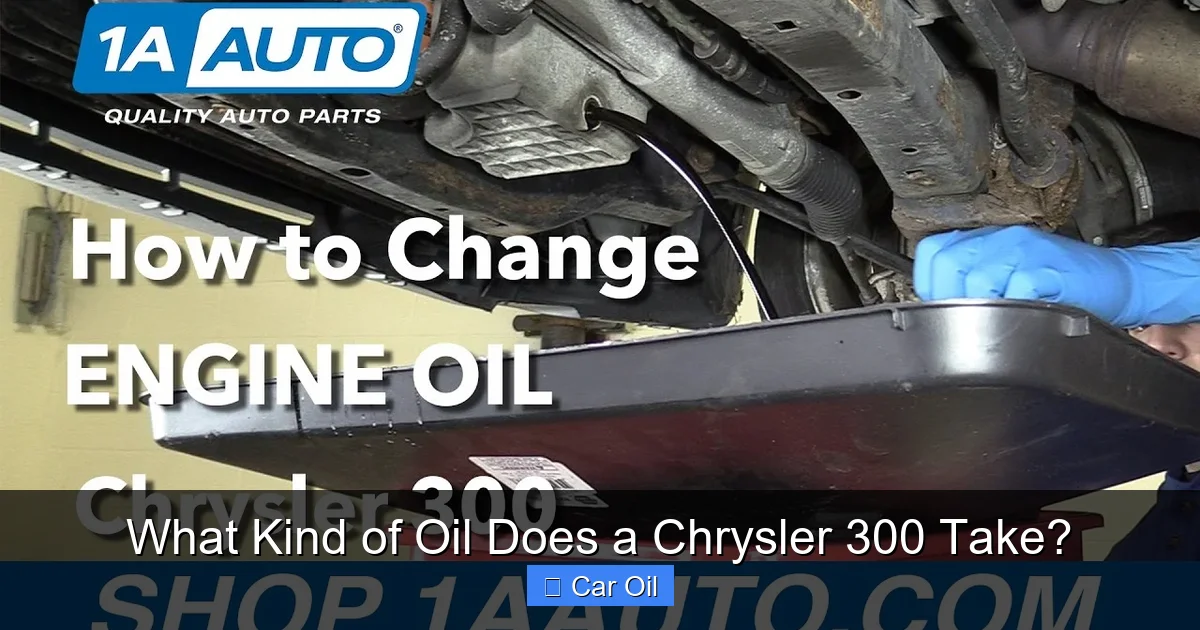
Visual guide about What Kind of Oil Does a Chrysler 300 Take?
Image source: i.ytimg.com
Understanding the Stamps: API and Chrysler MS
First, look for the current API “SN” or “SP” donut symbol on the bottle. This is the American Petroleum Institute’s certification for gasoline engine oils, with “SP” being the latest and offering enhanced protection against low-speed pre-ignition (LSPI) in turbocharged engines. While important, this is a baseline.
The critical certification is the Chrysler Material Standard (MS) number. This is Chrysler’s own specification that the oil manufacturer must meet. The two primary ones for the Chrysler 300 are:
- MS-6395: This is the standard for most Chrysler, Dodge, and Jeep vehicles with gasoline engines. It covers requirements for wear protection, sludge prevention, and compatibility with emission systems. Oils meeting this spec will be clearly labeled.
- MS-14831: This is a newer, more stringent standard, often required for high-performance and some turbocharged engines (like the 6.4L Hemi and certain Ecotec turbo 4-cylinders in other models). It provides extra protection under extreme heat and stress.
When you buy oil, scan the back label for “Meets Chrysler MS-6395” or “MS-14831.” Major brands like Pennzoil, Mobil 1, Royal Purple, and Mopar (Chrysler’s own brand) formulate oils specifically to meet these standards. Don’t be fooled by oils that say “For Chrysler Vehicles” without listing the specific MS number. If you need help decoding these standards, our general guide on what kind of oil your car needs provides a detailed breakdown of certifications across manufacturers.
Conventional vs. Synthetic: There Is No Contest for Modern 300s
For the 2011 and newer Chrysler 300, the manufacturer explicitly calls for full synthetic oil. This is non-negotiable. Synthetic oils are manufactured molecule-by-molecule, resulting in a purer, more uniform product with superior performance characteristics:
- Better Extreme Temperature Protection: They flow more easily at cold starts (protecting your engine in winter) and maintain viscosity at high operating temperatures (protecting during summer towing or hard driving).
- Enhanced Cleaning Power: Superior detergent and dispersant additives keep engine internals cleaner for longer, preventing sludge and varnish.
- Longer Drain Intervals: Synthetic oils maintain their protective properties longer, allowing for the extended service intervals (often 10,000 miles) recommended by Chrysler.
- Improved Fuel Economy: Reduced friction can lead to a small but measurable improvement in MPG.
For the pre-2011 models, while synthetic blend or conventional was acceptable, upgrading to full synthetic is still one of the best preventative maintenance decisions you can make for longevity and performance.
How Much Oil Does a Chrysler 300 Need?
Oil capacity is the second critical piece of the puzzle. Overfilling can cause aeration (foaming), leading to poor lubrication and potential damage. Underfilling leads to insufficient oil pressure and rapid engine wear. Capacity is measured in quarts or liters and is specific to the engine and whether you’re replacing the filter (which holds about 0.5-1 quart of oil).
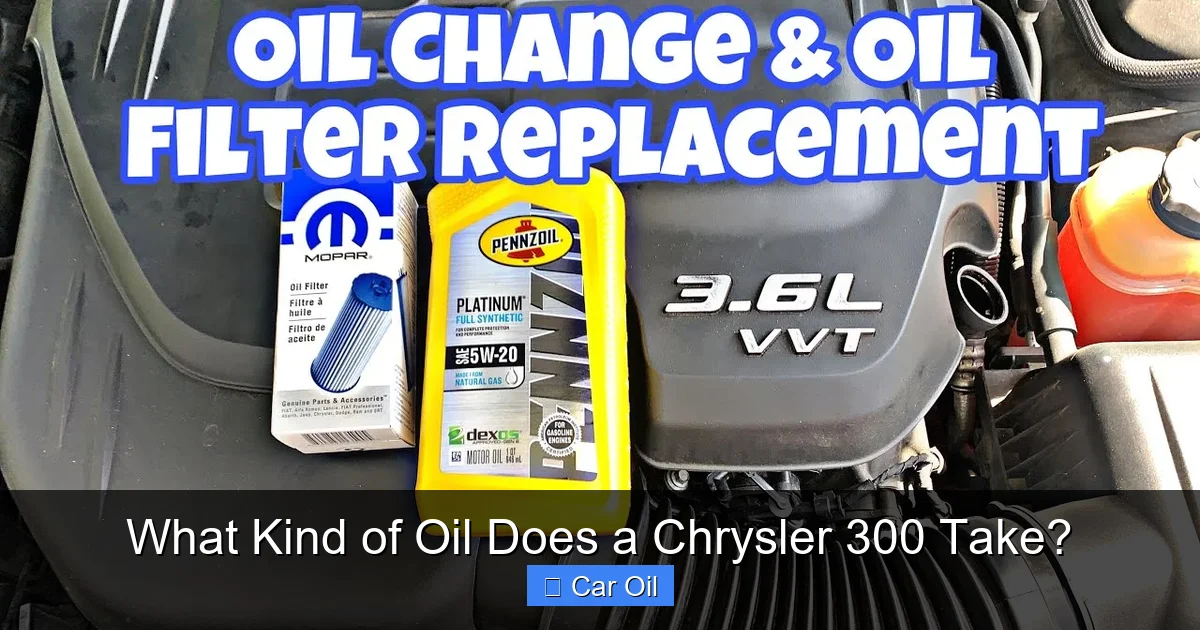
Visual guide about What Kind of Oil Does a Chrysler 300 Take?
Image source: i.ytimg.com
Capacity Reference by Engine
Here is a general reference guide. Always double-check for your specific engine code using your owner’s manual.
- 3.6L Pentastar V6 (2011-2023): Approximately 5.5 quarts (5.2 liters) with filter change.
- 2.7L V6 (2005-2010): Approximately 5.5 quarts (5.2 liters) with filter.
- 3.5L V6 (2005-2010): Approximately 5.5 quarts (5.2 liters) with filter.
- 5.7L HEMI V8 (All Years): Approximately 7 quarts (6.6 liters) with filter. This is a common point of confusion; it holds significantly more than the V6.
- 6.1L HEMI V8 (2006-2010 SRT-8): Approximately 7 quarts (6.6 liters) with filter.
- 6.4L 392 HEMI V8 (2012-2023 SRT/300C): Approximately 7 quarts (6.6 liters) with filter.
Practical Tip: After draining the old oil and replacing the filter, add about 90% of the specified capacity (e.g., about 6.3 quarts for a 7-quart Hemi). Then, start the engine, let it run for 30 seconds, turn it off, wait a minute for oil to settle, and check the dipstick. Add the remaining oil gradually until the level is at the “F” or full mark. This prevents overfilling. For precise capacities on other models, you might consult a resource like our article on how many quarts of oil a car takes, which explains the methodology.
Oil Change Intervals and Best Practices
Using the right oil is only half the equation. Changing it at the correct interval is equally important. Chrysler’s recommendations have evolved with oil technology.
Manufacturer Recommendations
For 2011 and newer models equipped with the engine oil life monitoring system (which most have), Chrysler’s official recommendation is to change the oil when the system displays the “Change Oil” message. Under normal driving conditions, this typically translates to every 6,000 to 10,000 miles when using full synthetic oil that meets the MS specification. For severe driving conditions (frequent short trips under 10 miles, extreme temperatures, dusty conditions, heavy loads, or extensive idling), the interval should be reduced to every 3,000 to 5,000 miles. For pre-2011 models, the traditional 3,000-5,000 mile interval for conventional oil was standard, but with synthetic, you can often extend it. Always refer to your owner’s manual’s maintenance schedule for the definitive interval for your vehicle and driving habits.
Pro Tips for a Perfect Oil Change
- Use a Quality Filter: The oil filter is just as important as the oil. Use a high-quality filter from brands like Mopar (OEM), Wix XP, Mobil 1, or K&N. A cheap filter can allow contaminants into your clean oil almost immediately.
- Warm the Engine First: Run the engine for 5-10 minutes before draining. Warm oil flows more freely, carrying more suspended sludge and contaminants with it.
- Torque the Drain Plug: Hand-tighten the drain plug, then use a torque wrench to tighten it to the manufacturer’s specification (usually around 20-25 ft-lbs). Over-tightening can strip the threads; under-tightening causes leaks.
- Check for Leaks: After filling and running the engine, check the oil filter and drain plug for any signs of leakage before lowering the vehicle.
- Reset the Oil Life Monitor: After any oil change, you must reset the vehicle’s oil life monitoring system. The procedure is in your owner’s manual, usually involving the trip odometer button and ignition sequence.
What Happens If You Use the Wrong Oil?
Understanding the consequences helps reinforce why this matters. The effects can be immediate or develop over thousands of miles.
Short-Term and Long-Term Damage Scenarios
- Incorrect Viscosity (e.g., 10W-30 in a 5W-20 engine): Cold starts will be harder, with more engine noise. The thicker oil may not reach critical bearings quickly enough, causing accelerated wear. Fuel economy will suffer. The engine’s VVT system may not function correctly, leading to poor performance, rough idle, and check engine lights.
- Non-MSN Spec Oil: The oil may lack the necessary additives to protect against the specific types of deposits common in Chrysler engines. Sludge can form in the oil passages, galleries, and on the cylinder heads, restricting oil flow. This is a slow death for an engine. It may also lack the proper friction modifiers, affecting the smooth operation of the MDS or VVT systems.
- Using Conventional Oil in a Synthetic-Required Engine: The conventional oil will break down faster under the high temperatures of a modern engine. It will cause more deposits, offer less protection against wear, and require changes far more frequently. The engine’s designed longevity will be severely compromised.
- Low-Quality or “High-Mileage” Oil in a Healthy Engine: High-mileage oils contain seal conditioners and different additive packages designed for older engines with worn seals. Using them in a newer engine can sometimes cause issues with VVT systems and is generally not recommended unless you have over 75,000 miles and specific seal leakage issues.
If you’ve accidentally used the wrong oil, the best course of action is to drain it and refill with the correct specification as soon as possible. Do not run the engine for extended periods. For a single accidental mix-up, the risk is lower, but repeated use is dangerous. If you’re experiencing symptoms like low oil pressure, ticking noises, or poor performance after an oil change, have the oil checked immediately. You can learn more about the signs of oil pressure issues in a Chrysler 300 here.
Conclusion: Your Simple Path to Engine Longevity
Your Chrysler 300 is a powerful, comfortable vehicle designed to provide years of reliable service. Protecting its heart—the engine—starts with one simple, inexpensive maintenance task: using the correct oil. The formula is straightforward: Identify your engine, find the Chrysler MS specification (MS-6395 or MS-14831), and use the full synthetic oil of the correct viscosity (almost always 5W-20 for post-2011 models) in the proper capacity. Don’t guess. Use your owner’s manual as your guide. When purchasing oil, take an extra 10 seconds to read the back label for the Chrysler MS number. Pair this with a high-quality filter and adherence to the recommended change interval, and you are doing everything within your control to ensure your Chrysler 300’s engine purrs smoothly for hundreds of thousands of miles. It’s the ultimate example of an ounce of prevention being worth a pound of cure.
Frequently Asked Questions
Can I use 5W-30 instead of 5W-20 in my Chrysler 300?
Generally, no. Chrysler specifically engineers engines for a particular viscosity. Using a thicker oil like 5W-30 in an engine designed for 5W-20 can cause VVT system issues, reduced fuel economy, and increased wear, especially during cold starts. Always use the viscosity specified in your owner’s manual.
Is it okay to mix different brands of synthetic oil in my Chrysler 300?
In a pinch, mixing different reputable brands of full synthetic oil that both meet the required Chrysler MS specification will not harm your engine. However, for consistency and to ensure the full additive package is effective, it’s best to stick to one brand and formulation for each complete oil change.
Do I need to use Mopar (Chrysler) brand oil?
No. Mopar oil is guaranteed to meet the specifications, but many other major brands—such as Pennzoil Platinum, Mobil 1, and Royal Purple—also formulate oils that explicitly state they meet Chrysler MS-6395 or MS-14831. The key is the certification, not the brand name.
What happens if I forget to change my Chrysler 300’s oil and the oil life monitor goes off?
Driving past the recommended oil change interval risks oil breakdown, increased engine wear, and sludge formation. The oil life monitor is a sophisticated algorithm based on engine runtime, temperature, and revolutions; ignoring it negates one of your engine’s key protective systems. Change the oil as soon as the message appears.
How do I check the oil level correctly in my Chrysler 300?
Park on level ground, let the engine cool for at least 10-15 minutes (for an accurate reading), pull the dipstick, wipe it clean, reinsert it fully, and pull it out again. The oil film should be between the “L” (low) and “F” (full) marks. If it’s at or below “L,” add the correct oil immediately.
My Chrysler 300 has high mileage (over 100k miles). Should I switch to high-mileage oil?
It depends. If your engine is burning or leaking oil due to worn seals, a high-mileage oil with seal conditioners can help. However, if the engine is not using oil, sticking with the standard full synthetic oil that meets the Chrysler MS specification is perfectly fine and often preferred to avoid any potential VVT system compatibility issues.
