
What Kind of Oil Does a Chrysler 300 Take

Choosing the correct oil for your Chrysler 300 is non-negotiable for engine health. Most modern Chrysler 300s require a full synthetic 5W-20 oil meeting Chrysler’s MS-6395 specification. Using the wrong oil can lead to poor fuel economy, increased wear, and voided warranties. Always verify your specific engine type and model year in the owner’s manual, as requirements can differ between the standard 3.6L V6 and the high-performance 5.7L HEMI V8.
So, you’ve got a Chrysler 300. That full-size sedan or wagon with the bold, imposing grille and a choice of potent engines. It’s a car that commands respect on the road. But to keep that powerful heart beating smoothly for years to come, you need to feed it exactly what it craves. And what it craves isn’t just any oil from the shelf. It’s a specific, engineered fluid. Getting this wrong is one of the most common—and easily avoidable—mistakes owners make. Let’s cut through the confusion and talk plainly about what kind of oil your Chrysler 300 truly takes.
This isn’t about brand loyalty to Valvoline, Pennzoil, or Mobil 1. It’s about specifications. It’s about viscosity. It’s about knowing your specific engine. The “Chrysler 300” nameplate has spanned over a decade, with different engine families under the hood. A 2012 Pentastar V6 has different needs than a 2006 3.5L High Output. We’re going to break it down by era and engine, but the golden rule always applies: your owner’s manual is the final authority. Consider this your comprehensive field guide to understanding what that manual is telling you.
Key Takeaways
- Primary Recommendation: The vast majority of Chrysler 300 models (2011+) with the 3.6L Pentastar V6 require full synthetic 5W-20 oil that meets the Chrysler MS-6395 (or current equivalent like Stellantis MS-6395) specification.
- HEMI V8 Exception: Models equipped with the 5.7L HEMI V8 engine also use 5W-20 synthetic oil meeting the same MS-6395 spec. Using a different weight like 5W-30 is not recommended and can affect variable valve timing.
- Capacity Matters: The oil capacity varies by engine and whether you’re changing just the filter or the entire system. The 3.6L V6 holds approximately 6.1 quarts (5.8 liters) with a filter change, while the 5.7L V8 holds about 7 quarts (6.6 liters). Always check your manual for the exact figure.
- OEM Specification is Key: The “W” (winter) number and the “20” or “30” viscosity are only part of the story. The oil must carry the Chrysler MS-6395 approval. This ensures the additive package is designed for your engine’s specific materials and systems like the VVT (Variable Valve Timing) solenoids.
- Synthetic is Standard: Since the early 2010s, Chrysler has mandated full synthetic oil for all 300 models. Conventional or synthetic blend oils are not sufficient and will not meet the required specifications or protection levels for modern engines.
- Older Models Differ: Pre-2011 models, especially those with the 2.7L or 3.5L engines, have different requirements (often 5W-30). You must look up the specification for your exact year and engine.
- High-Mileage Options: For engines with over 75,000 miles, a full synthetic oil formulated for high-mileage vehicles (with seal conditioners) that still meets the MS-6395 spec can be a beneficial choice to reduce leaks and consumption.
📑 Table of Contents
- Decoding the Oil Code: What the Numbers and Letters Actually Mean
- Engine by Engine: Your Chrysler 300’s Specific Needs
- Capacity, Filter, and The DIY Oil Change: A Practical Guide
- What Happens If You Get It Wrong? The Real Consequences
- Oil Change Intervals: Following the Modern Rules
- Conclusion: Your Simple, Actionable Checklist
Decoding the Oil Code: What the Numbers and Letters Actually Mean
Walk into any auto parts store, and you’re hit with a wall of options: 5W-20, 5W-30, 0W-20, Full Synthetic, High Mileage. It’s enough to make your head spin. But it’s all a precise language. Let’s translate it for your Chrysler 300.
The Viscosity Grade: The “5W-20” Mystery
The numbers like 5W-20 describe the oil’s flow characteristics. The “W” stands for Winter, not Weight. The first number (5) indicates how easily the oil flows at cold temperatures. A lower number is better for cold starts. The “5” means it remains relatively fluid in cold weather, protecting your engine from the moment you turn the key.
The second number (20) tells you the oil’s viscosity at the engine’s normal operating temperature (around 212°F or 100°C). Here, a lower number means thinner oil. Modern engines, with their tight tolerances and complex variable valve timing (VVT) systems, often require these thinner oils at operating temperature. Why? Thinner oil flows more easily through tiny passages, reduces internal friction (boosting fuel economy), and can get to critical components faster. For most Chrysler 300s, 5W-20 is the specified weight. Using a 5W-30 or 10W-30, which is thicker at operating temp, can cause problems with VVT solenoid operation and reduce efficiency. It’s a common misconception that “thicker is better for protection.” In a modern engine like the 300’s, it’s the opposite. The engineers designed it for a specific flow rate.
Synthetic vs. Conventional: There’s No Contest
Gone are the days when you could put a quart of conventional oil in your family sedan. For the Chrysler 300, starting with the 2011 model year redesign (and for its V8 models before that), full synthetic oil is mandatory. Here’s why in simple terms:
- Better Temperature Stability: Synthetic oil is man-made from uniform molecular chains. It doesn’t break down as fast in extreme heat or get as thick in extreme cold.
- Superior Cleaning: It has better detergent and dispersant additives to keep sludge and deposits from forming inside your engine—a critical feature for direct injection engines like the 3.6L Pentastar.
- Longer Drain Intervals: It maintains its protective properties much longer, which is why Chrysler’s oil change intervals for synthetic are often 8,000-10,000 miles.
- Enhanced Protection: It provides a stronger, more resilient lubricating film between metal parts, reducing wear during cold starts and high-RPM operation.
You might find a synthetic blend that meets the MS-6395 spec for older models, but for anything 2011 and newer, you must use full synthetic. Using conventional oil in a modern 300 is a fast track to carbon buildup and potential engine damage.
The Most Important Spec: Chrysler MS-6395 (or Stellantis MS-6395)
This is the secret decoder ring. The viscosity (5W-20) and the “Full Synthetic” label are just the first two clues. The third, and most critical, is the OEM specification. For Chrysler, that’s MS-6395. This is a rigorous standard set by the automaker that defines the exact performance requirements for the oil. It tests for:
- Fuel Economy: The oil must help the engine achieve its rated MPG.
- Wear Protection: It must protect against scuffing and wear in the valvetrain and bearings.
- Sludge & Varnish Prevention: It must keep the engine exceptionally clean, especially important for engines with variable valve timing (VVT) mechanisms that are sensitive to deposits.
- Seal Compatibility: It must condition engine seals without causing them to swell or leak.
An oil that simply says “5W-20 Synthetic” is not enough. You must look for the words “Meets Chrysler MS-6395” or “API SP” and “Chrysler MS-6395” on the back label. Many top brands (Mopar, Pennzoil Platinum, Mobil 1 Extended Performance, Royal Purple, Liqui Moly) formulate oils specifically to meet this standard. Using an oil without this certification means you’re using a generic product that may not have the correct additive package for your 300’s VVT system, potentially leading to poor performance, ticking noises, and long-term damage. If you’re ever in doubt, check the Chrysler’s official lubricant recommendations or consult your dealer.
Engine by Engine: Your Chrysler 300’s Specific Needs
Now, let’s get practical. What do you actually put in your specific 300? The answer depends entirely on the engine under the hood. Here’s the breakdown for the most common engines found in the Chrysler 300 from the 2005 model year to the present.
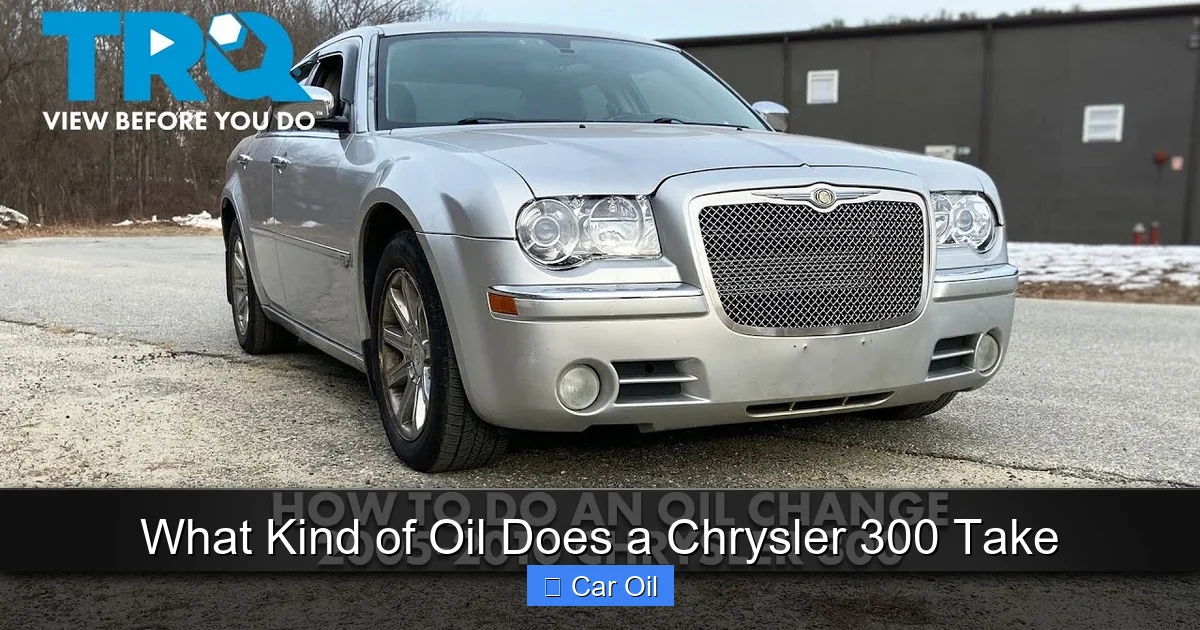
Visual guide about What Kind of Oil Does a Chrysler 300 Take
Image source: i.ytimg.com
The Workhorse: 3.6L Pentastar V6 (2011-Present)
This is the engine in the vast majority of Chrysler 300s on the road today. It’s a fantastic, smooth, and efficient V6. Its requirements are clear:
- Oil Type: Full Synthetic
- Viscosity: 5W-20
- Specification: Chrysler MS-6395 (or the updated Stellantis version)
- Capacity: Approximately 6.1 quarts (5.8 liters) with filter change. *Always verify with your dipstick/fill hole.*
- Change Interval: Under normal conditions, Chrysler recommends every 8,000 miles or 12 months when using full synthetic oil that meets MS-6395. Severe conditions (mostly short trips, extreme temps, dusty conditions) may require 5,000-mile changes.
Practical Tip: When buying oil, look for bottles that explicitly list “Chrysler MS-6395” in the specifications box. Don’t just grab any 5W-20. Mopar’s own oil is the safest bet, but brands like Pennzoil Platinum Euro, which is designed for European cars but happens to meet MS-6395, are excellent and often more affordable choices.
The Legend: 5.7L HEMI V8 (2005-2023)
The iconic HEMI. That rumble is unmistakable. Even this high-performance V8, with its cylinder deactivation (MDS) system, follows a similar oil rule as the Pentastar, but it’s crucial to get it right. The MDS system uses the oil’s hydraulic pressure to lock and unlock the lifters. The wrong oil viscosity can cause this system to malfunction, leading to rough operation and Check Engine lights.
- Oil Type: Full Synthetic
- Viscosity: 5W-20. This is critical. Older forums might suggest 5W-30, but for the modern HEMI (especially 2009+ with MDS), 5W-20 meeting MS-6395 is required for proper VVT and MDS function.
- Specification: Chrysler MS-6395
- Capacity: Approximately 7 quarts (6.6 liters) with filter change. *Always verify.*
- Change Interval: Same as the V6: 8,000 miles/12 months for normal service.
Warning: Do not use a “High Performance” or “Racing” oil with different additive packages in your daily-driven 300. These can sometimes interfere with the emissions-related systems like MDS. Stick to the spec.
The Older Brother: 3.5L High Output V6 (2005-2010)
For the first-generation 300 (2005-2010), the most common engine was the 3.5L. Its requirements differ from the newer Pentastar.
- Oil Type: Full Synthetic is highly recommended for longevity, though the original spec called for a synthetic blend. For best protection today, use full synthetic.
- Viscosity: 5W-30 (or in some climates, 10W-30). This is a key difference from the later models.
- Specification: It should meet API SN or newer and Chrysler’s older specification (often MS-6395 was not yet the standard). Look for oils meeting Chrysler MS-9602 or simply a high-quality synthetic meeting API SN and the recommended viscosity.
- Capacity: About 6 quarts (5.7 liters) with filter.
If you own a first-gen 300, your best path is to consult your original manual or a trusted mechanic for the exact spec, as the transition to MS-6395 happened around the 2011 redesign.
The Rare Bird: 2.7L V6 (2005-2010)
This engine is less common and has a reputation for sludge issues if not maintained meticulously. Using the correct, high-quality synthetic oil is absolutely essential.
- Oil Type: Full Synthetic is absolutely mandatory.
- Viscosity: 5W-20 or 5W-30 depending on climate and specific model year. The manual is your friend here.
- Specification: API SL or better. Given its age and propensity for sludge, using a premium synthetic with strong detergent packages is your best defense.
- Capacity: ~5.5 quarts (5.2L) with filter.
For this engine, sticking to a strict 5,000-mile change interval with a quality full synthetic is the single best thing you can do for its long-term survival.
Capacity, Filter, and The DIY Oil Change: A Practical Guide
Let’s say you’ve got the right oil. Now what? Changing the oil on a Chrysler 300 is a straightforward DIY job for anyone with basic tools. But you need to get the details right.
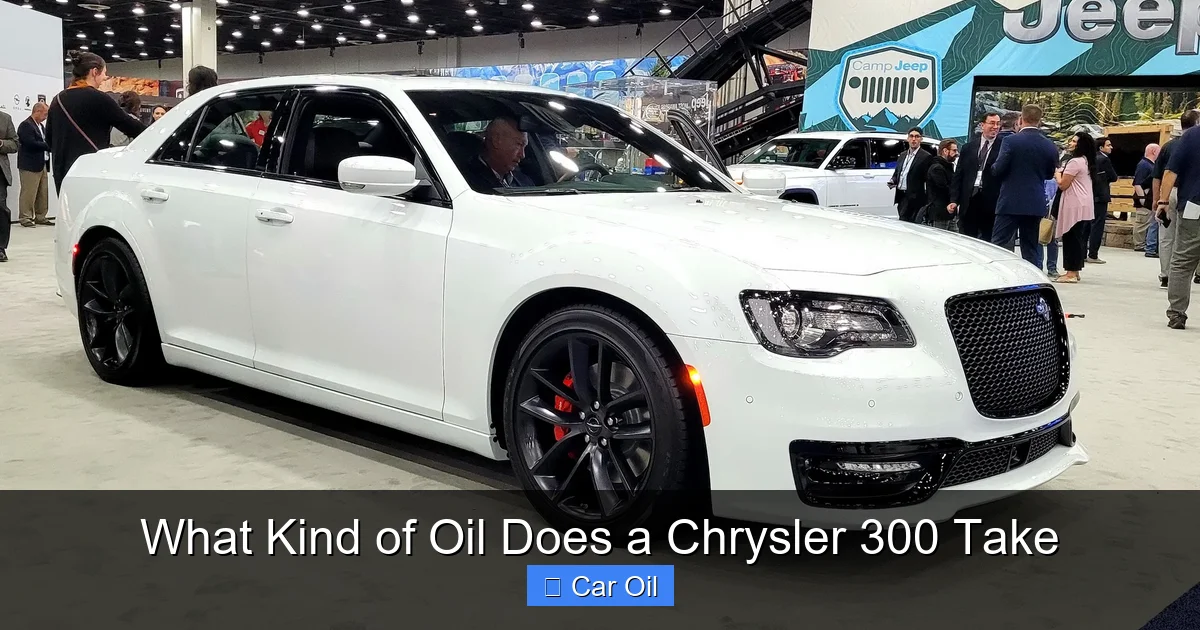
Visual guide about What Kind of Oil Does a Chrysler 300 Take
Image source: carscoops.com
Knowing Your Exact Capacity
We gave estimates above, but the only way to be 100% sure is to check your owner’s manual. The capacity listed is for a “drain and fill” with a new filter. Never just pour in the estimated amount. The procedure is: drain the old oil, replace the drain plug and crush washer, install the new oil filter (pre-filled with a bit of new oil), then slowly add about 1/2 to 1 quart less than the total capacity. Wait 5 minutes for the oil to settle, then check the dipstick. Add oil gradually until the level is at the top of the cross-hatched area (the “full” mark). Overfilling is just as bad as underfilling, as it can cause aeration (foaming) and damage.
Choosing the Right Filter
The oil filter is your engine’s kidney. Don’t cheap out. For a Chrysler 300, you have excellent OEM and aftermarket options.
- OEM (Mopar): The original equipment filter. Perfect fit and filtration. Part numbers vary by engine/year.
- Premium Aftermarket: Brands like Wix XP, Fram Ultra Synthetic, Royal Purple, Mobil 1, and K&N Performance all make excellent synthetic-media filters for the 300. They often have better construction and higher dirt-holding capacity than basic filters.
- What to Avoid: The cheapest “lifetime” or “economy” filters. Their media is too coarse and their construction (especially the anti-drainback valve) is often inferior, allowing dirty oil to circulate or leaving the filter empty on start-up.
Pro Tip: When you buy your filter, check the gasket. Some filters (like some Wix models) come with the gasket pre-installed. Others have it on the box. Make sure you have a gasket in place before tightening. A missing gasket means instant, catastrophic oil loss.
The Step-by-Step (Simplified)
- Warm Up: Run the engine for 5-10 minutes. Warm oil flows out faster and carries more sludge with it.
- Lift & Secure: Use jack stands on solid frame rails. Never rely on a jack alone.
- Drain: Place your drain pan under the oil pan bolt. Use the correct socket (usually 13mm or 15mm). Let it drain completely. Replace the crush washer on the drain plug and tighten to spec (usually 20-25 ft-lbs, check manual).
- Filter: Place your drain pan under the filter. Use an oil filter wrench. Before installing the new filter, dab a bit of fresh oil on the new filter’s rubber gasket. Screw it on by hand until the gasket contacts, then tighten 3/4 of a turn (or follow filter instructions).
- Fill: Pour in your new Chrysler MS-6395-compliant 5W-20. Start with less than the total capacity. Check the dipstick. Add until “full.”
- Check: Start the engine, let it run for 30 seconds. Check for leaks at the drain plug and filter. Turn off, wait 5 minutes, re-check dipstick and top off if necessary.
- Dispose: Take your old oil and filter to any parts store or recycling center. Never dump it.
For more detailed procedures on specific models, you might find a guide on how many quarts a car takes helpful for understanding capacity nuances.
What Happens If You Get It Wrong? The Real Consequences
It’s not just a recommendation. Using the wrong oil has tangible, often expensive, consequences. Let’s talk about the two biggest sins: wrong viscosity and wrong specification.

Visual guide about What Kind of Oil Does a Chrysler 300 Take
Image source: cdn.motor1.com
The Dangers of the Wrong Viscosity (e.g., 5W-30 in a 5W-20 Engine)
Putting a thicker oil like 5W-30 in an engine designed for 5W-20 is like forcing a thick syrup through a coffee filter. The engine’s oil pump is designed for a specific flow rate. Thicker oil at operating temperature causes:
- Increased Fuel Consumption: The engine has to work harder to pump the thicker oil, sapping power and MPG.
- VVT System Failure: The Variable Valve Timing solenoids are tiny, precision hydraulic devices. They are calibrated for a specific oil flow. Too-thick oil can cause them to stick, fail, or operate erratically. This triggers Check Engine lights (P0016, P0340, etc.), causes rough running, and can lead to catastrophic valvetrain damage if the timing gets out of sync.
- Poor Cold Starts: While the “5W” cold rating might be similar, the thicker “30” can still take longer to reach all parts of the engine on a frosty morning, increasing initial wear.
The Dangers of Ignoring the MS-6395 Spec
This is the more insidious problem. You have the right weight, but the wrong chemistry. An oil without the MS-6395 spec might:
- Lack Proper Detergents: Leading to sludge and varnish, especially in the pistons and VVT mechanisms. This is a slow death, reducing compression and power over time.
- Have Incompatible Additives: Some additives can harm the seals in your engine, causing leaks. Others might not provide enough anti-wear protection for the HEMI’s lifters or the Pentastar’s bearings.
- Not Support Fuel Economy: The spec includes tests for maintaining EPA-rated fuel economy. A non-approved oil will likely lower your MPG.
Think of the MS-6395 spec as a custom-tailored suit. A 5W-20 synthetic is an off-the-rack suit. It might fit okay, but it won’t fit perfectly, move with you correctly, or look as sharp. Your 300’s engine deserves the custom-tailored suit.
Oil Change Intervals: Following the Modern Rules
Gone are the 3,000-mile oil change days (for most modern 300s). With full synthetic and advanced engine designs, intervals have lengthened dramatically. But “lifetime” oil is a dangerous myth.
The Official Stance vs. Real-World Wisdom
Chrysler’s official recommendation for the 300 with MS-6395 approved full synthetic is every 8,000 miles or 12 months, whichever comes first, under “normal” driving. They define “severe” driving as: frequent short trips (under 10 miles), extreme temperatures, dusty conditions, heavy loads, or extensive idling. For severe service, they recommend 5,000 miles or 6 months.
My practical advice: Even under normal driving, I never let my own vehicles go past 7,500 miles on a single change. Why? Because oil, while stable, still accumulates contaminants (fuel dilution, soot, acids). The 10,000-mile interval some brands advertise is a maximum ceiling, not a target. For the 300, especially if you do a lot of city driving, a 6,000-7,500 mile interval is a smart balance of cost and protection. If you have a HEMI and tow a trailer or drive it hard, stick to the 5,000-mile severe service interval.
The “Oil Life Monitor” – Your Best Friend
Your Chrysler 300 almost certainly has an oil life monitor. This is an algorithm-based system that calculates oil degradation based on engine revolutions, temperature, and driving patterns. This is your primary tool. When it says “Change Oil,” change it. Don’t reset it and keep driving. The system is calibrated for the use of MS-6395 approved oil. Resetting it and driving another 2,000 miles is asking for trouble. The monitor will typically call for a change between 5,000 and 8,000 miles depending on your driving style. Heed its advice.
Conclusion: Your Simple, Actionable Checklist
Okay, let’s wrap this up with a no-nonsense checklist you can print and keep in your glove box.
- Step 1: Identify Your Engine. Look under the hood or check your registration/insurance. Is it the 3.6L V6, 5.7L V8, or something else?
- Step 2: Buy the Correct Oil. For 2011+ V6 and all V8 models: Full Synthetic 5W-20 that explicitly states “Meets Chrysler MS-6395”. For pre-2011 models, consult your manual (likely 5W-30).
- Step 3: Get the Right Filter. A Mopar or premium aftermarket filter (Wix XP, Fram Ultra, etc.).
- Step 4: Know Your Capacity. ~6.1 quarts for 3.6L, ~7 quarts for 5.7L. Always check the dipstick!
- Step 5: Change at the Right Time. Follow your Oil Life Monitor or the 8,000-mile/12-month max. Consider 6,000-7,500 miles for optimal safety.
- Step 6: Never Ignore the Spec. The viscosity is important, but the MS-6395 specification is the law for your engine. No exceptions.
Your Chrysler 300 is a robust, powerful car. It’s designed to last. But it relies on you to give it the one fluid that touches every moving part. By using the correct, specified full synthetic oil, you’re not just checking a maintenance box. You’re actively protecting a significant investment, ensuring that smooth V6 power or thunderous HEMI rumble will be there for the next owner, or for you, for hundreds of thousands of miles. It’s the simplest, cheapest insurance policy you can buy for your engine. Do it right, and your 300 will reward you with years of reliable, enjoyable driving.
Frequently Asked Questions
Can I use 5W-30 oil in my Chrysler 300 instead of 5W-20?
For most Chrysler 300s from 2011 onward (3.6L V6 and 5.7L V8), no. The engine and its Variable Valve Timing (VVT) system are engineered for 5W-20. Using 5W-30 can cause VVT solenoid issues, reduced fuel economy, and potential long-term damage. Always use the viscosity specified for your exact engine, which is almost always 5W-20 for post-2010 models.
Is it okay to use a high-mileage oil in my Chrysler 300?
Yes, as long as it is a full synthetic 5W-20 that meets the Chrysler MS-6395 specification. High-mileage oils contain seal conditioners that can help reduce minor leaks and oil consumption in engines with over 75,000 miles. It’s an excellent choice for older, well-maintained 300s.
What happens if I accidentally put regular (conventional) oil in my Chrysler 300?
For a modern 300 (2011+), this is not recommended. Conventional oil cannot meet the MS-6395 spec’s requirements for sludge prevention and fuel economy. While a single quart top-off in an emergency won’t destroy the engine, it should not be used for a full drain-and-fill. For a full synthetic-mandated engine, always use full synthetic oil.
How do I know if my oil meets the Chrysler MS-6395 specification?
Look for the exact phrase on the oil bottle’s label. It will say something like “Meets Chrysler MS-6395” or “Chrysler MS-6395 Approved”. It may also be listed in the specifications chart. You can also check the manufacturer’s website or product data sheet. Reputable brands like Mopar, Pennzoil Platinum, and Mobil 1 clearly list this approval on their products for the 5W-20 grade.
My Chrysler 300 has an oil life monitor. Can I just reset it and keep driving?
No. The oil life monitor is a sophisticated algorithm that calculates oil degradation based on your driving habits and engine conditions. When it indicates an oil change is due, you should change the oil immediately. Resetting it without changing the oil means you are running on degraded oil, which accelerates wear and can lead to sludge formation.
Does the 5.7L HEMI V8 in my Chrysler 300 need a different oil than the V6 models?
The oil specification is the same: full synthetic 5W-20 meeting Chrysler MS-6395. The capacity is different (about 7 quarts for the HEMI vs. 6.1 quarts for the V6), but the product requirements are identical. Do not use a different viscosity (like 5W-30) in the HEMI, as it can affect the MDS (Multi-Displacement System) and VVT operation.