
What Is the Vdc Button on an Infiniti

The VDC button on your Infiniti controls the Vehicle Dynamics Control system, a sophisticated safety suite that helps prevent skidding and loss of traction. Pressing it temporarily disables this electronic stability and traction control assistance, which can be useful in specific situations like being stuck in deep snow or for track driving. Understanding when to use this button is key to maximizing both your safety and your vehicle’s performance in challenging conditions.
Key Takeaways
- VDC stands for Vehicle Dynamics Control: It’s Infiniti’s comprehensive stability and traction management system, combining multiple safety technologies.
- The button disables the system’s intervention: Pressing it turns off automatic braking and engine power reduction to wheels that are slipping.
- Use it for specific scenarios: Temporarily disable VDC when stuck in mud/snow or during certain performance driving on closed circuits.
- Keep it on for daily driving: For normal road conditions, VDC should remain active as it’s a critical active safety feature.
- A flashing VDC indicator is normal: It means the system is actively working to stabilize the car during slippery conditions.
- A steady VDC light indicates a problem: If the “VDC OFF” light stays illuminated or a “VDC” warning appears, the system may be malfunctioning.
- It’s part of a larger safety network: VDC works seamlessly with your Infiniti’s ABS, TCS, and other systems to maintain control.
📑 Table of Contents
- Unlocking the Mystery: What Is the VDC Button on an Infiniti?
- VDC Decoded: More Than Just “Traction Control”
- The VDC Button: Your Manual Interface
- When and Why: The Practical Applications of Disabling VDC
- Common Misconceptions and Troubleshooting
- VDC Across the Infiniti Lineup: Model-Specific Nuances
- Conclusion: Knowledge is Control
Unlocking the Mystery: What Is the VDC Button on an Infiniti?
You’re sitting in your Infiniti, hands on the wheel, and your eyes scan the dashboard and center console. Among the buttons for the audio system, climate control, and driving modes, one small, unassuming button catches your eye: VDC. What does it do? Should you ever press it? For many Infiniti owners, this button is a bit of an enigma. It’s not as commonly used as the window switches or the radio knob, but it represents one of the most important safety technologies in your vehicle. This guide will demystify the VDC button, explaining everything from its core function to the precise moments when you might need to interact with it. Think of this as your owner’s manual for Vehicle Dynamics Control, written in plain English.
The world of automotive acronyms can be confusing. You have ABS (Anti-lock Braking System), TCS (Traction Control System), ESC (Electronic Stability Control), and then there’s VDC. In the Infiniti world, VDC is the umbrella term for the brand’s advanced vehicle stability system. It’s the brain that constantly monitors your car’s movement and steps in to help you maintain control. The button is your manual override—a way to tell that brain, “I understand the risk, and for this specific reason, I need you to stand down for a moment.” Knowing when to use that override is a sign of an engaged and knowledgeable driver.
VDC Decoded: More Than Just “Traction Control”
What Does VDC Actually Stand For?
VDC stands for Vehicle Dynamics Control. While many people casually lump it in with “traction control,” it’s a more comprehensive system. Think of traction control as a specialist that only handles wheel spin during acceleration. VDC is the general manager overseeing the entire operation. It incorporates traction control but also adds a layer of electronic stability control (ESC). This means VDC doesn’t just look at wheel speed; it uses a network of sensors to measure steering angle, yaw rate (how much the car is rotating), and lateral G-forces. By comparing your intended path (steering input) with the car’s actual path, VDC can detect a slide or skid before you even fully realize it’s happening.
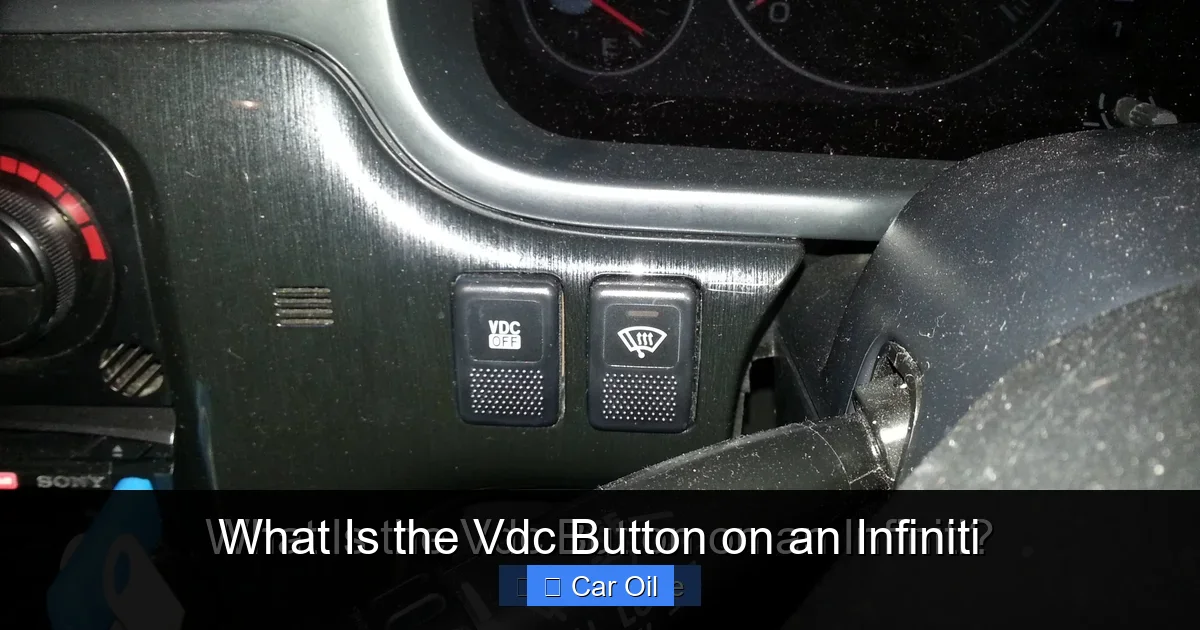
Visual guide about What Is the Vdc Button on an Infiniti
Image source: aautomotives.com
The Symphony of Sensors and Systems
Under the hood of your Infiniti’s intelligence, a constant conversation is happening. Wheel-speed sensors feed data to the computer. A steering-angle sensor tells the system where you’re pointing the wheels. A yaw-rate sensor detects if the car is rotating more or less than intended. If you’re cornering too fast and the car begins to understeer (plow forward) or oversteer (rear end swings out), VDC springs into action. It can individually brake a wheel to create a stabilizing force and/or reduce engine power to help realign the car with your steering input. It’s a seamless, nearly instantaneous process that has saved countless drivers from accidents. For a deeper dive into the technical architecture of this system, you can explore what VDC in an Infiniti truly encompasses, as it’s the foundation for what the button controls.
The VDC Button: Your Manual Interface
Finding the Elusive Button
Location can vary slightly by model year and Infiniti model (Q50, Q60, QX50, QX60, etc.), but you’ll almost always find the VDC button on the center console, within easy reach of the driver’s right hand. It’s typically located near the drive mode selector or the climate controls. The button is usually labeled clearly with “VDC” or with an icon depicting a car with swerving lines behind it. If you’re having trouble, your owner’s manual will have a diagram of the interior controls. Don’t confuse it with the “Drive Mode Select” button or the “Hill Start Assist” button, which are often nearby.
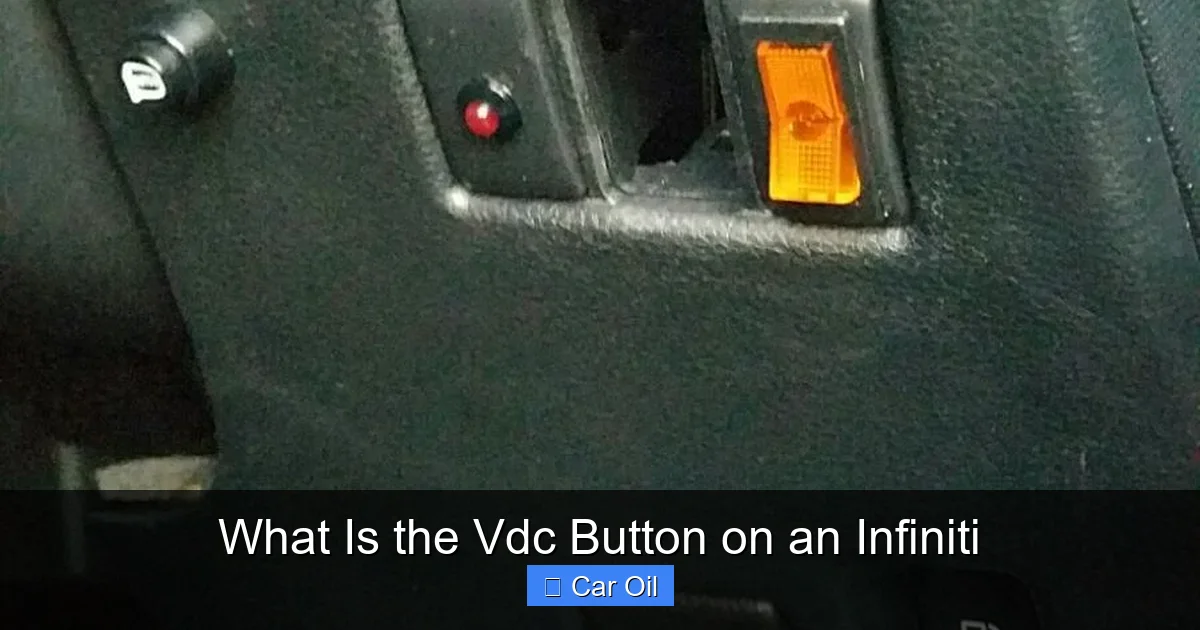
Visual guide about What Is the Vdc Button on an Infiniti
Image source: 350z-uk.com
What Happens When You Press It? A Two-Stage Process
Pressing the VDC button doesn’t create a binary on/off switch in the traditional sense. It’s a two-stage toggle with a clear visual indicator.
- First Press (Temporary Disable): A quick press and release will turn the system off. You’ll see a small light illuminate on your instrument cluster—usually a yellow or amber icon of a car with “OFF” written below it or next to it, or the letters “VDC OFF”. In this state, the VDC system’s intervention is disabled. However, the underlying components like the Anti-lock Braking System (ABS) and the Hill Start Assist Control remain fully functional. You still have those critical safety nets.
- Second Press (Re-engage): Pressing the button again will re-engage the full VDC system. The “VDC OFF” light will extinguish. The system will also automatically re-engage the next time you start the car, ensuring it’s active by default for your next drive.
- The Indicator Light: Pay close attention to this light. A flashing VDC light (without “OFF”) while driving is a good thing! It means the system is actively working to correct your car’s path. A steady, illuminated VDC or VDC OFF light when you haven’t pressed the button signals a fault in the system, and it should be checked by a technician.
When and Why: The Practical Applications of Disabling VDC
This is the most crucial part of understanding the VDC button. The default, always-on setting is the safest for 99% of your driving. So why would you ever turn it off? There are a few specific, legitimate scenarios where disabling VDC is not just helpful, but necessary.
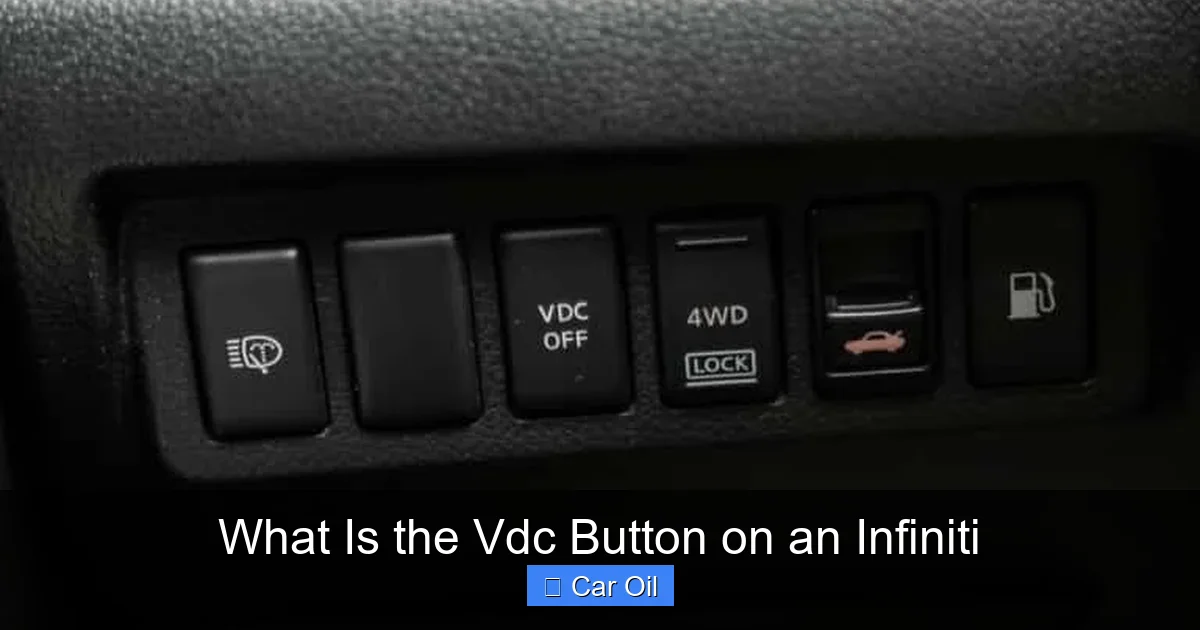
Visual guide about What Is the Vdc Button on an Infiniti
Image source: mechanicbase.com
Scenario 1: The “Rocking” Motion to Get Unstuck
Imagine you’re stuck in deep, soft snow or mud. Your wheels spin, VDC intervenes, cuts engine power, and you make zero progress. This is because the system interprets the wheel spin as a loss of traction and tries to stop it. To get momentum, you need to perform a “rocking” maneuver—alternating between forward and reverse to build up a bit of a runway. With VDC on, every time you try to reverse, the system kills the power, preventing you from rocking back. Pressing the VDC button to turn it off allows you to apply steady throttle in both directions to execute this maneuver safely and effectively. Once you’re free, remember to press the button again to re-engage the system for the rest of your drive.
Scenario 2: Performance Driving on a Closed Course
On a racetrack or a closed, controlled environment, skilled drivers may want to manage slides and control the car’s balance themselves. VDC’s automatic braking and power reduction can sometimes feel intrusive, cutting power mid-corner and disrupting a driver’s rhythm. For track days, turning VDC off (or putting the car in a “Sport” or “Track” mode if available, which may have a less intrusive stability tune) allows for a more direct connection between driver input and car response. This is for experts only on closed circuits. Never disable VDC on public roads for spirited driving.
Scenario 3:特定 Tire Conditions
In very rare cases, if you are using a temporary space-saver spare tire that is significantly smaller than your other tires, the wheel-speed sensors can create a discrepancy that might cause VDC to activate unexpectedly under light acceleration. If this happens and it’s creating a hazardous situation (like unexpectedly reducing power on a highway on-ramp), a temporary disable until you can replace the spare with a full-size tire may be warranted. This is a fringe case but good to know.
Common Misconceptions and Troubleshooting
“My VDC Light is On—Is My Car Dangerous?”
This is a frequent source of alarm. First, identify the light. If you see a flashing car icon with swerving lines, your VDC is actively working to keep you stable. This is normal and you should continue driving carefully. If you see a steady light that says “VDC OFF” but you never pressed the button, or a steady “VDC” or “ESC” warning, then the system has detected a fault and has disabled itself to prevent erroneous behavior. Common causes include a faulty wheel-speed sensor, a steering-angle sensor issue, or a problem with the yaw-rate sensor. Your Infiniti will store a diagnostic trouble code. You should schedule a service appointment promptly. Driving without a functioning primary stability system reduces your safety margin.
“Is VDC the Same as Traction Control? Can I Turn Them Off Separately?”
In an Infiniti, VDC is the master system. Traction Control (TCS) is one of its core components. There is no separate button to disable just traction control while leaving the stability control active. When you press the VDC button, you disable the entire suite’s intervention. However, some modern Infinitis with advanced drive modes might allow you to adjust the sensitivity of these systems through the infotainment screen (e.g., “Sport+” mode might allow more wheel spin before intervening), but the physical VDC button is the master override. This interconnectedness is why a fault in one sensor (like a wheel-speed sensor) can often illuminate both the VDC and TCS warning lights.
When VDC Might Interfere with Other Systems
Because VDC is so integrated, disabling it can sometimes affect the feeling of other systems. For example, thehill descent control feature (if equipped) often relies on the same brake actuators that VDC uses. With VDC off, hill descent control may also be unavailable. This is a good example of why you shouldn’t disable VDC without understanding the downstream effects. Always consult your owner’s manual for your specific model year’s capabilities and limitations.
VDC Across the Infiniti Lineup: Model-Specific Nuances
While the core function of the VDC button is consistent across all Infiniti models—from the sporty Q50 sedan to the family-friendly QX60 crossover—there can be subtle differences in tuning and integration.
Performance Models (Q50, Q60 with Red Sport 400)
In Infiniti’s high-performance Red Sport 400 models, the VDC system is often tuned to be more permissive, allowing for a greater degree of rear-wheel slip before intervening, which appeals to driving enthusiasts. These models may also have a more aggressive “Sport” or “Sport+” drive mode that adjusts the VDC threshold without fully disabling it. The button’s function remains the same, but the baseline level of intervention is different.
Crossovers and SUVs (QX50, QX55, QX60)
In Infiniti’s SUV lineup, VDC is calibrated with a heavier emphasis on stability and safety, given the higher center of gravity. The system may intervene earlier and more aggressively to prevent a potential rollover scenario. For owners who tow a trailer, VDC can be particularly helpful in mitigating trailer sway. However, in very low-traction off-road situations (like deep sand), a driver might find it necessary to disable VDC to allow for more wheelspin to “dig in,” similar to the snow scenario.
The Connection to Your Infiniti’s TPMS
Your Tire Pressure Monitoring System (TPMS) and VDC are close cousins. Both rely heavily on accurate wheel-speed sensor data. A significant difference in tire pressure between wheels can cause a false reading of wheel slip, potentially triggering the VDC light or causing the system to activate unnecessarily. If you’ve recently had a flat tire repaired or rotated your tires and notice a VDC warning, it’s possible the system needs a simple reset after the tire pressure has been equalized. Learning how to clear a flat tire warning on an Infiniti Q50, for instance, often resolves a coincidental VDC light, as the two systems share common diagnostic pathways. Always check tire pressures first if you encounter an unexplained VDC warning.
Conclusion: Knowledge is Control
The VDC button on your Infiniti is not a toy to be pressed out of curiosity. It is a powerful tool, designed for specific, informed use. For the vast majority of your daily driving—commuting, running errands, highway cruising—you should leave VDC engaged. It is a silent guardian, working tirelessly in the background to compensate for driver error, sudden hazards, and treacherous road conditions. It is a testament to modern automotive engineering and a primary reason why modern cars are safer than ever.
However, knowing that this guardian exists and understanding how to respectfully ask it to step aside for a moment is part of being a complete driver. Whether you’re carefully rocking your car free from a snowbank or exploring the limits on a racetrack, the ability to manually control VDC empowers you. Remember the two-stage process, heed the indicator lights, and always re-engage the system when the special circumstance has passed. By respecting this technology and using it as intended, you maximize both your safety and your driving enjoyment. Your Infiniti’s VDC system is there to give you confidence—confidence that comes from knowing the car is helping you, and knowing that you, as the driver, have the final say.
Frequently Asked Questions
What does VDC stand for in my Infiniti?
VDC stands for Vehicle Dynamics Control. It is Infiniti’s integrated system that combines traction control and electronic stability control to help prevent skidding and loss of control during acceleration, cornering, and braking.
When should I turn the VDC button off in my Infiniti?
You should only turn VDC off in specific situations: when stuck in deep snow or mud to allow for a “rocking” maneuver, or during closed-course performance driving where you need to manage slides yourself. Always turn it back on for normal road driving.
What does a flashing VDC light mean on my dashboard?
A flashing VDC light (the car icon with squiggly lines) is normal and indicates the system is actively working to stabilize your vehicle, such as when driving on slippery roads. It means the safety system is doing its job.
What does a steady VDC or VDC OFF light mean?
A steady, illuminated VDC light or a “VDC OFF” light that you didn’t activate means the system has detected a fault and has disabled itself. This is often due to a problem with a wheel-speed sensor or related component and requires service by a technician.
Is it safe to drive with VDC turned off?
It is safe to drive with VDC off, but it is not advisable for normal conditions. You will lose the electronic assistance that helps prevent skids and spins, significantly reducing your vehicle’s active safety margin. Only drive with it off when necessary for the specific scenarios mentioned.
Does turning off VDC affect my ABS or braking system?
No. When you disable VDC using the button, your Anti-lock Braking System (ABS) and Hill Start Assist remain fully functional. VDC specifically disables the traction and stability control intervention, but the core anti-lock braking capability is independent and always active.