
What Is the Towing Capacity of Subaru Crosstrek

The Subaru Crosstrek has a towing capacity ranging from 1,500 to 2,000 pounds, depending on the model year, engine, and drivetrain. While not built for heavy-duty hauling, it’s ideal for small trailers, bikes, or lightweight campers when properly equipped.
If you’re considering the Subaru Crosstrek for your next adventure—whether it’s a weekend camping trip, hauling a small trailer, or towing a jet ski—you’ve probably asked: *What is the towing capacity of Subaru Crosstrek?* It’s a fair question, especially since this compact SUV has become a favorite among outdoor enthusiasts, city drivers, and families alike. Known for its rugged design, standard all-wheel drive, and impressive fuel efficiency, the Crosstrek blends practicality with a spirit of adventure. But when it comes to towing, it’s not the strongest player in the game—and that’s okay. Understanding its limits is key to using it safely and effectively.
Unlike full-size trucks or heavy-duty SUVs, the Subaru Crosstrek isn’t designed to pull massive loads. Instead, it’s built for light-duty towing—perfect for small trailers, utility haulers, or recreational gear. Whether you’re transporting a couple of kayaks, a pop-up camper, or a small cargo trailer, the Crosstrek can handle it—*if* you know its capabilities and prepare accordingly. Over the years, Subaru has made improvements to the Crosstrek’s towing performance, especially with the introduction of newer engines, updated transmissions, and optional towing packages. So, while the numbers might seem modest compared to larger vehicles, they’re more than enough for many everyday towing needs.
In this guide, we’ll dive deep into the towing capacity of the Subaru Crosstrek across different model years, trims, and configurations. You’ll learn what affects towing performance, how to safely prepare your vehicle, and what types of loads are realistic. We’ll also explore the special Crosstrek Wilderness edition, which offers enhanced off-road and towing features. Whether you’re a current owner or considering a purchase, this article will give you the knowledge you need to tow confidently and responsibly.
Key Takeaways
- Towing capacity varies by model: Earlier Crosstreks (2013–2017) tow up to 1,500 lbs, while newer models (2018–present) with the optional towing package can handle up to 2,000 lbs.
- Engine and transmission matter: Models with the 2.0L engine and CVT (continuously variable transmission) typically offer higher towing capability than base models.
- Factory towing package required: To reach the maximum 2,000-lb capacity, you must have the optional towing package, which includes a transmission cooler and wiring harness.
- Not all trims are equal: Higher trims like the Limited and Wilderness often come with better towing specs and standard features that support towing.
- Proper setup is crucial: Always use a weight-distributing hitch, check tire pressure, and distribute cargo evenly to maintain stability and safety.
- Know your limits: Exceeding the towing capacity can damage your vehicle, void your warranty, and create dangerous driving conditions.
- Consider the Crosstrek Wilderness: Introduced in 2022, this off-road-focused trim offers enhanced ground clearance and improved towing performance over standard models.
📑 Table of Contents
- Understanding Towing Capacity: What It Means and Why It Matters
- Subaru Crosstrek Towing Capacity by Model Year and Trim
- Factors That Affect Towing Performance
- What Can You Actually Tow with a Subaru Crosstrek?
- Tips for Safe and Effective Towing
- The Subaru Crosstrek Wilderness: A Towing Upgrade
- Final Thoughts: Is the Crosstrek Right for Your Towing Needs?
Understanding Towing Capacity: What It Means and Why It Matters
Before we get into the specifics of the Subaru Crosstrek’s towing numbers, let’s clarify what “towing capacity” actually means. In simple terms, towing capacity is the maximum weight your vehicle can safely pull behind it. This includes the weight of the trailer itself (called the trailer’s dry weight) plus everything inside it—gear, water, fuel, passengers, and any additional equipment. Exceeding this limit can lead to serious problems: brake failure, transmission overheating, loss of control, and even accidents.
Subaru publishes official towing capacities for each Crosstrek model, and these numbers are based on rigorous testing under controlled conditions. However, real-world factors like altitude, weather, road conditions, and vehicle condition can affect performance. That’s why it’s always wise to stay below the maximum limit and leave a safety buffer. For example, if your Crosstrek can tow 2,000 pounds, consider keeping your total load under 1,800 pounds to account for unexpected variables.
It’s also important to distinguish between *towing capacity* and *payload capacity*. Payload refers to the total weight your vehicle can carry inside—passengers, cargo, and any accessories. The Crosstrek’s payload is typically around 1,000 to 1,200 pounds, depending on the trim. When you tow, some of that payload is used up by the tongue weight of the trailer (the downward force exerted on the hitch), so you’ll have less room for people and gear inside the vehicle. Always check your owner’s manual for combined weight limits.
Subaru Crosstrek Towing Capacity by Model Year and Trim
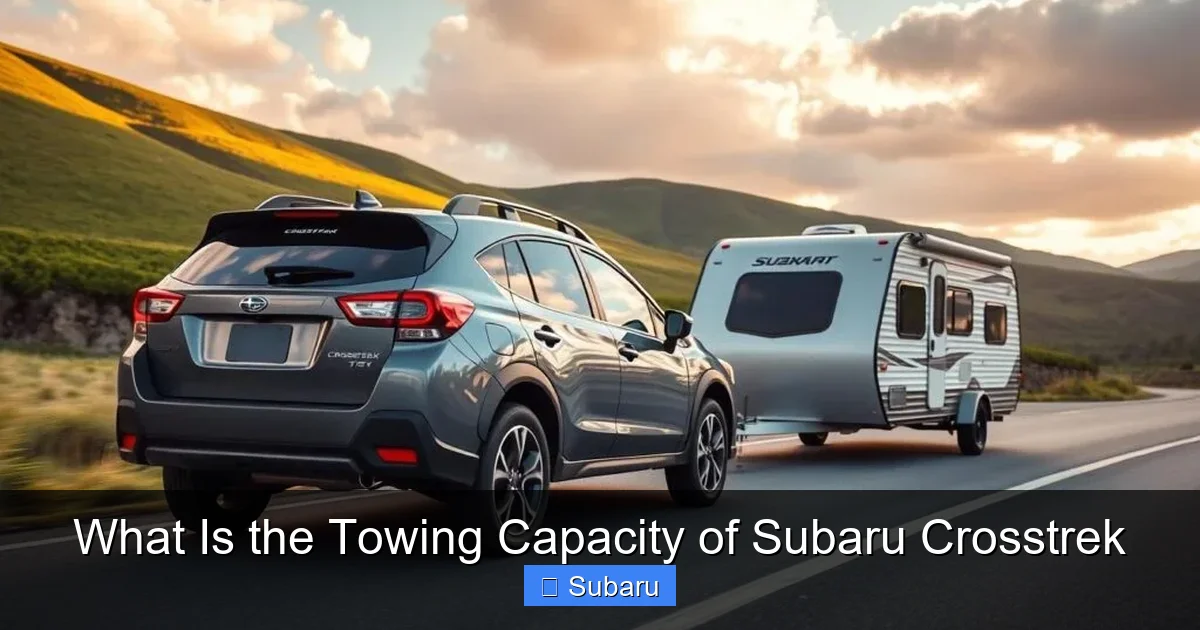
Visual guide about What Is the Towing Capacity of Subaru Crosstrek
Image source: vehiclerides.com
The towing capacity of the Subaru Crosstrek has evolved over the years, largely due to engine upgrades and the introduction of optional towing packages. Let’s break it down by generation and key model years.
First Generation (2013–2017): 1,500 Pounds
The original Subaru Crosstrek, introduced in 2013 as a slightly lifted version of the Impreza hatchback, came with a 2.0-liter naturally aspirated four-cylinder engine. This engine produced around 148 horsepower and was paired with either a 6-speed manual or a CVT (continuously variable transmission). During this period, the standard towing capacity was **1,500 pounds**, regardless of transmission or trim.
This limit applied to all trims—Base, Premium, and Limited. Even with the CVT, which is generally better for towing than a manual due to smoother power delivery, Subaru did not offer a factory towing package for the first-gen Crosstrek. That meant no transmission cooler, no reinforced hitch, and no wiring harness. As a result, towing was possible but not officially supported beyond 1,500 pounds. Many owners successfully towed small trailers, bike racks, or lightweight campers, but they had to be cautious about overheating and wear on the transmission.
Second Generation (2018–2022): Up to 2,000 Pounds with Towing Package
With the 2018 redesign, Subaru gave the Crosstrek a major update—new platform, refreshed styling, and improved performance. The 2.0-liter engine remained, but it now produced 152 horsepower and was exclusively paired with a CVT. More importantly, Subaru introduced an **optional towing package** for the first time, which increased the maximum towing capacity to **2,000 pounds** when properly equipped.
This towing package includes:
– A transmission cooler to prevent overheating
– A 4-pin wiring harness for trailer lights
– A reinforced rear bumper and hitch receiver (usually a 2-inch Class I or II hitch)
– Enhanced cooling system components
To achieve the 2,000-pound rating, your Crosstrek must have this package installed—either from the factory or added by a dealer. Without it, the towing capacity remains at 1,500 pounds. This package was available on higher trims like the Limited and could be added as an option on Premium models.
It’s worth noting that not all 2018–2022 Crosstreks came with the towing package standard. You’ll need to check your vehicle’s build sheet or window sticker to confirm. If you’re buying used, ask the seller or check the VIN through Subaru’s website or a dealer.
Third Generation (2023–Present): Refinements and the Wilderness Trim
The latest Crosstrek, introduced in 2023, continues to offer the same 2,000-pound towing capacity with the optional towing package. However, Subaru has made subtle improvements to the CVT and cooling systems, making towing slightly more reliable and efficient. The engine remains the 2.0-liter boxer four, but it now features direct injection and other tweaks for better performance and fuel economy.
One major addition is the **Crosstrek Wilderness** trim, launched in 2022 and carried over into the new generation. This off-road-focused version includes:
– Increased ground clearance (9.3 inches vs. 8.7 inches on standard models)
– All-terrain tires
– Skid plates
– Enhanced X-Mode for off-road driving
– Standard towing package with 2,000-pound capacity
The Wilderness is ideal for adventurers who want to tow a small trailer over rough terrain. While its towing capacity is the same as other equipped models, its rugged build and improved traction make it better suited for towing in challenging conditions.
Factors That Affect Towing Performance
Even if your Crosstrek is rated to tow 2,000 pounds, several factors can impact how well it performs when towing. Understanding these will help you tow safely and avoid damage.
Engine and Transmission
The 2.0-liter engine in the Crosstrek is adequate for light towing, but it’s not a powerhouse. When fully loaded, you’ll notice reduced acceleration, especially on hills or when merging onto highways. The CVT helps by keeping the engine in its optimal power range, but it can feel sluggish under heavy load.
If you frequently tow near the maximum capacity, consider driving in “manual” or “sport” mode (if equipped) to prevent excessive shifting and overheating. Avoid towing in extreme heat, as the transmission and engine can overheat more easily.
Weight Distribution and Tongue Weight
Proper weight distribution is critical. The general rule is that **60% of the trailer’s weight should be on the front half** of the trailer, with the remaining 40% toward the rear. This helps prevent swaying and keeps the trailer stable.
Tongue weight—the downward force on the hitch—should be **10% to 15% of the total trailer weight**. For a 2,000-pound trailer, that’s 200 to 300 pounds. Too little tongue weight can cause the trailer to fishtail; too much can overload the rear suspension and affect steering.
Use a weight-distributing hitch if your trailer is over 1,500 pounds. This type of hitch spreads the load more evenly across all four wheels and improves stability.
Tire Pressure and Suspension
Always check your tire pressure before towing. Underinflated tires can overheat and fail, especially when carrying extra weight. Subaru recommends increasing rear tire pressure when towing—usually by 5–10 PSI above the normal recommendation. Check your owner’s manual for specifics.
The Crosstrek’s suspension is tuned for comfort and off-road capability, not heavy loads. If you plan to tow regularly, consider upgrading to heavy-duty shocks or air helper springs to support the rear end and maintain ride height.
Braking and Stopping Distance
Towing increases your vehicle’s weight, which means longer stopping distances. The Crosstrek’s brakes are adequate for light towing, but they can fade on long descents or in hot weather.
If you’re towing a trailer with brakes, make sure they’re properly connected and functioning. Electric trailer brakes require a brake controller, which is not standard on the Crosstrek. You’ll need to install one if your trailer has brakes.
Fuel Economy and Range
Towing reduces fuel efficiency significantly. Expect a drop of 20–30% in miles per gallon when towing near capacity. For example, if your Crosstrek normally gets 30 MPG, it might drop to 21–24 MPG when towing. Plan your fuel stops accordingly, especially on long trips.
What Can You Actually Tow with a Subaru Crosstrek?
Now that we’ve covered the specs, let’s talk real-world applications. What kinds of trailers and loads are realistic for the Crosstrek?
Small Utility Trailers
A typical 4×6 or 5×8 utility trailer weighs around 500–700 pounds empty. Loaded with tools, landscaping materials, or camping gear, it can easily stay under 1,500 pounds. This is a perfect match for the Crosstrek, even without the towing package.
Pop-Up Campers and Teardrop Trailers
Many lightweight campers fall within the Crosstrek’s range. For example:
– A basic pop-up camper: 1,000–1,500 pounds
– A teardrop trailer: 800–1,200 pounds
– A small A-frame camper: 1,200–1,800 pounds
These are ideal for weekend getaways and can be towed comfortably, especially with the 2,000-pound capacity.
Boats and Watercraft
Small boats like kayaks, canoes, or inflatable dinghies on a trailer are well within limits. Even a lightweight fishing boat (under 1,000 pounds) can be towed, but check the total weight including fuel and gear.
Jet skis are another great option. A single jet ski with trailer typically weighs 600–800 pounds, leaving plenty of room for additional cargo.
Bike and Cargo Racks
While not “towing” in the traditional sense, hitch-mounted bike racks or cargo carriers are common uses for the Crosstrek. These add minimal weight (usually under 100 pounds) and don’t count toward the towing capacity, but they do affect aerodynamics and fuel economy.
What You Should Avoid
The Crosstrek is not suitable for:
– Travel trailers over 2,000 pounds
– Large boats or RVs
– Horse or livestock trailers
– Heavy equipment like ATVs or motorcycles (unless on a very light trailer)
Even if a trailer weighs under 2,000 pounds, consider its size and aerodynamics. A tall, boxy trailer can create wind resistance and sway, making it harder to control.
Tips for Safe and Effective Towing
Towing safely requires preparation, awareness, and maintenance. Here are some practical tips for Crosstrek owners:
Get the Right Hitch and Equipment
Use a Class II hitch (2-inch receiver) for trailers over 1,000 pounds. Make sure it’s properly rated and installed by a professional. A weight-distributing hitch is recommended for loads over 1,500 pounds.
Practice Before You Go
If you’ve never towed before, practice in an empty parking lot. Get used to turning, backing up, and braking with a trailer attached. It takes time to adjust.
Check Lights and Connections
Before every trip, verify that all trailer lights (brake, turn, and running lights) are working. Use a trailer light tester or have a friend help you check.
Secure Your Load
Use ratchet straps, bungee cords, or cargo nets to secure everything inside the trailer. Loose items can shift during travel and affect balance.
Monitor Temperature Gauges
Keep an eye on your engine and transmission temperature gauges, especially on long climbs or in hot weather. If they start to rise, pull over and let the engine cool.
Don’t Forget Insurance and Registration
Make sure your trailer is registered and insured. Some auto policies cover trailers, but others require separate coverage.
The Subaru Crosstrek Wilderness: A Towing Upgrade
Introduced in 2022, the Crosstrek Wilderness is Subaru’s answer to off-road enthusiasts who want more capability. While its towing capacity remains at 2,000 pounds (with the standard towing package), it offers several advantages for towing in rugged conditions.
The increased ground clearance (9.3 inches) means you’re less likely to scrape the undercarriage when approaching or leaving a campsite. The all-terrain tires provide better grip on dirt, gravel, or wet roads. And the enhanced X-Mode helps maintain traction when towing up steep inclines or through mud.
The Wilderness also comes with roof rails rated for heavier loads, making it easier to carry extra gear like kayaks or cargo boxes. While it doesn’t increase the towing capacity, it makes the overall towing experience more capable and confident.
Final Thoughts: Is the Crosstrek Right for Your Towing Needs?
So, what is the towing capacity of Subaru Crosstrek? The answer depends on your model year and equipment, but it generally ranges from 1,500 to 2,000 pounds. For many drivers, that’s more than enough. Whether you’re hauling a small trailer for a weekend trip or towing a jet ski to the lake, the Crosstrek can handle it—when properly equipped and driven responsibly.
It’s not a truck, and it shouldn’t be treated like one. But for light-duty towing, it’s a reliable, fuel-efficient, and versatile option. Just remember to stay within limits, prepare your vehicle, and prioritize safety.
If you’re shopping for a Crosstrek and plan to tow, aim for a 2018 or newer model with the optional towing package—or consider the Wilderness trim for added capability. And always consult your owner’s manual for the most accurate and up-to-date information.
With the right setup and mindset, your Crosstrek can be a trusted companion on all your adventures.
Frequently Asked Questions
Can a Subaru Crosstrek tow a camper?
Yes, but only lightweight campers. Pop-up campers, teardrop trailers, and small A-frame campers under 2,000 pounds are suitable. Larger travel trailers are not recommended due to weight and size.
Do I need a special hitch to tow with my Crosstrek?
Yes, for trailers over 1,000 pounds, you’ll need a Class II hitch (2-inch receiver). For loads over 1,500 pounds, a weight-distributing hitch is recommended for stability.
Does towing void the Subaru warranty?
No, towing within the manufacturer’s specified limits does not void the warranty. However, damage caused by overloading or improper towing may not be covered.
Can I add a towing package to an older Crosstrek?
Yes, many dealers can install a factory towing package on 2018 and newer models. For older models (2013–2017), aftermarket solutions are available but may not increase the official towing capacity.
What is the tongue weight limit for a Crosstrek?
The tongue weight should be 10% to 15% of the total trailer weight. For a 2,000-pound trailer, that’s 200 to 300 pounds. Exceeding this can affect handling and safety.
Is the Crosstrek Wilderness better for towing?
The Wilderness doesn’t increase towing capacity, but its enhanced suspension, ground clearance, and standard towing package make it better suited for off-road towing and rough terrain.
