What Is the Highest Mileage Toyota Has Ever Recorded?

Contents
- 1 Key Takeaways
- 2 📑 Table of Contents
- 3 The Undisputed Champion: Victor Shepard’s Million-Mile Tundra
- 4 A Gallery of Million-Mile Heroes: Other Legendary Toyotas
- 5 The Engineering Secrets Behind Toyota’s Immortality
- 6 The Non-Negotiable Maintenance Ritual: What the Million-Mile Owners Do
- 7 Does High Mileage Affect Value and What Does It Mean for Buyers?
- 8 The Cultural Impact: More Than Just a Number
- 9 Conclusion: The Legacy of the Highest Mileage Toyota
- 10 Frequently Asked Questions

Jack Stands

Car Phone Holder

Side Mirror Rain Guard

Brake Cleaner Spray
The highest mileage Toyota ever recorded is a 1996 Toyota Tundra owned by Victor Shepard, with an astonishing 2,200,000+ miles on its original engine and transmission. This record, verified by Toyota, showcases the brand’s legendary engineering and build quality. It proves that with meticulous maintenance, Toyotas can achieve extraordinary longevity far beyond typical expectations. This article dives into the story behind this iconic truck, explores other high-mileage Toyotas, and reveals the practical maintenance secrets that make such feats possible.
Key Takeaways
- The undisputed record holder is a 1996 Toyota Tundra with over 2.2 million miles. Victor Shepard’s truck, still on its original powertrain, is the highest mileage Toyota ever documented and verified.
- Legendary durability is a core Toyota engineering philosophy. The “Over-Engineering” principle means components are built stronger and with tighter tolerances than strictly necessary for their intended lifespan.
- Meticulous, consistent maintenance is the non-negotiable key to extreme mileage. The owners of these high-mileage heroes follow strict service schedules, often exceeding manufacturer recommendations.
- High mileage is not limited to one model. From Camrys and Corollas to Land Cruisers and Tacomas, numerous Toyota models have surpassed 1 million miles, demonstrating brand-wide quality.
- Real-world longevity often surpasses factory warranties and expectations. These million-mile stories are powerful testimonials that directly influence buyer perception and resale value.
- Simple design and proven technology contribute to longevity. Many high-mileage Toyotas rely on robust, naturally aspirated engines and proven transmissions, avoiding overly complex, unproven systems.
- The “million-mile” club is a living marketing strategy for Toyota. These verified stories serve as the most authentic and compelling advertisements for Toyota’s reliability claims.
📑 Table of Contents
- The Undisputed Champion: Victor Shepard’s Million-Mile Tundra
- A Gallery of Million-Mile Heroes: Other Legendary Toyotas
- The Engineering Secrets Behind Toyota’s Immortality
- The Non-Negotiable Maintenance Ritual: What the Million-Mile Owners Do
- Does High Mileage Affect Value and What Does It Mean for Buyers?
- The Cultural Impact: More Than Just a Number
- Conclusion: The Legacy of the Highest Mileage Toyota
The Undisputed Champion: Victor Shepard’s Million-Mile Tundra
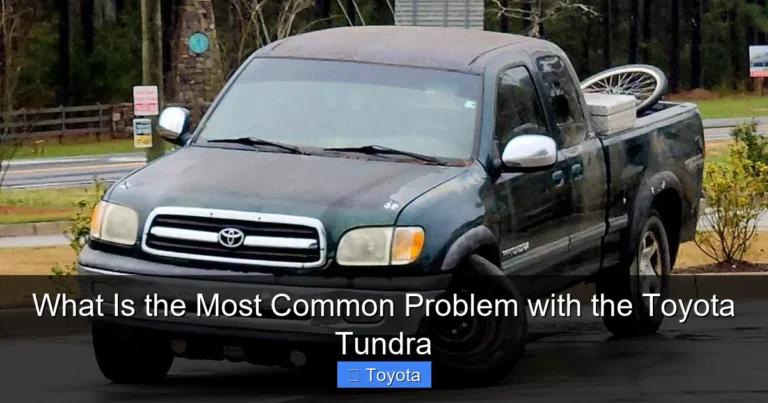
When we talk about the highest mileage Toyota ever recorded, there is one name and one truck that stands above all others, a true monarch in the kingdom of durability: Victor Shepard’s 1996 Toyota Tundra. This isn’t a tale of hearsay or garage legend; it is a story meticulously documented, verified by Toyota Motor Corporation itself, and celebrated globally. The odometer on this silver pickup has rolled over an astonishing 2,200,000 miles. Let that number sink in. That’s enough miles to drive to the moon and back nearly five times, or to circle the Earth more than 88 times.
The most mind-bending fact? This Tundra is still running on its original 3.4-liter V6 engine and original 4-speed automatic transmission. No rebuilds, no replacements. The engine has never been opened up. The transmission has never been touched. It has received every single oil change, every single scheduled service, and every single repair—no matter how small—on time, without fail, for over two decades. Victor Shepard, a retired contractor from Arizona, didn’t just buy a truck; he entered into a covenant of care with it. He treated it not as a disposable appliance, but as a lifelong partner. His story is the gold standard, the benchmark against which all other high-mileage claims are measured.
The Verification Process: How Toyota Confirmed the Record
Skepticism is healthy when someone claims over two million miles. Toyota, aware of the claim, dispatched engineers and historians to investigate. They didn’t just take Victor’s word for it. They reviewed decades of service records, inspected the truck’s wear patterns, and analyzed the engine and transmission internals. They confirmed the engine block and heads were original, the crankshaft was original, and the transmission case was original. The wear on critical components was consistent with the mileage, not a reset odometer. This level of corporate verification is rare and makes Shepard’s Tundra the undisputed, official record holder for the highest mileage Toyota ever recorded.
A Gallery of Million-Mile Heroes: Other Legendary Toyotas
While Shepard’s Tundra holds the crown, it’s not alone in the million-mile club. Toyota’s reputation is built on a foundation of countless stories from everyday drivers who have coaxed extraordinary life from their vehicles. These stories span the entire Toyota lineup, from compact sedans to rugged SUVs, proving that legendary reliability is a brand-wide trait, not an isolated incident.
The Camry and Corolla: Sedan Survivors
It’s perhaps no surprise that the world’s best-selling cars, the Toyota Camry and Corolla, are frequent entrants into the million-mile fray. Their simple, efficient, and incredibly robust 4-cylinder engines (like the 1ZZ-FE and 2ZZ-GE) are known for bulletproof design. Owners often cite consistent oil changes with high-quality synthetic oil and timely timing belt/chain replacements as critical. A 1996 Camry with 1.2 million miles and a 2003 Corolla with 1.1 million miles are famous examples, both running on their original engines and automatic transmissions. Their stories resonate because they are the very cars millions of people drive daily, making the million-mile feat feel attainable through disciplined care.
The Land Cruiser and 4Runner: Unbreakable SUVs
For those who need a vehicle that can traverse continents and survive decades of harsh use, the Toyota Land Cruiser and 4Runner are the chosen tools. Their body-on-frame construction and legendary 4×4 systems are built for abuse. The 1HZ and 1FZ-FE diesel and gasoline engines in 80-Series Land Cruisers are practically indestructible. A 1995 Land Cruiser with 1.5 million miles, still using its original 1FZ-FE engine and gearbox, is a testament to this. Similarly, a 1997 4Runner with over 1 million miles on its original 3.4L V6 is a common sight in online forums. These vehicles often see severe service—towing, off-roading, and extreme temperatures—and still endure, a testament to their overbuilt nature.
The Tacoma and T-100/Tundra: Workhorse Trucks
Shepard’s Tundra may be the king, but it’s part of a royal family of Toyota trucks. The Tacoma, especially the pre-2005 models with the 2.4L and 3.4L engines, has a cult-like following for its durability. A 1995 Tacoma with 1.2 million miles is well-documented. The earlier T-100 pickup and other Tundra generations also have their million-mile ambassadors. These trucks share a common DNA: robust frames, simple yet powerful engines, and transmissions (like the A340F and A750F) that, when maintained with fluid changes, seem to defy entropy. For many, the story of Shepard’s Tundra validates the decades of trust they’ve placed in their own Toyota trucks.
The Engineering Secrets Behind Toyota’s Immortality
So, what is the magic? It’s not magic; it’s a relentless, decades-old engineering philosophy often summarized as “Over-Engineering.” Toyota doesn’t just meet the required standard; it builds to a far higher, internal standard. This manifests in several tangible ways that directly contribute to extreme longevity.
Tolerances and Material Science
Toyota factories are famous for their precise machining and tight component tolerances. An engine part is not made to be “good enough” for 150,000 miles; it’s engineered for 300,000+ with a massive safety margin. They use high-grade metals and heat-treatment processes that resist fatigue and wear. The pistons, rings, and cylinder walls in a high-mileage Toyota often show incredibly uniform wear, a sign of perfect engineering harmony. This contrasts with some competitors who may optimize for lower initial cost or peak performance at the expense of long-term stress. When you combine these robust components with a design that avoids extreme internal pressures and RPMs (favoring low-end torque and reliability), you create a powerplant that simply doesn’t wear out quickly.
Simplicity and Proven Technology
Look under the hood of a million-mile Toyota, and you’ll often see a naturally aspirated engine, a straightforward fuel injection system, and a well-understood transmission architecture. Toyota is famously cautious about adopting unproven, cutting-edge technology that hasn’t been thoroughly validated over hundreds of thousands of miles in the real world. Variable valve timing (VVT-i) was introduced only after years of testing. Turbocharging on mainstream models (like the new Tundra’s twin-turbo) is a recent, heavily scrutinized development. This conservative approach means the core technology in these high-mileage heroes is rock-solid, with few complex, failure-prone systems. As one engineer might say, they prefer to “perfect the old” rather than “risk the new.”
The Role of the Toyota Production System
It’s not just the design on paper. The legendary Toyota Production System (TPS), the foundation of “Lean Manufacturing,” is built on the principle of Jidoka—automation with a human touch. This means any anomaly on the assembly line stops production immediately. A worker can pull a cord to halt everything if they see a defect. This relentless focus on quality at the source, where the vehicle is built, prevents latent flaws from ever leaving the factory. A perfectly assembled engine from the start has a much higher probability of reaching a million miles than one with a minor, undetected flaw that leads to premature failure. This culture of zero tolerance for defects is baked into every weld, bolt, and bolt torque specification.
The Non-Negotiable Maintenance Ritual: What the Million-Mile Owners Do
You can have the most over-engineered vehicle on the planet, but without disciplined care, it will not reach its potential. The common thread among all million-mile Toyota owners is a fanatical, almost religious, adherence to maintenance. It’s not about doing more; it’s about doing everything, on time, without exception. This is where practical examples become critical.
Fluids: The Lifeblood of Longevity
The single most important practice is frequent, high-quality fluid changes. For engine oil, the rule is often “every 5,000 miles or 6 months” with full synthetic oil, even if the manual says 10,000. Victor Shepard reportedly changed his oil every 3,000-4,000 miles. This keeps the engine clean, prevents sludge, and ensures optimal lubrication. Transmission fluid is equally critical. Many high-mileage owners change it every 30,000-50,000 miles, far more often than the “lifetime” fill often specified by manufacturers. They view “lifetime” as “lifetime of the transmission if you change the fluid.” Differential and transfer case fluids in 4x4s are also drained and refilled regularly. Coolant is changed every 2-3 years to prevent corrosion and maintain proper boiling/freezing points.
Preventative Replacements Before Failure
The philosophy shifts from “fix it when it breaks” to “replace it before it breaks.” Timing belts and chains are replaced at or before the recommended interval. Water pumps, thermostat housings, and radiator hoses are swapped out preemptively during major services. Belts (serpentine, accessory) are inspected and replaced at the first sign of cracking. Suspension components like struts, shocks, control arm bushings, and ball joints are not run until they are clunking and banging; they are replaced based on age and mileage. This approach costs more upfront but prevents catastrophic collateral damage (e.g., a broken timing belt destroying an engine) and keeps the car running smoothly, reducing stress on other systems.
The “Toyota Assessment Test” Mindset
This level of ownership requires a diagnostic mindset. Owners learn to listen for new noises, feel for subtle changes in shifting or braking, and notice minor leaks. They use the Toyota assessment test mentality—a systematic, pre-emptive check of all major systems. It’s not about being a mechanic, but about being an attentive caretaker. They build a relationship with a trusted independent mechanic who knows the car’s history and can spot potential issues during routine inspections. This partnership is as important as the maintenance itself.
Does High Mileage Affect Value and What Does It Mean for Buyers?
A Toyota with 300,000+ miles on the odometer is a unique proposition in the used car market. It defies the conventional wisdom that a car is “worn out” at 200,000 miles. This has a profound impact on perception, value, and buyer strategy.
The Million-Mile Premium: A Story Has Value
A well-documented, high-mileage Toyota often commands a surprising premium over a similar, lower-mileage example from a less-reliable brand. Why? Because the mileage itself is proof of concept. The story is the selling point. A 2005 Toyota Tacoma with 280,000 miles and a stack of maintenance records is often more desirable—and can be more expensive—than a 2010 Tacoma with 120,000 miles and no history. Buyers are paying for the verified proof of durability. The high mileage, instead of being a red flag, becomes a green flag, a testament to the vehicle’s inherent toughness and the previous owner’s care. This is the ultimate validation of Toyota’s brand promise.
What to Look For: The Due Diligence Checklist
For a buyer, a high-mileage Toyota requires even more thorough vetting. The maintenance records are paramount. You want to see a consistent history of oil changes, fluid services, and major component replacements. A pre-purchase inspection by a specialist (not just any mechanic) is non-negotiable. They should check for: 1) Engine compression and leak-down test results, 2) Transmission health (scan for codes, check fluid condition), 3) Frame and undercarriage for rust (especially in northern states), 4) Suspension wear, 5) Electronics and interior function. The presence of the original, never-rebuilt powertrain is a massive plus, but you must verify it through inspection and records. A high-mileage Toyota that has been neglected is a ticking time bomb; one that has been pampered is a treasure.
Resale Value and Long-Term Ownership
The resale value curve for these high-mileage heroes is unique. They depreciate very slowly after a certain point because their “floor” is determined by scrap value, not perceived useful life. A $3,000 parts car is its ultimate low. A running, driving million-mile truck is worth many times that. For the owner who plans to drive it into the ground, the cost of ownership becomes minuscule when spread over a million miles. The initial depreciation is absorbed, and the ongoing costs are primarily fuel, tires, and routine maintenance. This total cost of ownership model is where Toyotas truly shine and why they are the darlings of fleet managers, taxi services, and pragmatic private owners worldwide.
The Cultural Impact: More Than Just a Number
The story of the highest mileage Toyota is not just an automotive curiosity; it’s a powerful cultural narrative that shapes consumer behavior and corporate identity. It feeds directly into the psyche of the Toyota buyer.
The Ultimate Testimonial
No advertisement, no 5-star review, no warranty booklet can compete with a photograph of an odometer reading 2,200,000 miles. It is the ultimate, irrefutable testimonial. These stories are shared in online forums, news segments, and Toyota’s own marketing materials. They create a powerful, emotional connection. A person buying a Toyota Camry for their daily commute is, on some level, buying a piece of that million-mile potential. They are investing in a machine with a proven track record of outlasting its competitors by a wide margin. This narrative builds immense brand loyalty and trust, which is worth billions in customer retention and positive word-of-mouth.
A Benchmark for the Industry
Toyota’s million-mile heroes set the benchmark for the entire automotive industry. Competitors are forced to ask: “How can our cars last longer?” This pressure drives improvements in engineering, materials, and service recommendations across the board. The “Toyota Reliability” standard is a moving target that others chase. It influences everything from warranty lengths (Toyota’s power train warranty is competitive) to resale value predictions. The existence of these high-mileage vehicles proves that the technological ceiling for passenger vehicle longevity is far, far higher than what is typically delivered, challenging the entire industry to do better.
Conclusion: The Legacy of the Highest Mileage Toyota
The highest mileage Toyota ever recorded, Victor Shepard’s 2.2 million-mile Tundra, is more than a record; it is a symbol. It symbolizes an unwavering commitment to engineering excellence, a philosophy of over-building, and a culture that prioritizes long-term quality over short-term profits. It demonstrates that with unwavering attention to maintenance—the simple, fundamental acts of care—a machine can transcend its designed lifespan and become a lifelong companion.
While not every Toyota owner will log a million miles, the principles are universal. The tight tolerances, the proven engineering, the focus on quality control from the Toyota convenience package to the core powertrain, all contribute to a baseline of durability that is unmatched. These high-mileage stories are not flukes; they are the logical, inevitable outcome of a system designed for resilience. They remind us that ownership is a partnership. The vehicle provides the robust foundation; the owner provides the disciplined care. Together, they achieve the extraordinary. So, the next time you see an older Toyota on the road, you might just be looking at a future million-miler in the making, a rolling testament to a simple, powerful idea: build it right, and treat it right, and it will never let you down.
Frequently Asked Questions
Is the 2.2 million-mile Tundra still on the road today?
Yes, it is. Victor Shepard’s truck is meticulously maintained and is still driven regularly. It has become a ceremonial vehicle for Toyota, often appearing at events and dealerships to showcase the brand’s durability. It remains a fully functional, road-legal vehicle, a rolling monument to reliability.
What is the single most important maintenance item for high mileage?
Without question, it is strict, frequent oil changes with high-quality full synthetic oil. Clean oil is the lifeblood of the engine, preventing wear, sludge, and corrosion. All other maintenance is secondary to this fundamental practice. A neglected oil change will destroy an engine long before any other component fails.
Can modern Toyotas with more complex tech still reach these extreme mileages?
Time will tell, but the early signs are positive. Modern Toyota engines like the 2GR-FKS V6 and the A25A-FXS hybrid system are showing excellent longevity in fleet and taxi applications. The key is that Toyota still applies its over-engineering philosophy to these newer systems. However, the sheer complexity of turbochargers, 10-speed transmissions, and advanced hybrid systems introduces more potential failure points. Meticulous maintenance will be even more critical, but the engineering foundation suggests million-mile potential remains possible.
Are high-mileage Toyotas a good buy for someone on a tight budget?
Absolutely, but with a major caveat. A high-mileage Toyota can be the most reliable cheap car on the market if it has impeccable maintenance records. You are buying proven longevity. However, a neglected high-mileage Toyota is a financial disaster waiting to happen. Always budget for a thorough pre-purchase inspection and be prepared to address any deferred maintenance items immediately upon purchase. The initial low price can be eaten up by repairs if the history is unknown.
Do I need to use OEM parts to achieve high mileage?
Not necessarily OEM, but you must use high-quality, reputable parts. For critical wear items like timing belts, water pumps, and suspension bushings, sticking with OEM or top-tier brands (like Aisin, NGK, Denso) is a safe bet. For less critical items, quality aftermarket parts can suffice. The goal is to avoid cheap, poorly made components that will fail prematurely and cause collateral damage. The cost difference between a $15 no-name alternator and a $150 remanufactured OEM unit is insignificant compared to the cost of a tow truck and a missed day of work.
What about the electronics and infotainment systems in older high-mileage cars?
This is often the Achilles’ heel. The mechanical components can last forever, but the early 2000s-era navigation systems, touchscreens, and complex ECU modules can fail and be expensive or impossible to replace. The good news is that the core driving functions—engine, transmission, brakes, steering—are completely separate and will operate perfectly even if the radio dies. For a high-mileage daily driver, prioritize mechanical condition over a fully functional, original infotainment system. Aftermarket stereo upgrades are a common and relatively inexpensive fix.