
What Is the Difference Between the Toyota Highlander and the Grand Highlander

Choosing between the Toyota Highlander and Grand Highlander comes down to one main thing: space. The Grand Highlander is a significantly larger, three-row SUV with more passenger and cargo room, while the standard Highlander is a more compact, efficient two-row model with an optional third row. They share engines and core technology, but their size, seating capacity, and target family needs set them apart.
Key Takeaways
- Size is the Biggest Difference: The Grand Highlander is longer, wider, and offers dramatically more cargo space, making it a true full-size SUV competitor.
- Seating Configuration: Highlander is primarily a 5-seater with an optional 3rd row (tight for adults). Grand Highlander is a dedicated 8-seater with a more usable third row.
- Shared Powertrain, Different Tuning: Both offer the same 2.4L turbo 4-cylinder (265 hp) and hybrid options, but the Grand Highlander’s extra weight impacts acceleration and fuel economy slightly.
- Pricing & Positioning: Grand Highlander starts higher and targets larger families needing maximum space. Highlander is for those wanting 3-row flexibility in a more manageable, efficient package.
- Feature Parity: Tech, safety (Toyota Safety Sense 3.0), and available comfort features are very similar across comparable trim levels.
- Target Audience: Highlander suits smaller families or those who prioritize efficiency. Grand Highlander is for families with 3+ kids or those who frequently carry adults in all rows.
[FEATURED_IMAGE_PLACEHOLDER]
📑 Table of Contents
- Introduction: Solving the Toyota SUV Puzzle
- 1. The Core Distinction: Size, Space, and Seating
- 2. Performance and Efficiency: Shared Heart, Different Feel
- 3. Features, Trims, and Technology: Nearly Twins
- 4. Pricing, Value, and Which One is For You?
- 5. Real-World Scenarios and Practical Tips
- Conclusion: Your Family, Your Choice
Introduction: Solving the Toyota SUV Puzzle
If you’re in the market for a three-row family SUV, Toyota’s lineup can be a little confusing. For years, the Toyota Highlander was the go-to, offering a balance of size, efficiency, and reliability. But then arrived the Toyota Grand Highlander, a name that sounds like just a bigger version—and it is, but that “just” makes all the difference. Think of them not as different years of the same car, but as siblings with distinct personalities: one is the versatile, athletic older brother, and the other is the strong, spacious, built-for-duty younger one.
This isn’t about a simple facelift. The Grand Highlander rides on a completely different, longer wheelbase platform, giving it a presence and capability the standard Highlander simply cannot match. Our job today is to cut through the marketing and give you the clear, practical differences. We’ll talk real-world space, driving feel, which features matter, and most importantly, which one will actually fit your life and your family’s gear. By the end, you’ll know exactly which Toyota is the right fit for you.
1. The Core Distinction: Size, Space, and Seating
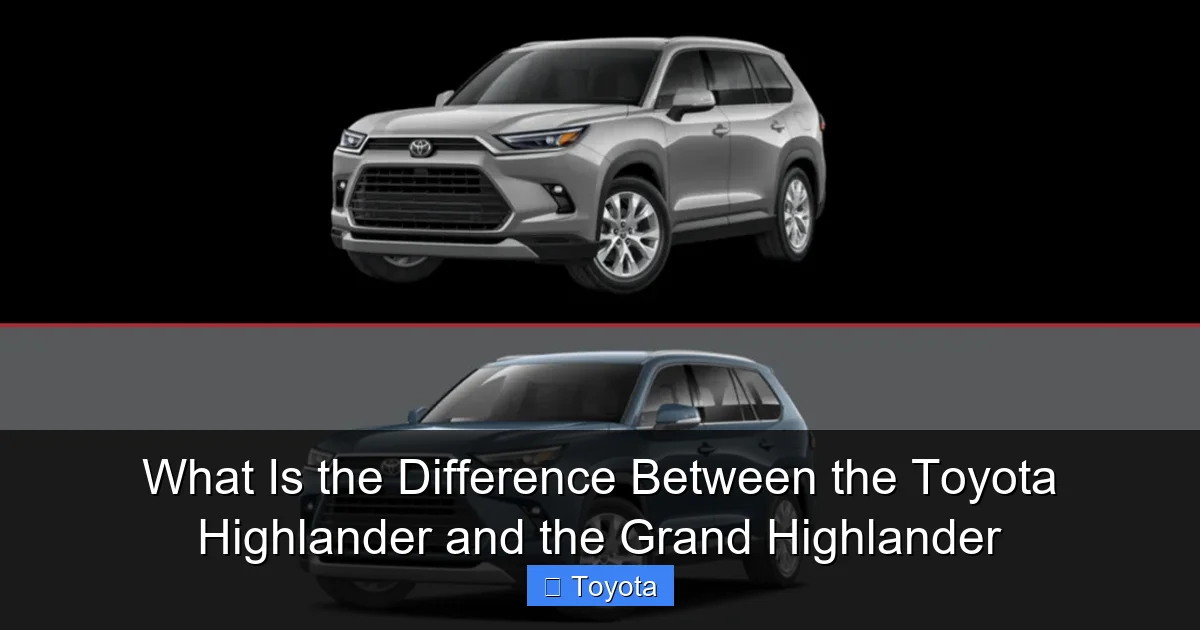
This is the heart of the matter. You can’t understand these two SUVs without first putting them side-by-side. The Grand Highlander isn’t a trim level; it’s a different vehicle designed from the ground up for maximum family utility.
Visual guide about What Is the Difference Between the Toyota Highlander and the Grand Highlander
Image source: darcarstoyotaoffrederick.com
Exterior Dimensions: A Noticeable Gap
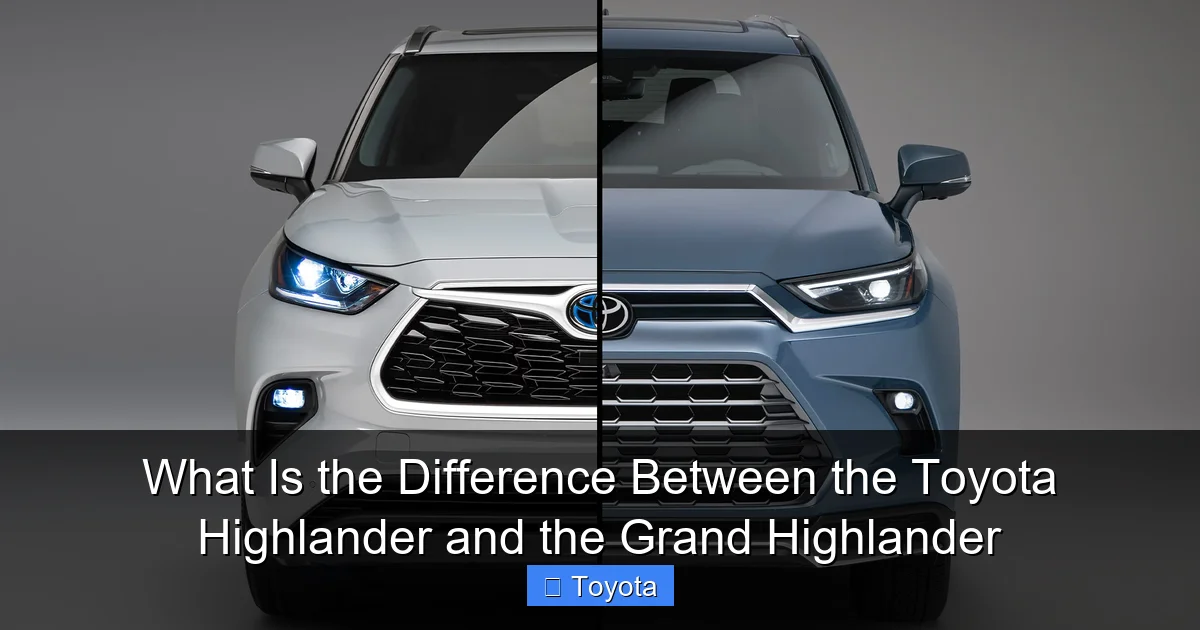
Looking at the numbers tells the story immediately. The Grand Highlander is over 5 inches longer in overall length and has a wheelbase (the distance between front and rear axles) that is about 3.9 inches longer. This isn’t a subtle difference. The Grand Highlander has a more vertical, upright rear window and a longer rear overhang, which directly translates into its superior cargo and third-row space. On the road, the Grand Highlander feels more substantial and imposing, while the Highlander feels more nimble and car-like for its class.
Inside the Cabin: Where People and Gear Go
The interior dimension split is stark. With all rows up, the Highlander offers a very cramped 16 cubic feet of cargo space—think a few grocery bags or a small stroller. The Grand Highlander, with its longer body, jumps to a much more usable 27.7 cubic feet behind the third row. That’s a massive 70% increase, enough for several suitcases or larger gear.
Flip the third row down, and the gap widens. Highlander: 48.9 cu ft. Grand Highlander: 72.5 cu ft. That’s enough space for a weekend’s worth of luggage for a large family plus bikes or a large dog crate. With both rear rows folded, the Highlander has 84.7 cu ft, while the Grand Highlander boasts a cavernous 97.5 cu ft—approaching full-size SUV territory.
Seating Capacity & Comfort: Here’s the practical impact. The Highlander’s third row is best reserved for children or very short adults on short trips. The Grand Highlander’s third row, thanks to its longer wheelbase, offers significantly more legroom and is genuinely usable by adults for longer journeys. The Grand Highlander also comes standard as an 8-seater (2-3-3 configuration), while the Highlander is a 5-seater (2-3) with a third-row option making it a 7-seater (2-2-3). The Grand Highlander’s middle row is often a bench, maximizing seating to eight. If your family regularly has three kids in car seats or booster seats, the Grand Highlander’s wider rear seats and easier access are a major advantage.
Under the hood, you might expect more variation, but Toyota has kept the core powertrain strategy similar, with one key twist.
Visual guide about What Is the Difference Between the Toyota Highlander and the Grand Highlander
Image source: motortrend.com
The Powertrain Lineup
For 2024-2025 models, both SUVs offer two main engine choices:
- 2.4L Turbocharged 4-Cylinder (Gas Only): This is the new standard, replacing the old V6. It makes 265 horsepower and 310 lb-ft of torque in both vehicles. It’s paired with an 8-speed automatic transmission.
- 2.5L Hybrid 4-Cylinder: The efficient hybrid system, combining a gas engine with electric motors for a total system output of 243 horsepower. It uses a continuously variable transmission (CVT).
The Key Difference: While the numbers are identical, the Grand Highlander’s additional 400-500 pounds of curb weight means it doesn’t feel as quick or responsive as the Highlander. The turbo engine in the Highlander can feel sprightly; in the Grand Highlander, it’s more about confident, steady acceleration. The hybrid system masks weight differences better due to electric torque, so the Grand Highlander Hybrid still feels adequately powered, though its 0-60 mph time is slightly slower.
Fuel Economy: The Efficiency Trade-Off
You pay for that extra space and weight at the pump. The lighter Highlander consistently earns better EPA estimates. For example, with the 2.4L turbo, FWD Highlanders get 22 mpg city/29 highway. The equivalent Grand Highlander drops to 21/28. The hybrid penalty is similar. The Highlander Hybrid is rated at 34 mpg combined, while the Grand Highlander Hybrid is at 32 mpg combined. For the average driver, this translates to 1-2 fewer miles per gallon, which adds up over years of ownership.
3. Features, Trims, and Technology: Nearly Twins
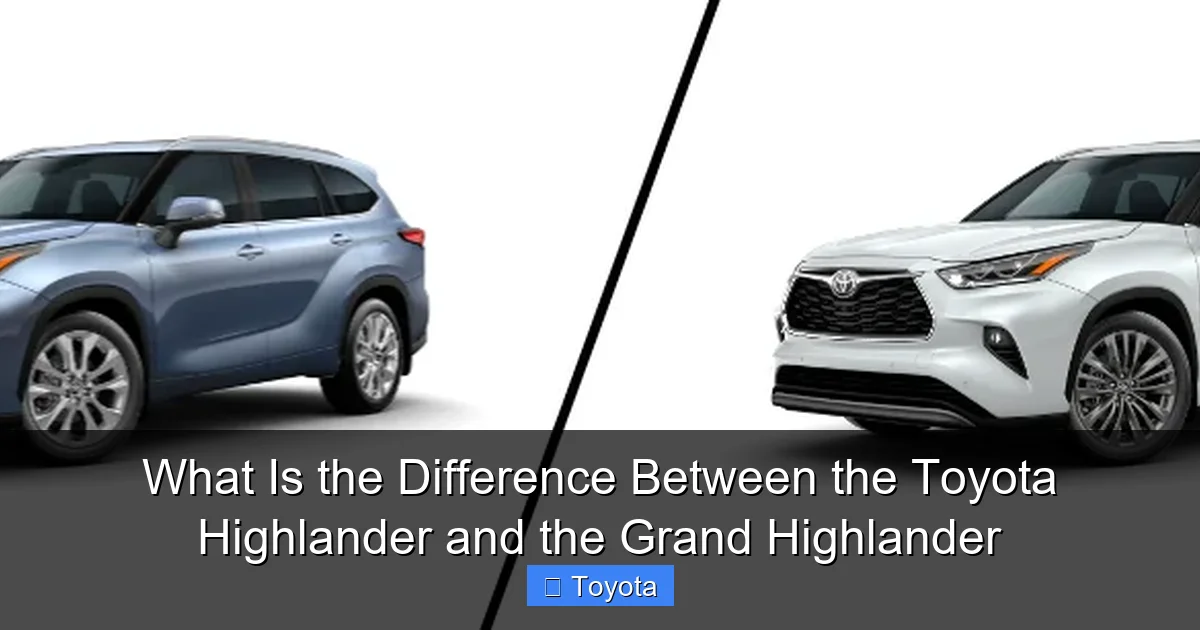
Here, the two models converge. Toyota doesn’t differentiate them with unique tech; instead, they share the same excellent infotainment and safety suite across comparable trim levels.
Visual guide about What Is the Difference Between the Toyota Highlander and the Grand Highlander
Image source: s3.amazonaws.com
Infotainment and Connectivity
Both offer a standard 8-inch touchscreen, with an optional 12.3-inch display on higher trims. Apple CarPlay and Android Auto are standard (wireless on higher trims). The interface is identical. Available features like a premium JBL audio system, panoramic moonroof, and rear-seat entertainment system are also shared. If tech is your priority, you won’t be missing out by choosing one over the other.
Safety: Toyota Safety Sense 3.0 is Standard
This is a huge win for both. Every single Highlander and Grand Highlander comes standard with the latest Toyota Safety Sense 3.0 suite. This includes:
- Pre-Collision System with Pedestrian Detection
- Full-Speed Range Dynamic Radar Cruise Control
- Lane Departure Alert with Steering Assist
- Road Sign Assist
- Proactive Driving Assist (new for 2024)
Higher trims add features like Blind Spot Monitor and Rear Cross-Traffic Alert. Safety is a wash—both are equally equipped.
Trim Level Structure and Key Differences
The trim ladder is almost identical: L, LE, XLE, Limited, and Platinum (gas), with hybrid versions of most. The XLE and Limited are the volume sellers. However, the feature sets for a “Highlander XLE” and a “Grand Highlander XLE” are nearly indistinguishable. You might find slightly different wheel designs or minor interior trim accents, but the core value proposition—heated/ventilated seats, soft-touch materials, dual-zone climate—is the same. The main trim difference is price, which we’ll cover next. For a deep dive into the popular mid-trim options, check out our detailed comparison of the Highlander XLE vs. XSE.
4. Pricing, Value, and Which One is For You?
This is where the rubber meets the road. Your budget and your needs will make the final decision.
Starting MSRP and Price Spread
The Grand Highlander commands a premium for its extra size. For the 2024 model year:
- Toyota Highlander: Starts at ~$39,420 (L FWD) and tops out around $54,000+ for a Platinum Hybrid.
- Toyota Grand Highlander: Starts at ~$44,670 (L FWD) and can exceed $60,000 for a Platinum Hybrid.
That’s a starting difference of over $5,000. You’re paying a significant premium for the Grand Highlander’s extra space and capability. The question is: is that premium worth it for your needs?
Making the Choice: A Simple Guide
Ask yourself these questions:
- “Do I regularly need to carry 7 or 8 people, with adults in the third row?” If yes, the Grand Highlander is your only real choice. The Highlander’s third row is a penalty box for adults.
- “Is my family’s gear (strollers, sports equipment, luggage) a constant challenge to fit?” If you’re always playing Tetris with cargo, the Grand Highlander’s 20+ extra cubic feet behind the third row is a game-changer.
- “Do I prioritize fuel economy and a more agile driving feel in a 3-row SUV?” Then the Highlander is the clear winner. It’s more efficient and feels lighter on its feet.
- “Is my garage or parking space tight?” The Highlander’s 5-inch shorter length makes it easier to park and maneuver in urban environments.
The Bottom Line: The Toyota Highlander is the efficient, versatile, and more affordable 3-row option for smaller families or those who only occasionally use the third row. The Toyota Grand Highlander is the ultimate space-maximizer for larger families or anyone who treats their SUV as a mobile storage unit. It’s a dedicated people-hauler that doesn’t force major compromises on third-row space.
5. Real-World Scenarios and Practical Tips
Let’s make this concrete with some everyday situations.
The Car Seat Conundrum
Installing three car seats across the second row is a tight squeeze in almost any 3-row SUV. The Highlander’s second row is a bit narrower. The Grand Highlander’s wider cabin gives you a fraction more breathing room, which can mean the difference between a peaceful fit and a frustrating battle. If you have three young children in boosters, test-fit your specific seats in both vehicles.
Towing and Hauling
For the 2.4L turbo models, maximum towing capacity is 5,000 pounds for both. However, the Grand Highlander’s heavier curb weight means its payload capacity (how much weight you can put in the vehicle itself) is slightly lower. For towing a medium-sized trailer, both are capable. If you’re loading the SUV to the gills with people and gear for a camping trip, check the payload sticker on the driver’s door jamb—the Highlander might have a slight edge.
Winter Driving and Features
Both offer excellent all-wheel drive systems. One neat feature found on many Highlanders is the “Snow Button”—a dedicated drive mode that softens throttle response and adjusts AWD torque distribution for better traction on slippery surfaces. This feature is also available on the Grand Highlander. If you live in snowy climates, it’s a handy tool. You can learn exactly what the snow button does in a Toyota Highlander and how to use it effectively.
Conclusion: Your Family, Your Choice
The difference between the Toyota Highlander and Grand Highlander is profound, yet beautifully simple. It all circles back to your family’s spatial needs. The Grand Highlander is not an upgraded Highlander; it’s a different animal altogether—a larger, more spacious, and more capable (at the cost of efficiency and price) three-row SUV. The Highlander remains a brilliant, more efficient, and more agile package that offers a third row as an option, not its primary identity.
Your decision path is clear: if absolute, adult-friendly third-row space and maximum cargo volume are non-negotiable, the Grand Highlander is your destination. If you want a versatile, efficient, and more affordable 3-row SUV where the third row is for occasional use or kids, the Highlander is the smarter, more practical choice. The best way to decide? Take a Saturday, bring your car seats and your typical gear, and test drive both back-to-back. The moment you try to fold the third row and load luggage, or have your spouse sit in the third row, the answer will become perfectly, personally clear.
Frequently Asked Questions
Is the Grand Highlander just a longer Highlander?
Yes, in the simplest terms. It uses a longer wheelbase platform, which results in significantly more rear-seat legroom and cargo space. They share engines, transmissions, and most interior technology and features.
Which is more fuel-efficient, the Highlander or Grand Highlander?
The standard Highlander is consistently more fuel-efficient due to its lighter curb weight. The difference is about 1-3 mpg combined across both gas and hybrid models, favoring the Highlander.
Can adults sit comfortably in the third row of a Highlander?
It’s very tight. The Highlander’s third row is best suited for children or short adults on short trips. For regular adult use, the Grand Highlander’s third row is significantly more spacious and comfortable.
What is the price difference between a base Highlander and Grand Highlander?
The Grand Highlander starts about $5,000-$6,000 higher than the equivalent base Highlander trim. This premium reflects its larger size and increased material costs.
Do both SUVs come with Toyota Safety Sense 3.0?
Yes, absolutely. Every 2024+ Highlander and Grand Highlander includes the full Toyota Safety Sense 3.0 suite of driver-assistance features as standard equipment.
Is the Grand Highlander available as a hybrid?
Yes, both the Highlander and Grand Highlander are available with the same 2.5L hybrid powertrain, offering excellent fuel economy without sacrificing too much power.
