What Is the Difference Between Bmw X3 and X5?

Contents
- 1 Key Takeaways
- 2 📑 Table of Contents
- 3 The Fundamental Divide: Compact vs. Midsize SUV
- 4 Performance & Powertrain: Agile vs. Authoritative
- 5 Interior Space & Practicality: Room to Breathe vs. Just Enough
- 6 Technology, Comfort & Luxury: Shared DNA, Different Expression
- 7 Pricing & Value of Ownership: The Clear Divider
- 8 Who Should Choose Which? Matching SUV to Lifestyle
- 9 Frequently Asked Questions

Trunk Organizer

Car Cup Holder Expander

Car Floor Mats (Universal)

Microfiber Car Cleaning Cloth
Choosing between the BMW X3 and X5 comes down to your need for space versus agility. The X3 is a compact, nimble SUV ideal for urban driving and smaller families, offering a lower starting price. The X5 is a midsize powerhouse with more passenger and cargo room, stronger engine options, and a more commanding road presence, but at a significantly higher cost. Your lifestyle and budget are the ultimate deciding factors.
So, you’ve decided on a BMW SUV. Excellent choice. But now you’re staring at two fantastic options: the BMW X3 and the BMW X5. Both wear the iconic blue-and-white roundel, both ooze premium quality, and both promise that signature BMW driving joy. Yet, they are engineered for very different lives. The core difference between BMW X3 and X5 isn’t just about size—it’s a fundamental divergence in purpose, character, and who they’re built for. Think of it as the difference between a precision-engineered sports watch and a robust, feature-packed chronograph. Both tell time brilliantly, but you’d pick one for a gala and the other for a diving expedition. Let’s break down every layer of this comparison so you can see which SUV truly fits your world.
Key Takeaways
- Size & Class: The X3 is a compact luxury SUV (similar to Audi Q5, Mercedes GLC), while the X5 is a midsize luxury SUV (rivaling Audi Q7, Mercedes GLE).
- Performance Spectrum: X3 focuses on sporty, efficient driving; X5 offers more powerful base engines and optional V8s for serious towing and acceleration.
- Interior & Cargo: X5 provides noticeably more passenger space (especially in the third row) and cargo capacity, making it better for larger families or frequent hauling.
- Technology & Features: Both share BMW’s latest iDrive system and driver aids, but the X5 often gets more premium standard materials and available luxury features.
- Price & Value: The X3 has a substantially lower starting MSRP and typically lower long-term ownership costs (fuel, insurance, maintenance).
- Target Driver: The X3 suits singles, couples, or small families wanting a dynamic, city-friendly drive. The X5 is for those prioritizing space, comfort, and presence for a growing family or heavy-duty needs.
- Fuel Efficiency: The smaller, lighter X3 consistently delivers better fuel economy across comparable powertrains, a key consideration for high-mileage drivers.
📑 Table of Contents
- The Fundamental Divide: Compact vs. Midsize SUV
- Performance & Powertrain: Agile vs. Authoritative
- Interior Space & Practicality: Room to Breathe vs. Just Enough
- Technology, Comfort & Luxury: Shared DNA, Different Expression
- Pricing & Value of Ownership: The Clear Divider
- Who Should Choose Which? Matching SUV to Lifestyle
The Fundamental Divide: Compact vs. Midsize SUV
This is the single most important distinction and the root of all other differences. The BMW X3 belongs to the compact luxury SUV segment. It’s designed to be agile, efficient, and perfectly sized for navigating city streets and tight parking garages. The BMW X5, however, is a midsize luxury SUV. It’s built to dominate highways, swallow family vacations whole, and offer a serene, spacious cabin for everyone on board. This classification dictates everything from their external dimensions and weight to their engine choices and target audience.
Seeing is Believing: Dimensions & Presence
Park an X3 and an X5 side-by-side, and the size gap is immediately apparent. The X5 is roughly 10 inches longer and 4 inches wider (mirror-to-mirror) than the X3. Its wheelbase is about 4.5 inches longer, which translates directly into more cabin room. The X5 also sits slightly taller. This isn’t just about statistics; it’s about real-world impact. The X3 feels like a manageable, almost wagon-like extension of a sport sedan. The X5 has a undeniable presence on the road—it looks and feels substantial, which many buyers associate with safety and luxury. However, that presence comes with trade-offs: maneuvering in cramped urban environments, fitting into compact parking spots, and overall drivability in stop-and-go traffic are all noticeably easier in the X3. If your daily life involves narrow alleys or crowded multi-story car parks, the X3’s smaller footprint is a daily blessing.
Performance & Powertrain: Agile vs. Authoritative
BMW famously engineers its SUVs to drive like sports cars, but the “how” differs between these two siblings. The difference between BMW X3 and X5 performance is a direct reflection of their size and weight.
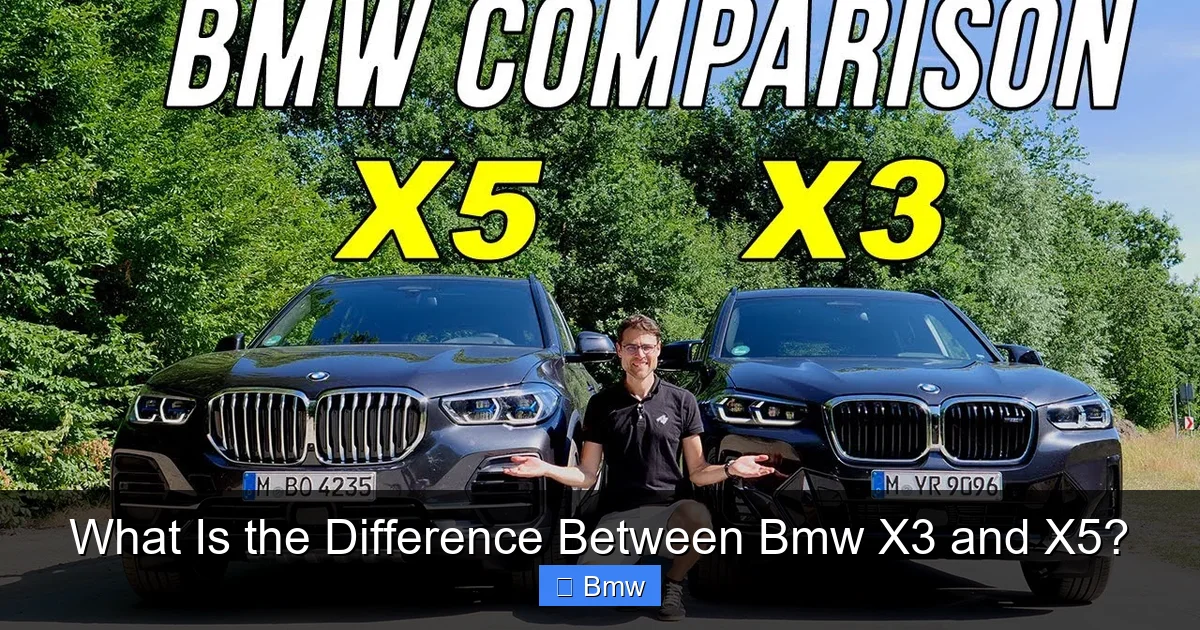
Visual guide about What Is the Difference Between Bmw X3 and X5?
Image source: i.ytimg.com
Engine Lineup and Driving Character
The X3 typically starts with a turbocharged 4-cylinder (the B48 engine, around 248 hp in the sDrive18i/xDrive20i). It’s punchy, responsive, and feels perfectly matched to the vehicle’s lighter weight. The driving character is sharp, with quick steering and a taut suspension that emphasizes road feedback. It’s the SUV you drive when you want to enjoy the journey, not just endure it. The X5, being heavier, traditionally gets a more powerful base engine: a turbocharged 6-cylinder (the B58, around 335 hp in the xDrive40i). This delivers a layer of effortless, authoritative power that the 4-cylinder X3, while quick, can’t fully replicate. The X5’s acceleration is more serene and powerful, and its optional V8 (in the M60i or AlpinaXB7) is in a completely different league of performance. The X5 also handles its weight well, with a composed, planted feel, but it lacks the X3’s tossable, lightweight agility. It’s more about smooth, confident authority than playful cornering.
Towing and Hauling Capacity
Here’s a practical difference between BMW X3 and X5 that matters for boat owners, trailer haulers, or anyone with serious cargo. The X5 is rated to tow significantly more. While a standard X3 can handle a modest trailer (around 3,500 lbs with the 4-cylinder), the X5’s 6-cylinder models are typically rated for 7,000+ lbs when properly equipped. This is a non-negotiable spec for many families and hobbyists. If you have even a passing thought about towing a camper, jet skis, or a sizable utility trailer, the X5 is your only viable choice from this pair. Its stronger engine, more robust cooling system, and heavier-duty transmission are built for that task.
Interior Space & Practicality: Room to Breathe vs. Just Enough
This is where the midsize advantage of the X5 becomes overwhelmingly clear. The difference between BMW X3 and X5 interior space defines their utility.

Visual guide about What Is the Difference Between Bmw X3 and X5?
Image source: i.ytimg.com
Passenger Accommodations
The X3 offers comfortable seating for five adults. Front and rear legroom is generous for a compact SUV, but the rear seat is best for two adults or three children. The X5, with its longer wheelbase, provides a genuinely roomy second row with excellent legroom for three adults. More importantly, the X5 is available with a third-row seat (a small, but functional one best for kids or occasional adult use). This transforms it from a 5-seater to a 7-seater, a capability the X3 simply does not have. For a family of four or five with kids in booster seats, the X3 is fine. For a family of five or six where teenagers or adults regularly ride in the back, the X5’s extra space and optional third row are game-changers. The feeling of spaciousness, airiness, and reduced claustrophobia in the X5 is significant.
Cargo Capacity: Weekends Away vs. Long Vacations
Cargo space tells a similar story. With all seats up, the X3 offers about 28 cubic feet of cargo room—perfect for grocery runs and weekend bags. The X5 provides around 15-18 cubic feet more with all seats up. But the real difference appears when you fold the rear seats. The X3 expands to a very respectable ~65 cubic feet. The X5 balloons to a massive ~83 cubic feet. That extra 18 cubic feet is the difference between comfortably fitting suitcases for a two-week family trip or struggling to pack for a long weekend. If you regularly haul large items, have a dog that needs cargo space, or simply hate packing light, the X5’s cavernous cargo hold is a major practical advantage.
Both SUVs showcase BMW’s best-in-class technology and build quality. The core infotainment system is the same brilliant iDrive 8 (or iDrive 9 in newest models) with a large curved screen. Both offer the full suite of driver-assistance systems like adaptive cruise, lane-keep assist, and parking assistant. So where’s the difference between BMW X3 and X5?
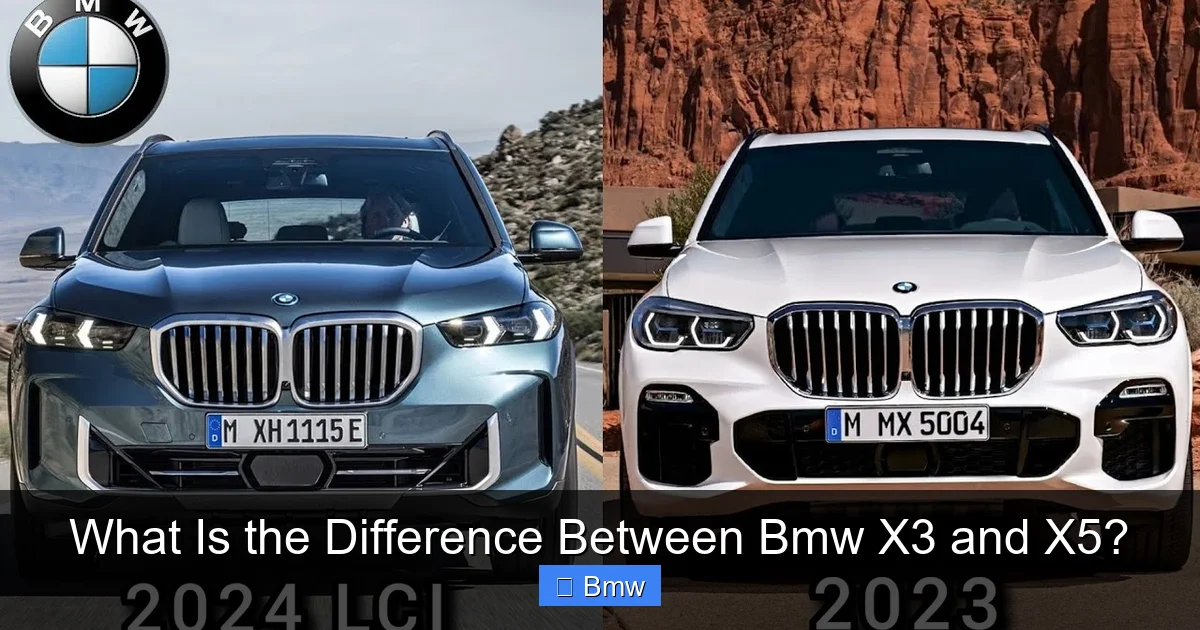
Visual guide about What Is the Difference Between Bmw X3 and X5?
Image source: i.ytimg.com
Materials & Standard Features
The X5 generally starts with a higher grade of standard materials. You’ll find more soft-touch surfaces, more substantial metal and wood trim, and often features like a multi-function front seats or a nicer audio system as standard that are optional on the X3. The X5’s larger cabin also allows for more elaborate ambient lighting setups and a more dramatic, spacious feel. When you option both to similar price points, the X5 will often feel more opulent and substantial inside due to its scale and the extra material used. The X3’s interior is still beautifully crafted—it’s a BMW, after all—but it has a slightly more driver-focused, sport-sedan-esque ambiance compared to the X5’s grand touring vibe.
Pricing & Value of Ownership: The Clear Divider
This is often the most decisive difference between BMW X3 and X5. The X3’s lower starting MSRP (often $10,000-$15,000 less) opens up BMW luxury to a wider budget. This price gap persists through the trim levels. A well-equipped X3 can be had for what a base-model X5 costs. Financing, monthly payments, and even insurance premiums will be lower for the X3. Long-term, the X3’s smaller size and typically more efficient engines (especially if you compare a 4-cylinder X3 to a 6-cylinder X5) lead to better fuel economy and potentially lower maintenance costs over time, as some services are weight/component-dependent. The X5, with its more complex systems and heavier components, will cost more to maintain and repair as it ages. For buyers watching total cost of ownership, the X3 presents a more accessible entry point into the BMW ecosystem.
Who Should Choose Which? Matching SUV to Lifestyle
Let’s make it practical. Who is each SUV for?
The Ideal BMW X3 Owner
You are a professional or couple without young children, or with very young kids in car seats. You live in a city or suburbs with tight roads and parking. You value sharp handling, a connected drive, and fuel efficiency. Your adventures involve weekend hiking trips or a set of golf clubs, not a full camper. You want premium luxury without the bulk and price tag of a larger SUV. You might even be cross-shopping it against the best color for a BMW X3 to personalize your agile companion. For you, the difference between BMW X3 and X5 is that the X3 feels like a natural, nimble extension of your active, urban lifestyle.
The Ideal BMW X5 Owner
You have a growing family (three kids, frequent teen passengers, or often carry grandparents). You regularly take long road trips or vacations where cargo space is critical. You tow a boat, trailer, or large RV. You desire a commanding view of the road and a cabin that isolates you from the world. You prioritize passenger comfort and silence over ultimate cornering agility. The higher price is justified by the tangible increase in space, power, and presence. You see your SUV as the ultimate all-purpose family hauler and road-trip cruiser that still happens to drive brilliantly for its size.
One final tip: test drive them back-to-back. Drive the X3 first, then immediately get in the X5. The difference in size, seating position, and power delivery will hit you instantly. Sit in the back seat of each. Fold the cargo floors. Your body will tell you which one feels right. While exploring your options, you might also compare how these SUVs stack up against models from other brands, like the differences between Kia Sportage models, to understand the broader market landscape.
Frequently Asked Questions
Is the BMW X3 or X5 more reliable?
Both are generally reliable German-engineered SUVs when maintained properly. Long-term data often shows the simpler, turbocharged 4-cylinder in the X3 has slightly lower potential for expensive repairs compared to the more complex 6-cylinder and V8 options in the X5. However, model year and specific maintenance history are bigger factors than the model itself.
Which BMW SUV has better fuel economy?
The BMW X3 consistently delivers better fuel economy across the board. Its lighter weight and availability of efficient 4-cylinder engines give it a clear advantage. An X3 with a 4-cylinder can easily achieve 25-28 MPG combined, while a comparable 6-cylinder X5 will typically be in the 21-24 MPG range. The difference is significant for annual mileage.
Can a BMW X3 fit three car seats in the back?
It is possible but tight. The X3’s rear seat is wide enough for three narrow infant or convertible seats, but installing three larger booster seats or a combination will be a very tight squeeze, likely making the middle seat unusable. The X5’s wider rear cabin handles three car seats much more comfortably.
Does the BMW X5 handle significantly worse than the X3?
It doesn’t handle “worse,” but it handles differently. The X5 is heavier and has a longer wheelbase, so it feels more planted and stable at high speeds but less playful and tossable in tight corners. The X3 feels more like a sport sedan—nimble and quick to turn. For most drivers, the X5’s handling is more than sufficient and feels secure, but enthusiasts will prefer the X3’s agility.
Is the BMW X5 worth the extra money over the X3?
The X5 is worth the premium only if you need its specific advantages: a third row, vastly more cargo space, serious towing capacity, or the presence and power of a 6-cylinder/V8. If you don’t need that extra space and power, the X3 offers 90% of the BMW driving experience and luxury at a much lower price, making it the better value for most.
Which is better for off-road driving?
Neither is a serious off-roader like a Land Rover or Jeep. However, the X5’s available xDrive system with more sophisticated torque vectoring and its higher ground clearance (on some models) give it a slight edge for light-duty dirt roads or snowy trails. Both should be considered on-road SUVs with all-weather capability, not off-road machines.