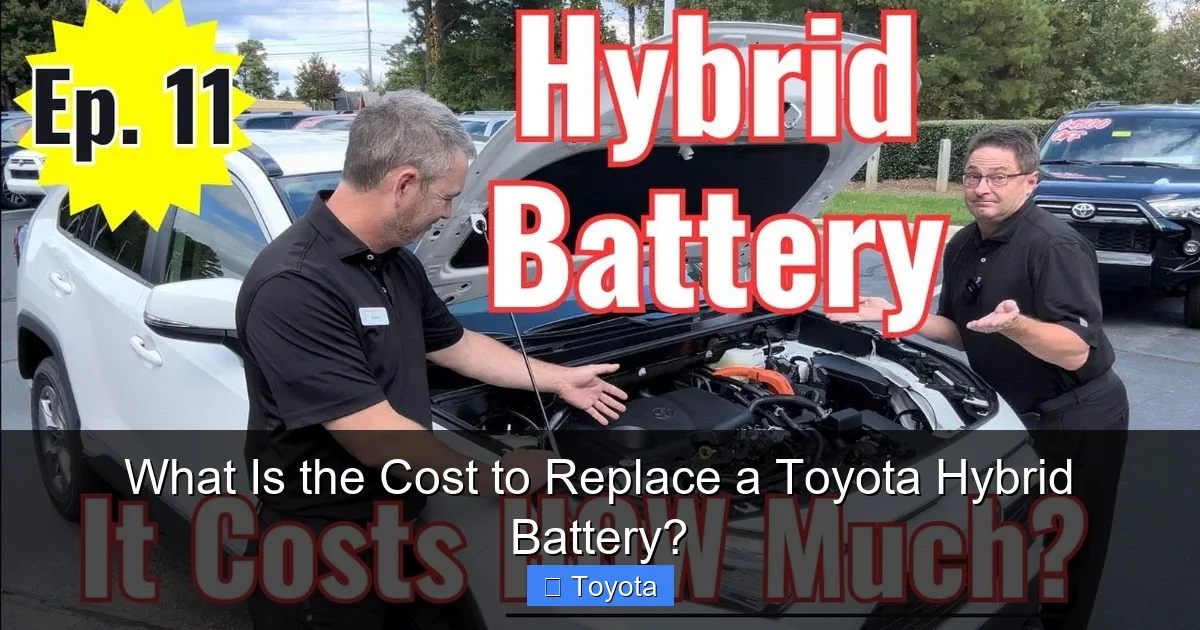
What Is the Cost to Replace a Toyota Hybrid Battery?

Contents
- 1 Key Takeaways
- 2 📑 Table of Contents
- 3 Understanding Your Toyota Hybrid Battery
- 4 Factors That Influence the Replacement Cost
- 5 Typical Cost Breakdown by Popular Toyota Models
- 6 How to Get the Best Value: A Step-by-Step Strategy
- 7 Alternatives to Full Replacement: Can You Save More?
- 8 Protecting Your Investment: Maximizing Battery Life
- 9 Conclusion: Weighing the Cost Against the Value
- 10 Frequently Asked Questions


Replacing a Toyota hybrid battery typically costs between $2,000 and $5,500+, with the final price depending heavily on your specific model, year, and whether you choose a new dealer part, a refurbished unit, or a remanufactured battery. Labor costs, regional pricing, and warranty coverage are major variables. While a significant expense, it’s often far less than the cost of replacing a full vehicle, and proper maintenance can extend your battery’s life for 10-15 years or more.
So, you’ve gotten the dreaded warning light on your Toyota hybrid. Maybe it’s the familiar red triangle with an exclamation point, or perhaps your car is suddenly acting sluggish, refusing to start, or showing a significant drop in fuel economy. Your heart sinks a little. You know what this likely means: your hybrid battery is failing. The next, almost immediate thought is a financial one: “What is the cost to replace a Toyota hybrid battery?” It’s one of the most common and significant questions for hybrid owners, and the answer isn’t a single number. It’s a spectrum. Let’s break down everything you need to know, from the nitty-gritty cost details to smart strategies that can save you thousands.
First, take a breath. While the cost is substantial, it’s important to understand what you’re paying for. You’re not replacing a simple, $100 lead-acid car battery. You’re replacing a complex, high-voltage (over 200 volts!) nickel-metal hydride (NiMH) or lithium-ion (Li-ion) battery pack that is the heart of your vehicle’s hybrid system. This pack contains multiple battery modules, a sophisticated cooling system, and intricate wiring. It’s a major component. The good news? Toyota hybrid batteries are renowned for their longevity. With proper care, they often last 10-15 years or 150,000 to 200,000 miles. But when they do eventually wear out, understanding your options is key to making a smart, cost-effective decision.
Key Takeaways
- Cost Range is Broad: Expect to pay $2,000 to $5,500+ for a complete hybrid battery replacement, with luxury models like the RAV4 Prime or older Prius models at the higher end.
- Part Type Dictates Price: New OEM batteries are the most expensive ($3,500-$5,500+), while remanufactured/refurbished units offer savings of 30-50% ($1,800-$3,500).
- Labor Adds Significantly: Installation labor can add $500 to $1,200, depending on complexity and your location. Dealer labor rates are typically highest.
- Model & Year Matter: A 2012 Prius battery costs less than a 2023 RAV4 Hybrid battery due to technology, capacity, and part availability.
- Warranty is Crucial: Toyota’s hybrid battery warranty is 8 years/100,000 miles (10 years/150,000 miles in some states). If covered, your cost could be $0.
- Maintenance Extends Life: Avoiding extreme temperatures, gentle driving, and regular hybrid system checks can help your battery last 150,000+ miles, delaying the replacement cost.
- Get Multiple Quotes: Always compare estimates from dealers, independent hybrid specialists, and mobile mechanics to find the best value for your situation.
📑 Table of Contents
- Understanding Your Toyota Hybrid Battery
- Factors That Influence the Replacement Cost
- Typical Cost Breakdown by Popular Toyota Models
- How to Get the Best Value: A Step-by-Step Strategy
- Alternatives to Full Replacement: Can You Save More?
- Protecting Your Investment: Maximizing Battery Life
- Conclusion: Weighing the Cost Against the Value
Understanding Your Toyota Hybrid Battery
Before we dive into dollars and cents, it helps to understand what you’re replacing. Toyota has used two main types of hybrid batteries over the years. The older, more common type is the Nickel-Metal Hydride (NiMH) battery. These are robust, reliable, and have been the workhorse in models like the Prius, Camry Hybrid, and early RAV4 Hybrids for over two decades. They are heavier but very durable. Newer models, especially plug-in hybrids like the RAV4 Prime and the latest Prius Prime, use Lithium-Ion (Li-ion) batteries. These are more energy-dense, lighter, and can store more power in a smaller space, which is crucial for electric-only driving range. The technology inside the pack, the number of cells, and the overall design vary significantly between a 2005 Prius and a 2024 Highlander Hybrid, which is a primary driver of the cost difference.
The Hybrid Battery vs. The 12-Volt Auxiliary Battery
A critical point of confusion for many owners is the difference between the main high-voltage hybrid battery and the standard 12-volt auxiliary battery. The 12-volt battery is just like the one in a conventional car; it powers the lights, radio, and computer systems when the car is off. It’s small, cheap (usually $150-$300 installed), and needs replacement every 3-5 years. The hybrid battery is the massive pack in the trunk or under the rear seats that works with the engine and electric motor. When people talk about the expensive “hybrid battery replacement,” they are never talking about the small 12-volt battery. If your car won’t start but the hybrid system warning light is not on, you likely just need a new 12-volt battery. You can learn more about replacing the smaller auxiliary battery in other vehicles, like a Mercedes-Benz, by reading this guide on auxiliary battery replacement costs, though the process and cost for your Toyota’s 12V battery will be different.
Factors That Influence the Replacement Cost
Why does one Toyota owner pay $2,200 and another pay $5,800? The final invoice is a combination of several key factors. Understanding these will help you interpret quotes and negotiate intelligently.
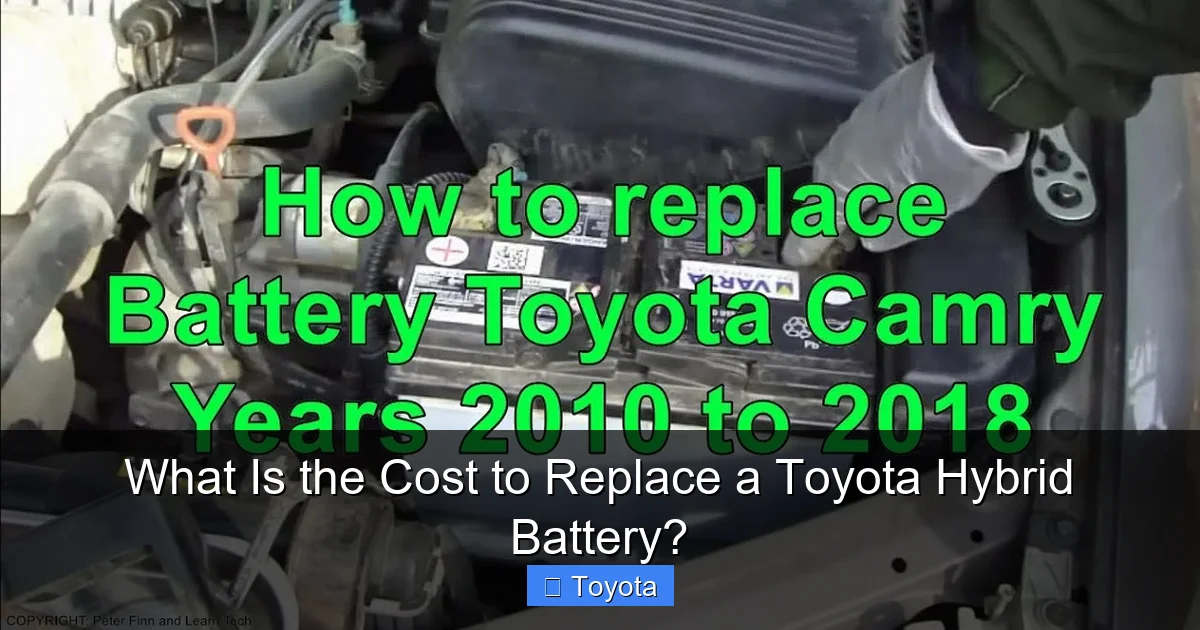
Visual guide about What Is the Cost to Replace a Toyota Hybrid Battery?
Image source: i.ytimg.com
1. Vehicle Model, Year, and Battery Type
This is the single biggest factor. A battery for a first-generation (2001-2003) Prius is a different, simpler, and less expensive unit than the high-capacity lithium-ion pack in a 2023 RAV4 Prime. Here’s a general, model-based breakdown:
- Toyota Prius (Various Years): The most common hybrid on the road. For older NiMH packs (pre-2010), you might find remanufactured units for $1,500-$2,500 installed. Newer models see higher prices. A new battery for a 2016-2022 Prius can range from $2,800 to $4,200+ installed.
- Toyota Camry Hybrid: A popular family sedan. Costs are similar to the standard Prius. A remanufactured battery might run $1,800-$2,800, while a new OEM unit with labor can be $3,000-$4,500+. For specific Camry Hybrid battery insights, you can explore dedicated resources.
- Toyota RAV4 Hybrid (Non-Prime): As a larger SUV, its battery is more powerful. Expect $2,500-$4,500+ for a complete replacement with a new or quality remanufactured part.
- Toyota RAV4 Prime (Plug-in Hybrid): Its large lithium-ion battery is the most expensive. Replacement costs often start at $4,500 and can exceed $7,000 for a new OEM part from a dealer, as it has a much larger capacity for electric-only driving.
- Toyota Highlander Hybrid: A three-row SUV with a substantial battery pack. Costs typically align with or exceed the RAV4 Hybrid, often in the $3,000-$5,500+ range.
2. New OEM vs. Remanufactured vs. Used
This is where you have real power to control costs.
- New OEM (Original Equipment Manufacturer): This is a brand-new battery purchased from a Toyota dealer. It comes with a full Toyota warranty (often 8 years/100,000 miles from original *in-service date*). It’s the gold standard for reliability and peace of mind but also the most expensive option.
- Remanufactured/Refurbished: This is the most popular and cost-effective middle ground. A reputable hybrid specialist disassembles a used core, tests every individual cell, replaces any weak or faulty cells and modules, updates the battery management system (BMS) software if needed, and reassembles it to like-new condition. They typically offer a solid warranty (e.g., 2 years/24,000 miles or 3 years/36,000 miles). You get 80-90% of the performance at 50-70% of the cost. This is the option most experts recommend for out-of-warranty repairs.
- Used/Salvage: Pulling a battery from a wrecking yard is the cheapest upfront cost (maybe $800-$1,500). However, it’s a massive gamble. You have no history, no warranty, and no guarantee it will last more than a few months. The labor to install it is the same, so you risk paying the full installation cost for a temporary fix. Generally not advised unless you’re a DIY expert with a way to test the pack.
3. Labor Costs and Who Does the Work
Replacing a hybrid battery is not a simple 30-minute job. It involves:
- Disconnecting and isolating the high-voltage system (a critical safety step requiring special tools and training).
- Removing heavy battery pack components (they can weigh 50-100 lbs).
- Disconnecting coolant lines for the battery’s thermal management system.
- Installing the new/refurbished pack.
- Reconnecting, refilling coolant, and performing a full system diagnostic and calibration with a dealer-level scan tool (like Techstream) to ensure the new battery communicates perfectly with the car’s computers.
This labor can take 2 to 4 hours. At a dealer, labor rates are often $120-$150+ per hour, so labor alone could be $400-$600+. At an independent hybrid specialist, rates might be $90-$120/hour. Always ask for a breakdown of parts and labor on your estimate.
4. Your Geographic Location and Shop Type
Costs are higher in major metropolitan areas (NYC, San Francisco, Boston) compared to rural Midwest or Southern towns. Dealerships in premium areas command the highest prices. Independent shops, especially those that specialize in hybrids and electric vehicles, often offer much more competitive rates. Mobile mechanics who come to you might save on shop overhead but confirm they have the specific hybrid expertise and insurance.
5. Additional Services and Diagnostics
A responsible shop won’t just swap the battery. They should perform a full diagnostic of the hybrid system before confirming the battery is the culprit. A failing inverter or a software glitch can sometimes mimic battery failure. A pre-replacement diagnostic fee ($100-$200) is common and wise. After replacement, the system must be calibrated, which is part of the labor. Some shops may also recommend a coolant system flush or other preventive maintenance while the pack is out, adding to the total.
Typical Cost Breakdown by Popular Toyota Models
Let’s look at some real-world price ranges. Remember, these are estimates for a complete, installed replacement with a quality remanufactured battery from a reputable independent shop. Dealer prices for new parts will be 25-50% higher.
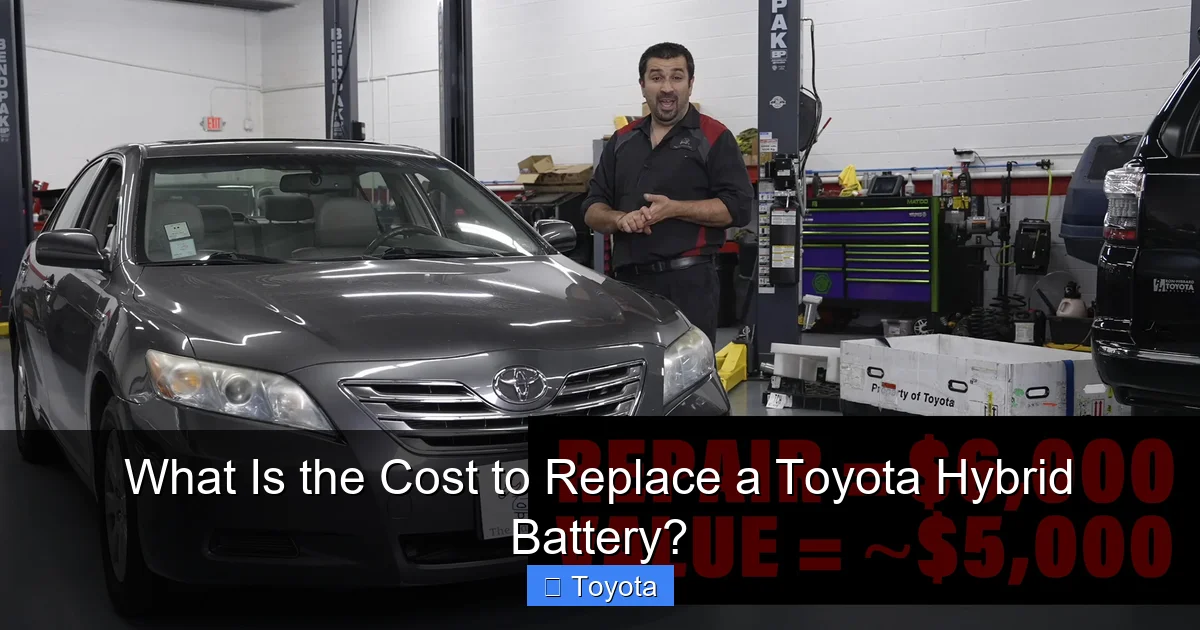
Visual guide about What Is the Cost to Replace a Toyota Hybrid Battery?
Image source: carscoops.com
Toyota Prius (2010-2015 Model Years)
The quintessential hybrid. For this generation, a remanufactured NiMH battery pack is widely available.
- Parts (Remanufactured): $1,400 – $2,200
- Labor: $400 – $700
- Total Estimated Cost: $1,800 – $2,900
New OEM from a dealer for this era might run $3,000-$4,500 installed.
Toyota Camry Hybrid (2012-2021 Model Years)
Shares much of its hybrid technology with the Prius but in a sedan package. Costs are very similar to the standard Prius of the same era.
- Parts (Remanufactured): $1,600 – $2,500
- Labor: $500 – $800
- Total Estimated Cost: $2,100 – $3,300
Toyota RAV4 Hybrid (2016-2022 Model Years)
The best-selling hybrid in the US. Its battery is larger and more powerful than the Prius’s to handle the SUV’s weight and AWD system (in some models).
- Parts (Remanufactured): $2,000 – $3,200
- Labor: $600 – $900
- Total Estimated Cost: $2,600 – $4,100
Toyota RAV4 Prime (2020-Present Model Years)
The plug-in hybrid version has a massive lithium-ion battery for its 42-mile EV range. This is the most common Toyota hybrid battery replacement today and the most expensive.
- Parts (Remanufactured Li-ion): $3,500 – $5,000
- Labor: $700 – $1,200
- Total Estimated Cost: $4,200 – $6,200+
A new OEM RAV4 Prime battery from a dealer, with tax and all fees, can easily surpass $7,500.
How to Get the Best Value: A Step-by-Step Strategy
Don’t just call the dealer and accept the first quote. Be a smart consumer.
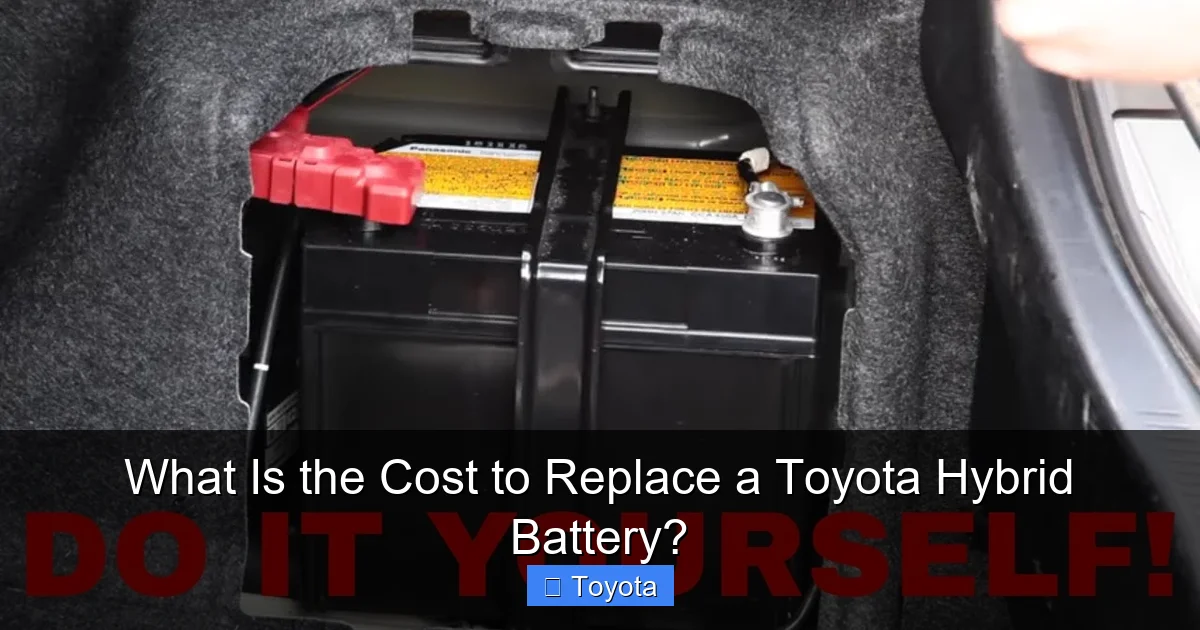
Visual guide about What Is the Cost to Replace a Toyota Hybrid Battery?
Image source: i.ytimg.com
Step 1: Get a Definitive Diagnosis
Before anyone quotes you for a battery, make sure the battery is actually the problem. A proper diagnostic using a scan tool that can read hybrid system codes and perform a battery cell test is essential. Pay for this diagnostic if you have to. It will tell you if the battery is weak, if there’s a different fault (like a bad inverter coolant pump), or if a simple software reset or hybrid battery charging procedure is needed. Misdiagnosis is a common way to get quoted for a part you don’t need.
Step 2: Research and Call Around
Get at least 3 written estimates. Call:
- Your Local Toyota Dealer: Get the “list price” for a new OEM battery and their labor rate. This is your ceiling.
- 2-3 Independent Hybrid Specialists: Search for “hybrid battery repair [Your City]” or “Toyota hybrid specialist.” These shops exist specifically for this business. Ask them directly: “Do you remanufacture batteries in-house or sell a specific brand?” “What warranty do you offer on the battery and labor?” “Do you use OEM-grade cells?”
- Large National Chain Auto Shops: (e.g., Midas, Meineke, Pep Boys). They often have partnership programs with battery remanufacturers and can be competitive, but ensure the mechanic assigned has hybrid experience.
Step 3: Ask the Right Questions
When you get the quote, ask:
- Is this a new OEM, remanufactured, or used battery?
- What is the warranty on the parts and labor? (Aim for at least 2 years/24k miles).
- Do you test each cell/module before installation?
- Will you perform a full system calibration with the proper scan tool after installation?
- Is the coolant for the battery’s cooling system included, or is that extra?
Step 4: Consider the “Core Charge”
Most remanufacturers require you to send back your old battery core (the old, worn-out pack) to rebuild future batteries. This “core charge” is often included in the price, but sometimes it’s a separate refundable deposit (e.g., $200-$400). Make sure you understand this. You usually have 30-90 days to return the core to get your deposit back. If you don’t, you lose that money.
Alternatives to Full Replacement: Can You Save More?
Is a full pack swap your only option? Sometimes, yes. But there are a few other paths to explore, especially for older vehicles.
Module Replacement
A hybrid battery pack is made of multiple smaller battery modules (e.g., a Prius pack has 28 modules). If a diagnostic shows that only 1-3 modules are weak, a specialist might be able to replace just those bad modules instead of the entire pack. This can save $500-$1,500. However, it requires a very skilled technician to match the capacity and resistance of the new modules to the old ones perfectly. If not done correctly, the new modules will be dragged down by the old ones, leading to premature failure. This is a viable option only if a very small number of modules are faulty.
Battery Reconditioning/Recycling
Some shops offer a “reconditioning” service where they take your pack, rebuild it with new cells, and reinstall it. This is essentially what a remanufactured battery is, but you’re using your own core. The cost might be slightly less than buying a remanufactured unit off the shelf, but you’re without your car for several days. The warranty is usually the same.
The “Do-It-Yourself” Route
Strong Warning: This is not for the casual mechanic. You are dealing with lethal high-voltage DC current. A mistake can cause severe injury, death, or catastrophic damage to your car’s electronics. If you are a professional with experience in high-voltage systems and have the proper safety equipment (insulated tools, HV gloves, safety glasses) and a scan tool for calibration, you can source a remanufactured core and save on labor. For 99.9% of people, this is not a safe or recommended option.
Protecting Your Investment: Maximizing Battery Life
The best way to deal with replacement cost is to never need it. While Toyota batteries are incredibly reliable, you can help yours last longer.
- Drive Regularly: Hybrid batteries thrive on regular use. Letting the car sit for weeks can cause self-discharge and degrade cells.
- Avoid Extreme Temperatures: Extreme heat is a battery killer. If possible, park in a garage or shade. The battery’s cooling system (usually air or liquid) works hard; ensure its intake vents are clean and not blocked.
- Gentle Driving: While hybrids are great for city driving, constant hard acceleration and high-speed driving keep the battery in a high-stress state. Smooth driving helps thermal management.
- Follow Service Intervals: Have your hybrid system inspected by a qualified technician every 30,000-50,000 miles. They can check the battery’s state of health via scan tool, inspect coolant levels and condition for the battery cooling system, and check for any developing trouble codes.
- Address Warning Lights Immediately: The red hybrid system warning light is not a “check it later” light. Get it diagnosed promptly. Driving with a severely degraded battery can cause the car to go into “limp mode” and can stress other components like the engine and inverter.
Conclusion: Weighing the Cost Against the Value
So, what is the cost to replace a Toyota hybrid battery? The honest answer is: it depends, but you should budget between $2,500 and $4,500 for most popular models like the Prius and RAV4 Hybrid when using a quality remanufactured part from a reputable independent shop. For plug-in models like the RAV4 Prime, prepare for $4,500-$6,500+. A new dealer battery will add $1,500-$3,000 to those figures.
While this is a major repair, it’s essential to view it in context. A well-maintained Toyota hybrid with 200,000 miles on the clock still has immense value. A $3,000 battery replacement gives that vehicle a new lease on life, restoring its legendary fuel economy and reliability for another 100,000+ miles. Compare that to the monthly payment on a new car. In most cases, replacing the battery is the overwhelmingly smarter financial decision. Your key to success is knowledge: get a proper diagnosis, shop around, understand your options (new vs. remanufactured), and choose a specialist who stands behind their work with a strong warranty. With that approach, you can navigate this significant repair with confidence and get your trusted Toyota hybrid back on the road performing at its best.
Frequently Asked Questions
Is a Toyota hybrid battery replacement covered under warranty?
Yes, Toyota provides a comprehensive hybrid battery warranty. In most states, it’s 8 years or 100,000 miles from the vehicle’s original in-service date. In states that follow California’s stricter emissions standards (like California, New York, and Vermont), the warranty is 10 years or 150,000 miles. If your car is within these limits and the battery fails a diagnostic test, your replacement cost at a dealer should be $0.
Can I drive my Toyota hybrid with a failing battery?
You can drive it for a short time, but it’s not recommended. A severely degraded battery will cause the car to run primarily on its gasoline engine, leading to poor fuel economy, sluggish acceleration, and a lack of power. It also puts extra strain on the engine and other hybrid components. The red triangle warning light indicates a serious fault; you should have it diagnosed immediately and avoid long or high-speed trips.
How long does it take to replace a Toyota hybrid battery?
A professional shop with experience on your specific model will typically take between 2 and 4 hours. This includes the critical high-voltage system safety procedures, removal of the old pack, installation of the new/refurbished unit, coolant servicing, and a complete system calibration with a dealer-level scan tool. Simpler models like the older Prius are on the shorter end; larger SUVs like the Highlander Hybrid or RAV4 Prime take longer.
What’s the difference between a remanufactured and a refurbished hybrid battery?
In the hybrid battery world, these terms are often used interchangeably. However, a true “remanufactured” battery implies a more rigorous process: the entire pack is disassembled, every single cell and module is individually tested, all weak or failed components are replaced with new, OEM-spec parts, the battery management system (BMS) is updated, and the pack is reassembled and tested to meet original performance specs. “Refurbished” can sometimes be a less thorough process. Always ask the shop for the details of their remanufacturing process and warranty.
Will a hybrid battery replacement reset my car’s computer or mileage?
No, a battery replacement will not reset your odometer or erase your radio presets. However, the technician will need to perform a specific calibration procedure using a scan tool to “marry” the new battery to the car’s hybrid system computers. This is a standard and necessary part of the installation process. After calibration, the car will relearn optimal charging and discharging parameters over a few drive cycles.
Can I recycle my old Toyota hybrid battery?
Absolutely, and you should. Hybrid batteries are not regular trash. The core charge system (mentioned earlier) is designed for this—when you purchase a remanufactured battery, you typically return your old core to the remanufacturer, who then recycles it responsibly. If you have an old battery from a DIY project or otherwise, you must take it to a specialized battery recycler, a hybrid/EV repair shop, or some auto parts stores that participate in recycling programs. Never dispose of it in regular household waste.