
What Is the Average Lease Payment on a Toyota Tacoma

The average monthly lease payment on a new Toyota Tacoma typically ranges from $350 to $600, heavily influenced by the specific trim level, lease term, annual mileage allowance, your credit score, and current manufacturer incentives. Base model SR5 leases start lower, while top trims like the Trailhunter or Limited command higher payments. Understanding how leasing terms like money factor and residual value work is crucial to evaluating any offer and ensuring it fits your budget.
So, you’re eyeing a Toyota Tacoma. It’s easy to see why. This midsize pickup truck has conquered mountains, job sites, and suburban driveways with its legendary reputation for reliability and rugged capability. But turning that dream into a reality on your driveway often comes down to one big question: what will it cost you each month? For many, leasing is an attractive path to driving a new truck with lower upfront costs and monthly payments compared to a traditional loan. But pinning down the “average” lease payment on a Toyota Tacoma is tricky. It’s not a single number you can look up. Instead, it’s a figure shaped by a combination of the specific truck you choose, the deal you negotiate, your financial profile, and the ever-changing market.
This guide will pull back the curtain on Tacoma leasing. We won’t just throw a number at you. We’ll walk you through exactly how a lease payment is calculated, how different trims and options change the math, what the current market looks like, and provide real-world examples to give you a clear, actionable range. By the end, you’ll be equipped to walk into a dealership not just knowing a ballpark figure, but understanding how to get the best possible deal on your new Tacoma.
Key Takeaways
- Payments Vary Widely: There is no single “average” payment. A base 2024 Tacoma SR5 4×2 can lease for around $350/month, while a loaded TRD Pro or Trailhunter 4×4 can exceed $600/month with the same terms.
- Credit Score is King: Your creditworthiness directly impacts the money factor (interest rate). Excellent credit (740+) qualifies for the best rates; lower scores can increase your payment significantly.
- Negotiate the Selling Price: The lease payment is based on the vehicle’s capitalized cost. Always negotiate the sale price of the truck first, just as you would if buying, before discussing lease terms.
- Mileage & Term Matter: Lower annual mileage limits (e.g., 10,000 miles/year) yield lower payments than higher limits (15,000 miles/year). Similarly, a 24-month lease costs more per month than a 36-month lease for the same vehicle.
- Understand the Fees: Your first payment, acquisition fee, registration, and any down payment (cap cost reduction) are due at signing. These can add several hundred to a couple thousand dollars upfront.
- Lease vs. Buy Long-Term: Leasing offers lower monthly payments and a new vehicle every few years, but you never build equity. Buying, even with a loan, results in ownership after the term, though payments are higher.
- Mind the End-of-Lease Condition: You are responsible for normal wear and tear. Excessive damage, beyond what’s considered normal, will incur charges. Keeping up with maintenance is essential to avoid fees.
📑 Table of Contents
- How a Car Lease Payment is Actually Calculated
- Toyota Tacoma Trim Levels & Their Impact on Lease Payments
- Current Market Conditions: Incentives, Inventory, and Interest Rates (2024)
- Real-World Lease Payment Examples
- Strategic Tips to Lower Your Tacoma Lease Payment
- Pitfalls and Hidden Costs to Avoid
- Conclusion: Is Leasing a Tacoma Right for You?
How a Car Lease Payment is Actually Calculated
Before we talk Tacoma specifics, we need a quick lesson in Lease Math 101. Your monthly payment isn’t arbitrary. It’s derived from three core components. Think of it like this: you’re paying for the depreciation you use during the lease term, plus a finance charge. The formula looks complex, but the concepts are simple.
The Three Pillars of Your Payment
1. Capitalized Cost (“Cap Cost”): This is the agreed-upon selling price of the vehicle. It’s the number you negotiate with the dealer. A lower cap cost means a lower payment. This price can be reduced by any down payment (called a “cap cost reduction”) or manufacturer incentives (like lease cash).
2. Residual Value: This is the estimated wholesale value of the truck at the end of the lease term (e.g., 36 months). The leasing company (often the manufacturer’s finance arm, like Toyota Financial Services) guesses what the truck will be worth. A higher residual percentage means you’re financing less depreciation, leading to a lower payment. Tacomas hold their value exceptionally well, which typically results in strong residual values and competitive lease payments.
3. Money Factor: This is the interest rate on a lease, expressed as a tiny decimal (e.g., 0.00125). To get a comparable annual percentage rate (APR), you multiply it by 2400. So a money factor of 0.00125 equals a 3% APR. This is based heavily on your credit score. Tier 1 credit (740+) gets the best money factors.
The Simple Payment Formula: (Cap Cost – Residual Value) ÷ Term in Months = Depreciation Portion. Then, (Cap Cost + Residual Value) x Money Factor = Finance Charge Portion. Add those two numbers together, add sales tax (if applicable in your state), and you have your monthly payment.
Let’s make it real. Imagine a Tacoma with a cap cost of $40,000, a 36-month residual value of $22,000 (55%), and a money factor of 0.00100 (2.4% APR). Depreciation: ($40,000 – $22,000) / 36 = $500. Finance charge: ($40,000 + $22,000) x 0.00100 = $62. Total pre-tax payment: $562. See? It’s a math problem based on the deal you strike and the preset residual and money factor.
Toyota Tacoma Trim Levels & Their Impact on Lease Payments
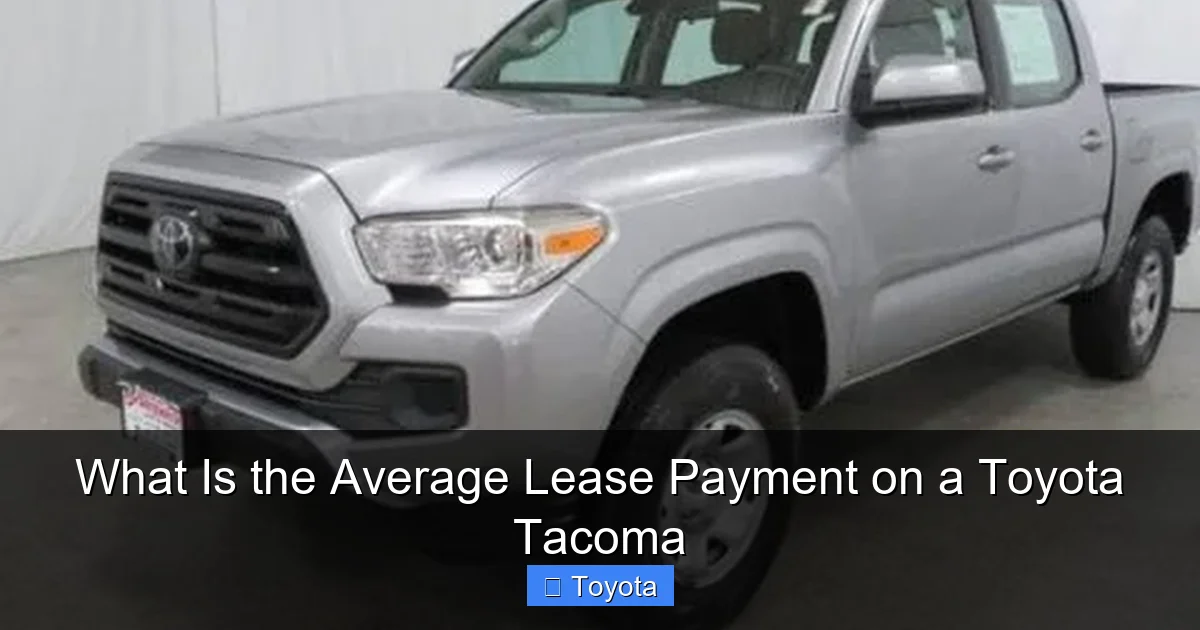
This is the biggest variable you control. The Tacoma lineup is diverse, from a basic work truck to a desert-racing monster. Each step up adds thousands to the MSRP, which directly increases the capitalized cost and, therefore, your monthly payment. Here’s a breakdown of the 2024 model year trims and their typical lease impact.
Visual guide about What Is the Average Lease Payment on a Toyota Tacoma
Image source: trucksauthority.com
SR5 & SR5 Premium (The Entry Point)
These are your most affordable gateways to Tacoma ownership. The SR5 comes standard with the 2.4L 4-cylinder engine, a 7-inch touchscreen, and Toyota Safety Sense. The Premium adds a power driver’s seat, keyless entry, and a moonroof. Lease Payment Estimate: With a 36-month, 10,000-mile/year lease and average incentives, you might see payments in the $320 – $380 range for a 4×2 SR5. Adding 4×4 and the Premium package pushes it toward $380 – $450. These are your baseline numbers.
TRD Sport & TRD Sport Premium (On-Road Focus)
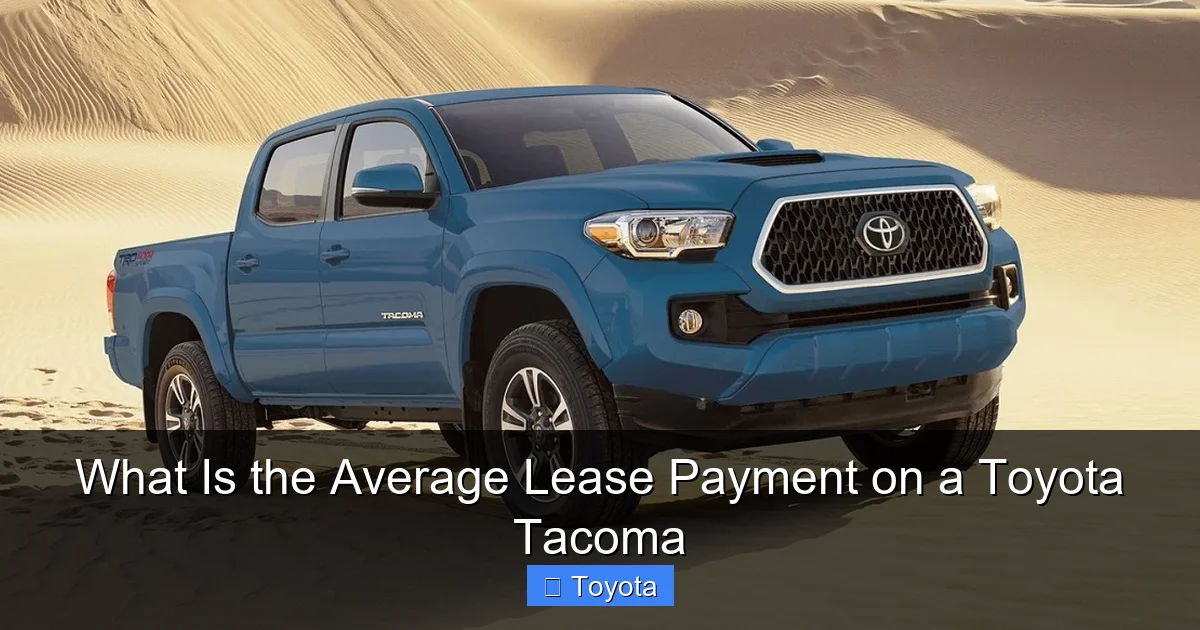
The Sport adds cosmetic and handling upgrades like a sport-tuned suspension, 18-inch alloy wheels, and a hood scoop. It’s for the driver who wants a sharper look and feel on pavement. The Premium adds the same comfort features as the SR5 Premium. Expect to pay roughly $30-$60 more per month than a comparably equipped SR5. So, a TRD Sport 4×4 might lease in the $410 – $470 range.
TRD Off-Road & TRD Off-Road Premium (The Popular Choice)
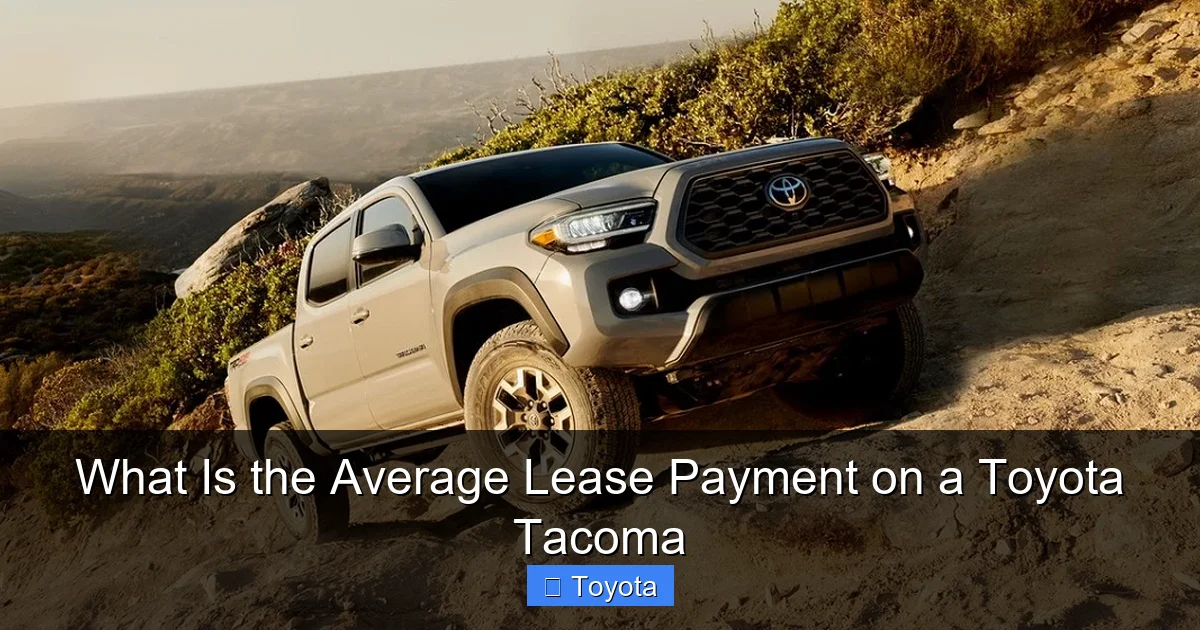
This is the quintessential adventure Tacoma for many. It includes all the goodies from the Sport, plus off-road essentials: a multi-terrain select system, hill-start assist control, and a locking rear differential. The Off-Road Premium adds a JBL audio system and a sunroof. This trim commands a significant premium. A TRD Off-Road 4×4 is a very common lease candidate, with payments often landing in the $450 – $530 monthly zone. The inclusion of advanced off-road tech like Auto LSD and the multi-terrain system adds value that reflects in the cost.
Limited (The Luxe Truck)
The Limited is about comfort and convenience on top of capability. It features leather-trimmed seats, a premium audio system, a smart key system, and a 4G LTE connected service trial. It’s essentially the Off-Road Premium with leather and some extra tech. Payments for a Limited 4×4 typically start around $500 and can climb to $580+ depending on options.
TRD Pro & Trailhunter (The Top Dogs)
These are the halo trims. The TRD Pro is the desert-racer, with a lifted suspension, FOX shocks, a steel front bumper, and a multi-terrain monitor. The Trailhunter, new for 2024, is the overlanding-focused model with a roof rack, tent, and other expedition gear. Both start with a higher MSRP and have very strong residual values due to high demand. However, the initial cost is high. leasing a TRD Pro or Trailhunter will push you into the $550 – $700+ monthly range, even with a healthy down payment. These leases are for those who prioritize the absolute best equipment and are willing to pay for it.
Pro Tip: Remember, every single option package—from a bed liner to a premium sound system—increases the cap cost. When configuring your truck online, the price you see is the starting point for your lease calculation. Be ruthless in deciding what you need versus what you want.
Current Market Conditions: Incentives, Inventory, and Interest Rates (2024)
The “average” payment isn’t static. It floats on the tides of the national economy and Toyota’s specific business strategy. In 2024, we’re in a unique transitional period.
Visual guide about What Is the Average Lease Payment on a Toyota Tacoma
Image source: scout.customerscout.net
The End of the Crazy Seller’s Market
For the past few years, dealer inventory was scarce, and buyers paid over MSRP. Tacomas, in particular, were hard to find without a markup. That has significantly softened. Production has ramped up, and dealer lots have more inventory. This is good news for lessees. You have more bargaining power. You are far more likely to negotiate a deal at or below MSRP today than you were two years ago.
Manufacturer Incentives Are Key
Toyota Financial Services regularly offers lease specials on the Tacoma. These are pre-negotiated deals with a set money factor and residual value for specific trims and terms. They often include “lease cash” – a direct manufacturer rebate that reduces the cap cost. Always check the official Toyota.com “Special Offers” page for your region before you shop. A current incentive can knock $50-$100 off a monthly payment compared to a standard lease offer. However, these specials are usually on select base-level trims. Want a TRD Pro? Don’t expect much in the way of incentives.
The Interest Rate Environment
The Federal Reserve’s rate hikes have increased the cost of borrowing across the board. This is reflected in the money factors offered by Toyota Financial Services. While still competitive, they are higher than the rock-bottom rates of 2020-2021. Your personal credit score is now even more important to secure the best available tier. A buyer with fair credit might face a money factor 50-100% higher than someone with excellent credit, adding hundreds to the total cost of a 3-year lease.
Real-World Lease Payment Examples
Let’s put rubber to the road with some concrete examples. These are illustrative estimates based on a 36-month lease, 10,000 miles/year, with $0 down (just paying the first month’s payment, fees, and taxes at signing). Assumptions: Cap cost negotiated to ~MSRP (no large discount), current average money factor for Tier 1 credit (~0.00125), and a residual value of approximately 58-60% for a 2024 model at lease end. Your actual numbers will vary.
Visual guide about What Is the Average Lease Payment on a Toyota Tacoma
Image source: scout.customerscout.net
Example 1: The Base Workhorse
- Vehicle: 2024 Toyota Tacoma SR5 4×2, Access Cab, 6-foot bed.
- MSRP: ~$32,500
- Negotiated Cap Cost: ~$31,800
- Residual Value (58%): ~$18,844
- Money Factor: 0.00125 (3.0% APR)
Monthly Depreciation: ($31,800 – $18,844) / 36 = $359. Monthly Finance Charge: ($31,800 + $18,844) x 0.00125 = $63. Pre-Tax Payment: $422. With a 7% sales tax, the final payment would be about $451/month. This is a very realistic starting point for a no-frills, capable Tacoma.
Example 2: The Popular Off-Road Adventurer
- Vehicle: 2024 Toyota Tacoma TRD Off-Road 4×4, Double Cab, 5-foot bed.
- MSRP: ~$42,500 (with common options)
- Negotiated Cap Cost: ~$41,800
- Residual Value (57%): ~$24,226
- Money Factor: 0.00125
Monthly Depreciation: ($41,800 – $24,226) / 36 = $488. Monthly Finance Charge: ($41,800 + $24,226) x 0.00125 = $82. Pre-Tax Payment: $570. With tax, that’s roughly $610/month. This example shows how moving up to a 4×4 system, a larger cab, and the Off-Road package adds nearly $200 to the monthly commitment.
Example 3: The Top-Shelf TRD Pro
- Vehicle: 2024 Toyota Tacoma TRD Pro 4×4, Double Cab, 5-foot bed.
- MSRP: ~$50,000+
- Negotiated Cap Cost: ~$49,500
- Residual Value (59%): ~$29,505
- Money Factor: 0.00150 (3.6% APR – often higher for top trims)
Monthly Depreciation: ($49,500 – $29,505) / 36 = $555. Monthly Finance Charge: ($49,500 + $29,505) x 0.00150 = $119. Pre-Tax Payment: $674. With tax, you’re looking at $720+/month. This illustrates the premium for the top trim, even with a strong residual value.
Strategic Tips to Lower Your Tacoma Lease Payment
Now that you see the numbers, how do you fight to get them down? Your payment is a formula, so you can manipulate the variables.
Negotiate the Selling Price Aggressively
This is the single most important action. The cap cost is the foundation. Do your homework. Use pricing guides like Kelley Blue Book or Edmunds to know the true market value. Get multiple dealer quotes via email. Your goal is to get the dealer to sell you the truck for as close to the invoice price as possible, before you mention leasing. Once you have a rock-bottom price, then you let them run the lease numbers through Toyota Financial Services.
Optimize Your Lease Term and Mileage
A 39-month lease will have a slightly lower monthly payment than a 24-month lease because you’re spreading the depreciation over more months, but you’ll pay more total finance charges. A 36-month term is the sweet spot for most. Regarding mileage, if you know you’ll drive less than 12,000 miles a year, take the 10,000-mile/year allowance. It saves a few dollars monthly. If you think you’ll exceed 15,000, consider buying instead, as excess mileage fees are steep (typically $0.20-$0.30/mile).
Consider a Larger Down Payment (Cap Cost Reduction)
Putting more money down at signing directly reduces the cap cost, lowering your payment. Caution: This is generally not recommended with leasing. If the truck is totaled or stolen, your insurance pays the leasing company, not you. That large down payment is gone. It’s better to keep that cash and use it for the monthly payments.
Wait for Manufacturer Incentives
Patience pays. If you’re not in a rush, wait for a holiday sale (Memorial Day, Labor Day, end of quarter/year). Toyota often boosts its lease cash and may sweeten the money factor on select trims. A $1,000 lease cash incentive directly lowers your cap cost, saving about $27-$28 per month on a 36-month lease.
Target Discontinued or Slow-Selling Models
This is a niche but powerful tactic. Sometimes, dealers have overstock of a specific color, cab/bed configuration, or even a previous model year (if still available). They are highly motivated to move that unit. You can often negotiate a significantly better price on that specific truck, which translates to a much lower lease payment. Be flexible in your exact wants.
Pitfalls and Hidden Costs to Avoid
Leasing seems simple, but the devil is in the details. Overlooking these can turn a good deal into a financial headache.
Excess Wear and Tear Charges
This is the most common end-of-lease surprise. You are responsible for returning the truck in “normal” condition. What’s normal? Minor door dings, small scratches, and normal tire wear. What’s excess? Large dents, cracked bumpers, torn seats, stained carpets, or mismatched tire wear. Get the leasing company’s wear-and-tear guide in writing before signing. Document the truck’s condition thoroughly with date-stamped photos and a video walk-around when you pick it up. This is your defense against bogus charges later. Also, staying on top of routine maintenance, like knowing how to reset the maintenance required light after an oil change, shows good faith and helps avoid pre-existing condition disputes.
Mileage Overage Fees
You signed up for 10,000 miles/year? That’s 30,000 over a 36-month lease. Go over by just 2,000 miles? That’s a $400-$600 bill at turn-in (at $0.20-$0.30/mile). Track your mileage. If you’re consistently going over, call the leasing company mid-lease to buy extra miles. It’s cheaper than the penalty at the end.
Early Termination Fees
Life happens. You might need to get out of the lease early. Do not just stop paying. The penalties for early termination are severe—you could owe the remaining payments, plus a hefty termination fee, and any negative equity. If you must exit, look into a lease transfer (swapalease) or see if the leasing company offers a “pull-ahead” program, especially if you’re leasing a new Toyota from the same brand.
Disposition Fee
At the end of the lease, when you return the truck, you will almost always pay a disposition fee (typically $350-$500). This is a non-negotiable fee charged by the leasing company to process the vehicle’s return. Some manufacturers waive it if you purchase the vehicle at lease end or immediately lease another vehicle from them. Know this fee upfront so it’s not a shock.
Conclusion: Is Leasing a Tacoma Right for You?
So, what’s the real answer to “What is the average lease payment on a Toyota Tacoma?” It’s a range, not a point. For a well-equipped, popular trim like a TRD Off-Road 4×4 in today’s market, you should realistically budget $450 to $550 per month before tax, with a few thousand dollars due at signing. A base model can be had for under $400/month, while a top-tier TRD Pro will push toward $700/month.
The power is in your hands. Your final payment will depend on your negotiation skills, your credit score, and the specific combination of metal and options on the truck you choose. Leasing a Tacoma makes perfect sense if you value driving a new vehicle under warranty, prefer lower monthly payments, and are disciplined about mileage and condition. It’s the wrong choice if you want to build equity, modify the truck, or are unsure about your long-term vehicle needs.
Do your homework. Know the trims. Run the numbers using the formulas we discussed. Get multiple quotes. And read every single line of the lease contract before you sign. The Tacoma is an incredible tool for adventure and work. With a smart lease, you can get behind the wheel without overpaying.
Frequently Asked Questions
What credit score do I need to lease a Toyota Tacoma?
You generally need a good credit score, typically 680 or higher, to qualify for a lease. The best money factors (lowest “interest rates”) are reserved for lessees with excellent credit (740+). Scores below 620 may result in a denied application or a very high money factor that makes leasing uneconomical.
Can I negotiate the lease terms on a Toyota Tacoma?
Absolutely. While the money factor and residual value are set by Toyota Financial Services and are generally non-negotiable, the capitalized cost (vehicle price) is fully negotiable. You should negotiate the sale price of the truck as if you were buying it. A lower agreed-upon price directly lowers your monthly payment. Also, ask about available manufacturer lease cash incentives.
How much money do I need to put down on a Tacoma lease?
Technically, you can lease with $0 down, but you will need to cover the first month’s payment, any official fees (acquisition, title), and sales tax at signing. This “due at signing” amount is typically $1,000 – $2,500. While you can make a larger down payment to lower the monthly cost, it’s usually not financially advisable as that money is lost if the truck is totaled.
What happens if I go over my mileage on a Tacoma lease?
You will be charged an excess mileage fee at lease-end, typically between $0.20 and $0.30 per mile over your contracted limit. For example, going 5,000 miles over a 10,000/year plan could cost you $1,000-$1,500. You can sometimes purchase extra miles mid-lease at a lower rate, so call your leasing company if you anticipate exceeding your limit.
Are there any tax benefits to leasing a Tacoma for business?
Yes, if you use the vehicle for business, you may be able to deduct a portion of the lease payments and related expenses. The rules are complex and depend on whether you use the standard mileage rate or actual expense method. Consult with a tax professional to understand how leasing a vehicle like a Tacoma could impact your specific business tax situation.
Should I buy or lease a Toyota Tacoma?
It depends on your goals. Lease if you want lower monthly payments, drive a new truck every 2-3 years, always have warranty coverage, and keep your mileage predictable. Buy (with a loan) if you want to build equity, keep the truck long-term, drive unlimited miles, and don’t mind higher monthly payments. With the Tacoma’s strong resale value, buying and holding can be a very smart financial move if you plan to keep it for 7+ years.
