
Can I Sue the City for Damage to My Car?

Yes, you can sometimes sue a city for damage to your car, but it’s not straightforward. Cities are protected by “sovereign immunity,” meaning you must follow specific legal procedures and prove the city’s negligence caused your damage. Success depends on the cause (like a pothole or police towing), timely notice, and overcoming legal hurdles. Always document everything and consult a lawyer.
Key Takeaways
- Sovereign Immunity is the Major Hurdle: Cities generally cannot be sued without permission, so you must first file a formal administrative claim within a strict deadline.
- Negligence Must Be Proven: You must show the city owed you a duty, breached it (e.g., failed to maintain roads), and that breach directly caused your car’s damage.
- Cause of Damage is Critical: Common valid claims involve poorly maintained public roads (potholes), city-owned vehicle accidents, or improper towing by a city contractor.
- Insurance is Your First Stop: Your own auto insurance (comprehensive/collision) will typically handle the repair first, then may subrogate (seek reimbursement) from the city.
- Document Everything Immediately: Take photos, get a police report if applicable, collect witness info, and keep all repair estimates and receipts.
- Strict Deadlines Apply: Notice of claim deadlines can be as short as 30 days after the incident, and lawsuit filing deadlines (statutes of limitations) are often 1-3 years.
- Consult an Attorney: Navigating municipal claims is complex. An attorney can ensure procedural rules are followed and maximize your chance of recovery.
📑 Table of Contents
- Introduction: When the Government Dents Your Wallet
- Understanding Sovereign Immunity: The “Can’t Sue” Rule
- Common Scenarios Where a City *Might* Be Liable for Car Damage
- The Claims Process: Your Step-by-Step Guide
- Proving Your Case: The Burden of Negligence
- Practical Challenges and Pitfalls to Avoid
- Conclusion: Knowledge and Action Are Your Best Tools
Introduction: When the Government Dents Your Wallet
You’re driving down a city street, minding your own business, when suddenly—THUMP. Your car drops into a massive, city-neglected pothole. Or perhaps you return to your legally parked car to find a city-employed tow truck has hooked it up for a ticket you never received. Your blood boils, and your wallet cries. The immediate question bubbles up: Can I sue the city for damage to my car?
The short answer is: sometimes. The long answer involves navigating a legal maze designed to protect government entities from constant litigation. This principle is called sovereign immunity, a legacy of English common law meaning “the king can do no wrong.” In the U.S., it means you can’t just file a lawsuit against a city, county, or state like you would against a private individual or company. You must jump through specific, often strict, procedural hoops first. This guide will walk you through exactly what those hoops are, when a claim is viable, and the practical steps you need to take to seek compensation for your damaged vehicle.
Understanding Sovereign Immunity: The “Can’t Sue” Rule
What Is Sovereign Immunity and Why Does It Exist?
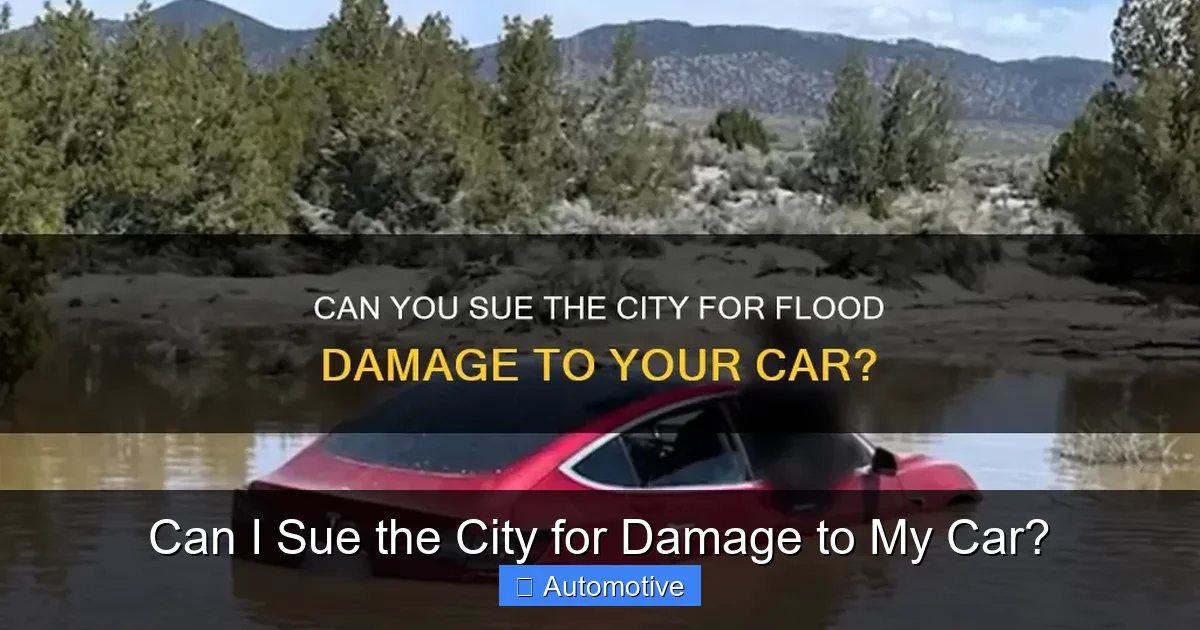
Sovereign immunity shields government bodies from tort lawsuits (lawsuits for civil wrongs, like negligence). The rationale is to prevent the government from being distracted from its public duties by endless claims and to protect public funds. However, this immunity is not absolute. Both federal and state governments have passed laws—called tort claims acts—that waive this immunity in certain, specific circumstances. This means you can sue, but only if you fit within the narrow exceptions the law allows and, crucially, if you follow the exact procedure the law dictates.
Visual guide about Can I Sue the City for Damage to My Car?
Image source: shunauto.com
Each state has its own version of a Tort Claims Act, and cities/municipalities often have their own additional administrative codes. The rules, deadlines, and exceptions vary significantly. What might be a valid claim in California could be barred in Texas. Therefore, your first and most important task is to identify the laws in your specific city and state.
The Two-Step Dance: Claim First, Sue Later
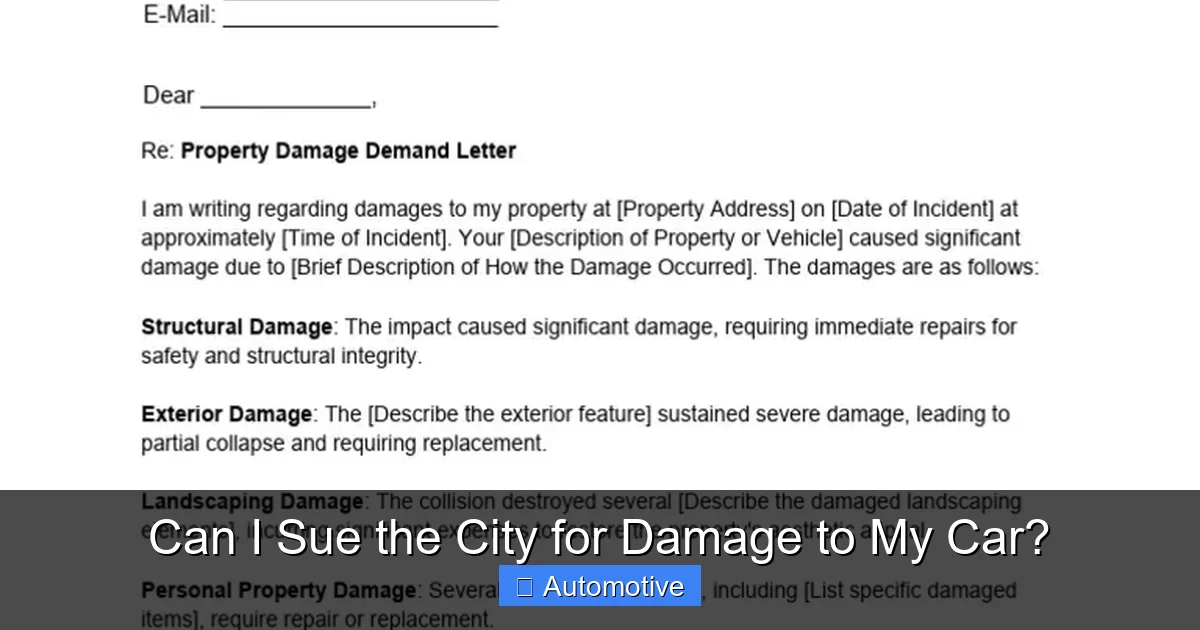
Because of sovereign immunity, you almost always cannot directly file a lawsuit in court. You must first file a formal administrative claim with the specific government entity you believe is responsible (e.g., the City Department of Transportation, the Mayor’s Office, the City Clerk). This claim is a detailed, official document that outlines:
- Your name and contact information.
- The date, time, and exact location of the incident.
- A factual description of what happened and how the city was involved.
- The specific nature of the damage to your vehicle.
- The amount of money you are seeking (with estimates/invoices).
The government agency then has a set period (often 30-90 days) to investigate and either accept the claim (and offer a settlement) or deny it. Only after they deny your claim, or after the claim period expires without action, can your attorney typically file a lawsuit in court. Missing the initial claim filing deadline is almost always fatal to your case, regardless of how strong your evidence is.
Common Scenarios Where a City *Might* Be Liable for Car Damage
Not every unfortunate incident involving a city and your car leads to a valid claim. Liability hinges on the city’s negligence—a failure to use reasonable care. Here are the most common situations where a city’s negligence might be established.
Visual guide about Can I Sue the City for Damage to My Car?
Image source: imgv2-1-f.scribdassets.com
1. Poor Road Maintenance: The Pothole Problem
This is the classic example. Cities have a legal duty to maintain public roads in a reasonably safe condition. If a city knows (or should have known) about a dangerous pothole or cracked roadway and fails to repair it within a reasonable time, and that defect causes your accident and vehicle damage, they may be liable.
Key Challenges: Proving the city had “actual or constructive notice” is the biggest hurdle. You must show they were notified (e.g., via a 311 complaint, a prior accident report at the same spot) or that the defect was so obvious and long-standing that they should have discovered it through routine inspections. Gathering evidence of prior complaints is critical. If you simply hit a pothole that appeared after last night’s freeze with no prior history, a claim will likely fail.
2. Negligent Operation of City Vehicles
When a city employee—a bus driver, a sanitation worker, a police officer on duty—operates a city-owned vehicle negligently and causes an accident that damages your car, the city can be held liable under the doctrine of respondeat superior (let the master answer). The city is responsible for the actions of its employees performed within the scope of their employment.
Important Nuance: If the city employee was on a “frolic and detour” (doing something completely unrelated to work, like running personal errands), the city might not be liable. Also, emergency vehicle accidents (police, fire) often have different, more protective standards for the city if the employee was responding to an emergency with lights/sirens.
3. Improper or Wrongful Towing
If your car is towed by a company contracted by the city (often for parking violations, abandoned vehicle designation, or after an accident), and the tow was improper—e.g., you were legally parked, the signage was inadequate, or the tow company damaged your car during the hook-up—you may have a claim against the city for authorizing the negligent tow.
Critical Step: You must act fast. Towed vehicles are often stored in secure lots with high daily fees. You need to demand a tow hearing or post-tow hearing immediately (usually within 24-72 hours) to challenge the validity of the tow. If the hearing officer finds the tow was wrongful, the city may be liable for the towing/storage fees and any damage. If you simply pay to get your car out, it can be harder to later argue the tow was wrongful. It’s also worth checking if the tow company itself, a separate private entity, is directly liable—you might sue them instead or in addition to the city. For more on towing company disputes, see our guide on Can I Sue a Towing Company for Towing My Car?.
4. Hazardous Conditions on City Property
This applies if your car is damaged on city-owned property, like a public parking garage, park, or government building parking lot. The city has a duty to maintain these areas safely. Examples include falling debris from a poorly maintained city structure, a collapsing parking garage ceiling, or a slippery, unmarked floor in a city-owned parking facility that causes a crash.
5. Construction Zone Negligence
If a city construction project (roadwork, utility work) creates a hazardous condition that damages your car—like unmarked trenches, dropped equipment, or improper traffic control—the city or its contractor may be liable. Again, proving notice and negligence is key.
The Claims Process: Your Step-by-Step Guide
If you believe your situation fits one of the scenarios above, here is the critical sequence of actions you must take. Speed and precision are everything.
Visual guide about Can I Sue the City for Damage to My Car?
Image source: shunauto.com
Step 1: Secure Evidence at the Scene (If Possible)
If you are present when the damage occurs (like a pothole accident or a tow):
- Photograph Everything: The exact damage to your car, the offending pothole/road defect/tow truck, the surrounding area, any relevant signage (or lack thereof), and your car’s position. Use your phone’s video function to capture a 360-degree view.
- Witnesses: Get names and contact info for any bystanders.
- Police Report: Call the police, especially for accidents or suspected criminal towing. Get the report number. A police report creates an official, contemporaneous record.
- Do Not Move Your Car: If it’s safe and not obstructing traffic, leave it where it is until police arrive to document the scene.
If you discover the damage later (e.g., you find your car damaged in a city lot), return to the scene as soon as possible to photograph the condition that caused it.
Step 2: Notify Your Insurance Company
Report the damage to your auto insurer immediately. This is non-negotiable. Your policy will dictate whether you use collision coverage (for accidents with objects/potholes) or comprehensive coverage (for non-collision events like theft, vandalism, or possibly damage from a tow). They will pay for repairs minus your deductible.
Why this matters for a city claim: If your insurer pays out, they will often exercise their right of subrogation. This means they will then pursue the at-fault party (the city) to recover the money they paid you. You may be asked to cooperate. Having your insurer involved can provide resources and legal muscle you lack. However, if your damages are below your deductible, or you choose not to use insurance, you must pursue the city claim entirely on your own.
Step 3: Identify the Correct Government Entity and Find Their Claim Form
This is harder than it sounds. Is it the City? The County? The State Department of Transportation? A specific city department (DOT, Parks & Rec)? You must file with the entity that has legal responsibility for the area or action. Start with the city or county’s main website. Look for sections like “Claims,” “Risk Management,” “City Clerk,” or “Tort Claims.” They will have the specific form, instructions, and—most importantly—the deadline.
Step 4: File the Administrative Claim PERFECTLY and ON TIME
This is the most important step. The claim form will ask for very specific information. Be meticulously accurate and thorough. Include:
- All your contact info.
- Precise location (cross streets, mile marker, parking space number).
- Exact date and time.
- A clear, factual, chronological narrative. Stick to facts. “I was traveling east on Main St. at 25 mph when my vehicle struck a pothole approximately 3 feet wide and 1 foot deep located in the right lane, 50 feet before the intersection of Oak St.” is good. “The city sucks at fixing roads” is not.
- Attach all your evidence: photos, police report number, repair estimates, towing invoices, storage fees.
- Specify the exact amount of your total damages (repair estimates, rental car costs, etc.).
Mail it certified mail, return receipt requested. Do not just walk it in or email if not specified. You need proof of timely filing. Keep a complete copy of everything you send.
Proving Your Case: The Burden of Negligence
Filing the claim is just the entry ticket. To ultimately win a lawsuit (if your claim is denied), you must prove the city’s negligence by a preponderance of the evidence (more likely than not). The four elements of negligence are:
- Duty: The city owed you a duty of care. This is usually easy for public roads and property (they have a duty to maintain them safely).
- Breach: The city breached that duty. This is the fight. Was the pothole so bad and longstanding that not fixing it was unreasonable? Was the tow driver improperly trained or reckless?
- Causation: The breach directly caused your damage. You must show the pothole, not your speeding or distracted driving, was the primary cause. Police reports and accident reconstruction can help.
- Damages: You suffered actual, quantifiable financial loss (repair bills, rental car, diminished value).
Evidence is King: Your photos, prior complaint records (FOIA requests can help find these), witness statements, and expert testimony (e.g., from a mechanic or road engineer) become vital. The city will likely argue the defect was “open and obvious” (you should have seen it and avoided it) or that they had no prior notice.
Practical Challenges and Pitfalls to Avoid
Even with a seemingly strong case, expect obstacles.
Low Settlement Offers
City claims adjusters are trained to minimize payouts. They may lowball you, dispute the repair costs, or argue comparative negligence (that you were partly at fault for not avoiding the hazard). Be prepared to negotiate and have solid documentation to justify your number.
The “Discretionary Function” Exception
This is a major legal shield. The city cannot be liable for decisions that are discretionary (planning-level decisions, like budgeting priorities or the overall design of a road) rather than operational (the actual failure to fix a known pothole). Your attorney must carefully frame your claim around an operational failure, not a policy choice.
caps on Damages
Some state tort claims acts place caps on how much you can recover from a government entity, regardless of your actual damages. For a simple car repair, this may not matter, but it’s a factor in severe cases.
Going to Court: The Last Resort
If your administrative claim is denied, filing a lawsuit is the next step. This is where you absolutely need a lawyer. The procedural rules in municipal court can be arcane. Your lawyer will draft a complaint that precisely alleges the city’s negligence and navigate the discovery process (exchanging evidence with the city’s attorneys). Most cases still settle before trial, but the threat of litigation is what often motivates a better settlement from the city.
Conclusion: Knowledge and Action Are Your Best Tools
So, can you sue the city for damage to your car? The answer is a qualified yes, but the path is narrow, technical, and time-sensitive. The system is designed to be difficult to navigate, which is why so many valid claims are lost simply because the owner missed a filing deadline or submitted an incomplete form. Your immediate actions after an incident—documenting everything, involving your insurance, and identifying the correct claim process—are more important than any legal theory. Remember, suing a city is a marathon of procedure, not a sprint to the courthouse. Your best strategy is to treat the administrative claim with the utmost seriousness, consider consulting with an attorney early (many offer free consultations for personal injury/property damage), and understand that while the city has special protections, it is not completely above the law when its negligence causes you tangible harm. Your car is an investment, and if a government entity damages it through carelessness, you have the right—within a complex framework—to seek to make yourself whole.
Frequently Asked Questions
What is the most common reason a city claim for car damage gets denied?
The most common reason is failure to file the administrative claim within the strict deadline. This is a procedural bar that ends the case regardless of its merits. Other common denials involve insufficient evidence that the city had notice of the hazard (like the pothole) or successful arguments that the hazard was “open and obvious.”
Can I sue the city if a city bus hits my parked car?
Yes, this is a strong potential claim. This falls under negligent operation of a city vehicle. You would file a claim against the city’s transit authority or transportation department. The city employee was acting within the scope of their employment. You must prove the bus driver was at fault (e.g., failed to see your parked car, lost control). Evidence like traffic camera footage or eyewitnesses is very valuable here.
What if the damage is very minor, like a $500 bumper scrape from a pothole?
You can still file a claim, but you must weigh the cost-benefit. The process requires time, documentation, and possibly legal help. For a small repair, the effort may outweigh the recovery. However, if you have a high deductible and this is your only incident, pursuing the city claim might be worthwhile to avoid using your insurance and risking a premium increase. Always get at least one professional repair estimate before deciding.
Does my car insurance have to be involved?
No, you are not legally required to use your insurance. You can pursue the city claim entirely on your own. However, using your collision/comprehensive coverage is often the fastest way to get your car repaired. If you do this, your insurer will likely handle the subrogation process against the city automatically. If you choose not to use insurance, you bear the full burden of proving your case and collecting from the city, which can be much slower.
How long do I have to sue the city after my car is damaged?
There are two critical deadlines. First, the administrative claim filing deadline, which is very short—often 30 to 90 days from the date of damage. This is the most important. Second, the statute of limitations for filing a lawsuit after your claim is denied, which is typically 1 to 3 years depending on your state. Do not wait. The moment the incident happens, start researching the specific deadlines for your city.
What if the city says the damage was caused by a third party, like a private construction company?
The city may try to deflect liability. If a city-permitted construction project caused the hazard, you may have a claim against both the city (for failing to properly oversee the work or maintain the roadway) and the private contractor. Your claim against the city would argue they had a non-delegable duty to ensure public ways were safe. An attorney can help determine the best targets for your claim based on the facts and local laws.
