
What Is Pit Maintenance on Infiniti

Pit maintenance on an Infiniti refers to a comprehensive, multi-point inspection and service performed with the vehicle elevated on a lift or service pit. This thorough process goes beyond a standard oil change, allowing technicians to inspect critical undercarriage components like brakes, suspension, and drivetrain for wear and leaks. It’s a proactive service designed to maintain your Infiniti’s performance, safety, and longevity by catching potential issues early. Following the manufacturer’s recommended schedule for this detailed maintenance is essential for protecting your investment and ensuring a smooth, reliable driving experience.
Key Takeaways
- It’s More Than an Oil Change: Pit maintenance is a deep, under-vehicle inspection and service performed on a lift, not just a routine fluid top-off.
- Focus on Critical Systems: The service prioritizes checking brakes, suspension, steering, drivetrain, and undercarriage for damage, leaks, and wear.
- Preventative, Not Just Reactive: Its primary goal is to identify small problems before they become expensive, dangerous repairs, saving you money long-term.
- Follow Infiniti’s Schedule: Adhering to the maintenance schedule in your owner’s manual, which calls for periodic pit inspections, is key to warranty compliance and vehicle health.
- Requires Professional Equipment: This is not a typical DIY job; it requires a lift, specialized tools, and trained technicians to perform safely and correctly.
- Includes Essential Services: Often bundled with tire rotation, fluid checks/replacements, and a full vehicle health scan using Infiniti’s diagnostic systems.
📑 Table of Contents
- Demystifying “Pit Maintenance” on Your Infiniti
- What Exactly Does Infiniti Pit Maintenance Include?
- Why is This Service So Crucial for Your Infiniti?
- How Often Should You Get Pit Maintenance?
- Pit Maintenance vs. Standard Oil Change: What’s the Difference?
- Can You Perform Pit Maintenance Yourself?
- What to Expect at the Dealership or Premium Independent Shop
- Common Findings & Recommendations
- Conclusion: An Investment in Your Driving Future
Demystifying “Pit Maintenance” on Your Infiniti
If you own an Infiniti, you’ve likely seen the term “pit maintenance” on a service menu or in your owner’s manual. It sounds technical, maybe a bit intimidating. But what does it really mean? Simply put, pit maintenance is your Infiniti’s version of a full-body check-up, but instead of a doctor’s office, it happens on a service lift (or in an actual pit). It’s one of the most comprehensive and important services you can have performed on your luxury vehicle.
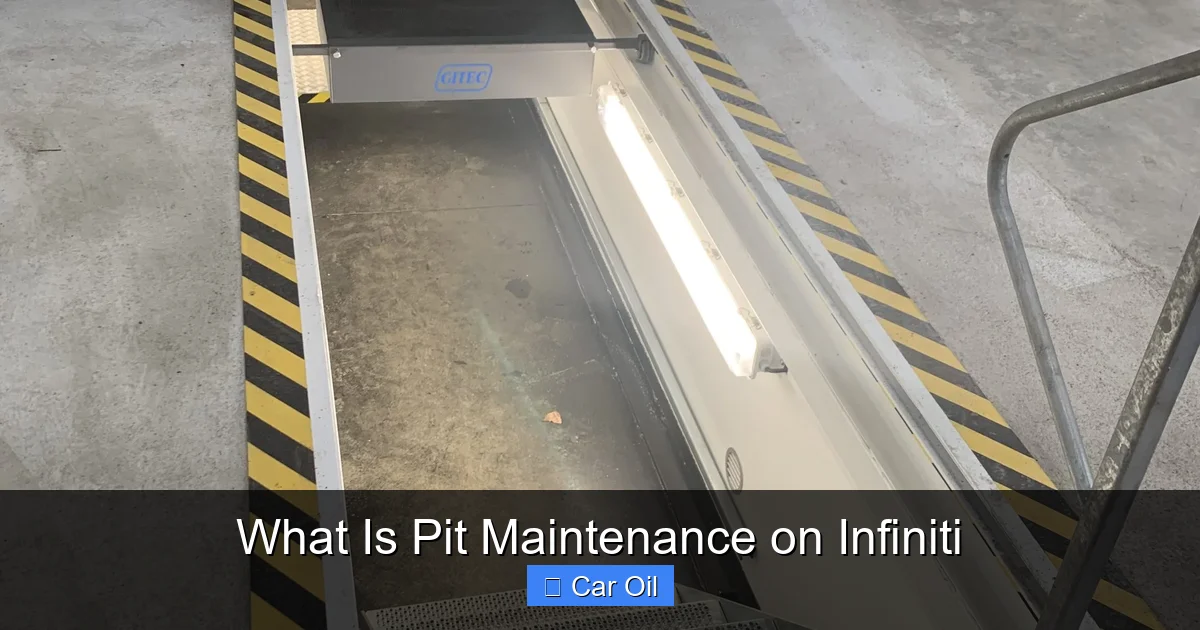
The term “pit” comes from the traditional service bay design where technicians could work underneath cars from a sunken workspace. Today, it almost always means the car is on a hydraulic lift. This elevation is the key. It provides unobstructed access to the entire underside of your vehicle—the belly pan, exhaust, fuel lines, brake lines, suspension components, and differential. A standard driveway or quick-lube bay simply can’t offer this level of inspection. For a precision-engineered car like an Infiniti, this thoroughness isn’t a luxury; it’s a necessity for maintaining its legendary performance and reliability.
What Exactly Does Infiniti Pit Maintenance Include?
While specific packages can vary by dealership or service center, a true Infiniti pit maintenance service is a detailed, multi-point procedure. Think of it as a systematic tour of your car’s undercarriage. Here’s a breakdown of what you should expect to be inspected and serviced.

Visual guide about What Is Pit Maintenance on Infiniti
Image source: orlandoinfiniti.com
The Visual & Physical Inspection
With the vehicle lifted, the technician conducts a hands-on, visual, and tactile examination.
- Brake System: This is a major focus. The tech will check the thickness of brake pads and rotors on all wheels, inspect brake lines and hoses for cracks, corrosion, or leaks, and look at the calipers for proper operation and seal condition. They’ll also check the brake fluid level and condition.
- Suspension & Steering: Every bushing, ball joint, tie rod end, and control arm is scrutinized for wear, tears, or play. Shock absorbers or struts are checked for leaks and proper damping. The power steering fluid level and condition are assessed.
- Drivetrain (AWD/RWD Models): For Infiniti’s famous ATTESA E-TS® all-wheel-drive systems, this is critical. The technician will inspect the transfer case, rear differential, and front/rear axles for leaks and damage. They’ll check the differential fluid levels and condition. On rear-wheel-drive models, the rear differential gets the same careful look.
- Undercarriage & Body: The entire floor pan, wheel wells, and frame rails are checked for rust, corrosion, or damage from road debris. The exhaust system is inspected for holes, loose hangers, and leaks. Fuel lines and the protective shield are examined.
- Fluid Leaks: The lift makes it easy to spot any fresh or chronic leaks from the engine oil pan, transmission, differentials, power steering, or coolant lines. Identifying the source of a drip is much simpler from below.
Service Tasks Typically Performed
Inspection is only half the battle. Pit maintenance usually involves several key service actions.
- Tire Rotation & Pressure Check: With the car in the air, rotating tires to promote even wear is quick and efficient. All four tires (and the spare, if applicable) are removed, rotated according to Infiniti’s recommended pattern (often cross-pattern for AWD), and their pressure is set to the factory spec found on the driver’s door jamb sticker.
- Comprehensive Fluid Check & Top-Off: While not always a full fluid change in every package, a top-tier pit service includes checking and topping off all essential fluids: engine oil, coolant, brake fluid, power steering fluid, windshield washer fluid, and differential fluid.
- Lubrication: Certain suspension and driveline components that have grease fittings (zerks) will be lubricated as part of the service.
- Diagnostic Scan: A full computer diagnostic scan is often performed to check for any stored trouble codes in the engine, transmission, ABS, or other modules. This connects the electronic health of the car to the physical inspection.
Why is This Service So Crucial for Your Infiniti?
Infiniti vehicles are engineered for a sporty, responsive, and comfortable driving experience. This performance is directly tied to the health of the components you can’t see from the driver’s seat. Neglecting undercarriage maintenance is like ignoring the foundation of your house.
Visual guide about What Is Pit Maintenance on Infiniti
Image source: xpertive.com
Safety First: Brakes & Steering
Your brakes and steering are non-negotiable for safety. Worn brake pads or a leaking brake line can dramatically increase stopping distances. A failing ball joint or tie rod can lead to a complete loss of steering control. The pit inspection is the only reliable way to assess the true condition of these vital, hidden components before they fail catastrophically. It’s a proactive safety audit.
Preserving Performance & Longevity
Infiniti’s rear-wheel-drive and all-wheel-drive platforms are complex. A small differential leak, if ignored, can lead to gear grinding, whining noises, and eventual differential failure—a repair that can cost thousands. Worn suspension bushings lead to poor handling, uneven tire wear, and a harsh ride. Catching these issues early allows for simple, affordable repairs (like replacing a bushing) instead of major component replacement. This directly protects your vehicle’s resale value and ensures it continues to drive as the engineers intended.
Preventing Costly, Corrosive Damage
Road salt, grime, and moisture are the enemies of your car’s undercarriage. In climates with harsh winters, rust can attack brake lines, fuel lines, and structural components. A regular pit inspection allows a technician to identify the earliest signs of corrosion, apply protective treatments, or replace vulnerable parts before they cause a leak or structural weakness. This is a battle fought from below.
How Often Should You Get Pit Maintenance?
The golden rule is to follow the severe/maintenance schedule in your Infiniti owner’s manual. Infiniti’s maintenance schedules are sophisticated, often based on both time and mileage, and they account for “severe” driving conditions (which include most real-world driving: short trips, stop-and-go traffic, dusty roads, etc.).
Visual guide about What Is Pit Maintenance on Infiniti
Image source: farra.co.nz
General Guidelines
As a rule of thumb, a comprehensive pit inspection and service is typically recommended:
- Every 15,000 to 30,000 miles.
- At least once a year, regardless of mileage.
- Anytime you notice a new symptom: a clunking noise over bumps, a change in handling, a fluid leak, or uneven tire wear.
- Before a long road trip, as a peace-of-mind safety check.
Your Infiniti’s onboard maintenance minder system will also alert you when service is due. However, it’s wise to understand what that alert signifies. A “Maintenance Other” alert, for example, might be calling for this very type of comprehensive check. Understanding these alerts is key; you can learn more about what maintenance other means on a Nissan Altima (which shares much of its platform and technology with Infiniti vehicles) to get a clearer picture of your car’s needs.
Factors That Increase Frequency
If your driving habits fall into the “severe” category—frequent short trips where the engine doesn’t fully warm up, driving in extremely hot or cold climates, towing a trailer, or consistently driving on rough, unpaved roads—you should lean toward the shorter end of the service interval. These conditions accelerate fluid degradation and component wear.
Pit Maintenance vs. Standard Oil Change: What’s the Difference?
This is a critical distinction. A standard oil change at a quick-lube shop is a valuable, routine service, but it’s fundamentally different from a true Infiniti pit maintenance.
The Scope of Work
A standard oil change is primarily an engine-focused service: drain old oil, replace the filter, add new oil, and maybe do a quick visual check of fluids and belts. The car never leaves the ground. A pit maintenance, by contrast, is a holistic vehicle health assessment with the car on a lift. The engine oil and filter change is just one small component of a much larger inspection.
Expertise & Equipment
Infiniti technicians performing pit maintenance are brand-trained. They use Infiniti-specific diagnostic software to scan all vehicle modules, not just a generic OBD-II reader. They have the lift, the proper jacking points for your specific model (like an Infiniti Q50 or QX60), and the knowledge to interpret what they see on the undercarriage. A technician at a generic shop might not be trained on the nuances of an ATTESA AWD system or the specific wear points of an Infiniti independent suspension.
The Bottom Line
Think of it this way: an oil change is like getting your blood pressure checked at a pharmacy. Pit maintenance is a full annual physical with a specialist, including EKG, blood work, and a detailed systems review. Both are important, but they serve entirely different purposes. For your Infiniti, the pit maintenance is the deep, preventive care that protects your significant investment.
Can You Perform Pit Maintenance Yourself?
The short, direct answer is: no, not safely or effectively. While an enthusiast with a home lift and extensive mechanical knowledge could potentially perform some of the inspection tasks, the complete service is not a DIY project for several critical reasons.
Safety is Paramount
Working under a vehicle is one of the most dangerous tasks in automotive repair. A hydraulic lift must be properly rated for the vehicle’s weight, positioned on the exact manufacturer-specified lift points, and secured with safety locks. A mistake can mean a car falling on you. Professional shops have rigorously maintained equipment and protocols to prevent this.
Access and Expertise
Even with a lift, accessing certain components on a tightly packaged Infiniti engine bay or undercarriage can be tricky without the right tools and experience. More importantly, correctly interpreting what you see requires training. Is that minor crack in a control arm bushing normal wear or a sign of imminent failure? Is that a normal fluid weep or a seal about to blow? A seasoned Infiniti tech has seen hundreds of examples and knows the difference.
Diagnostic Integration
The true value comes from combining the physical “eyes-on” inspection with the electronic diagnostic scan. A DIYer might see a worn brake pad but miss the ABS wheel speed sensor fault code that indicates the new pad might wear unevenly. The professional integrates both data streams to form a complete picture.
What to Expect at the Dealership or Premium Independent Shop
When you bring your Infiniti in for a prescribed pit maintenance, here’s the typical flow.
1. Drop-off & Initial Scan: The advisor will note your concerns. The tech starts with a full pre-scan of all vehicle systems to capture any existing electronic faults.
2. The Lift & Inspection: The car is carefully raised. The tech methodically inspects every item on the checklist, often using a camera to document findings (like a worn bushing or a minor leak) for your review.
3. The Service Execution: Based on the inspection, agreed-upon services are performed: tire rotation, fluid top-offs/changes, lubrication, etc.
4. Post-Service Scan & Report: After work is complete, a final scan is run to ensure no new faults were introduced. You should receive a detailed digital or paper report listing all inspected items, their condition (Pass/Fail/Inspect Soon), and any recommendations for future service. This transparency is key.
5. Road Test: A final road test verifies that everything feels normal and that any repairs (like brake service) are functioning correctly.
Common Findings & Recommendations
Based on mileage and model, certain items frequently appear on pit maintenance inspection reports for Infinitis.
- Brake Pads & Rotors: These are wear items. Expect to see them on the report, with a percentage of life remaining. Rotors may need resurfacing or replacement when pads are changed.
- Suspension Bushings: Especially on older Infinitis or those driven on rough roads, control arm and trailing arm bushings can develop cracks or excessive play.
- Differential/Transfer Case Fluid: This fluid is often overlooked but is critical for AWD system health. It can degrade over time and should be replaced per the severe service schedule, typically every 30,000-60,000 miles.
- Boots & Seals: CV axle boots (on front-wheel-drive based models) and driveline seals can tear, leading to grease loss and contaminants entering the joint.
- Exhaust Components: Hangers can break, and heat shields can rust and rattle.
Your technician will rate these findings and provide a prioritized recommendation. “Repair Immediately” for a leaking brake line versus “Monitor” for a minor bushing crack. Don’t be surprised by the list; the goal is to be informed.
Conclusion: An Investment in Your Driving Future
Pit maintenance on your Infiniti is far more than a line item on a service invoice. It is the cornerstone of a responsible ownership strategy. It translates to safer driving, preserved performance, lower long-term repair costs, and a vehicle that continues to deliver the luxurious, engaging experience you paid for. By understanding what this service entails and committing to it at the recommended intervals, you are not just maintaining a car—you are actively protecting a sophisticated piece of engineering. Treat your Infiniti to the comprehensive care it deserves, and it will reward you with years of trouble-free, exhilarating driving.
Frequently Asked Questions
Is pit maintenance the same as a regular oil change?
No. A regular oil change is a quick, engine-focused service. Pit maintenance is a comprehensive, multi-point inspection and service performed with the vehicle on a lift, covering brakes, suspension, drivetrain, and undercarriage in addition to fluids and often tires.
How much does Infiniti pit maintenance typically cost?
Costs vary by region, dealership, and your specific Infiniti model (e.g., Q50 vs. QX80). Expect to pay between $200 and $500 or more. The price reflects the time on the lift, the extensive inspection, and any included services like tire rotation and fluid top-offs. It’s an investment in comprehensive vehicle health.
Can I skip a pit maintenance if my car seems to be running fine?
You should not skip it. Many critical issues—like a developing brake fluid leak, a cracked suspension bushing, or early-stage differential wear—have no noticeable symptoms until they cause a breakdown or unsafe condition. The pit inspection finds these hidden problems while they are still small and affordable to fix.
What’s the difference between AWD and RWD pit maintenance?
The core inspection process is similar, but for AWD models (like most Infiniti crossovers and sedans with ATTESA), there is a much heavier focus on the transfer case, rear differential, and front/rear axles. These components require specific fluid checks and are common wear points unique to AWD systems.
Should I use the dealership or an independent shop for pit maintenance?
A certified Infiniti dealership offers the highest level of brand-specific training, factory diagnostic software, and access to technical service bulletins. A reputable independent shop with Infiniti-certified technicians can also perform excellent work, often at a lower cost. The key is the technician’s training and the shop’s equipment, not necessarily the sign on the door.
What should I do if the technician finds a major issue during the inspection?
A reputable shop will clearly explain the finding, show you photos if possible, and provide a detailed estimate for repair. Don’t feel pressured to approve all work immediately. Take the estimate, consider a second opinion for major repairs, and understand that some items (like worn brake pads) are normal maintenance, while others (like a leaking transfer case seal) may be urgent.