What Is Easy Entry in Tesla Model 3

Contents
- 1 Key Takeaways
- 2 📑 Table of Contents
- 3 How Easy Entry Works: The Magic Behind the Movement
- 4 Setting Up and Customizing Easy Entry for Your Profile
- 5 The Tangible Benefits: Why Easy Entry is a Game-Changer
- 6 Troubleshooting: When Easy Entry Doesn’t Behave
- 7 Easy Entry in Context: Comparing Convenience Features
- 8 Beyond the Seat: Personalizing Your Tesla Model 3 Experience
- 9 Conclusion: The Small Feature That Makes a Big Difference
- 10 Frequently Asked Questions

Car Interior LED Light

Car Paint Touch Up Pen

Solar Car Battery Maintainer

Bluetooth FM Transmitter
Easy Entry in the Tesla Model 3 is a brilliant convenience feature that automatically moves the driver’s seat and steering column away from the dashboard when you approach the car, making entry and exit effortless. It uses your authenticated key fob or smartphone to recognize you and adjust to your pre-set driving position once you’re seated. This system eliminates the awkward squirming and reaching common in traditional cars, especially for taller or shorter drivers, and is fully customizable for multiple drivers through individual profiles.
Imagine this: you’re carrying a armful of groceries, a briefcase, and your coffee cup. You approach your car, press the door handle, and instead of having to shove the seat forward, wrestle with the steering wheel, and contort your body to get in, the car simply moves the seat all the way back and tilts the steering wheel up out of your way. You slide in effortlessly, place your items on the passenger seat, sit down, and with a press of the brake pedal, everything glides silently back into your perfect, pre-set driving position. That’s not a dream of a luxury limousine; that’s the Easy Entry feature in the Tesla Model 3, and it’s one of those small, brilliant details that completely changes your daily interaction with your vehicle.
For new Tesla owners, the term “Easy Entry” might appear in the touchscreen menus with a simple toggle, but its underlying functionality represents a significant leap in user-centric design. It’s more than just a memory seat; it’s an automated choreography between you, your key, and the car’s motors. In this comprehensive guide, we’ll dive deep into exactly what Easy Entry is, how it works, how to set it up perfectly for your body, how to troubleshoot it when things go sideways, and why it’s a feature you’ll quickly come to depend on. We’ll also touch on how this convenience fits into the broader ecosystem of Tesla ownership, from personalizing your interior with ambient lighting to considering protective measures like a custom Tesla Model 3 wrap for the exterior.
Key Takeaways
- Automatic Adjustment: Easy Entry moves the seat rearward and tilts the steering wheel up/away when you open the door with your key, creating clear entry space.
- Profile-Based: Settings are tied to your specific driver profile, so the car returns to *your* perfect driving position after you sit down and buckle up.
- Multiple Triggers: The feature activates when you open a door with the key fob or phone key present, but deactivates once you shift to Drive and start moving.
- Safety First: The system includes safeguards; adjustments stop if an obstruction is detected, and the feature is disabled if a child lock is active on the rear doors.
- Fully Customizable: You can set the exact seat and steering wheel positions for the “entry” mode separately from your normal driving position within your profile settings.
- Troubleshooting is Simple: Common issues like non-activation are often resolved by re-calibrating the seat motors, checking key battery, or ensuring driver profile recognition is working.
- Part of a Suite: Easy Entry works alongside other Tesla convenience features like automatic mirror folding and climate preconditioning for a seamless ownership experience.
📑 Table of Contents
- How Easy Entry Works: The Magic Behind the Movement
- Setting Up and Customizing Easy Entry for Your Profile
- The Tangible Benefits: Why Easy Entry is a Game-Changer
- Troubleshooting: When Easy Entry Doesn’t Behave
- Easy Entry in Context: Comparing Convenience Features
- Beyond the Seat: Personalizing Your Tesla Model 3 Experience
- Conclusion: The Small Feature That Makes a Big Difference
How Easy Entry Works: The Magic Behind the Movement
At its core, Easy Entry is a sequence of automated actions triggered by a specific event: the unauthorized opening of a driver’s door while your authenticated key (either the fob or your phone via Bluetooth) is detected nearby. But the “how” involves a neat integration of hardware, software, and profile management.
The Role of Key Fob and Phone Key
The system’s brain starts with authentication. Your Tesla Model 3 is always listening for its paired keys. When you press the door handle to open it, the car’s antennas detect the signal from your key fob or the Bluetooth Low Energy (BLE) signal from your phone key. This signal does two things: it unlocks the door (if configured to do so) and sends a “presence” signal to the vehicle’s body control module. That module then checks: is the driver’s door being opened? Is a valid driver profile currently active or recognized? If the answer is yes, and the Easy Entry toggle is ON in that profile’s settings, the command is sent to the seat motors and the steering column motor.
Sensors and Motors Involved
The physical movement is handled by the same powerful, quiet electric motors that adjust your seat and steering wheel during normal driving. These are not simple mechanisms; they have position sensors that provide constant feedback to the car’s computer about exactly where the seat backrest, cushion, and steering column are positioned. For Easy Entry, the car doesn’t just “move forward.” It moves to a specific, saved coordinate set that you define as the “entry position.” This position is typically several inches rearward from your normal driving position, and the steering wheel is tilted up to its maximum upward angle to clear the dashboard and A-pillar. The system is designed for a smooth, deliberate pace—not a jerky rush—so you can safely get in without the seat bumping into you.
Step-by-Step Activation Process
Here is the precise, intended sequence of events:
- Approach & Unlock: You walk up to the Model 3 with your paired key (fob or phone) within range (typically 20-30 feet). You press the door handle to unlock and open it.
- Trigger: The car detects the key’s presence and the door opening. If Easy Entry is enabled for the active/recognized profile, it begins the adjustment sequence.
- Movement: The driver’s seat slides rearward, and the steering wheel tilts upward. This creates a large, unobstructed opening into the cockpit.
- Entry: You sit down in the spacious cabin. You can now easily place bags, adjust your posture, and buckle your seatbelt.
- Reset: Once you press the brake pedal (indicating intent to drive) and shift the car into Drive (or Reverse), the seat and steering wheel smoothly glide forward and down to your pre-set “Driving Position.” The system assumes you are now ready to operate the vehicle.
It’s a beautifully simple loop: open door with key -> adjust for entry -> sit down and brake -> adjust for driving.
Setting Up and Customizing Easy Entry for Your Profile
The real power of Easy Entry isn’t just that it works, but that you can tailor it precisely to your body and preferences. The setup is done entirely through the large central touchscreen and is stored within your individual driver profile. This means if you share your Model 3 with a partner of a vastly different height, you can both have a perfect entry experience.
Visual guide about What Is Easy Entry in Tesla Model 3
Image source: gearpatro.com
Accessing the Settings Menu
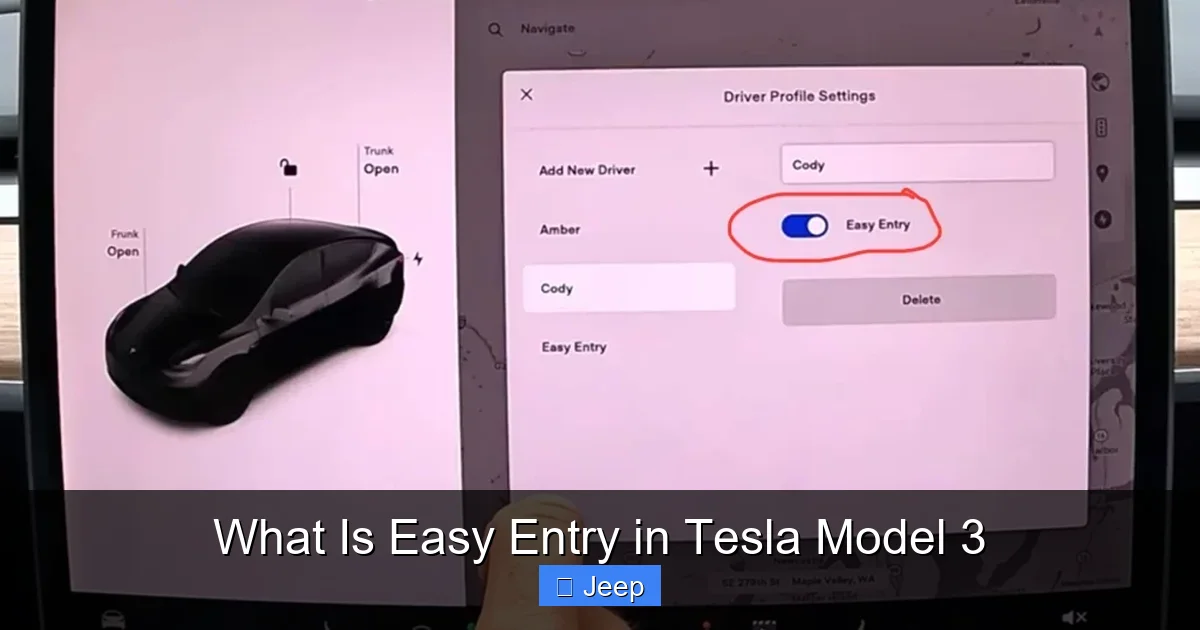
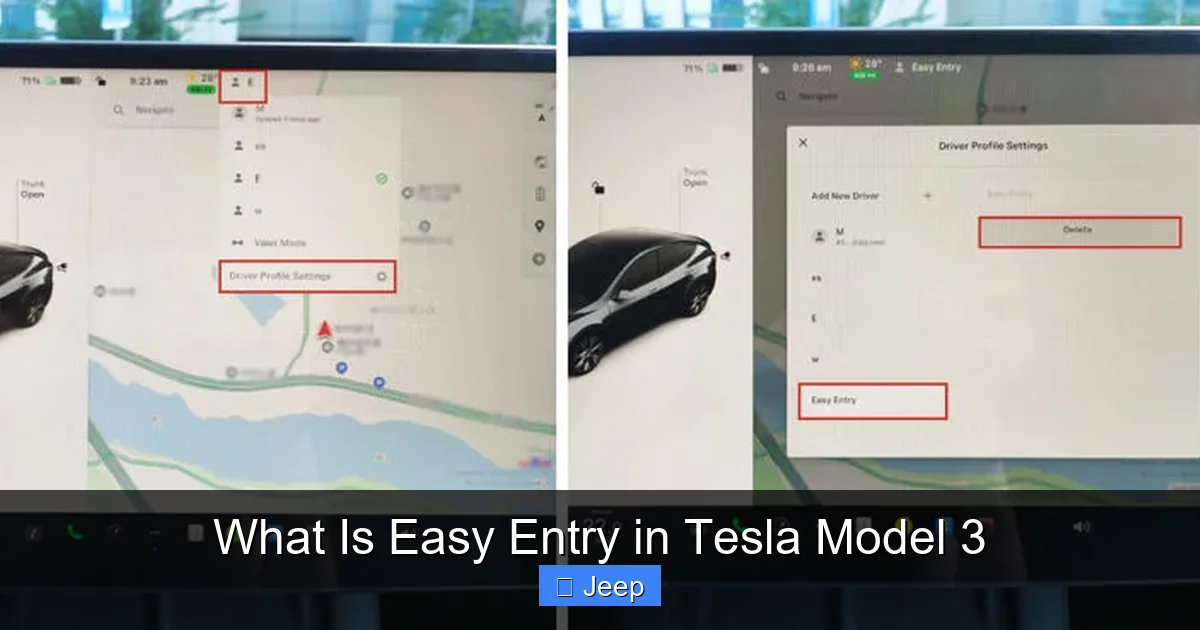
First, ensure you are logged into your driver profile. Tap the car icon on the bottom center of the screen, then select “Controls.” From there, navigate to “Vehicle” and then scroll down to “Driver Profile.” You will see a list of saved profiles. Tap on your profile name to enter the profile-specific settings. Here, you will find the toggle for “Easy Entry.” Turn it ON. Below that toggle, you will see a button that says “Set Easy Entry Position.” This is where the magic happens.
Creating the Perfect Entry Position
Here’s the critical, often-missed step: you must set the Easy Entry position from the *entry* position itself. Many people try to set it from their normal driving seat, which results in a poor adjustment. The correct method:
- With the car on and parked, manually adjust the driver’s seat all the way back and the steering wheel all the way up. Get out of the car if you need to, or just sit in the passenger seat to judge the clearance. The goal is maximum space to slide in.
- Once you have the seat and wheel in a position that feels spacious and easy to enter from (think: you could easily swing your legs in without hitting the seat or wheel), press the “Set Easy Entry Position” button on the screen.
- The system will save these coordinates as your “entry” position.
Now, test it! Close the door, walk away with your key, come back, open the door, and watch it move to that spacious position. Sit down, press the brake, and watch it return to your normal driving position (which you should have also saved in your profile under “Save Driver Profile”).
Calibrating and Fine-Tuning
If the movement seems off—say, the seat doesn’t go back quite enough, or the steering wheel doesn’t tilt up fully—you simply need to re-set the position. Repeat the steps above. It’s also worth noting that the system has safety limits; it won’t move the seat beyond its mechanical maximums or into a position where it could damage internal components. If you find the range is limited, check for any physical obstructions under the seat or around the steering column.
The Tangible Benefits: Why Easy Entry is a Game-Changer
This feature isn’t just a tech gimmick; it solves real, daily pain points for a wide range of drivers. Its benefits become immediately apparent after just a few uses.

Visual guide about What Is Easy Entry in Tesla Model 3
Image source: teslashooters.com
Enhanced Accessibility for All Body Types
This is the most obvious benefit. For taller drivers (often over 6’2″), getting into a low-slung sedan like the Model 3 can mean ducking your head and folding your body to avoid the roof and A-pillar. Easy Entry creates headroom and legroom before you even sit down. Conversely, for shorter drivers, a seat pushed all the way forward for driving can make entry feel like climbing into a go-kart. The automatic rearward movement provides a much larger “door opening” to step into. It’s a universal design win that makes the Model 3 feel adaptable to any physique.
Seamless Multi-Driver Households
In a family where one person is 5’4″ and the other is 6’1″, manually adjusting the seat and steering wheel every time you switch drivers is a nuisance. With Easy Entry and saved driver profiles, it’s completely automated. The car recognizes which key or phone is present, loads that person’s profile (which includes seat, mirror, steering wheel, and even radio preset settings), and the Easy Entry sequence creates the perfect entry space for that specific driver’s body geometry. No more fumbling with controls after you’ve already squeezed into the cockpit.
Convenience When Hands Are Full
As mentioned in the intro, carrying packages, luggage, or a child makes entry cumbersome. With hands occupied, you can’t easily reach the seat controls. Easy Entry requires only that you open the door with your key (which you can do with a finger or even your elbow if needed). The car does the rest. You can then place your items on the seat or floor, sit down, and buckle up without ever having to adjust anything manually. It turns a multi-step, awkward process into a single-motion entry.
Safety and Reduced Strain
Constantly yanking a seat forward or wrestling with a steering wheel can strain shoulders and backs. Easy Entry uses the car’s electric motors, which are far smoother and require zero physical effort from you. Furthermore, by creating a clear entry path, it reduces the chance of bumping your head on the door frame or A-pillar, a common minor injury in cars. The system is also designed with obstruction detection; if something (like a pet or a bag) is in the path of the moving seat, it will stop and reverse slightly to prevent pinching or damage.
Troubleshooting: When Easy Entry Doesn’t Behave
For all its cleverness, Easy Entry is a software-controlled mechanical system, and occasionally it might not work as expected. Don’t panic; most issues have simple fixes.
Visual guide about What Is Easy Entry in Tesla Model 3
Image source: teslashooters.com
Common Reasons for Non-Activation
If you open the door and nothing happens, check these in order:
- Easy Entry Toggle: Is it turned ON in your specific driver profile? It’s profile-specific, so if your partner turned it off in their profile, it won’t work for them.
- Key Detection: Is your key fob battery low? A weak signal might not be detected until you’re much closer. Try replacing the coin cell battery. For phone key, ensure Bluetooth is on and your phone is not in a deep sleep mode or a signal-blocking case.
- Profile Recognition: Is the car loading your correct driver profile? Sometimes it loads “Guest” or another profile if keys are mixed up. Confirm your profile icon is active on the top left of the screen before opening the door.
- Child Door Locks: If the rear doors have their child safety locks engaged, the system often disables Easy Entry as a safety precaution. Disengage the rear door locks.
- Seat or Wheel Already in Position: If your seat is already in the furthest-back/up position, there’s nowhere for it to go. The system may not trigger if it thinks it’s already in the “entry” position.
Resetting and Re-Calibrating
The most effective fix is often to re-set the Easy Entry position as described in the previous section. This re-calibrates the saved coordinates. If the problem persists, you can try a soft reset of the car’s systems: put the car in Park, press and hold both scroll wheel buttons on the steering wheel until the screen goes black and the Tesla logo reappears. This reboots the vehicle’s computer without losing settings. After the reboot, test again.
When to Contact Tesla Service
If you’ve verified all settings, replaced key fob batteries, rebooted the system, and re-calibrated the position, but the seat still doesn’t move for entry or gets stuck, there may be a hardware issue. A motor could be failing, a position sensor could be faulty, or there could be a wiring issue. At this point, it’s time to schedule a service appointment through the Tesla app. The service team can run diagnostics on the seat control module and address any mechanical faults.
Easy Entry in Context: Comparing Convenience Features
Easy Entry is fantastic, but it exists within a larger ecosystem of Tesla convenience and automation. Understanding how it differs from and complements other features helps you get the most out of your Model 3.
Easy Entry vs. Traditional Memory Seats
Many premium cars have “memory seats” that store positions for multiple drivers. The key difference is the automatic, pre-entry trigger. In a traditional car with memory seats, you must press a button (often on the door) after you get in to recall your saved position. Easy Entry is proactive; it moves before you enter, creating space. Then, it automatically returns to your driving position when you brake. It’s a more intuitive, hands-free flow that feels one step ahead of you. The Tesla system essentially combines the “memory” function with an automated “welcome” sequence.
Integration with Other Automated Features
Easy Entry is part of a hands-free routine. It often works in concert with:
- Automatic Mirror Unfolding: As you approach with your key, the mirrors may unfold. Then, when you open the door, Easy Entry activates. It’s a coordinated welcome.
- Climate Preconditioning: You can schedule or manually start cabin heating/cooling from the app. When you walk up to a pre-conditioned car, the temperature is already perfect, and the seat is moved back for easy entry.
- Walk-Away Locking: The same key detection that triggers Easy Entry also manages the lock/unlock state. The car knows you’re near, unlocks for you, and then locks automatically when you walk away with the key.
These features together create a holistic “keyless and seamless” experience that defines modern EV ownership.
Beyond the Seat: Personalizing Your Tesla Model 3 Experience
While Easy Entry handles the physical act of getting into the driver’s seat, Tesla owners love to personalize their vehicles in countless other ways. The minimalist interior is a blank canvas, and the sleek exterior is a point of pride. Once you’ve mastered the software-controlled adjustments inside, you might look to enhance the car’s aesthetics and utility.
Interior Ambiance and Comfort
The Model 3’s interior is defined by its clean lines and optional ambient lighting. That soft, glowing light along the dashboard and door sills isn’t just pretty; it can be customized in color and intensity to match your mood or the time of day. Pairing a well-configured Easy Entry (which gets you comfortable quickly) with your preferred ambient lighting setting creates an instantly welcoming cockpit every time you get in. It’s about tailoring the entire sensory experience of the drive, from the moment you slide into the seat.
Exterior Protection and Style
The stunning, paint-like finish of Tesla’s body panels is a major selling point, but it’s also vulnerable to road debris, stone chips, and minor scratches in parking lots. Many Model 3 owners protect their investment with a clear vinyl paint protection film (PPF) or opt for a full color wrap to completely change the car’s appearance. Wrapping a Tesla is particularly popular because it’s non-permanent, can be removed without damage, and allows for bold customization. The cost of a professional Tesla Model 3 wrap varies based on coverage and material, but it’s a common next step for owners who want to personalize their car’s look while preserving the original paint. It’s a different kind of “customization” than Easy Entry, but it serves the same owner desire: making the car uniquely theirs.
Utility and Adventure Add-Ons
The Model 3’s trunk and frunk offer good storage, but for active lifestyles, you often need more. This is where specialized accessories come in. A high-quality bike rack is a quintessential Tesla accessory for weekend adventurers. Due to the Model 3’s rear design, you’ll need a hitch-mounted or roof-rack system specifically compatible with its body. Researching the best bike racks for Tesla Model 3 is crucial to ensure a secure fit that doesn’t interfere with the car’s sensors or aesthetics. It’s about extending the vehicle’s functionality beyond the daily commute, just as Easy Entry extends the convenience of daily use.
Conclusion: The Small Feature That Makes a Big Difference
Easy Entry in the Tesla Model 3 is a masterclass in user-centered design. It’s a feature you might not discover until weeks after ownership, but once you experience it, you’ll wonder how you ever lived without it. It solves fundamental ergonomic problems that every driver faces, regardless of height or strength, and does so with silent, electric precision. The setup is straightforward, the customization is personal, and the daily payoff is immense—turning the routine act of getting into a car into a genuinely pleasant, effortless moment.
This feature exemplifies Tesla’s philosophy of using software to enhance hardware. It’s not a physical button or a manual lever; it’s an intelligent response to your presence, made possible by the car’s connected brain. As you become more comfortable with your Model 3, take the time to perfect your Easy Entry settings. Pair it with your other preferred driver profile settings, from mirror positions to your favorite Tesla ambient lighting color. Consider how other customizations, from a protective wrap to a sturdy bike rack, can further tailor your vehicle to your life. Ultimately, Easy Entry is more than a convenience feature; it’s a daily reminder that your car is designed to work for you, anticipating your needs before you even have to think about them. It’s the little things that make the Tesla experience so thoroughly modern and enjoyable.
Frequently Asked Questions
What is Easy Entry in Tesla Model 3?
Easy Entry is a convenience feature that automatically moves the driver’s seat rearward and tilts the steering wheel up when you open the door with your key, creating more space to get in. It then returns to your saved driving position when you press the brake.
How do I activate and set up Easy Entry?
Go to Controls > Vehicle > Driver Profile, select your profile, turn ON “Easy Entry,” and then manually adjust your seat and wheel to your desired spacious entry position. Tap “Set Easy Entry Position” to save it. Ensure your normal driving position is saved separately.
Can both my spouse and I use Easy Entry with different settings?
Yes, absolutely. Easy Entry settings are stored within each individual driver profile. As long as each person has their own profile and key (fob or phone), the car will load their specific entry and driving positions automatically.
Does Easy Entry work with both the key fob and the phone key?
Yes, it works with any authenticated key that the car recognizes. This includes the physical key fob, a phone key via Bluetooth, or even a compatible Tesla key card. The system simply needs to detect a valid key when the driver’s door is opened.
What should I do if Easy Entry isn’t working when I open the door?
First, check that Easy Entry is toggled ON in your specific driver profile. Then, verify your key is being detected (check key battery or phone Bluetooth). Ensure the rear child door locks are off. Finally, try re-setting the Easy Entry position and perform a soft reboot by holding both steering wheel scroll buttons.
Is Easy Entry safe? Could it hit me or something in the car?
Yes, it has safety features. The seat and wheel movement have obstruction detection; if something is in the way, the system will stop and reverse slightly. It also won’t activate if child locks are on. The movement is slow and deliberate, not fast, to allow you to safely get in and out of its path.