What Is Comparable to a Subaru Crosstrek

Contents
- 1 Key Takeaways
- 2 📑 Table of Contents
- 3 What Is Comparable to a Subaru Crosstrek?
- 4 Why the Subaru Crosstrek Stands Out
- 5 Top Competitors: Compact Crossovers with Similar Features
- 6 How to Choose the Right Crossover for You
- 7 Final Thoughts: Is the Crosstrek Still the Best Choice?
- 8 Frequently Asked Questions


The Subaru Crosstrek blends rugged capability, fuel efficiency, and everyday practicality in a compact package. If you’re searching for a vehicle that offers similar all-wheel drive confidence, off-road readiness, and interior versatility, several strong competitors stand out.
Key Takeaways
- All-wheel drive is standard on the Crosstrek – a rare feature in its class, but many rivals now offer it as an option or standard.
- Compact crossovers dominate the market – models like the Honda CR-V, Toyota RAV4, and Mazda CX-5 offer similar space and fuel economy.
- Off-road capability varies – while the Crosstrek excels on light trails, only a few competitors like the Jeep Compass and Ford Bronco Sport match its adventure-ready design.
- Tech and safety features are competitive – most rivals now include advanced driver aids, but Subaru’s EyeSight system remains a standout.
- Fuel efficiency is a key factor – the Crosstrek gets up to 29 mpg combined, putting it in line with hybrids and efficient gas models.
- Interior quality and cargo space differ – some competitors offer more premium materials or larger trunks, but the Crosstrek wins on versatility.
- Price range overlaps significantly – expect to pay between $25,000 and $35,000 for most comparable models, depending on trim and options.
📑 Table of Contents
What Is Comparable to a Subaru Crosstrek?
If you’re in the market for a compact crossover that can handle daily commutes, weekend adventures, and everything in between, the Subaru Crosstrek has likely caught your attention. It’s known for its standard all-wheel drive, raised ground clearance, and rugged yet practical design. But what if you’re not sold on the Crosstrek? Or maybe you just want to compare your options before making a decision?
You’re in the right place. The compact crossover segment is packed with strong contenders, and many offer features that rival—or even surpass—what the Crosstrek brings to the table. Whether you prioritize fuel efficiency, off-road performance, tech features, or interior comfort, there’s a vehicle out there that fits your needs.
In this guide, we’ll explore the top models comparable to the Subaru Crosstrek. We’ll break down their strengths and weaknesses, compare key specs, and help you decide which one might be the best fit for your lifestyle. From trusted Japanese brands to American ruggedness and European refinement, the competition is fierce—and that’s great news for you.
Why the Subaru Crosstrek Stands Out

Visual guide about What Is Comparable to a Subaru Crosstrek
Image source: i.pinimg.com
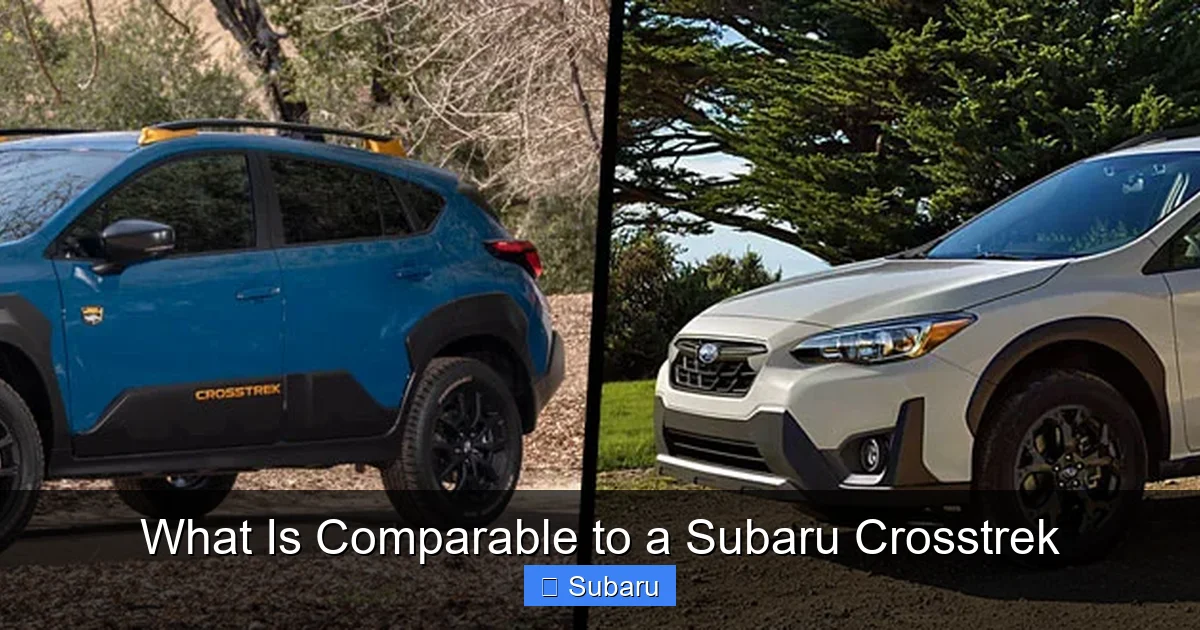
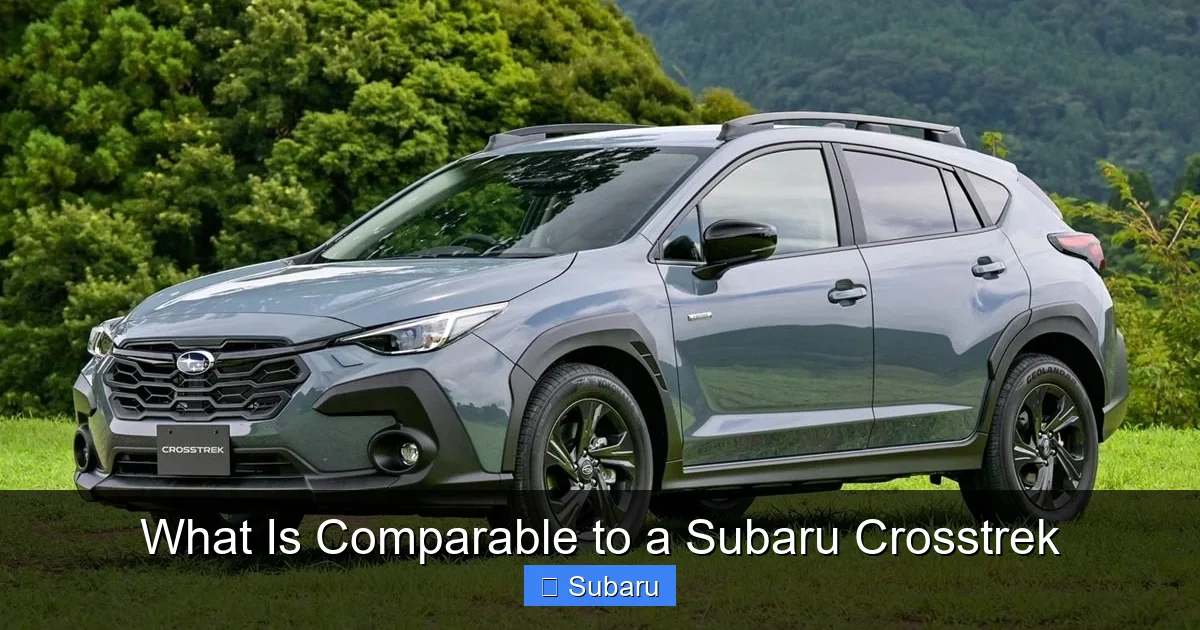
Before diving into the competition, it’s important to understand what makes the Crosstrek so appealing in the first place. Launched as a more adventurous version of the Impreza hatchback, the Crosstrek quickly became a favorite among outdoor enthusiasts, city drivers, and families alike.
One of its biggest selling points is standard all-wheel drive (AWD). In a segment where many competitors offer AWD only as an expensive upgrade, Subaru includes it on every trim level. This gives the Crosstrek an edge in snowy, wet, or uneven terrain—making it a top choice for drivers in regions with challenging weather.
The Crosstrek also boasts 8.7 inches of ground clearance, which is higher than most rivals. That extra height helps it navigate gravel roads, potholes, and light off-road trails with confidence. Paired with Subaru’s Symmetrical AWD system, it delivers stable handling and traction in conditions where front-wheel-drive crossovers might struggle.
Inside, the Crosstrek offers a functional, no-nonsense cabin with plenty of cargo space—up to 55.3 cubic feet with the rear seats folded. The rear seats are roomy enough for adults on short trips, and the hatchback design makes loading gear a breeze. Plus, Subaru’s reputation for safety is well-earned, with the Crosstrek consistently earning top marks from the IIHS and NHTSA.
Fuel economy is another strong point. The base 2.0-liter four-cylinder engine delivers up to 28 mpg city and 33 mpg highway, with a combined rating of 29 mpg. That’s competitive with many hybrids and efficient gas models, especially considering the standard AWD.
Of course, the Crosstrek isn’t perfect. Some drivers find the engine underpowered, especially when climbing hills or carrying a full load. The infotainment system, while improved in recent years, still lags behind rivals in responsiveness and screen quality. And while the ride is comfortable, it’s not as refined as some competitors.
But for many buyers, the Crosstrek’s blend of capability, safety, and value outweighs its shortcomings. Now, let’s see how it stacks up against the competition.
Top Competitors: Compact Crossovers with Similar Features

Visual guide about What Is Comparable to a Subaru Crosstrek
Image source: 2024subaru.com
When shopping for a vehicle comparable to the Subaru Crosstrek, you’ll find a wide range of options across different brands and price points. Here are the top contenders that offer similar size, capability, and value.
Honda CR-V
The Honda CR-V is one of the most popular compact crossovers on the market—and for good reason. It’s reliable, fuel-efficient, and packed with family-friendly features. While it doesn’t come with standard AWD like the Crosstrek, it’s available on most trims for an additional cost.
The CR-V excels in interior space and comfort. Rear-seat legroom is generous, and the cargo area is one of the largest in the class—offering up to 75.8 cubic feet with the seats down. That’s significantly more than the Crosstrek’s 55.3 cubic feet. The cabin materials are also more upscale, with soft-touch surfaces and a modern design.
Under the hood, the CR-V comes with a 1.5-liter turbocharged four-cylinder engine that produces 190 horsepower—more than the Crosstrek’s 152 hp base engine. This gives it better acceleration and towing capacity (up to 1,500 pounds). Fuel economy is excellent, with up to 28 mpg city and 34 mpg highway.
Safety is a strong suit, with Honda Sensing included on all trims. This suite includes adaptive cruise control, lane-keeping assist, and collision mitigation braking. The CR-V also earns top safety ratings from the IIHS.
So, why choose the CR-V over the Crosstrek? If you prioritize interior space, power, and a more refined ride, the CR-V is a great choice. But if you want standard AWD and better off-road capability, the Crosstrek still has the edge.
Toyota RAV4
The Toyota RAV4 is another heavyweight in the compact crossover segment. Like the CR-V, it’s known for reliability, resale value, and strong safety ratings. The RAV4 offers AWD as an option, and Toyota’s AWD system is highly regarded for its performance in slippery conditions.
The RAV4 comes with a 2.5-liter four-cylinder engine that delivers 203 horsepower—significantly more than the Crosstrek. It also offers a hybrid version that achieves up to 40 mpg combined, making it one of the most fuel-efficient non-plug-in crossovers available.
Inside, the RAV4 has a modern, tech-forward design with a large touchscreen and available digital gauge cluster. Cargo space is generous at 69.8 cubic feet, and the rear seats are comfortable for long trips. Toyota Safety Sense 2.0 is standard, offering a comprehensive suite of driver aids.
One unique feature is the RAV4 Adventure and TRD Off-Road trims, which include enhanced suspension, all-terrain tires, and additional underbody protection. These models come closer to matching the Crosstrek’s off-road prowess, though they still fall short in ground clearance (8.4 inches vs. 8.7 inches).
If you want a more powerful engine, better fuel economy (especially with the hybrid), and Toyota’s legendary reliability, the RAV4 is a strong alternative. But if you’re looking for standard AWD and a more rugged, adventure-ready design, the Crosstrek remains a compelling option.
Mazda CX-5
The Mazda CX-5 stands out in the compact crossover class for its upscale interior and engaging driving dynamics. While it doesn’t offer the same level of off-road capability as the Crosstrek, it delivers a more premium feel and sportier handling.
The CX-5 comes with a 2.5-liter four-cylinder engine that produces 187 horsepower, with an optional turbocharged version that bumps output to 250 hp. Front-wheel drive is standard, but AWD is available on most trims. Fuel economy is solid, with up to 25 mpg city and 31 mpg highway.
What really sets the CX-5 apart is its interior. Mazda uses high-quality materials, including real wood and leather, and the design is sleek and driver-focused. The infotainment system is intuitive, and the available Bose audio system delivers excellent sound.
Safety features are strong, with i-Activsense included on all trims. The CX-5 also earns top marks from the IIHS and NHTSA.
If you prioritize driving enjoyment, interior refinement, and a stylish design, the CX-5 is a great choice. But if you need standard AWD and more ground clearance for light off-roading, the Crosstrek is still the better pick.
Jeep Compass
For buyers who want a crossover with real off-road chops, the Jeep Compass is one of the few models that can truly challenge the Crosstrek. Jeep’s heritage of rugged capability shines through in the Compass, especially in the Trailhawk trim.
The Compass comes with a 2.4-liter four-cylinder engine that produces 180 horsepower. Front-wheel drive is standard, but AWD is available—and on the Trailhawk, it’s paired with Jeep’s Active Drive Low system, which includes a low-range transfer case and skid plates.
Ground clearance is 8.2 inches on the Trailhawk, just slightly less than the Crosstrek. But the Compass offers better approach and departure angles, making it more capable on steep trails. It also comes with Selec-Terrain traction control, which lets you optimize performance for snow, sand, mud, or rocks.
Inside, the Compass has a functional but less refined cabin compared to the Crosstrek. The infotainment system is user-friendly, and Uconnect offers excellent smartphone integration. Cargo space is decent at 53.6 cubic feet.
Fuel economy is a weak point, with the Compass averaging around 22 mpg city and 30 mpg highway. That’s lower than the Crosstrek, especially if you opt for AWD.
If you’re serious about off-roading and want a vehicle that can handle more than just gravel roads, the Compass Trailhawk is a worthy competitor. But for everyday driving and better fuel efficiency, the Crosstrek still holds its own.
Ford Bronco Sport
The Ford Bronco Sport is a newer entry in the compact crossover market, but it’s quickly gaining attention for its rugged design and off-road capability. It’s built on the same platform as the Ford Escape but with a more adventurous spirit.
The Bronco Sport comes with a 1.5-liter or 2.0-liter turbocharged engine, producing 181 or 250 horsepower respectively. AWD is standard, and the Badlands trim includes advanced off-road features like a terrain management system, rear differential lock, and 8.8 inches of ground clearance—more than the Crosstrek.
The Bronco Sport also offers unique features like a built-in cooler, trail sights on the hood, and a configurable roof rack. The interior is practical and durable, with washable floors and available rubberized cargo areas.
Fuel economy is decent, with the 1.5-liter engine achieving up to 25 mpg city and 28 mpg highway. Safety features include Ford Co-Pilot360, which offers automatic emergency braking, blind-spot monitoring, and lane-keeping assist.
If you want a crossover that looks and feels like a mini SUV, the Bronco Sport is a fun and capable option. It’s more off-road-ready than the Crosstrek in some ways, but it’s also more expensive and less fuel-efficient.
Hyundai Tucson
The Hyundai Tucson offers a lot of value in the compact crossover segment. It comes with a stylish design, a long warranty, and a range of efficient powertrains—including a hybrid and plug-in hybrid option.
The base 2.5-liter engine produces 187 horsepower, with AWD available. The hybrid version delivers up to 38 mpg combined, making it one of the most fuel-efficient options. The plug-in hybrid offers up to 33 miles of electric-only range.
Inside, the Tucson has a modern cabin with a dual-screen layout and available ambient lighting. Cargo space is generous at 74.8 cubic feet, and the rear seats are comfortable. Hyundai SmartSense includes a full suite of safety features.
If you want a tech-rich interior, strong fuel economy, and a long warranty (10 years/100,000 miles), the Tucson is a great alternative. But it lacks the standard AWD and off-road focus of the Crosstrek.
How to Choose the Right Crossover for You
Visual guide about What Is Comparable to a Subaru Crosstrek
Image source: autotijd.be
With so many strong competitors, how do you decide which vehicle is right for you? Here are some practical tips to help you compare your options.
Consider Your Driving Conditions
If you live in an area with snow, rain, or unpaved roads, standard AWD and higher ground clearance are major advantages. The Crosstrek, Compass, and Bronco Sport are best for these conditions. If you mostly drive on highways and city streets, the CR-V, RAV4, or CX-5 may be more than sufficient.
Think About Fuel Efficiency
If saving money at the pump is a priority, look at the RAV4 Hybrid, Tucson Hybrid, or even the base Crosstrek. The Bronco Sport and Compass are less efficient, especially with AWD.
Evaluate Interior Space and Comfort
For families or frequent travelers, the CR-V and Tucson offer the most cargo and passenger space. The CX-5 and RAV4 have more upscale interiors, while the Crosstrek focuses on practicality.
Test Drive for Feel and Features
Nothing beats a test drive. Pay attention to how the vehicle handles, how responsive the infotainment system is, and how comfortable the seats are. Also, check the visibility, noise levels, and ease of use for controls.
Compare Warranties and Reliability
Hyundai and Kia offer the best warranties, while Toyota and Honda are known for long-term reliability. Subaru also has a strong reputation, especially for AWD durability.
Final Thoughts: Is the Crosstrek Still the Best Choice?
The Subaru Crosstrek remains one of the most well-rounded compact crossovers on the market. Its standard AWD, high ground clearance, and rugged design make it ideal for drivers who want confidence in all conditions. It’s not the most powerful, spacious, or fuel-efficient option—but it strikes a great balance.
If you’re looking for a vehicle comparable to the Subaru Crosstrek, the Honda CR-V, Toyota RAV4, and Ford Bronco Sport are top contenders. Each offers unique strengths, from interior space to off-road capability. The Mazda CX-5 and Hyundai Tucson appeal to those who value style and efficiency.
Ultimately, the best choice depends on your priorities. If you want a crossover that’s ready for adventure right off the lot, the Crosstrek is hard to beat. But if you’re willing to trade some ruggedness for more power, space, or tech, one of its rivals might be the perfect fit.
Take your time, compare your options, and don’t forget to test drive. The right vehicle is out there—whether it’s a Crosstrek or something very much like it.
Frequently Asked Questions
What cars are similar to a Subaru Crosstrek?
The Honda CR-V, Toyota RAV4, Mazda CX-5, Jeep Compass, Ford Bronco Sport, and Hyundai Tucson are all comparable to the Subaru Crosstrek. They offer similar size, features, and capabilities, with some excelling in fuel economy, interior space, or off-road performance.
Does the Crosstrek have good off-road capability?
Yes, the Crosstrek has 8.7 inches of ground clearance and standard AWD, making it capable on gravel roads, snow, and light trails. While not a full off-roader, it handles more than most compact crossovers.
Which has better fuel economy: Crosstrek or RAV4?
The Toyota RAV4, especially the hybrid version, gets better fuel economy than the Crosstrek. The RAV4 Hybrid achieves up to 40 mpg combined, while the Crosstrek gets up to 29 mpg.
Is the Honda CR-V bigger than the Crosstrek?
Yes, the Honda CR-V offers more interior and cargo space. It has up to 75.8 cubic feet of cargo room compared to the Crosstrek’s 55.3 cubic feet.
Do any crossovers come with standard AWD like the Crosstrek?
Very few compact crossovers offer standard AWD. The Crosstrek is one of the only models in its class that includes it on every trim level.
Is the Ford Bronco Sport better than the Crosstrek for off-roading?
The Bronco Sport, especially the Badlands trim, has more advanced off-road features like a terrain management system and rear differential lock. It’s more capable on tough trails, but the Crosstrek is better for everyday driving and fuel efficiency.