What Is Car Battery Group Size
Car battery group size refers to the physical dimensions, terminal placement, and type of battery that fits your vehicle. It’s a standardized classification system created by the Battery Council International (BCI) to ensure compatibility between batteries and vehicle battery trays. Choosing the correct group size is critical for proper fit, electrical performance, and safety.
In This Article
- 1 Key Takeaways
- 2 📑 Table of Contents
- 3 What Is Car Battery Group Size?
- 4 Why Does Battery Group Size Matter?
- 5 How Is Battery Group Size Determined?
- 6 Can You Use a Different Battery Group Size?
- 7 Group Size vs. Battery Performance: What Else Matters?
- 8 Tips for Choosing the Right Battery
- 9 Conclusion
- 10 Frequently Asked Questions
- 10.1 What happens if I install the wrong battery group size?
- 10.2 Can two different battery brands have the same group size?
- 10.3 Is group size the same as battery capacity?
- 10.4 How do I know if my car needs an AGM battery?
- 10.5 Can I upgrade to a higher CCA battery in the same group size?
- 10.6 Do electric vehicles use the same battery group sizes?
Key Takeaways
- Car battery group size defines physical fit: It includes length, width, height, and terminal location to match your vehicle’s battery tray.
- Standardized by BCI: The Battery Council International assigns group numbers (e.g., 24F, 35, 65) to ensure consistency across manufacturers.
- Not all batteries with the same group size are identical: Cold Cranking Amps (CCA), Reserve Capacity (RC), and chemistry can vary even within the same group.
- Check your owner’s manual or existing battery: This is the easiest way to find your correct group size before purchasing a replacement.
- Using the wrong group size can cause damage: Improper fit may lead to loose connections, vibration damage, or electrical issues.
- Some vehicles accept multiple group sizes: Always verify compatibility with your make, model, and engine type.
- Group size affects performance in extreme climates: Choose a battery with adequate CCA and RC for your region, even within the correct group.
📑 Table of Contents
What Is Car Battery Group Size?
If you’ve ever shopped for a car battery, you’ve probably seen numbers like “24F,” “35,” or “65” listed in the product details. These aren’t random codes—they’re part of something called the car battery group size. But what exactly does that mean?
In simple terms, car battery group size is a standardized way to describe the physical dimensions and terminal configuration of a battery so it fits properly in your vehicle. Think of it like shoe sizes: just as you need the right shoe size to walk comfortably, your car needs the right battery size to function safely and efficiently. The group size ensures the battery will fit snugly in the battery tray, connect correctly to the cables, and operate without risk of damage or failure.
This system was developed by the Battery Council International (BCI), a trade organization that sets standards for automotive batteries in North America. By assigning specific group numbers to batteries with similar dimensions and terminal layouts, the BCI makes it easier for consumers and technicians to find the right replacement without guesswork. For example, a Group 35 battery is commonly used in many Japanese and Korean vehicles, while a Group 48 (H6) is popular in European and some American cars.
Understanding your car’s battery group size is essential—not just for convenience, but for safety and performance. Installing the wrong size can lead to loose connections, vibration damage, or even electrical shorts. Plus, modern vehicles rely heavily on complex electrical systems, and a poorly matched battery can disrupt everything from your infotainment system to your engine’s start-stop functionality.
Why Does Battery Group Size Matter?
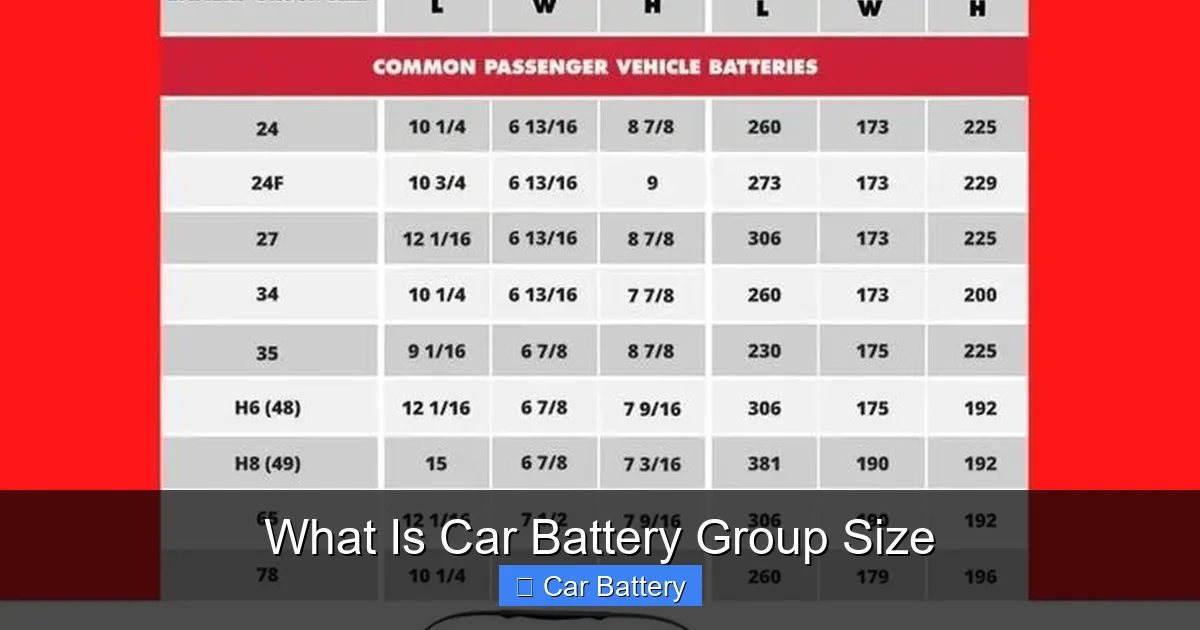
Visual guide about What Is Car Battery Group Size
Image source: i.pinimg.com
You might be wondering: “Can’t I just pick any battery that fits?” The short answer is no—group size matters more than you think. While it’s true that some batteries may physically fit in your tray, that doesn’t mean they’re the right choice. Here’s why getting the correct group size is so important.
First and foremost, group size ensures proper fit. Your car’s battery tray is designed to hold a specific size and shape of battery. If the battery is too small, it can shift around while driving, leading to damaged terminals or internal components. If it’s too large, it simply won’t fit—or worse, it might interfere with other under-hood components like the air intake or engine cover.
Second, terminal placement is critical. Car batteries have positive and negative terminals, and their location (top post, side post, front post, etc.) must match your vehicle’s cable routing. A Group 24F battery, for instance, has its terminals on the top, with the positive on the right and negative on the left when viewed from the front. If you install a battery with reversed terminals, you’ll have to reroute cables—something that’s not only inconvenient but potentially dangerous if done incorrectly.
Third, electrical compatibility matters. While group size doesn’t directly determine voltage or chemistry (most car batteries are 12-volt lead-acid), it often correlates with capacity and performance ratings. For example, larger group sizes like Group 65 are typically used in trucks and SUVs with higher electrical demands, while smaller group sizes like Group 35 are common in compact cars.
Finally, using the wrong group size can void your vehicle’s warranty or cause damage to sensitive electronics. Modern cars have advanced systems like battery management systems (BMS) that monitor battery health and charging. If the battery doesn’t match the expected specifications, the BMS might misread data, leading to charging errors or premature failure.
How Is Battery Group Size Determined?
Visual guide about What Is Car Battery Group Size
Image source: cimg1.ibsrv.net
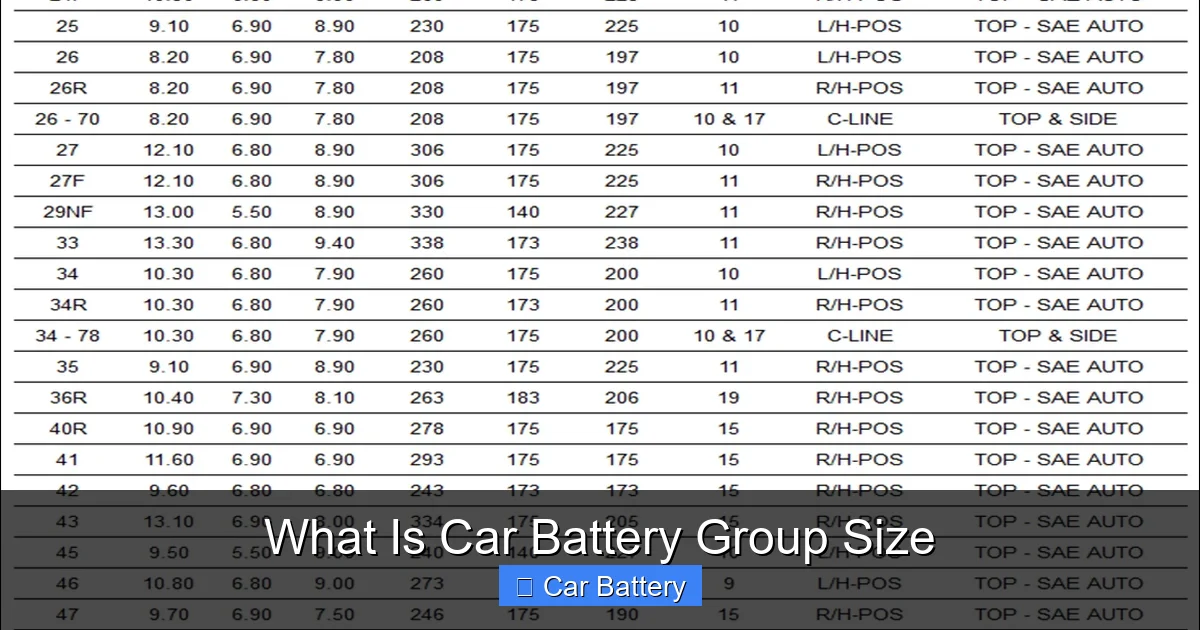
Now that you know why group size matters, let’s break down how it’s actually determined. The Battery Council International (BCI) assigns each group size a number (and sometimes a letter) based on a set of standardized measurements. These include:
– Length (in inches)
– Width (in inches)
– Height (in inches)
– Terminal type and location (e.g., top post, side post)
– Polarity (which side has the positive terminal)
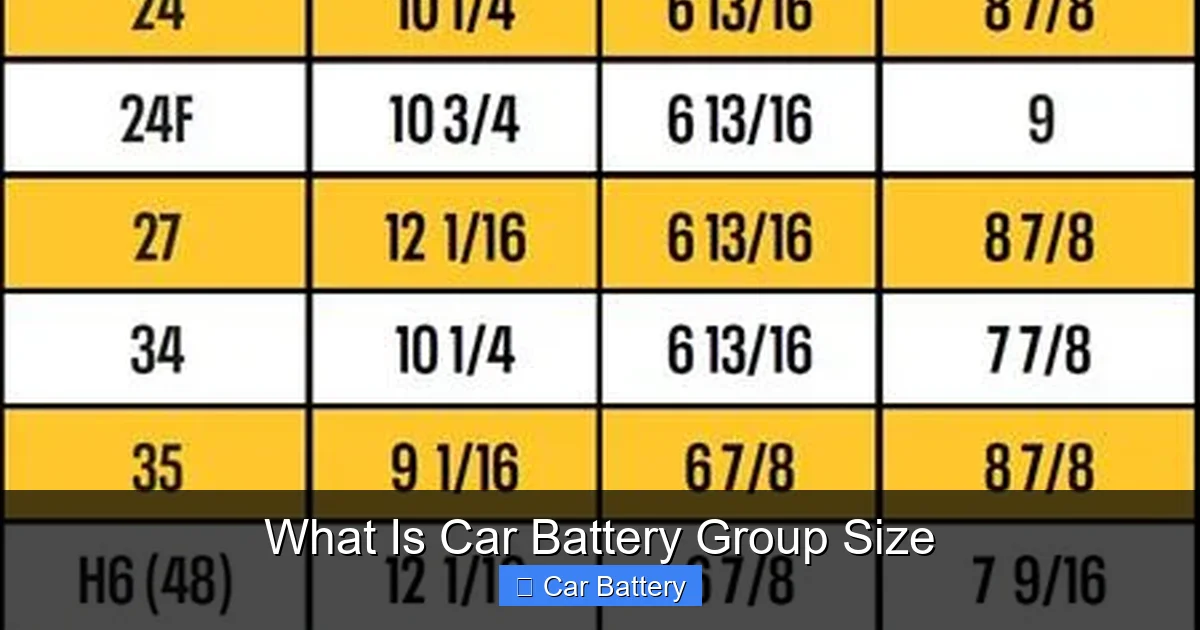
For example, a Group 35 battery is typically about 9.0 inches long, 6.9 inches wide, and 8.9 inches high, with top-mounted terminals and positive on the right. A Group 24F, on the other hand, is slightly longer at 10.2 inches and has the same terminal layout. The “F” in 24F indicates that it’s a “flush” terminal design, meaning the terminals are slightly recessed.
These measurements are carefully standardized so that any battery labeled with a specific group size will fit in vehicles designed for that group. However, it’s important to note that not all batteries within the same group are identical. Manufacturers may offer different versions with varying Cold Cranking Amps (CCA), Reserve Capacity (RC), or even chemistry (flooded, AGM, EFB).
Common Car Battery Group Sizes and Their Uses
While there are dozens of battery group sizes, some are far more common than others. Here’s a quick look at a few widely used ones and the types of vehicles they typically serve:
– Group 35: Found in many Japanese and Korean cars like the Honda Accord, Toyota Camry, and Hyundai Elantra. Compact size with solid performance for everyday driving.
– Group 24F: Common in older American and some Asian vehicles, including certain Ford, Chrysler, and Nissan models. Slightly larger than Group 35.
– Group 48 (H6): Popular in European cars like BMW, Mercedes-Benz, and Volkswagen. Often used in vehicles with start-stop technology and high electrical loads.
– Group 65: Typically used in full-size trucks and SUVs like the Ford F-150, Chevrolet Silverado, and Dodge Ram. Larger size supports higher cranking power and accessory loads.
– Group 96R: Common in compact and midsize cars like the Honda Civic and Toyota Corolla. Similar in size to Group 35 but with reversed terminal polarity (positive on the left).
– Group 49 (H8): Used in larger European vehicles and some luxury SUVs. Offers high capacity and performance for demanding electrical systems.
Knowing these common group sizes can help you narrow down your search, but always double-check your vehicle’s requirements before buying.
How to Find Your Car’s Battery Group Size
So how do you figure out which group size your car needs? There are several reliable ways to find this information:
1. Check your owner’s manual: This is the most accurate source. Look for the “Battery” or “Specifications” section, where the recommended group size is usually listed.
2. Look at your current battery: Most batteries have the group size printed right on the label. It’s often near the brand name or part number. For example, you might see “Group 35” or “BCI Group: 24F” clearly marked.
3. Use an online battery finder: Many auto parts stores (like AutoZone, Advance Auto Parts, or O’Reilly) have online tools where you enter your vehicle’s year, make, model, and engine size, and they’ll recommend the correct battery—including group size.
4. Ask a professional: If you’re unsure, visit a mechanic or battery specialist. They can quickly identify the right group size and help you choose a battery with the right performance specs.
Pro tip: Even if you find a battery that fits physically, always confirm the group size matches your vehicle’s requirements. Don’t assume compatibility based on size alone.
Can You Use a Different Battery Group Size?
Visual guide about What Is Car Battery Group Size
Image source: content.speedwaymotors.com
This is a common question—and the answer is: sometimes, but it’s not recommended.
In rare cases, you might find that a battery from a different group size fits in your tray and connects to your cables. For example, a Group 24F might physically fit where a Group 35 goes, especially if the tray is slightly oversized. However, this doesn’t mean it’s a good idea.
Using a non-standard group size can lead to several problems:
– Improper terminal alignment: Even a small mismatch can make it hard to connect cables securely, leading to loose connections and potential arcing.
– Vibration and movement: A battery that doesn’t fit snugly can rattle around, damaging internal plates or the tray itself.
– Electrical incompatibility: The new battery might have different CCA, RC, or charging characteristics, which can confuse your car’s charging system.
– Warranty issues: Installing a non-recommended battery may void your vehicle’s warranty or the battery’s own warranty.
There are exceptions. Some vehicles are designed to accept multiple group sizes. For example, certain SUVs might offer both a standard and a high-capacity battery option, each with a different group size. In these cases, the manufacturer will specify which groups are compatible.
But unless you’re certain the alternative group size is approved for your vehicle, it’s always safer to stick with the original specification.
Group Size vs. Battery Performance: What Else Matters?
While group size ensures physical compatibility, it’s not the only factor that determines how well a battery will perform. Two batteries with the same group size can have very different capabilities. Here are the key performance specs to consider:
Cold Cranking Amps (CCA)
CCA measures how much current a battery can deliver at 0°F (-18°C) for 30 seconds while maintaining at least 7.2 volts. This is crucial for starting your engine in cold weather. A higher CCA rating means better cold-weather performance. For example, a Group 35 battery might range from 500 to 700 CCA depending on the brand and model.
Reserve Capacity (RC)
RC tells you how long the battery can power your car’s essential systems if the alternator fails. It’s measured in minutes at 25 amps and 80°F. A higher RC means longer runtime—important for safety and convenience.
Battery Chemistry
Most car batteries are lead-acid, but there are different types:
– Flooded (wet cell): Traditional, affordable, requires maintenance.
– AGM (Absorbent Glass Mat): Sealed, maintenance-free, better performance, ideal for start-stop vehicles.
– EFB (Enhanced Flooded Battery): Improved flooded design for mild hybrid systems.
AGM and EFB batteries often come in the same group sizes as flooded batteries but offer superior durability and performance.
Brand and Warranty
Not all batteries are created equal. Reputable brands like Optima, Interstate, DieHard, and Bosch often provide better build quality and longer warranties. A longer warranty (e.g., 3–5 years) usually indicates confidence in the product’s longevity.
When choosing a battery, match the group size first, then compare performance specs based on your driving conditions and vehicle needs.
Tips for Choosing the Right Battery
Now that you understand group size and performance, here are some practical tips to help you pick the best battery for your car:
1. Start with the correct group size: Use your owner’s manual or current battery label to confirm the right group.
2. Match or exceed OEM specs: If your original battery had 600 CCA, don’t go below that—especially if you live in a cold climate.
3. Consider your driving habits: Frequent short trips, extreme temperatures, or heavy accessory use (like sound systems) demand a higher-performance battery.
4. Choose the right chemistry: If your car has start-stop technology, you likely need an AGM or EFB battery, even if it’s the same group size as a flooded one.
5. Check the warranty: A longer warranty often means better quality. Look for free replacement periods and pro-rated coverage.
6. Buy from a trusted retailer: Reputable stores often offer free installation, recycling of your old battery, and expert advice.
7. Recycle your old battery: Car batteries contain hazardous materials. Most retailers will take your old one for free and recycle it responsibly.
Conclusion
Understanding car battery group size is more than just a technical detail—it’s a key part of vehicle maintenance and safety. The group size ensures your battery fits properly, connects correctly, and performs reliably under all conditions. While it’s easy to overlook, choosing the wrong size can lead to frustration, damage, and even danger.
By knowing how to identify your vehicle’s group size and what it means, you’re better equipped to make informed decisions when it’s time for a replacement. Combine that knowledge with an understanding of performance specs like CCA, RC, and battery chemistry, and you’ll be able to select a battery that not only fits but enhances your driving experience.
Remember: when in doubt, consult your owner’s manual, check your current battery, or ask a professional. A little research now can save you time, money, and hassle down the road. Your car—and your peace of mind—will thank you.
Frequently Asked Questions
What happens if I install the wrong battery group size?
Installing the wrong group size can cause physical fit issues, loose connections, vibration damage, or electrical problems. In severe cases, it may damage your vehicle’s electronics or void warranties.
Can two different battery brands have the same group size?
Yes, multiple brands can produce batteries in the same group size. The group size standardizes physical dimensions, but performance specs like CCA and RC may vary between brands.
Is group size the same as battery capacity?
No, group size refers to physical dimensions and terminal layout, not capacity. Two batteries with the same group size can have different capacities and performance ratings.
How do I know if my car needs an AGM battery?
Check your owner’s manual or look for start-stop technology in your vehicle. AGM batteries are required for many modern cars with advanced electrical systems.
Can I upgrade to a higher CCA battery in the same group size?
Yes, as long as it fits and matches the group size, you can choose a battery with higher CCA for better cold-weather performance.
Do electric vehicles use the same battery group sizes?
No, electric vehicles use large lithium-ion battery packs, not traditional 12-volt lead-acid batteries. However, they still have a 12-volt auxiliary battery, which may use standard group sizes.