What Is Auto H on Bmw X5?

Contents
- 1 Key Takeaways
- 2 📑 Table of Contents
- 3 What Exactly is “Auto H” on a BMW X5?
- 4 Why You’ll Love It: The Tangible Benefits of Auto H
- 5 How to Use Auto H in Your BMW X5: A Step-by-Step Guide
- 6 Auto H vs. The Electronic Parking Brake (EPB): Critical Differences
- 7 Troubleshooting: What to Do When Auto H Won’t Work
- 8 The Big Picture: Auto H in the Ecosystem of BMW X5 Driving Aids
- 9 Conclusion: Is Auto H a Must-Have for Your X5?
- 10 Frequently Asked Questions




Auto H on a BMW X5 stands for “Auto Hold,” an intelligent driving assistance feature that automatically keeps your vehicle stationary when you come to a complete stop, freeing your foot from the brake pedal. It’s a convenience and safety system designed for stop-and-go traffic and hill starts, engaging with a simple button press and disengaging when you accelerate. Think of it as an extra layer of control that reduces fatigue and prevents rollback on inclines, seamlessly integrating with the X5’s existing stability and braking systems.
Key Takeaways
- Auto H is BMW’s Auto Hold System: It’s not a hybrid or engine mode; the “H” specifically denotes “Hold.” This system maintains braking pressure after you stop, so you don’t have to keep your foot on the pedal.
- Engagement is Manual: You must press the Auto Hold button (usually with a circular “A” icon) to activate it for your drive. It will then activate automatically after each full stop.
- Safety First: The system is designed with multiple safeguards. It will not engage if your seatbelt is unbuckled or a door is open, and it always disengages when you press the accelerator.
- Ideal for Traffic & Hills: Its primary benefits are reducing foot fatigue in heavy traffic and preventing dangerous rollback when starting on an incline.
- Distinct from Parking Brake: Auto Hold is for temporary stops in traffic. The electronic parking brake (EPB) is a separate, manual system for securing the vehicle when parked.
- Indicator is Key: A green “A” symbol on your instrument cluster indicates the system is active and holding the vehicle. A yellow or red light indicates a fault or disengagement.
- Works with Other Systems: Auto Hold functions in harmony with Dynamic Stability Control (DSC) and the X5’s hill-start assist logic for a seamless experience.
📑 Table of Contents
- What Exactly is “Auto H” on a BMW X5?
- Why You’ll Love It: The Tangible Benefits of Auto H
- How to Use Auto H in Your BMW X5: A Step-by-Step Guide
- Auto H vs. The Electronic Parking Brake (EPB): Critical Differences
- Troubleshooting: What to Do When Auto H Won’t Work
- The Big Picture: Auto H in the Ecosystem of BMW X5 Driving Aids
- Conclusion: Is Auto H a Must-Have for Your X5?
What Exactly is “Auto H” on a BMW X5?
If you’ve recently stepped into the driver’s seat of a BMW X5, whether it’s a sleek G05 model from the last few years or an earlier F15, you’ve likely noticed a button on the center console marked with a circular “A” inside a bracket or circle. You may have also seen a corresponding “A” symbol light up on your digital instrument cluster. This, friends, is the gateway to one of the most useful and driver-friendly features in the BMW utility vehicle’s arsenal: Auto Hold. The “H” in “Auto H” quite simply stands for Hold. It is BMW’s branded term for an automatic brake-hold function.
But what does it actually do? In the simplest terms, Auto H takes the effort out of stopping and starting in heavy traffic or on hills. Once activated, the system uses the X5’s sophisticated ABS and electronic stability control hardware to automatically apply and maintain the brake pressure whenever you bring the vehicle to a complete stop. This means you can take your foot off the brake pedal, and the X5 will remain perfectly stationary. The moment you touch the accelerator pedal, the system smoothly releases the brakes and you drive away. It’s a feature that feels like magic the first time you use it, transforming nerve-wracking hill starts and tedious bumper-to-bumper commutes into effortless maneuvers.
To understand its brilliance, it’s helpful to contrast it with a similar system you might have encountered. For instance, Subaru’s equivalent is called Auto Vehicle Hold. The core principle is identical across brands: an intelligent computer manages the brake calipers to hold the car at a stop. BMW’s execution, however, is finely tuned to the X5’s specific driving dynamics and chassis characteristics, ensuring a seamless blend with the vehicle’s overall feel. This isn’t just a convenience gimmick; it’s a carefully engineered safety and comfort aid that leverages the X5’s existing advanced braking architecture.
The Technology Under the Hood: How Auto H Actually Works
You might wonder how the car knows to hold itself without you pressing the pedal. The magic is in the integration of several existing systems. Your BMW X5 is already equipped with a powerful network of sensors and control units for its ABS (Anti-lock Braking System) and DSC (Dynamic Stability Control). Auto H essentially acts as a smart supervisor for these systems when you’re at a standstill.
Here’s the step-by-step process:
- Activation: You press the dedicated Auto Hold button. A green “A” symbol illuminates on the instrument cluster, telling you the system is armed and ready.
- The Stop: You come to a complete halt as you normally would, by pressing the brake pedal. The system detects that the vehicle speed is zero and that brake pressure is being applied.
- The Transfer: In the split second after you stop, the Auto Hold control module signals the brake calipers to maintain hydraulic pressure. You can now slowly lift your foot from the brake pedal. The X5 will not move.
- The Hold: The system continuously monitors various parameters: Is the driver’s seatbelt fastened? Are any doors or the trunk open? Is the gradient (hill angle) changing? As long as conditions are safe and normal, it will keep the brake pressure applied.
- The Go: The moment you press the accelerator pedal with any meaningful pressure, the Auto Hold system instantly releases the brake calipers. The transition is designed to be smooth and immediate, with no lag or jerking, allowing for a natural driving feel.
This process happens in milliseconds, far faster and more consistently than any human could manage by “riding the brake” in stop-and-go traffic. It’s a perfect example of using vehicle electronics to handle a repetitive, low-cognitive task, freeing the driver to focus on scanning the road ahead.
Why You’ll Love It: The Tangible Benefits of Auto H
Knowing how it works is one thing, but understanding why it matters is what truly sells this feature. For X5 owners, Auto H delivers on two major fronts: daily comfort and enhanced safety.
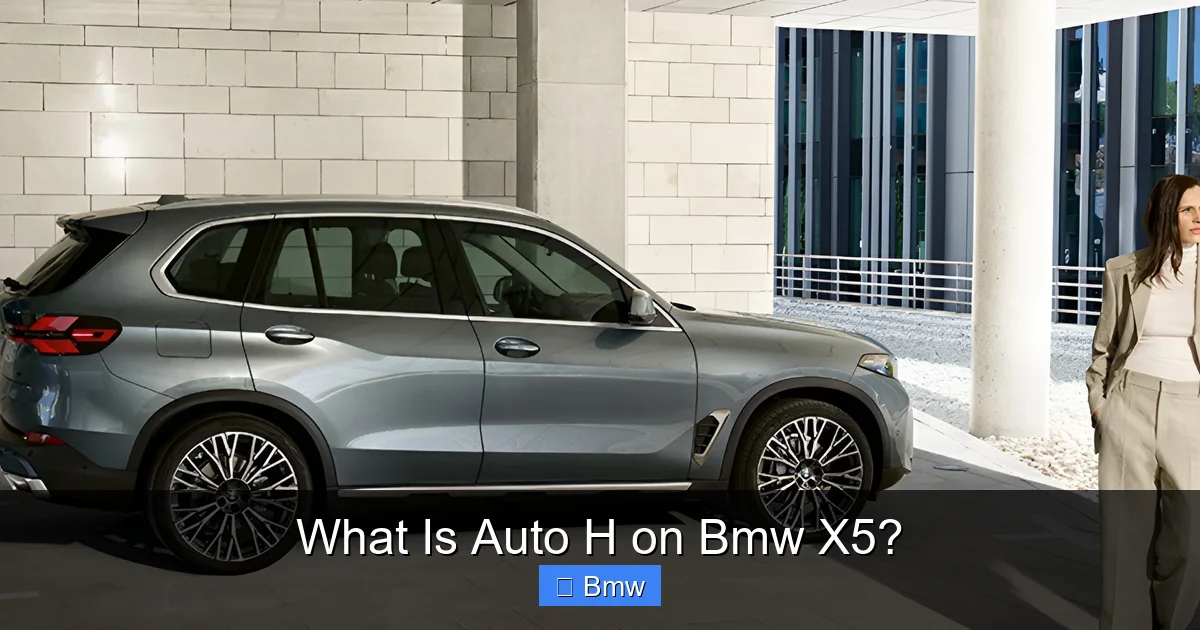
Visual guide about What Is Auto H on Bmw X5?
Image source: thecarhow.com
Conquering Stop-and-Go Traffic Without Fatigue
Imagine your daily commute on a busy highway or through a congested city center. The constant cycle of pressing and releasing the brake pedal for miles on end is not just annoying; it causes physical fatigue in your ankle and leg. Auto H eliminates this entirely. Once you’ve activated it at the start of your journey, every time traffic comes to a halt, you simply press the brake normally to stop, lift your foot, and relax. Your left leg gets a break, and your focus can remain on the traffic flow and surrounding environment instead of pedal modulation. This reduces overall driving stress significantly on long, slow-moving journeys.
Mastering Hill Starts with Zero Rollback
This is arguably the most celebrated benefit, especially for a heavy, powerful SUV like the X5. On a steep incline, the combination of the vehicle’s weight and gravity can cause a few inches of rollback the instant you move your foot from the brake to the accelerator. For drivers behind you, this can be a heart-stopping moment. For you, it can lead to a jerky, stall-prone start. Auto H solves this problem completely. When stopped on a hill, the system holds the X5 with firm brake pressure. When you’re ready to go, you can smoothly transition to the gas pedal. The X5 will hold its position until the engine torque overcomes gravity, and then it will pull away smoothly without any backward movement. It instills tremendous confidence when navigating hilly terrain or steep driveway exits.
An Added Layer of Safety and Security
Beyond convenience, Auto H contributes to safety. By preventing unintended vehicle movement when stopped, it reduces the risk of a low-speed collision with the vehicle in front if the driver’s foot slips off the brake. It also provides a consistent, predictable holding force, which is more reliable than a human’s variable pedal pressure. Furthermore, the system’s built-in safeguards—like automatically disengaging if the driver’s door is opened—prevent potentially dangerous situations where a driver might think the car is held but it isn’t. It works in concert with the X5’s Hill Descent Control and other off-road systems, providing a cohesive suite of control features for varying conditions.
How to Use Auto H in Your BMW X5: A Step-by-Step Guide
Using Auto Hold is brilliantly simple, but knowing the exact sequence and the visual cues is key to mastering it. The process is identical across most X5 generations with this feature.

Visual guide about What Is Auto H on Bmw X5?
Image source: sm.pcmag.com
Activation: Getting Started
1. Start the Engine: Ensure your X5 is powered on (ignition on or engine running). The system requires full electrical power.
2. Fasten Your Seatbelt: For safety, the system will not activate if the driver’s seatbelt is unbuckled.
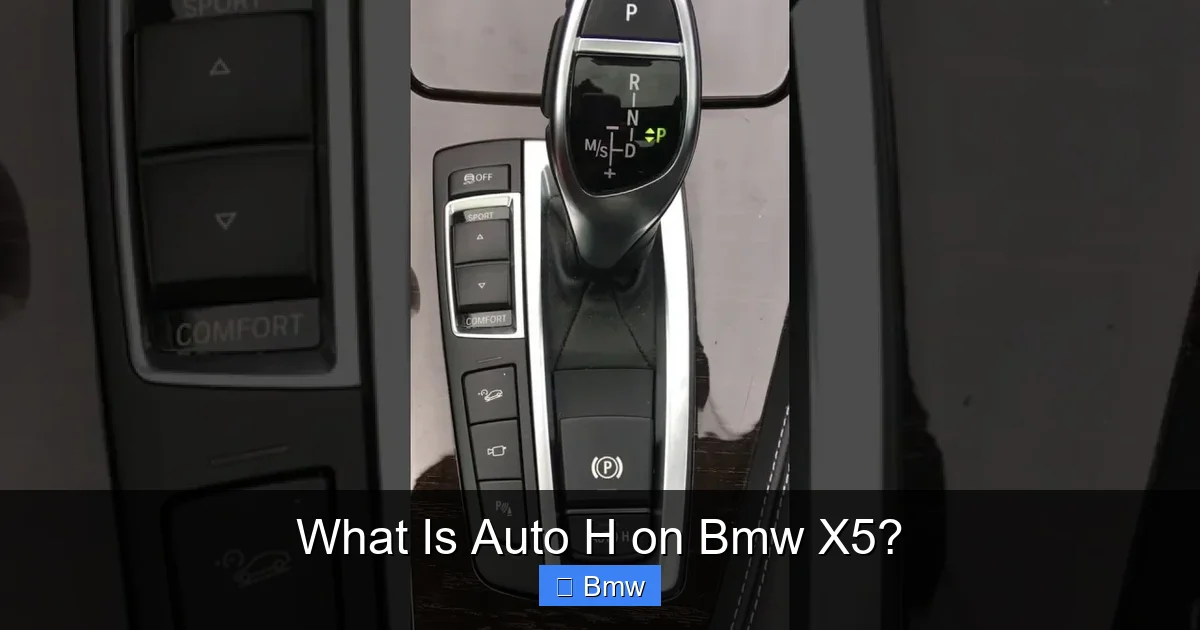
3. Locate the Button: Find the Auto Hold button. It’s typically located on the center console, to the left of the electronic parking brake switch, or integrated into the iDrive controller’s button array. It features a circular “A” inside a larger circle or bracket.
4. Press the Button: Give it a firm press. You will see a green “A” symbol illuminate on your instrument cluster, usually near the speedometer. This means Auto Hold is armed and will engage after your next complete stop.
Driving with Auto Hold: The Normal Routine
Once activated, your driving routine changes subtly:
– When you approach a stop light or traffic, brake normally.
– When the X5 comes to a full stop, you’ll feel the brake pedal depress slightly on its own (a normal sensation as the system takes over). You can now safely remove your foot.
– The “A” symbol will remain green on the cluster, confirming the vehicle is held.
– To move again, simply press the accelerator pedal smoothly. The brakes will release instantly, and you’ll proceed.
It’s that easy. The system will remain active for the entire duration of your drive, automatically re-engaging after every subsequent stop. You do not need to press the button again unless you manually deactivate it.
Deactivation: How to Turn It Off
You can deactivate Auto Hold in a few ways:
1. Manual Button Press: Press the Auto Hold button again. The green “A” will extinguish.
2. Pressing the Electronic Parking Brake: Engaging the parking brake (the switch with the “P” icon) will automatically deactivate Auto Hold.
3. System Override: In certain situations, like if you press the brake pedal very firmly while the system is holding, it may disengage to give you full manual control.
4. Engine Stop: Turning off the engine will deactivate the system.
It’s good practice to manually deactivate it if you’re about to perform a maneuver where you don’t want the car to hold itself unexpectedly, such as in a tight parking spot where you plan to use the accelerator for precise control.
Auto H vs. The Electronic Parking Brake (EPB): Critical Differences
This is a common point of confusion for new X5 drivers. Both systems use the X5’s rear brake calipers, but they have fundamentally different purposes and operational logic. Understanding the distinction is crucial for safe and correct vehicle operation.

Visual guide about What Is Auto H on Bmw X5?
Image source: mywebshop.ro
Auto Hold (Auto H): The Temporary Assistant
Purpose: For dynamic, temporary stops during driving (traffic lights, stop signs, congestion).
Engagement: Manual button press to arm, then automatic after a full stop.
Duration: Very short-term. It holds only until you press the accelerator.
Indicator: A green “A” on the instrument cluster.
Action Required: Must be manually disengaged or it will disengage upon acceleration.
Electronic Parking Brake (EPB): The Secure Anchor
Purpose: To securely hold the vehicle when it is parked and unattended. It’s your modern handbrake.
Engagement: Manually pulled by pressing the dedicated switch (usually with a “P” icon). It can also engage automatically in some models when you shift to Park and turn off the engine.
Duration: Long-term, for parking. It remains engaged until manually released.
Indicator: A red “P” symbol on the instrument cluster.
Action Required: Must be manually released by pressing the switch (often with a foot on the brake pedal) before driving.
Never use Auto Hold as a substitute for the parking brake. Auto Hold is not designed to secure a parked vehicle. If you leave your X5 in Drive with only Auto Hold active and get out, it may hold for a moment, but the system is not a failsafe against vehicle movement. Always shift to Park (P) and engage the electronic parking brake when leaving your vehicle. For a deeper dive into BMW’s specific parking systems, you might explore resources on BMW’s driving modes, like the Eco Pro Mode, which often works in conjunction with these systems to optimize efficiency.
Troubleshooting: What to Do When Auto H Won’t Work
While incredibly reliable, the Auto Hold system can sometimes refuse to engage or disengage unexpectedly. This is usually due to one of several common, fixable reasons. Don’t panic; it’s often a simple check.
Common Reasons for Non-Engagement
- Unfastened Seatbelt: This is the #1 cause. The system has a mandatory safety interlock. Buckle up.
- Open Door or Trunk: An ajar door (especially the driver’s door) or open trunk/boot will prevent activation.
- Faulty Brake Light Switch: The system needs to know you’re pressing the brake pedal to initiate the stop-and-hold sequence. A worn-out brake light switch can disrupt this signal.
- Low Brake Fluid: The system requires adequate hydraulic pressure. A low brake fluid warning will disable many brake-based systems, including Auto Hold.
- ABS or DSC Malfunction: Since Auto H piggybacks on these systems, a fault code in the ABS pump or DSC module will illuminate a warning light and deactivate Auto Hold.
- Extreme Temperature: In very rare cases, extreme cold or heat might temporarily affect electronic control unit behavior.
What to Do If the System Fails
1. Perform the Basic Checks: Ensure your seatbelt is fastened, all doors and the trunk are firmly closed, and there are no other dashboard warning lights (like brake system warnings).
2. Cycle the System: Try deactivating and re-activating Auto Hold. Turn the car off and back on.
3. Check for Fault Codes: If the problem persists, the instrument cluster may show a specific warning message (e.g., “Auto Hold Inoperative”). This requires a professional diagnosis. A BMW-specific scan tool is needed to read the fault memory from the relevant control units (DSC, ABS, or the body domain controller).
4. Visit a Qualified Technician: Given the integration with critical safety systems, any persistent issue should be inspected by a BMW technician or a specialist with the proper diagnostic equipment. They can check the brake switch, fluid levels, and module communications.
Remember, your X5’s conventional braking system is always fully functional and operational, even if Auto Hold is disabled. The feature is an add-on convenience, not a primary safety system.
The Big Picture: Auto H in the Ecosystem of BMW X5 Driving Aids
To truly appreciate Auto Hold, it helps to see where it fits in the vast landscape of the BMW X5’s driver-assistance technologies. It’s not an isolated feature but a key component in a holistic approach to reducing driver workload and enhancing control.
Think of it as the companion to systems like Active Driving Assistant (which includes Forward Collision Warning and Automatic Emergency Braking) and Adaptive Cruise Control with Stop & Go. While ACC with Stop & Go can automatically control speed and braking in traffic, Auto Hold takes the last, crucial step: holding the car at a zero-speed stop without driver pedal input. The two can work beautifully together. You can have ACC active, and when traffic stops, Auto Hold (if activated) will keep the X5 stationary without you needing to keep pressure on the brake. When the car in front moves, you just press the resume button on the steering wheel or the accelerator, and you’re off.
It also complements BMW’s various driving modes (like Sport, Comfort, and Eco Pro). While Eco Pro tweaks throttle response and climate control for efficiency, Auto Hold remains functional across all modes, providing its consistent benefit regardless of how you’ve tuned the X5’s personality. It’s a testament to BMW’s philosophy of providing tactile, engaging driving dynamics while also offering sophisticated comfort and convenience technologies. It’s not about removing the driver, but about eliminating tedious, repetitive tasks so the driver can be more present and alert for the moments that truly matter.
Conclusion: Is Auto H a Must-Have for Your X5?
In the final analysis, the Auto Hold (Auto H) system in the BMW X5 is far more than a simple parlor trick. It is a profoundly practical, intelligent, and safety-conscious feature that directly addresses two of the most common—and frustrating—driving scenarios: endless stop-and-go traffic and nerve-wracking hill starts. Its seamless operation, requiring just a single button press to activate, makes it a “set it and forget it” benefit that you will use literally every single day you drive in urban or hilly conditions.
The technology showcases how modern vehicles leverage existing hardware (ABS, DSC) with clever software to create a superior user experience. It reduces physical fatigue, prevents rollback, and adds a layer of consistency to your driving. While its operation is simple, understanding its distinction from the parking brake and its safety interlocks is key to using it correctly and confidently.
For any BMW X5 owner, mastering the Auto Hold function is part of fully unlocking the vehicle’s sophisticated and driver-focused character. It represents the thoughtful engineering that makes the daily drive less of a chore and more of a composed, controlled, and comfortable experience. If your X5 has it, we strongly encourage you to activate that button, give it a try in a safe, quiet area, and then make it a permanent part of your driving routine. Once you experience the freedom of lifting your foot at every red light, you’ll wonder how you ever drove without it.
Frequently Asked Questions
What does the green “A” symbol mean on my BMW X5 dashboard?
The green “A” symbol indicates that the Auto Hold system is active and currently applying brake pressure to hold your vehicle stationary at a complete stop. It’s your visual confirmation that you can safely remove your foot from the brake pedal.
Can I use Auto Hold on steep hills or in slippery conditions?
Yes, Auto Hold is designed to work on inclines and in most conditions. However, on extremely slippery surfaces like ice or loose gravel, the system may disengage to allow for wheel spin if needed for traction, as it prioritizes the function of the ABS and DSC systems. Always drive cautiously in such conditions.
Will Auto H drain my car battery if I leave it activated?
No. Auto Hold only uses electrical power when actively engaged, which occurs after a full stop. When you accelerate and the system disengages, it’s in a standby, armed mode that consumes negligible power. It does not actively hold the brakes while the car is off or parked.
What’s the difference between Auto Hold and the Auto Start-Stop system?
They are completely different. Auto Start-Stop automatically shuts off the engine at idle (e.g., at a red light) to save fuel and restarts it when you press the accelerator. Auto Hold uses the brakes to hold the car stationary. They can work together: Start-Stop turns the engine off, and Auto Hold keeps the brakes applied until you press the gas to restart the engine and go.
My Auto Hold isn’t engaging. What’s the first thing I should check?
The very first thing is to ensure your driver’s seatbelt is firmly fastened and all doors, including the trunk, are completely closed. These are the most common and easily fixed reasons for the system to refuse activation. Also, check for any other brake-related warning lights on your dashboard.
Is it safe to rely on Auto Hold when towing a trailer with my X5?
While Auto Hold will technically function when towing, it is not specifically designed or recommended for that scenario. The added mass and braking dynamics of a trailer can affect how the system feels and behaves. For towing, it’s safer and more predictable to use traditional braking techniques and rely on the trailer brake controller if equipped. Always consult your owner’s manual for specific towing guidelines related to driving aids.