
What Is a Volvo Mild Hybrid Car

A Volvo mild hybrid car combines a traditional gasoline engine with a small electric motor and battery to boost fuel efficiency, reduce emissions, and enhance driving smoothness. Unlike full hybrids or plug-in models, mild hybrids can’t run on electric power alone but offer a cost-effective, low-maintenance step toward electrification.
If you’ve been shopping for a new car lately—especially a Volvo—you’ve probably noticed the term “mild hybrid” popping up more and more. It’s not just marketing jargon. It’s a real, practical technology that’s quietly transforming how we drive. But what exactly is a Volvo mild hybrid car? And why should you care?
Let’s break it down in simple terms. A mild hybrid isn’t a full electric vehicle (EV), nor is it a plug-in hybrid (PHEV). Instead, it’s a clever middle ground. It uses a small electric motor and battery to support a traditional gasoline engine. Think of it like a helpful sidekick—always there to lend a hand, but not taking over the show. This setup improves fuel efficiency, cuts emissions, and makes your drive smoother, all without requiring you to plug in or change your driving habits.
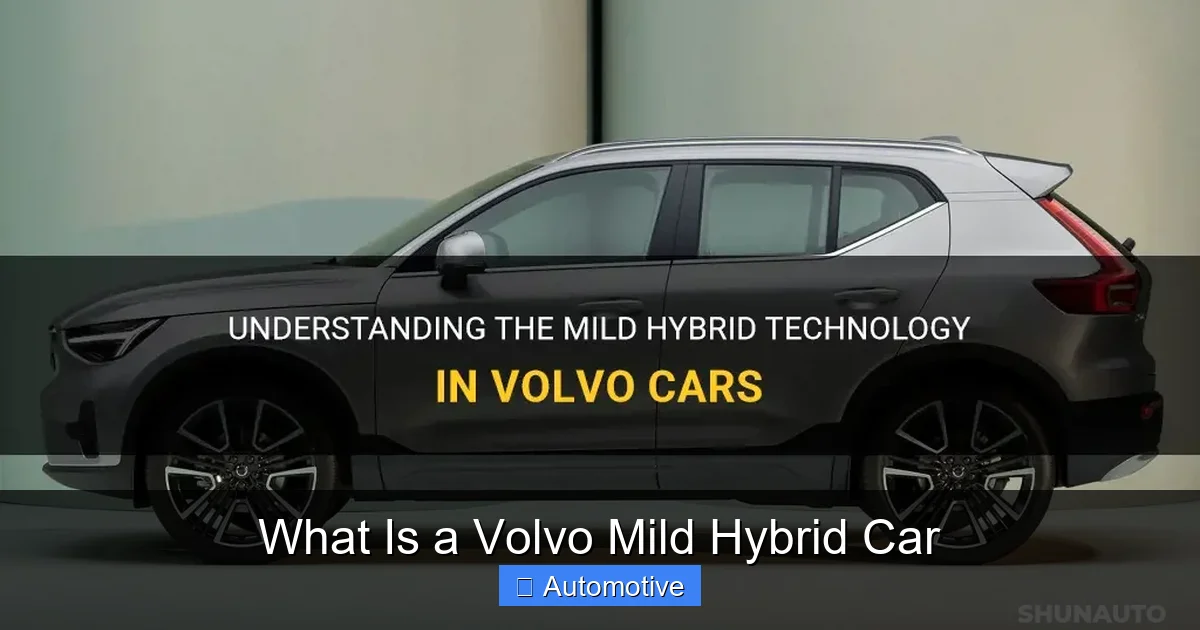
Volvo has embraced mild hybrid technology across nearly its entire lineup, from the compact XC40 to the luxurious XC90. The Swedish automaker sees it as a vital step toward its goal of becoming a fully electric car company by 2030. But mild hybrids aren’t just about future-proofing—they offer real benefits today. Whether you’re commuting through city traffic, cruising on the highway, or loading up the family for a weekend trip, a Volvo mild hybrid delivers a smarter, cleaner, and more refined driving experience.
Key Takeaways
- What It Is: A Volvo mild hybrid uses a 48-volt battery and electric motor to assist the gasoline engine, improving efficiency without needing to be plugged in.
- How It Works: The system recovers energy during braking (regenerative braking) and uses it to power accessories and support acceleration.
- Fuel Savings: Expect 10–15% better fuel economy compared to conventional engines, especially in city driving and stop-and-go traffic.
- No Plug Required: Unlike plug-in hybrids, mild hybrids charge automatically—no external charging or range anxiety.
- Smoother Driving: The electric motor reduces engine load, enabling quieter starts, smoother gear shifts, and reduced turbo lag.
- Environmental Benefit: Lower CO₂ emissions help meet environmental goals and may qualify for tax incentives in some regions.
- Wide Availability: Most new Volvo models now come standard with mild hybrid technology, making it easy to choose greener driving.
📑 Table of Contents
- How Does a Volvo Mild Hybrid Work?
- Benefits of Driving a Volvo Mild Hybrid
- Volvo Mild Hybrid vs. Other Hybrid Types
- Real-World Performance and Driving Experience
- Volvo Mild Hybrid Models: Which Ones Offer It?
- Maintenance and Ownership Costs
- The Future of Mild Hybrids at Volvo
- Is a Volvo Mild Hybrid Right for You?
- Conclusion
How Does a Volvo Mild Hybrid Work?
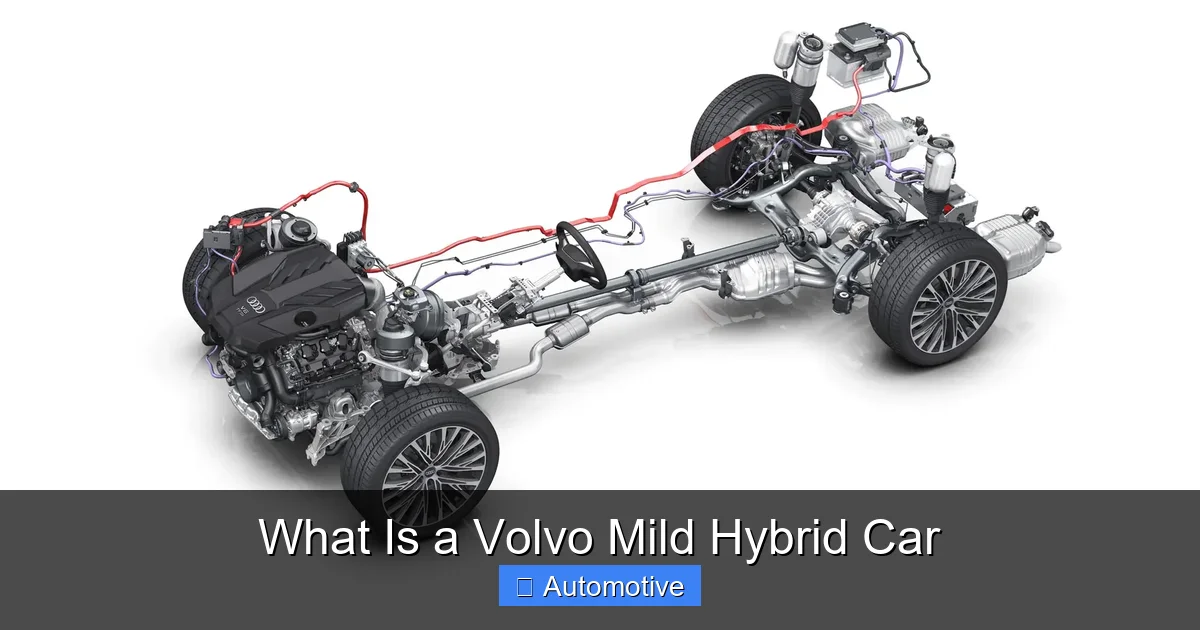
At the heart of every Volvo mild hybrid is a 48-volt lithium-ion battery and a belt-driven starter generator (often called a BSG or integrated starter generator). This system works alongside the conventional internal combustion engine (ICE) to improve performance and efficiency.
When you press the accelerator, the electric motor gives the engine a boost—especially during startup and low-speed driving. This reduces the load on the gasoline engine, which means it burns less fuel. During braking or coasting, the system captures kinetic energy and converts it into electricity through regenerative braking. That energy is stored in the 48-volt battery and reused later to power the car’s electrical systems or assist the engine.
One of the smartest features is the start-stop system. In a traditional car, the engine shuts off at a red light and restarts when you press the gas—often with a noticeable jerk. In a Volvo mild hybrid, the electric motor restarts the engine almost instantly and silently. You barely notice it happening. This not only saves fuel but also makes city driving more comfortable.
Another advantage is reduced turbo lag. Many modern engines use turbochargers to boost power, but they can hesitate when you first press the accelerator. The mild hybrid’s electric motor fills that gap, delivering instant torque for smoother, more responsive acceleration.
The Role of the 48-Volt Battery
The 48-volt battery is the unsung hero of the mild hybrid system. It’s much smaller and lighter than the batteries in full hybrids or EVs—typically weighing around 15–20 kg (33–44 lbs). Despite its size, it packs a punch. It powers not just the starter generator but also high-demand electrical components like the air conditioning, infotainment system, and advanced driver aids.
Because the battery handles these loads, the engine doesn’t have to work as hard. This reduces fuel consumption and wear on the engine. Plus, the 48-volt system is safer and more cost-effective than high-voltage systems used in plug-in hybrids.
Regenerative Braking: Turning Stops into Savings
Every time you slow down or brake in a Volvo mild hybrid, the system captures energy that would otherwise be lost as heat. This is called regenerative braking. The electric motor acts as a generator, converting motion into electricity and storing it in the battery.
This process is seamless and barely noticeable to the driver. There’s no need to change how you brake. But over time, the energy savings add up—especially in stop-and-go traffic. It’s like getting free fuel every time you slow down.
Benefits of Driving a Volvo Mild Hybrid
Visual guide about What Is a Volvo Mild Hybrid Car
Image source: shunauto.com
So, what do you actually gain by choosing a Volvo mild hybrid? Let’s look at the real-world advantages that matter most to drivers.
Improved Fuel Efficiency
The most obvious benefit is better gas mileage. While exact numbers vary by model and driving conditions, Volvo mild hybrids typically achieve 10–15% better fuel economy than their non-hybrid counterparts. For example, the Volvo XC60 mild hybrid might return around 28–30 mpg combined, compared to 24–26 mpg for a similar non-hybrid SUV.
That might not sound like a huge difference, but over a year of driving, it can save you hundreds of dollars in fuel costs. And if you drive a lot in the city—where stop-and-go traffic is common—the savings are even greater.
Lower Emissions and Environmental Impact
Volvo is serious about sustainability, and mild hybrids play a key role in reducing the brand’s carbon footprint. By using less fuel, these vehicles emit fewer greenhouse gases. The average Volvo mild hybrid produces around 15–20% less CO₂ than a comparable gasoline-only model.
This isn’t just good for the planet—it can also benefit you. In some countries and states, lower-emission vehicles qualify for tax breaks, reduced registration fees, or access to carpool lanes. Even if you don’t get financial incentives, driving a cleaner car feels good.
Smoother, Quieter Driving Experience
One of the most noticeable improvements is how refined the driving experience becomes. The electric motor eliminates the jerky restart of traditional start-stop systems. When the engine turns back on at a traffic light, it’s nearly silent and vibration-free.
The motor also helps during gear changes, especially in automatic transmissions. It smooths out shifts and reduces the “turbo lag” that can make acceleration feel sluggish. The result? A more relaxed, premium feel—even in everyday driving.
No Need to Plug In
Here’s a big plus: you don’t have to worry about finding a charging station or remembering to plug in your car. The mild hybrid system charges itself automatically through regenerative braking and engine operation. This makes it ideal for people who want greener driving without the hassle of EV ownership.
You can fill up at any gas station, take long road trips without range anxiety, and still enjoy the benefits of electrification. It’s the best of both worlds.
Enhanced Reliability and Lower Maintenance
Because the electric motor reduces strain on the engine, components like the starter motor and alternator last longer. The start-stop system is also more durable, thanks to the robust BSG unit.
Additionally, regenerative braking reduces wear on brake pads and rotors. Since the electric motor helps slow the car, the mechanical brakes are used less often. This means fewer brake replacements over time—another cost-saving benefit.
Volvo Mild Hybrid vs. Other Hybrid Types
Visual guide about What Is a Volvo Mild Hybrid Car
Image source: car-images.bauersecure.com
It’s easy to get confused by all the hybrid terms out there: mild hybrid, full hybrid, plug-in hybrid, electric vehicle. Let’s clear up the differences so you can make an informed choice.
Mild Hybrid vs. Full Hybrid
A full hybrid—like the Toyota Prius—can run on electric power alone for short distances, usually at low speeds. It has a larger battery and more powerful electric motor. In contrast, a mild hybrid cannot drive on electricity alone. The electric motor only assists the engine.
The advantage of a mild hybrid is simplicity and cost. It’s cheaper to build and maintain, and it doesn’t require plugging in. Full hybrids offer better fuel economy in some cases, but they’re more complex and often more expensive.
Mild Hybrid vs. Plug-in Hybrid (PHEV)
Plug-in hybrids, like the Volvo T8 Recharge, have larger batteries that can be charged from an external power source. They can drive 30–50 miles on electric power alone, making them ideal for short commutes. Once the battery is depleted, they operate like a full hybrid.
Mild hybrids, on the other hand, can’t be plugged in and can’t run on electric power alone. But they’re lighter, less expensive, and don’t require charging infrastructure. For drivers who don’t need long electric-only range, a mild hybrid is a practical, low-maintenance option.
Mild Hybrid vs. Full Electric Vehicle (EV)
Electric vehicles run entirely on battery power and produce zero tailpipe emissions. They’re the cleanest option but require regular charging and may have range limitations.
Mild hybrids still use gasoline, so they’re not as green as EVs. But they offer a gentler transition for drivers not ready to go fully electric. You get some of the benefits of electrification—like smoother driving and lower emissions—without the need for charging.
Real-World Performance and Driving Experience
Visual guide about What Is a Volvo Mild Hybrid Car
Image source: popp-fahrzeugbau.de
So, how does a Volvo mild hybrid actually feel on the road? Let’s take a closer look.
City Driving: Stop-and-Go Made Easy
In urban environments, the mild hybrid system shines. Frequent stops and starts are where regenerative braking and start-stop technology make the biggest difference. You’ll notice the engine shutting off at traffic lights and restarting smoothly when it’s time to go.
The electric motor also helps during low-speed maneuvers, like parking or crawling through traffic. It provides extra torque when you need it, making the car feel more responsive and easier to control.
Highway Cruising: Efficiency at Speed
On the highway, the benefits are more subtle but still present. The mild hybrid system helps maintain steady speeds with less engine effort. It also powers accessories like climate control and navigation without drawing as much from the engine.
While you won’t see dramatic fuel savings at constant high speeds, the overall efficiency gain adds up over long trips. Plus, the quieter cabin and smoother acceleration make highway driving more enjoyable.
Towing and Load-Carrying: Extra Power When Needed
If you use your Volvo for towing a trailer or carrying heavy loads, the mild hybrid system provides a helpful boost. The electric motor delivers instant torque, which can improve acceleration when starting from a stop or climbing hills.
While it’s not a replacement for a diesel engine or a plug-in hybrid with high electric output, the mild hybrid still makes a noticeable difference in real-world performance.
Volvo Mild Hybrid Models: Which Ones Offer It?
As of 2024, nearly every new Volvo model comes standard with mild hybrid technology. Here’s a quick rundown of the lineup:
– **Volvo XC40**: The compact SUV now features a mild hybrid option across most trims, offering a balance of efficiency and agility.
– **Volvo XC60**: This midsize SUV is available with mild hybrid powertrains, delivering a refined ride and strong fuel economy.
– **Volvo XC90**: The flagship three-row SUV includes mild hybrid support, enhancing its already impressive performance and comfort.
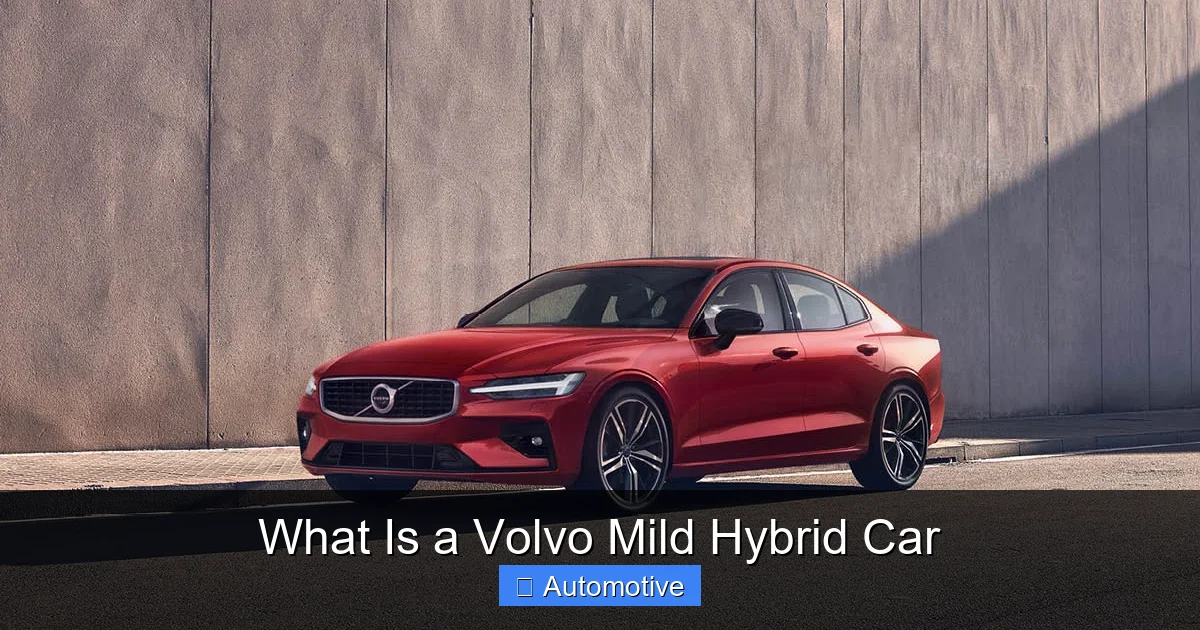
– **Volvo S60 and S90**: The sedan lineup benefits from mild hybrid tech, making these luxury cars even more efficient.
– **Volvo V60 and V90**: The wagon versions also come with mild hybrid options, ideal for families and long-distance travelers.
Even the high-performance Polestar Engineered models use mild hybrid systems to boost power and efficiency. Volvo’s strategy is clear: make electrification accessible across the board.
What About Plug-In Hybrids?
Volvo also offers plug-in hybrid versions of many models, like the XC60 Recharge and S90 Recharge. These combine a gasoline engine with a larger battery and electric motor, allowing for 30–50 miles of electric-only driving.
If you have access to charging and want maximum efficiency, a PHEV might be the better choice. But if you prefer simplicity and don’t want to plug in, the mild hybrid is a smart, no-fuss alternative.
Maintenance and Ownership Costs
One of the biggest concerns with any new technology is reliability and cost. So, how does owning a Volvo mild hybrid compare to a traditional car?
Lower Long-Term Costs
Thanks to improved fuel economy and reduced wear on brakes and engine components, mild hybrids can save you money over time. Fewer fill-ups, fewer brake jobs, and less strain on the engine all contribute to lower ownership costs.
Volvo’s mild hybrid system is designed for durability. The 48-volt battery and BSG unit are built to last the life of the vehicle under normal conditions. And because the system is less complex than a full hybrid or EV, repair costs are typically lower.
Warranty and Support
Volvo includes a comprehensive warranty with all new vehicles, including mild hybrid components. Most models come with a 4-year/50,000-mile basic warranty and an 8-year/100,000-mile warranty on hybrid batteries and related systems.
Plus, Volvo’s service network is well-equipped to handle mild hybrid maintenance. Technicians are trained on the latest systems, and parts are widely available.
Resale Value
As demand for efficient, low-emission vehicles grows, mild hybrids are holding their value well. Volvo’s reputation for safety, quality, and sustainability also helps maintain strong resale prices.
While they may not depreciate as slowly as full EVs or PHEVs, mild hybrids are still a smart investment for buyers looking for long-term value.
The Future of Mild Hybrids at Volvo
Volvo’s commitment to sustainability is driving rapid innovation. The company has pledged to become a fully electric car maker by 2030, but mild hybrids are a crucial stepping stone.
They allow Volvo to reduce emissions across its entire fleet while giving customers time to adapt to electrification. For many drivers, a mild hybrid is the perfect introduction to hybrid technology—offering real benefits without major lifestyle changes.
As battery technology improves and costs come down, we may see even more advanced mild hybrid systems in the future. But for now, the current 48-volt setup strikes an excellent balance between performance, efficiency, and affordability.
Is a Volvo Mild Hybrid Right for You?
Deciding whether a mild hybrid is the right choice depends on your driving habits, budget, and environmental goals.
If you:
– Drive mostly in the city or face frequent traffic,
– Want better fuel economy without charging,
– Prefer a smooth, quiet ride,
– Are looking for a reliable, low-maintenance vehicle,
– Want to reduce your carbon footprint without going fully electric,
Then a Volvo mild hybrid could be a great fit.
On the other hand, if you have a short daily commute and access to charging, a plug-in hybrid or full EV might offer even greater savings and environmental benefits.
But for most drivers, the mild hybrid strikes the perfect balance. It’s practical, efficient, and easy to live with—no charging cables, no range anxiety, just smarter driving.
Conclusion
A Volvo mild hybrid car is more than just a marketing term—it’s a thoughtful, engineering-driven solution for modern drivers who want efficiency, performance, and sustainability without compromise. By combining a gasoline engine with a 48-volt electric motor and battery, Volvo has created a system that improves fuel economy, reduces emissions, and enhances the driving experience.
You don’t need to plug it in. You don’t need to change your habits. Just get in, drive, and enjoy a smoother, cleaner, and more efficient journey. Whether you’re navigating city streets or cruising down the highway, a Volvo mild hybrid makes every mile count.
As the automotive world moves toward electrification, mild hybrids offer a smart, accessible path forward. They’re not the final destination—but they’re a significant step in the right direction. And with Volvo leading the charge, the future of driving looks brighter, quieter, and greener.
Frequently Asked Questions
Can a Volvo mild hybrid run on electric power alone?
No, a Volvo mild hybrid cannot drive on electric power alone. The electric motor only assists the gasoline engine and cannot propel the car by itself.
Do I need to plug in a Volvo mild hybrid to charge it?
No, you do not need to plug in a Volvo mild hybrid. The 48-volt battery charges automatically through regenerative braking and engine operation.
How much better is the fuel economy of a Volvo mild hybrid?
Volvo mild hybrids typically achieve 10–15% better fuel economy than non-hybrid models, especially in city driving and stop-and-go traffic.
Are Volvo mild hybrids reliable?
Yes, Volvo mild hybrids are designed for long-term reliability. The 48-volt system is durable and backed by an 8-year/100,000-mile warranty on hybrid components.
Can a Volvo mild hybrid tow a trailer?
Yes, Volvo mild hybrids can tow trailers, though towing capacity varies by model. The electric motor provides extra torque for better performance when towing.
Is a mild hybrid better than a plug-in hybrid?
It depends on your needs. Mild hybrids are simpler and don’t require charging, while plug-in hybrids offer electric-only driving but need regular charging. Choose based on your lifestyle and access to charging.