
Can a Locksmith Make a Car Key?

Yes, a professional locksmith can make a car key—even for modern vehicles with advanced security systems. From traditional metal keys to high-tech transponder and smart keys, skilled locksmiths use specialized tools and training to provide fast, reliable, and often cheaper alternatives to dealerships.
Key Takeaways
- Locksmiths can create most car keys: Whether you have a basic key, transponder chip, or proximity fob, a qualified automotive locksmith has the tools and expertise to duplicate or replace it.
- Programming is often required: Modern car keys contain electronic chips that must be programmed to your vehicle’s immobilizer system—something many locksmiths can do on-site.
- Faster and cheaper than dealerships: Locksmiths typically offer same-day service at lower prices than car dealers, who may charge hundreds more and require appointments.
- Mobile services add convenience: Many locksmiths come to your location—home, office, or roadside—so you don’t need to tow your car.
- Not all locksmiths are equal: Choose a licensed, insured, and experienced automotive locksmith with positive reviews and proper equipment for your vehicle make and model.
- Emergency situations are covered: If you’re locked out or lost your only key, a 24/7 locksmith can often get you back in and provide a new key within an hour.
- Prevention saves time and money: Keep a spare key in a safe place or consider a keyless entry backup to avoid future lockouts.
📑 Table of Contents
Can a Locksmith Make a Car Key? The Short Answer
Losing your car key—or worse, locking it inside your vehicle—is one of those frustrating moments that can throw your entire day off track. You might immediately think, “I need to call the dealership,” but there’s a faster, often cheaper solution: a professional automotive locksmith. So, can a locksmith make a car key? The answer is a resounding yes—for nearly every type of vehicle on the road today.
Modern locksmiths aren’t just about picking locks or cutting spare house keys. They’ve evolved into highly trained technicians equipped with advanced tools to handle complex automotive security systems. Whether you drive a 1995 Honda Civic with a simple metal key or a 2023 Tesla with a key fob and smartphone app integration, a skilled locksmith can likely create a working replacement. And unlike dealerships, which may require proof of ownership, wait days for parts, and charge premium prices, many locksmiths offer same-day, on-the-spot service—often at half the cost.
But it’s not just about cutting metal. Today’s car keys are sophisticated devices. Many contain microchips, remote controls, and even biometric sensors. This means making a car key isn’t just physical—it’s digital too. A qualified locksmith must not only duplicate the key’s shape but also program its electronic components to communicate with your car’s onboard computer. Fortunately, most reputable automotive locksmiths are trained and equipped to handle this process, making them a reliable alternative to expensive dealer visits.
Types of Car Keys and What Locksmiths Can Do
Visual guide about Can a Locksmith Make a Car Key?
Image source: locksmithmen.com
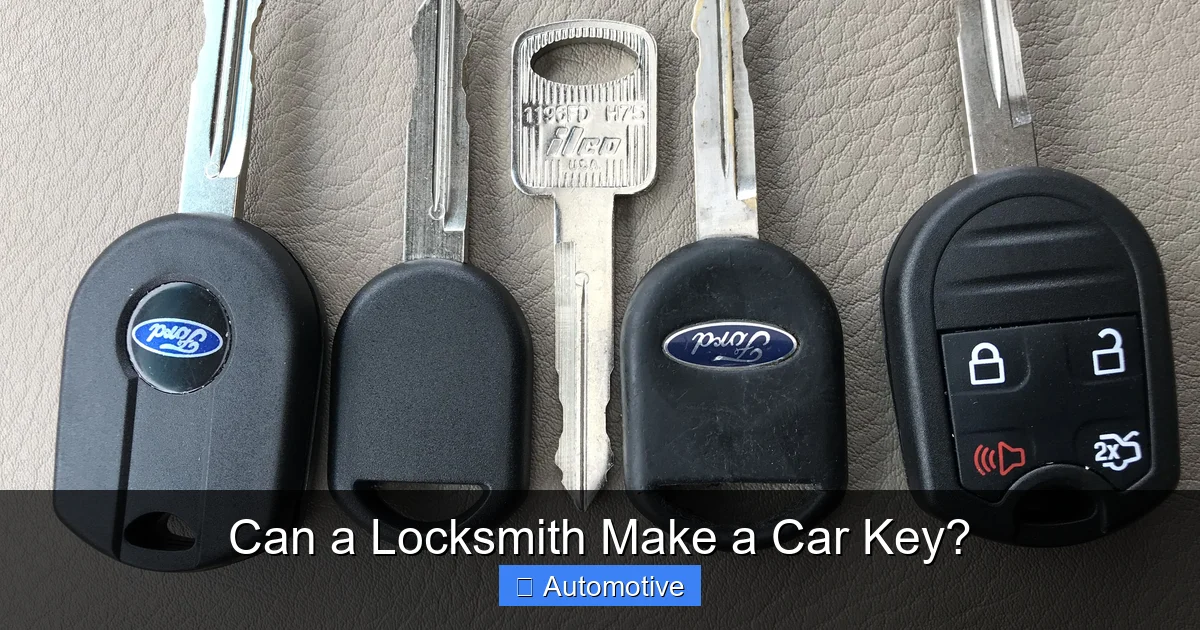
To understand how a locksmith can help, it’s important to know the different types of car keys in use today. Each type requires a slightly different approach, but a professional locksmith is typically equipped to handle them all.
Traditional Metal Keys
These are the simplest and oldest type of car keys—basic metal blades used to unlock doors and start the ignition. Found in older vehicles (typically pre-2000), they don’t contain any electronics. If you lose one, a locksmith can quickly cut a new one using your vehicle’s VIN (Vehicle Identification Number) or by decoding the lock. This process involves carefully measuring the internal pins in your car’s lock cylinder to determine the correct key pattern. While it sounds technical, experienced locksmiths can do this in minutes, often without even removing the lock.
For example, if you own a 1998 Ford F-150 and lose your key, a locksmith can visit your location, decode the door lock, and cut a new key on the spot. No waiting, no towing, no dealership fees.
Transponder Keys
Introduced in the mid-1990s, transponder keys contain a small electronic chip embedded in the plastic head. When you insert the key into the ignition, the chip sends a unique code to the car’s immobilizer system. If the code matches, the engine starts. If not, the car won’t start—even if the key turns the lock.
This added layer of security makes transponder keys much harder to duplicate than traditional keys. But don’t worry—locksmiths can handle them. They use specialized programming tools to clone or program a new chip to match your vehicle. For instance, if you drive a 2005 Toyota Camry and lose your transponder key, a locksmith can cut a new blade and program the chip using your VIN or by accessing the car’s OBD-II port (the same port mechanics use for diagnostics).
One important note: some vehicles require two working keys to program a third. If you only have one key or none at all, the locksmith may need to perform a “zero-mile” programming procedure, which resets the system. This is completely doable but may take a bit longer.
Remote Key Fobs and Smart Keys
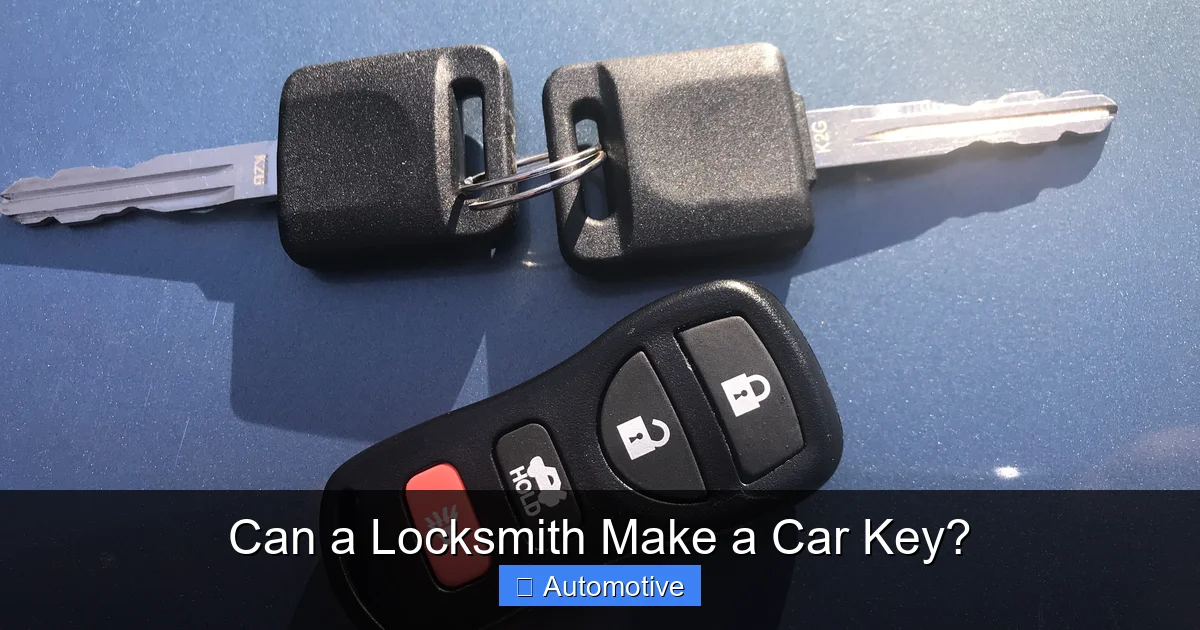
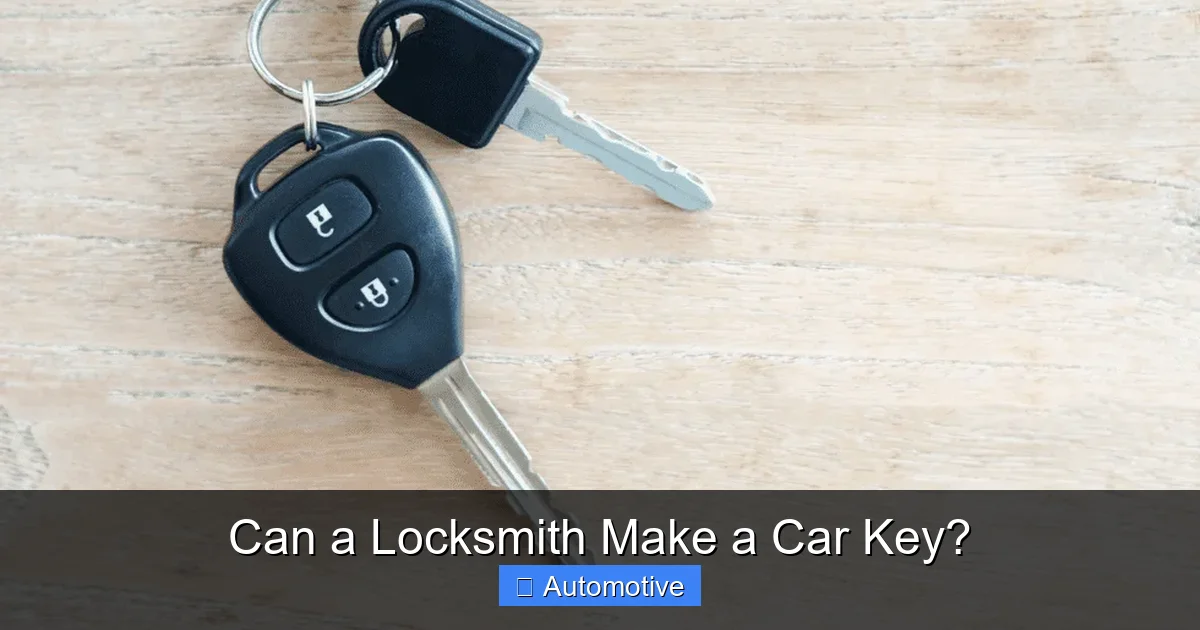
Remote key fobs—also known as keyless entry remotes—allow you to lock, unlock, and sometimes even start your car with the push of a button. These are common in vehicles from the 2000s onward. Smart keys, or proximity keys, take it a step further: you don’t even need to pull the key out of your pocket. Simply being near the car allows you to unlock the doors and start the engine with a button.
These keys are the most complex to replace because they combine mechanical cutting, electronic programming, and wireless synchronization. A locksmith must cut the physical key (if applicable), program the remote functions, and sync the key with the car’s immobilizer and keyless entry system.
For example, if you own a 2018 Honda Accord with a smart key and lose it, a locksmith can create a new one by:
– Cutting the key blade to match your ignition
– Programming the transponder chip
– Syncing the remote buttons (lock, unlock, trunk, panic)
– Pairing the key with the car’s proximity sensor system
Many locksmiths carry a wide range of blank fobs and use advanced diagnostic tools to ensure full functionality. Some even offer upgrades—like replacing a worn-out fob with a newer model that has better range or additional features.
Keyless Entry Systems and Push-to-Start
Some modern vehicles, especially luxury models like BMW, Mercedes, or Tesla, use fully keyless systems. Instead of a physical key, you might have a card, a smartphone app, or a fob that communicates wirelessly with the car. While these systems are convenient, they’re also the most challenging to replace if lost.
However, even in these cases, a skilled automotive locksmith can often help. They may be able to:
– Program a replacement fob or card
– Reset the vehicle’s security system
– Provide a temporary mechanical key (many keyless cars have a hidden physical key inside the fob for emergencies)
For instance, if you lose your Tesla key card, a locksmith with Tesla-specific tools can often program a new one or help you regain access using your phone app as a backup.
How Locksmiths Make and Program Car Keys
Visual guide about Can a Locksmith Make a Car Key?
Image source: locksmithmen.com
Now that you know the types of keys, let’s dive into how locksmiths actually make and program them. The process varies depending on the key type and vehicle, but it generally involves three main steps: decoding or duplication, cutting, and programming.
Step 1: Decoding or Duplication
For traditional keys, the locksmith may decode the lock by inserting a special tool into the door or ignition cylinder. This tool reads the pin configuration and determines the exact cuts needed for a new key. Alternatively, if you have a working key, they can use a key duplicating machine to copy it directly.
For electronic keys, the locksmith will often use your vehicle’s VIN to access manufacturer databases and determine the correct key code. This is especially useful if you’ve lost all your keys. Some locksmiths also use advanced diagnostic scanners to read the car’s immobilizer system and retrieve key data.
Step 2: Cutting the Key
Once the correct pattern is known, the locksmith uses a key-cutting machine to shape a blank key. Modern machines are highly precise and can replicate even complex key patterns with laser-cut edges (common in European cars like Audi or Volkswagen). Some locksmiths use computerized cutters that connect to databases for exact specifications.
For example, a BMW key with a laser-cut blade requires a specific type of blank and a precision cutter. A professional locksmith will have the right equipment to handle this, ensuring the key fits smoothly into the lock and ignition.
Step 3: Programming the Key
This is where many people think locksmiths fall short—but they don’t. Programming is essential for transponder, remote, and smart keys. The locksmith connects a programming device (often via the OBD-II port) to your car’s computer and syncs the new key’s chip or fob with the immobilizer system.
Some vehicles allow “on-board” programming, where you can program a new key yourself by following a sequence (like turning the ignition on and off several times). But if you don’t have any working keys, a locksmith’s tools are necessary.
For instance, programming a 2015 Ford F-150 key fob requires a specific sequence and diagnostic tool. A locksmith can complete this in 10–15 minutes, whereas a dealership might charge $200+ and require an appointment.
Why Choose a Locksmith Over a Dealership?
Visual guide about Can a Locksmith Make a Car Key?
Image source: locksmith-sandiego.com
It’s easy to assume that only a car dealership can make a key for your vehicle—especially if it’s a newer model. But that’s a common misconception. In fact, using a locksmith often makes more sense for several reasons.
Cost Savings
Dealerships are known for high labor rates and markups on parts. A simple transponder key might cost $150–$300 at a dealer, while a locksmith could do the same job for $75–$150. For smart keys or fobs, the difference can be even greater—dealers may charge $400 or more, while locksmiths often charge half that.
Speed and Convenience
Dealerships often require appointments and may not have the key blank or programming tools in stock. You might wait days for a replacement. In contrast, many locksmiths offer 24/7 emergency service and can arrive within 30–60 minutes. They come to you—whether you’re at home, work, or stranded on the highway.
No Need to Tow Your Car
If you’re locked out or lost your only key, you might think you need to tow your car to the dealership. Not so with a mobile locksmith. They bring all the tools and equipment needed to make and program a key on-site. No tow truck, no hassle.
Expertise Across Brands
Reputable locksmiths work with all major car brands—Ford, Toyota, Honda, BMW, Mercedes, Tesla, and more. They stay updated on the latest security systems and carry a wide range of key blanks and programming tools. Many even specialize in European or luxury vehicles, which can be tricky for general mechanics.
Proof of Ownership Made Easy
You might worry about security—how does a locksmith know you own the car? Legitimate locksmiths will ask for proof of ownership, such as your driver’s license, vehicle registration, or VIN. This protects both you and them from fraud. Most will verify your information before proceeding.
When a Locksmith Might Not Be Able to Help
While locksmiths are incredibly capable, there are a few situations where their help may be limited.
Highly Restricted or Proprietary Systems
Some luxury or imported vehicles use highly encrypted systems that require manufacturer-specific tools or software. For example, certain Ferrari or Lamborghini models may only be serviceable by authorized dealers. In these cases, a locksmith might not have access to the necessary programming protocols.
Lack of Documentation
If you can’t prove ownership—say, you bought a used car without proper paperwork—a locksmith may refuse service to prevent theft. Always have your registration, ID, and VIN ready.
Severe Damage or Theft
If your car has been broken into or the ignition is damaged, a locksmith can help regain access, but you may also need a mechanic or body shop to repair the damage. In cases of theft, you’ll also need to report it to the police and possibly your insurance company.
Older or Rare Vehicles
For very old or obscure car models, finding the right key blank can be a challenge. However, many locksmiths have extensive inventories or can order specialty blanks quickly.
Tips for Choosing the Right Locksmith
Not all locksmiths are created equal. To ensure you get quality service, follow these tips:
Check for Licensing and Insurance
In many states, locksmiths must be licensed. Look for credentials and ask if they’re insured. This protects you in case of damage during service.
Read Reviews and Ask for Recommendations
Check Google, Yelp, or the Better Business Bureau for reviews. Ask friends or family for referrals. A locksmith with a strong local reputation is more likely to provide reliable service.
Verify They Specialize in Automotive Work
Some locksmiths focus only on homes or businesses. Make sure they explicitly offer car key services and have experience with your vehicle type.
Ask About Tools and Technology
A good locksmith will use modern diagnostic tools and carry a variety of key blanks. Avoid those who claim they can “do anything” but can’t name specific equipment.
Get a Clear Quote Upfront
Avoid locksmiths who give vague estimates or demand payment before starting. Reputable ones will provide a clear quote based on your key type and vehicle.
Look for Mobile Service
Choose a locksmith who offers mobile service—this saves you time and towing costs.
Preventing Future Key Problems
The best way to avoid the stress of losing your car key is to be proactive.
Keep a Spare Key
Store a spare key in a secure location—like a locked drawer at home or with a trusted family member. Avoid hiding it under a doormat or in a fake rock; these are easy for thieves to find.
Use a Key Finder or Tracker
Devices like Tile or Apple AirTag can help you locate your keys if they’re misplaced. Attach one to your keychain for peace of mind.
Consider a Keyless Entry Backup
Some cars allow you to use your smartphone as a digital key. If your vehicle supports it, set this up as a backup. Even if you lose your fob, you can still unlock and start the car.
Regularly Test Your Key Fob Battery
A dead battery can make your key fob useless. Replace it every 1–2 years or when the range starts to weaken.
Document Your VIN and Key Code
Keep a record of your vehicle’s VIN and, if available, the key code. This makes it easier for a locksmith to create a replacement quickly.
Conclusion
So, can a locksmith make a car key? Absolutely. From simple metal keys to advanced smart fobs, professional automotive locksmiths have the skills, tools, and technology to get you back on the road—fast and affordably. They offer a convenient, cost-effective alternative to dealerships, with the added benefit of mobile service and 24/7 availability.
Whether you’re locked out, lost your only key, or just want a spare, don’t panic. Call a trusted locksmith, provide proof of ownership, and let them handle the rest. With the right professional, you’ll have a working key in no time—without the hassle or high cost of going through your car dealer.
Remember, not all locksmiths are the same. Do your research, choose a licensed and experienced provider, and keep a spare key handy. A little preparation today can save you a lot of stress tomorrow.
Frequently Asked Questions
Can a locksmith make a car key without the original?
Yes, a professional locksmith can often create a new car key even if you don’t have the original. They can decode your car’s lock or use your VIN to determine the correct key pattern and program a replacement.
How long does it take a locksmith to make a car key?
Most car keys can be made in 15–45 minutes, depending on the type. Simple metal keys are fastest, while smart keys with programming may take longer.
Is it cheaper to get a key made by a locksmith or dealership?
Yes, locksmiths are typically much cheaper than dealerships. You can save 30–50% on both parts and labor by choosing a qualified locksmith.
Do I need to prove ownership when getting a car key made?
Yes, reputable locksmiths will ask for proof of ownership, such as your driver’s license, vehicle registration, or VIN, to prevent fraud and ensure security.
Can a locksmith program a key fob for my car?
Absolutely. Most automotive locksmiths can program remote key fobs, including lock/unlock functions and immobilizer syncing, for a wide range of vehicles.
What if my car uses a smart key or push-to-start system?
Locksmiths can handle smart keys and push-to-start systems. They use specialized tools to program the key’s electronics and sync it with your car’s security system.
