
What Is A-trac on Toyota Vehicles?

A-TRAC (Active Traction Control) is Toyota’s advanced off-road traction system that automatically manages wheel slip without needing a traditional locking differential. It uses the vehicle’s braking system to simulate differential lock, giving drivers better control on slippery or uneven terrain—making it ideal for off-roading, snow, mud, and sand.
If you’ve ever watched a Toyota 4Runner crawl over jagged rocks or a Land Cruiser glide through deep mud without breaking a sweat, you’ve likely seen A-TRAC in action—even if you didn’t know it. A-TRAC, short for Active Traction Control, is one of Toyota’s most underrated yet powerful off-road technologies. It’s not as flashy as a winch or as visible as a lifted suspension, but it plays a quiet yet crucial role in keeping your wheels turning when the going gets tough.
Unlike traditional locking differentials that require manual engagement, A-TRAC works automatically and intelligently. It uses the vehicle’s existing anti-lock braking system (ABS) to detect when a wheel is losing traction and instantly applies brake pressure to that slipping wheel. This action mimics the effect of a locked differential by redirecting torque to the wheels that still have grip. The result? Better forward momentum, reduced wheel spin, and more confidence when navigating challenging terrain.
What makes A-TRAC especially impressive is how seamlessly it integrates into Toyota’s broader off-road ecosystem. Whether you’re driving through snow-covered mountain passes, sandy desert trails, or muddy forest paths, A-TRAC adjusts in real time—no buttons to press, no levers to pull. It’s like having a co-pilot dedicated solely to keeping your tires planted on the ground. And because it’s built into the vehicle’s electronic control systems, it’s always ready, whether you’re crawling over boulders or just driving on a wet highway.
Key Takeaways
- What A-TRAC Is: A-TRAC is Toyota’s proprietary traction control system designed to improve off-road performance by managing wheel slip using the vehicle’s anti-lock braking system (ABS).
- How It Works: Instead of locking differentials, A-TRAC applies brake pressure to spinning wheels, transferring torque to wheels with better grip—automatically and seamlessly.
- Vehicles That Have It: Found primarily in Toyota’s off-road capable models like the Land Cruiser, 4Runner, Tacoma (TRD Pro), and Sequoia (TRD Off-Road).
- Benefits Over Traditional Systems: Offers smoother operation than manual lockers, works on-demand without driver input, and functions across various terrains including mud, snow, sand, and rocks.
- Complements Other Tech: Works alongside systems like Multi-Terrain Select, Crawl Control, and Kinetic Dynamic Suspension System (KDSS) for maximum off-road capability.
- Driver-Friendly: Requires no special training—ideal for both novice and experienced off-roaders who want reliable traction without complex controls.
- Maintenance & Reliability: Since it uses existing brake and ABS components, A-TRAC is low-maintenance and highly durable under tough conditions.
📑 Table of Contents
How A-TRAC Works: The Science Behind the Traction
At its core, A-TRAC is a smart application of existing automotive technology. Instead of relying on mechanical components like locking differentials or limited-slip axles, A-TRAC leverages the vehicle’s ABS sensors and hydraulic braking system to manage traction. Here’s how it breaks down:
Each wheel is equipped with a speed sensor that constantly monitors rotation. When the system detects that one or more wheels are spinning faster than the others—indicating loss of traction—A-TRAC springs into action. It applies precise brake pressure to the slipping wheel, which creates resistance and slows it down. This resistance effectively “tricks” the differential into sending more torque to the wheels that are still gripping the surface.
For example, imagine you’re driving through a muddy trail and your right front wheel starts to spin because it’s lost contact with solid ground. A-TRAC detects this spin and immediately applies the brake to that wheel. The braking action reduces the spin and allows the differential to redirect power to the left front wheel, which still has traction. The vehicle continues moving forward smoothly, without the driver needing to intervene.
This process happens in milliseconds and repeats continuously as conditions change. Whether you’re on loose gravel, icy pavement, or uneven rock, A-TRAC adapts instantly. It’s particularly useful in situations where only one wheel has traction—such as when one tire is off the ground or on a slippery patch—because it ensures that power isn’t wasted on spinning wheels.
Comparison to Traditional Locking Differentials
To understand why A-TRAC is such a big deal, it helps to compare it to traditional locking differentials. A locking differential physically connects the two wheels on an axle, forcing them to turn at the same speed. This is great for extreme off-roading because it ensures both wheels get equal power, even if one is in the air.
However, locking differentials have drawbacks. They can make steering difficult on hard surfaces because the wheels are forced to rotate at the same speed, causing tire scrub and potential damage. They also require the driver to manually engage and disengage them, which can be inconvenient and risky if forgotten.
A-TRAC, on the other hand, operates automatically and only when needed. It doesn’t physically lock the wheels, so steering remains smooth and natural on pavement. It’s always active in the background, ready to assist without driver input. This makes it ideal for drivers who want off-road capability without the complexity of manual systems.
A-TRAC and the ABS System: A Perfect Partnership
One of the reasons A-TRAC is so reliable is that it piggybacks on the vehicle’s existing ABS infrastructure. The ABS system already monitors wheel speed and can apply individual brakes during hard stops. A-TRAC simply extends this capability to off-road scenarios.
Because the hardware is already in place, there’s no need for additional mechanical components. This reduces weight, cost, and potential points of failure. It also means A-TRAC is highly durable—since it uses proven brake technology, it can withstand extreme conditions without breaking down.
In fact, many drivers don’t even realize A-TRAC is working until they’re in a tough spot and notice their vehicle moving forward despite slippery conditions. It’s that seamless.
Which Toyota Vehicles Come with A-TRAC?
Visual guide about What Is A-trac on Toyota Vehicles?
Image source: cdn-ds.com
A-TRAC isn’t available on every Toyota model—it’s reserved for vehicles designed with serious off-road capability in mind. If you’re looking for a Toyota that can handle more than just city streets and highways, here are the key models that typically include A-TRAC:
– **Toyota 4Runner (TRD Off-Road and TRD Pro trims):** The 4Runner is one of Toyota’s most popular off-road SUVs, and A-TRAC is a standard feature on the TRD Off-Road and TRD Pro versions. These trims also include features like Multi-Terrain Select and Crawl Control, making them ideal for adventure seekers.
– **Toyota Land Cruiser:** As Toyota’s flagship off-road SUV, the Land Cruiser comes fully loaded with A-TRAC, along with advanced suspension systems and full-time four-wheel drive. It’s built for global expeditions and extreme terrain.
– **Toyota Tacoma (TRD Off-Road and TRD Pro trims):** The Tacoma pickup is a favorite among overlanders and off-road enthusiasts. A-TRAC is included in the TRD Off-Road and TRD Pro packages, giving it excellent traction in challenging conditions.
– **Toyota Sequoia (TRD Off-Road trim):** The full-size Sequoia isn’t just for towing and family trips—it’s also capable off-road. The TRD Off-Road trim adds A-TRAC, skid plates, and off-road-tuned suspension.
It’s important to note that A-TRAC is usually bundled with other off-road features and isn’t available on base or lower trims. If you’re shopping for a used Toyota, be sure to check the trim level and option packages to confirm A-TRAC is included.
How to Identify A-TRAC on a Toyota
If you’re not sure whether a Toyota has A-TRAC, there are a few ways to check:
– Look for the “TRD Off-Road” or “TRD Pro” badge on the vehicle. These trims almost always include A-TRAC.
– Check the owner’s manual or vehicle specifications online. A-TRAC is typically listed under “traction control” or “off-road systems.”
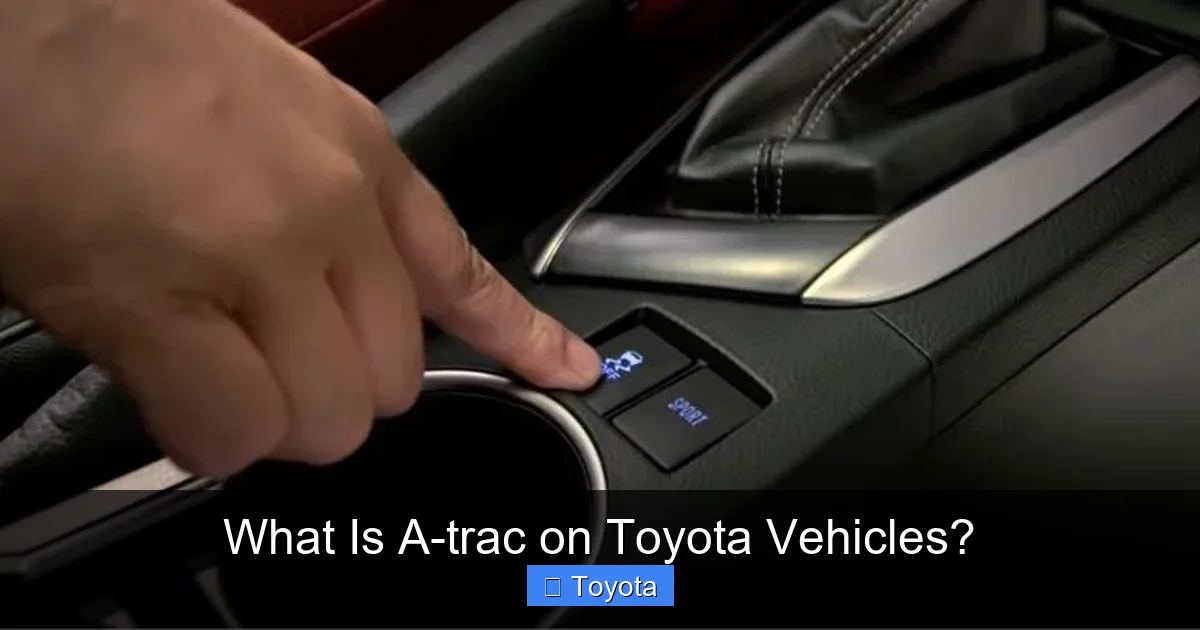
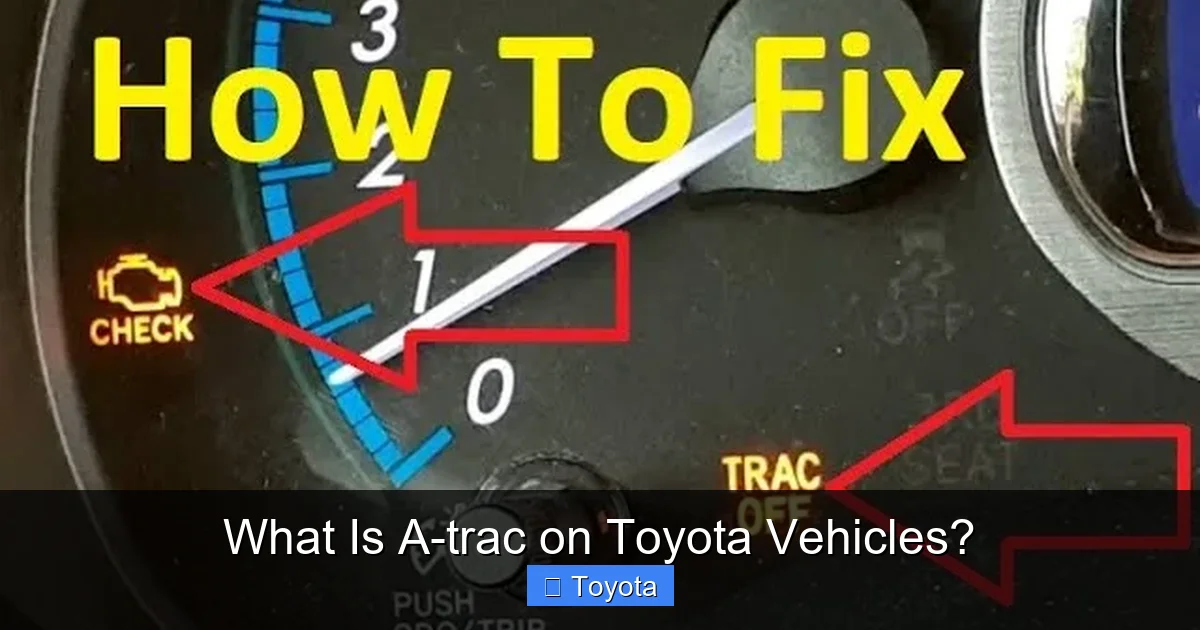
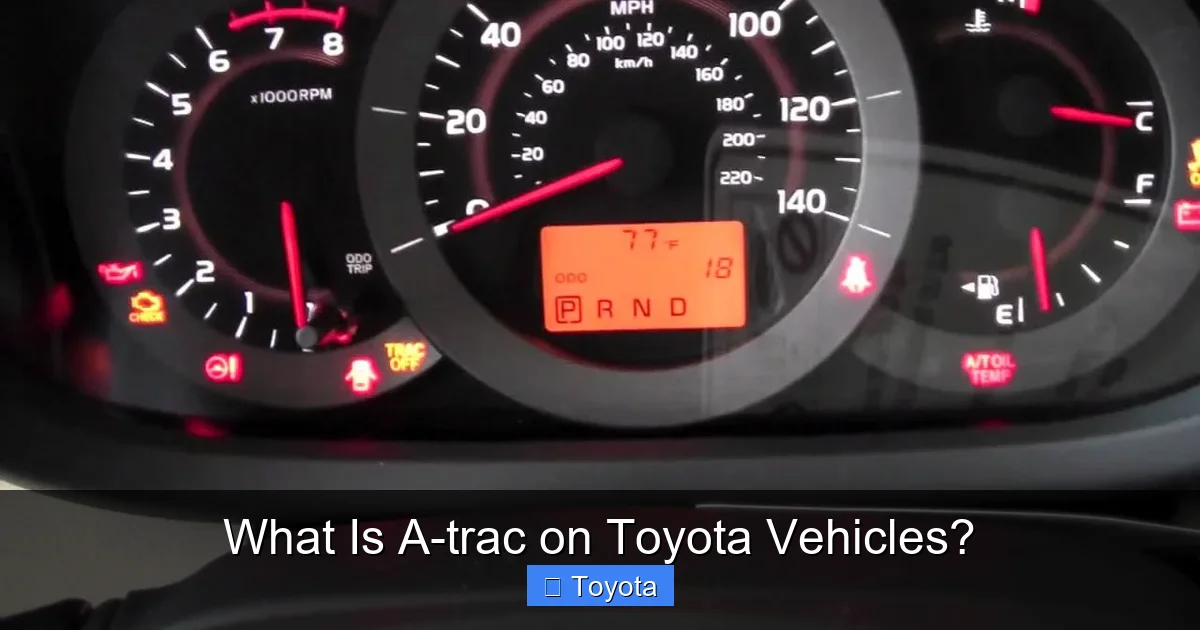
– Look for a dashboard indicator light labeled “A-TRAC” or “TRAC OFF.” When the system is active, you may see a light flash briefly during wheel slip.
Some newer models also display A-TRAC status on the multi-information display (MID) screen, especially when using off-road driving modes.
Real-World Benefits of A-TRAC: When It Shines
Visual guide about What Is A-trac on Toyota Vehicles?
Image source: i.ytimg.com
A-TRAC isn’t just a marketing buzzword—it delivers real, tangible benefits in everyday and extreme driving situations. Here’s how it helps in various scenarios:
Driving in Snow and Ice
Winter driving can be nerve-wracking, especially on steep or unpaved roads. A-TRAC helps by preventing wheel spin when accelerating from a stop or climbing hills. If one wheel starts to slip on ice, A-TRAC applies the brake and redirects power to the gripping wheel, helping you maintain control and momentum.
For example, imagine you’re pulling out of a snowy driveway and your right rear wheel starts to spin. Without A-TRAC, you might get stuck or slide sideways. With A-TRAC, the system detects the slip and applies the brake, allowing the left rear wheel to pull you forward safely.
Off-Roading in Mud and Sand
Mud and sand are notorious for causing wheels to dig in and lose traction. A-TRAC shines in these conditions by keeping power distributed to the wheels that can actually move the vehicle. In deep sand, for instance, it’s common for one wheel to lift slightly or sink into a soft spot. A-TRAC ensures that the other wheels keep turning, preventing you from getting stuck.
Many off-roaders report that A-TRAC gives them the confidence to tackle trails they’d otherwise avoid. It’s especially helpful for beginners who might not know how to manually manage traction or use a locker.
Rock Crawling and Technical Terrain
When crawling over rocks or uneven terrain, it’s common for one or more wheels to lose contact with the ground. A-TRAC helps by maintaining torque to the wheels that are still on the rocks. This reduces the chance of getting high-centered or losing forward progress.
In combination with Crawl Control—a feature that automatically manages speed and braking on tough trails—A-TRAC allows drivers to focus on steering rather than managing throttle and brakes.
Everyday Driving on Wet or Gravel Roads
You don’t need to be off-roading to benefit from A-TRAC. On rainy days or gravel roads, it can prevent wheel spin during acceleration, improving safety and stability. It’s like having an extra layer of traction control that’s always working behind the scenes.
A-TRAC vs. Other Traction Systems: How It Stacks Up
Visual guide about What Is A-trac on Toyota Vehicles?
Image source: i.ytimg.com
Toyota isn’t the only automaker with advanced traction systems, but A-TRAC stands out for its simplicity and effectiveness. Let’s compare it to similar technologies from other brands:
A-TRAC vs. Jeep’s Selec-Trac or Rock-Trac
Jeep offers selectable part-time or full-time four-wheel drive systems with locking differentials. While these are powerful, they often require manual shifting between modes and can be complex to use. A-TRAC, by contrast, is fully automatic and doesn’t require driver input.
A-TRAC vs. Land Rover’s Terrain Response
Land Rover’s Terrain Response system allows drivers to select driving modes (like Mud, Sand, or Rock) that adjust throttle, transmission, and traction settings. A-TRAC works similarly but focuses specifically on traction control through braking. In fact, Toyota’s Multi-Terrain Select system (available on some models) complements A-TRAC by adjusting settings based on terrain—just like Terrain Response.
A-TRAC vs. Subaru’s X-Mode
Subaru’s X-Mode enhances traction on slippery surfaces by managing throttle and braking. It’s effective, but it’s primarily designed for light off-roading and snow. A-TRAC, especially when paired with Toyota’s other off-road tech, is built for more extreme conditions.
A-TRAC vs. Ford’s Trail Control
Ford’s Trail Control is similar to Toyota’s Crawl Control—it maintains a set speed over rough terrain. A-TRAC works alongside such systems by managing wheel slip, ensuring that the vehicle can actually move forward when Trail Control is engaged.
In short, A-TRAC is a foundational technology that enhances other systems. It’s not a standalone gimmick—it’s a critical part of Toyota’s off-road strategy.
Tips for Getting the Most Out of A-TRAC
While A-TRAC is designed to work automatically, there are a few tips to help you get the best performance:
Keep Your Tires in Good Condition
A-TRAC can only work with the traction your tires provide. Worn or underinflated tires reduce grip, making it harder for the system to function effectively. Regularly check tire pressure and tread depth, especially before off-road trips.
Use the Right Driving Mode
On models with Multi-Terrain Select, choose the appropriate mode (Mud & Sand, Rock, etc.) to optimize A-TRAC and other systems. This ensures the vehicle adjusts throttle, braking, and traction settings for the terrain.
Don’t Rely on A-TRAC Alone
While A-TRAC is powerful, it’s not a substitute for proper off-road technique. Always assess terrain, maintain momentum when appropriate, and avoid sudden acceleration or braking.
Understand When to Turn It Off
In rare cases—such as when stuck in deep snow or mud—you may need to turn off A-TRAC to allow wheels to spin and dig out. Most Toyota models have a “TRAC OFF” button for this purpose. Just remember to turn it back on afterward.
Maintain Your Brake System
Since A-TRAC relies on the braking system, keep your brakes in good condition. Have them inspected regularly, especially if you frequently drive off-road.
The Future of A-TRAC and Toyota Off-Road Technology
As Toyota continues to evolve its off-road lineup—especially with the introduction of hybrid and electric models like the upcoming electric Land Cruiser—A-TRAC is likely to become even more advanced. Future versions may integrate with electric all-wheel-drive systems, using individual wheel motors to control torque more precisely.
We may also see A-TRAC combined with AI-driven terrain recognition, where the system automatically adjusts based on camera and sensor input. The goal? To make off-roading safer, easier, and more accessible to everyone.
For now, A-TRAC remains one of the most reliable and user-friendly traction systems on the market. It’s a testament to Toyota’s commitment to durability, simplicity, and real-world performance.
Conclusion
A-TRAC on Toyota vehicles is more than just a fancy acronym—it’s a smart, reliable, and highly effective traction control system that enhances off-road capability without complicating the driving experience. By using the vehicle’s ABS to manage wheel slip, A-TRAC delivers the benefits of a locking differential without the drawbacks of manual operation or steering issues.
Whether you’re navigating snowy mountain roads, sandy deserts, or rocky trails, A-TRAC helps keep your Toyota moving forward with confidence. It’s a key reason why models like the 4Runner, Land Cruiser, and Tacoma are so respected in the off-road community.
So the next time you see a Toyota crawling over obstacles with ease, remember: it’s not just the tires or the suspension doing the work. It’s A-TRAC, working silently in the background, making every adventure a little smoother and a lot safer.
Frequently Asked Questions
What does A-TRAC stand for?
A-TRAC stands for Active Traction Control. It’s Toyota’s proprietary system that uses the vehicle’s braking system to manage wheel slip and improve traction on slippery or uneven surfaces.
Is A-TRAC the same as 4WD or AWD?
No, A-TRAC is not the same as 4WD or AWD. While 4WD and AWD send power to all wheels, A-TRAC manages how that power is distributed by applying brakes to slipping wheels to improve grip.
Can I turn A-TRAC off?
Yes, most Toyota models with A-TRAC have a “TRAC OFF” button. This is useful in situations like deep snow or mud where you need wheels to spin freely to get unstuck.
Does A-TRAC work on pavement?
Yes, A-TRAC can work on wet or slippery pavement, but it’s primarily designed for off-road use. On dry pavement, it typically doesn’t activate unless a wheel loses traction.
Is A-TRAC available on all Toyota models?
No, A-TRAC is only available on select off-road capable models like the 4Runner TRD Off-Road, Tacoma TRD Pro, Land Cruiser, and Sequoia TRD Off-Road.
Does A-TRAC require maintenance?
A-TRAC itself requires no special maintenance since it uses existing brake and ABS components. However, keeping your brake system in good condition ensures optimal performance.
