
Why Is My Toyota Not Starting?

If your Toyota won’t start, don’t panic—common culprits include a dead battery, faulty starter, or fuel delivery issues. This guide walks you through the most likely reasons and practical solutions to get you back on the road fast.
Key Takeaways
- Dead or weak battery: The most common reason a Toyota won’t start—check for dim lights or clicking sounds.
- Faulty starter motor: A clicking noise without engine turnover often points to a bad starter.
- Fuel system problems: Clogged fuel filters, failing fuel pumps, or empty tanks can prevent ignition.
- Ignition switch or key fob issues: Worn keys or malfunctioning smart keys may disrupt the starting sequence.
- Alternator failure: If the battery keeps dying, the alternator might not be charging it properly.
- Engine immobilizer activation: Security systems can block startup if the key isn’t recognized.
- Extreme weather effects: Cold temperatures can thicken oil and reduce battery efficiency.
📑 Table of Contents
- Why Is My Toyota Not Starting? A Complete Troubleshooting Guide
- 1. Battery Problems: The #1 Culprit
- 2. Starter Motor Failure: The Clicking Mystery
- 3. Fuel System Issues: No Gas, No Go
- 4. Ignition and Key Fob Problems
- 5. Alternator and Charging System Failures
- 6. Engine Immobilizer and Security System Glitches
- 7. Environmental and Mechanical Factors
- When to Call a Mechanic
- Conclusion
Why Is My Toyota Not Starting? A Complete Troubleshooting Guide
You’re running late for work, you hop into your trusty Toyota Camry or RAV4, turn the key—or press the start button—and… nothing. No engine roar. No reassuring hum. Just silence. Or maybe a faint click. Your heart sinks. “Why is my Toyota not starting?” It’s a frustrating, all-too-common scenario that leaves drivers stranded and stressed.
But before you call a tow truck or assume the worst, take a breath. In most cases, a non-starting Toyota isn’t a sign of catastrophic failure—it’s often a solvable issue with a clear cause. Whether you drive a Corolla, Highlander, Prius, or Tacoma, the underlying reasons your Toyota won’t fire up are usually consistent across models. From electrical glitches to fuel delivery hiccups, understanding what’s going on under the hood (or behind the dashboard) can save you time, money, and a lot of anxiety.
This guide will walk you through the most common reasons your Toyota isn’t starting, how to diagnose them yourself, and when it’s time to visit a professional. We’ll cover everything from simple fixes like jump-starting a dead battery to more complex issues like a failing fuel pump or immobilizer system faults. By the end, you’ll know exactly what to check—and what to do next.
1. Battery Problems: The #1 Culprit
Visual guide about Why Is My Toyota Not Starting?
Image source: thecarhow.com
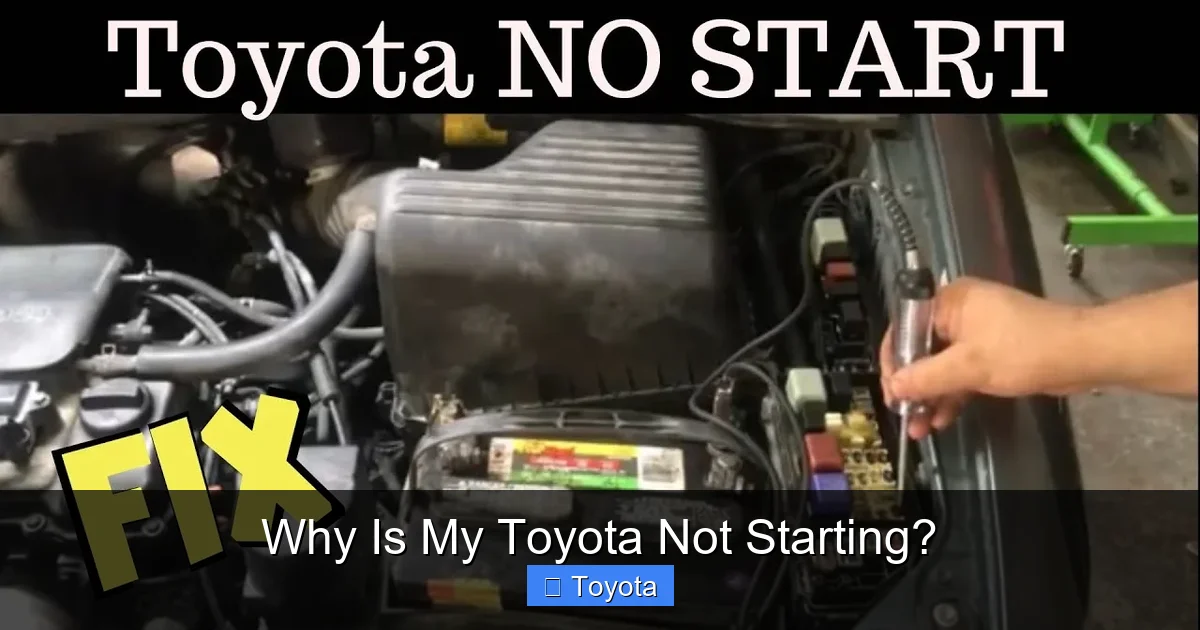
If your Toyota won’t start, the first thing to check is the battery. It’s the heart of your vehicle’s electrical system, and without enough power, nothing else can function. A dead or weak battery is by far the most common reason a Toyota fails to start—especially in older models or during cold weather.
Signs of a Dead Battery
You’ll often notice subtle clues before your car completely refuses to start. Dim headlights when you turn the key, slow cranking, or interior lights that flicker are all red flags. In modern Toyotas with push-button start, you might see a warning message on the dashboard like “Key Not Detected” or “Check Engine,” which can sometimes be linked to low battery voltage.
One classic symptom is the dreaded “click-click-click” sound when you try to start the engine. This means the starter solenoid is receiving power, but not enough to turn the motor. It’s your battery saying, “I’m too weak to do this.”
How to Test Your Battery
You don’t need fancy tools to check your battery. A simple multimeter can tell you if it’s holding a charge. A healthy 12-volt battery should read around 12.6 volts when the car is off. If it’s below 12.4 volts, it’s likely weak. When the engine is running, the voltage should rise to 13.7–14.7 volts—if it doesn’t, your alternator might not be charging the battery properly.
Another quick test: turn on your headlights with the engine off. If they’re bright, your battery probably has enough juice. If they’re dim or flicker, it’s time to charge or replace it.
Jump-Starting Your Toyota
If your battery is dead, a jump-start can get you going again. Here’s how to do it safely:
- Park a working vehicle close (but not touching) your Toyota.
- Connect the red jumper cable to the positive (+) terminal of your dead battery.
- Attach the other red clamp to the positive terminal of the good battery.
- Connect the black clamp to the negative (-) terminal of the good battery.
- Attach the final black clamp to an unpainted metal surface on your Toyota’s engine block (not the battery itself).
- Start the working car, let it run for a few minutes, then try starting your Toyota.
Pro tip: After a jump-start, drive your Toyota for at least 30 minutes to allow the alternator to recharge the battery. If it dies again shortly after, the battery may be too old or the alternator could be failing.
When to Replace the Battery
Car batteries typically last 3–5 years. If your Toyota is older than that and you’re experiencing frequent no-starts, it’s likely time for a new one. Look for signs like corrosion on the terminals (a white, powdery substance), a swollen battery case, or a battery that won’t hold a charge even after being jumped.
Replacing a Toyota battery is usually straightforward—most are located under the hood in a plastic tray. Just disconnect the negative cable first, then the positive, remove the old battery, and install the new one in reverse order. Many auto parts stores will even test your old battery for free.
2. Starter Motor Failure: The Clicking Mystery
Visual guide about Why Is My Toyota Not Starting?
Image source: i.ytimg.com
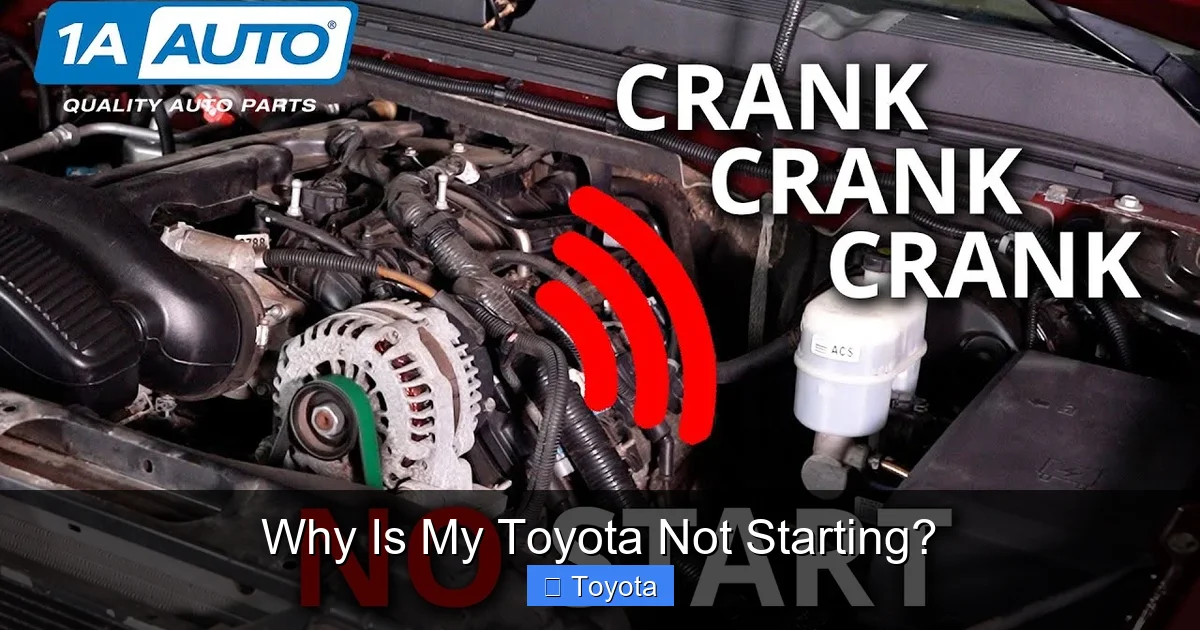
If you turn the key and hear a single loud click—but the engine doesn’t turn over—you might be dealing with a faulty starter motor. The starter is responsible for physically turning the engine when you initiate the start sequence. If it fails, your Toyota won’t start, even if the battery is fully charged.
How the Starter Works
When you turn the key or press the start button, an electrical signal is sent to the starter solenoid. This engages the starter motor, which spins the engine’s flywheel to begin combustion. If the solenoid clicks but the motor doesn’t spin, the issue is likely internal—worn brushes, a bad armature, or electrical failure.
Diagnosing a Bad Starter
A clicking noise without engine rotation is the hallmark of a starter problem. But don’t jump to conclusions—sometimes a weak battery can mimic this symptom. To confirm, try jump-starting your Toyota. If it starts after a jump, the battery was the issue. If it still only clicks, the starter is likely the culprit.
You can also tap the starter gently with a hammer (while someone tries to start the car) as a temporary test. If the car starts after a tap, the starter is failing and needs replacement. This isn’t a fix—it’s a diagnostic trick.
Replacing the Starter
Replacing a starter is more involved than swapping a battery. It’s usually located near the transmission, under the engine. You’ll need to disconnect the battery, remove heat shields, and unbolt the starter. It’s a job best left to a mechanic unless you’re experienced with car repairs.
The cost varies by model, but expect to pay $300–$600 for parts and labor. Some Toyotas, like the Camry or Corolla, have more accessible starters, while others (like the 4Runner) may require more disassembly.
3. Fuel System Issues: No Gas, No Go

Visual guide about Why Is My Toyota Not Starting?
Image source: shiftthrill.com
Your engine needs fuel to run. If your Toyota turns over but won’t start, the problem might be in the fuel system. This includes the fuel pump, fuel filter, fuel injectors, and even the gas tank itself.
The Fuel Pump: The Silent Workhorse
The fuel pump sends gasoline from the tank to the engine at high pressure. If it fails, your engine won’t get the fuel it needs to ignite. A common sign of a failing fuel pump is a whining noise from the rear of the car (where the pump is usually located). You might also notice poor acceleration, stalling, or difficulty starting when the engine is hot.
To test the fuel pump, turn the key to the “ON” position (without starting the engine). You should hear a brief hum from the fuel tank—this is the pump priming. If you don’t hear anything, the pump may be dead.
Clogged Fuel Filter
The fuel filter removes dirt and debris from gasoline before it reaches the engine. Over time, it can become clogged, restricting fuel flow. Symptoms include hard starting, engine hesitation, and reduced power. Most Toyota models have a fuel filter that should be replaced every 30,000–60,000 miles, though some newer models have lifetime filters.
Replacing a fuel filter is relatively simple on many Toyotas—it’s often located along the fuel line under the car. But be cautious: fuel systems are pressurized. Always relieve pressure by removing the fuel pump fuse and running the engine until it stalls before disconnecting anything.
Empty Fuel Tank or Bad Gas
It sounds obvious, but sometimes the simplest explanation is the right one. Check your fuel gauge—maybe you’re just out of gas. Also, bad or contaminated fuel (like water in the tank) can prevent starting. If you recently filled up at a questionable station, consider draining the tank or adding a fuel system cleaner.
4. Ignition and Key Fob Problems
Modern Toyotas rely heavily on electronic systems, especially when it comes to starting. If your key fob is dead or the ignition switch is faulty, your car may not recognize the signal to start.
Smart Key and Push-Button Start Issues
Toyotas with keyless entry and push-button start use a smart key system. If the key fob battery is dead, the car may not detect it, even if you’re standing right next to it. Look for a warning light on the dashboard or a message like “Key Not Detected.”
To start your Toyota with a dead fob, try placing it in the designated “emergency start” slot (often near the steering column or center console). Some models allow you to start the car by holding the fob against the start button while pressing it.
Worn or Damaged Key
Even with traditional keys, wear and tear can cause problems. A worn key may not make proper contact in the ignition cylinder, preventing the car from starting. Try jiggling the key gently—if the car starts after moving it slightly, the cylinder may be worn and need replacement.
Ignition Switch Failure
The ignition switch sends power to the starter and other systems when you turn the key. If it fails, your Toyota won’t start, and you may notice other electrical issues like dashboard lights flickering or accessories not working. Replacing an ignition switch is a job for a professional, as it involves disassembling the steering column.
5. Alternator and Charging System Failures
If your Toyota starts one day but won’t start the next—even after a jump—the alternator might be to blame. The alternator charges the battery while the engine runs. If it fails, the battery drains quickly, leaving you stranded.
Symptoms of a Bad Alternator
Common signs include:
- Battery warning light on the dashboard
- Dim or flickering headlights
- Electrical accessories (radio, power windows) working slowly
- Engine stalling or dying while driving
A multimeter can help confirm: with the engine running, voltage should be 13.7–14.7 volts. If it’s below 13 volts, the alternator isn’t charging properly.
Can You Drive with a Bad Alternator?
Technically, yes—but not for long. Once the battery is drained, the car will stop. And you risk damaging other electrical components. It’s best to replace the alternator as soon as possible.
6. Engine Immobilizer and Security System Glitches
Toyotas are equipped with an immobilizer system to prevent theft. It uses a chip in the key to communicate with the car’s computer. If the system doesn’t recognize the key, it won’t allow the engine to start—even if you turn the key perfectly.
Immobilizer Light Blinking
If the security or immobilizer light on your dashboard flashes when you try to start the car, the system isn’t recognizing your key. This can happen if the key chip is damaged, the fob battery is dead, or there’s a fault in the immobilizer antenna.
Try using a spare key. If it works, the original key may need reprogramming or replacement.
Resetting the System
Sometimes, a simple reset can fix the issue. Turn the key to “ON” for 10 minutes, then turn it off. Wait a few minutes and try again. This can reset the immobilizer’s communication cycle.
7. Environmental and Mechanical Factors
Cold Weather Challenges
Cold temperatures thicken engine oil and reduce battery efficiency. If your Toyota won’t start on a freezing morning, it could be due to sluggish oil or a weak battery. Use a block heater in extreme cold, and consider a battery with higher cold cranking amps (CCA).
Flooded Engine
In rare cases, especially with older carbureted engines, the engine can become “flooded” with too much fuel. If you’ve tried starting multiple times without success, wait 10–15 minutes to let the excess fuel evaporate, then try again with the accelerator pedal held down slightly.
Timing Belt Failure
If your Toyota has a non-interference engine, a broken timing belt may prevent starting but won’t damage internal components. However, in interference engines (like many 4-cylinder Toyotas), a broken belt can cause catastrophic engine damage. If the engine turns over but won’t start, and you suspect belt issues, have it inspected immediately.
When to Call a Mechanic
While many no-start issues can be diagnosed at home, some require professional help. If you’ve checked the battery, starter, and fuel system and still can’t find the cause, it’s time to visit a Toyota service center or trusted mechanic. They have diagnostic tools to read error codes, test sensors, and pinpoint complex electrical or mechanical faults.
Conclusion
So, why is your Toyota not starting? The answer is usually one of a handful of common issues—most of which are fixable without a major repair bill. Start with the battery: it’s the most frequent offender. Then move on to the starter, fuel system, and ignition components. Pay attention to warning signs like clicking, dim lights, or dashboard messages.
Remember, regular maintenance goes a long way. Replace your battery every 3–5 years, change the fuel filter as recommended, and keep your key fob battery fresh. And if you’re ever unsure, don’t hesitate to consult a professional.
Your Toyota is built to last—and with a little troubleshooting know-how, you’ll keep it running smoothly for years to come.
Frequently Asked Questions
Why won’t my Toyota start even with a new battery?
If your Toyota still won’t start after replacing the battery, the issue could be a faulty starter, bad alternator, or a problem with the ignition system. Check for clicking sounds or dashboard warning lights to narrow it down.
Can a bad fuel pump prevent my Toyota from starting?
Yes, a failing fuel pump can stop fuel from reaching the engine, causing hard starts or no starts at all. Listen for a humming sound from the fuel tank when you turn the key to the “ON” position—if you don’t hear it, the pump may be dead.
Why does my Toyota only start when I jump it?
If your Toyota starts with a jump but dies soon after, the alternator likely isn’t charging the battery properly. Have the charging system tested to confirm.
Can a dead key fob stop my Toyota from starting?
Yes, especially in models with push-button start. If the fob battery is dead, the car may not detect the key. Try placing the fob in the emergency start slot or replacing the battery.
Why won’t my Toyota start in cold weather?
Cold temperatures reduce battery efficiency and thicken engine oil, making it harder to start. Use a battery with higher cold cranking amps (CCA) and consider a block heater in extreme climates.
Is it safe to keep trying to start a Toyota that won’t turn over?
Repeated attempts can drain the battery further or damage the starter. If it doesn’t start after 2–3 tries, stop and diagnose the issue—don’t keep cranking.