
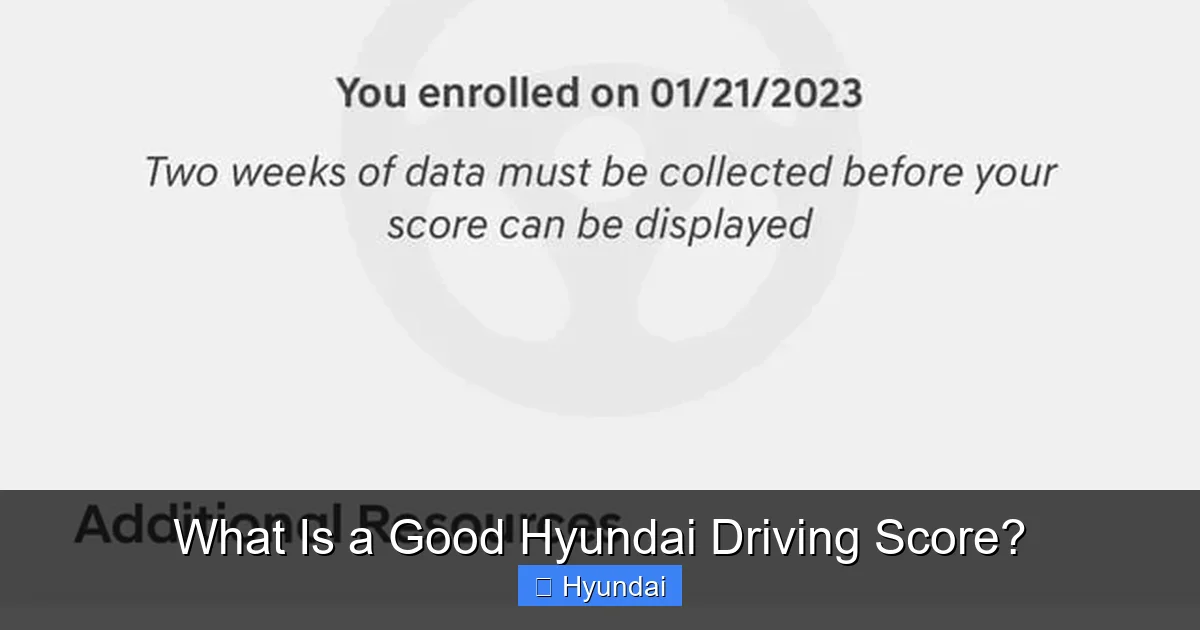
What Is a Good Hyundai Driving Score?

Contents
- 1 Key Takeaways
- 2 📑 Table of Contents
- 3 What Exactly Is the Hyundai Driving Score?
- 4 Breaking Down the Scoring Factors
- 5 What Score Numbers Actually Mean: Interpreting the Scale
- 6 Why Your Driving Score Matters Beyond Bragging Rights
- 7 10 Actionable Tips to Boost Your Hyundai Driving Score
- 8 Debunking Common Myths and Misconceptions
- 9 The Future of Driving Scores and Connected Car Safety
- 10 Frequently Asked Questions

Torque Wrench Set

Windshield Washer Fluid
Car Phone Holder

Anti Rust Spray
Your Hyundai Driving Score is a number from 0 to 100 that reflects your driving habits based on data from your car’s telematics system. A good score is generally 80 or above, which can qualify you for insurance discounts with participating carriers. Improving your score involves practicing smooth acceleration, gentle braking, and minimizing distractions while behind the wheel.
You’re driving your Hyundai, maybe a sleek Sonata or a sporty Tucson, and you glance at the dashboard. Beyond the speedometer and fuel gauge, your car is quietly collecting a different kind of data—data about you as a driver. This is the era of connected cars, and Hyundai is at the forefront with its innovative Driving Score system. But what exactly is this number, and what does it mean for you? Is a 75 good? What about a 90? More importantly, why should you care?
Think of your Hyundai Driving Score as a report card for your daily driving habits. It’s a simple, easy-to-understand metric generated by your car’s built-in telematics system, typically through the Blue Link connected car service. This score isn’t about how fast your car goes; it’s about how smoothly and safely you operate it. In this complete guide, we’ll break down everything you need to know about the Hyundai Driving Score—from the exact formula to actionable tips that can help you boost your number. Whether you’re looking to save on insurance, become a more mindful driver, or just understand what your car is tracking, this article is for you.
Key Takeaways
- Score Range: The Hyundai Driving Score ranges from 0 to 100, with 80+ considered good and 90+ excellent.
- Key Factors: Your score is primarily based on smooth acceleration, braking, cornering, speed management, and phone distraction.
- Insurance Benefits: A high score can lead to significant discounts on your car insurance through usage-based programs.
- Access via Blue Link: You can view your score and detailed breakdowns through the Hyundai Blue Link app or owner portal.
- Improvement is Possible: Your score updates regularly, so consistent safe driving habits will gradually raise your number.
- No Performance Impact: Your driving score does not affect your vehicle’s warranty, performance, or mechanical condition.
- Privacy Focused: The system tracks driving behaviors, not your specific GPS location routes, for the scoring algorithm.
📑 Table of Contents
- What Exactly Is the Hyundai Driving Score?
- Breaking Down the Scoring Factors
- What Score Numbers Actually Mean: Interpreting the Scale
- Why Your Driving Score Matters Beyond Bragging Rights
- 10 Actionable Tips to Boost Your Hyundai Driving Score
- Debunking Common Myths and Misconceptions
- The Future of Driving Scores and Connected Car Safety
What Exactly Is the Hyundai Driving Score?
At its core, the Hyundai Driving Score is a quantitative assessment of your driving behavior, calculated using data from your vehicle’s sensors and telematics unit. It’s part of Hyundai’s broader Blue Link ecosystem, which includes remote start, vehicle health alerts, and emergency assistance. The score itself is a single number between 0 and 100, updated regularly (often daily or after each trip) and made available to you via the Blue Link smartphone app or the web owner portal.
The Blue Link Connection
You don’t need a separate device. If your Hyundai is model-year 2020 or newer (and in many cases, select 2017-2019 models with connected car services), it likely has the hardware built-in. The Driving Score is one feature within the Blue Link subscription, which may be complimentary for a trial period before requiring a paid subscription. This system uses the car’s own network to collect acceleration, braking, and cornering data, along with information about speed and potential phone use (if your phone is paired via Bluetooth). It’s a passive system—there’s no need to manually start or stop tracking. It simply observes and calculates.
How Data is Collected
Your Hyundai is essentially a data-gathering machine on wheels. For the Driving Score, it monitors specific events:
- Acceleration: How quickly you press the gas pedal from a stop or while moving.
- Braking: The force and speed of your brake pedal application.
- Cornering: The lateral force (how much you lean or swerve) during turns.
- Speed: Your speed relative to posted limits and road conditions.
- Phone Distraction: It can detect if your phone is paired and potentially in use during a trip via Bluetooth interaction patterns.
This data is aggregated and anonymized, then run through Hyundai’s proprietary algorithm to produce your score. It’s important to note that for the purpose of the Driving Score, Hyundai does not track your precise GPS route or location history. The focus is purely on how you drive, not where you go, which addresses a common privacy concern.
Breaking Down the Scoring Factors
Understanding what goes into your score is the first step to improving it. Hyundai doesn’t publish the exact, secret-sauce formula, but they are transparent about the core behavioral categories that influence your number. Each category contributes to the overall score, and poor performance in one area can drag down your total.
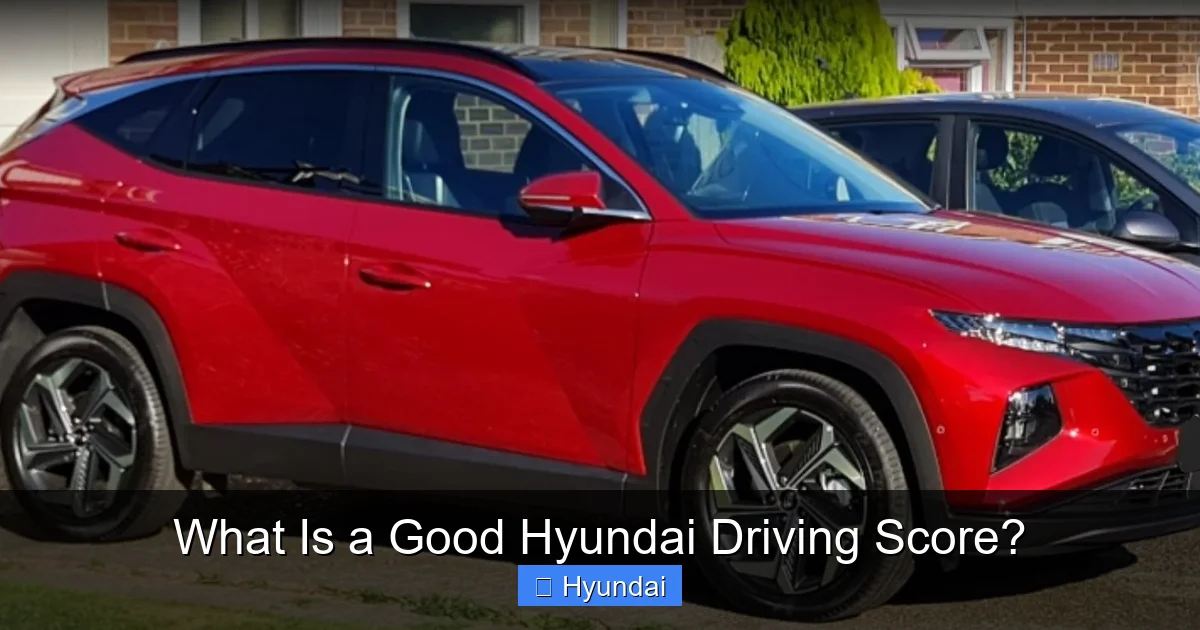
Visual guide about What Is a Good Hyundai Driving Score?
Image source: i.redd.it
Smooth Acceleration and Braking
This is the heaviest weighted factor. The system rewards gradual, smooth inputs and penalizes aggressive, jerky movements.
- Good: Gently pressing the accelerator to merge or move from a stop. Applying the brakes early and steadily to come to a smooth stop.
- Bad: “Jackrabbit” starts from a red light. Slamming on the brakes at the last second to avoid stopping short. Frequent hard braking events are a major score killer.
Practical Example: Imagine two drivers approaching the same stop sign. Driver A sees the sign 200 feet ahead, eases off the gas, and brakes gently over the last 75 feet, coming to a smooth stop. Driver A gets positive points. Driver B races to the sign, then brakes hard at the last moment, causing a jolt. That hard braking event registers as a negative, lowering Driver B’s score for that trip.
Cornering and Speed Management
This category assesses your control of the vehicle during turns and your adherence to speed limits.
- Good: Taking corners at a controlled, appropriate speed for the road curve. Staying within or very close to posted speed limits, adjusting for conditions like rain or heavy traffic.
- Bad: Taking turns too fast, causing tires to squeal or the car to lean significantly. Consistently exceeding speed limits by more than 5-10 mph.
Tip: Use your turn signals early, slow down before the turn (not during), and accelerate smoothly as you exit. This demonstrates planned, controlled driving.
Phone Distraction and Other Habits
This is where the Bluetooth pairing data comes in. The system can detect patterns consistent with phone use while driving, such as frequent disconnections/reconnections or interactions during a trip.
- Good: Letting calls go to voicemail, using a “Do Not Disturb” mode, or only interacting with your phone when the car is parked.
- Bad: Frequent Bluetooth pairing/unpairing mid-drive, which the system interprets as potential phone handling. Answering calls or texting while moving.
Important: The system cannot read your texts or listen to calls. It only notes the occurrence of Bluetooth activity that suggests manual phone use. The safest and best way to maximize this portion of your score is to activate your phone’s driving mode or auto-reply features before you start the car.
What Score Numbers Actually Mean: Interpreting the Scale
So you’ve pulled up the Blue Link app, and there’s a number. Is 72 terrible? Is 88 amazing? Let’s decode the scale and what different ranges signify in the real world.

Visual guide about What Is a Good Hyundai Driving Score?
Image source: i.redd.it
The 0-100 Scale
The scale is linear and cumulative. A score of 100 represents theoretically perfect driving—no hard accelerations, no hard brakes, perfect cornering, no speeding, and zero phone distraction. This is exceptionally rare, as even the most defensive drivers occasionally need to brake firmly for an unexpected obstacle. A score of 0 would represent constant, extreme aggressive driving. Most real-world scores fall somewhere in the middle.
Industry Benchmarks: What’s “Good”?
While Hyundai doesn’t officially define “good” vs. “bad,” industry standards for similar telematics programs (like those from insurance companies) provide a clear benchmark:
- 90-100: Excellent. You are a highly safe, defensive, and smooth driver. You consistently anticipate traffic flow. You will qualify for the highest insurance discounts.
- 80-89: Very Good / Good. This is the target range for most drivers. You drive safely and smoothly with only occasional, minor events that don’t indicate a pattern of risk. You will qualify for good insurance discounts.
- 70-79: Fair. Your driving has room for improvement. You may have a tendency to brake late, accelerate quickly, or occasionally exceed speed limits. Discounts may be minimal or unavailable.
- Below 70: Needs Improvement. Your driving habits are statistically riskier. You likely have frequent hard braking, speeding, or other aggressive inputs. Focus on the improvement tips below. You will not qualify for discounts and may even face higher premiums with some carriers.
Aim for 80+. That’s the magic number that signifies safe, responsible driving to both Hyundai and insurance partners. It’s achievable with conscious effort.
How Hyundai Categorizes Scores (In-App)
Within the Blue Link app, your score is often color-coded and given a simple label:
- Green (typically 80+): “Excellent” or “Great Job!”
- Yellow (typically 70-79): “Good” or “Room for Improvement”
- Red (typically below 70): “Poor” or “Needs Work”
This visual cue makes it easy to see your standing at a glance.
Why Your Driving Score Matters Beyond Bragging Rights
You might think, “I drive safely already. Why do I need a score?” The Hyundai Driving Score has tangible benefits that extend beyond personal satisfaction.
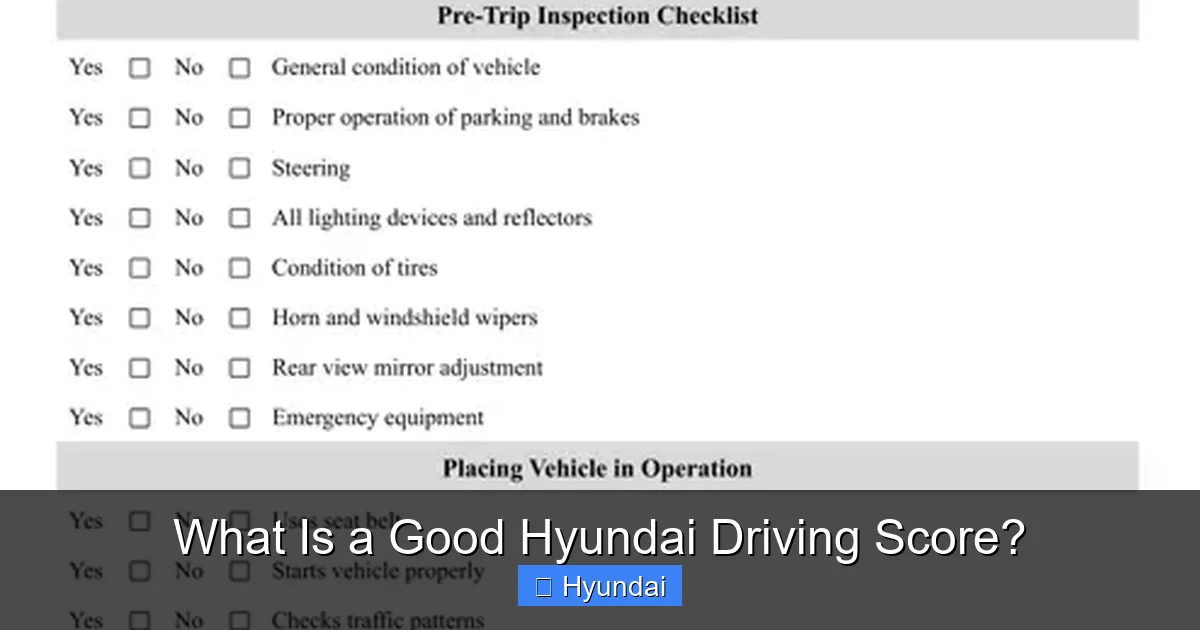
Visual guide about What Is a Good Hyundai Driving Score?
Image source: data.templateroller.com
Insurance Discount Opportunities
This is the biggest financial incentive. Many major insurance companies (like State Farm, Allstate, Progressive) have partnerships with Hyundai Blue Link. By voluntarily sharing your Driving Score data with them, you can enroll in a usage-based insurance (UBI) program, often called a “safe driver discount” or “telematic discount.”
- How it works: Instead of traditional risk factors (age, location, credit-based insurance scores), your premium is partially based on your actual, measured driving behavior.
- The Savings: Drivers with scores of 80+ can often save between 10% and 30% on their annual premium. Some programs offer an immediate discount just for enrolling and sharing data, with potential for more after a review period.
- Important Link: To understand how these discounts compare to standard premium calculations, it’s helpful to know what is a good 6-month car insurance premium in your area. This context helps you gauge the real value of your Hyundai Driving Score savings.
Note: Participation is always voluntary and opt-in. You control who sees your data. Your score is never shared with Hyundai for purposes like warranty claims or dealer service.
Vehicle Health and Maintenance Insights
While not directly part of the score, the Blue Link system that houses it provides other valuable data. Aggressive driving habits (hard acceleration, braking) increase wear and tear on your brakes, tires, and engine. By monitoring your Driving Score and seeing high “hard brake” events, you might infer that your brake pads are wearing faster than normal. This can help you anticipate maintenance needs and drive in a way that prolongs your vehicle’s life.
Personal Safety and Awareness
Simply having a scoreback creates a powerful feedback loop. It makes you more mindful of your actions behind the wheel. You might find yourself thinking, “I need to brake a little earlier here to avoid a hard brake event.” This conscious correction leads to safer, more defensive driving habits overall, reducing your risk of an accident. It’s a built-in coaching tool for yourself or a new driver in your family.
10 Actionable Tips to Boost Your Hyundai Driving Score
Ready to move that number up? Here are proven, practical strategies to improve your Hyundai Driving Score, trip by trip.
- Increase Following Distance: This is the #1 rule. The more space you have between you and the car ahead, the more time you have to react. This eliminates most hard braking situations. Aim for at least a 3-second following distance in dry conditions (more in rain/snow).
- Anticipate Traffic Flow: Look far ahead at the road. See the brake lights two cars in front? Start easing off the gas now. This smooth, proactive driving is exactly what the score rewards.
- Use Cruise Control on Highways: On long, straight stretches, cruise control maintains a constant speed, preventing unnecessary acceleration and speeding. Just be sure to use it responsibly in appropriate traffic conditions.
- Brake Early and Gently: Make a game of coming to a stop so smoothly that your passengers don’t feel a jolt. Press the brake pedal progressively, not in one sudden motion.
- Accelerate Gradually: After a stop, press the gas pedal gently. You don’t need to race to the speed limit. Smooth, steady acceleration is key.
- Plan Your Turns: Slow down before the turn, not while you’re in it. Signal early, and accelerate smoothly as you straighten the wheel on the exit.
- Obey Speed Limits (and then some): Aim to drive at or slightly below the posted limit. The system rewards consistent, lawful speed. Remember, going 5 mph over might not trigger an event, but a pattern of 10+ over will hurt your score.
- Eliminate Phone Distraction: Before you start driving, enable your phone’s “Driving Mode” or “Do Not Disturb While Driving.” This auto-responds to texts and silences notifications. The less your Bluetooth shows activity during a trip, the better this portion of your score will be.
- Be Smooth in Parking Lots: These low-speed zones are full of stop-and-go. Use gentle brake pressure when navigating parking spots and stop signs. Avoid the “creep-and-stop” method.
- Review Your Trip Details: Don’t just look at the daily number. Dive into the Blue Link app’s trip breakdown. Which specific events (hard brake at Main St.?) hurt your score? Learning from your specific mistakes is the fastest way to improve.
Pro Tip: If you’re coaching a teen driver, use the Driving Score as a neutral, data-driven teaching tool. Review trips together and discuss how to avoid the hard brake or acceleration events. It makes abstract “safe driving” concepts concrete.
Debunking Common Myths and Misconceptions
Like any new technology, the Hyundai Driving Score comes with its share of confusion. Let’s clear the air.
Myth 1: “It voids my warranty if my score is low.”
False. Your driving score is completely separate from your vehicle’s warranty. Hyundai does not use this data to deny warranty claims. The score is for your information and optional insurance programs only. Mechanical failures are covered based on the warranty terms, not your driving habits.
Myth 2: “It tracks everywhere I go and sells my location data.”
False. As mentioned, the scoring algorithm does not use GPS location data. It processes behavioral data (g-forces, speed changes) without mapping them to specific addresses. Your privacy is protected. Hyundai’s privacy policy details data usage, and location tracking for the Driving Score is not part of it.
Myth 3: “My score is permanently ruined if I have one bad trip.”
False. The score is an average over time, typically rolling over the last 30 days or a certain number of trips. One aggressive drive will lower your score temporarily, but consistent good driving will bring it back up. It’s designed to reward overall patterns, not single events.
Myth 4: “I have to pay extra for Blue Link to see my score.”
Partially True, but Misleading. The Driving Score feature is part of the Blue Link connected services. Hyundai often includes a complimentary trial period (e.g., 3 years) for new vehicles. After the trial, a subscription is required to access *all* Blue Link features, including the Driving Score. However, some insurance partnerships may allow you to share your score without an active Blue Link subscription, but you’d need to verify with your insurer. Check your vehicle’s eligibility and Hyundai’s current offers.
Myth 5: “A high score means I’m a perfect driver and won’t get in an accident.”
False. While statistically correlated with lower risk, the score is not a guarantee. It measures specific, quantifiable behaviors but cannot account for every variable (e.g., other drivers’ actions, extreme weather, mechanical failure). It’s a excellent risk-reduction tool, not a crystal ball.
The Future of Driving Scores and Connected Car Safety
The Hyundai Driving Score is more than a gimmick; it’s a glimpse into the future of automotive insurance and safety. As vehicle-to-everything (V2X) technology advances, these scores could become even more sophisticated, potentially incorporating data from advanced driver-assistance systems (ADAS) like forward collision warning or lane keep assist performance. Imagine a score that also rewards you for properly using your car’s safety features. Furthermore, as more insurers adopt usage-based models, drivers with proven safe habits will have unprecedented leverage to lower their costs based on reality, not just demographic assumptions. Hyundai is pioneering this shift towards personalized, behavior-based feedback, making our roads safer one smooth brake at a time.
Frequently Asked Questions
What is considered a good Hyundai Driving Score?
A good Hyundai Driving Score is generally 80 or above. Scores in the 80-89 range are “Good” to “Very Good,” while 90-100 is “Excellent.” A score below 70 indicates significant room for improvement in driving habits.
How often is my Hyundai Driving Score updated?
Your score is typically updated after each driving trip and aggregated into a rolling average, often displayed as a daily or weekly number in the Blue Link app. The overall score you see usually reflects your performance over the last 30 days or a set number of trips.
Can my driving score affect my Hyundai vehicle’s warranty?
No. Your Hyundai Driving Score has absolutely no impact on your vehicle’s warranty status. Warranty coverage is based on time and mileage, not your driving behavior. The score data is separate and used only for your feedback and optional insurance programs.
Does the Hyundai Driving Score track my exact location or routes?
No. The scoring algorithm does not use GPS location data to calculate your score. It processes raw behavioral data like acceleration, braking, and cornering forces without mapping them to specific addresses or routes. Your location privacy is maintained for the purpose of the score.
How do I access my Hyundai Driving Score?
You can view your Driving Score through the Hyundai Blue Link smartphone app (iOS/Android) or the Blue Link website owner portal. You must have an active Blue Link subscription (or a trial period) and your vehicle must be a compatible model with connected services enabled.
Can I reset my Hyundai Driving Score to start fresh?
There is no manual “reset” button. Your score is a rolling average of your recent driving trips. If you have a period of poor driving, the only way to improve your score is to consistently practice safe, smooth driving habits over subsequent trips. As new, good data replaces old, bad data in the calculation, your score will naturally increase.


