
What Is a Good 6-month Premium for Car Insurance?

Understanding what is a good 6-month premium for car insurance depends on your location, driving history, vehicle type, and coverage needs. While national averages hover around $900–$1,200 every six months, individual rates can vary widely—so shopping around and comparing quotes is key to finding the best deal.
Key Takeaways
- National averages range from $900 to $1,200 for a 6-month premium—but your personal rate may be higher or lower based on risk factors.
- Your driving record heavily influences your premium: accidents, tickets, and DUIs can significantly increase costs.
- Where you live matters more than you think: urban areas with high traffic and theft rates often have steeper premiums.
- Vehicle type and age play a big role: luxury, sports, or newer cars typically cost more to insure than older, safer sedans.
- Coverage level directly impacts price: minimum liability is cheapest, while full coverage with comprehensive and collision adds cost.
- Discounts can lower your premium by 10–30%: safe driver, multi-policy, good student, and low-mileage discounts are common.
- Shopping around annually saves money: insurers change rates frequently, so comparing quotes can uncover better deals.
📑 Table of Contents
- What Is a Good 6-Month Premium for Car Insurance?
- How Much Does Car Insurance Cost Every 6 Months?
- Factors That Influence Your 6-Month Car Insurance Premium
- How to Determine If Your 6-Month Premium Is “Good”
- Ways to Lower Your 6-Month Car Insurance Premium
- Common Mistakes That Lead to Higher Premiums
- Final Thoughts: Is Your 6-Month Premium Fair?
What Is a Good 6-Month Premium for Car Insurance?
If you’ve ever shopped for car insurance, you’ve probably asked yourself: “What is a good 6-month premium for car insurance?” It’s a smart question—and one that doesn’t have a one-size-fits-all answer. Car insurance isn’t like buying a loaf of bread; the price depends on a mix of personal, geographic, and vehicle-related factors. But understanding the average costs and what drives them can help you make informed decisions and avoid overpaying.
At its core, a “good” 6-month premium is one that offers the right balance of coverage and affordability for your situation. For many drivers, this means paying enough to stay legally compliant and financially protected, but not so much that it strains your budget. The national average for a six-month car insurance policy in the U.S. falls between $900 and $1,200, according to data from sources like the National Association of Insurance Commissioners (NAIC) and industry reports. That breaks down to about $150 to $200 per month. But again—this is just an average. Your actual rate could be $600 if you’re a safe driver in a rural area with an older car, or it could climb to $2,000+ if you live in a high-risk urban zone with a sports car and a few traffic violations.
The key takeaway? Don’t judge your premium solely by the dollar amount. Instead, evaluate whether it reflects your risk profile and coverage needs. A “good” premium isn’t necessarily the cheapest—it’s the one that gives you peace of mind without breaking the bank. In this guide, we’ll break down what influences your 6-month car insurance cost, how to assess whether your rate is fair, and practical tips to lower it if needed.
How Much Does Car Insurance Cost Every 6 Months?
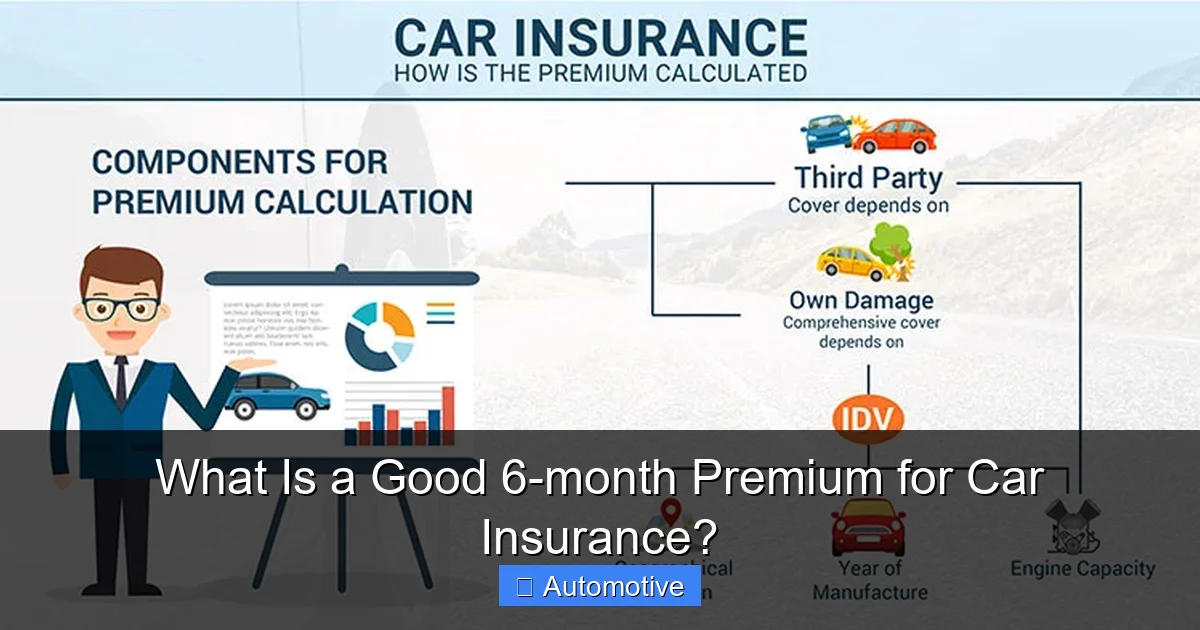
Visual guide about What Is a Good 6-month Premium for Car Insurance?
Image source: oneinsure.com
Let’s start with the numbers. When people ask, “What is a good 6-month premium for car insurance?” they’re often looking for a benchmark. While exact figures vary, here’s a realistic snapshot of what most drivers pay:
– **National average (full coverage):** $1,070 per 6 months
– **National average (minimum coverage):** $545 per 6 months
These numbers come from recent analyses by the NAIC and consumer advocacy groups. Full coverage typically includes liability, collision, and comprehensive insurance—offering broader protection. Minimum coverage, required in most states, only covers bodily injury and property damage you cause to others, not your own vehicle.
But averages can be misleading. For example, a 25-year-old male in Detroit with a clean record might pay $2,500 every six months due to high urban crime and accident rates. Meanwhile, a 45-year-old female in rural Montana with the same car and driving history might pay just $700. That’s why it’s essential to look beyond national stats and consider local and personal factors.
State-by-State Variations
Car insurance costs vary dramatically by state due to differences in regulations, traffic density, weather risks, and litigation rates. Here are a few examples of average 6-month premiums:
– **Louisiana:** $2,800+ (highest in the nation, due to high accident rates and litigation)
– **Michigan:** $2,500+ (no-fault laws and unlimited PIP coverage drive up costs)
– **California:** $1,400 (strict regulations but lower-than-average premiums due to competition)
– **Maine:** $600 (low population density and few claims keep rates down)
– **Ohio:** $750 (affordable liability and low fraud rates)
Even within a state, ZIP code matters. Living in a busy downtown area with high theft rates can cost 20–30% more than a suburban or rural neighborhood just 20 miles away.
Age and Gender Impact
Young drivers, especially teens and those under 25, face the highest premiums. Insurance companies see them as high-risk due to inexperience and higher accident rates. For example:
– A 17-year-old male might pay $3,000–$4,000 every six months for full coverage.
– A 30-year-old with a clean record might pay half that amount.
– Women under 25 often pay slightly less than men the same age, though the gap narrows after 25.
As you age and build a clean driving history, your premiums typically decrease—peaking again after age 70 due to increased risk of health-related accidents.
Factors That Influence Your 6-Month Car Insurance Premium

Visual guide about What Is a Good 6-month Premium for Car Insurance?
Image source: fintopi.com
Now that we’ve covered the averages, let’s dive into what actually determines your rate. Insurance companies use complex algorithms to assess risk, but most factors fall into a few key categories. Understanding these can help you see why your premium is what it is—and how you might reduce it.
Driving History and Record
Your driving record is one of the biggest predictors of your insurance cost. Insurers look at:
– **Accidents:** Even one at-fault accident can increase your premium by 20–50%.
– **Traffic violations:** Speeding tickets, running red lights, or reckless driving add points to your record and raise rates.
– **DUIs or DWIs:** These can double or even triple your premium and may require an SR-22 filing.
– **Claims history:** Frequent claims, even for small incidents, signal higher risk.
For example, a driver with a clean record might pay $900 every six months. Add one at-fault accident, and that could jump to $1,200. Two accidents? You might be looking at $1,600 or more.
Location and ZIP Code
Where you live affects your premium more than you might think. Insurers consider:
– **Population density:** More cars on the road mean more accidents.
– **Crime rates:** High theft or vandalism areas lead to higher comprehensive claims.
– **Weather risks:** Hail, floods, or snowstorms increase the chance of damage claims.
– **Traffic congestion:** Stop-and-go traffic raises accident likelihood.
For instance, a driver in Miami, Florida, might pay $1,800 every six months due to hurricanes, theft, and heavy traffic. The same driver in Boise, Idaho, might pay $900.
Vehicle Type and Usage
The car you drive directly impacts your premium. Insurers evaluate:
– **Make and model:** Sports cars (like a Mustang or BMW) cost more to insure than sedans (like a Toyota Camry).
– **Age of vehicle:** Newer cars have higher replacement costs but may qualify for safety discounts.
– **Safety features:** Cars with advanced driver assistance systems (ADAS) like automatic braking or lane departure warnings may get discounts.
– **Annual mileage:** Driving more than 12,000 miles a year increases risk and cost.
For example, insuring a 2023 Honda Civic might cost $1,000 every six months, while a 2023 Porsche 911 could cost $3,000+ due to high repair costs and theft risk.
Coverage Level and Deductibles
The type and amount of coverage you choose play a major role in your premium:
– **Liability only:** Covers damage you cause to others. Cheapest option, but no protection for your car.
– **Collision:** Pays for damage to your car from accidents, regardless of fault.
– **Comprehensive:** Covers non-collision events like theft, fire, or weather damage.
– **Uninsured/underinsured motorist:** Protects you if hit by a driver with no or insufficient insurance.
Higher coverage limits and lower deductibles increase your premium. For example, choosing a $500 deductible instead of $1,000 can add $100–$200 to your 6-month premium.
Credit Score (in Most States)
In 47 states, insurers can use your credit-based insurance score to set rates. Studies show a correlation between credit history and claim frequency. Drivers with poor credit may pay 20–50% more than those with excellent credit.
For example:
– Excellent credit (750+): $900 every 6 months
– Fair credit (650–699): $1,100
– Poor credit (below 600): $1,400+
Note: California, Hawaii, and Massachusetts prohibit the use of credit scores in insurance pricing.
Other Personal Factors
Insurers may also consider:
– **Marital status:** Married drivers often pay less, as they’re seen as more stable.
– **Occupation:** Some jobs (like teachers or engineers) qualify for group discounts.
– **Education level:** Higher education may correlate with lower risk.
– **Annual mileage:** Low-mileage drivers (under 7,500 miles/year) may qualify for discounts.
How to Determine If Your 6-Month Premium Is “Good”

Visual guide about What Is a Good 6-month Premium for Car Insurance?
Image source: png.pngtree.com
So, how do you know if your premium is fair? Here’s a simple framework to evaluate your rate:
Compare to Local Averages
Start by researching average rates in your state and city. Websites like the NAIC, Insurance Information Institute (III), or consumer reports provide state-specific data. If your premium is 20–30% higher than the local average, it might be worth shopping around.
Assess Your Risk Profile
Ask yourself:
– Do I have a clean driving record?
– Do I live in a high-risk area?
– Do I drive a high-performance or luxury vehicle?
– Do I need full coverage or just liability?
If you answered “no” to most of these, but your premium is high, you might be overpaying.
Review Your Coverage Needs
Are you paying for coverage you don’t need? For example:
– If your car is over 10 years old, collision coverage might not be worth it.
– If you have savings to cover repairs, a higher deductible could lower your premium.
Conversely, if you’re underinsured, a “cheap” premium might leave you vulnerable in an accident.
Get Multiple Quotes
The best way to test if your premium is good is to compare it to others. Get quotes from at least three insurers—national (like State Farm, Geico), regional (like Auto-Owners), and local companies. Use online comparison tools or work with an independent agent.
For example, you might find:
– Current insurer: $1,100 every 6 months
– Competitor A: $950
– Competitor B: $875
Even a $100 difference adds up to $200 per year—money you could save.
Ways to Lower Your 6-Month Car Insurance Premium
If your premium feels too high, don’t panic. There are proven strategies to reduce it—without sacrificing essential coverage.
Take Advantage of Discounts
Most insurers offer a range of discounts. Common ones include:
– **Safe driver discount:** For accident- and violation-free records (often 10–25% off).
– **Multi-policy discount:** Bundling auto and home insurance (up to 20% savings).
– **Good student discount:** For full-time students with a B average or higher.
– **Low-mileage discount:** For driving under 7,500 miles per year.
– **Defensive driving course:** Completing an approved course can save 5–10%.
– **Pay-in-full discount:** Paying your 6-month premium upfront instead of monthly.
– **Telematics programs:** Using a usage-based app (like Progressive’s Snapshot) to prove safe driving.
For example, a driver who bundles policies, takes a defensive driving course, and drives under 5,000 miles a year could save $300–$500 every six months.
Raise Your Deductible
Increasing your deductible from $500 to $1,000 can reduce your premium by 15–30%. Just make sure you can afford the higher out-of-pocket cost if you file a claim.
Drop Unnecessary Coverage
If your car is older and has low market value (under $4,000), consider dropping collision and comprehensive coverage. The cost of the coverage might exceed the car’s value.
Improve Your Credit Score
In states that allow it, boosting your credit score can lower your premium. Pay bills on time, reduce credit card balances, and check your credit report for errors.
Shop Around Annually
Insurance companies don’t always reward loyalty. Rates change frequently based on claims, competition, and risk models. Reviewing your policy and comparing quotes every 6–12 months can uncover better deals.
Consider Usage-Based Insurance
Telematics programs track your driving habits—speed, braking, mileage—and reward safe behavior with discounts. Some drivers save up to 30% with these programs.
Common Mistakes That Lead to Higher Premiums
Even savvy drivers can make errors that inflate their premiums. Avoid these pitfalls:
Not Updating Your Policy
Life changes—like moving, getting married, or buying a new car—should prompt a policy review. Failing to update your insurer can result in incorrect rates or denied claims.
Choosing the Cheapest Policy Without Reviewing Coverage
A low premium might mean inadequate coverage. Always check liability limits, deductibles, and exclusions. Minimum coverage might not be enough after a serious accident.
Ignoring Discount Opportunities
Many drivers don’t ask about discounts or forget to re-qualify for them. Contact your insurer annually to review available savings.
Letting Your Policy Auto-Renew Without Comparison
Auto-renewal is convenient, but it can lock you into a rate that’s no longer competitive. Set a calendar reminder to shop around before renewal.
Final Thoughts: Is Your 6-Month Premium Fair?
So, what is a good 6-month premium for car insurance? There’s no magic number, but a fair premium is one that aligns with your risk profile, coverage needs, and budget. If you’re paying within 10–20% of your state’s average and feel adequately protected, you’re likely in good shape.
Remember, the cheapest policy isn’t always the best. Focus on value—adequate coverage, reliable customer service, and fair claims handling. And don’t forget: your premium isn’t set in stone. With smart choices—like maintaining a clean driving record, bundling policies, and shopping around—you can keep your costs manageable for years to come.
Ultimately, car insurance is about peace of mind. A “good” premium is one that lets you drive confidently, knowing you’re protected without overpaying. Take control of your coverage today, and you’ll save money while staying safe on the road.
Frequently Asked Questions
What is the average 6-month car insurance premium in the U.S.?
The national average for a 6-month car insurance premium is around $1,070 for full coverage and $545 for minimum coverage. However, rates vary widely by state, driving history, and vehicle type.
Is $1,200 every 6 months a lot for car insurance?
$1,200 every six months is slightly above the national average for full coverage, but it may be reasonable depending on your location, age, and driving record. Compare it to local averages to determine if it’s fair.
Can I lower my 6-month premium without reducing coverage?
Yes! You can lower your premium by taking advantage of discounts, raising your deductible, improving your credit score, or switching to a usage-based insurance program—all without cutting essential coverage.
Why is my car insurance so high even with a clean record?
Even with a clean driving record, factors like living in a high-risk area, driving a luxury or sports car, or having poor credit can increase your premium. Shopping around can help you find a better rate.
How often should I shop for car insurance?
It’s wise to compare car insurance quotes at least once a year, or whenever you experience a life change like moving, buying a new car, or getting married. Rates change frequently, and loyalty doesn’t always pay.
Does my car’s color affect my insurance premium?
No, the color of your car does not affect your insurance premium. Insurers care about make, model, age, safety features, and theft rates—not the paint job.
