What Is a Bmw Microfilter?

Contents
- 1 Key Takeaways
- 2 📑 Table of Contents
- 3 What Exactly Is a BMW Microfilter?
- 4 Where Is the BMW Microfilter Located?
- 5 Signs Your BMW Microfilter Needs Replacing
- 6 How Often Should You Replace a BMW Microfilter?
- 7 The Replacement Process: What to Expect
- 8 Why Genuine or High-Quality Replacement is Non-Negotiable
- 9 Conclusion: A Small Part with a Big Impact
- 10 Frequently Asked Questions

Pressure Washer for Car

Car Windshield Wiper Blades

Steering Wheel Cover

Engine Oil Additive
A BMW microfilter is a high-efficiency cabin air filter designed to capture the smallest airborne contaminants, far beyond what a standard filter can trap. It’s a critical component for maintaining superior interior air quality, protecting your health, and preserving your BMW’s HVAC system. Regular replacement is a simple yet vital part of ownership.
You love your BMW for its driving dynamics, engineering, and that signature luxury feel. But what about the air you breathe while enjoying that experience? That’s where a small, often overlooked component comes into play: the BMW microfilter. This isn’t just a regular cabin air filter; it’s a specialized piece of technology engineered to meet the high standards of the brand. Understanding what it is, what it does, and how to care for it is a hallmark of an informed and proactive BMW owner. This guide will walk you through everything you need to know, from its technical definition to practical maintenance tips, ensuring your driving environment remains as pristine as the day you drove your car off the lot.
Key Takeaways
- It’s Not Your Engine Air Filter: The microfilter cleans the air you breathe inside the car, not the air going into the engine.
- Superior Filtration: It uses advanced media like activated carbon and electro-static fibers to capture particles as small as PM2.5, pollen, and odors.
- Location & Access: It’s typically located behind the glovebox or under the hood near the cowl, requiring specific steps for access and replacement.
- Regular Replacement is Key: BMW recommends changing it every 12-24 months or 10,000-20,000 miles, depending on driving conditions.
- Neglect Has Consequences: A clogged filter reduces HVAC airflow, strains the blower motor, causes foul odors, and compromises your health.
- Quality Matters: Always use an OEM-spec or high-quality aftermarket filter to ensure proper fit and filtration efficiency.
- DIY vs. Professional: Replacement can be a DIY project for many models but can be complex on others; know your car’s specific procedure.
📑 Table of Contents
- What Exactly Is a BMW Microfilter?
- Where Is the BMW Microfilter Located?
- Signs Your BMW Microfilter Needs Replacing
- How Often Should You Replace a BMW Microfilter?
- The Replacement Process: What to Expect
- Why Genuine or High-Quality Replacement is Non-Negotiable
- Conclusion: A Small Part with a Big Impact
What Exactly Is a BMW Microfilter?
At its core, a BMW microfilter is the cabin air filter for your vehicle. However, calling it that undersells its capabilities. The term “microfilter” specifically denotes a filter with an exceptionally high filtration efficiency, designed to capture microscopic particles that standard filters might allow to pass through. Think of it as the difference between a sieve and a high-tech laboratory filter.
The Science of Filtration: Beyond Dust and Pollen
Standard cabin filters primarily trap larger particles like dust, dirt, and pollen. A genuine BMW microfilter employs a multi-layered media construction. This often includes:
- Electrostatic Melt-Blown Media: This is the workhorse. Tiny synthetic fibers are blown and bonded together, creating a web with microscopic gaps. An electrostatic charge is imparted to these fibers, which actively attracts and traps particles like a magnet—even those far too small to get physically caught in the weave.
- Activated Carbon Layer: Many BMW microfilters incorporate a layer of activated carbon. This porous material is fantastic for adsorbing (not absorbing) gaseous pollutants, odors, and volatile organic compounds (VOCs). It neutralizes smells from exhaust fumes, industrial pollution, and even that new car smell that can off-gas harmful chemicals.
- Supporting Layers: Sturdy mesh or fabric layers on either side provide structural integrity, preventing the delicate filter media from collapsing under the force of the HVAC system’s airflow.
This combination allows the microfilter to effectively capture particles down to 0.3 micrometers in size or smaller, including PM2.5 (fine particulate matter), bacteria, mold spores, and soot. For the driver and passengers, this means a significantly cleaner, healthier breathing environment, especially important for those with allergies, asthma, or other respiratory sensitivities.
Microfilter vs. Standard Cabin Filter: A Clear Difference
It’s easy to confuse a BMW microfilter with a generic cabin filter you might buy at an auto parts store. The key differentiator is efficiency and media quality. A generic filter might have a filtration efficiency of 50-70% for certain particle sizes. An OEM BMW microfilter is engineered to meet specific European and internal standards, often boasting efficiencies of 90% or higher for the smallest particles. Using a subpar filter negates the design intent of your BMW’s climate control system and can leave you exposed to the very pollutants the system is meant to exclude. This focus on极致 (extreme) filtration aligns with BMW’s overall philosophy of engineering excellence, similar to how their engines are tuned for performance and efficiency, not just basic transportation.
Where Is the BMW Microfilter Located?
The location is not universal and varies significantly between BMW models and generations. However, you’ll almost always find it in the fresh air intake path, before the air reaches the HVAC blower and the cabin. Here are the two most common locations:

Visual guide about What Is a Bmw Microfilter?
Image source: storage.googleapis.com
Behind the Glovebox (The Most Common Spot)
For a vast majority of modern BMWs (3 Series, 5 Series, X3, X5, etc. from the early 2000s onward), the microfilter is accessed from the passenger side of the dashboard. The process typically involves:
- Opening the glovebox and removing any contents.
- Locating and gently releasing the glovebox damper (the rod that slows its drop).
- Allowing the glovebox to swing down completely, revealing a plastic cover panel behind it.
- Removing the screws or clips holding this panel to expose the filter housing.
- Opening the housing (usually by releasing clips or removing a few screws) and sliding the old filter out.
This design is clever because it uses otherwise unused space and keeps the filter accessible without needing to go under the hood.
Under the Hood, Near the Cowl
Some models, particularly certain SUVs (like the X1) or older designs, house the filter in a compartment at the base of the windshield, under the hood. You’ll find it behind a plastic cover marked with an air filter icon. Access is simpler in terms of dashboard removal but requires opening the hood and dealing with exterior elements. Always consult your owner’s manual for the exact location and procedure for your specific VIN.
Why Location Matters for Replacement
Knowing the location is the first step. The complexity of access directly impacts whether you should attempt a DIY replacement. The glovebox method, while requiring careful handling of the damper and plastics, is generally a 30-45 minute job for a competent DIYer with basic tools. The under-hood location is often even simpler. However, some newer models with more complex dash structures may require professional tools and expertise. If you’re unsure, a quick search for “[Your BMW Model Year] microfilter replacement” on a trusted enthusiast forum (like BimmerPost) will give you a clear picture of the difficulty.
Signs Your BMW Microfilter Needs Replacing
Unlike an engine air filter, which might trigger a service light, a failing microfilter gives you subtle but telling clues. Ignoring these signs doesn’t just affect air quality; it can lead to expensive repairs down the line.

Visual guide about What Is a Bmw Microfilter?
Image source: m.media-amazon.com
Reduced HVAC Airflow and Weak Blower
This is the most common and noticeable symptom. A clogged microfilter is a massive roadblock for your HVAC system’s fresh air intake. You’ll notice:
- Air from the vents feels weak, even on the highest fan setting.
- It takes much longer to defog or defrost the windshield.
- You’re constantly adjusting the fan speed higher to achieve the same cooling or heating effect.
This reduced airflow forces your blower motor to work harder, increasing its electrical draw and accelerating wear. A failed blower motor in a BMW can be a costly replacement, making a $30-$60 filter a wise investment in prevention.
Unpleasant Odors Inside the Cabin
A saturated microfilter, especially one with an activated carbon layer that has done its job, becomes a breeding ground for mold, mildew, and bacteria. When the HVAC system runs, it blows these odors directly into the cabin. You might smell:
- A persistent musty, “old socks” smell (classic sign of microbial growth).
- Stale, dusty air.
- Exhaust or outside pollution smells that seem stronger than usual, indicating the filter is no longer trapping them effectively.
If an odor treatment (like a professional HVAC cleaning) doesn’t last long, the source is almost certainly a clogged, contaminated filter. Replacing it is the only permanent fix.
Visible Debris and Poor Condition Upon Inspection
If you’ve located the filter, a visual inspection is definitive. A healthy filter will have a consistent color (usually white, off-white, or light gray) and a clean, fibrous texture. A filter that is:
- Dark gray or black.
- Caked with dust and debris.
- Wet, damp, or showing signs of mold.
- Torn or damaged.
…is long overdue for replacement. Don’t wait for symptoms; checking it during routine oil changes or seasonal maintenance is a great habit.
How Often Should You Replace a BMW Microfilter?
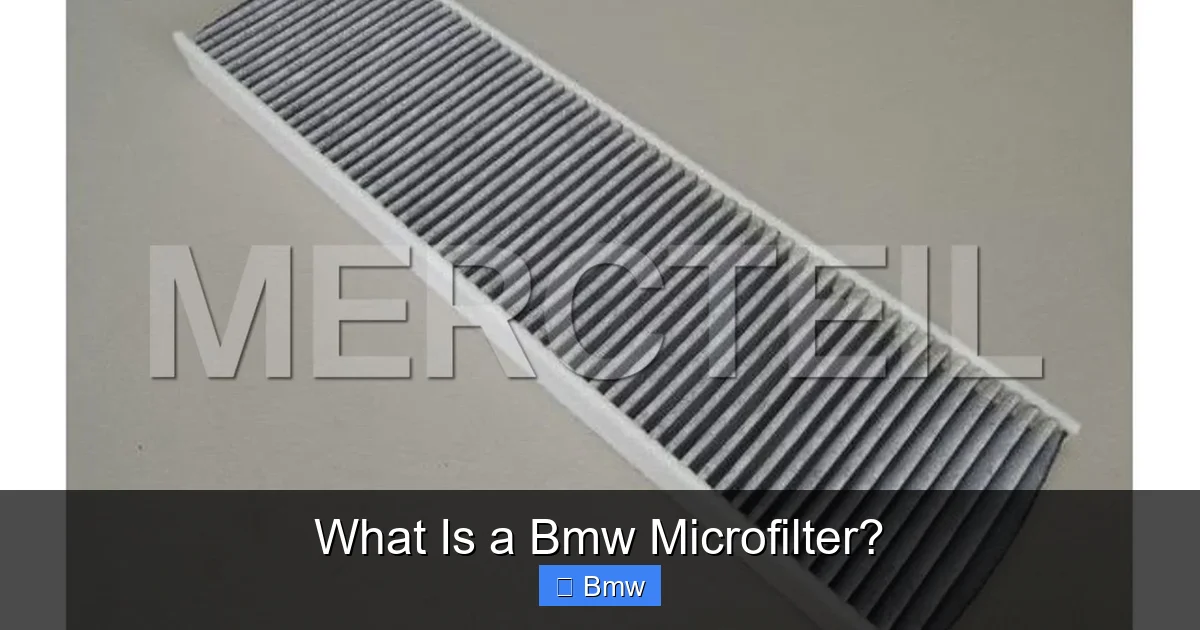
BMW’s official “normal” interval is typically every 2 years or 20,000 miles. However, this is a best-case scenario for ideal driving conditions: mostly clean, rural highways. For most drivers, this interval is too long. A more realistic and proactive schedule is:
Visual guide about What Is a Bmw Microfilter?
Image source: mercteil.com
Annual Replacement (The Gold Standard)
Replacing your microfilter once a year, ideally in the spring before pollen season hits full force, is the single best thing you can do for your cabin air quality and HVAC health. It’s a cheap, easy form of preventative maintenance. Think of it like changing your home’s furnace filter; you wouldn’t wait two years.
Adjusting for Harsh Conditions
You should shorten the interval if you frequently drive in:
- Urban/High-Traffic Areas: Constant exposure to exhaust soot, brake dust, and construction debris loads the filter faster.
- Dusty or Polluted Environments: Living near dirt roads, agricultural areas, or industrial zones.
- Areas with High Pollen Count: Seasonal allergies are a sign your filter is working hard. Change it before and after peak season.
- Stop-and-Go Traffic: Idling in traffic means the HVAC system is constantly pulling in the polluted air of the car in front of you.
In these scenarios, consider a replacement every 12 months or 10,000-15,000 miles. The cost of a quality filter is far less than the price of a blower motor or the health cost of poor air quality.
The Replacement Process: What to Expect
If you’ve decided to tackle this yourself, here’s a generalized overview. Always refer to your specific model’s service manual or a trusted tutorial first.
Tools and Parts Needed
- The Correct Filter: This is the most important part. Use your VIN or exact model/year to look up the BMW part number (e.g., 64 11 9 407 907 for many models). Reputable brands like Mann-Filter, Bosch, or Mahle make excellent OE-equivalent replacements. Avoid cheap, unknown brands.
- Basic Tools: Screwdrivers (Phillips and flathead), socket set (often 8mm or 10mm for glovebox dampers/panels), trim removal tools (plastic pry tools to avoid scratching).
- Gloves and a Vacuum: For cleaning the housing and your hands.
Step-by-Step (Glovebox Access Example)
- Disconnect the battery (optional but recommended). This prevents any accidental airbag system warnings if you disconnect wiring near the glovebox.
- Open the glovebox and remove all items.
- Locate the glovebox damper. It’s a small metal rod with a clip on one end. Gently unclip it from the glovebox lid and let it retract.
- Swing the glovebox down. It should now hang freely, revealing the filter cover behind it.
- Remove the filter cover. It’s usually held by 2-4 screws or plastic clips. Use the correct tool to avoid breaking clips.
- Note the filter’s orientation. There will be an arrow printed on the frame indicating airflow direction (usually points toward the cabin/blower). This is critical.
- Slide the old filter out. It may be gripped by the housing; wiggle it gently.
- Clean the housing. Use a vacuum to remove all loose debris. Do not use water or compressed air, which can force dirt into the HVAC system.
- Insert the new filter. Match the orientation exactly to the old one. Ensure it seats properly in the guides.
- Reinstall the cover and glovebox. Reattach the damper to the glovebox lid before closing it. Reconnect the battery if you disconnected it.
- Run the HVAC system. Turn it on to max fan for a few minutes with windows down to blow out any residual dust from the housing.
Why Genuine or High-Quality Replacement is Non-Negotiable
You might be tempted by a cheap, generic microfilter on an online marketplace. Resist this urge for your BMW. The precision engineering of the HVAC system’s airflow dynamics relies on a filter with specific pleat design, media density, and frame rigidity. A cheap filter can:
Compromise Filtration and Health
It may not have the electrostatic charge or fine media to capture the smallest particles. You’re essentially running without the protection you paid for. The activated carbon layer, if present, is often insufficient or poorly bonded, offering little to no odor/gas removal.
Cause Physical Damage
Poorly molded plastic frames can warp or crack during installation. Filters that are too flimsy can collapse under vacuum, sending pieces of media into the HVAC plenum—a nightmare to clean. Filters that are too thick can strain the housing clips or prevent the cover from sealing properly, allowing unfiltered air to bypass the filter entirely.
Lead to Premature HVAC Failure
An inefficient filter creates more airflow resistance. Your blower motor has to work harder, generating more heat and consuming more power. Over time, this extra stress can lead to motor failure. A quality filter maintains the designed airflow path and system load.
Sticking with an OEM BMW part or a premium brand like Mann-Filter (which often supplies to BMW) ensures you get the exact specifications your car was built with. It’s a small price to pay for guaranteed performance, longevity, and peace of mind. This attention to component quality is what separates maintaining a true luxury car from a basic appliance on wheels.
Conclusion: A Small Part with a Big Impact
The BMW microfilter is a perfect example of how a seemingly minor component plays a major role in the ownership experience. It is your first and last line of defense against the polluted external world, safeguarding your health, your comfort, and the complex machinery of your climate control system. Treating it with the same importance as your engine oil or brake pads is not paranoia; it’s smart, cost-effective maintenance. By understanding its function, recognizing the signs of failure, and adhering to a proactive replacement schedule with a quality part, you ensure that every journey in your BMW is accompanied by the clean, fresh air that matches its exceptional driving feel. Make checking and replacing this filter a standard part of your BMW care routine, and you’ll breathe easier for it—literally and figuratively.
Frequently Asked Questions
Can a dirty BMW microfilter affect my car’s fuel economy?
Yes, indirectly. A severely clogged microfilter creates significant airflow resistance for the HVAC system, forcing the blower motor to work harder. This increased electrical load places a small extra burden on the alternator, which in turn places a tiny additional load on the engine, potentially reducing fuel economy by a fraction of a percent. The primary impacts are on comfort and system health, not MPG.
Is the BMW microfilter the same as the engine air filter?
Absolutely not. This is a common point of confusion. The engine air filter is located under the hood and cleans the air entering your engine for combustion. The microfilter (cabin air filter) is inside the dashboard or cowl area and cleans the air entering the passenger compartment. They are completely separate filters with different jobs and replacement intervals.
My car has an Eco Pro mode. Does that affect the microfilter?
Eco Pro mode optimizes the car for efficiency, which can include adjusting the HVAC system’s behavior. It may slightly reduce blower output or encourage more recirculation mode (which reuses cabin air instead of pulling in fresh air). While this can slightly lessen the load on the microfilter, it does not eliminate the need for regular replacement. The filter still needs to be effective when you use normal or max settings, and recirculation mode can concentrate interior odors and moisture onto the filter.
How much does a BMW microfilter replacement cost?
The cost varies. The filter part itself typically ranges from $30 to $70 for a quality OEM or OE-equivalent brand. If you do it yourself, that’s the total cost. If you have a dealership or independent shop do it, labor will add to the price. For a simple glovebox access job, labor might be 0.5 to 1 hour. Expect a total shop cost of $100 to $200 depending on your location and model. DIY is highly cost-effective for this job.
Will replacing the filter fix a musty smell in my car?
Often, yes. A musty smell is usually caused by mold and bacteria growing on a saturated, dirty microfilter. Replacing it removes the source of the odor. However, if the smell persists, the mold and bacteria may have colonized the HVAC housing and ducts themselves. In that case, a professional HVAC system cleaning (using antimicrobial agents) may be needed in addition to the filter change.
Can I use a standard cabin filter instead of a BMW microfilter?
Technically, a standard filter will fit and might work for a short time. However, you will lose the high-level filtration efficiency, especially for ultrafine particles and odors. You also risk the issues of poor fit and inadequate construction mentioned earlier. For a BMW, where the cabin is a key part of the luxury experience, using the specified microfilter is the correct and recommended choice.