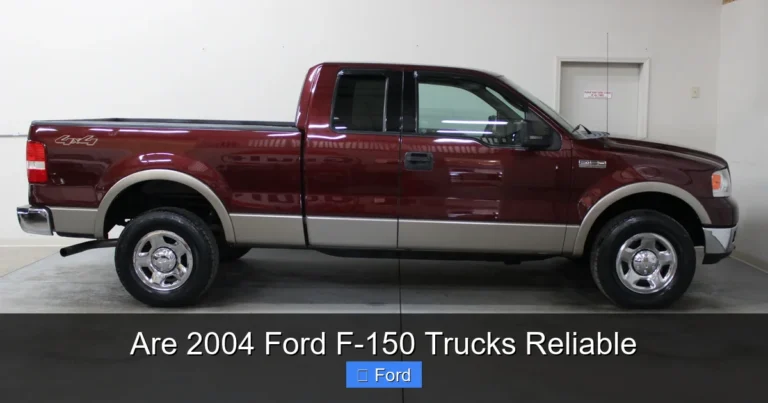
What Gas Does a Ford F-150 Take

Your Ford F-150 almost certainly takes regular unleaded gasoline with an 87 octane rating. This is true for the vast majority of model years and engine configurations, including the popular EcoBoost turbocharged engines. Only specific high-performance versions, like the Raptor or certain older 5.0L V8s, may require or recommend premium 91 octane fuel. The absolute best source is your vehicle’s owner’s manual or the fuel door label. Using the correct fuel ensures optimal performance, fuel economy, and protects your engine from long-term damage.
So, you’ve got a Ford F-150. Maybe it’s your trusty workhorse, your family hauler, or your weekend adventure rig. It’s a truck that does a little bit of everything. But there’s one question that every F-150 owner faces at the pump: “What gas does this thing take?” It’s a simple question, but the answer has some important details that can affect your wallet, your truck’s performance, and its long-term health. Let’s pop the hood and clear up the confusion once and for all.
First, take a deep breath. The answer for the overwhelming majority of you is wonderfully simple: regular unleaded gasoline with an octane rating of 87. That’s it. You can pull up to any pump, select the lowest-grade white button, and fill ‘er up. Ford has designed the F-150’s engine lineup, from the base V6 to the mighty 5.0L V8 and the turbocharged EcoBoost engines, to run perfectly on standard 87-octane fuel. This isn’t a compromise; it’s a deliberate engineering choice that prioritizes accessibility, cost-effectiveness, and proven reliability for millions of drivers.
However, “overwhelming majority” leaves a little room for exceptions. And in the world of trucks, those exceptions matter. This guide will walk you through everything you need to know, from the basic rule to the specific cases where you might need to reach for the more expensive premium pump. We’ll decode octane ratings, talk about ethanol, and debunk some common myths. By the end, you’ll be a certified F-150 fueling expert.
Key Takeaways
- Standard Fuel is Regular Unleaded (87 Octane): For over 95% of Ford F-150s on the road, from the early 2000s to the latest 2024 models, the required fuel is standard 87-octane regular unleaded gasoline.
- EcoBoost Engines Typically Use Regular: Ford’s popular turbocharged EcoBoost V6 engines (2.7L, 3.5L) are designed for and calibrated to run on 87 octane fuel. Using premium offers no significant benefit for most drivers.
- Premium is for Specific High-Performance Models: Only certain high-output variants, such as the F-150 Raptor (especially the 3.5L V6 EcoBoost in recent years) and some older 5.0L V8 models with high compression ratios, require or strongly recommend 91 octane premium fuel.
- Your Owner’s Manual is the Final Authority: Always check your specific vehicle’s manual or the label inside the fuel filler door. This information is tailored to your exact engine, model year, and configuration.
- Ethanol Blends (E10, E15) are Generally Approved: Modern F-150s are compatible with gasoline containing up to 15% ethanol (E15). Flex Fuel (E85) models, clearly badged, can run on up to 85% ethanol.
- Using Lower Octane Can Cause “Knock”: If your truck requires 87 octane and you use a lower grade, the engine’s computer will detect harmful spark knock and adjust timing, reducing power and fuel economy to protect itself.
- Top Tier Detergent Gasoline is Recommended: For long-term engine health, choose fuel brands that meet the Top Tier gasoline standard, which contains superior detergent additives to keep fuel injectors and valves clean.
📑 Table of Contents
- The Golden Rule: 87 Octane is King for Most F-150s
- Decoding Octane: What That Number Really Means
- The EcoBoost Engine: Turbocharged, But Still on Regular
- Ethanol and Flex Fuel: Understanding the “E” Numbers
- Myth Busting: Premium Gas, Additives, and Old Wives’ Tales
- What Happens If You Use the Wrong Gas?
- The Bottom Line: Your Simple, Actionable Guide
The Golden Rule: 87 Octane is King for Most F-150s
Let’s establish the baseline. Since the early 2000s, and certainly for all modern F-150s (2015+), Ford specifies 87 octane as the minimum requirement for all standard engines. This includes:
- The naturally aspirated 3.3L V6 (used in base models and fleet trucks).
- The legendary 5.0L V8 “Coyote” engine (in most non-Raptor trims).
- The 2.7L and 3.5L EcoBoost V6 turbocharged engines (found in a huge percentage of trucks).
- The 5.2L V8 “Carnivore” in the Raptor (this one is the exception we’ll cover).
Why 87? It comes down to compression ratio and boost pressure. The engine’s computer (the PCM) is programmed to manage ignition timing for 87-octane fuel. Using a higher octane fuel in an engine designed for 87 won’t hurt anything, but it also won’t provide any measurable benefit in power or fuel economy. The computer isn’t calibrated to extract the extra energy from premium fuel. You’d just be spending more money per gallon for no return. It’s like putting racing slicks on a minivan—it doesn’t help.
Finding Your Truck’s Official Requirement
Never guess. There are three foolproof places to find your F-150’s required fuel type:
- The Owner’s Manual: This is the bible. In the “Capacities and Specifications” or “Fuel” section, it will list “Recommended Fuel” or “Required Fuel.” Look for “Unleaded Gasoline, 87 octane minimum” or similar.
- The Fuel Filler Door Label: Open your fuel door. There’s almost always a sticker on the door or the surrounding panel that says something like “Use Unleaded Fuel Only” or “87 Octane Recommended.”
- The Gas Cap: On some models, the gas cap itself or the area around it has the octane requirement printed on it.
If your manual or label says “Premium Fuel Recommended” or “Premium Required,” that’s a different story. But for most, it will say “87 Octane.”
Decoding Octane: What That Number Really Means
You see 87, 89, and 91 at the pump. But what does “octane” actually measure? It’s not a measure of energy content or quality. Octane rating is a measure of a fuel’s ability to resist “knock” or “pinging.”
Visual guide about What Gas Does a Ford F-150 Take
Image source: i.ytimg.com
Knock is a destructive, uncontrolled combustion event. In a healthy engine, the air/fuel mixture ignites from the spark plug at a precise moment. But under high pressure and temperature (like in a turbocharged engine or one with a high compression ratio), the mixture can spontaneously ignite from heat and pressure alone, before the spark plug fires. This creates a shockwave that sounds like ping or knock. It can cause severe engine damage over time.
Higher octane fuel is more resistant to this spontaneous ignition. So, engines with higher compression ratios or more boost pressure (like performance cars or some trucks) need higher octane fuel to prevent knock. Your F-150’s engine is designed with a specific compression ratio that is optimized for 87-octane fuel’s resistance level. Using 87 in an engine that calls for 91 can cause persistent knock. The engine’s computer will detect this and *retard* the ignition timing to protect the engine, which results in a noticeable loss of power, poor throttle response, and worse fuel economy. You’ll know it’s happening.
The EcoBoost Engine: Turbocharged, But Still on Regular
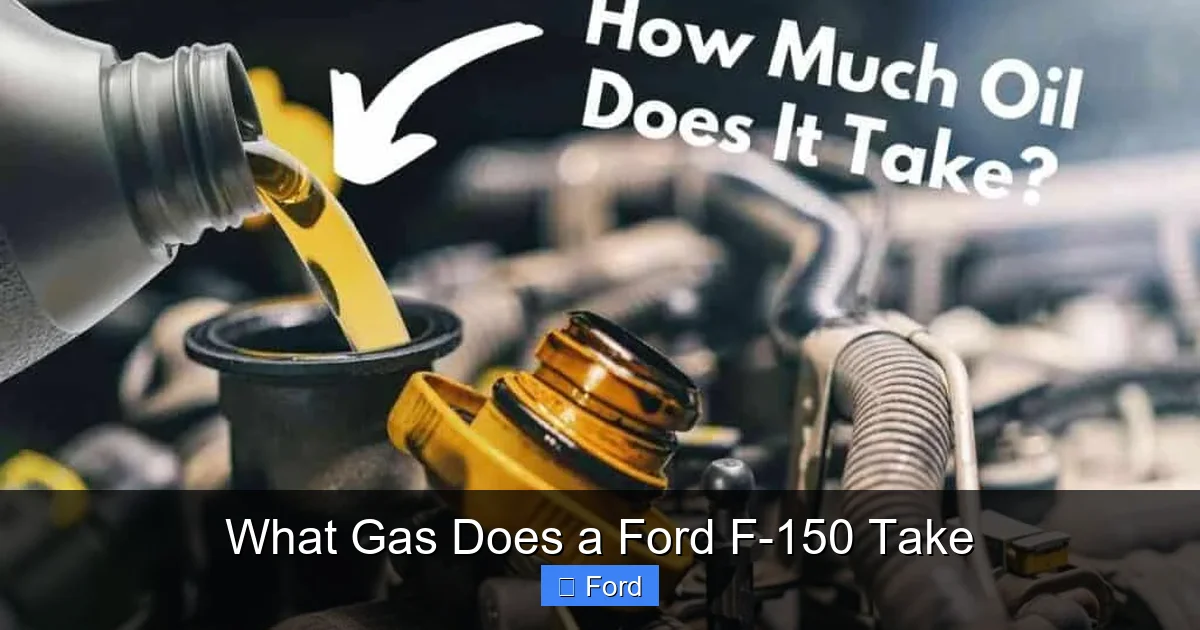
This is a point of major confusion. Ford’s EcoBoost engines—the 2.7L and 3.5L V6s—use turbochargers to force more air into the cylinders, which increases power. More air means you can add more fuel and make more power from a smaller, more efficient engine. Doesn’t that require premium gas?
Visual guide about What Gas Does a Ford F-150 Take
Image source: fourwheeltrends.com
Actually, no. Ford’s engineers meticulously calibrated these engines to run on 87 octane. The turbocharger’s boost pressure is managed by the engine computer in real-time. When it detects lower-quality (87 octane) fuel, it simply reduces boost pressure slightly under heavy load to prevent knock. The result? You might lose a few horsepower under wide-open throttle on a hot day, but for normal driving and towing, the difference is imperceptible. The efficiency gains of the EcoBoost design far outweigh any theoretical benefit from premium fuel.
Important Exception: The high-performance F-150 Raptor (especially the 3.5L V6 EcoBoost in the current generation) is tuned for significantly higher boost and power. For the current Raptor, Ford requires 91 octane premium fuel to achieve its stated horsepower and torque numbers and to prevent knock under hard use. Always check your manual for your specific Raptor model year.
What About the 5.0L V8?
The 5.0L “Coyote” V8 is another story of modern engineering. Earlier versions (pre-2018) generally required 87 octane. However, starting with the 2018 model year and the introduction of the second-generation Coyote with higher compression (10.5:1 vs 10.0:1) and port fuel injection (in addition to direct injection), Ford began recommending (but not requiring) premium fuel for optimal performance and fuel economy. The manual will often say “For best performance and fuel economy, use premium fuel.” It will run perfectly fine on 87, but you may see a slight improvement in power and MPG with 91. For daily driving, 87 is perfectly acceptable and meets the minimum requirement.
Ethanol and Flex Fuel: Understanding the “E” Numbers
You’ve seen the stickers: “Contains up to 10% ethanol” or “E15.” What does this mean for your F-150?
Visual guide about What Gas Does a Ford F-150 Take
Image source: i2.wp.com
All modern Ford F-150s (since the early 2000s) are designed to safely operate on gasoline blended with up to 10% ethanol (E10). This is the standard fuel sold across the U.S. In many states, you’ll also find E15 (15% ethanol), which is approved for use in all F-150s model year 2012 and newer. Ethanol is an oxygenate that burns cleaner but has slightly less energy content than pure gasoline, which can marginally reduce fuel economy (often by 1-3 MPG).
A small number of F-150s are “Flex Fuel Vehicles” (FFV). These are clearly marked with a “Flex Fuel” badge on the tailgate and a yellow gas cap. They can run on any blend of gasoline and ethanol, from E0 (pure gas) up to E85 (85% ethanol). If your truck is NOT a Flex Fuel model, you must NOT use E85. The fuel system components (seals, lines, injectors) in non-FFV trucks are not compatible with the high ethanol content of E85 and can be damaged.
Myth Busting: Premium Gas, Additives, and Old Wives’ Tales
Let’s tackle some persistent myths about fueling your truck.
Myth 1: “Premium gas cleans my engine better.”
False. The octane rating has nothing to do with detergent quality. Some premium fuels may have higher detergent packages, but you can get excellent detergents in regular grade. The solution is to choose Top Tier gasoline. This is a voluntary standard backed by major automakers (including Ford) that requires higher levels of deposit-control additives to keep engines clean. Most major brands (Shell, Chevron, ExxonMobil, etc.) are Top Tier. Look for the Top Tier logo on the pump. Using Top Tier 87 octane is better for your engine than non-Top Tier premium.
Myth 2: “My truck feels sluggish, I should use premium.”
If your truck is designed for 87 octane and suddenly feels sluggish, the problem is likely not your fuel grade. It could be a clogged air filter, bad spark plugs, a failing fuel pump, or a sensor issue. Putting premium in a 87-required engine won’t fix an underlying mechanical problem. Diagnose the real issue.
Myth 3: “I need an additive every few fill-ups.”
Modern, computer-controlled fuel injection systems and Top Tier gasoline are very good at keeping things clean. For most drivers, routine maintenance (following the manual’s service schedule) is sufficient. If you have an older truck with high mileage and you’re concerned about injector cleanliness, a single bottle of a quality fuel system cleaner (like Techron or Seafoam) every 3,000-5,000 miles can be beneficial, but it’s not a mandatory monthly ritual.
What Happens If You Use the Wrong Gas?
Mistakes happen. Here’s the damage assessment:
- Putting 87 in a truck that REQUIRES 91: This is the dangerous one. The engine will likely experience persistent spark knock under load (towing, hard acceleration). The computer will try to compensate by retarding timing, which you’ll feel as a loss of power and poor throttle response. Prolonged operation on low octane in a premium-required engine can cause serious internal damage. If you realize the mistake quickly, fill up with correct premium as soon as possible. If you hear persistent knock, drive gently and get it sorted.
- Putting 91 in a truck that requires 87: Zero harm. Zero benefit (except perhaps a placebo effect). It’s a waste of money.
- Putting E85 in a non-FFV truck: Can cause damage to fuel system components over time. If you accidentally filled up with E85, do not start the engine if possible. Have the tank siphoned. If you did start it, fill the tank with regular 87 octane as soon as possible to dilute the ethanol concentration and seek advice from a mechanic.
- Putting diesel in a gas F-150: Catastrophic. Do not start the engine. Have the tank completely drained and the fuel system flushed by a professional.
The Bottom Line: Your Simple, Actionable Guide
So, what gas does a Ford F-150 take? Here is your cheat sheet:
- For 95% of you: Fill up with regular unleaded (87 octane). Look for the Top Tier logo for best long-term engine health.
- If you own a Raptor (current gen): You must use premium (91 octane). Check your manual.
- If you own a 2018+ 5.0L V8 (non-Raptor): 87 is fine and meets the requirement. Premium is “recommended” for best performance/economy. Try a few tanks and see if you notice a difference worth the extra cost.
- If you have a Flex Fuel (FFV) model: You can use any gasoline, including E85. Remember E85 reduces fuel economy.
- When in doubt, look it up: Your owner’s manual and fuel door label are your ultimate sources of truth. They are written for your exact truck.
Your Ford F-150 is a marvel of engineering built to be tough and practical. Giving it the right fuel is one of the simplest and most effective ways to keep it running strong for years to come. Stick to the basics, use quality fuel, and don’t overthink it. Now you can drive up to the pump with total confidence.
Frequently Asked Questions
Can I put premium gas in my Ford F-150 that requires regular?
Yes, you can. Using a higher octane fuel than required will not harm your engine. However, your truck’s engine computer is not tuned to take advantage of premium fuel’s higher knock resistance, so you will not see any meaningful increase in power, performance, or fuel economy. It’s simply a waste of money. The only exception is if your manual “recommends” premium for best performance—in that case, you might notice a slight benefit.
My F-150 has a 5.0L V8. Does it need premium gas?
It depends on your model year. For 2017 and earlier 5.0L engines, 87 octane is the requirement. For 2018 and newer models, Ford changed the engine design and states that 87 octane meets the minimum requirement, but premium fuel is “recommended” for best performance and fuel economy. Your truck will run safely on regular, but you may see a small improvement with premium. Check your owner’s manual for the exact wording for your vehicle.
Is it okay to use ethanol-blended gas (E15) in my F-150?
Yes, for most F-150s. All Ford F-150 models from 2012 onward are approved to use E15 (gasoline with up to 15% ethanol). Earlier models are approved for E10 (10% ethanol). The only caution is for Flex Fuel Vehicle (FFV) owners, who can also use E85. Non-FFV trucks should never use E85, as it can damage the fuel system over time. Using E15 is perfectly safe and common across the U.S.
What happens if I accidentally put diesel fuel in my gas F-150?
This is a serious mistake. Diesel fuel is not combustible in a gasoline engine in the same way and will cause severe damage if you try to start the engine. Do not crank or start the engine. Have the vehicle towed to a mechanic who will need to completely drain the fuel tank, flush the fuel lines, and potentially clean or replace the fuel injectors and other components. The repair cost is significant.
My F-150 is pinging/knocking. Should I switch to premium gas?
Possibly, but it’s a symptom, not the solution. Persistent knock under load can be caused by using fuel with an octane rating lower than what your specific engine requires. If your manual calls for 87 and you’re using 87, knock indicates a different problem, such as carbon buildup increasing compression, faulty spark plugs, or a bad sensor. First, verify you are using the correct fuel grade as per your manual. If the problem persists, have a mechanic diagnose the engine. Do not ignore knock, as it can cause engine damage.
Does using “Top Tier” gasoline really make a difference?
Yes, it can, especially over the long term. Top Tier is a standard created by automakers (including Ford) that requires gasoline to contain higher levels of detergent additives than the federal minimum. These detergents help prevent the buildup of deposits on fuel injectors, intake valves, and combustion chambers. Clean injectors spray fuel more efficiently, which can help maintain performance, fuel economy, and lower emissions. Choosing Top Tier 87 octane is a simple, effective way to help keep your F-150’s engine clean and running well. You can find a list of Top Tier brands on the Top Tier website. For more on engine maintenance, see our guide on what kind of oil a Dodge Journey takes, which also discusses the importance of using quality fluids.