
What Does “run” Mean on a Jeep Compass?

Contents
- 1 Key Takeaways
- 2 📑 Table of Contents
- 3 Decoding the Dashboard: What Exactly is the “Run” Indicator?
- 4 The Normal Startup Sequence: A Light with a Purpose
- 5 When “Run” Becomes a Problem: Warning Signs and Meanings
- 6 The Connection to Other Systems: It’s Not Always Isolated
- 7 Troubleshooting Steps: From Simple to Complex
- 8 Maintenance and Prevention: Keeping the System Healthy
- 9 Conclusion: Knowledge is Power (and a Running Vehicle)
- 10 Frequently Asked Questions




The “run” indicator on a Jeep Compass is a normal dashboard light that illuminates when the ignition is turned to the “run” position, signifying the vehicle’s electrical systems are active but the engine is not cranking. It’s a standard feature confirming the key is in the correct position for operation and should turn off once the engine starts. However, if this light behaves abnormally—such as flashing or staying on while driving—it can indicate an issue with the ignition system, security system, or a related sensor that requires professional diagnosis.
Key Takeaways
- Definition: The “run” indicator is a dashboard light that confirms the ignition switch is in the “run” or “on” position, powering the vehicle’s accessories and computer systems before the engine starts.
- Normal Behavior: It should illuminate when you turn the key to “run” (before starting) and extinguish once the engine is running. This is a standard, non-critical status light.
- Abnormal Signals: A flashing “run” light, or one that illuminates while driving, often points to a fault in the ignition circuit, a security system problem (like the Sentry Key system), or a communication issue with the engine control module (ECM).
- Related Systems: This light is intrinsically linked to the ignition switch, the Powertrain Control Module (PCM), and the vehicle’s anti-theft system. A problem in one can trigger the run indicator.
- First Steps: If the light is abnormal, try a simple key cycle (turn off and back on). If it persists, check for other dashboard warnings (like the check engine light) and note any starting difficulties.
- When to Seek Help: Do not ignore a persistent or flashing run light. Have the vehicle’s computer scanned for diagnostic trouble codes (DTCs) at a qualified service center, as it could lead to a no-start condition.
📑 Table of Contents
- Decoding the Dashboard: What Exactly is the “Run” Indicator?
- The Normal Startup Sequence: A Light with a Purpose
- When “Run” Becomes a Problem: Warning Signs and Meanings
- The Connection to Other Systems: It’s Not Always Isolated
- Troubleshooting Steps: From Simple to Complex
- Maintenance and Prevention: Keeping the System Healthy
- Conclusion: Knowledge is Power (and a Running Vehicle)
Decoding the Dashboard: What Exactly is the “Run” Indicator?
You’re sitting in your Jeep Compass, key in hand (or finger on the push-button), and you turn the ignition. A small light on the dashboard, often labeled “RUN” or sometimes just an illuminated icon, glows steadily. You start the engine, and it goes out. Everything seems fine. But then, one day, you notice that light is still on after the engine is running. Or worse, it starts flashing while you’re driving. Panic sets in. What does “run” mean on a Jeep Compass, and why is it acting strange?
First, take a breath. In its most basic and common form, this light is not a “problem” light at all. It’s a confirmation light. Its sole job is to tell you, “The ignition is in the ‘on’ or ‘run’ position.” It’s a simple status indicator, much like the light that tells you your headlights are on. It’s part of the normal startup sequence. However, like many dashboard telltales, its behavior can change from a benign confirmation to a critical warning if the vehicle’s computer detects an anomaly in the systems it monitors. Understanding this distinction is the first step to diagnosing the issue correctly and avoiding unnecessary worry or repair costs.
The Normal Startup Sequence: A Light with a Purpose
To understand what’s abnormal, we must first establish what’s normal. The “run” indicator is part of the Jeep Compass’s ignition and security system choreography. When you insert the key (or have the key fob inside with a push-button start), the vehicle goes through a precise sequence.
Visual guide about What Does “run” Mean on a Jeep Compass?
Image source: tadvantagegroupprod-com.cdn-convertus.com
The Key Positions: Off, Run, Start
A traditional key ignition has distinct positions: OFF, ACC (Accessory), RUN (or ON), and START. The RUN position is the “go” signal for almost everything except the engine starter motor itself. When you turn the key to RUN:
- The vehicle’s main computer, the Powertrain Control Module (PCM), powers up and begins its self-checks.
- The fuel pump primes for a few seconds.
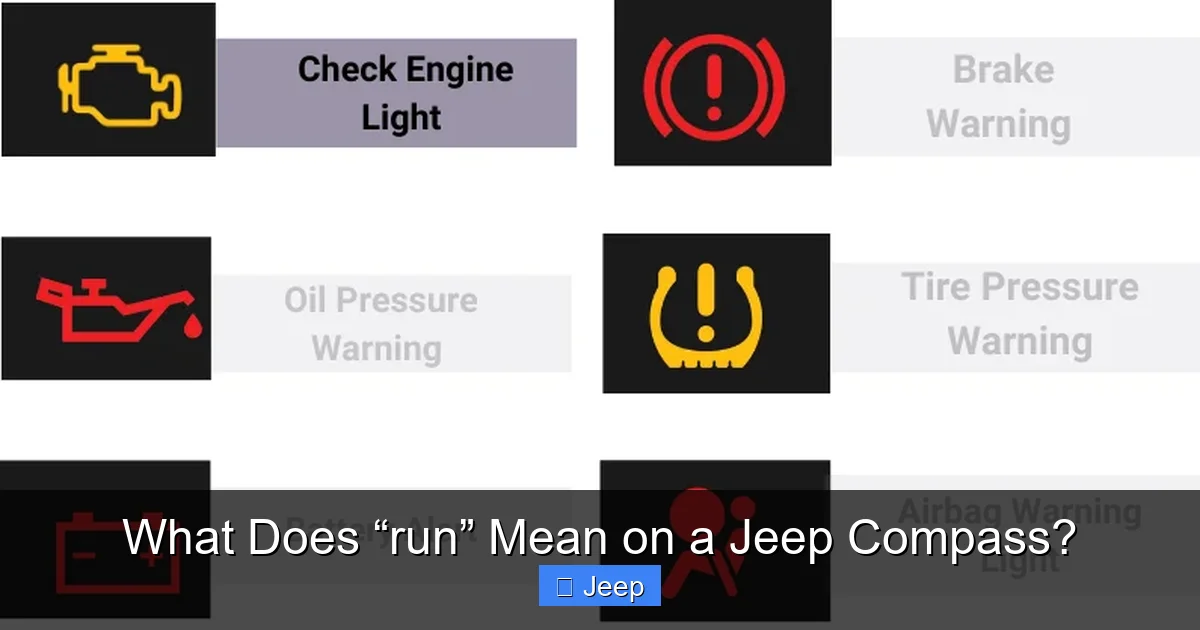
- The instrument cluster illuminates all its warning lights for a “bulb check.”
- Your radio, climate control, and power windows become operational.
- The “RUN” indicator light illuminates.
This light tells you the vehicle’s electrical brain is awake and listening. When you then turn the key further to the START position (or press the engine start button), the starter cranks the engine. Once the engine fires and is running on its own, you release the key (or the button automatically releases), and it springs back to the RUN position. At this exact moment, the “run” light should go out. Its job is done. It has confirmed the ignition is in the correct operational state. If it stays on after this point, the system is flagging that something isn’t right between the ignition switch position and what the PCM is sensing.
When “Run” Becomes a Problem: Warning Signs and Meanings
This is where the simple confirmation light transforms into a diagnostic clue. A persistent or flashing “run” indicator is your Jeep’s way of saying, “Hey, the ignition circuit or a related security system has a fault.” Here are the most common scenarios and what they typically mean.
Visual guide about What Does “run” Mean on a Jeep Compass?
Image source: pickmyscooter.com
The Light Stays On Solid After Start
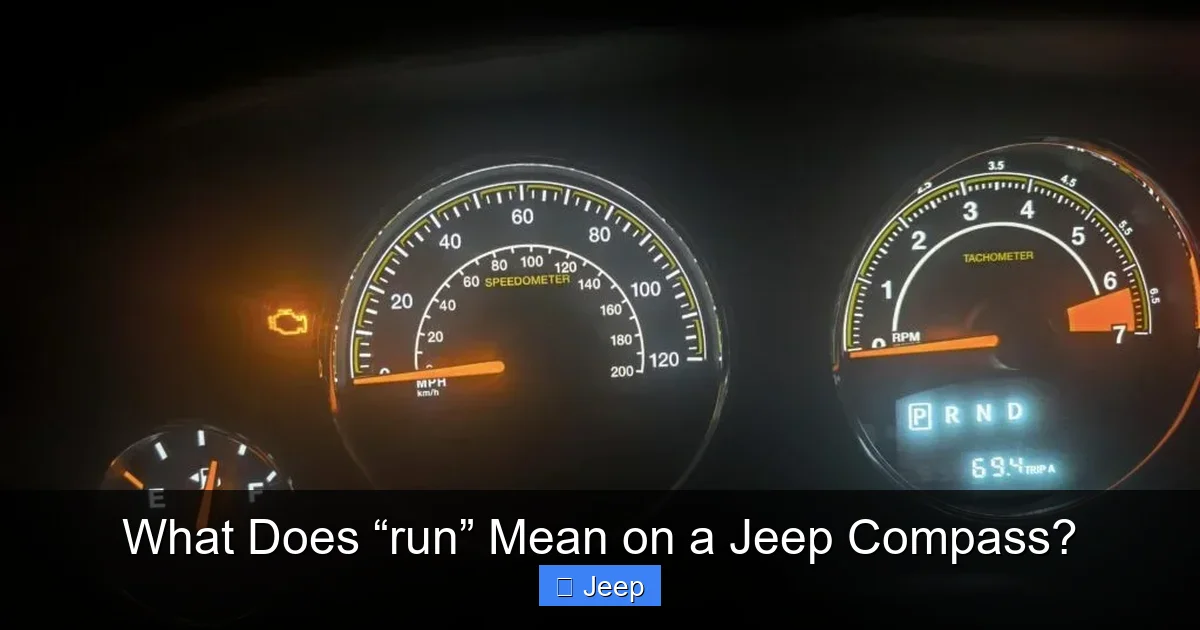
If the “RUN” light remains illuminated after the engine is running smoothly, it’s often a sign that the Powertrain Control Module (PCM) is not recognizing that the ignition switch has moved fully to the “run” position. This could be due to:
- A faulty ignition switch: The switch itself is a mechanical/electrical component that can wear out. Its contacts may not be making a clean connection, confusing the PCM.
- A wiring issue: A loose, corroded, or damaged wire in the ignition circuit (from the switch to the PCM) can interrupt the signal.
- A PCM communication error: Less common, but the PCM might be malfunctioning and not processing the switch position signal correctly.
Practical Impact: You might experience no immediate drivability issues, but the vehicle may not restart if you turn it off, as the PCM may still think the key is in the “start” or “off” position. It can also prevent the vehicle from entering certain sleep modes, potentially draining the battery over time.
The Light Flashes Intermittently or While Driving
A flashing “run” light is a more urgent signal. This pattern is frequently tied directly to the vehicle’s Sentry Key Theft Deterrent System (or equivalent anti-theft system). The system’s job is to prevent the engine from starting unless it recognizes a valid, programmed key. Here’s the flash sequence often means:
- The PCM is trying to communicate with the key’s transponder chip.
- It’s failing to get a valid “read.”
- It interprets this as a security breach (like an unprogrammed key being used) and flashes the run light to warn you.
- In many cases, the engine will continue to run for a few seconds or minutes after the flash begins, but it will eventually shut down to prevent theft.
Common Causes:
- A weak key fob battery: The transponder in the key is passive, but the fob’s battery powers its remote functions. A very low battery can sometimes cause communication hiccups.
- Interference: A strong radio frequency near the vehicle (from a tower, another key fob, or even a phone) can jam the signal between the key and the ignition ring.
- Damaged key or ignition ring: The ring around the ignition (or the key button on push-start) houses the antenna for the transponder. Damage or excessive wear here is a prime culprit.
- Failed PCM/security module: The module that reads the key has failed.
Immediate Action: If the light starts flashing while driving, the engine is likely to stall soon. Safely pull over, shut off the engine, and try restarting with your spare key. If the problem persists, you will likely need a dealer or locksmith with a wrench—specifically, a diagnostic tool capable of reprogramming keys and diagnosing the Sentry Key system. This is not a typical DIY fix.
The Connection to Other Systems: It’s Not Always Isolated
It’s a mistake to look at the “run” light in a vacuum. Modern vehicles are networks of computers talking to each other. A fault flagged here can be connected to other systems, and vice versa.

Visual guide about What Does “run” Mean on a Jeep Compass?
Image source: koala.sh
The Ignition Switch’s Role
The ignition switch is the physical source of the “run” signal. When you turn it, it closes multiple circuits. One circuit powers the “run” light itself. Another sends a signal to the PCM telling it the switch is in the “on” position. A failing switch can have intermittent contacts, causing the PCM to see the switch jumping between “run” and “start” positions erratically. This can confuse the engine management system and trigger the run light, and often a check engine light as well. Diagnosing an ignition switch issue often requires checking for voltage at the switch connector and at the PCM input pin.
The Security System Nexus
As mentioned, the Sentry Key system is the most common partner-in-crime for a flashing run light. The system works by having the PCM send a challenge to the key’s transponder. The key must respond with the correct encrypted code. If it fails, the PCM will not allow the starter to engage (on a start attempt) or will shut down the fuel pump (if running). The flashing run light is the primary visual cue for this failure. This is a complex, coded system. Resetting it often requires a dealer-level scan tool to “learn” a new key or to clear a permanent fault code stored in the security module.
What About Other Dashboard Warnings?
Always perform a full dashboard scan when you see an abnormal “run” light. Is the check engine light on? Is there a security icon (usually a car with a key over it)? Are the traction control or ABS lights on? A network communication error (like a “no bus” code, which you might read about in articles for other vehicles like certain Dodge Rams) could cause multiple modules to act strangely, including misinterpreting the ignition signal. While the Compass doesn’t typically use a “no bus” message, the principle of a communication breakdown between modules is universal in modern automotive electronics.
Troubleshooting Steps: From Simple to Complex
Before you call a mechanic, there are logical steps you can take to gather information and possibly solve a simple issue.
Step 1: The Simple Key Cycle
Turn the ignition fully OFF. Wait 10 seconds. Turn it back to RUN. Does the light behave normally now? Sometimes, a transient glitch in the PCM’s startup self-test can cause a false indication. A full power cycle clears its temporary memory.
Step 2: Check the Obvious
- Key Fob Battery: Replace the battery in your key fob. It’s cheap and easy. A weak battery can cause low-voltage signals that the vehicle’s security system misreads.
- Spare Key: Immediately try your spare, programmed key. If the problem disappears with the spare, the primary key is damaged or its transponder has failed.
- Interference: Are you parked near a large radio tower, a medical facility with strong equipment, or using a powerful aftermarket phone charger? Move the vehicle to a different location and try again.
Step 3: Visual and Auditory Inspection
Listen and feel. When you turn the key to RUN, do you hear the fuel pump prime (a 2-second whir from the rear)? If not, and the run light is on, it could indicate a total loss of power to the fuel system, which is a separate but potentially related circuit failure. Also, inspect the ignition switch area for excessive wear or damage. For vehicles with push-button start, ensure the key fob is inside the vehicle and the brake pedal is depressed (for automatic).
Step 4: The Professional Scan
This is the most critical step for any persistent issue. You need to have the Jeep’s On-Board Diagnostics (OBD-II) port scanned. Do not just read “generic” codes. You need a technician who can access the PCM, Body Control Module (BCM), and most importantly, the Wireless Control Module (WCM) or Ignition System Module that handles the Sentry Key function. They should look for:
- Codes related to “Ignition Switch Circuit” (e.g., P1632, P1633 – these are manufacturer-specific).
- Codes from the security module, often starting with “B” (body) or “P” (powertrain) and mentioning “immobilizer,” “transponder,” or “key.”
- Any “communication” or “bus” errors between modules.
A proper diagnosis will trace the problem from the symptom (flashing run light) to the stored code, to the specific circuit or component. Replacing parts without this scan is a costly gamble.
Maintenance and Prevention: Keeping the System Healthy
While you can’t prevent all failures, you can minimize the risk of ignition and security system problems.
- Treat Your Keys Gently: Don’t throw them, expose them to extreme heat (like on a dashboard), or submerge them. Damage to the internal transponder chip is often irreversible.
- Use the Correct Key: Only use keys programmed for your specific vehicle. A copied key from a hardware store will not have the transponder chip and will not start the Jeep, but it can sometimes cause confusion if the system detects an invalid signal.
- Battery Health: A severely discharged vehicle battery can cause voltage drops that confuse sensitive electronic modules during startup. Ensure your battery is healthy and the connections are clean and tight.
- Address Related Issues Promptly: If you have an intermittent no-start condition, a security light that comes on occasionally, or a check engine light, get it diagnosed. These can be early warnings of a failing ignition switch or security module that will eventually leave you stranded.
Think of your Jeep’s ignition and security system as a highly sophisticated handshake. The “run” light is simply the visible acknowledgment that the handshake was successful. If that acknowledgment is missing or wrong, it means the handshake failed somewhere, and you need to find out why before you’re left outside your vehicle with a key that doesn’t work.
Conclusion: Knowledge is Power (and a Running Vehicle)
The “run” indicator on your Jeep Compass is a deceptively simple light with a crucial job: confirming the ignition is in the “on” position. In its normal, steady state during the brief moment between turning the key and the engine firing, it’s just a helpful bit of feedback. But when its behavior deviates—staying on or flashing—it becomes a vital diagnostic beacon pointing to issues within the ignition switch circuitry, the Powertrain Control Module, or, most commonly, the Sentry Key anti-theft system.
The key takeaway is context. The light’s behavior, combined with any other dashboard warnings and the vehicle’s starting/running performance, paints the full picture. A simple key cycle or spare key test can solve minor glitches. However, a persistent or flashing light is your Jeep’s firm request for professional attention. Ignoring it risks a complete no-start situation. By understanding what this light is trying to tell you, you move from a confused owner to an informed one, capable of describing the problem accurately to a technician and making smart decisions about your vehicle’s care. Remember, in the complex world of modern automotive electronics, even a single, small light can be the first and most important clue to a larger issue.
Frequently Asked Questions
Is the “run” light supposed to stay on after I start my Jeep Compass?
No. The “run” indicator should illuminate when you turn the key to the “on” or “run” position (before starting) and should turn off automatically once the engine is running and the key springs back to the “run” position. If it stays on solid after startup, it indicates a fault in the ignition circuit or a communication error with the vehicle’s computer.
What does it mean if the “run” light starts flashing while I’m driving?
A flashing “run” light is a serious warning, typically indicating a failure in the Sentry Key Theft Deterrent System. The vehicle’s computer is not recognizing your key’s transponder code and will likely shut the engine off within a short time to prevent theft. You should safely park and shut off the engine immediately. Try restarting with your spare key; if the problem persists, the vehicle will need to be towed for diagnosis.
Can a low key fob battery cause the “run” light to come on?
A low key fob battery alone usually does not cause the “run” light to illuminate, as the transponder chip in the key is passive and powered by the ignition’s antenna ring. However, a severely low battery can sometimes cause communication glitches with the vehicle’s security system, which might trigger the run light to flash. Replacing the key fob battery is a quick and easy first step in troubleshooting.
Is it safe to drive my Jeep Compass if the “run” light is on?
If the light is solid and steady after startup, you can likely drive cautiously to a safe location or a repair shop, but you should not delay diagnosis as it may lead to a no-start condition later. If the light is flashing, you should not drive the vehicle. Park safely, shut off the engine, and seek immediate assistance, as the engine is expected to stall.
How do I reset the “run” light after fixing the problem?
The light is controlled by the vehicle’s computer and will reset automatically once the underlying fault is repaired and the system successfully completes its self-checks during a normal startup cycle. Simply turning the ignition off and back on after the repair is usually sufficient. If the light returns, the problem has not been fully resolved or there is a new fault.
Could a problem with the “run” light be related to other dashboard warnings?
Yes. Since the “run” indicator is tied to the ignition switch and the main computer (PCM), any fault that causes multiple module communication failures (like a severe electrical issue) could cause several lights to come on simultaneously. Always note if the check engine light, security light, or other warnings are also present, as this provides critical context for a technician. Issues with the vehicle’s network can sometimes manifest in ways similar to a no bus error seen on some other brands, like certain Dodge Ram models.