What Does Maintenance Required Mean on a Toyota Prius?

Contents
- 1 Key Takeaways
- 2 📑 Table of Contents
- 3 What the “Maintenance Required” Light Actually Means
- 4 How the Maintenance Reminder System Works in Your Prius
- 5 Common Reasons the Light Comes On: What’s Actually Due?
- 6 What to Do When the Light Comes On: A Step-by-Step Plan
- 7 How to Reset the “Maintenance Required” Light Yourself
- 8 The High Cost of Ignoring the Wrench: Why Proactive Care Pays Off
- 9 Special Considerations for Prius Models and Hybrid Systems
- 10 Conclusion: Your Partner in Prius Ownership
- 11 Frequently Asked Questions

Brake Cleaner Spray

LED Indicator Light

Multipurpose Lubricant Spray

Car Wax Polish
The Maintenance Required light on your Toyota Prius isn’t an emergency—it’s a friendly reminder that scheduled maintenance is due based on time or mileage. Ignoring it can lead to costly repairs, so addressing it promptly keeps your hybrid efficient and reliable. Resetting the light after service is simple, but understanding what triggers it helps you stay proactive with care.
Hey there, fellow Prius owner! Have you ever been driving along, enjoying the smooth, quiet glide of your hybrid, when suddenly a little wrench icon illuminates on your dashboard? It’s easy to feel a pang of anxiety. Is something seriously wrong? Should you pull over immediately? Take a deep breath. That little wrench is your Toyota Prius’s way of giving you a friendly nudge, not a dire warning. It means “Maintenance Required,” and it’s a fundamental part of what makes your Prius such a reliable and long-lasting vehicle. This article is your complete guide to demystifying that light. We’ll break down exactly what it means, why it comes on, what you should do about it, and how to handle the reset after your service. By the end, you’ll look at that wrench with understanding, not dread.
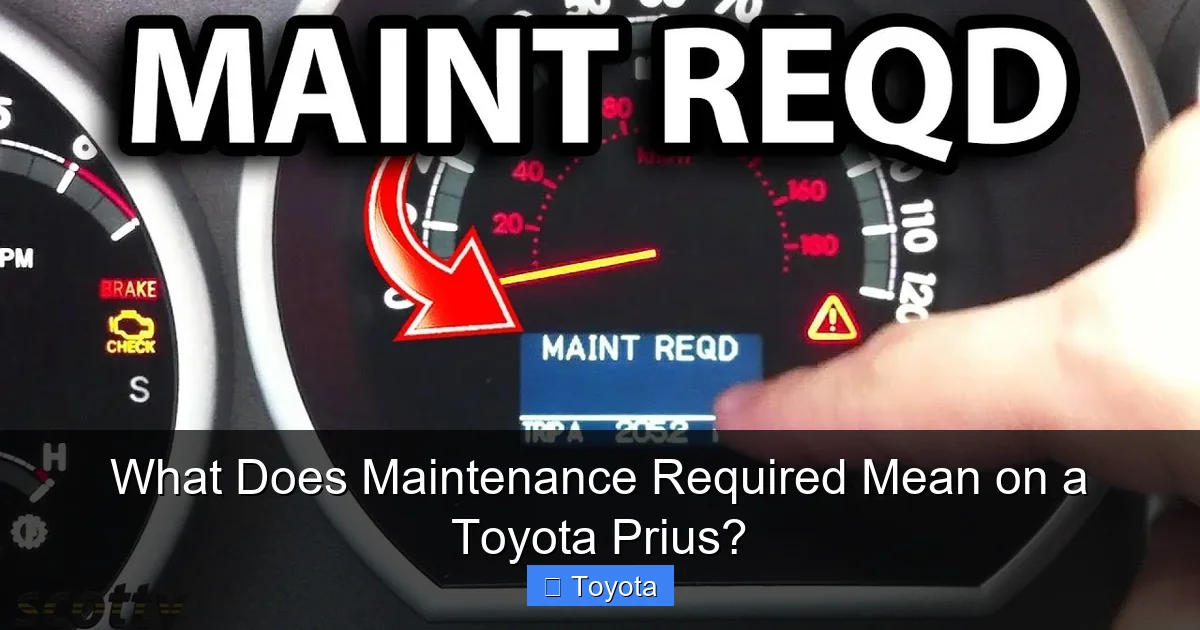
The “Maintenance Required” light, sometimes called the “Service Required” light, is a feature Toyota calls the “Maintenance Required Reminder” system. It’s an intelligent, computerized scheduler built into your car’s brain. Unlike the ominous, solid “Check Engine” light (which signals a fault code), this wrench is purely preventative. It’s based on a simple algorithm: after a certain number of miles driven or a certain amount of time elapsed since your last service, the system reminds you it’s time for routine, scheduled maintenance. Think of it as your car’s own personal calendar, keeping track of oil life, service intervals, and more. For a hybrid like the Prius, this schedule is meticulously designed by Toyota engineers to account for the unique operating characteristics of the hybrid synergy drive system. Ignoring it doesn’t just mean you’re skipping an oil change; it means you’re missing critical checks on the hybrid battery cooling system, regenerative braking components, and other specialized parts that define Prius efficiency.
Key Takeaways
- It’s a Reminder, Not an Emergency: The light indicates planned maintenance is due, not an immediate system failure like a check engine light.
- It’s Time or Mileage Based: The system triggers primarily after a set mileage (e.g., 10,000 miles) or time interval (e.g., 12 months), whichever comes first.
- Common Triggers Include: Oil changes, tire rotations, multi-point inspections, cabin air filter replacement, and brake checks.
- Never Ignore It Long-Term: Skipping these services can reduce fuel economy, cause premature wear, and lead to expensive repairs, especially for hybrid components.
- Resetting Requires Specific Steps: You must perform the required maintenance first, then follow a precise button sequence to turn the light off.
- Hybrid Systems Need Specialized Care: Ensure your technician is certified for hybrid vehicles to properly service the unique battery and regenerative braking systems.
- It’s Part of Toyota’s Reliability: Following this schedule is key to maintaining your Prius’s reputation for longevity and high resale value.
📑 Table of Contents
- What the “Maintenance Required” Light Actually Means
- How the Maintenance Reminder System Works in Your Prius
- Common Reasons the Light Comes On: What’s Actually Due?
- What to Do When the Light Comes On: A Step-by-Step Plan
- How to Reset the “Maintenance Required” Light Yourself
- The High Cost of Ignoring the Wrench: Why Proactive Care Pays Off
- Special Considerations for Prius Models and Hybrid Systems
- Conclusion: Your Partner in Prius Ownership
What the “Maintenance Required” Light Actually Means
When that wrench icon appears on your Prius’s multi-information display, it’s sending a clear, non-negotiable message: “Hey, it’s time for your scheduled maintenance service.” This isn’t a guess or a random malfunction. It’s the culmination of the car’s internal tracking system counting down from the last time you had a service performed and the system was reset. The primary triggers are almost always mileage-based or time-based intervals set by Toyota. For most modern Prius models, this is typically every 10,000 miles or 12 months, but you should always confirm the exact interval for your specific model year and trim in your owner’s manual.
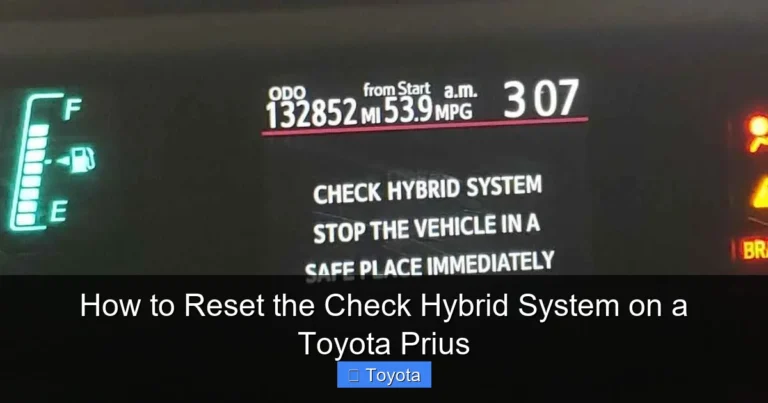
It’s crucial to understand what this light is not. It is not an oil pressure warning. It is not a low tire pressure alert (that’s a separate, cross-section icon). It is not an indication of an immediate safety hazard like a severe engine misfire. You can usually continue to drive your Prius safely for a short period to reach your trusted service center. However, “a short period” is not an excuse to procrastinate for weeks or months. The light is the starting gun for your service window, not the finish line. Driving for thousands of miles with it on means you’re operating outside the manufacturer’s recommended maintenance parameters, which increases wear and risks voiding certain aspects of your warranty.
The Difference Between “Maintenance Required” and “Check Engine”
This is a common point of confusion. The “Check Engine” light (usually an engine-shaped icon) illuminates when the car’s onboard diagnostics (OBD-II) system detects a problem with the emissions system, engine performance, or a related sensor. It’s reactive, telling you something is currently wrong. The “Maintenance Required” wrench is proactive, telling you something is due soon. One is a doctor saying, “You have a fever right now,” and the other is your calendar saying, “It’s time for your annual physical.” Never confuse the two. If both lights are on, you have a scheduled service and an active problem that needs diagnosis.
How the Maintenance Reminder System Works in Your Prius
Your Prius’s system is more sophisticated than a simple mileage counter. While the primary trigger is the odometer reading (or time), it also incorporates data from various sensors to optimize the reminder, especially for engine oil changes. This is often referred to as “oil life monitoring” or “engine oil maintenance data.” The system doesn’t just count miles; it calculates the actual stress on your engine oil based on driving conditions.

Visual guide about What Does Maintenance Required Mean on a Toyota Prius?
Image source: erwinsalarda.com
Factors That Influence the Calculation
- Driving Patterns: Frequent short trips where the engine doesn’t fully warm up degrade oil faster than long highway cruises. The system accounts for engine run-time and temperature.
- Engine Load: Towing, driving in mountainous terrain, or frequent rapid acceleration puts more stress on the engine and oil.
- Climate: Extreme cold or heat can affect oil viscosity and longevity.
- Time: Even if you drive very little, oil and other fluids degrade over time. The 12-month interval ensures you don’t go too long without a service.
Once the system calculates that the oil life has reached a predetermined threshold (often around 15-20% remaining), or the time/mileage interval is met, it will trigger the “Maintenance Required” light. On many Prius models, the display will also show a message like “MAINTENANCE REQUIRED” and may even list specific items (e.g., “OIL & FILTER,” “TIRE ROTATION”) depending on the trim and model year. This data-driven approach helps prevent unnecessary oil changes while ensuring you don’t go too long, protecting your engine and maximizing efficiency.
Common Reasons the Light Comes On: What’s Actually Due?
So, you see the wrench. What exactly does your Prius need? While the exact service package can vary by model year and local dealer recommendations, the light typically signals a combination of the following standard maintenance items. For a Prius, these services are critical not just for the gasoline engine, but for the entire hybrid system’s health.

Visual guide about What Does Maintenance Required Mean on a Toyota Prius?
Image source: erwinsalarda.com
The Standard 10,000-Mile/12-Month Service
This is the most common trigger and usually includes:
- Engine Oil and Filter Change: This is the #1 reason. Using the correct oil (typically 0W-16 or 0W-20 for newer models) is absolutely critical for Prius engine and hybrid system longevity. Your owner’s manual specifies the exact grade and Toyota-approved brand.
- Tire Rotation and Pressure Check: Rotating tires ensures even wear, which is vital for the Prius’s fuel-efficient, low-rolling-resistance tires. Proper inflation is also key for efficiency and battery cooling (some models route air over the hybrid battery).
- Multi-Point Inspection: A thorough visual check of brakes (pads, rotors, and especially the regenerative braking system’s interface), suspension components, steering linkage, fluid levels (coolant, brake fluid, washer fluid), and belts/hoses.
- Cabin Air Filter Replacement: Often due at this interval. A clogged filter reduces HVAC efficiency and air quality inside your eco-friendly cabin.
- Brake System Check: While regenerative braking handles most slowing, the conventional friction brakes are still used and need inspection for wear.
Intermediate and Major Services
At higher intervals (e.g., 20,000, 30,000, 60,000, 90,000 miles), the light may come on for more extensive services. These can include:
- Engine Air Filter Replacement: A dirty filter hurts performance and efficiency.
- Fuel Filter Inspection/Replacement: Part of the fuel system service.
- Coolant System Service: The hybrid system has its own dedicated coolant circuit for the battery and inverter, which has its own service interval (often around 100,000 miles but check your manual). The engine coolant also needs changing.
- Spark Plug Replacement: Typically due around 120,000 miles on many Prius models.
- Transmission (e-CVT) Fluid Inspection: Toyota often states the transmission fluid is “lifetime” but many technicians still recommend inspection or change at very high miles for ultimate longevity.
- Hybrid Battery Cooling System Inspection: Checking the fan, filters, and ducts that keep the high-voltage battery at its optimal temperature is a Prius-specific must.
Pro Tip: Your owner’s manual contains the definitive, model-year-specific maintenance schedule. It’s the bible for your Prius. When the light comes on, consult it to know exactly what items are due. Don’t just rely on the shop’s generic list. You can also find digital copies on the Toyota owner’s portal.
What to Do When the Light Comes On: A Step-by-Step Plan
Seeing that wrench doesn’t require panic, but it does require action. Here is your clear, calm action plan.
Visual guide about What Does Maintenance Required Mean on a Toyota Prius?
Image source: i.ytimg.com
Step 1: Assess Your Immediate Situation
Are you on a long road trip, or are you near home? If you’re far from a trusted mechanic, it’s generally safe to continue driving to your destination or a nearby, reputable service center. The Prius is designed to keep running. However, avoid aggressive driving, excessive idling, or towing until the service is complete. If the light is flashing (which is extremely rare for this particular indicator—it’s usually solid), or if you have other warning lights like a red triangle with an exclamation point (which indicates a serious hybrid system fault), stop driving safely and call for assistance. A solid wrench is a reminder; a flashing one or accompanying severe warnings are distress signals.
Step 2: Check Your Owner’s Manual and Service History
Locate your owner’s manual. Find the maintenance schedule section. Cross-reference your current mileage with the last service you had documented. This tells you what is likely due. If you’ve lost records, a reputable shop can look up your car’s history using the VIN. This step empowers you with knowledge before you take the car in. You’ll know if you’re due for just an oil change or if a larger service is pending.
Step 3: Schedule Service with a Qualified Technician
This is the most important step. For a Prius, you have two excellent options: a Toyota dealership or an independent shop with hybrid-certified technicians. Dealerships have factory training, proprietary diagnostic tools, and direct access to technical service bulletins (TSBs) for your specific model year. A good independent shop can be more cost-effective but must have proven expertise in Toyota hybrids. Never take your Prius to a shop that isn’t comfortable working on high-voltage hybrid systems. Ask them directly about their experience with the Prius. When you call, mention the “Maintenance Required” light is on and ask for the specific services associated with your mileage. Get an estimate in advance. For context on how different vehicle systems require specialized care, you can read about the intricacies of other models like the “Maintenance Other” indicator on a Nissan Altima, which highlights how manufacturers use different reminder systems.
Step 4: Perform the Required Maintenance
Have the technician perform all the items listed in your schedule. Insist on seeing the old parts (like the oil filter and air filter) and getting a detailed invoice that lists each service performed, the part numbers used, and the labor time. This documentation is vital for your records and future resale. Ensure they reset the maintenance reminder system as part of the service. If they forget, you’ll have to do it yourself (see next section).
How to Reset the “Maintenance Required” Light Yourself
Once the required service is completed, the wrench light will remain on until you manually reset the system. This is a simple procedure you can do at home in under a minute. Here’s the universal method for most Prius models from the early 2000s to the current generation. Always perform the reset after the service is done.
The Standard Reset Procedure
- Turn the ignition ON. Do not start the engine. Press the “POWER” button twice without touching the brake pedal.
- Using the arrow buttons on the steering wheel (or sometimes the odometer button), navigate to the “Settings” or “Vehicle Settings” menu on the multi-information display.
- Scroll to find “Maintenance” or “Maintenance Reset.” Select it.
- The display will ask you to confirm. Select “Yes” or “Reset.”
- The wrench icon should blink and then go out, and the display may show “MAINTENANCE RESET” or return to the normal odometer/trip meter screen.
Important Note: The exact menu names and button locations can vary slightly between model years (e.g., Gen 2 vs. Gen 4 Prius). If the above doesn’t work, your owner’s manual has the precise steps for your specific vehicle. A quick YouTube search for “Reset Maintenance Required Light [Your Prius Year]” will also show you a visual guide. If the light comes back on immediately after a reset without driving the required interval, it means the system wasn’t properly reset or there’s an underlying electrical glitch that needs diagnosis. For those who enjoy DIY, understanding these reset procedures is part of vehicle ownership, similar to knowing what the snow button does on a Toyota Highlander for seasonal driving.
The High Cost of Ignoring the Wrench: Why Proactive Care Pays Off
Let’s be real: it’s easy to think, “The car seems fine, I’ll just wait.” But with a Prius, proactive maintenance isn’t just about avoiding a breakdown; it’s about protecting a complex, high-value machine. Here’s what’s at stake.
Protecting Your Hybrid Investment
The heart of your Prius is the hybrid synergy drive system—the powerful battery pack, the sophisticated power-split device, and the electric motor/generators. While incredibly robust, they rely on clean fluids, proper cooling, and healthy supporting systems. Skipping an oil change can lead to sludge, which harms the gasoline engine that also charges the battery. Neglecting the hybrid battery cooling filter (often located behind the rear seat or in the trunk) can cause the battery to overheat, leading to drastically reduced performance, battery degradation, and a very expensive replacement. The maintenance schedule is engineered to prevent these scenarios.
Maximizing Fuel Economy and Performance
You bought a Prius for exceptional MPG. Dirty engine oil, under-inflated tires, and a clogged air filter all work against that goal. Each percentage point of lost efficiency costs you money at the pump and increases emissions. Regular maintenance ensures your Prius delivers the fuel economy it was designed to, which is often its most valuable feature. It also keeps the transitions between electric and gasoline power smooth and seamless.
Preserving Long-Term Reliability and Resale Value
A well-maintained Prius with a complete service history is a legend. These cars can easily surpass 200,000 and even 300,000 miles. A documented history of following the “Maintenance Required” schedule is the single best proof of that care when it’s time to sell or trade. It gives a buyer immense confidence and directly translates to a higher value. Conversely, a car with a history of ignored service reminders is a red flag for potential hidden problems and will sell for less, if it sells at all. Keeping up with scheduled service is one of the smartest financial decisions you can make as a car owner. It’s a principle that applies across the board, whether you’re looking at a Toyota RAV4’s driving modes or a Prius’s hybrid system.
Special Considerations for Prius Models and Hybrid Systems
While the core principle of the maintenance reminder is the same across all Toyotas, the Prius has some unique aspects to keep in mind.
Model Year Differences
The generation of your Prius (Gen 1: 2001-2003, Gen 2: 2004-2009, Gen 3: 2010-2015, Gen 4: 2016-2022, Gen 5: 2023+) can affect specific service intervals and procedures. For example, oil change intervals have lengthened over the years due to improving engine technology and oil chemistry. Always defer to your specific model year’s manual. The location of the hybrid battery cooling filter, for instance, changed between generations.
The Importance of Hybrid-Certified Service
Working on a Prius is not like working on a conventional Corolla. Technicians need training on high-voltage safety systems. They must use insulated tools and understand how to safely de-energize the system before working near the battery or orange-cabled components. An uncertified technician might accidentally damage a sensor or connector, leading to a costly hybrid system fault. When choosing a shop, ask: “Do you have technicians certified by Toyota for hybrid vehicle repair?” This is non-negotiable for major services. For simpler items like oil changes and tire rotations, any competent shop can do it, but ensure they use the correct, specified fluids and parts.
Understanding Related Hybrid System Indicators
Sometimes, other lights may accompany or follow the maintenance light. A red triangle with an exclamation point (!) inside is the “Master Warning Light.” If this comes on with the wrench, it could indicate a serious issue with the hybrid system that needs immediate diagnosis. A separate “Check Hybrid System” message is even more specific. These are not part of the maintenance reminder. They are active faults. If you see these, stop driving safely and have the car towed to a qualified technician. For deeper dives into Toyota’s warning systems, resources explaining what “ET” means on Toyota vehicles can provide insight into how the manufacturer communicates with drivers.
Conclusion: Your Partner in Prius Ownership
The “Maintenance Required” light on your Toyota Prius is one of your car’s best features. It’s a built-in, intelligent assistant designed to take the guesswork out of ownership and protect your significant investment. It’s not a scare tactic; it’s a gift of foresight. By understanding that this light is a scheduled reminder based on your driving habits and time, you can approach it with confidence. The key is simple: when it illuminates, consult your owner’s manual, schedule service with a qualified hybrid technician, have the prescribed work done, and then reset the system. This cycle of proactive care is the secret sauce behind the Prius’s legendary reliability and staggering resale values. It ensures your hybrid powertrain stays harmonious, your fuel economy stays stellar, and your car remains a joy to drive for years, even hundreds of thousands of miles, to come. So, the next time that little wrench appears, give yourself a pat on the back—your Prius is just doing its job, and now you know exactly how to answer its call.
Frequently Asked Questions
Is it safe to continue driving my Prius with the Maintenance Required light on?
Yes, for a limited time. The light is a reminder for scheduled service, not an immediate danger signal like an oil pressure warning. You can safely drive to your service appointment. However, avoid long delays, aggressive driving, or towing, as you’re operating outside the manufacturer’s recommended maintenance parameters.
How many miles or months can I drive after the light comes on before getting service?
There’s no official “grace period,” but you should schedule service as soon as practical, typically within 1-2 weeks or 500-1,000 miles. The light comes on at the recommended interval (e.g., 10,000 miles/12 months), so you’re already at the service point. Prolonged driving beyond that increases wear risk.
What happens if I just reset the light without actually getting the maintenance done?
The light will come back on after a short drive (a few miles) because the system’s internal counters weren’t actually serviced. More importantly, you’re now driving without the necessary oil change, inspections, etc., which can cause engine wear, reduce fuel economy, and potentially damage hybrid components, leading to very costly repairs.
Will ignoring the Maintenance Required light void my warranty?
Possibly, for warranty claims related to the neglected maintenance. Toyota warranties (like the 5-year/60,000-mile powertrain warranty) require you to follow the recommended maintenance schedule documented in your owner’s manual. Failure to do so can be grounds for denying a warranty claim if a failure is linked to lack of maintenance.
Can I reset the Maintenance Required light myself, and is it difficult?
Yes, you can and should reset it after a completed service. It’s a simple, button-press procedure that takes less than a minute using your steering wheel controls and multi-information display. The steps are in your owner’s manual. It’s much easier than, say, diagnosing a complex electrical issue.
Does the Maintenance Required light mean I need to go to a Toyota dealership?
Not necessarily. You can use any reputable repair shop, but it is highly recommended that the shop has technicians certified in Toyota hybrid systems. A dealership will have factory-trained technicians and proprietary information, but a qualified independent hybrid specialist is also an excellent and often more affordable choice.