What Does Maintenance Required Mean on a 2018 Toyota Corolla

Contents
- 1 Key Takeaways
- 2 📑 Table of Contents
- 3 What the “Maintenance Required” Light Actually Means
- 4 How the Maintenance Required System Works (The “Behind the Scenes”)
- 5 What to Do When You See the Light: A Step-by-Step Guide
- 6 How to Reset the Maintenance Required Light Yourself
- 7 The Real Importance: Why You Should Never Ignore It
- 8 Common Misconceptions and Frequently Asked Questions
- 9 Frequently Asked Questions

Car Window Tint Film

Car Mud Flaps (Universal)

Car Seat Cover (Universal Fit)
Power Steering Fluid
The “Maintenance Required” light on a 2018 Toyota Corolla is a factory-set reminder that your vehicle is due for its regularly scheduled service based on mileage and time intervals. It is not an emergency warning but a proactive alert from your car’s computer to ensure long-term reliability and warranty compliance. Ignoring it can lead to premature wear, while addressing it involves following the specific maintenance schedule in your owner’s manual and then resetting the light.
You’re driving your trusty 2018 Toyota Corolla, maybe on your way to work or running errands, when a small icon of a wrench illuminates on your dashboard. It’s accompanied by the words “MAINTENANCE REQUIRED.” A wave of uncertainty hits. Does this mean something is seriously wrong? Is your car about to break down? How much is this going to cost? Take a deep breath. For the vast majority of owners, this light is not a cause for panic but a helpful, albeit sometimes annoying, nudge from your car’s computer. It’s your Corolla’s way of saying, “Hey, it’s time for our check-up!” Understanding this system is one of the simplest yet most powerful things you can do to protect your investment and ensure your daily driver remains reliable, efficient, and safe for years to come.
This comprehensive guide will demystify everything about the “Maintenance Required” light on your 2018 Corolla. We’ll break down exactly what it means, how the system works behind the scenes, the specific steps you should take when you see it, and how to properly reset it after service. We’ll also discuss the critical importance of adhering to Toyota’s recommended schedule and clear up common misconceptions that lead to unnecessary stress. Think of this as your owner’s manual’s friendlier, more detailed cousin. By the end, you’ll look at that little wrench with confidence, knowing precisely what it’s asking of you.
Key Takeaways
- It’s a Mileage/Time-Based Reminder: The light illuminates when your Corolla reaches a predetermined interval (e.g., 5,000 miles or 6 months) since the last reset, calculated by the vehicle’s computer.
- Not an Emergency: Unlike a check engine light, this light indicates scheduled maintenance is due, not an immediate, dangerous problem. You have time to schedule service.
- Specific Tasks Are Required: The reminder corresponds to a list of inspections, fluid changes, and part replacements (like oil and filter) outlined in your maintenance guide.
- You Must Reset It Manually: After a technician performs the required service, they (or you) must follow a specific procedure to reset the maintenance timer. The light will not turn off on its own.
- Warranty and Resale Value: Following the maintenance schedule and keeping records is often required for warranty coverage and significantly improves your car’s resale value.
- It’s Different From Other Alerts: This is a general service reminder, distinct from more specific warnings like low oil pressure or tire pressure. If other lights are on, address them separately.
- Driving Conditions Matter: “Severe” driving (frequent short trips, extreme temps, dusty conditions) may require more frequent service than the standard interval.
📑 Table of Contents
- What the “Maintenance Required” Light Actually Means
- How the Maintenance Required System Works (The “Behind the Scenes”)
- What to Do When You See the Light: A Step-by-Step Guide
- How to Reset the Maintenance Required Light Yourself
- The Real Importance: Why You Should Never Ignore It
- Common Misconceptions and Frequently Asked Questions
What the “Maintenance Required” Light Actually Means
Let’s start with the core truth: the “MAINTENANCE REQUIRED” light is a preventive maintenance reminder. It is not a diagnostic trouble code or an indicator of a current, active fault. Your 2018 Corolla’s onboard computer, often called the Engine Control Unit (ECU) or a dedicated maintenance module, is programmed with a service schedule based on both mileage and the passage of time. This schedule is meticulously developed by Toyota engineers to optimize the longevity and performance of every component in your vehicle.
The system is designed to be reset by a technician (or you) after each scheduled service visit. From that reset point, the computer begins counting either the miles you drive or the days that pass, whichever comes first. When you reach the next interval—commonly 5,000 miles or 6 months for standard oil changes under normal driving conditions—the light will illuminate. Its sole purpose is to ensure you don’t lose track of time and miles between essential services like oil changes, tire rotations, and multi-point inspections.
It’s a Timer, Not a Sensor
This is the most crucial concept to grasp. The light does not “know” the condition of your oil, the wear on your brakes, or the health of your battery. It’s a simple countdown timer. It’s triggered by an algorithm, not a measurement. This means you could theoretically reset the light without doing any service, and the car would have no idea. However, doing so defeats the entire purpose of the system and puts your vehicle at risk. The schedule is there for your benefit, not to inconvenience you. For more on how Toyota’s dashboard systems communicate, understanding codes like what ET means on Toyota vehicles can provide insight into the brand’s broader diagnostic language.
Normal vs. Severe Driving Conditions
Your owner’s manual defines two types of service schedules: “Normal” and “Severe.” Many people assume they drive under normal conditions, but Toyota’s definition of “Severe” is quite common. It includes:
- Driving primarily on short trips (less than 5 miles) where the engine doesn’t fully warm up.
- Extended idling or frequent stop-and-go traffic.
- Driving in extremely hot (above 100°F) or cold (below 10°F) temperatures.
- Operating in dusty, sandy, or muddy conditions.
- Repeated towing or carrying heavy loads.
If your driving matches any of these, you should follow the “Severe” schedule, which typically calls for service more frequently (e.g., every 3,500-5,000 miles). The “Maintenance Required” light will still come on at the interval set by your last reset, so it’s important to discuss your driving habits with your technician to ensure the correct schedule is being used and the light is reset accordingly.
How the Maintenance Required System Works (The “Behind the Scenes”)
The magic is in the simplicity. Within your Corolla’s computer memory, there is a variable that stores the mileage (and sometimes a time/date stamp) from the last service reset. This variable is compared against a pre-programmed threshold stored in the software. For a 2018 Corolla with the 1.8L or 2.0L engine, the standard threshold for the first several intervals is typically 5,000 miles or 6 months. Once the vehicle’s current odometer reading exceeds the stored reset value + 5,000 miles, OR if 6 months have passed since the reset (whichever occurs first), the ECU sends a signal to the dashboard to illuminate the wrench icon and the “MAINTENANCE REQUIRED” message.

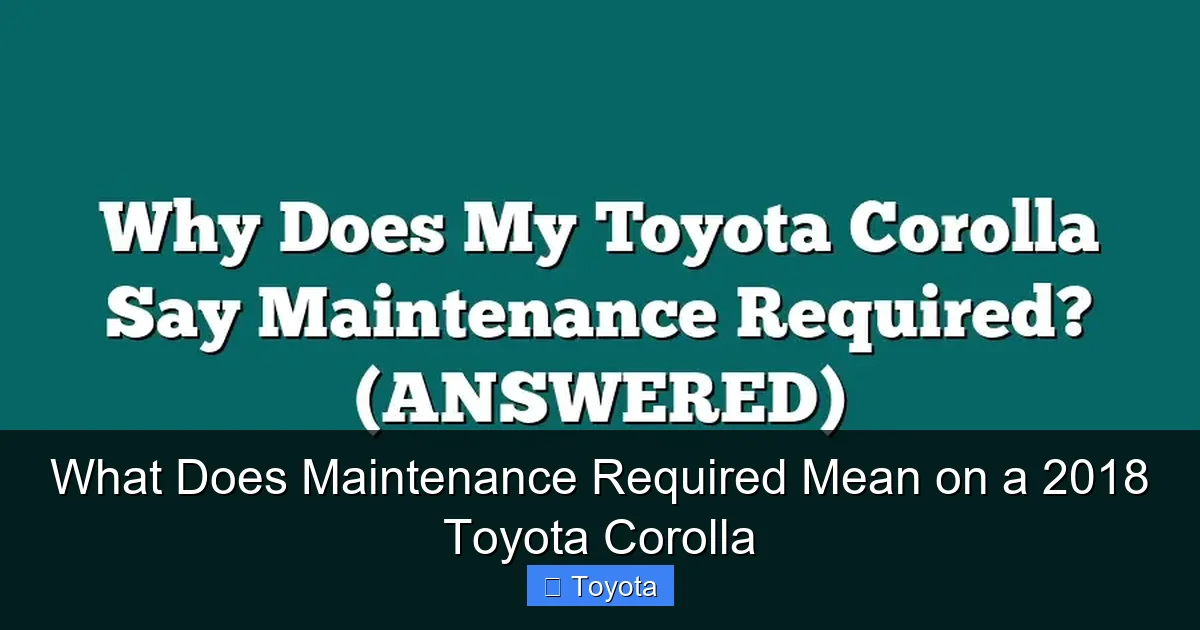
Visual guide about What Does Maintenance Required Mean on a 2018 Toyota Corolla
Image source: i.ytimg.com
There is no complex sensor array monitoring oil life directly (though some newer models have more advanced systems). It’s a purely里程-based (mileage-based) and time-based logic. This is why it’s imperative to reset the light immediately after completing the service. If you get an oil change at 4,800 miles but forget to reset the light, it will still come on at 5,000 miles from the *previous* reset point, which might only be 200 miles later, causing confusion. Always ensure the reset is part of the service transaction.
What Service Is Typically Due When the Light Comes On?
For a 2018 Toyota Corolla, the first few “Maintenance Required” alerts (every 5,000 miles/6 months) generally correspond to a standard oil and filter change, tire rotation, and a multi-point inspection. This inspection includes checking fluid levels (coolant, brake, washer), inspecting belts and hoses, checking the battery, examining the brakes, and looking for any signs of leaks or wear. As the mileage accumulates, the intervals bring more comprehensive services. For example, at 30,000 miles, you might add air filter replacement, cabin filter replacement, and more detailed inspections. At 60,000 miles, major services like spark plug replacement, transmission fluid inspection (or change for certain models), and coolant replacement often come into play. The exact schedule is in your owner’s manual’s maintenance section. The light doesn’t tell you *what* is due; it simply signals that *something* from the schedule is due. You or your technician must consult the schedule based on the current mileage to see the full list.
What to Do When You See the Light: A Step-by-Step Guide
So, the wrench is glowing. Don’t ignore it, but don’t panic either. Here is your clear action plan:
Step 1: Check Your Mileage and Time. Note your current odometer reading. How many miles have you driven since your last oil change or service? If it’s been about 5,000 miles or 6 months, the light is doing its job. If it came on much sooner, there may have been a reset error.
Step 2: Consult Your Owner’s Manual. Open to the “Maintenance and Care” or “Scheduled Maintenance” section. Find the chart that lists services by mileage interval (e.g., 5k, 10k, 15k, etc.). See what specific tasks are recommended for your current mileage. This empowers you to have an informed conversation with your service advisor.
Step 3: Schedule Service. Call your trusted Toyota dealer or independent mechanic. Tell them your 2018 Corolla’s mileage and that the “Maintenance Required” light is on. They will look up the appropriate service package for your vehicle’s mileage and schedule an appointment. This is typically a straightforward oil change service for the first few intervals.
Step 4: Get the Service Performed and Request a Reset. When you drop off the car, explicitly remind the service advisor that the “Maintenance Required” light is on and needs to be reset after the work is done. Reputable shops will always do this, but it’s your responsibility to remind them. It takes two seconds. Watch for it to go out when you start the car after pickup.
Step 5: Verify the Reset. After service, start your car. The light should be off. If it’s still on, politely return to the service desk and ask them to complete the reset procedure. It’s a simple oversight but an easy fix.
Can I Drive With the Light On?
Yes, but with a caveat. Since this light indicates scheduled maintenance is overdue, not an imminent failure, you can drive the car for a short period to get it serviced. However, you should not delay excessively. The most common service at the first interval is an oil change. Driving thousands of miles past an oil change interval with degraded oil can cause excessive engine wear. Think of it as a gentle warning that your car’s “health check” is late. Aim to schedule service within one or two weeks of the light coming on, or within 1,000 miles of the interval, whichever is sooner. If other, more urgent warning lights (like red oil pressure or temperature) are also on, do not drive the car and seek immediate assistance.
How to Reset the Maintenance Required Light Yourself
If you perform your own oil changes and maintenance, or if a shop forgets to reset the light, you can easily do it yourself. The process for a 2018 Corolla is done via the multi-information display on the instrument cluster using the steering wheel buttons. You do not need any special tools.
The Step-by-Step Reset Procedure
Follow these exact steps. The car must be turned OFF to start.
- Press and hold the “ODO/TRIP” button (the one that toggles between odometer and trip meter) on the instrument cluster.
- While still holding that button, turn the ignition key to the “ON” position (the position right before starting the engine, where all dashboard lights come on). Do not start the engine.
- Continue holding the “ODO/TRIP” button. The odometer display will change. You will see a series of dashes “—–” that will count down, or you may see the “MAINTENANCE REQUIRED” message blink and then go out.
- After the countdown completes (about 5-10 seconds), release the button. The light should be off.
- Turn the ignition off, then back on to confirm the light is extinguished.
If this doesn’t work, consult your owner’s manual for the precise procedure, as there can be slight variations. Some models use the “DISP” or “MODE” buttons on the steering wheel. The key is using the trip meter reset button while turning the car to the “ON” position.
A Critical Warning About Resetting
Only reset the light AFTER the required maintenance has been fully completed. Resetting it prematurely is fraudulent and dangerous. It erases the car’s reminder system, meaning you will forget to perform the next service. If you sell the car, the new owner will have no record of when services were last done. Always reset as the final step in a completed service, and keep your own service records as the ultimate source of truth.
The Real Importance: Why You Should Never Ignore It
It’s easy to think, “The car runs fine, I’ll get to it later.” But this light is one of the most valuable protective systems your Corolla has. Ignoring it has tangible, costly consequences.
Preventing Costly Repairs
Modern engines are finely tuned machines that rely on clean oil, proper fluid levels, and well-functioning components. An oil change is the most common service tied to this light. Fresh oil lubricates, cools, and cleans internal engine parts. As oil ages, it breaks down, becomes contaminated with metal shavings and sludge, and loses its viscosity. Running on old oil increases friction, causes excessive heat, and accelerates wear on bearings, pistons, and camshafts. The $40 oil change is trivial insurance against a $3,000+ engine rebuild. The same logic applies to other services: neglecting a coolant flush can lead to a failed water pump, radiator, or head gasket; skipping brake inspections can turn a $300 pad replacement into a $1,500 rotor and caliper job.
Maintaining Fuel Efficiency and Performance
A well-maintained Corolla is a fuel-efficient Corolla. A clogged air filter makes the engine work harder to suck in air, reducing MPG. Properly inflated, evenly worn tires (from regular rotations) reduce rolling resistance. Clean fuel injectors and a healthy spark plug ensure optimal combustion. Every item on the maintenance schedule contributes to your car running as efficiently as Toyota designed. Letting services slip means you’re literally throwing money away at the gas pump and sacrificing the peppy, responsive drive your Corolla is known for.
Protecting Your Warranty and Resale Value
If your 2018 Corolla is still under its original 5-year/60,000-mile powertrain warranty, following the scheduled maintenance is often a condition of warranty coverage. If a major component fails and Toyota can prove you neglected the required maintenance, they could deny your warranty claim. Keep all service receipts as proof. Furthermore, when it’s time to sell or trade-in, a complete service history—especially one showing timely responses to the “Maintenance Required” light—is a massive selling point. It gives a buyer confidence the car has been cared for and typically commands a higher price. You can also learn about other dashboard indicators, such as what B means on a Toyota Corolla, which relates to the brake system, to be fully informed.
Common Misconceptions and Frequently Asked Questions
Let’s clear the air on some frequent points of confusion.
“Is the Maintenance Required Light the Same as the Check Engine Light?”
Absolutely not. This is the most common mix-up. The “Check Engine” light (usually a yellow engine icon) indicates a problem with the emissions system or engine management that could increase pollutants or affect performance. It requires immediate diagnostic attention. The “Maintenance Required” wrench light is a simple calendar alert for routine service. They are entirely separate systems with different meanings and urgency levels.
“Can I Just Disconnect the Battery to Turn It Off?”
No. Disconnecting the battery will reset the clock and radio presets, but it will not reset the maintenance interval timer in most modern vehicles, including your Corolla. The maintenance timer is stored in non-volatile memory that retains data even when power is removed. You must use the specific button-press sequence described earlier to clear it.
“What If the Light Blinks or Flashes?”
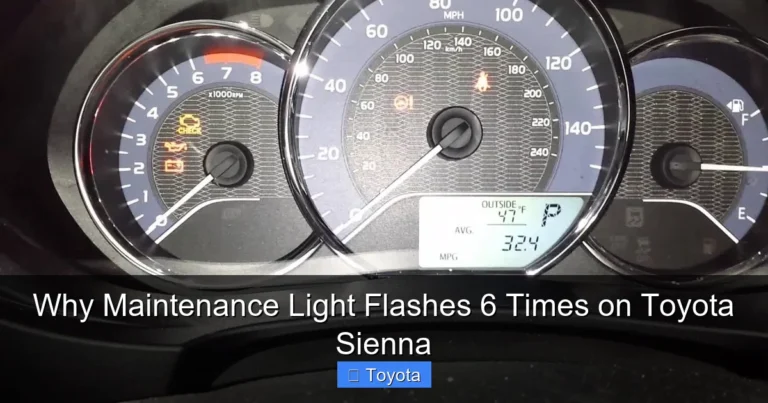
The “Maintenance Required” light on a Corolla is designed to illuminate steadily and stay on. It does not typically blink or flash. If you see a flashing warning light, it is likely a different, more urgent indicator (like a severe engine misfire or critical oil pressure warning). A steady “MAINTENANCE REQUIRED” is your normal service reminder.
“Does This Light Have Anything to Do With My Eco Features?”
No direct link. The maintenance schedule is independent of your driving mode (Eco, Normal, Sport) or climate control settings like Eco Heat/Cool. However, using Eco mode to drive more gently can, over the long term, contribute to conditions that might align with a “Normal” rather than “Severe” driving schedule, potentially extending service intervals slightly according to the manual’s definitions.
Frequently Asked Questions
How often does the “Maintenance Required” light come on a 2018 Toyota Corolla?
For most 2018 Corolla models, it is set to illuminate every 5,000 miles or 6 months, whichever comes first, when driven under “Normal” conditions. Under “Severe” conditions, the interval may be shorter. The light will come on consistently at each scheduled interval as long as it is properly reset after each service.
Is it safe to drive my Corolla with the Maintenance Required light on?
Yes, it is generally safe to drive for a short period to schedule service, as it is not an emergency indicator. However, you should not delay indefinitely. The most common service is an oil change, and driving significantly past that interval risks engine damage. Aim to have it serviced within 1,000 miles or a couple of weeks of the light coming on.
Can I reset the Maintenance Required light without doing the service?
Technically, yes, using the reset procedure described in your manual. However, you should never do this. Resetting without performing the maintenance defeats the purpose of the system, leads to forgotten services, risks vehicle damage, voids warranty protections, and destroys your service history for future resale.
Why did my Maintenance Required light come on after just 3,000 miles?
This usually means the light was not properly reset after the last service. The timer was still counting down from the previous interval. It could also indicate you are operating under “Severe” driving conditions, which may have a shorter preset interval (though the light still triggers at the set mileage from the last reset). Verify the reset procedure was followed correctly at your last service.
Will the light turn off by itself after I get the oil changed?
No. The light will remain illuminated until a technician (or you) manually performs the reset procedure. The car’s computer has no way of knowing the oil was changed unless you tell it via the reset sequence. Always remind the shop to reset it, and verify it’s off before you leave.
Does the Maintenance Required light affect my car’s performance or fuel economy?
The light itself has no effect. However, the neglected maintenance that the light is reminding you of will affect performance and fuel economy. Old oil, dirty filters, and under-inflated tires all contribute to reduced efficiency, sluggish performance, and increased emissions. The light is the symptom; the lack of service is the cause.