
What Does “b” Mean on a Toyota Corolla?

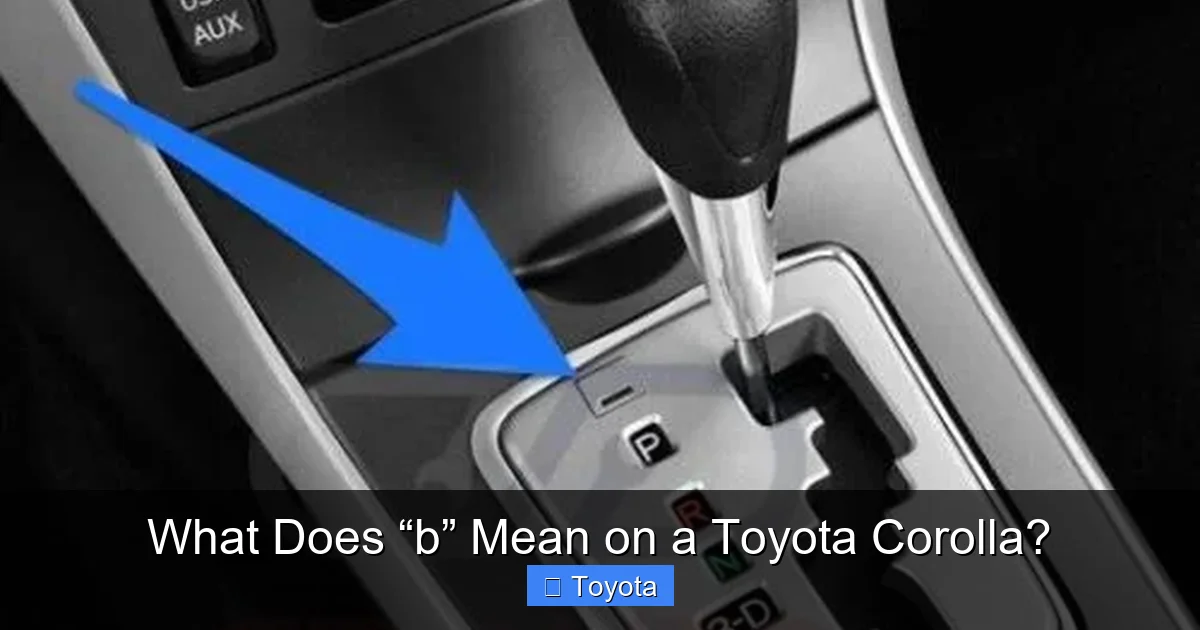
The “B” on a Toyota Corolla’s gear selector stands for “Engine Braking” mode, designed to help slow the vehicle using engine resistance instead of just the brakes. It’s especially useful when driving downhill or in slippery conditions, improving safety and reducing brake wear.
If you’ve ever driven a Toyota Corolla with an automatic transmission, you’ve probably noticed the gear selector has more than just “P,” “R,” “N,” and “D.” Tucked in there, often between “D” and “N,” is a mysterious letter: “B.” If you’re like most drivers, you might have glanced at it, wondered what it does, and then promptly ignored it. But that little “B” is actually a powerful feature designed to enhance your driving safety and vehicle performance—especially in certain conditions.
So, what does “B” mean on a Toyota Corolla? Simply put, “B” stands for “Engine Braking.” It’s a driving mode that uses the engine’s internal resistance to slow the car down, reducing the need to constantly press the brake pedal. This might sound like a small detail, but it can make a big difference when you’re driving down a steep mountain road, navigating icy hills, or simply trying to preserve your brake system over time.
In this guide, we’ll dive deep into what the “B” gear really does, when and how to use it, and why Toyota includes this feature in the Corolla. Whether you’re a new driver or a long-time Corolla owner, understanding “B” can help you drive smarter, safer, and more efficiently. Let’s get started.
Key Takeaways
- “B” stands for Engine Braking: This mode increases engine resistance to slow the car down without relying solely on the brake pedal.
- Ideal for downhill driving: Use “B” when going down steep hills to maintain control and prevent brake overheating.
- Improves safety in slippery conditions: Helps maintain traction and stability on wet, icy, or snowy roads.
- Reduces brake wear: By using engine braking, you extend the life of your brake pads and rotors.
- Does not harm the engine or transmission: Toyota designs the Corolla to safely handle “B” mode under normal driving conditions.
- Not a replacement for brakes: Always use your foot brake when coming to a complete stop or in emergency situations.
- Common in automatics with manual modes: Found in Corollas with automatic transmissions that include “B,” “D,” and sometimes “S” gears.
📑 Table of Contents
- Understanding the “B” Gear: Engine Braking Explained
- When Should You Use the “B” Gear?
- How to Use the “B” Gear: Step-by-Step Guide
- Does Using “B” Harm Your Corolla?
- Common Misconceptions About the “B” Gear
- Real-World Examples: When “B” Makes a Difference
- Conclusion: Make “B” Part of Your Driving Routine
Understanding the “B” Gear: Engine Braking Explained
At first glance, the “B” gear might seem confusing. After all, most drivers are used to just shifting between Drive (D), Reverse (R), and Park (P). So why add another option? The answer lies in how vehicles slow down.
Normally, when you take your foot off the gas pedal in Drive (D), the car begins to coast. The transmission shifts into higher gears, and the engine runs at lower RPMs. This is great for fuel efficiency on flat roads, but it doesn’t help much when you need to slow down—especially on a downhill slope. That’s where the “B” gear comes in.
When you shift into “B,” the transmission holds the engine in a lower gear, even as the car slows down. This increases engine resistance, which in turn slows the vehicle more effectively than coasting alone. Think of it like downshifting in a manual car—except the Corolla’s automatic transmission does it for you.
This process is called engine braking. It’s not a new concept—truck drivers and motorcyclists have used it for decades—but Toyota has made it accessible and easy to use in everyday passenger cars like the Corolla.
How Engine Braking Works
To understand engine braking, it helps to know a little about how engines and transmissions work together. When you press the gas pedal, fuel is injected into the engine’s cylinders, creating combustion that turns the crankshaft and powers the wheels. When you release the gas, the engine still spins—but now it’s being turned by the wheels, not by combustion.
In “B” mode, the transmission keeps the engine in a lower gear ratio. This means the engine has to work harder to turn the wheels, creating more resistance. That resistance slows the car down, just like pressing the brake pedal would—but without wearing out your brake pads.
For example, imagine you’re driving down a long, steep hill. In Drive (D), the car might start to accelerate due to gravity, forcing you to ride the brakes. This can cause brake fade—a dangerous condition where the brakes overheat and lose effectiveness. But in “B” mode, the engine helps hold the car back, reducing the strain on the brakes and keeping your speed under control.
Why Toyota Includes “B” in the Corolla
You might wonder why Toyota includes an engine braking mode in a compact, fuel-efficient car like the Corolla. After all, it’s not a truck or a sports car. The answer is safety and versatility.
Toyota designs the Corolla to be driven in a wide range of environments—from city streets to mountain passes. In hilly or mountainous regions, drivers often face long descents where constant braking can be risky. By including “B,” Toyota gives drivers an extra tool to maintain control without overheating their brakes.
Additionally, “B” mode can improve traction in slippery conditions. When you use the engine to slow down, the wheels are less likely to lock up or skid—especially on ice or wet pavement. This makes “B” a valuable feature for drivers in colder climates or areas with frequent rain.
When Should You Use the “B” Gear?
Visual guide about What Does “b” Mean on a Toyota Corolla?
Image source: gearfixup.com
Now that you know what “B” does, the next question is: when should you actually use it? The short answer is: whenever you need extra slowing power without relying heavily on the brakes. But let’s break that down with some practical examples.
Driving Downhill
The most common use for “B” is when driving down a steep or long hill. Whether you’re descending a mountain pass, a rural road, or even a steep driveway, “B” can help you maintain a safe, steady speed.
For instance, imagine you’re driving through the Blue Ridge Mountains in North Carolina. You’re coming down a winding road with a 7% grade. In Drive (D), your Corolla might start to pick up speed, and you’ll need to press the brake pedal frequently to stay under the speed limit. After a few minutes, your brakes could get hot—and less effective.
But if you shift into “B” before starting the descent, the engine will help slow the car. You’ll feel a noticeable deceleration as soon as you shift, and you’ll be able to maintain a safe speed with minimal brake use. This not only improves safety but also protects your brake system from overheating.
Driving in Snow or Ice
Winter driving can be tricky, especially when roads are slick. Sudden braking on ice can cause your wheels to lock up, leading to skids or loss of control. Engine braking offers a gentler way to slow down.
In “B” mode, the engine provides smooth, consistent resistance. This reduces the chance of skidding because the wheels aren’t being forced to stop abruptly. It’s especially helpful when approaching a stop sign or traffic light on a snowy road.
For example, if you’re driving in Minnesota during a snowstorm and need to slow down for a turn, shifting into “B” a few seconds early can help you decelerate gradually. This gives you better control and reduces the risk of sliding.
Heavy Loads or Towing
While the Toyota Corolla isn’t designed for heavy towing, some drivers use it to pull small trailers or carry heavy loads—like camping gear or furniture. In these situations, the extra weight can make the car harder to slow down.
Using “B” when descending hills with a load can prevent the brakes from overheating. It also helps maintain stability, since the engine’s resistance keeps the vehicle from gaining too much speed.
Even if you’re not towing, carrying a full car of passengers and luggage can increase the strain on your brakes. “B” mode gives you an extra layer of control.
Frequent Stop-and-Go Driving
You might not think of “B” as useful in city driving, but it can help in certain situations—like driving down a steep hill in traffic. If you’re in a hilly city like San Francisco and need to descend a long, curvy street with stop signs every block, “B” can reduce brake wear.
Instead of riding the brakes between stops, you can use engine braking to slow down naturally. This keeps your brake pads cooler and extends their lifespan.
How to Use the “B” Gear: Step-by-Step Guide
Visual guide about What Does “b” Mean on a Toyota Corolla?
Image source: garagedreams.net
Using the “B” gear is simple, but it’s important to do it correctly to avoid damaging your transmission or losing control of the vehicle.
Step 1: Come to a Safe Speed
Before shifting into “B,” make sure your speed is appropriate. You don’t want to shift into “B” at high speeds—like 60 mph on the highway. The sudden increase in engine resistance could cause a jerky deceleration.
Instead, slow down to a reasonable speed—usually under 40 mph—before shifting. This is especially important if you’re coming down a hill.
Step 2: Shift Smoothly
With your foot off the gas, gently move the gear selector from “D” to “B.” You don’t need to press the brake or come to a complete stop. Most Corollas allow you to shift into “B” while moving.
You’ll feel the car slow down immediately as the transmission holds a lower gear. The engine RPMs will rise slightly, and you may hear a bit more engine noise—this is normal.
Step 3: Use the Brake as Needed
“B” mode helps slow the car, but it’s not a replacement for the brake pedal. Always use your foot brake when coming to a complete stop or in emergency situations.
For example, if you’re descending a hill in “B” and need to stop at a red light, press the brake pedal as usual. The engine braking will help, but the brakes are still necessary for a full stop.
Step 4: Shift Back to “D” When Done
Once you’ve finished your descent or no longer need engine braking, shift back to “D” for normal driving. There’s no need to stay in “B” on flat roads—it can reduce fuel efficiency and increase engine wear over time.
Tips for Safe Use
- Don’t shift into “B” at high speeds: This can cause sudden deceleration and stress the transmission.
- Use “B” proactively: Shift into “B” before starting a downhill drive, not after you’ve already picked up speed.
- Listen to your engine: If the engine sounds strained or the RPMs are too high, ease off or shift back to “D.”
- Practice in a safe area: If you’re new to using “B,” try it on a quiet, downhill road to get a feel for how it works.
Does Using “B” Harm Your Corolla?
Visual guide about What Does “b” Mean on a Toyota Corolla?
Image source: img-s-msn-com.akamaized.net
A common concern among drivers is whether using “B” mode can damage the engine or transmission. The short answer is: no, it doesn’t—when used correctly.
Toyota engineers design the Corolla’s transmission to handle engine braking safely. The “B” gear is a factory-installed feature, not a hack or workaround. It’s meant to be used regularly in appropriate conditions.
Engine and Transmission Safety
Modern automatic transmissions, including those in the Corolla, are built with safeguards to prevent damage from engine braking. The transmission control unit (TCU) monitors engine speed, vehicle speed, and gear position to ensure smooth operation.
When you shift into “B,” the TCU selects the appropriate gear and manages clutch engagement to avoid shock or strain. As long as you don’t shift into “B” at excessively high speeds, your transmission will handle it just fine.
Fuel Efficiency Considerations
One downside of “B” mode is that it can reduce fuel efficiency. Because the engine is working harder to slow the car, it burns more fuel than it would in “D” mode.
However, this trade-off is usually worth it in situations where safety and brake preservation are more important than fuel economy. For example, using “B” on a long downhill drive might use a little more gas, but it prevents brake overheating—which could lead to costly repairs or even an accident.
In flat, everyday driving, stick with “D” for the best fuel economy. Save “B” for hills, snow, or heavy loads.
Brake Wear and Longevity
One of the biggest benefits of “B” mode is reduced brake wear. Brake pads and rotors are expensive to replace, and constant braking—especially on hills—can wear them out quickly.
By using engine braking, you give your brakes a break. Over time, this can extend the life of your brake system and save you money on maintenance.
For example, a driver who frequently travels mountain roads might replace brake pads every 20,000 miles without using “B.” But with regular use of engine braking, that interval could stretch to 30,000 miles or more.
Common Misconceptions About the “B” Gear
Despite its usefulness, the “B” gear is often misunderstood. Let’s clear up some common myths.
Myth 1: “B” Is Only for Trucks or Heavy Vehicles
Some drivers think engine braking is only for big rigs or off-road vehicles. But Toyota includes “B” in the Corolla because it’s useful for everyday drivers—especially in hilly or snowy areas.
Even if you don’t drive in extreme conditions, “B” can still help on steep driveways, parking garages, or rural roads.
Myth 2: “B” Is the Same as “L” or “S” Gears
On some vehicles, you’ll see “L” (Low) or “S” (Sport) gears. These are similar to “B” but not identical.
“L” typically locks the transmission in the lowest gear, providing maximum engine braking. “S” mode prioritizes performance, holding gears longer for quicker acceleration.
“B” is a middle ground—it provides strong engine braking without being as aggressive as “L.” It’s designed for safety and control, not speed.
Myth 3: You Should Always Use “B” on Hills
While “B” is helpful on steep descents, you don’t need to use it on every hill. Short, gentle slopes can be handled with normal braking.
Use “B” when the descent is long, steep, or in poor weather. For quick hills in the city, “D” is usually fine.
Myth 4: “B” Will Make Your Car Stop Faster
Engine braking helps slow the car, but it doesn’t replace the brake pedal. In an emergency, always use your foot brake for maximum stopping power.
“B” is a supplementary tool—not a primary braking system.
Real-World Examples: When “B” Makes a Difference
Let’s look at a few real-life scenarios where using “B” can improve your driving experience.
Example 1: Mountain Road Trip
Sarah is driving her Toyota Corolla from Denver to Aspen, Colorado. The route includes a 10-mile descent with sharp curves and a 6% grade.
Instead of riding her brakes the entire way, she shifts into “B” at the top of the hill. The engine slows the car smoothly, and she only needs to tap the brake occasionally for turns. Her brakes stay cool, and she arrives safely without any issues.
Example 2: Winter Commute
Mike lives in Buffalo, New York, where snow is common in winter. One morning, he’s driving down a steep, icy hill to get to work.
He shifts into “B” before starting the descent. The engine braking helps him slow down gradually, reducing the risk of skidding. He makes it to the bottom safely, even though the road is slick.
Example 3: Moving Day
Jenna is helping her friend move and has loaded her Corolla with boxes, a couch, and a TV. She’s driving down a long, steep driveway to the street.
With the extra weight, she’s worried about brake overheating. She shifts into “B” and lets the engine do the work. The car slows down steadily, and she doesn’t have to press the brake hard once.
Conclusion: Make “B” Part of Your Driving Routine
The “B” gear on your Toyota Corolla isn’t just a mystery button—it’s a smart, safety-focused feature that can make your driving safer and more efficient. By using engine braking, you reduce wear on your brakes, maintain better control on hills, and improve traction in slippery conditions.
While it’s not something you’ll use every day, knowing when and how to use “B” can be a game-changer—especially if you live in a hilly area, drive in winter weather, or frequently carry heavy loads.
So the next time you’re heading down a steep road or driving in the snow, don’t ignore that little “B.” Give it a try. Your brakes—and your peace of mind—will thank you.
Frequently Asked Questions
What does “B” stand for on a Toyota Corolla?
“B” stands for “Engine Braking.” It’s a driving mode that uses the engine’s resistance to slow the vehicle, reducing the need for constant brake use.
Can I shift into “B” while driving?
Yes, you can shift into “B” while the car is moving, as long as your speed is reasonable—usually under 40 mph. Avoid shifting at high speeds to prevent jerky deceleration.
Does using “B” save fuel?
No, “B” mode typically uses more fuel because the engine works harder. It’s best used when safety and brake preservation are more important than fuel economy.
Is “B” the same as “L” or “S” gears?
No, “B” is different. “L” provides maximum engine braking, while “S” prioritizes performance. “B” offers moderate engine braking for control and safety.
Can “B” damage my transmission?
No, when used correctly, “B” won’t damage your transmission. Toyota designs the Corolla to handle engine braking safely under normal conditions.
Should I use “B” in the rain or snow?
Yes, “B” can improve traction and control in slippery conditions by providing smooth, gradual deceleration without locking the wheels.