What Does Maintenance Required Mean on a 2013 Toyota Highlander?

Contents
- 1 Key Takeaways
- 2 📑 Table of Contents
- 3 Understanding the “Maintenance Required” Light on Your 2013 Toyota Highlander
- 4 How Toyota’s Maintenance Reminder System Works
- 5 What Triggers the “Maintenance Required” Light on a 2013 Highlander?
- 6 Immediate Steps to Take When the Light Comes On
- 7 How to Reset the “Maintenance Required” Light
- 8 Your 2013 Toyota Highlander Maintenance Schedule Explained
- 9 Why Ignoring the “Maintenance Required” Light Can Be Costly
- 10 Conclusion: Your Partner in Proactive Ownership
- 11 Frequently Asked Questions


The “Maintenance Required” light on a 2013 Toyota Highlander is a factory-set reminder that your vehicle is due for scheduled maintenance, typically an oil change based on mileage or time. It is not an emergency warning like the “Check Engine” light, but ignoring it can lead to serious engine damage. The light is triggered by the vehicle’s internal computer after a set interval and must be manually reset after the maintenance is performed. Staying on top of these alerts ensures your Highlander’s longevity, performance, and resale value.
Key Takeaways
- It’s a Reminder, Not a Warning: The “Maintenance Required” light is a proactive alert from your Highlander’s computer indicating scheduled service is due, not an immediate danger signal.
- Primarily an Oil Change Alert: For the 2013 model, this light most commonly signifies that the engine oil and filter are due for replacement based on the oil life monitoring system or a fixed mileage interval.
- It Tracks Multiple Services: Beyond oil changes, the system can also remind you of other time/mileage-based services like tire rotations, filter replacements, and inspections.
- Manual Reset is Required: After a qualified technician performs the necessary maintenance, the light must be manually reset using a specific procedure; it will not turn off on its own.
- Ignoring It Risks Engine Damage: Prolonged driving with overdue oil changes causes excessive engine wear, sludge buildup, and can ultimately lead to catastrophic engine failure.
- It’s Linked to Your Warranty: Adhering to the maintenance schedule documented by this light is often required to maintain the validity of your vehicle’s factory warranty.
- Simple Diagnostics: The light’s activation is a straightforward calculation by the Engine Control Unit (ECU) based on mileage, engine run time, and driving conditions, not a sensor fault.
📑 Table of Contents
- Understanding the “Maintenance Required” Light on Your 2013 Toyota Highlander
- How Toyota’s Maintenance Reminder System Works
- What Triggers the “Maintenance Required” Light on a 2013 Highlander?
- Immediate Steps to Take When the Light Comes On
- How to Reset the “Maintenance Required” Light
- Your 2013 Toyota Highlander Maintenance Schedule Explained
- Why Ignoring the “Maintenance Required” Light Can Be Costly
- Conclusion: Your Partner in Proactive Ownership
Understanding the “Maintenance Required” Light on Your 2013 Toyota Highlander
Seeing a new light illuminate on your dashboard can cause a moment of panic. Your mind might race to thoughts of expensive repairs or a stranded vehicle. But when that light is the simple, yet persistent, “Maintenance Required” message on your 2013 Toyota Highlander, it’s important to take a deep breath. This light is your vehicle’s way of having a polite conversation with you, not screaming in alarm. It’s a scheduled reminder, a nudge from your car’s computer that says, “Hey, it’s time for our regular check-up.” Unlike the ominous “Check Engine” light, which can indicate anything from a loose gas cap to a failing catalytic converter, the Maintenance Required light is a pre-programmed, predictable event based on your driving habits and mileage.
For owners of the 2013 Highlander, understanding this light is a cornerstone of responsible ownership. This three-row SUV is known for its reliability and family-friendly features, but even the most robust engine needs consistent care. The Maintenance Required system is Toyota’s tool to help you provide that care at the right intervals. In this comprehensive guide, we will demystify everything about this light: what truly triggers it, what actions you should take when it comes on, exactly how to reset it after service, and why heeding this reminder is non-negotiable for protecting your investment. We’ll also break down the specific maintenance schedule for your model year, so you know exactly what to expect at each service interval.
How Toyota’s Maintenance Reminder System Works
The “Maintenance Required” light is the final output of a sophisticated, yet reliable, system within your Highlander’s Engine Control Unit (ECU). This isn’t a simple mileage counter like the old sticker in your windshield. Instead, it’s an algorithm that considers multiple factors to estimate engine oil degradation. This system, often called the Maintenance Reminder System (MRS) or Oil Life Monitoring System (OLMS), is a significant upgrade from the rigid “every 3,000 miles” rule of the past.

Visual guide about What Does Maintenance Required Mean on a 2013 Toyota Highlander?
Image source: img.toyotask.com
The Role of the Maintenance Reminder System (MRS)
Your 2013 Highlander’s computer constantly monitors engine operating conditions. It tracks engine revolutions per minute (RPM), engine temperature, vehicle speed, and driving time. It even factors in things like frequent short trips (which don’t allow the engine to fully warm up and burn off contaminants) versus long highway cruises. Based on this data, the MRS calculates a percentage of remaining oil life. When that percentage drops to a predetermined threshold—typically around 15% to 0%—the system triggers the “Maintenance Required” light on your dashboard. This means the reminder is tailored to your actual driving style and conditions, making it far more accurate than a generic mileage interval.
Oil Life Monitoring vs. Mileage-Based Reminders
It’s a common misconception that the light comes on solely at a specific mileage marker, like 5,000 or 7,500 miles. While the system is calibrated with a maximum interval (often 10,000 miles for normal driving conditions with synthetic oil), it dynamically adjusts. If you mostly drive in severe conditions—extreme temperatures, dusty environments, stop-and-go traffic, or frequent short trips—the oil will degrade faster, and the light will illuminate sooner. Conversely, if you primarily drive long distances on the highway, you might get more mileage between alerts. This smart system prevents unnecessary oil changes while protecting against delayed service. The light you see is the culmination of this ongoing calculation, telling you that the oil has likely reached the end of its effective life and needs to be changed to protect your engine.
What Triggers the “Maintenance Required” Light on a 2013 Highlander?
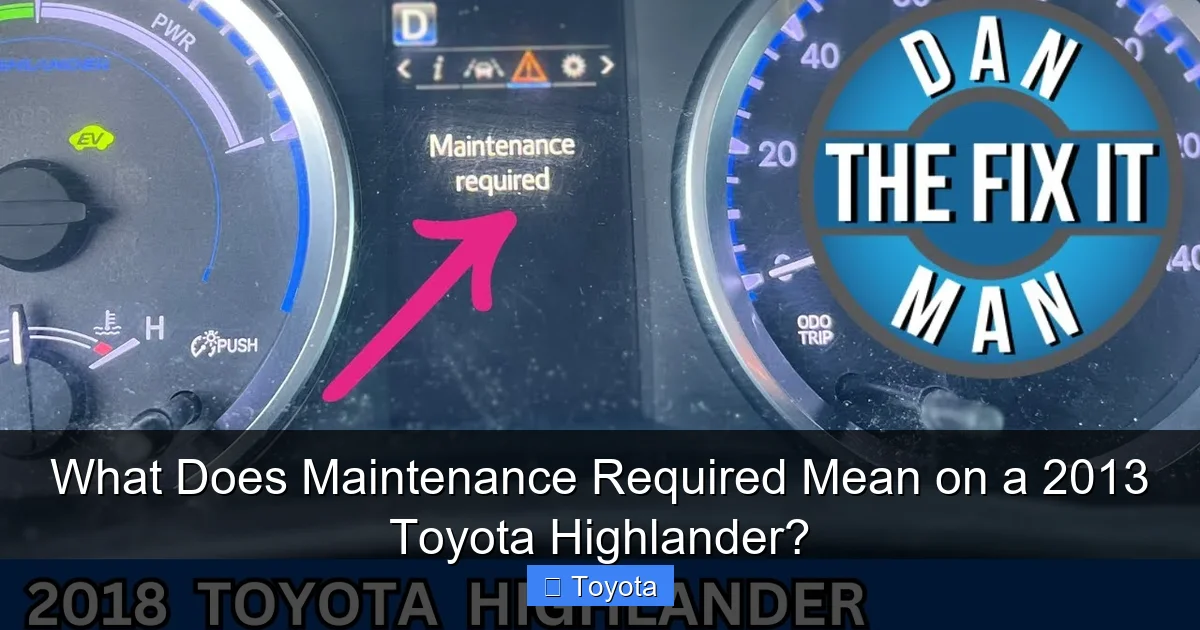
Knowing the primary trigger helps you understand the urgency and nature of the required service. For your 2013 Toyota Highlander, the “Maintenance Required” light is overwhelmingly triggered by the engine oil and filter reaching the end of their service life. However, the system is also designed to integrate other critical maintenance items into its reminder cycle.
Visual guide about What Does Maintenance Required Mean on a 2013 Toyota Highlander?
Image source: i.ytimg.com
Oil Change as the Primary Trigger
This is the most common and critical reason for the light. The MRS calculates oil life based on the factors mentioned above. When it determines the oil’s lubricating properties are significantly diminished, it activates the light. For a 2013 Highlander, the recommended interval under “normal” driving conditions is typically 10,000 miles or 12 months, whichever comes first, when using Toyota Genuine Motor Oil or an equivalent meeting Toyota’s specification. Under “severe” conditions—which include towing, driving in very hot or cold climates, extensive idling, or very short trips—the interval shortens, often to 5,000 miles or 6 months. The light doesn’t differentiate between normal and severe; it simply responds to the sensor data, so your driving habits directly influence when it comes on.
Secondary Maintenance Triggers
While the oil change is the star of the show, the Maintenance Required system is also linked to other time/mileage-based services in your owner’s manual. After the oil change is performed and the light is reset, the system starts its countdown for the next full cycle, which includes:
- Tire Rotation: Typically due every 5,000 to 7,500 miles. Proper rotation ensures even tire wear and maximizes tire life.
- Cabin Air Filter Replacement: Usually recommended every 15,000 to 30,000 miles. A clogged filter reduces HVAC efficiency and air quality inside the cabin.
- Engine Air Filter Inspection/Replacement: Inspected regularly and replaced as needed, often around 15,000 to 30,000 miles. A dirty filter hurts fuel economy and performance.
- Brake System Inspection: Brakes should be inspected at every oil change interval for pad thickness, rotor condition, and fluid level.
- Fluid Levels and Conditions: Checking coolant, transmission fluid, power steering fluid, and windshield washer fluid is part of the standard service.
- Comprehensive Vehicle Inspection: A multi-point inspection covering belts, hoses, suspension components, lights, and more.
When your technician completes these services and resets the Maintenance Required light, they are essentially telling the car’s computer, “All scheduled items for this cycle are done. Start counting for the next one.” It’s a holistic reminder for your vehicle’s overall health, not just an oil change ticker.
Immediate Steps to Take When the Light Comes On
So, the “Maintenance Required” message is now glowing on your instrument cluster. What should you do? The key is a calm, methodical approach. This light is not a “stop driving now” signal, but it is a “plan your service soon” signal.
Don’t Panic, But Don’t Ignore It
First, understand you have some time. The light is not an immediate crisis. You can safely drive your Highlander for a few hundred miles after it illuminates to complete your current trip or schedule a convenient service appointment. However, you should not delay for weeks or months. The window between the light coming on and potential oil degradation becoming critical is relatively short. Think of it as your car’s “low fuel” warning—you have a bit of range, but you need to refuel soon. Ignoring it is like running your engine on dirty, sludgy oil, which increases friction, causes excessive heat, and leads to premature wear on vital components like bearings, pistons, and camshafts.
What to Inspect Yourself Before Service
While you should leave the actual maintenance to professionals, there are a few quick checks you can perform:
- Check the Engine Oil Level: Use the dipstick to verify the oil is between the MIN and MAX marks. Low oil level is a separate, more urgent issue that requires immediate attention and topping up.
- Note Your Mileage: Write down the current odometer reading. This helps you and your technician verify the service interval and is useful for your records.
- Listen and Feel: Pay attention to any new noises (ticking, knocking), performance changes, or leaks under the car. Report these to your technician as they may indicate other issues needing attention.
- Check Tire Pressure: While not directly related to the light, proper tire pressure is a critical safety and efficiency item. Inflate tires to the pressure listed on the driver’s door jamb sticker.
Once you’ve done these checks, the next step is to schedule an appointment with a trusted mechanic, a Toyota dealer, or a reputable independent shop that knows your Highlander. Be sure to tell them specifically, “My 2013 Highlander’s Maintenance Required light is on. I need the scheduled service per the owner’s manual.” This ensures they perform all the necessary inspections and replacements, not just an oil change.
How to Reset the “Maintenance Required” Light
After the required maintenance is completed—ideally by a professional who has also performed the associated inspections—the light will remain illuminated until it is manually reset. This is a crucial step. The system does not automatically detect new oil or a new filter; it only knows that the service interval has been completed when you tell it so. Resetting the light is a simple process you can do yourself at home in under a minute. For a complete visual guide with video, you can refer to our dedicated article on how to reset the maintenance light on a 2013 Toyota Highlander.
Tools You’ll Need
You don’t need any special tools for this procedure. Just your vehicle’s key and your finger. The process uses the odometer display and the trip meter reset button on your instrument cluster.
The Step-by-Step Reset Procedure for a 2013 Highlander
Follow these steps precisely:
- Turn the Ignition On: Insert your key and turn it to the “ON” position (the position right before starting the engine). Do not start the engine. All dashboard lights, including the “Maintenance Required” light, should be illuminated.
- Access the Odometer Display: Use the “ODO/TRIP” button on your dashboard to cycle the digital display until it shows the total odometer reading (not a trip A or B reading).
- Turn the Ignition Off: While the odometer is displayed, turn the ignition key back to the “OFF” position.
- Press and Hold the Reset Button: Now, press and hold down the “ODO/TRIP” button.
- Turn the Ignition Back On: While continuing to hold the button, turn the ignition key back to the “ON” position (again, do not start the engine).
- Watch the Display: The odometer display will change. You will see it count down (e.g., “——” or “000000”) or flash for a few seconds.
- Release the Button: After the countdown or flashing completes (about 5-10 seconds), release the “ODO/TRIP” button. The “Maintenance Required” light should now be off.
- Verify: Cycle the display and turn the ignition off and on again to confirm the light stays off.
Important: Only perform this reset after the actual maintenance has been completed. Resetting the light without performing the service is defeating the purpose of the system and puts your engine at risk.
Your 2013 Toyota Highlander Maintenance Schedule Explained
Knowing what specific services are due at each interval helps you communicate effectively with your mechanic and understand what you’re paying for. The “Maintenance Required” light cycles through a schedule that aligns with Toyota’s official recommendations for the 2013 Highlander. Below is a generalized breakdown. Always consult your owner’s manual for the definitive schedule for your specific vehicle, as driving conditions can affect intervals.
Standard Maintenance at Each Major Interval
The schedule typically follows a pattern where major services occur at 5,000, 10,000, 15,000, 30,000, 45,000, 60,000, etc., mile marks. Here’s what you can generally expect:
- Every 5,000 Miles / 6 Months: Tire Rotation & Inspection. This is often bundled with the oil change service. Tires are rotated front-to-back (and side-to-side if non-directional) to promote even wear. All tires, including the spare, should be checked for pressure, tread depth, and damage.
- Every 10,000 Miles / 12 Months: Oil & Filter Change. This is the core service that most often triggers the light. Use Toyota Genuine Motor Oil or an API-certified oil meeting Toyota’s specification (typically 0W-20 for the 2013 Highlander’s V6 engines). The oil filter is also replaced.
- Every 15,000 Miles / 18 Months: Cabin Air Filter Replacement. This filter cleans the air entering your HVAC system. A clogged one reduces airflow and can cause musty odors. It’s usually an easy access item behind the glove box.
- Every 30,000 Miles / 36 Months: Major Service. This includes all the above, plus:
- Engine Air Filter replacement/inspection.
- Inspecting and possibly replacing spark plugs (if not platinum/iridium).
- Inspecting all drive belts and hoses.
- Checking and topping up all fluids (coolant, transmission, brake, power steering).
- Comprehensive brake system inspection (pads, rotors, calipers, lines, fluid).
- Inspecting suspension and steering components.
- Greasing and lubricating applicable chassis parts.
- Every 60,000 Miles / 60 Months: Major Major Service. This includes the 30,000-mile items plus:
- Transmission fluid and filter service (if automatic, and especially if used for towing).
- Differential fluid service (especially critical for AWD models).
- Coolant system flush and refill.
- Brake fluid flush/replacement.
- More in-depth inspection of timing belt/chain components (though the 2013 Highlander’s V6 uses a timing chain, which is generally “lifetime” but still inspected).
Special Consideration for AWD Models
If your 2013 Highlander is equipped with All-Wheel Drive (AWD), the maintenance schedule includes specific attention to the drivetrain. The transfer case and rear differential have fluid that should be inspected and replaced at the 60,000-mile interval (or as specified for severe service). Neglecting this fluid can cause expensive AWD system failures. If you ever see a separate warning light like “Check AWD” or “AWD Off,” it could indicate a problem with this system. For more information on what that specific warning means, you can read our article on what does Check AWD system mean on a Toyota Highlander. Regular differential fluid service as part of your scheduled maintenance is the best prevention against such warnings.
Why Ignoring the “Maintenance Required” Light Can Be Costly
It’s easy to think, “The car runs fine, I’ll get to it next week.” But procrastination on scheduled maintenance is a false economy that can lead to massive, unexpected expenses. The “Maintenance Required” light is your cheapest line of defense against catastrophic failure.
Engine Damage from Neglected Oil Changes
Engine oil is the lifeblood of your Highlander’s V6 engine. Its primary jobs are to lubricate moving parts to reduce friction, seal piston rings, cool hot spots, and suspend harmful combustion byproducts. As oil ages, it breaks down. Its viscosity changes, it loses its ability to clean, and it becomes saturated with contaminants like metal shavings, soot, and unburned fuel. When you drive past the oil change interval:
- Increased Friction & Wear: Thinned, dirty oil cannot form a proper protective film between bearings, cam lobes, and cylinder walls. This results in metal-on-metal contact, scoring, and permanent wear.
- Sludge Formation: Oxidized oil and contaminants form a tar-like sludge. This sludge can clog oil passages, preventing oil from reaching critical areas like the top of the cylinders and the valve train. An engine starved of oil can seize in minutes.
- Overheating: Oil helps carry heat away from the pistons and other components. Degraded oil is less effective at this, leading to hot spots and accelerated wear.
- Reduced Fuel Economy: A well-lubricated engine runs efficiently. An engine fighting friction works harder and burns more fuel.
The cost of a new engine or a long-block replacement for a 2013 Highlander can easily exceed $5,000. A series of timely $100 oil changes is a minuscule fraction of that cost.
Impact on Resale Value and Warranty
If you plan to sell or trade your Highlander, a complete service history—documented by timely responses to the Maintenance Required light—is a huge selling point. It proves to potential buyers that the vehicle has been cared for. A missing history or a car that has consistently ignored service reminders will raise red flags and lower its value. Furthermore, while the original factory warranty on a 2013 model is likely expired, if you have an extended warranty or are considering a certified pre-owned purchase, adhering to the maintenance schedule is almost always a requirement for coverage. Failure to provide proof of scheduled maintenance can void your warranty entirely.
Conclusion: Your Partner in Proactive Ownership
The “Maintenance Required” light on your 2013 Toyota Highlander is not an adversary; it’s a helpful assistant. It’s a sophisticated feature designed to take the guesswork out of maintenance timing, protecting your investment and ensuring your family hauler remains reliable, efficient, and safe for years to come. By understanding that this light primarily signals an oil change based on actual engine conditions, knowing the immediate steps to take, and performing the simple reset procedure after service, you are in complete control of your vehicle’s health.
Remember, this light is part of a larger ecosystem of dashboard notifications. Just as you should understand the Maintenance Required reminder, familiarizing yourself with other indicators, like the function of the snow button for winter traction or the meaning of a Check AWD warning, makes you a more knowledgeable and confident driver. Treat the Maintenance Required light as a positive prompt—a small task today that prevents a major, costly headache tomorrow. When it illuminates, schedule your service, get the work done, reset the light, and enjoy the peace of mind that comes with a well-maintained Toyota Highlander.
Frequently Asked Questions
Is the “Maintenance Required” light the same as the “Check Engine” light?
No, they are completely different. The “Maintenance Required” light is a scheduled reminder for routine service like oil changes. The “Check Engine” light indicates a potential problem with the engine or emissions system that needs immediate diagnostic attention.
Can I reset the “Maintenance Required” light without changing the oil?
Technically yes, using the reset procedure, but you should never do this. The light is a critical reminder that your engine needs fresh oil. Resetting it without performing the service means your engine will continue to run on degraded oil, leading to accelerated wear and potential damage.
How long can I drive after the “Maintenance Required” light comes on?
You have a limited buffer, typically 300-500 miles, but it’s best not to exceed 1,000 miles or one month. The light activates when oil life is very low. Driving significantly beyond this point risks engine damage due to insufficient lubrication and sludge buildup.
Will the dealership reset the light for free if I just want to turn it off?
No. Dealerships and reputable shops will only reset the light after verifying the required maintenance has been performed. They are ethically and, in many cases, legally obligated to ensure the vehicle’s service needs are met before resetting the system.
What type of oil should I use in my 2013 Toyota Highlander?
For the 2013 model year with the standard V6 engine, Toyota recommends 0W-20 synthetic oil. Using the correct viscosity and quality oil (meeting Toyota Genuine Motor Oil specifications or API SN/Resource Conserving) is essential for the oil life monitoring system to work accurately and for engine longevity.
Why did my “Maintenance Required” light come on right after an oil change?
This usually means the technician forgot to reset the maintenance reminder system after completing the service. Simply follow the reset procedure outlined in this article or ask your service center to do it. If the light comes on very shortly after an oil change (e.g., 500 miles), it could indicate a faulty oil level sensor or an issue with the reminder system itself, which should be diagnosed.