What Does Maintenance Required Mean on a 2007 Toyota Camry

Contents
- 1 Key Takeaways
- 2 📑 Table of Contents
- 3 How the “Maintenance Required” System Works
- 4 What Exactly Triggers the Light?
- 5 How to Reset the “Maintenance Required” Light
- 6 Essential Maintenance Tasks the Light Reminds You Of
- 7 DIY Maintenance vs. Professional Service
- 8 Consequences of Ignoring the Light
- 9 Conclusion: Your Simple Path to Longevity
- 10 Frequently Asked Questions




The “Maintenance Required” light on a 2007 Toyota Camry is a simple, mileage-based reminder primarily for an oil change and other scheduled services. It is not an emergency warning like a check engine light. You should address the underlying maintenance items and then manually reset the light. Ignoring it can lead to accelerated engine wear and other preventable issues.
That little wrench icon glowing on your dashboard can be a mysterious sight. If you own a 2007 Toyota Camry and see the words “MAINTENANCE REQUIRED” illuminate, don’t panic. It’s not a cry for immediate help from your car’s computer; it’s more like a friendly, persistent nudge from a calendar. This system is a brilliant, simple tool designed to help you stay on top of your vehicle’s health, but it only works if you understand what it’s asking. Let’s demystify this common dashboard indicator once and for all.
For the 2007 model year, Toyota equipped the Camry with a maintenance reminder system that is purely mileage and time-based. Unlike the complex, sensor-driven “Check Engine” light, this system uses a simple internal counter. When your car reaches a predetermined interval—typically 5,000 miles or 6 months, whichever comes first—the light comes on to tell you it’s time for routine service. Think of it as your car’s built-in to-do list, with the wrench symbol representing the “mechanic’s to-do” item. Understanding this light is the first step toward ensuring your reliable Camry stays that way for years to come, preventing small issues from becoming big, expensive problems.
Key Takeaways
- It’s a Reminder, Not an Alarm: The light indicates scheduled maintenance is due based on mileage/time, not an immediate system failure.
- Primarily an Oil Change Alert: Its main trigger is the engine oil change interval, but it also cues other services like tire rotation.
- Manual Reset Required: After performing the maintenance, you must manually reset the light using a specific button sequence; it does not reset itself.
- Follow the Schedule: Consult your owner’s manual for the exact maintenance schedule (e.g., every 5,000 miles) for your driving conditions.
- Don’t Ignore It Long-Term: Prolonged neglect can cause engine sludge, poor performance, and costly repairs, voiding aspects of your warranty.
- DIY or Professional: Resetting the light is easy, but the maintenance work (oil change, inspections) should be done correctly, either by you or a trusted mechanic.
📑 Table of Contents
How the “Maintenance Required” System Works
The genius of the 2007 Camry’s system lies in its simplicity. There is no sophisticated sensor monitoring oil quality or engine wear in real-time. Instead, it operates on a basic timer and odometer principle. When your car was built, the system was programmed with the standard maintenance intervals outlined in the owner’s manual.
The Mileage-Based Timer
Inside your car’s instrument cluster computer, a counter starts at zero after a reset. Every time you drive a mile, the counter increments. Once it hits the preset threshold—usually 5,000 miles for normal driving conditions—the system triggers the “MAINTENANCE REQUIRED” light. It also considers time, so even if you drive very little, the light will eventually illuminate after 6 or 12 months to remind you that fluids degrade and components can still age. This system does not know if you just changed your oil; it only knows the numbers on the odometer and clock. This is why manually resetting the light after the work is done is absolutely critical. If you don’t, the light will come back on in about 100 miles, thinking you’ve done nothing.
What It’s Primarily Tracking
While the light serves as a general reminder, its primary purpose is to alert you to the most critical routine service: the engine oil and filter change. Modern engine oil, even synthetic, breaks down over time and with heat cycles. The 5,000-mile interval (or as specified for your oil type and driving habits) is the sweet spot for draining out contaminants and replenishing lubrication before significant wear occurs. However, the reminder also typically coincides with other factory-scheduled tasks. For a 2007 Camry, this often includes a tire rotation, a multi-point inspection, and checks of various fluid levels (coolant, brake fluid, washer fluid) and belts/hoses. The light is your signal to check the entire maintenance schedule in your manual for that specific mileage interval.
What Exactly Triggers the Light?
You’ve seen the light, but what specific events in your car’s life cause it to turn on? Understanding the triggers helps you anticipate the work needed.
Visual guide about What Does Maintenance Required Mean on a 2007 Toyota Camry
Image source: integrityautoinc.com
The Primary Trigger: Oil Change Interval
As mentioned, the core trigger is the odometer reaching the set interval for an oil change. For a 2007 Camry using conventional oil, this was typically every 5,000 miles. If you use full synthetic oil, you might extend this to 7,500 or even 10,000 miles, but the factory system in your 2007 model is not “smart” enough to adjust for oil type. It’s programmed for a fixed interval. Therefore, if you use synthetic and change your oil at 7,500 miles, you must still reset the light at that 5,000-mile mark to avoid it glowing unnecessarily, or you simply reset it after your synthetic oil change at 7,500 miles. The key is to perform the oil change based on your chosen oil and driving conditions, then reset the reminder.
Secondary Triggers and Associated Services
The “MAINTENANCE REQUIRED” light is often tied to a broader service schedule. When it illuminates, it’s a cue to perform all services due at that specific mileage point. For a 2007 Camry at the 5,000-mile mark, this generally includes:
- Oil & Filter Change: The absolute minimum requirement.
- Tire Rotation: Crucial for even tire wear and longevity. This is almost always paired with the oil change reminder.
- Multi-Point Inspection: A mechanic should check brakes, battery, belts, hoses, fluid levels, and lights.
- Air Filter Check: The engine air filter may need replacement at this interval, especially in dusty conditions.
At higher intervals (30,000, 60,000, 90,000 miles), the same light will remind you of more major services like spark plug replacement, transmission fluid changes, and timing belt inspections (if applicable to your engine). The light itself doesn’t differentiate; it’s your owner’s manual that provides the detailed checklist for each interval.
How to Reset the “Maintenance Required” Light
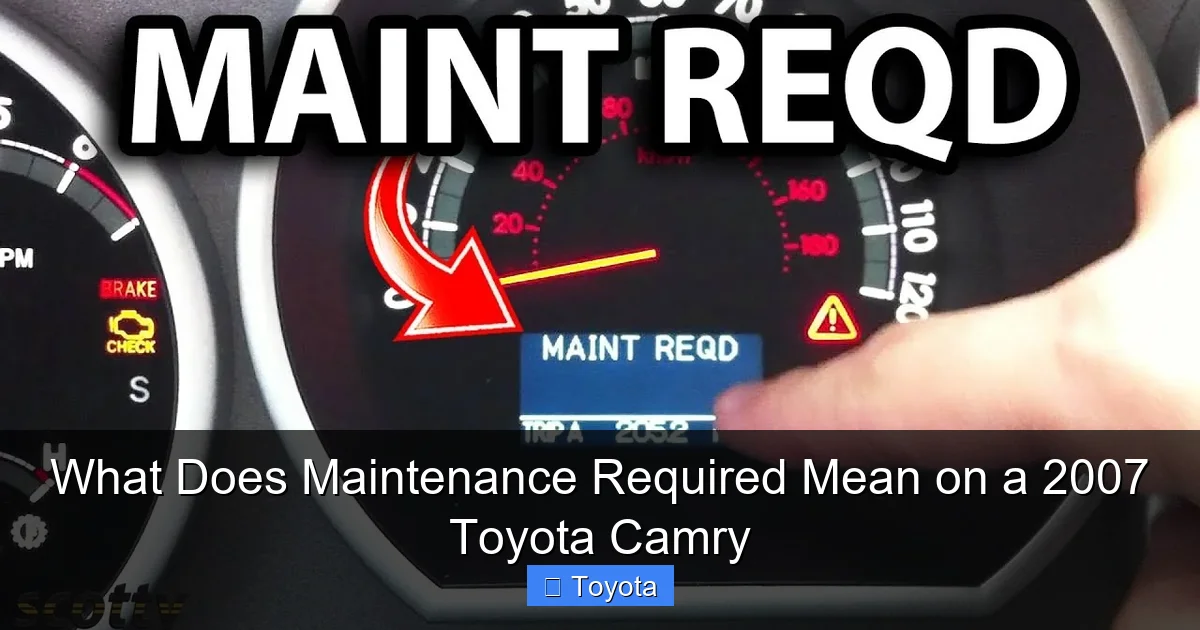
This is the part that confuses many owners. The light will not turn off on its own, even seconds after you drive away from the shop with fresh oil. Resetting it is a manual process you can easily do yourself. Here is the standard procedure for a 2007 Toyota Camry.
Visual guide about What Does Maintenance Required Mean on a 2007 Toyota Camry
Image source: i.ytimg.com
The Step-by-Step Reset Procedure
Before you start, ensure the car is parked, the parking brake is set, and the engine is off. The odometer must be displaying the total mileage (not a trip meter). Here are the steps:
- Turn the ignition to the “ON” position (the position right before starting, where all dash lights come on). Do not start the engine.
- Press the “ODO/TRIP” button on the dash to cycle the display until you see the total odometer reading.
- Turn the ignition “OFF.”
- Now, press and hold the “ODO/TRIP” button.
- While continuing to hold the button, turn the ignition back to the “ON” position (still don’t start the engine).
- Keep holding the button. You will see the odometer display a series of dashes “—–” and then a series of zeros “00000” or it will count down. This process takes about 5-10 seconds.
- Release the “ODO/TRIP” button. The “MAINTENANCE REQUIRED” light should blink a few times and then go out.
If the light remains on, turn the ignition off, wait a few seconds, and try the procedure again. The key is holding the button through the power cycle. If this doesn’t work, consult your owner’s manual, as there can be slight variations. Some models use the “Trip” reset button instead. The light is now reset and will not reappear until the next service interval.
Important Reset Considerations
Never reset the light without performing the required maintenance. The light is a safety net for your memory. Resetting it while the oil is old or tires are unevenly worn defeats the entire purpose of the system and puts your engine at risk. Also, if your car has other underlying issues that triggered a different warning light (like a “Check Engine” light), do not focus solely on the maintenance light. Those are separate systems. For more complex dashboard indicator confusion, such as what RCD Unavailable means on a Toyota Camry, it’s best to consult a specific diagnostic guide.
Essential Maintenance Tasks the Light Reminds You Of
When that wrench appears, it’s your cue to open your owner’s manual to the maintenance schedule chapter. For a 2007 Camry, here’s a breakdown of the critical tasks tied to this reminder.

Visual guide about What Does Maintenance Required Mean on a 2007 Toyota Camry
Image source: hiride.com
Oil and Filter Change: The Heart of the Reminder
This is non-negotiable. Engine oil lubricates, cleans, cools, and protects internal components. Over time, it becomes contaminated with fuel byproducts, metal shavings, and moisture, losing its viscosity and protective qualities. For your 2007 Camry’s 2.4L 4-cylinder or 3.5L V6 engine:
- Oil Type: Toyota typically recommended 5W-30 conventional oil. Many owners now use synthetic for better protection and longer intervals.
- Capacity: The 2.4L takes about 4.5 quarts with a filter change; the 3.5L takes about 6.4 quarts.
- Filter: Use a high-quality filter compatible with your engine. A clogged filter restricts flow and defeats the purpose of new oil.
Changing the oil yourself is a straightforward DIY task for the mechanically inclined, saving you money. If you prefer a professional, a quick lube shop or dealership will handle it, often performing the tire rotation and resetting the light as part of the service.
Tire Rotation and Pressure Check
Front tires on a front-wheel-drive Camry wear differently than rear tires due to steering and power delivery. Rotating them (typically front-to-back in a crisscross pattern) promotes even wear, extending the life of all four tires and maintaining optimal handling and fuel efficiency. At every rotation, check the tire pressure. The correct pressure for your 2007 Camry is found on a sticker inside the driver’s door jamb, not on the tire sidewall. Proper inflation is crucial for safety, wear, and gas mileage. If you’re unsure about the correct tire size specifications for your Camry, that sticker provides the definitive answer.
Comprehensive Inspections
The “Maintenance Required” light is also your prompt for a full vehicle once-over. This should include:
- Brakes: Inspect pad thickness, rotor condition, and brake fluid level.
- Fluids: Check engine coolant, power steering fluid, transmission fluid (if not sealed), and washer fluid.
- Battery: Test charge and check terminals for corrosion.
- Belts and Hoses: Look for cracks, fraying, or leaks, especially on the serpentine belt and coolant hoses.
- Lights: Ensure all headlights, taillights, and turn signals are functioning.
- Wiper Blades: Check for streaking or cracking.
Catching a worn belt or low coolant during a routine service can prevent a roadside breakdown.
DIY Maintenance vs. Professional Service
Should you tackle the work yourself or hand the keys to a professional? Both have merits, and the choice depends on your skill, tools, and time.
The Case for DIY
Changing the oil and filter on a Camry is one of the most approachable maintenance tasks. You need basic tools (socket, wrench, oil filter wrench), a drain pan, new oil, a new filter, and a way to safely dispose of the old oil. The financial savings can be significant over time. You also gain intimate knowledge of your vehicle. However, DIY requires a safe workspace (a level surface, jack stands), proper disposal of hazardous materials, and attention to detail (torquing the drain plug and filter correctly to avoid leaks). Mistakes can be costly. Additionally, DIY doesn’t include the professional inspection that comes with a paid service.
The Case for Professional Service
A dealership or reputable independent shop provides expertise, convenience, and a comprehensive inspection. Technicians are trained to spot issues you might miss—early signs of brake wear, suspension component wear, or software updates. They have specialized tools and lift access. For many owners, the peace of mind and time saved are worth the cost. When using a shop, always ask for a detailed invoice listing the work performed and the parts used. Verify they reset the maintenance light before you leave. If you ever have questions about other dashboard warnings, like what the Hold button on a Toyota Camry does, a professional can explain its function in your specific model.
Consequences of Ignoring the Light
It’s easy to dismiss a little wrench as a mere nuisance, especially if your car seems to be running fine. But ignoring the “MAINTENANCE REQUIRED” light is a false economy with real risks.
Engine Damage from Old Oil
This is the most severe risk. As oil degrades, it loses its lubricating film strength. Metal-on-metal contact increases, causing microscopic scoring on bearings, cylinder walls, and camshafts. This wear is permanent and accumulates. Eventually, it leads to increased oil consumption, reduced performance, and catastrophic engine failure. Rebuilding or replacing an engine costs thousands of dollars—a fraction of the cost of regular oil changes over the life of the car. “Running an engine on old oil is like running your body without water,” is a fitting analogy. The light is your earliest, cheapest warning sign.
Uneven Tire Wear and Poor Handling
Skipping tire rotations leads to scrubbing and premature wear on the front tires of a front-wheel-drive car. You’ll find yourself replacing tires in pairs or sets much more frequently, which is expensive. More importantly, uneven wear can cause unpredictable handling, especially in wet conditions, and can lead to dangerous tire failure (blowouts). It also unbalances your car, leading to premature wear on suspension components like struts and bearings.
Failed Inspections and Safety Risks
Many states require annual safety inspections. Worn brakes, bald tires, or inoperable lights will cause an immediate fail. The “MAINTENANCE REQUIRED” light is your reminder to address these items before an official inspection. Furthermore, neglected fluids like coolant can lead to overheating in summer, and low brake fluid can compromise braking performance. You are not just risking your wallet; you are risking your safety and the safety of others on the road.
Conclusion: Your Simple Path to Longevity
The “MAINTENANCE REQUIRED” light on your 2007 Toyota Camry is one of the most straightforward and helpful features on your dashboard. It is not a complex diagnostic tool but a faithful, mileage-based calendar. When it illuminates, your action plan is simple: 1) Perform the core services—an oil/filter change and tire rotation—and any other items due at that mileage per your owner’s manual. 2) Reset the light using the button sequence described above. 3) Repeat at every interval.
By treating this light as a helpful friend rather than an annoyance, you invest in the long-term reliability and value of your Camry. Regular maintenance is the single most effective way to ensure your car provides safe, economical transportation for 200,000 miles or more. It preserves engine life, maintains fuel efficiency, ensures safety, and saves you from devastating repair bills. So, the next time you see that little wrench, don’t curse it. Thank it. Then go change your oil.
Frequently Asked Questions
Is it safe to drive my Camry with the Maintenance Required light on?
Yes, it is generally safe to drive for a short period to get to a service center. The light indicates scheduled maintenance is due, not an imminent breakdown. However, you should schedule the service as soon as possible and avoid delaying the oil change for thousands of miles, as this risks engine damage.
Can I reset the Maintenance Required light without changing the oil?
Technically, yes, you can follow the reset procedure without doing any work. However, this completely defeats the purpose of the reminder system and is strongly discouraged. You would then be driving with potentially degraded oil and without other necessary inspections, putting your engine at risk.
What’s the difference between the Maintenance Required light and the Check Engine light?
The “Maintenance Required” light is a simple, pre-programmed reminder for routine services like oil changes. The “Check Engine” light (MIL) is triggered by the car’s computer when it detects a problem with the emissions system or engine operation, such as a faulty sensor or misfire. The Check Engine light requires immediate diagnostic attention.
Will the dealership reset the light for free if I just want it off?
No. The light is a reminder that work is due. A dealership or shop will only reset it after verifying the required maintenance (at minimum, an oil change) has been performed. They will not simply turn it off as a courtesy because that would be irresponsible and potentially harmful to your vehicle.
What kind of oil should I use in my 2007 Camry for the reset?
For the 2007 Camry, Toyota specified 5W-30 conventional oil meeting ILSAC GF-4 standards. Many owners successfully use full synthetic 5W-30 (like Mobil 1) for longer drain intervals and better protection. Always consult your owner’s manual and use an oil with the correct API certification (usually “SN” or newer for your model year).
How many miles can I drive after the light comes on before I must change the oil?
You should change the oil as soon as convenient, ideally within 500-1,000 miles of the light illuminating. The system is designed to give you a buffer. The light comes on at the *recommended* interval (e.g., 5,000 miles). Driving an extra 1,000 miles puts you at the absolute limit for conventional oil and increases wear risk. Do not wait several thousand miles.