
How to Turn on Passenger Airbag in a Toyota Corolla

Turning on the passenger airbag in a Toyota Corolla is essential for safety, especially when carrying adult passengers. This guide walks you through the process across different model years, explains when it should be activated, and highlights important safety considerations to keep everyone protected.
Key Takeaways
- Know your model year: Older Corollas (pre-2014) may have manual switches, while newer models use automatic sensors and dashboard indicators.
- Check the dashboard light: The passenger airbag status is shown by an indicator on the instrument panel—green means on, red or off means disabled.
- Use the manual override switch (if equipped): Some older Corollas have a physical switch near the glove compartment to turn the airbag on or off.
- Never disable the airbag for adults: The passenger airbag should always be on when an adult is seated, as it significantly reduces injury risk in a crash.
- Child safety comes first: If a child is in a rear-facing car seat, the airbag must be turned off to prevent injury—follow Toyota’s guidelines carefully.
- Reset after maintenance: After any repairs or battery disconnection, verify the airbag system is functioning properly using the dashboard lights.
- Consult your owner’s manual: Always refer to your specific Corolla’s manual for model-specific instructions and safety warnings.
📑 Table of Contents
- Why the Passenger Airbag Matters in Your Toyota Corolla
- Understanding How the Passenger Airbag System Works
- Step-by-Step: How to Turn On the Passenger Airbag in a Toyota Corolla
- When Should You Turn Off the Passenger Airbag?
- Common Mistakes and Safety Tips
- Model-Specific Considerations Across Corolla Generations
- Conclusion: Safety First, Always
Why the Passenger Airbag Matters in Your Toyota Corolla
When you slide into the driver’s seat of your Toyota Corolla, you’re not just stepping into a reliable, fuel-efficient compact car—you’re entering a vehicle designed with safety at its core. Among its many safety features, the passenger airbag plays a crucial role in protecting the person sitting beside you during a collision. But here’s the thing: not all passengers are the same size, and not all seating situations are the same. That’s why understanding how to turn on the passenger airbag in a Toyota Corolla isn’t just a technical detail—it’s a vital part of responsible driving.
The passenger airbag is designed to deploy during moderate to severe frontal crashes, cushioning the occupant’s head and chest to reduce the risk of serious injury. However, this life-saving feature only works if it’s properly activated. In some cases, especially when a child is riding in the front seat, the airbag may need to be turned off. But for most adult passengers, keeping it on is not just recommended—it’s essential. Whether you’re driving a 2005 Corolla or a 2023 model, knowing how to manage this system ensures that your vehicle’s safety technology works exactly as intended.
Understanding How the Passenger Airbag System Works
Visual guide about How to Turn on Passenger Airbag in a Toyota Corolla
Image source: i.ytimg.com
Before we dive into the steps for turning on the passenger airbag, it helps to understand how the system actually functions. Modern Toyota Corollas are equipped with advanced Supplemental Restraint Systems (SRS), which include front airbags for both the driver and passenger. These systems rely on a network of sensors, control modules, and indicators to determine when and how to deploy the airbags.
In most Corolla models from 2014 onward, the passenger airbag operates automatically based on input from weight sensors in the seat. These sensors detect whether someone is sitting in the seat, how much they weigh, and whether they’re wearing a seatbelt. If the system determines that an adult is present, the airbag is enabled. If the seat is empty or occupied by a child in a rear-facing car seat, the system may disable the airbag to prevent injury from deployment.
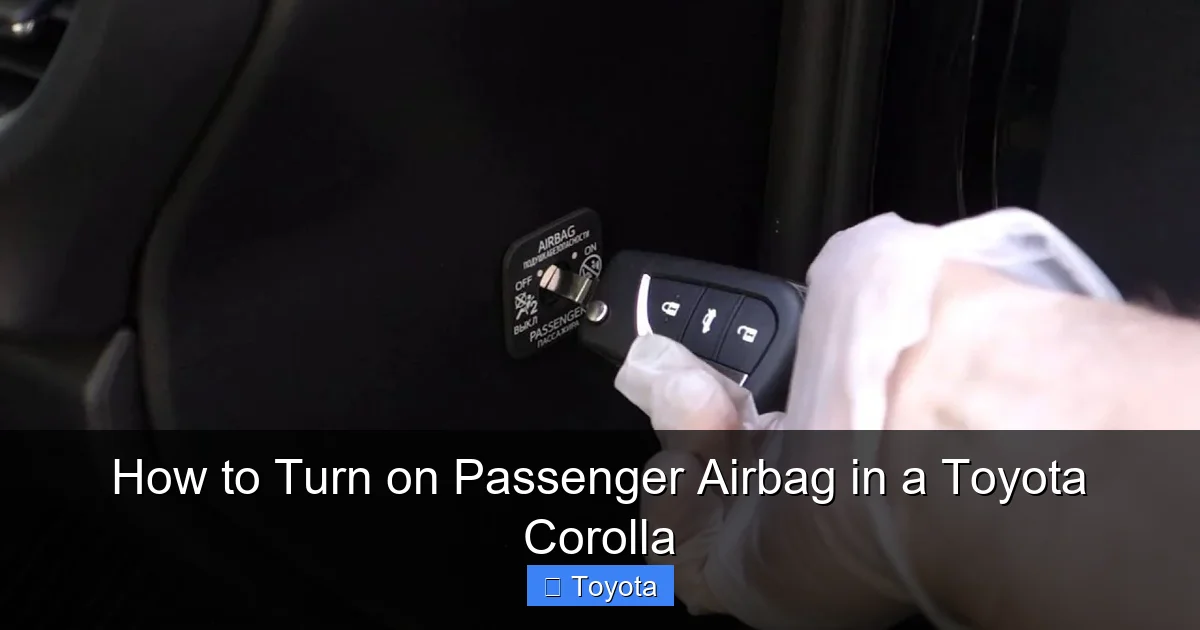
For older Corolla models—particularly those manufactured before 2014—the system may include a manual override switch. This allows the driver or passenger to physically turn the airbag on or off using a key or toggle switch, usually located near the glove compartment or lower dashboard. This feature was designed to accommodate situations where a child must ride in the front seat, such as in vehicles without rear seating.
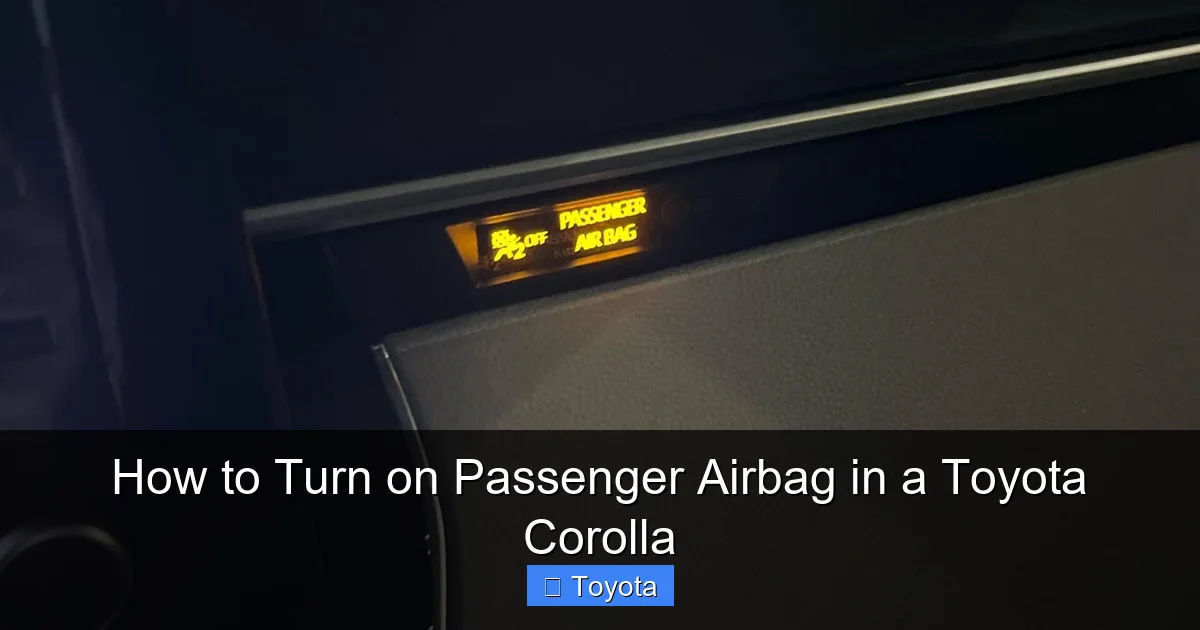
Regardless of the model year, the status of the passenger airbag is always indicated by a light on the dashboard. A green light or the absence of a warning typically means the airbag is active. A red light or an illuminated “PASS AIRBAG OFF” message means it’s disabled. Paying attention to this light is one of the simplest yet most important habits you can develop.
Step-by-Step: How to Turn On the Passenger Airbag in a Toyota Corolla
Visual guide about How to Turn on Passenger Airbag in a Toyota Corolla
Image source: papasroadtrip.com
Now that you understand the basics, let’s walk through the actual process of turning on the passenger airbag in your Toyota Corolla. The steps vary slightly depending on your model year, so we’ll cover both older and newer vehicles to ensure you get the right instructions.
For Older Corolla Models (Pre-2014) with Manual Switch
If you drive a Toyota Corolla from the early 2000s to around 2013, you likely have a manual passenger airbag switch. This is a small, key-operated toggle usually found on the passenger side of the dashboard, near the glove compartment. Here’s how to use it:
First, locate the switch. It’s often labeled “PASS AIRBAG” or “AIRBAG ON/OFF” and may require a small key (sometimes the same one used for the doors or ignition). Insert the key and turn it to the “ON” position. You should hear a faint click, and the dashboard indicator should change—typically, the “PASS AIRBAG OFF” light will go out, confirming the airbag is now active.
It’s important to note that this switch should only be used when necessary—such as when a child is riding in the front seat in a rear-facing car seat. For adult passengers, always keep the switch in the “ON” position. If you’re unsure whether the airbag is on, check the dashboard light. If the “PASS AIRBAG OFF” light is illuminated, the airbag is disabled and needs to be turned back on.
For Newer Corolla Models (2014 and Later) with Automatic Sensors
Starting around 2014, Toyota began phasing out the manual switch in favor of automatic passenger detection systems. In these models, the airbag turns on and off based on seat occupancy and weight. Here’s how it works:
When an adult sits in the front passenger seat, the weight sensors detect their presence and automatically enable the airbag. You’ll know it’s on when the “PASS AIRBAG OFF” light on the dashboard is not illuminated. If the seat is empty or occupied by a lightweight object (like a backpack or small child), the system may disable the airbag and the light will turn on.
To ensure the airbag turns on, make sure the passenger is seated properly—feet on the floor, back against the seat, and seatbelt fastened. Avoid placing heavy objects on the seat, as they can trigger the sensor and mistakenly disable the airbag. If the light remains on despite an adult being seated, try having them shift positions or remove any items from the seat. In rare cases, a sensor malfunction may require a visit to a Toyota service center.
What to Do After Battery Disconnection or Repairs
If you’ve recently disconnected the car battery—perhaps to replace it or perform maintenance—the airbag system may need to reset. In some cases, the dashboard light may stay on or behave erratically. This is normal and usually resolves itself after a few minutes of driving.
To ensure everything is working correctly, start the engine and observe the dashboard. The “PASS AIRBAG OFF” light should briefly illuminate during the system check and then turn off if the airbag is active. If the light stays on, try turning the ignition off and on again. If the issue persists, consult your owner’s manual or visit a certified Toyota technician.
When Should You Turn Off the Passenger Airbag?
Visual guide about How to Turn on Passenger Airbag in a Toyota Corolla
Image source: diycarexpert.com
While the general rule is to keep the passenger airbag on for adult passengers, there are specific situations where it should be disabled—primarily for child safety. Understanding these scenarios is critical to preventing injury.
Rear-Facing Child Car Seats
The most common reason to turn off the passenger airbag is when a child is riding in a rear-facing car seat. Because these seats position the child’s head very close to the dashboard, an airbag deployment could cause serious harm—even at low speeds. Toyota and safety organizations like the National Highway Traffic Safety Administration (NHTSA) strongly recommend disabling the airbag in this situation.
If your Corolla has a manual switch, use the key to turn it off. In newer models with automatic sensors, the system should detect the lightweight car seat and disable the airbag automatically. However, always double-check the dashboard light to confirm it’s off. Never place a rear-facing car seat in a seat with an active airbag.
Forward-Facing Child Seats and Booster Seats
For forward-facing child seats and booster seats, the rules are a bit different. In most cases, the airbag can remain on, but the child should be properly secured with a seatbelt or LATCH system. The seat should be pushed as far back as possible to increase the distance between the child and the airbag.
However, if the child is very small or the seat cannot be moved back far enough, it may be safer to disable the airbag—especially in older vehicles without advanced sensors. Always follow the car seat manufacturer’s instructions and Toyota’s guidelines.
Medical Conditions or Physical Limitations
In rare cases, a passenger may have a medical condition that makes airbag deployment risky—such as certain heart conditions or implanted medical devices. If you’re unsure, consult a healthcare professional. However, in most cases, the benefits of an active airbag far outweigh the risks, and it should remain on.
Common Mistakes and Safety Tips
Even with the best intentions, drivers sometimes make mistakes when managing the passenger airbag system. Here are a few common pitfalls and how to avoid them.
Leaving the Airbag Off After a Child Rides
One of the most frequent errors is forgetting to turn the airbag back on after a child has been dropped off. If the next passenger is an adult, they won’t be protected in a crash. Make it a habit to check the dashboard light every time someone new gets in the car.
Placing Objects on the Passenger Seat
Heavy items like laptops, groceries, or even large purses can trigger the weight sensor and disable the airbag. Always place heavy objects in the footwell or trunk, not on the seat. If you must place something on the seat, ensure it’s lightweight and won’t interfere with the sensor.
Ignoring Dashboard Warnings
The “PASS AIRBAG OFF” light is there for a reason. If it stays on when an adult is seated, don’t ignore it. It could indicate a sensor issue, a faulty connection, or a system malfunction. Have it checked by a professional to ensure your safety systems are functioning properly.
Using Aftermarket Seat Covers
Some seat covers, especially thick or non-OEM designs, can interfere with the airbag deployment path or sensor readings. Stick to Toyota-approved accessories or ensure any aftermarket cover is designed to work with SRS systems.
Model-Specific Considerations Across Corolla Generations
The Toyota Corolla has evolved significantly over the decades, and so has its airbag system. Here’s a quick breakdown by generation to help you identify your model and its features.
2003–2008 Corolla (E150 Platform)
These models typically include a manual passenger airbag switch near the glove compartment. The switch is key-operated and clearly labeled. The dashboard will show a “PASS AIRBAG OFF” light when disabled.
2009–2013 Corolla (E140 Platform)
Similar to the earlier E150, these models also feature a manual switch. However, some higher trims may include early versions of automatic sensors. Always check your owner’s manual to confirm.
2014–2019 Corolla (E170 Platform)
This generation introduced the automatic passenger detection system. The manual switch was removed, and the airbag now operates based on seat weight and occupancy. The dashboard indicator is the primary way to monitor status.
2020–Present Corolla (E210 Platform)
The latest Corolla models feature advanced safety suites, including Toyota Safety Sense (TSS). The passenger airbag is fully automatic, and the system integrates with other safety features like pre-collision braking and lane departure warning. The dashboard display may show more detailed messages about airbag status.
Regardless of your Corolla’s age, always refer to the owner’s manual for model-specific instructions. Toyota provides detailed diagrams and warnings tailored to each vehicle.
Conclusion: Safety First, Always
Turning on the passenger airbag in your Toyota Corolla might seem like a small task, but it’s a big deal when it comes to safety. Whether you’re driving a vintage model with a manual switch or a brand-new Corolla with smart sensors, knowing how to manage this system ensures that your vehicle’s safety technology works when you need it most.
Remember: for adult passengers, the airbag should almost always be on. Only disable it when absolutely necessary—like when a child is in a rear-facing car seat—and always re-enable it afterward. Pay attention to the dashboard lights, avoid placing heavy objects on the seat, and consult your owner’s manual if you’re ever unsure.
Your Corolla is designed to protect you and your passengers. By taking a few extra seconds to check the airbag status, you’re not just following a procedure—you’re making a commitment to safety. So the next time you buckle up, take a moment to glance at that dashboard light. It could make all the difference.
Frequently Asked Questions
Can I turn on the passenger airbag without a key?
In older Corolla models with a manual switch, a key is usually required to toggle the airbag on or off. This is a safety feature to prevent accidental changes. If you’ve lost the key, contact a Toyota dealer for a replacement.
Why is my passenger airbag light staying on when someone is seated?
This could be due to a sensor issue, a loose connection, or the passenger not sitting properly. Try having them shift positions or remove items from the seat. If the light remains on, have the system inspected by a professional.
Is it safe to drive with the passenger airbag turned off?
It’s safe only in specific situations, such as when a child is in a rear-facing car seat. For adult passengers, the airbag should always be on to provide protection in a crash.
Do all Toyota Corollas have a passenger airbag?
Yes, all modern Toyota Corollas come equipped with a passenger airbag as part of the standard SRS. Earlier models may have optional airbags, but most from the late 1990s onward include them.
Can I install an aftermarket switch to control the airbag?
No, modifying or installing unauthorized airbag controls is dangerous and illegal in many areas. Always use factory-approved methods and consult a Toyota technician for assistance.
What happens if the airbag deploys accidentally?
Airbags are designed to deploy only during significant impacts. Accidental deployment is extremely rare and usually indicates a serious system malfunction. If it occurs, stop driving and contact Toyota immediately.
