Using a Car Battery for Power
Using a car battery for power is a smart, cost-effective way to run small devices during outages, camping trips, or off-grid projects. With the right setup and safety precautions, you can tap into your vehicle’s 12-volt system to keep lights, phones, and essential gear running—no generator needed.
In This Article
- 1 Key Takeaways
- 2 📑 Table of Contents
- 3 Introduction: Why Use a Car Battery for Power?
- 4 How Car Batteries Work: The Basics
- 5 Safety First: Essential Precautions
- 6 What Can You Power with a Car Battery?
- 7 Setting Up Your Car Battery Power System
- 8 Tips for Maximizing Battery Life and Performance
- 9 When to Use a Deep-Cycle Battery Instead
- 10 Conclusion: Smart, Simple, and Sustainable Power
- 11 Frequently Asked Questions
- 11.1 Can I use my car battery to power my house?
- 11.2 How long will a car battery power a refrigerator?
- 11.3 Is it safe to leave a car battery connected to an inverter?
- 11.4 Can I charge my phone directly from a car battery?
- 11.5 What happens if I drain my car battery too low?
- 11.6 Can I use a solar panel to recharge my car battery?
Key Takeaways
- Car batteries provide portable 12-volt DC power: Ideal for small electronics, lights, and 12V appliances, making them great for emergencies and outdoor use.
- Safety is critical: Always wear protective gear, avoid sparks near the battery, and never short the terminals to prevent fires or explosions.
- Use an inverter for AC devices: A power inverter converts DC power from the battery into standard 120V AC power for household electronics.
- Monitor battery charge levels: Deep discharges can damage car batteries; use a voltmeter or battery monitor to avoid over-draining.
- Not ideal for long-term or high-power use: Car batteries are designed for short bursts of energy (like starting engines), not sustained power delivery.
- Consider a deep-cycle battery for frequent use: If you plan to use battery power regularly, a marine or deep-cycle battery lasts longer than a standard car battery.
- Proper connections matter: Use heavy-duty cables and secure clamps to ensure efficient power transfer and reduce overheating risks.
📑 Table of Contents
- Introduction: Why Use a Car Battery for Power?
- How Car Batteries Work: The Basics
- Safety First: Essential Precautions
- What Can You Power with a Car Battery?
- Setting Up Your Car Battery Power System
- Tips for Maximizing Battery Life and Performance
- When to Use a Deep-Cycle Battery Instead
- Conclusion: Smart, Simple, and Sustainable Power
Introduction: Why Use a Car Battery for Power?
Imagine your power goes out during a storm. The lights are off, your phone is dying, and the fridge is warming up. What do you do? If you have a car battery and the right tools, you might already have a backup power source sitting in your garage. Using a car battery for power is a practical, affordable solution for short-term energy needs—whether you’re camping, dealing with an outage, or working on a remote project.
Car batteries are built to deliver a strong burst of energy to start your engine, but they can also power small devices for hours. With a few simple accessories like a power inverter, extension cords, and proper connectors, you can turn your car battery into a portable power station. It’s not as powerful as a generator, but it’s quiet, emission-free, and doesn’t require fuel. Plus, you’re already carrying one in your vehicle—no extra cost.
How Car Batteries Work: The Basics
Before you start tapping into your car battery for power, it helps to understand how it works. A standard car battery is a 12-volt lead-acid battery. It stores chemical energy and converts it into electrical energy when needed. When you turn the key, the battery sends a surge of electricity to the starter motor, which cranks the engine.
Visual guide about Using a Car Battery for Power
Image source: poweroutageready.com
Types of Car Batteries
Most vehicles use one of two main types of lead-acid batteries: flooded (wet) or sealed (AGM or gel). Flooded batteries are the traditional type—they have liquid electrolyte and require occasional maintenance like checking water levels. Sealed batteries, like AGM (Absorbent Glass Mat), are maintenance-free and better suited for vibration and repeated charging cycles.
Voltage and Capacity
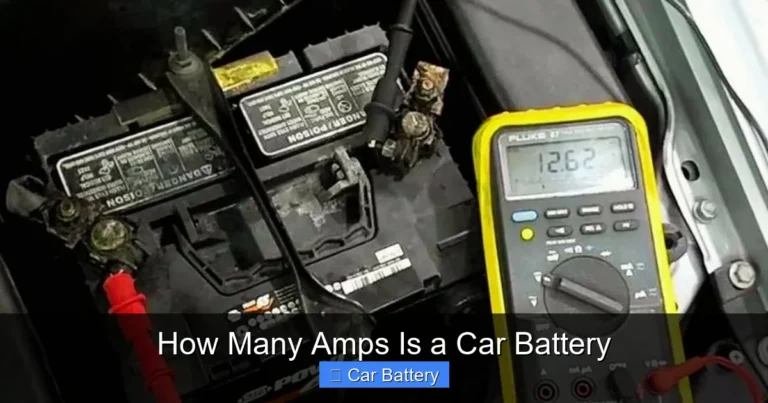
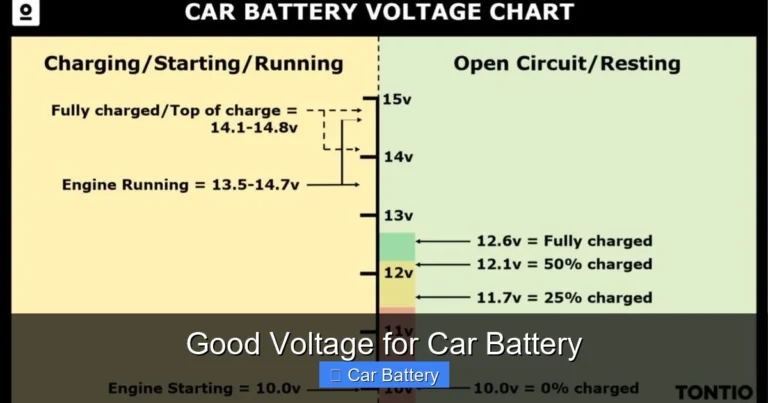
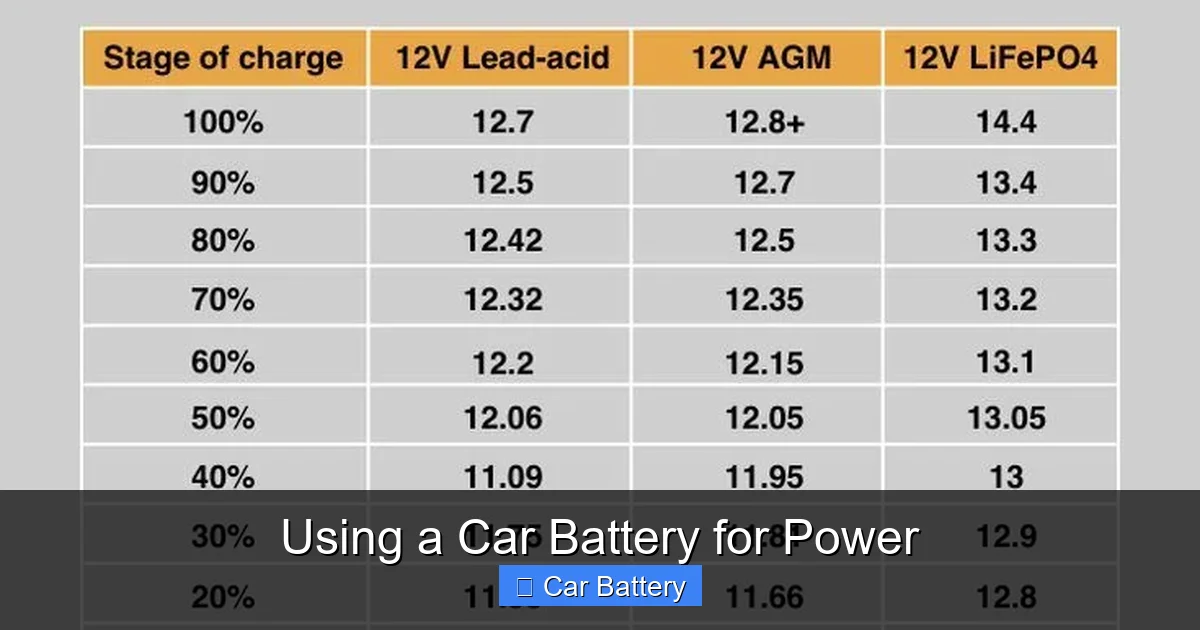
Car batteries are rated at 12 volts, but their actual voltage can range from about 11.8V (nearly dead) to 12.6V (fully charged). The capacity is measured in amp-hours (Ah), which tells you how much current the battery can deliver over time. A typical car battery has a capacity of 40–70 Ah. That means it could theoretically supply 1 amp for 40–70 hours, or 10 amps for 4–7 hours.
Limitations of Car Batteries
Here’s the catch: car batteries are designed for short, high-current bursts—not long-term, steady power. If you drain them below 50% charge regularly, you’ll shorten their lifespan. That’s why they’re not ideal for running a refrigerator or space heater for hours. For those tasks, a deep-cycle battery (like a marine battery) is a better choice.
Safety First: Essential Precautions
Using a car battery for power isn’t dangerous if you follow basic safety rules—but ignoring them can lead to serious injury or damage. Batteries contain sulfuric acid and produce explosive hydrogen gas when charging or discharging. Always treat them with respect.
Visual guide about Using a Car Battery for Power
Image source: m.media-amazon.com
Wear Protective Gear
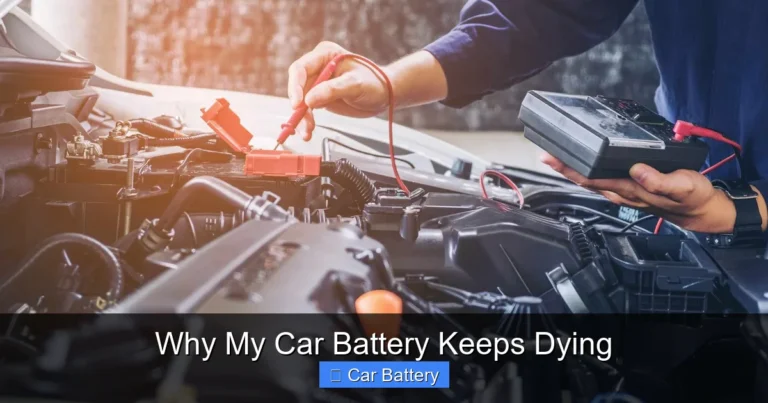
Before handling a battery, put on safety glasses and gloves. Acid can burn skin and eyes, and sparks can ignite hydrogen gas. Work in a well-ventilated area, especially if the battery is old or damaged.
Avoid Short Circuits
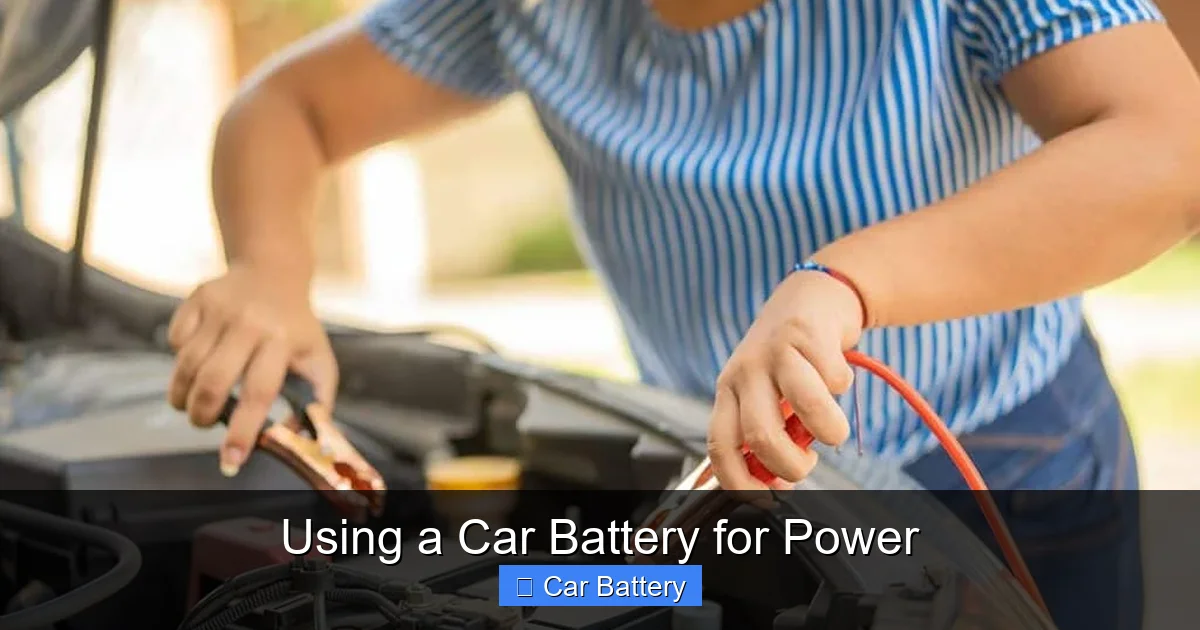
Never let the positive and negative terminals touch each other or any metal object. A short circuit can cause sparks, melt wires, or even explode the battery. Always disconnect the negative terminal first when working on a battery, and reconnect it last.
Keep It Cool and Dry
Batteries work best at moderate temperatures. Extreme heat can cause them to overheat and leak; extreme cold reduces their capacity. Store and use your battery in a dry, shaded area. Never place it on a concrete floor—while modern batteries are insulated, it’s still a good practice to use a wooden board or battery tray.
Use Proper Tools and Cables
Use heavy-duty jumper cables or battery cables with secure clamps. Thin wires can overheat and cause fires. Make sure all connections are tight and free of corrosion. Clean terminals with a baking soda and water solution if needed.
What Can You Power with a Car Battery?
Now for the fun part: what can you actually run? The answer depends on the device’s power requirements and how long you need it. Most small electronics and 12V devices work great. Larger appliances need more power—and that’s where inverters come in.
Visual guide about Using a Car Battery for Power
Image source: static.vecteezy.com
Devices That Run Directly on 12V
Many devices are designed to plug into a car’s cigarette lighter or 12V outlet. These include:
- Phone and tablet chargers
- Portable fans
- LED lights and camping lanterns
- Car vacuums and air compressors
- Small TVs and radios
- Coolers and mini-fridges (12V models)
These devices draw low power and can run for hours on a fully charged battery. For example, a 10-watt LED light uses about 0.8 amps. On a 50 Ah battery, that’s over 60 hours of light—plenty for a weekend camping trip.
Using an Inverter for AC Power
Most household devices run on 120-volt AC power, not 12V DC. That’s where a power inverter comes in. It converts the battery’s DC power into AC power, so you can plug in things like laptops, lamps, or small appliances.
Inverters come in different sizes, measured in watts. A 300-watt inverter can handle small devices like a laptop or phone charger. A 1000-watt inverter can run a microwave or coffee maker—but only for a short time. Always check the wattage rating of your devices and choose an inverter that can handle the total load.
Tip: Look for a pure sine wave inverter if you’re powering sensitive electronics like medical devices or audio equipment. Modified sine wave inverters are cheaper but can cause noise or damage in some devices.
Real-World Examples
Let’s say you’re camping and want to keep your phone charged, run a small fan, and watch a movie on a portable DVD player. Here’s how it might work:
- Phone charger: 5 watts (0.4 amps)
- 12V fan: 20 watts (1.7 amps)
- DVD player: 30 watts (2.5 amps)
Total: about 4.6 amps. On a 50 Ah battery, that’s roughly 10 hours of use—more than enough for a night under the stars.
Now imagine a power outage at home. You want to keep a few lights on, charge your phone, and run a small fridge. A 1000-watt inverter could handle this, but the fridge alone uses 100–200 watts when running. If it cycles on and off, you might get 6–8 hours of backup power—enough to keep food cold overnight.
Setting Up Your Car Battery Power System
Ready to build your own portable power setup? It’s easier than you think. You don’t need to be an electrician—just follow these steps.
Step 1: Gather Your Gear
Here’s what you’ll need:
- A fully charged car battery (or deep-cycle battery for frequent use)
- Heavy-duty battery cables or jumper cables
- A power inverter (choose the right wattage for your needs)
- Fuse holder and appropriate fuse (to protect against overloads)
- 12V outlets or extension cords (optional)
- Multimeter or battery monitor (to check voltage)
Step 2: Connect the Inverter
Attach the inverter directly to the battery terminals using the included cables. Connect the positive (red) cable to the positive terminal and the negative (black) cable to the negative terminal. Make sure the connections are tight and secure.
Important: Install an inline fuse on the positive cable, as close to the battery as possible. This protects against short circuits and fires. Use a fuse rated for the inverter’s maximum current (e.g., a 1000-watt inverter draws about 83 amps at 12V, so use a 100-amp fuse).
Step 3: Plug In and Power Up
Once connected, turn on the inverter. You should see a power light. Now plug in your devices and start using them. Keep an eye on the battery voltage—most inverters have a low-voltage shutoff, but it’s good to monitor it yourself.
Tip: Use a battery monitor or voltmeter to check the state of charge. A healthy 12V battery reads:
- 12.6V or higher: Fully charged
- 12.4V: 75% charged
- 12.2V: 50% charged
- 12.0V: 25% charged
- Below 11.9V: Nearly dead—recharge immediately
Step 4: Recharge the Battery
When the battery gets low, recharge it as soon as possible. You can do this by:
- Starting your car and letting it run for 20–30 minutes (the alternator will recharge the battery)
- Using a battery charger (faster and more efficient)
- Connecting to a solar panel with a charge controller (great for off-grid use)
Never let a car battery sit in a discharged state for long—it can sulfate and become unusable.
Tips for Maximizing Battery Life and Performance
Using a car battery for power is smart, but doing it wisely will save you money and hassle in the long run. Here are some pro tips to get the most out of your setup.
Don’t Drain It Too Low
Car batteries hate deep discharges. Try to keep the charge above 50% whenever possible. If you regularly drain it below 20%, you’ll shorten its life significantly. For frequent use, consider upgrading to a deep-cycle battery, which is built to handle repeated discharges.
Use Energy-Efficient Devices
LED lights use 75% less power than incandescent bulbs. A 12V cooler uses less energy than a full-sized fridge. Choose low-wattage, efficient devices to stretch your battery life.
Turn Off What You’re Not Using
Even small devices like phone chargers draw power when plugged in—even if nothing is charging. Unplug them when not in use to conserve energy.
Keep the Battery Charged
A fully charged battery delivers more power and lasts longer. If you’re not using your car for a while, use a trickle charger to maintain the charge. This is especially important in winter, when cold weather reduces battery capacity.
Store It Properly
If you’re not using the battery for a while, store it in a cool, dry place. Disconnect it from any devices and check the charge every few weeks. A battery tender or smart charger can keep it topped off automatically.
When to Use a Deep-Cycle Battery Instead
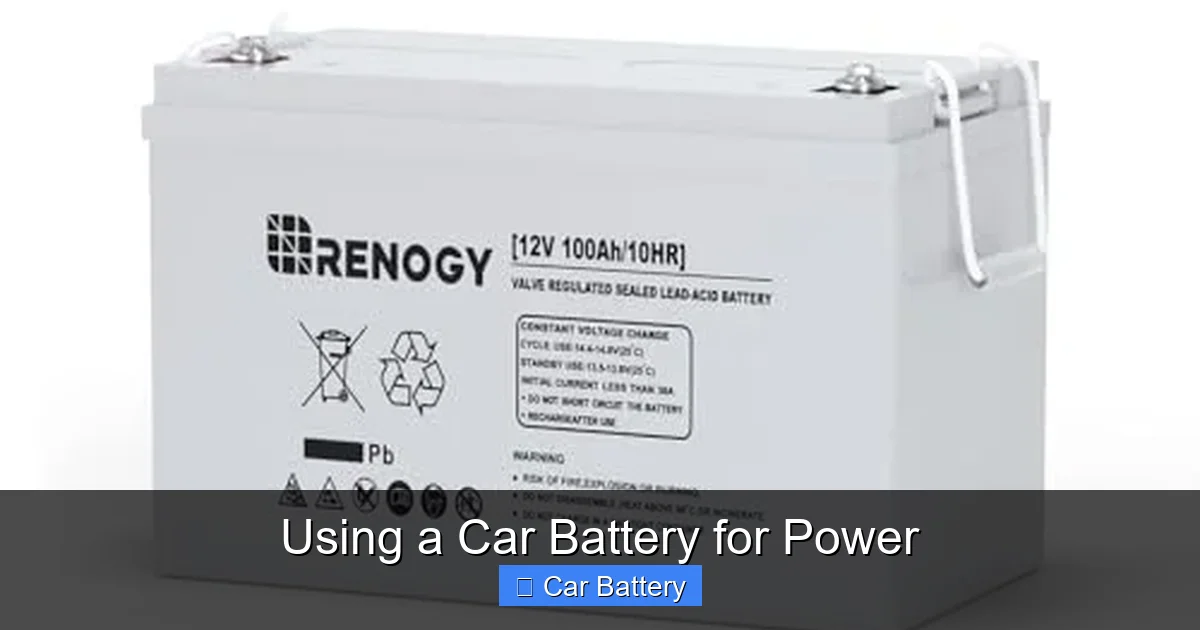
While a standard car battery works in a pinch, it’s not built for regular power use. If you plan to use battery power often—like for camping, RVing, or off-grid living—consider a deep-cycle battery.
Deep-cycle batteries are designed to be discharged and recharged repeatedly. They have thicker plates and can handle deeper discharges without damage. Marine batteries and golf cart batteries are common types. They’re more expensive than car batteries, but they last longer and perform better for power applications.
For example, a 100 Ah deep-cycle battery can safely deliver 50 amps for 2 hours, while a car battery might only last 30 minutes under the same load. If you’re serious about portable power, it’s a worthwhile investment.
Conclusion: Smart, Simple, and Sustainable Power
Using a car battery for power is a clever way to stay connected and comfortable when the grid goes down or you’re off the beaten path. It’s affordable, portable, and surprisingly versatile. With the right setup—like a power inverter, proper cables, and safety precautions—you can run lights, charge devices, and even power small appliances for hours.
Just remember: car batteries are not designed for long-term or high-power use. Treat them with care, monitor their charge, and recharge them promptly. For frequent use, consider upgrading to a deep-cycle battery. Whether you’re prepping for emergencies, enjoying the outdoors, or just looking for a backup power source, your car battery can be a reliable ally—quiet, clean, and always ready to help.
Frequently Asked Questions
Can I use my car battery to power my house?
Not for long. A car battery can run small devices like lights or a fan for a few hours, but it can’t power an entire house. For whole-house backup, consider a home battery system like a Tesla Powerwall or a generator.
How long will a car battery power a refrigerator?
A standard car battery might run a small 12V cooler for 6–10 hours, but a full-sized fridge needs much more power. Even with an inverter, you’d likely only get 2–4 hours—enough for short outages, not days.
Is it safe to leave a car battery connected to an inverter?
It’s safe if done correctly, but don’t leave it unattended for long periods. Always use a fuse, monitor the battery voltage, and disconnect when not in use to prevent over-discharge or overheating.
Can I charge my phone directly from a car battery?
Yes, using a 12V car charger or USB adapter. These plug into the cigarette lighter socket and convert 12V DC to 5V USB power. Just make sure the adapter is rated for your device.
What happens if I drain my car battery too low?
Deep discharges can damage the battery, reducing its lifespan. In extreme cases, the battery may not recharge properly or could sulfate, making it unusable. Always recharge as soon as possible.
Can I use a solar panel to recharge my car battery?
Yes! A 50–100 watt solar panel with a charge controller can slowly recharge a car battery. It’s a great option for camping or off-grid use, especially when combined with a deep-cycle battery.