Subaru Won’t Start: Common Reasons and Solutions

Contents
- 1 Key Takeaways
- 2 📑 Table of Contents
- 3 Why Won’t My Subaru Start? A Complete Troubleshooting Guide
- 4 1. Dead or Weak Battery: The #1 Culprit
- 5 2. Starter Motor Failure: When the Engine Won’t Crank
- 6 3. Fuel System Problems: No Fuel, No Start
- 7 4. Ignition System Failures: Spark Plugs and Coils
- 8 5. Security and Electrical Glitches
- 9 6. Preventive Maintenance: Avoiding No-Start Situations
- 10 Conclusion
- 11 Frequently Asked Questions


When your Subaru won’t start, it’s often due to a dead battery, faulty starter, or fuel system issue. This guide walks you through the most common causes and practical fixes so you can diagnose and resolve the problem quickly—whether you’re at home or on the road.
Key Takeaways
- Dead or weak battery: The most common reason a Subaru won’t start—check voltage, connections, and age.
- Faulty starter motor: Listen for clicking sounds; a bad starter often fails to engage the engine.
- Fuel delivery problems: Clogged fuel filters, failing fuel pumps, or empty tanks can prevent ignition.
- Ignition system issues: Worn spark plugs or ignition coils disrupt the combustion process.
- Security system glitches: Immobilizer errors or key fob battery failure can block engine start.
- Electrical and sensor faults: Corroded wiring or malfunctioning crankshaft sensors disrupt engine signals.
- Preventive maintenance helps: Regular checks reduce the chance of unexpected no-start situations.
📑 Table of Contents
- Why Won’t My Subaru Start? A Complete Troubleshooting Guide
- 1. Dead or Weak Battery: The #1 Culprit
- 2. Starter Motor Failure: When the Engine Won’t Crank
- 3. Fuel System Problems: No Fuel, No Start
- 4. Ignition System Failures: Spark Plugs and Coils
- 5. Security and Electrical Glitches
- 6. Preventive Maintenance: Avoiding No-Start Situations
- Conclusion
Why Won’t My Subaru Start? A Complete Troubleshooting Guide
Picture this: You’re running late for work, you hop into your trusty Subaru Outback or Forester, turn the key—and nothing happens. No crank, no engine turnover, just silence. Or maybe it cranks but refuses to fire up. Frustrating? Absolutely. But before you panic or call a tow truck, know this: most Subaru no-start issues have straightforward causes and often simple fixes.
Subaru vehicles are known for their reliability, all-wheel drive capability, and rugged performance—but like any car, they’re not immune to mechanical hiccups. When your Subaru won’t start, it’s usually signaling one of a handful of common problems. The good news? Many of these can be diagnosed at home with basic tools and a little patience. Whether you’re dealing with a dead battery on a cold morning or a mysterious no-crank situation after parking overnight, understanding the root cause is the first step toward getting back on the road.
In this guide, we’ll walk you through the most frequent reasons your Subaru won’t start—from electrical gremlins to fuel system failures—and give you actionable solutions. We’ll also share tips on how to prevent these issues from happening again. So grab your multimeter, check your owner’s manual, and let’s get your Subaru fired up.
1. Dead or Weak Battery: The #1 Culprit

Visual guide about Subaru Won’t Start: Common Reasons and Solutions
Image source: cararac.com
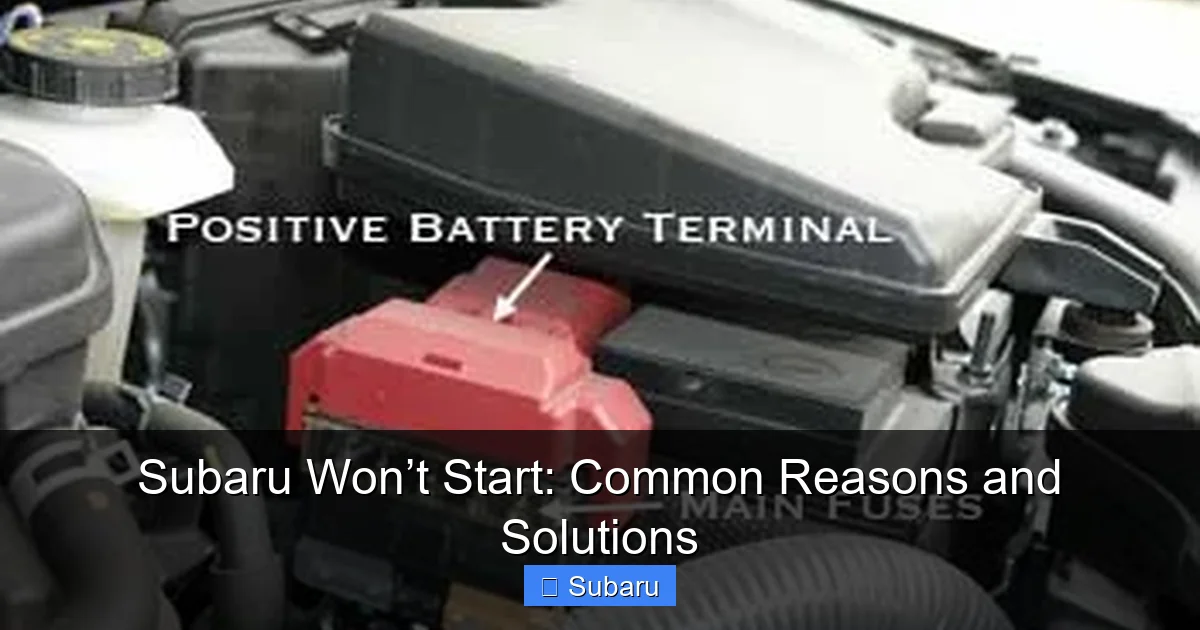
If your Subaru won’t start and you hear a rapid clicking sound—or no sound at all—when you turn the key, the battery is the first place to look. In fact, a dead or weak battery is the single most common reason Subarus fail to start, especially in colder climates or after long periods of inactivity.
How to Diagnose a Battery Problem
Start by checking the battery voltage with a multimeter. A healthy 12-volt car battery should read between 12.4 and 12.7 volts when the engine is off. If it’s below 12.2 volts, the battery is likely discharged. If it drops below 11.8 volts, it’s probably dead or failing.
Another telltale sign is dim headlights or interior lights that flicker when you try to start the car. You might also notice that power windows move slowly or the radio resets when you turn the key.
Common Battery Issues in Subarus
Subaru batteries typically last 3–5 years, but extreme temperatures, frequent short trips, and leaving accessories on (like interior lights or phone chargers) can shorten their lifespan. Corroded battery terminals are another frequent issue—white, powdery buildup on the terminals can prevent proper electrical contact.
To check for corrosion, look at the battery posts and cable connectors. If you see a crusty white or green substance, it’s time to clean them. Use a mixture of baking soda and water, a wire brush, and protective gloves to scrub the terminals. Then, reconnect the cables tightly.
Jump-Starting Your Subaru
If the battery is dead, jump-starting is often the quickest fix. Make sure both vehicles are off before connecting the jumper cables: red to the dead battery’s positive terminal, red to the donor battery’s positive, black to the donor’s negative, and black to an unpainted metal surface on your Subaru (like a bolt on the engine block)—not the negative terminal. This prevents sparks near the battery, which can be dangerous.
Start the donor car, let it run for a few minutes, then try starting your Subaru. Once it’s running, leave it on for at least 20–30 minutes to allow the alternator to recharge the battery. If the car starts but dies again shortly after, the battery may not be holding a charge—and it’s time for a replacement.
When to Replace the Battery
Even if your Subaru starts after a jump, a weak battery is a ticking time bomb. If your battery is more than four years old, or if it’s struggled to start the car in cold weather, consider replacing it proactively. Modern Subaru models often have advanced electrical systems that require a stable voltage, and a failing battery can cause other components to malfunction.
2. Starter Motor Failure: When the Engine Won’t Crank
Visual guide about Subaru Won’t Start: Common Reasons and Solutions
Image source: testingautos.com
If you turn the key and hear a single loud click—but the engine doesn’t turn over—the starter motor might be the problem. The starter is responsible for spinning the engine’s flywheel to initiate combustion. When it fails, your Subaru won’t start, even if the battery is fully charged.
Signs of a Failing Starter
A bad starter often gives warning signs before complete failure. You might notice intermittent starting issues—sometimes the car starts fine, other times it doesn’t. You may also hear a grinding noise when turning the key, which suggests the starter gear isn’t engaging properly with the flywheel.
In some cases, the starter solenoid (the part that sends power to the motor) can fail independently. This results in a click but no movement—classic symptoms of a stuck or burnt-out solenoid.
Testing the Starter
Testing a starter requires some electrical knowledge, but it’s doable with a multimeter. First, confirm the battery is fully charged. Then, check for voltage at the starter solenoid when the key is turned to the “start” position. If there’s power but the starter doesn’t engage, the starter itself is likely faulty.
Another method is the “tap test”: with the car off, gently tap the starter motor with a hammer or wrench while someone tries to start the engine. If it starts after tapping, the starter brushes or internal components are worn and need replacement.
Replacing the Starter
Starter replacement is a moderate DIY job on most Subarus, but it requires lifting the vehicle and removing components like the air intake or heat shield. The starter is usually located near the transmission bell housing. Once you disconnect the battery, remove the electrical connections and mounting bolts, then swap in the new unit.
Always use an OEM or high-quality aftermarket starter designed for your specific Subaru model. Cheap replacements may fail prematurely and leave you stranded again.
3. Fuel System Problems: No Fuel, No Start
Visual guide about Subaru Won’t Start: Common Reasons and Solutions
Image source: i.pinimg.com
If your Subaru cranks but won’t start, the engine isn’t getting fuel. This could be due to a clogged fuel filter, a failing fuel pump, or an empty gas tank—yes, even Subarus can run out of gas!
The Role of the Fuel Pump
The fuel pump delivers gasoline from the tank to the engine at the correct pressure. Most modern Subarus use an electric fuel pump located inside the fuel tank. When it fails, the engine cranks but doesn’t fire because no fuel reaches the injectors.
A common symptom of a failing fuel pump is a whining or humming noise from the rear of the car when you turn the key to “on” (before starting). If you don’t hear this sound, the pump may not be priming.
Checking Fuel Pressure
To confirm a fuel pump issue, you’ll need a fuel pressure gauge. Locate the fuel rail test port (usually near the engine), attach the gauge, and turn the key to “on.” The pressure should match your Subaru’s specifications—typically around 35–45 psi for most models. If it’s low or zero, the pump or fuel pressure regulator may be faulty.
Clogged Fuel Filter
The fuel filter traps dirt and debris before fuel reaches the engine. Over time, it can become clogged, restricting flow. While Subaru recommends replacing the fuel filter every 30,000–60,000 miles, many owners skip this maintenance.
A clogged filter may cause hard starting, especially when the engine is hot, or poor acceleration. Replacing it is relatively simple on most Subarus and can restore proper fuel flow.
Other Fuel-Related Issues
Don’t forget to check the fuel cap. A loose or faulty cap can trigger the check engine light and, in rare cases, affect fuel system pressure. Also, ensure your gas tank isn’t empty—Subaru’s fuel gauge is generally accurate, but it’s easy to misjudge how much fuel is left.
4. Ignition System Failures: Spark Plugs and Coils
Even with fuel and a working starter, your Subaru won’t start if the ignition system isn’t producing a spark. The ignition system includes spark plugs, ignition coils, and the crankshaft position sensor—all critical for combustion.
Worn Spark Plugs
Spark plugs ignite the air-fuel mixture in the engine. Over time, they wear out, becoming fouled with carbon or developing gaps that are too wide. Most Subarus need new spark plugs every 60,000 to 100,000 miles, depending on the model and plug type (copper, platinum, or iridium).
Symptoms of bad spark plugs include rough idling, misfires, and difficulty starting—especially when the engine is cold. If your Subaru cranks but sputters or dies immediately, worn plugs could be the cause.
Ignition Coil Problems
Each cylinder in your Subaru has its own ignition coil (or a coil pack). These convert low-voltage battery power into the high voltage needed to create a spark. A failing coil can cause a no-start condition, particularly if it fails completely.
You can test coils with an ohmmeter or by swapping them between cylinders to see if the problem follows the coil. Modern Subarus often have coil-on-plug systems, making replacement straightforward—just remove the coil and plug, then install the new one.
Crankshaft Position Sensor Issues
This sensor tells the engine control unit (ECU) when to fire the spark plugs. If it fails, the ECU doesn’t know when to ignite the fuel, and the engine won’t start—even if everything else is working.
A faulty crankshaft sensor may trigger a check engine light and cause intermittent starting problems. Replacement requires locating the sensor (usually near the crankshaft pulley or transmission) and disconnecting the electrical connector.
5. Security and Electrical Glitches
Modern Subarus come equipped with advanced anti-theft systems, including immobilizers and keyless entry. While these features enhance security, they can also prevent your car from starting if something goes wrong.
Immobilizer System Malfunction
The immobilizer system uses a transponder chip in your key to verify identity before allowing the engine to start. If the system doesn’t recognize the key, it blocks ignition—even if the battery and starter are fine.
Symptoms include a flashing security light on the dashboard and the engine cranking but not starting. This can happen if the key is damaged, the transponder chip is faulty, or the immobilizer antenna (around the ignition switch) is broken.
Key Fob Battery Failure
If your Subaru has a push-button start, a dead key fob battery can prevent the car from recognizing the key. Even if the fob still locks and unlocks the doors, the start signal may not transmit properly.
Try holding the fob directly against the start button (many Subarus have a backup method) or replace the fob battery. Most use a CR2032 coin cell, which is inexpensive and easy to swap.
Electrical Shorts and Corrosion
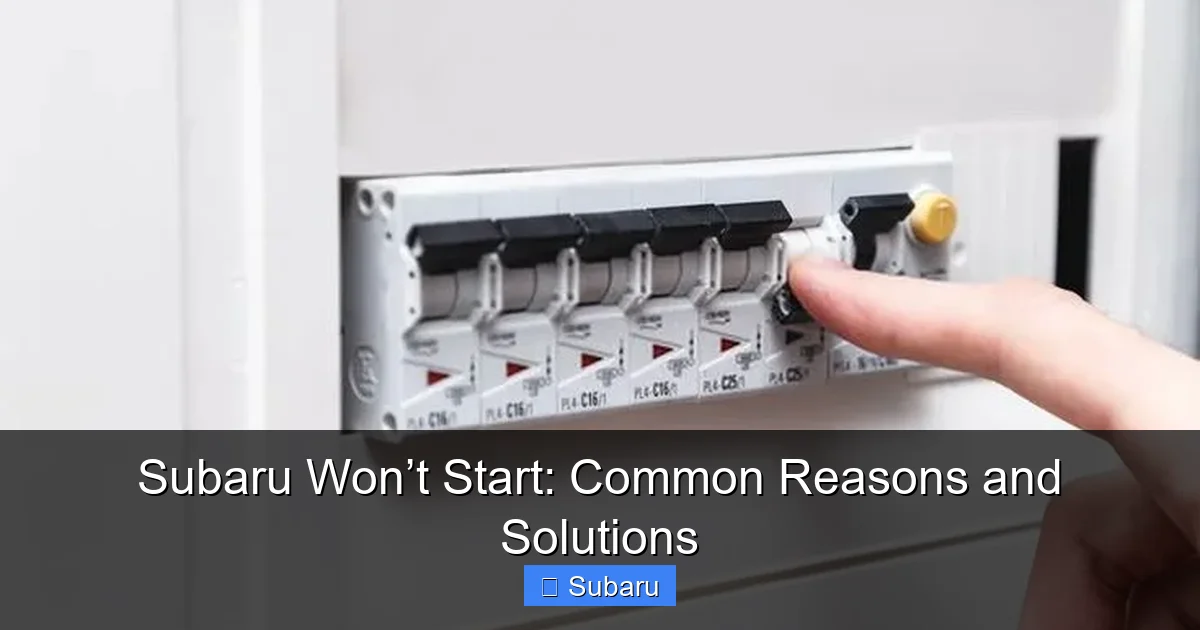
Corroded wiring, blown fuses, or faulty relays can disrupt the starting circuit. Check the main fuses in the engine bay and interior fuse box—especially the starter relay and ignition fuse. A visual inspection can reveal burnt or melted components.
Also, inspect ground connections. A poor ground between the engine and chassis can prevent the starter from receiving enough current. Clean and tighten all ground straps.
6. Preventive Maintenance: Avoiding No-Start Situations
The best way to deal with a Subaru that won’t start is to prevent it from happening in the first place. Regular maintenance goes a long way in keeping your vehicle reliable.
Battery Care
Test your battery annually, especially before winter. Clean terminals regularly and ensure cables are tight. If you park your Subaru for extended periods, consider using a battery maintainer or trickle charger.
Fuel System Maintenance
Replace the fuel filter as recommended and use quality gasoline. Avoid running the tank below ¼ full, as this can cause the fuel pump to overheat and fail prematurely.
Ignition System Checks
Follow the maintenance schedule for spark plugs and coils. If you notice rough running or hesitation, don’t wait—address it early.
Key and Security System
Keep your key fob battery fresh and avoid exposing keys to water or extreme temperatures. If you have a spare key, test it periodically to ensure it works.
Listen to Your Car
Unusual noises, warning lights, or changes in performance are early signs of trouble. Addressing small issues before they become big problems saves time, money, and stress.
Conclusion
When your Subaru won’t start, it’s easy to feel overwhelmed—but most no-start issues are solvable with the right knowledge. From a simple dead battery to a failing fuel pump or ignition coil, the causes are often predictable and fixable. By understanding the common reasons and knowing how to diagnose them, you can often get your Subaru running again without a costly trip to the mechanic.
Remember: start with the basics. Check the battery, listen for sounds, and look for warning lights. Keep up with regular maintenance, and don’t ignore small symptoms. With a little preparation and know-how, you’ll spend less time stranded and more time enjoying the open road in your Subaru.
Frequently Asked Questions
Why won’t my Subaru start even though the battery is new?
Even with a new battery, your Subaru won’t start if there’s a faulty starter, bad ground connection, or immobilizer issue. Check the starter motor, inspect wiring, and ensure the key is recognized by the security system.
Can a bad alternator cause a Subaru not to start?
Yes, a failing alternator can’t recharge the battery, leading to a drained battery over time. If your Subaru starts but dies shortly after, the alternator may not be supplying enough power.
Why does my Subaru crank but not start?
This usually points to fuel, ignition, or sensor problems. Check the fuel pump, spark plugs, ignition coils, and crankshaft position sensor. A clogged fuel filter or bad fuel pressure regulator can also cause this issue.
How do I reset the immobilizer on my Subaru?
Try turning the key to the “on” position for 10–15 seconds, then off. Repeat 2–3 times. If that doesn’t work, disconnect the battery for 10 minutes, reconnect, and try starting. If the problem persists, visit a dealer for diagnostic help.
Can cold weather cause my Subaru not to start?
Absolutely. Cold temperatures reduce battery efficiency and thicken engine oil, making it harder to crank. Use a battery tender in winter and consider a block heater for extreme climates.
Is it safe to jump-start a Subaru with all-wheel drive?
Yes, but always follow proper jump-starting procedures. Connect the final ground cable to the engine block, not the battery, to avoid damaging the AWD system’s electronics. Avoid using quick-start devices that deliver high amperage.