
Should I Buy a New Car Now or Wait

Deciding whether to buy a new car now or wait depends on your budget, needs, and the current market. With fluctuating prices, supply chain recovery, and evolving incentives, timing can make a big difference in what you pay and what you get.
Key Takeaways
- Supply chain improvements have increased new car inventory: After years of shortages, dealerships now have more vehicles in stock, giving buyers more choices and better negotiating power.
- Interest rates remain a key factor: While rates have risen from pandemic lows, they may stabilize or dip slightly in late 2024, affecting monthly payments.
- Manufacturer incentives are returning: Cash rebates, low APR financing, and lease deals are making a comeback, especially on 2023 and 2024 models.
- Electric and hybrid vehicles offer long-term savings: Though pricier upfront, EVs and hybrids can save money on fuel and maintenance over time, especially with tax credits.
- Used car prices are dropping: As new car supply grows, used car values are falling, making them a strong alternative if you’re flexible on age or mileage.
- Your personal situation matters most: If your current car is unreliable or you need a vehicle for a new job or family, waiting might not be practical.
- Timing your purchase can save thousands: End-of-year sales, model-year clearances, and seasonal promotions offer the best deals for savvy buyers.
📑 Table of Contents
- Should I Buy a New Car Now or Wait? A Smart Buyer’s Guide
- Current Market Conditions: What’s Happening Right Now?
- Pros and Cons of Buying a New Car Now
- When Should You Wait to Buy?
- Timing Your Purchase: Best Times to Buy a New Car
- Electric and Hybrid Vehicles: Is Now the Time?
- Used Cars: A Smart Alternative?
- How to Decide: A Step-by-Step Approach
- Conclusion: Make the Right Choice for You
Should I Buy a New Car Now or Wait? A Smart Buyer’s Guide
Buying a new car is one of the biggest financial decisions most people make—right after purchasing a home. It’s exciting, yes, but also stressful. You want the right vehicle, the best price, and a deal that won’t leave you second-guessing your choice for years. With so many moving parts in today’s automotive market, it’s natural to wonder: Should I buy a new car now or wait?
The short answer? It depends. But the good news is that the market is finally shifting in favor of buyers after years of tight inventory, high prices, and limited choices. After the pandemic disrupted supply chains and caused a global chip shortage, new car availability plummeted. Dealers had little to sell, and prices soared. Now, things are changing. Automakers have ramped up production, inventory is growing, and incentives are returning. That means more options and better deals for you.
But before you rush to the dealership, it’s important to weigh your personal needs against market conditions. Are you driving a car that’s on its last legs? Do you need a vehicle for a new job or a growing family? Or are you simply ready for an upgrade? Your situation will play a huge role in whether now is the right time—or if waiting a few months could save you thousands.
Current Market Conditions: What’s Happening Right Now?

Visual guide about Should I Buy a New Car Now or Wait
Image source: innovatecar.com
To decide whether to buy now or wait, you need to understand the current state of the new car market. Let’s break it down.
Inventory Is Finally Recovering
For much of 2021 and 2022, new car buyers faced a frustrating reality: there simply weren’t enough vehicles to go around. Automakers couldn’t get the semiconductors needed to build cars, and production lines slowed to a crawl. As a result, dealerships had bare lots, and buyers often had to wait months—or pay above sticker price—for the car they wanted.
That’s changing. According to industry reports, new car inventory in the U.S. has more than doubled since early 2023. Brands like Toyota, Honda, Ford, and Hyundai now have thousands of vehicles in stock. This increased supply gives you more choices and strengthens your negotiating position. You’re no longer competing with dozens of other buyers for the same vehicle.
Prices Are Stabilizing—But Still High
While inventory is up, prices haven’t dropped dramatically. The average transaction price for a new car in mid-2024 is around $48,000—down slightly from the peak of $50,000 in 2022, but still well above pre-pandemic levels. Why? Inflation, higher manufacturing costs, and the growing popularity of SUVs and trucks (which are more expensive than sedans) all play a role.
That said, the gap between the manufacturer’s suggested retail price (MSRP) and what buyers actually pay is narrowing. In 2022, many buyers paid thousands above MSRP due to scarcity. Now, most are paying at or slightly below sticker. Some dealers are even offering discounts to move inventory, especially on slower-selling models.
Interest Rates Are a Wild Card
One of the biggest factors affecting your monthly payment is the interest rate on your auto loan. After hitting historic lows during the pandemic, rates have climbed significantly. As of mid-2024, the average rate for a new car loan is around 7% for buyers with good credit. That’s nearly double what it was in 2021.
Higher rates mean higher monthly payments. For example, on a $40,000 loan over 60 months, a 5% rate would cost about $755 per month. At 7%, that jumps to $792—adding nearly $2,200 in interest over the life of the loan. If you’re financing, this could be a dealbreaker.
The good news? The Federal Reserve has signaled it may cut rates later in 2024 if inflation continues to cool. If that happens, auto loan rates could follow. But no one can predict the future with certainty. Waiting for a rate drop might save you money—but it could also mean missing out on current incentives or the car you really want.
Pros and Cons of Buying a New Car Now

Visual guide about Should I Buy a New Car Now or Wait
Image source: thumbs.dreamstime.com
Let’s look at the advantages and disadvantages of making your purchase today.
Pros of Buying Now
- More inventory means more choices: You can shop around, compare models, and find the exact trim, color, and features you want without settling.
- Negotiating power is returning: With more cars on the lot, dealers are more willing to negotiate on price, trade-in value, and financing terms.
- Incentives are making a comeback: Many automakers are offering cash rebates, low APR financing, and lease deals to attract buyers. For example, Ford is offering $2,000 cash back on certain 2024 F-150 models, while Hyundai has 0.9% APR financing on select SUVs.
- Newer technology and safety features: The latest models come with advanced driver-assistance systems (ADAS), better infotainment, and improved fuel efficiency.
- Warranty coverage starts fresh: A new car comes with a comprehensive warranty, often covering 3 years/36,000 miles or more, giving you peace of mind.
Cons of Buying Now
- Higher interest rates increase costs: Even with a good credit score, you’ll likely pay more in interest than you would have a few years ago.
- Prices are still elevated: While not as high as 2022, new cars remain expensive due to inflation and demand for larger, feature-rich vehicles.
- Depreciation starts immediately: A new car can lose 20% of its value the moment you drive it off the lot. If you plan to sell or trade in within a few years, this is a major consideration.
- Potential for better deals later: If you can wait, you might benefit from deeper discounts, lower rates, or newer models with improved features.
When Should You Wait to Buy?
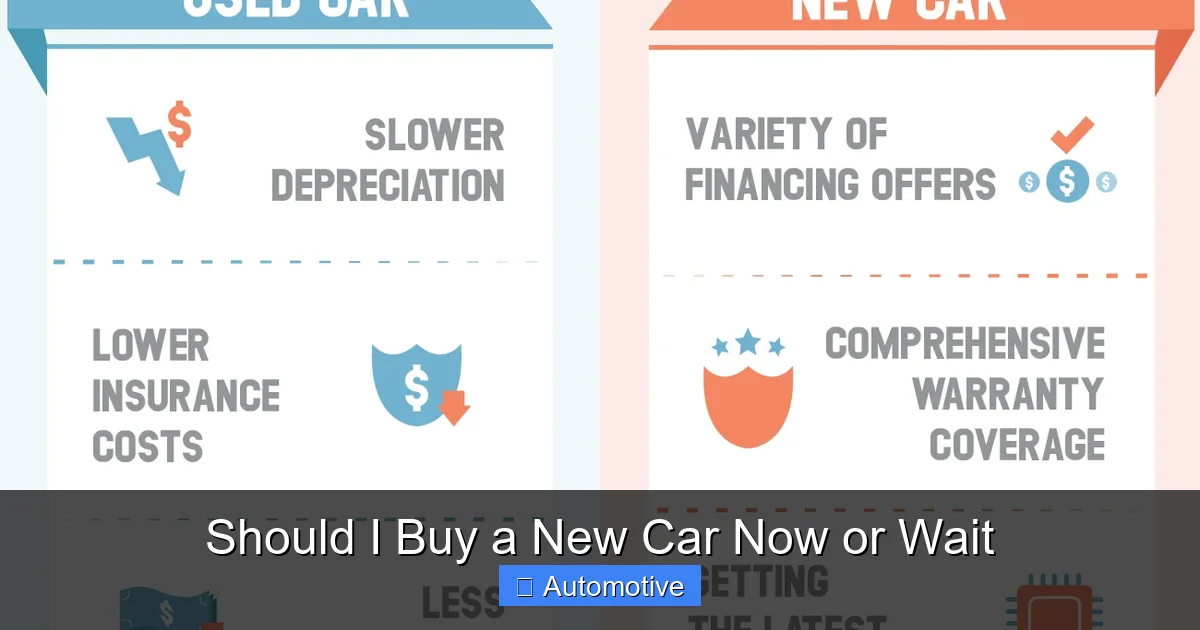
Visual guide about Should I Buy a New Car Now or Wait
Image source: global-uploads.webflow.com
Waiting to buy a new car isn’t always the wrong move. In fact, for some buyers, it’s the smartest choice. Here are situations where holding off makes sense.
Your Current Car Is Still Reliable
If your current vehicle is running well, has low mileage, and doesn’t require major repairs, there’s no urgent need to replace it. Keeping it for another year or two could save you tens of thousands of dollars. Use that time to save for a larger down payment, improve your credit score, or wait for better market conditions.
For example, let’s say you drive a 2019 Honda Civic with 60,000 miles. It’s reliable, gets great gas mileage, and costs $150 a month in insurance. Replacing it now with a $35,000 new car could add $500+ to your monthly expenses. Unless you need more space or safety features, it might be wiser to wait.
You’re Close to a Major Life Change
Are you planning to move, change jobs, or start a family? These life events can dramatically affect your transportation needs. Buying a car now might mean outgrowing it in a year. For instance, if you’re expecting twins, a compact sedan might not cut it. Waiting until after the baby arrives (or your new job starts) ensures you buy a vehicle that fits your new lifestyle.
You Want to Avoid High Depreciation
New cars depreciate fastest in the first few years. If you’re concerned about resale value, consider waiting and then buying a one- or two-year-old certified pre-owned (CPO) vehicle. These cars have already taken the biggest depreciation hit but still come with warranties and modern features. You could save $5,000–$10,000 compared to a brand-new model.
You’re Waiting for a Specific Model or Update
Automakers frequently update their vehicles with new designs, technology, or powertrains. If you’re eyeing a 2025 model that’s set to launch in a few months—especially one with a hybrid or electric option—it might be worth the wait. For example, the 2025 Toyota Camry is expected to feature a full hybrid system across all trims, offering better fuel economy and performance.
Timing Your Purchase: Best Times to Buy a New Car
If you decide to buy now, timing can still make a big difference in what you pay. Here are the best times of year to shop for a new car.
End of the Model Year (August–October)
Dealers are eager to clear out current-year models to make room for the next year’s lineup. This is when you’ll find the biggest discounts, especially on outgoing trims or colors. For example, a 2024 Honda CR-V might be discounted by $2,000–$3,000 in September to make way for the 2025 model.
End of the Calendar Year (November–December)
December is prime time for year-end sales events. Manufacturers often offer special financing, cash rebates, and lease deals to meet annual sales targets. Many dealers also have quotas to hit, so they’re more willing to negotiate.
End of the Month, Quarter, or Year
Dealers and salespeople often have monthly or quarterly goals. Shopping at the end of these periods increases your chances of getting a better deal as they try to close sales.
Holiday Sales Events
Look for promotions around major holidays like Presidents’ Day, Memorial Day, July 4th, and Labor Day. These events often feature special financing rates or cash-back offers.
Electric and Hybrid Vehicles: Is Now the Time?
Electric vehicles (EVs) and hybrids are becoming more mainstream, and the market is evolving rapidly. If you’re considering one, now might be a great time to buy—but there are factors to consider.
Federal and State Incentives Are Available
The Inflation Reduction Act offers up to $7,500 in federal tax credits for qualifying new EVs and plug-in hybrids. Many states also offer additional rebates. For example, California provides up to $2,000 for EV purchases, and Colorado offers $5,000.
However, not all vehicles qualify. The credit depends on battery size, assembly location, and income limits. Be sure to check the IRS’s list of eligible models before buying.
Charging Infrastructure Is Improving
Range anxiety is fading as charging networks expand. Companies like Electrify America and Tesla are adding thousands of fast chargers across the U.S. Many workplaces and apartment complexes now offer charging stations, making EV ownership more convenient.
Prices Are Coming Down
EV prices have dropped significantly in 2023 and 2024. Tesla cut prices multiple times, and competitors like Ford, Chevrolet, and Hyundai have followed suit. The average price of a new EV is now around $52,000—down from over $65,000 in 2022.
Still, EVs remain more expensive than gas-powered cars on average. But when you factor in fuel savings, lower maintenance, and incentives, the total cost of ownership can be lower over time.
Consider a Hybrid as a Middle Ground
If you’re not ready for a full EV, a hybrid or plug-in hybrid (PHEV) offers the best of both worlds. You get better fuel economy without range anxiety. Many hybrids, like the Toyota RAV4 Hybrid, now get over 40 mpg and qualify for tax credits.
Used Cars: A Smart Alternative?
While this article focuses on new cars, it’s worth mentioning that used cars are also a strong option—especially now.
Used car prices have dropped significantly since their peak in 2022. According to Kelley Blue Book, the average price of a used car fell by nearly 10% in 2023 and continues to decline in 2024. This is due to increased new car supply, which reduces demand for used vehicles.
Buying a 1- to 3-year-old used car can save you $10,000 or more compared to a new one, while still getting modern features and a solid warranty. Certified pre-owned (CPO) programs offer even more peace of mind, with inspections, extended warranties, and roadside assistance.
If you’re flexible on age or mileage, a used car might be the smarter financial move—even if you were planning to buy new.
How to Decide: A Step-by-Step Approach
Still unsure? Follow these steps to make the right decision for your situation.
1. Assess Your Current Vehicle
Ask yourself: Is my car reliable? How much would it cost to keep it running for another year? If repairs are piling up or safety is a concern, it might be time to upgrade.
2. Determine Your Budget
Use an auto loan calculator to see what monthly payment you can afford. Aim to keep your car payment under 10–15% of your take-home pay. Don’t forget to factor in insurance, fuel, maintenance, and registration.
3. Check Your Credit Score
Your credit score affects your interest rate. A score of 720 or higher will get you the best rates. If your score is lower, consider waiting a few months to improve it by paying down debt and making on-time payments.
4. Research Incentives and Deals
Visit manufacturer websites and use tools like Edmunds, Kelley Blue Book, or TrueCar to compare prices and find current offers. Sign up for email alerts to stay informed about sales.
5. Test Drive and Compare
Don’t rush. Test drive at least three vehicles in your price range. Compare features, comfort, fuel economy, and resale value.
6. Negotiate Like a Pro
Know the invoice price (what the dealer paid) and aim to pay close to it. Use competing offers from other dealers to your advantage. Be ready to walk away if the deal isn’t right.
Conclusion: Make the Right Choice for You
So, should you buy a new car now or wait? The answer isn’t one-size-fits-all. If you need a vehicle urgently, the market is finally favorable enough to make a purchase worthwhile. With more inventory, returning incentives, and better negotiating power, buyers have more leverage than they’ve had in years.
But if you can wait—especially if your current car is still running well—holding off a few months could save you money, especially if interest rates drop or newer models launch. And don’t forget to consider used or certified pre-owned vehicles as a cost-effective alternative.
Ultimately, the best time to buy a new car is when it aligns with your financial situation, lifestyle needs, and long-term goals. Do your research, stay informed, and don’t let pressure from salespeople rush your decision. With the right approach, you can drive off in the car you want—at a price you can afford.
Frequently Asked Questions
Is it a good time to buy a new car in 2024?
Yes, 2024 is a better time to buy than the past few years. Inventory has improved, prices are stabilizing, and incentives are returning. However, interest rates remain high, so your monthly payment may still be steep.
Will car prices drop in 2025?
It’s possible. If inflation continues to cool and supply chains remain stable, prices could dip slightly. However, demand for SUVs, trucks, and EVs may keep prices elevated. Waiting could save money, but there’s no guarantee.
Should I buy a new car or a used car right now?
Used cars are currently a great value, with prices dropping and quality improving. If you want to save money and don’t mind a few years of wear, a used or CPO vehicle could be the smarter choice.
Are there tax credits for new cars in 2024?
Yes, the federal government offers up to $7,500 in tax credits for qualifying new electric and plug-in hybrid vehicles. Many states also offer additional rebates. Check the IRS website for eligible models.
What’s the best month to buy a new car?
December, September, and October are typically the best months. Dealers offer discounts to clear out inventory for new models and meet annual sales goals.
Should I wait for interest rates to drop before buying?
If you can afford to wait and your current car is reliable, holding off a few months could save you hundreds in interest. However, if you need a car now, current incentives may offset higher rates.
